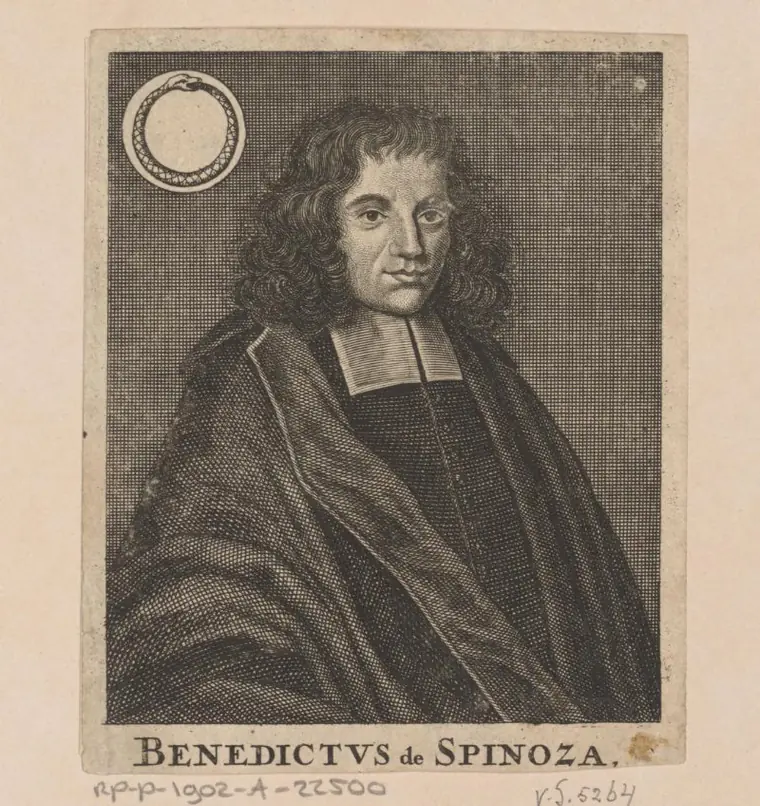
An essay on bondage, power, and the discipline of understanding
I. The Tribunal That Was Never There
The deepest error in human life is not that we suffer. It is that we misunderstand why we suffer. We imagine ourselves injured by fate, betrayed by fortune, persecuted by other people, or abandoned by God. We live as though the world were a tribunal, history a punishment, and nature a hidden moral drama staged for our private humiliation. We read our losses as verdicts. We read our gains as approval. We treat every accident as a message addressed to us by name. Baruch Spinoza's philosophy begins by destroying this illusion. It does not console us by flattering us. It liberates us by correcting us.
The flattery we crave is subtle. We do not usually believe, in plain words, that the universe revolves around us. We believe it sideways. We believe it in the shape of our complaints. The man who asks why this happened to him has already assumed that the world owed him a different outcome. The woman who feels singled out by misfortune has already assumed a cosmic intention behind impersonal events. Beneath nearly every grievance lies a buried metaphysics, a quiet conviction that reality was supposed to be arranged for our comfort and has broken its promise. Spinoza removes the promise. There was no contract. There was only nature, and we mistook our wishes for its law.
II. One Substance, One Order
Spinoza's most important insight is severe, luminous, and still almost unbearable: reality is not arranged around human desire. The universe is not a kingdom within which man is sovereign, nor a theater designed for reward and punishment. It is one infinite order, one substance, one nature, expressing itself through infinite attributes and finite modes. There are not many ultimate things loosely competing for room. There is one reality, complete and self-contained, and everything we call a separate object is a passing expression of it, the way a wave is not a separate sea but the sea taking a shape.
Everything that exists follows from the necessity of what exists. Nothing is contingent in the ultimate sense. Nothing floats outside the order of causes. Nothing happens because nature forgot herself, paused, hesitated, or made an exception for our sake. A thing seems contingent to us only because we do not see the full chain of its causes. Contingency is not a property of the world. It is a confession of our ignorance. When we say an event might or might not have happened, we are not describing the event. We are describing the limits of what we know about it.
This is the foundation, and it must be felt before it can be used. Most of human misery is built on the secret belief that things could easily have gone otherwise, that some small adjustment of fortune would have spared us, that we stand a hair's breadth from the life we deserved. Spinoza closes that gap. The event followed from its causes as strictly as a conclusion follows from its premises. To grasp this is not to grow cold. It is to stop bleeding from a wound the imagination keeps reopening.
III. Necessity Is Not Fatalism
Here the careless reader makes his first mistake. He hears that all things are necessary and concludes that nothing can be done. This is fatalism, and Spinoza is its enemy, not its prophet. Fatalism says events are fixed and therefore understanding is useless. Spinoza says the opposite. Because events follow from causes, understanding is the only path to freedom. Where the fatalist throws down his tools, Spinoza picks them up. If the world ran on whim, knowledge would be powerless, because whim cannot be studied. Precisely because the world runs on causes, knowledge becomes the lever by which we move our own lives.
The ignorant person is not unfree because necessity governs him. He is unfree because necessity governs him from behind his back. He is moved by causes he does not comprehend, by passions he calls choices, by appetites he mistakes for identity, by inherited words he mistakes for thought. He believes himself free because he is conscious of his desires, while remaining ignorant of the causes that determine those desires. A thrown stone, if it could think, would believe it had chosen to fly. It would feel the motion as its own will and never suspect the hand that launched it. Most human freedom is the consciousness of the stone.
So the difference between bondage and liberty is not the difference between being caused and being uncaused. Everything is caused. The difference is between being caused blindly and being caused knowingly, between forces that work on us through darkness and forces we have brought into the light. Freedom, for Spinoza, is not an escape from the causal order. It is a change in our position within it. We move from the back of the chain, dragged, to the front of it, understanding.
IV. We React, We Do Not Act
In this one diagnosis, Spinoza gives us a philosophy of mind, emotion, politics, ethics, religion, and human bondage at once. Most people do not act. They react. They are pulled by fear, seduced by hope, inflamed by resentment, weakened by envy, intoxicated by praise, and mutilated by shame. They do not possess their emotions. Their emotions possess them. They call this personality. They call this conviction. They call this destiny. Spinoza calls it inadequate knowledge.
Watch a man receive an insult. The blood rises before a single judgment has been examined. The body has already answered. The thought arrives afterward, dressed as reason, to justify a motion that was never chosen. Watch a crowd receive a rumor. It moves as one animal, swayed by an image, certain of its certainty, incapable of locating the cause of its own conviction. This is the ordinary condition, and it is not rare or shameful. It is the default state of a being who has not yet done the work. The passions are not sins. They are the weather of a mind that does not yet understand its own causes, and like weather they will govern anyone who has not learned to read them.
What we proudly call our character is often only the sum of our most habitual reactions, the grooves worn by causes we never examined. We mistake the depth of a feeling for the truth of it. We assume that what moves us strongly must be telling us something real. Spinoza severs that assumption. The strength of a passion measures the force of its cause, not the adequacy of its idea. A man can be overwhelmed by a complete illusion and serene before a vital truth. Intensity is not evidence. It is only intensity.
V. The Mind Is the Idea of the Body
For Spinoza, an emotion is not an enemy of reason. It is an event in nature. Anger, grief, ambition, lust, anxiety, pride, and despair are not supernatural invasions into the soul. They are changes in the body's power of acting, accompanied by ideas of those changes. The mind is not a ghost trapped inside flesh. The mind is the idea of the body. What happens to the body is expressed in thought. What happens in thought is inseparable from the body's condition.
This is why Spinoza remains more modern than many moderns. He does not divide the human being into a noble intellect and a corrupt animal machine, the soul pulling upward while the body drags it down. That ancient war between reason and appetite, spirit and flesh, is for him a confusion. There is one being, considered under two aspects. Thought and extension are not two substances locked in struggle. They are the same reality read in two languages. A feeling of dread and a constriction of the body are not cause and effect across a void. They are one event, expressed once as motion and once as idea.
The consequence is immense and practical. To improve the mind, one must not merely scold the mind. One must reorganize life. One must alter causes. One must understand the machinery of affect, environment, habit, association, memory, nutrition, sleep, labor, friendship, fear, and imagination. The person who tries to think himself out of a despair rooted in exhaustion is fighting the wrong front. The body is half the equation, and the equation cannot be solved from one side. Moralizing is weak medicine because it attacks effects while leaving causes intact. It tells the fevered man to stop sweating. Spinoza is not interested in condemnation. Condemnation is often ignorance disguised as virtue. He wants understanding, because only understanding changes the order of our participation in nature.
There is a precise mechanism here, and it is the quiet center of his entire therapy. A passion endures as a passion only so long as we suffer it blindly. The moment we form a clear and distinct idea of it, trace it to its cause, see exactly how and why it arose, it ceases to rule us in the same way. It does not always vanish. But it loses its tyranny, because it is no longer a force moving us from the dark. We have turned the cause into an object of knowledge, and what we understand we no longer simply undergo. This is not positive thinking. It is the opposite of positive thinking. It does not ask us to feel better about our chains. It asks us to study the lock.
VI. Virtue Is Power
Here we arrive at his great ethical revolution: virtue is power. Not domination over others, not theatrical righteousness, not obedience to superstition, but the increasing power to exist, act, understand, and persevere according to the necessity of one's own nature. Virtue is not what we sacrifice. It is what we become capable of. The virtuous man is not the one who has paid the most in self-denial. He is the one whose power of acting has grown, whose understanding has widened, whose life expresses more of his own nature and less of the forces that merely batter him.
This rests on a single principle that runs beneath everything that lives. Every being strives to persist in its being. This striving, the conatus, is not a poetic accessory to his system. It is the engine of finite existence, and it is nothing other than the actual essence of each thing. A stone, a plant, an animal, a citizen, a thinker, a republic, an institution, a body, a mind: each endeavors, in its own way, to continue and enhance its power of being. To exist is already to strive. The question is never whether we will strive, but whether our striving will be clear or confused, free or driven, active or merely pushed.
Human excellence, therefore, is not self-negation. It is not the hatred of desire. It is not the purification of life into weakness. Human excellence is the intelligent ordering of desire. Desire is the very essence of man insofar as he is determined to act. The question is not whether we shall desire. The question is whether our desires will be confused, servile, externally manipulated, and sad, or whether they will be clarified by reason into forms of life that increase our power. The ascetic who hates his own wanting has not risen above the conatus. He has only turned it against himself and called the wound holiness.
This is where Spinoza surpasses both moralism and nihilism. The moralist tells man to obey. The nihilist tells man nothing matters. Both abandon him. The moralist abandons him to an external rule he cannot make his own, and the nihilist abandons him to a void in which no rule could mean anything. Spinoza tells man to understand what increases or diminishes his power of acting, and so returns the measure of life to something within reach of intelligence. Joy is the passage to greater perfection, the increase of one's power. Sadness is the passage to lesser perfection, the diminishment of one's power. This is not motivational rhetoric. It is metaphysics translated into ethics. A life can be judged, without appeal to any heaven, by what it does to the power of existing.
VII. What Diminishes, and Why
Once we hold this measure, the moral world reorganizes itself, and many things we were taught to admire are revealed as quiet thefts of power.
Envy diminishes, for it makes another's gain into one's own loss and converts the success of the world into a private wound. Hatred diminishes, for it binds the mind to its object and gives the hated thing a permanent residence in the hater. Superstition diminishes, for it surrenders the understanding to fear and trains the soul to obey what it cannot examine. Resentment diminishes, for it lives backward, feeding on an injury it refuses to let die. Passive comparison diminishes, for it measures the self against others and so makes one's worth a hostage to strangers.
The craving for applause diminishes most deceptively of all, because it wears the mask of ambition. It transfers the measure of one's being into the unstable imagination of others, so that a man's peace now rises and falls with opinions he does not control and often does not respect. He has handed the keys of his mind to a crowd. Fear diminishes, for it binds the mind to an image of future harm and lets a thing that has not happened govern a life that is happening now. And hope, though endlessly praised, is more unstable than it looks, because it depends upon uncertainty and trembles always beside fear as its twin. The same doubt that lets us hope lets us dread. They are not opposites. They are one wavering, seen from two sides. The free person does not build life upon hope and fear. He builds upon understanding, which does not waver because it does not depend on the unknown for its footing.
None of this counsels indifference. Spinoza does not ask us to want nothing, feel nothing, or risk nothing. He asks us to notice what each of our attachments does to our power, and to stop calling our diminishments by flattering names. Much of what we suffer, we have chosen, by choosing to measure ourselves with instruments that can only subtract.
VIII. Causation Is Not an Excuse
This is why Spinoza's philosophy is so demanding, and why it offers no comfortable resting place even to those who accept it. It does not permit the luxury of self-pity as a metaphysical principle. To say "I was caused" is not to say "I am excused from becoming stronger." To say "my emotions have causes" is not to enthrone them. To say "I am part of nature" is not to dissolve into passivity. The determinist who uses causation as a pillow has misread the whole project. Spinoza did not labor to prove that everything is caused so that we might lie down. He proved it so that we might get to work, because only the caused can be changed, and only what obeys laws can be mastered through knowledge of its laws.
On the contrary, the recognition that we are caused is the beginning of the only serious work: to understand the causes that compose me, determine me, weaken me, strengthen me, and can be reorganized through reason. The man who says his anger is not his fault has stopped halfway. The truth is larger and harder. His anger has causes, yes, and some of those causes lie within his power to rearrange, and to leave them unrearranged once they are understood is itself a further cause, and a further responsibility. Determinism, in Spinoza's hands, does not lift the burden of self-improvement. It explains exactly how self-improvement is possible.
IX. God, or Nature
Spinoza's God is the name for this totality, not a monarch beyond the stars. God is not a person who chooses, commands, judges, forgives, intervenes, or suspends the order of nature for the sake of human wishes. God is Nature, the infinite, necessary, self-expressing reality of which all things are modes, considered not as scenery but as the single substance underlying everything that is. This is the meaning of his most scandalous phrase, that God and Nature are one. He does not lower God into the dirt. He raises nature into the divine. He refuses the gap between a holy elsewhere and a profane here, and finds the whole of the sacred in the order of what exists.
This offended the theologians, and it was meant to, because it removed the divine from the economy of fear. A God who does not punish is useless to priests who govern through terror. A God who does not reward tribal vanity is useless to nations that wish to sanctify themselves. A God identical with the intelligible order of reality cannot be bribed, flattered, frightened, or recruited to a war. He answers no prayers because he grants no exceptions, and he grants no exceptions because exception would mean a crack in the necessity that is his very nature. To the priest who trades in divine moods, such a God is worse than an atheist's denial. He leaves the temple standing and empties it of its leverage.
Yet Spinoza does not abolish reverence. He purifies it. To understand nature is not to disenchant the world. It is to love it more adequately. A clockwork universe inspires no awe only if one imagines that awe required a magician behind the curtain. Spinoza finds the wonder in the curtain itself, in the fact that anything exists at all and exists by an order the mind can partly comprehend. The highest form of blessedness is not emotional intoxication but the intellectual love of God, the mind's joy in understanding its own place within the eternal order. This love is not sentimental. It is not directed toward a cosmic personality who might love us back. It is the joy that arises when the mind grasps reality under the aspect of eternity, seeing finite things not as isolated accidents but as necessary expressions of the infinite. And in a strange and rigorous sense, this love by which the mind loves the order of things is part of the order's love of itself, for the mind that understands nature is nature, come to understanding in one of its modes.
X. The Fragment and the Whole
The ordinary person is imprisoned in fragments. He sees this insult, this loss, this ambition, this wound, this promotion, this humiliation, this enemy, this pleasure, this delay, this death. Each fragment appears absolute because imagination isolates it from its causes and sets it before the mind as if it were the whole of reality. The imagination is a magnifier with no sense of proportion. It takes the nearest thing and makes it the largest, the most recent injury and makes it eternal, the present fear and makes it the shape of all the future.
Reason restores proportion. It reconnects the fragment to the whole. It shows that every person who injures us is himself caused, driven by his own confusions, his own history, his own unexamined passions, as much a mode of nature as the storm or the stone. Every passion that shames us is caused. Every institution that forms us is caused. Every fear that narrows us is caused. To understand this is not to approve of everything. Approval and disapproval are often merely human projections cast upon an order that contains no such categories. To understand is to cease being astonished by necessity, and to stop spending one's strength in protest against the fact that things are what their causes made them.
There is a freedom in this that the angry man cannot imagine, because he believes his anger is the price of his dignity. He thinks that to understand his enemy would be to excuse him, and so he clings to his incomprehension as if it were a virtue. Spinoza shows that the reverse is true. The man who understands the cause of his injury is no longer at its mercy. He has converted an event that was happening to him into an object that he now holds in thought, and the holding is itself a kind of power that the raging man will never possess.
XI. The Politics of Fear
This has political consequences, and Spinoza drew them without flinching. Men governed by fear are easily ruled. Men governed by superstition are easily manipulated. Men who do not understand their affects will surrender liberty in exchange for psychic relief. They will call obedience peace, call persecution justice, and call their own bondage virtue. Spinoza understood, long before the word existed, that political domination often begins in the imagination, not in the army. The chains are forged first in the mind, and the soldier only guards what fear has already built.
A populace afraid of uncertainty will accept any myth that makes its suffering meaningful, its enemies monstrous, and its rulers sacred. This is the permanent transaction of tyranny. It does not sell prosperity. It sells relief from the unbearable openness of an uncertain world. It offers a story in which the frightened are righteous, the confused are wise, and the obedient are safe, and a people will pay for that story with everything, including the freedom to question it. The strongest hold a ruler has over men is not their pain but their need to believe their pain has an author who can be blamed and a meaning that can be obeyed.
For this reason, freedom of thought is not ornamental to Spinoza's politics. It is essential, and it is the very purpose for which a state should exist. A state that fears inquiry confesses its own irrationality, for truth has nothing to fear from examination and only falsehood needs the protection of silence. The purpose of political order is not to manufacture obedient souls but to enable human beings to live securely enough to develop reason. A government that succeeds in making its people quiet, frightened, and incurious has not achieved peace. It has achieved a more efficient bondage.
Here Spinoza corrects a confusion that outlives him in every age. Peace is not the mere absence of war. A prison is quiet. A graveyard is orderly. Peace, rightly understood, is not silence imposed from above but a condition that arises from the strength of a people, a positive power of living well together, the flourishing of minds that are secure enough to think. A society that produces terror, ignorance, servility, and faction may be calm on the surface, but it is not at peace. It is a machine for diminishing human beings, and its quiet is the quiet of suppression, not of strength.
XII. The Discipline of Lucidity
Against all of this, Spinoza offers neither utopia nor despair. He promises no perfect city and forecasts no inevitable ruin. He offers something narrower and far more useful: a discipline of lucidity, a way of standing inside a necessary world without being crushed by it.
The discipline begins by reversing our questions. Do not ask whether reality has honored your expectations. Ask whether your expectations were adequate to reality. Do not ask whether fortune has insulted you. Ask what causes produced the event, what power remains to you, what understanding can be gained, and what action follows from reason rather than from passion. Do not worship outcomes. Outcomes belong to the whole order of nature, woven from a thousand causes beyond your reach, and to stake your peace on them is to hand your life to forces that never agreed to serve you. Attend instead to the adequacy of your ideas, the nobility of your conduct, the steadiness of your mind, and the causes that lie within your power to arrange.
This is not the cheap counsel to control what you can and release what you cannot, though it can sound like it from a distance. It is more exacting. It asks for a continuous labor of understanding, a refusal to let any feeling pass unexamined into action, a habit of tracing every disturbance to its cause until the cause is known and the disturbance loses its blind authority. It is the work of a lifetime and it is never finished, because the mind is acted upon constantly and must constantly convert that being-acted-upon into knowledge or be ruled by it.
XIII. The Free Person
The free person, in Spinoza's sense, is not invulnerable. This must be said plainly, because the doctrine is often misread as a recipe for invincibility. He still suffers, ages, loses, labors, misjudges, and dies. No understanding repeals mortality. No clarity exempts the body from pain or the heart from grief. But he suffers differently, because he understands differently. He is not lifted out of necessity. He participates in it more intelligently.
He does not confuse freedom with randomness, nor dignity with control over the uncontrollable. He has given up the fantasy of commanding fortune and gained in exchange something fortune cannot touch. His power consists in becoming the adequate cause of more of what follows from his own nature, in originating more of his life from understanding and less of it from being pushed. He acts more and reacts less. He is governed less by images, rumors, applause, dread, and fantasy. And because he understands the levers by which men are moved, the fears that drive them, the hopes that blind them, the vanities that purchase them, he becomes harder to manipulate, for one cannot easily pull a string in a man who can see the string.
There is a quiet grandeur in such a life, but it is not the grandeur of conquest. It is the grandeur of a mind that has stopped being astonished, stopped being humiliated by necessity, and learned to find its joy in the very act of understanding the order that contains it.
XIV. The Promise, and the Danger
This is the Spinozan promise, and it is worth stating exactly so that it is not mistaken for more or less than it is. Not that life will bend to us, but that we may cease bending before phantoms. Not that we will conquer nature, but that we will come to understand ourselves as nature. Not that we will escape causality, but that through knowledge we will become more active within it. The highest human life is not the life of the sovereign ego imposing itself upon the world. It is the life of the mind becoming adequate to the world.
This is why Spinoza remains dangerous, three and a half centuries on, in a way that softer philosophers never will. He removes our favorite excuses. He denies us the innocence of ignorance. He will not let us call confusion depth, passivity sensitivity, resentment justice, fear morality, or superstition faith. He refuses to dignify our diminishments. He asks something far harder than belief, because belief is cheap and can be worn like a coat. He asks for transformation through understanding. He asks us to examine what we love and why we love it, what we fear and why we fear it, what diminishes us and what strengthens us, and whether we truly want freedom or merely more comfortable forms of bondage.
Most people, confronted honestly with this question, discover that they wanted comfort all along and called it freedom. That is the danger of reading him seriously. He leaves no place to hide, least of all behind one's own suffering.
XV. The Daily Work
The answer he demands is not given once. It is lived. There is no moment at which a person becomes free and remains so without effort, no graduation, no permanent arrival. Freedom is not a possession but an activity, and it must be renewed against the constant pressure of a world that acts upon us whether we consent or not.
Every day the mind is either captured by inadequate ideas or strengthened by adequate ones. Every day we are acted upon or we learn to act. Every day we mistake the partial for the whole, or we labor to see things more truthfully. Every day we submit to sadness, vanity, rage, envy, and fear, or we convert experience into understanding. The work does not scale toward a final victory. It is the same work, met again each morning, in new disguises. This is not discouraging once it is understood rightly. It means that freedom is never out of reach, because it is never behind us as a thing we failed to win. It is always available in the next act of understanding, however small.
XVI. Fire Disciplined by Geometry
Spinoza's philosophy is not cold, though its method is austere and its propositions march in the dress of mathematics. It is a fire disciplined by geometry. The rigor is not the enemy of the warmth. It is what makes the warmth survivable, what keeps joy from collapsing into intoxication and love from dissolving into fantasy. He burns away illusion not to leave us in ash but so that joy can become stable, freedom intelligible, and love no longer dependent upon the unreliable inventions of the imagination.
This is the meaning of his hardest and most liberating claim, the one toward which the whole austere edifice has been building. Blessedness is not the reward of virtue. Blessedness is virtue itself. The free life is not paid out at the end like wages for service rendered. We are not good now in order to be happy later. The relation runs the other way. It is present wherever the mind understands, wherever desire is ordered by reason, wherever a human being increases his power without hatred, wherever necessity is seen clearly enough that it no longer humiliates us. We do not restrain our worst impulses in order to earn joy. Because we have found joy in understanding, we are able to restrain them. Strength is not the toll we pay for blessedness. Strength is what blessedness feels like from the inside.
XVII. The Beginning of Dignity
To live Spinoza, and it can only be lived, never merely believed, is to stop demanding that reality become a servant of the imagination. It is to exchange complaint for causality, resentment for understanding, passivity for power, superstition for clarity, and fear for the intellectual love of what is. None of this is resignation. Resignation gives up and grows quiet. This gives up only the illusions, and in their place takes up the one labor worthy of a mind: to understand the order in which it finds itself, and so to act within it as a cause and not merely as a thing caused.
That is the whole turn. We came expecting the world to be a tribunal and found it to be an order. We came demanding a verdict and were offered a study. We arrived as defendants pleading our innocence before fortune and leave as participants in a reality that owes us nothing and offers us, instead of vindication, the far greater gift of comprehension. This is not the consolation we wanted. It is the dignity we did not know we could have.
For freedom is not the absence of necessity.
Freedom is necessity understood.
The Tyranny of Hope and Fear
Spinoza's devastating analysis of why humans are governed by alternating fantasies of salvation and disaster.
I.
A man sits alone in a darkened room. He has just received a letter. He does not know what it contains. It might bring news of an inheritance, a lost love returning, a position offered. Or it might bring news of a death, a debt called in, a judgment rendered against him. He holds the envelope unopened. His pulse quickens. His mind churns through scenarios. He sees himself wealthy, vindicated, safe. He sees himself ruined, abandoned, exposed. These images alternate with such speed that he cannot separate one from the next. He is, in this moment, completely governed by two affects and neither of them knows its object. He is governed by hope and fear.
Spinoza calls this condition the normal state of human life. It is not exceptional. It is not pathological in the clinical sense. It is the ordinary consequence of living among partial causes without adequate understanding. Most people, most of the time, oscillate between hope and fear. They imagine favorable outcomes without grasping the causal chains that might produce them. They imagine unfavorable outcomes with the same ignorance. Their inner life is a theater in which disaster and salvation alternate across the stage, neither one arriving with enough permanence to end the performance. They call this being alive.
The man in the room will eventually open the letter. The news will be specific, concrete, finite. It will fall short of his best fantasy and exceed his worst fear. For a brief moment, he will inhabit reality. But within hours, new uncertainties will arise. Did the letter mean what it said? Will the good news hold? Will the bad news worsen? He will begin hoping and fearing again, about the next thing, the next letter, the next verdict. He does not control this rhythm. The rhythm controls him.
Spinoza's analysis of hope and fear is among the most devastating passages in the Ethics. It is not merely a description of unpleasant emotions. It is a structural diagnosis of why human beings remain in bondage. Hope and fear are not accidents of psychology. They are necessary consequences of inadequate ideas. And because inadequate ideas are the default condition of the human mind, hope and fear are the default governors of human action. The man who hopes is not free. The man who fears is not free. Both are moved by the imagination of things that are not present and not understood. Both have surrendered their power to causes they cannot see.
II.
The definitions appear early in the Ethics, in the Definitions of the Affects at the end of Part III. Hope, Spinoza writes, is a pleasure arising from the image of a future or past event whose outcome we doubt. Fear is a sadness arising from the image of a doubtful event. The structure is identical in both cases. An event is imagined. Its outcome is uncertain. The mind responds with an affect of pleasure or pain, directed not at the event itself but at the image of the event. The affect is not a response to reality. It is a response to a mental picture accompanied by uncertainty.
Notice the precision of the definition. Hope is not pleasure about something good that will happen. It is pleasure about an image of something whose occurrence is doubted. The pleasure depends entirely on the doubt. If the event were certain, the affect would not be hope. It would be confidence, or joy, or satisfaction. Hope requires uncertainty the way fire requires oxygen. Remove the uncertainty, and hope collapses into something else. This is the first clue that hope is not a straightforward good. It is a derivative affect, parasitic on ignorance.
The same holds for fear. Fear is not a rational response to a genuine threat. It is sadness about an image of something whose non-occurrence is doubted. If the threat were certain, fear would give way to despair, or to action, or to resignation. Fear requires the gap between what might happen and what is known to happen. It lives in that gap. It feeds on that gap. It expands to fill whatever space uncertainty provides.
Spinoza's point is not that hope and fear are useless. They can motivate action. A man who hopes for a harvest plants seeds. A man who fears a predator builds a wall. But motivation by hope and fear is always motivation by imagination rather than understanding. The hopeful farmer does not understand soil chemistry and weather patterns. He plants because he pictures abundance. The fearful builder does not understand predator behavior and structural engineering. He builds because he pictures teeth. Their actions may produce useful outcomes, but their minds remain in the dark. They are moved, not moving.
III.
The deeper problem emerges when hope and fear are examined together. Spinoza observes that hope and fear are never found in isolation. Hope always carries fear within it. Fear always carries hope within it. The hopeful man, precisely because he doubts the outcome, is also afraid that his hope will be disappointed. The fearful man, precisely because he doubts the outcome, also hopes that his fear will not be realized. The two affects are not opposites. They are twins, born from the same uncertainty, each containing the seed of the other.
This mutual implication has an immediately recognizable psychological reality. Consider the investor watching a stock position. He has bought shares in a company he believes will rise. He hopes for gain. But the very doubt that makes his feeling hope rather than certainty also makes him afraid of loss. As the price ticks upward, hope intensifies, but so does the fear of a reversal. As the price ticks downward, fear intensifies, but so does the hope of a recovery. The two affects do not cancel. They amplify each other. The oscillation becomes faster, sharper, more exhausting. The investor is not experiencing two separate emotions. He is experiencing one compound state: hope-fear, the anxious anticipation of an uncertain outcome.
This compound state is inherently unstable. It cannot persist. The mind cannot sustain contradictory affects indefinitely. Something must resolve the uncertainty. The letter must be opened. The earnings report must be released. The verdict must be announced. When resolution comes, hope and fear are replaced by something else: joy if the outcome is favorable, sadness if it is unfavorable. But the resolution is always temporary. New uncertainties emerge. New objects of hope and fear arise. The cycle begins again. This is why Spinoza calls hope and fear forms of bondage. They do not lead to rest. They lead only to more hope and fear, new objects, fresh oscillations, a permanent turbulence of the mind.
IV.
The political dimension of this analysis is where Spinoza's thought becomes genuinely dangerous. In the Tractatus Theologico-Politicus, he argues that hope and fear are the primary instruments by which religious and political authorities control populations. The mechanism is brutally simple. If you can keep people uncertain about their ultimate fate, uncertain about what pleases God, uncertain about what the king will do next, you can govern them through the manipulation of hope and fear. You promise salvation to the obedient and threaten damnation to the disobedient. You dangle favor before the loyal and brandish punishment before the disloyal. Neither promise nor threat need ever be delivered with finality. The uncertainty is the point. Certainty would free them. Uncertainty keeps them compliant.
Spinoza observes that superstition is born from the alternation of hope and fear. When people face dangers they do not understand and desire outcomes they cannot reliably produce, they turn to imaginary causes. They invent gods, spirits, omens, rituals. They seek signs that the future will be favorable. They perform actions designed to ward off disaster. These behaviors are not irrational in the sense of being unmotivated. They are perfectly rational given the information available to the superstitious mind. If you do not know what causes the storm, and you fear the storm, it is rational to try anything that might appease whatever force you imagine controls it. The error is not in the attempt to influence causes. The error is in the imagination of causes that do not exist. And that error is made inevitable by the combination of strong affect and inadequate understanding.
The tyrant, the priest, and the demagogue all exploit this mechanism. They cultivate uncertainty. They keep the future opaque. They alternate between promises of reward and threats of punishment, never delivering either with enough consistency to break the cycle. The population, suspended between hope and fear, becomes tractable. People who are uncertain about tomorrow do not rebel today. Rebellion requires confidence, and confidence requires knowledge, and knowledge is precisely what the tyrant withholds. Spinoza's radical conclusion is that political freedom requires not merely the absence of coercion but the presence of adequate ideas. A population that does not understand the causes that govern its conditions cannot be free, regardless of the formal structure of its government. Hope and fear will always fill the space that understanding has vacated.
V.
There is a specific kind of hope that Spinoza singles out as particularly destructive. He calls it overestimation, but the psychological reality is closer to what we would call grandiosity or manic optimism. It is the state of hoping so intensely for a favorable outcome that the mind begins to treat the outcome as if it were already certain. The man does not merely hope he will succeed. He becomes convinced, on no evidence, that success is inevitable. His hope has swallowed his doubt. He has arrived at a false certainty that is more dangerous than the original uncertainty.
This state is dangerous because it suppresses action. The man who is certain of success has no reason to prepare for failure. He takes risks he would not take if he faced the real probabilities. He borrows money he cannot repay, makes promises he cannot keep, ignores warnings he should heed. His hope has become a kind of intoxication, and like all intoxications, it impairs judgment while increasing confidence. When the crash comes, and it always comes, the fall is catastrophic. The manic hope is replaced by despair, which is itself a false certainty: the certainty that all is lost, that no recovery is possible, that action is futile. The oscillation between manic hope and despair is the extreme form of the ordinary oscillation between hope and fear. It is what happens when the cycle accelerates beyond the mind's capacity to regulate it.
Spinoza's remedy for this acceleration is not moderation. Moderation is the advice of someone who has not understood the structural problem. Telling a manic person to be moderate is like telling a falling man to fall more slowly. The problem is not the intensity of the hope. The problem is the inadequacy of the ideas that generate it. The manic person hopes intensely because he understands almost nothing about the causal structure of his situation. He substitutes intensity of feeling for accuracy of understanding. The remedy is not to feel less. The remedy is to understand more.
VI.
Understanding more means understanding causes. This is the central doctrine of Spinoza's entire philosophy, and it applies with particular force to hope and fear. Every affect is the idea of a bodily state. Every bodily state is produced by causes. If the causes are adequately understood, the affect is active: a product of the mind's own power. If the causes are inadequately understood, the affect is passive: something that happens to the mind from outside. Hope and fear are passive by definition because they depend on doubt, and doubt is always a sign of inadequate understanding. If you understood the causes fully, you would not doubt, and the affect would not be hope or fear but something else.
Consider a concrete example. A man hopes he will receive a promotion at work. He pictures the increased salary, the larger office, the respect of his colleagues. He fears he will be passed over. He pictures the humiliation, the stalled career, the conversations with his spouse. He oscillates between these images for weeks, unable to settle his mind. What does he actually know? He knows that a decision will be made by a specific person on a specific date. He knows his own performance history. He knows, perhaps, something about the other candidates. But he does not know the criteria the decision-maker will apply. He does not know the politics of the organization. He does not know whether the position will even be filled as advertised. His hope and fear are completely disproportionate to his knowledge. They are being generated not by the situation but by his imagination of the situation, which is fueled by ignorance.
If the man understood the full causal structure, his mental state would be different. He would not hope and fear. He would calculate probabilities and prepare contingencies. If the probability of promotion is high, he would experience confidence, which is an active affect grounded in understanding. If the probability is low, he would experience the recognition of a fact, which might be accompanied by sadness but not by the frantic oscillation of hope and fear. The uncertainty would still exist, but his relationship to it would be transformed. He would be acting on the uncertainty rather than being acted upon by it.
This is the Spinozan movement from passivity to activity. It does not eliminate affect. It transforms affect from something that happens to the mind into something the mind does. The man who understands his situation adequately still feels. He feels joy at genuine goods, sadness at genuine losses, desire for genuine improvements. But he does not hope and he does not fear, because hope and fear are the affects of ignorance, and ignorance is what understanding eliminates.
VII.
The difficulty, of course, is that full understanding is rarely available. Most situations contain irreducible uncertainty. The weather next month cannot be predicted with certainty. The behavior of other people cannot be deduced from first principles. The future contains genuinely unknown variables. If hope and fear are produced by uncertainty, and uncertainty is ineradicable, does Spinoza's analysis leave any room for freedom from hope and fear?
Spinoza's answer is subtle and often misunderstood. He does not claim that the wise person eliminates uncertainty. He claims that the wise person relates to uncertainty differently. The difference is between doubt that arises from ignorance and uncertainty that persists after the fullest available understanding has been applied. The first produces hope and fear. The second produces something closer to equanimity: a calm recognition that some variables are unknown, accompanied by a rational assessment of what can be done despite the unknown.
Imagine two sailors facing an approaching storm. The first sailor does not understand meteorology. He sees dark clouds and feels fear. He hopes the storm will pass. He prays. He alternates between imagining shipwreck and imagining a miraculous escape. His actions are driven by these images. He might tie down the sails, or he might not. He might steer into the storm, or he might steer away. He does not know which action is appropriate because he does not understand what the storm is doing.
The second sailor understands storms. He reads the cloud formations, the wind direction, the barometric pressure. He knows what the storm is likely to do and what his ship can withstand. He still faces uncertainty. The storm might intensify beyond his predictions. A wave might strike from an unexpected angle. But his uncertainty is bounded by understanding. He knows what he knows and he knows what he does not know. He takes the actions that are indicated by his understanding and prepares for the contingencies he cannot predict. He does not hope the storm will pass. He does not fear the storm will destroy him. He acts. His affect is not hope or fear but focus, attention, engagement with the causal structure as he understands it.
Spinoza's point is that most of the uncertainty that generates hope and fear is not genuine uncertainty about the future. It is confusion about the present. The first sailor's fear is not produced by the storm's unpredictability. It is produced by his ignorance of storms. If he understood storms, his uncertainty would shrink to the genuinely unpredictable elements, and those elements would not generate the wild oscillation of hope and fear. They would generate a measured acknowledgment of risk, which is compatible with action and even with calm.
VIII.
The practical discipline that follows from this analysis is demanding. It requires that whenever you find yourself hoping or fearing, you ask a specific question: what is it that I do not understand here? The question must be asked without self-deception. It is easy to say that the future is inherently uncertain and therefore hope and fear are justified. It is harder to admit that you have not done the work of understanding what can be understood. You have not studied the causal structure. You have not gathered the available information. You have not thought through the probabilities. You are hoping and fearing because hoping and fearing is easier than understanding, more immediately satisfying, more emotionally familiar.
The habit of hoping and fearing is deeply ingrained. From childhood, we are taught to hope for good things and fear bad things. Hope is presented as a virtue, fear as a natural response to danger. To question hope and fear is to question something that feels like the texture of a human life. But Spinoza is not asking you to stop being human. He is asking you to become more human, in the specific sense of becoming more rational, more active, more governed by your own understanding rather than by external causes working through your imagination.
The discipline begins with small applications. You hope for a parking space near the entrance. Stop. What do you not understand? The probability that a space will be available, the distribution of spaces at this time of day, the cost of walking an extra hundred meters. None of this is mysterious. You can estimate the probability. You can accept the walk. You do not need to hope. You need to understand the situation and act accordingly. The hope, when examined, reveals itself to be a residue of magical thinking: the fantasy that your desire can influence outcomes it does not causally touch.
You fear a difficult conversation with a colleague. Stop. What do you not understand? The colleague's likely response, your ability to communicate clearly, the consequences of various outcomes, the fact that the conversation will be finite and survivable. You can prepare. You can anticipate objections. You can decide in advance what outcomes you will accept and what you will not. You do not need to fear. You need to understand the situation and act accordingly. The fear, when examined, reveals itself to be the imagination of a catastrophe that is far less likely than your mind is making it seem.
These small applications build the habit. The habit generalizes. The mind learns that hope and fear are signals of inadequate understanding, invitations to investigate rather than commands to submit. Over time, the alternation between hope and fear gives way to something calmer and more powerful: the steady application of understanding to the situations that life presents.
IX.
The most difficult application concerns hope and fear about other people. Human relationships are the richest source of hope and fear, precisely because other people are the most complex and least predictable elements of the causal environment. You hope that someone will love you, approve of you, remain loyal to you. You fear that someone will reject you, betray you, abandon you. These hopes and fears are particularly intense because they touch the most fundamental needs: belonging, safety, the sense that one's existence matters to someone else.
Spinoza's analysis does not counsel indifference to others. It counsels understanding of others and, more importantly, understanding of your own dependence on them. The man who hopes for another's love and fears its withdrawal has placed his power in hands he does not control. He is governed by the imagination of the other's mental states, which he cannot observe directly and does not understand adequately. His hope and fear are the symptoms of this dependence.
The rational alternative is not to stop caring. It is to care from a position of adequate understanding. Understand why you value this person. Understand what you can and cannot expect from them. Understand that their behavior is caused by their own nature, their own history, their own inadequate ideas. You cannot make them love you by hoping harder. You cannot prevent them from leaving by fearing more intensely. Your hope and fear affect only you, and they affect you negatively: they consume attention, distort judgment, produce reactive behavior that often produces the very outcome you feared.
The discipline here is to replace hope and fear with attention and acceptance. Pay attention to what the other person actually does, not what you imagine they might do. Accept that their actions are caused by their nature, not by your desires. If their actions are compatible with your well-being, continue the relationship. If they are not, withdraw. Neither hope nor fear improves this calculus. Both degrade it.
This is not coldness. It is clarity. The man who loves without hope and without fear loves more genuinely than the man whose love is tangled with anxious anticipation. He sees the other person as they are, not as he needs them to be for his hopes to be fulfilled or his fears to be avoided. He can respond to reality rather than to imagination. This is, in Spinoza's terms, an active love rather than a passive one: a love that arises from the lover's own power rather than from the imagined qualities of the beloved.
X.
The political implications of this analysis extend beyond Spinoza's explicit arguments in the Tractatus. If hope and fear are the primary instruments of political control, then the cultivation of adequate understanding is not merely a private philosophical exercise. It is a political act. Every person who replaces hope and fear with understanding removes one unit of compliance from the tyrant's arsenal. A population that understands the causes of its conditions cannot be governed by the manipulation of hope and fear. It can only be governed by reason, which means by arguments and evidence that are publicly available and subject to scrutiny.
This is why Spinoza insists on freedom of thought and freedom of expression. These are not luxuries of a liberal society. They are the necessary conditions for the development of adequate ideas. A population that is prevented from thinking freely cannot replace hope and fear with understanding, because understanding requires the free exercise of reason. The tyrant who bans certain books, punishes certain opinions, and controls the flow of information is not merely restricting liberty. He is actively manufacturing the conditions under which hope and fear flourish and understanding withers. He is keeping his subjects in bondage by keeping them in the dark.
The same logic applies to the internal tyrant: the set of habits, beliefs, and emotional patterns that govern the individual mind. The internal tyrant thrives on the refusal to investigate. It says: do not examine this hope, it keeps you going. Do not examine this fear, it keeps you safe. Do not ask what you do not understand, because the answer might be uncomfortable. The internal tyrant, like the external one, depends on uncertainty and confusion. The moment you begin to understand, its power begins to dissolve.
XI.
There is a further dimension to Spinoza's analysis that is easy to miss but essential for grasping its full force. Hope and fear are not merely affects that happen to individuals. They are affects that spread between individuals through what Spinoza calls the imitation of affects. When one person hopes or fears, others around them begin to hope or fear in sympathy. A crowd can become hopeful or fearful with astonishing speed, and once the affect has spread, it becomes self-reinforcing. Each person's hope intensifies the hope of others. Each person's fear feeds the fear of others. The collective affect grows far beyond any individual's understanding of the situation that triggered it.
This is the mechanism of panics, bubbles, manias, and mass movements. A few people begin to fear a bank failure. Others see their fear and begin to fear as well. Soon the fear has spread to thousands, and the bank fails not because it was insolvent but because everyone feared insolvency and withdrew their deposits. The fear created the reality it imagined. The same mechanism drives speculative bubbles: a few people hope for riches from a new technology. Others see their hope and begin to hope as well. The hope inflates prices far beyond any rational valuation. When the hope collapses, the collapse is as contagious as the hope was.
Spinoza's analysis of affect imitation explains why these phenomena are so resistant to rational correction. You cannot talk a crowd out of a panic by presenting evidence of the bank's solvency. The fear is not a response to evidence. It is a response to the fear of others, which has become a causal force in its own right. The individual in the crowd is not reasoning. He is resonating. His affect is being determined by the affects around him, not by his own understanding of the situation. This is passivity in its most extreme form: the complete subordination of the individual mind to the collective affects of the surrounding social field.
The only protection against affect contagion is the prior cultivation of adequate ideas. A person who has trained himself to replace hope and fear with understanding will be less susceptible to the panic of the crowd. He will feel the pull of collective affect, because affect imitation is a law of human nature, not a moral failing. But he will be able to observe the pull rather than being wholly governed by it. He will have a space between the affect and the action, a space in which understanding can operate. This space is the practical meaning of freedom in Spinoza's philosophy: not the absence of affect, but the capacity to act from understanding rather than from the affect alone.
XII.
The final movement of Spinoza's analysis concerns the relationship between hope and fear and time. Hope and fear are always directed at the future or the past. They are affects of temporal displacement. The hopeful man is living in an imagined future. The fearful man is living in an imagined future or an imagined return of the past. Neither is present to the actual moment in which he exists. This temporal displacement is part of what makes hope and fear so exhausting. The mind is never where the body is. It is always ahead, or behind, in a realm of images that have no reality outside the imagination.
Spinoza's conception of the free man, the man who lives under the guidance of reason, includes a transformed relationship to time. The rational person acts from understanding of eternal things: the laws of nature, the causal structure of reality, the necessary order that Spinoza calls God or Nature. This understanding is not temporal. It does not concern what will happen next Tuesday or what happened last Thursday. It concerns what is always true, what follows necessarily from the nature of things. The mind that is occupied with eternal truths is not susceptible to hope and fear about temporal outcomes, because temporal outcomes are seen as necessary consequences of eternal causes. They are not surprises. They are not threats. They are simply what follows from what is.
This does not mean that the rational person becomes indifferent to events. He still acts in time. He still pursues goods and avoids harms. But he does so with the understanding that whatever happens follows necessarily from the order of Nature, and that his own actions are part of that order. His affect is not hope or fear but the intellectual love of God: the joy that arises from understanding the necessary order of reality. This joy is not dependent on outcomes. It is dependent only on understanding, which is always available to the mind that has cultivated it.
The man who has reached this state is no longer governed by hope and fear. He is governed by understanding. He is, in Spinoza's strict sense, free. Most people will not reach this state. Spinoza is clear that the path is difficult and that few will complete it. But the path is there, and even partial progress along it reduces the tyranny of hope and fear. Every adequate idea is a small liberation. Every instance of understanding replacing imagination is a small increase in freedom. The destination may be distant, but the journey is available to anyone who is willing to ask, whenever hope or fear arises: what is it that I do not understand? And then to do the work of understanding it.
The tyranny of hope and fear is not inevitable. It is a consequence of ignorance, and ignorance can be reduced. The first step is to recognize hope and fear for what they are: not virtues, not natural responses to an uncertain world, but symptoms of inadequate understanding, invitations to investigate rather than commands to submit. The man who takes this step has already begun to free himself. The rest of the journey is persistence.
Spinoza's God Against the God of Fear
How Spinoza replaces the supernatural ruler with infinite Nature, and why this annihilates fear-based religion
I. The Transaction Nobody Admits
Every fear-based religion rests on a single transaction: obedience in exchange for safety. The believer offers submission, ritual, belief, and self-renunciation, and in return receives protection from a god who could otherwise destroy him. The transaction is not usually stated this plainly. It is wrapped in language of love, grace, fatherhood, and divine concern. But the structure is unmistakable. The god is powerful enough to punish eternally, and the believer's primary task is to remain in his favor. Fear is the engine. Love is the paint.
Spinoza saw this transaction for what it was and refused it entirely. He did not soften the god of fear. He did not argue that God is actually kinder than the priests say, more merciful than the theologians claim, more willing to forgive if only we understood him correctly. That would have been a reform, and Spinoza was not a reformer. He was something more dangerous. He replaced the god of fear with a conception of the divine that cannot be feared because it cannot be bargained with, offended, appeased, or escaped. His God is not a person. His God is Nature itself.
This is the move that makes Spinoza uniquely intolerable to every institution that governs through dread. A god who does not punish is useless to priests. A god who does not take sides is useless to holy wars. A god who cannot be flattered is useless to the anxious. Spinoza leaves the temple standing and empties it of its operational mechanism. The result is not atheism in the ordinary sense. It is something harder to categorize and much harder to live with: a theism so purified of projection that it asks everything of the mind and offers nothing to the fear.
II. The God Who Cannot Be Offended
The god of fear has moods. He is pleased by some actions and angered by others. He watches, judges, remembers, and eventually settles accounts. This is not a mystery. It is a projection. We take the structure of a human court , sovereign, law, transgression, punishment , and inflate it to cosmic scale. We imagine God as a king with infinite jurisdiction and perfect memory, and we imagine ourselves as perpetual defendants whose every act enters into evidence.
Spinoza dismantles this by dismantling the idea that God could be a person at all. In the Ethics, God is defined as substance consisting of infinite attributes, each expressing eternal and infinite essence. Substance is that which exists in itself and is conceived through itself. Nothing outside substance can act upon it. Nothing outside substance can constrain it. Substance is not one being among others. It is the being within which all other beings exist as modes.
A substance of this kind cannot be offended, because offense requires that something outside the offended party act upon it in a way it does not wish. A king can be offended by a rebellious subject because the subject is outside the king and acts against his will. But nothing is outside God. Every mode, every finite thing, every human thought and action, exists within God as a modification of God's own being. There is no external agent that could possibly injure, disappoint, or defy the divine. The entire category of offense collapses. The god of fear turns out to be a logical impossibility dressed in royal robes.
III. Against the Legislator God
Spinoza traces the god of fear to a specific error: the belief that God acts for ends, that the universe is governed by a divine will pursuing purposes, and that those purposes can be known and must be obeyed. This is what he calls the prejudice of final causes, and he spends much of the Appendix to Part I of the Ethics destroying it.
The argument is brutally simple. Humans act for ends because we are conscious of our desires and we pursue what we imagine will satisfy them. We then project this structure onto nature. We see the sun warm the earth, the rain nourish the crops, the body heal its wounds, and we conclude that these things happen for our benefit, designed by a mind that intended them. The sun exists to give us light. The rain exists to water our fields. The universe, in our imagination, is arranged around us.
From this projection we infer a divine legislator who, like a human ruler, issues commands and enforces them. We imagine moral laws as his decrees and misfortune as his punishment. Spinoza reverses the entire chain. It is not that things happen because God wills them for our benefit. It is that we call beneficial whatever happens to suit us, and then retroactively attribute the benefit to divine intention. The design we see in nature is a reflection of our own desires, not a property of nature itself. God does not legislate. Nature simply is, and necessity governs everything within it.
IV. Nature as the Only Temple
If God is Nature , infinite, necessary, self-caused, self-expressing , then the entire apparatus of sacred space collapses. There is no temple more holy than any other place, because every place is equally an expression of the one substance. There is no profane world outside the sacred, because nothing exists outside God. The distinction between holy ground and common dirt is a human invention, useful for priests who need to control access to the divine, but philosophically incoherent.
This has consequences that Spinoza drew explicitly. Miracles are impossible, not because God lacks power, but because a miracle would be a violation of nature's order, and nature's order is God's order. If something happened contrary to the laws of nature, it would mean that nature was not the full expression of God's being, that something outside God had forced an exception. But there is nothing outside God. A miracle is not an act of divine power. It is a conceptual mistake dressed as a pious hope.
The religious imagination finds this cold because it has been trained to locate the divine in exceptions. The more a religion depends on miracles , the parting of seas, the raising of the dead, the suspension of natural law , the more it depends on the idea that nature is normally godless and only becomes divine when interrupted. Spinoza says the opposite. Nature is always divine. The ordinary operations of causality are the face of God. The laws of physics are not obstacles to the sacred. They are its grammar.
V. Why Fear Requires a Person
Why does the god of fear persist when the philosophical case against him is so strong? Because fear needs a target. An abstract principle cannot be pleaded with, cannot be mollified, cannot be imagined to change its mind. When disaster strikes, the frightened mind does not want to hear about the order of causes. It wants someone to blame, someone to beg, someone whose mood might be influenced by sacrifice or prayer. A personal god provides what an impersonal nature cannot: the illusion of negotiation.
Spinoza understood this psychology with clinical precision. In the Appendix to Part I, he describes how humans, finding themselves subject to fortune and ignorant of causes, take refuge in superstition. They imagine that nature is governed by beings like themselves, beings who can be flattered, bribed, or persuaded. They invent gods, rituals, and intermediaries. They build temples and hire priests. They mistake the intensity of their fear for evidence of the reality of its object.
The whole structure of fear-based religion is thus, for Spinoza, an elaborate coping mechanism for ignorance. It does not reveal God. It reveals our unwillingness to bear uncertainty. The more a person clings to a personal, interventionist deity, the more he confesses, without knowing it, that he cannot tolerate a world he does not control.
VI. The Political Use of Sacred Terror
Spinoza was not naive about why this superstition persists. It persists because it serves power. In the Tractatus Theologico-Politicus, he analyzes how political and religious authorities collaborate to keep populations fearful and therefore governable. A people terrified of divine punishment will obey almost any command if it is presented as God's will. They will pay tithes, support wars, persecute heretics, and surrender their freedom of thought, all in exchange for the promise of safety from the very god the authorities claim to represent.
The mechanism is circular and self-reinforcing. The priest invents a terrifying god, then offers protection from the terror he has invented. The ruler allies with the priest, because a population that bows before an invisible throne will bow more readily before a visible one. The people, caught between manufactured dread and purchased relief, never notice that the entire apparatus depends on their remaining ignorant. Knowledge is the enemy of the arrangement. Philosophy is a political threat.
Spinoza's own life proved the point. He was excommunicated from the Amsterdam synagogue in 1656, at twenty-three, with a curse so elaborate it remains shocking even by the standards of the time. He was forbidden from teaching, publishing, or even conversing with members of the community. The authorities understood what he was doing. A man who argues that God cannot be offended is a man who has removed the lever by which priests move populations. A philosophy that dissolves fear-based religion is not merely a theological treatise. It is an act of liberation.
VII. Blessedness Without Terror
The most subversive claim in the Ethics is the one that closes it: blessedness is not the reward of virtue, but virtue itself. We do not obey God's commands in order to earn happiness. We are happy to the extent that we understand, and understanding is itself the highest form of blessedness. There is no future reward. There is no deferred salvation. There is only the present activity of the mind grasping the necessary order of things and taking joy in that grasp.
This inverts the entire psychology of fear-based religion. In the traditional model, fear motivates obedience, obedience earns favor, favor produces safety, and safety, eventually, in some distant future, allows peace. But peace never arrives, because the fear that powers the system is never discharged. It is only managed. The believer spends his life anxious about his standing with a deity whose moods he cannot predict and whose standards he can never be certain he has met. The system runs on perpetual insecurity.
Spinoza breaks the cycle by removing the anxiety's object. If God cannot be offended, there is nothing to fear. If God does not punish, there is nothing to escape. If blessedness is present understanding rather than future reward, the entire structure of deferred salvation collapses. You are not working toward peace. You are either in it or not, now, depending on the adequacy of your understanding.
VIII. The Terror of a Silent Universe
Here the honest reader will feel resistance. A god who does not answer prayers, who does not intervene, who does not love in any human sense, who does not even notice us as individuals: this sounds like abandonment. The god of fear is terrifying, but at least he is there. At least he attends. At least the universe has a face.
Spinoza's response is not comforting in the way the reader might wish. He does not say that God loves you individually, that your prayers are heard, that your suffering has a hidden purpose. He says that the desire for a cosmic person who attends to you is itself a form of bondage. It is the wish to remain a child before a parent, to have your existence validated by a larger consciousness, to be known and noticed by the ultimate authority. This wish is understandable. It is also, for Spinoza, a refusal of maturity.
The free person does not need the universe to have a face. He does not need reality to notice him. He participates in the order of nature as one mode among infinite modes, and he finds his dignity not in being singled out for divine attention but in understanding his place within the whole. This is not coldness. It is a different kind of warmth: the warmth of a mind that has stopped begging and started comprehending.
IX. The God That Remains
What kind of religious life survives Spinoza's demolition of fear-based religion? Not worship in the ordinary sense. Not prayer as petition. Not ritual as transaction. What remains is something Spinoza calls the intellectual love of God: the joy that arises in the mind when it grasps reality under the aspect of eternity, understanding finite things not as isolated accidents but as necessary expressions of the infinite.
This love does not ask God to love back. It does not require a personal relationship. It is not emotional in the sense of sentiment. It is the natural byproduct of understanding. When the mind sees a truth clearly, it experiences joy. When the mind sees the most comprehensive truth , the necessary order of all of nature , it experiences the highest joy. This joy is not separate from the understanding. It is what understanding feels like from the inside.
And in a formulation so strange it has puzzled readers for centuries, Spinoza adds that this love by which the mind loves God is part of the infinite love by which God loves himself. Since the human mind is a mode of God, and its understanding is God's own nature expressed through one of its modifications, the mind's love of God is God loving himself through the mind. The distinction between lover and beloved dissolves. There is only the one substance, expressing itself in infinite ways, and in some of those expressions, coming to conscious joy in its own order.
X. Freedom from the Invisible Witness
What does a human life look like when lived without the god of fear? It looks like a life without an invisible witness. The god of fear functions primarily as a surveillance mechanism. He sees everything. He remembers everything. He will eventually judge everything. The believer lives under permanent observation. Every private thought, every unspoken desire, every half-formed intention is already on the record.
Spinoza's God sees nothing in this sense, because seeing requires a subject separate from what is seen, and nothing is separate from God. But the psychological effect is the same as if God were blind: the surveillance is gone. The record does not exist. There is no tribunal. There is no verdict. There is only the causal order, within which actions have consequences, but those consequences are natural, not juridical. They follow from causes, not from judgments.
For someone raised in fear-based religion, this can feel like vertigo. The invisible witness has been the organizing principle of the psyche. Without him, who enforces the rules? Who guarantees that virtue is rewarded and vice punished? Who ensures that the moral order of the universe is maintained? Spinoza's answer is stark: nobody. No one enforces the moral order because there is no moral order of the kind we imagine. There are causes and effects. There are actions and consequences. There is the natural striving of each thing to persist in its being. But there is no cosmic judiciary. The universe does not prosecute. It simply proceeds.
XI. The Frightened and the Free
This leaves us with a division that is uncomfortable to state but impossible to avoid. Some people are governed by the god of fear because they are governed by fear itself. Their religion is the shape their anxiety takes. Remove the god and the anxiety remains, seeking a new object. Others are capable of the intellectual love of God, not because they are morally superior, but because their minds have been trained, through philosophy and discipline, to find joy in understanding rather than comfort in submission.
Spinoza does not judge the first group. He analyzes them. They are not wicked. They are caused. Their fear has causes, and until those causes are understood and reorganized, the fear will persist. But he also does not pretend that fear-based religion and rational understanding are compatible. They are not two paths to the same destination. They are opposing orientations toward reality. One seeks safety through submission to an imagined person. The other seeks power through comprehension of an actual order.
The transition from the first to the second is not a conversion. It is an education. It requires learning to tolerate a universe that does not arrange itself around human desires, learning to find dignity in understanding rather than in being noticed, learning to replace the fantasy of cosmic justice with the reality of causal consequence. This is the work of a lifetime, and most people never begin it. The god of fear is too useful, too familiar, too woven into the fabric of childhood and culture, to be abandoned lightly. But for those who do the work, the reward is not heaven. It is something more immediate and more durable: the end of trembling before a phantom.
XII. The Final Silence
Spinoza's God does not speak. There is no revelation, no scripture, no prophetic voice, no burning bush, no still small voice in the heart. The only access to the divine is through reason, and reason does not receive commands. It understands structures. It traces causes. It grasps necessities. It does not hear voices.
This silence is the deepest challenge Spinoza poses to the religious tradition. Even theologians who reject anthropomorphism usually retain some notion of divine communication. God may not have a body or emotions, but he speaks. He reveals. He addresses humanity through prophets, texts, traditions, or the inner voice of conscience. Spinoza dismantles all of this. Scripture is a historical document, written by humans, reflecting their imaginations and political circumstances. Prophecy is vivid imagination mistaken for supernatural communication. The inner voice is the echo of one's own unexamined affects.
What remains when the voice of God is silenced is not nihilism. It is the possibility of genuine understanding. So long as we believe we are being addressed by a divine person, we interpret the world as a message and spend our energies decoding intentions that do not exist. When we accept that the world is not a message but an order, we can begin to study it as it is. The silence of Spinoza's God is not an absence. It is the condition of clarity. Only when the imagined voice stops can the real structure be heard.
XIII. The Only Worship That Survives
If Spinoza's philosophy leaves any room for worship, it is worship in a form almost unrecognizable to the religious traditions. It is not praise. It is not petition. It is not ritual. It is not community. It is the solitary activity of the mind comprehending necessity and taking joy in that comprehension. The more we understand, the more we participate in the divine nature. The more we participate, the more blessed we become. There is no priest, no temple, no scripture, and no congregation. There is only the mind and the infinite order it strains to grasp.
This is austere, but it is not empty. A mind that has experienced the intellectual love of God has experienced something real. It has felt the peculiar joy of seeing a difficult truth clearly, of grasping the causal structure behind a phenomenon that had seemed chaotic, of understanding why something had to be the way it is. This joy is not emotional intoxication. It is the felt increase of the mind's power to act. It is, in Spinoza's exact sense, the passage to greater perfection.
Fear-based religion offers a pale imitation of this joy. It offers relief from anxiety, which feels like joy if you have never known anything better. The believer mistakes the cessation of dread for blessedness. He thinks that because he is no longer afraid of hell, he must be experiencing heaven. But relief is not joy. Relief is the temporary absence of a manufactured torment. The intellectual love of God is something else entirely. It does not require the prior production of terror. It arises from the positive activity of understanding. It is the mind exercising its highest power, and it needs no threat to motivate it.
XIV. The God That Cannot Be Used
The final and most radical implication of Spinoza's God is that he cannot be used. The god of fear is endlessly useful. He can be invoked to justify wars, to enforce obedience, to extract money, to shame desire, to control women, to sanctify rulers, to console the suffering, to terrify the disobedient. He is the most versatile instrument of social control ever invented. Every institution that depends on him has a stake in his continued existence.
Spinoza's God is useless in precisely this sense. He cannot be invoked because he does not intervene. He cannot justify a war because he does not take sides. He cannot enforce obedience because he does not command. He cannot extract money because he has no treasury and no priests. He cannot shame desire because desire is the very essence of finite beings, and the question is not whether we desire but whether our desires are rational. He cannot sanctify a ruler because a ruler is just another mode of nature, and the divine does not confer legitimacy on any particular political arrangement.
To the institutions that depend on the god of fear, this is worse than atheism. An atheist can be argued with, refuted, persecuted, or ignored. But a philosopher who says that God exists and is Nature, that the divine is real but cannot be bargained with: this is an enemy who leaves no ground to fight on. The temple is still there, but the god has been replaced by an idea, and ideas do not collect tithes.
XV. What We Lose and What We Gain
To abandon the god of fear is to lose something real, and it is dishonest to pretend otherwise. We lose the sense that the universe is watching. We lose the hope that justice will be done in the end, that the wicked will be punished and the virtuous rewarded. We lose the comfort of believing that our suffering has a hidden meaning, that there is a plan, that someone is in control. We lose the child's confidence that a parent governs the world and will eventually make everything right.
What we gain is harder to describe but more substantial. We gain the capacity to face reality without a protective layer of fantasy. We gain the dignity of understanding rather than the comfort of believing. We gain a world that operates according to knowable laws, a world in which action has predictable consequences and knowledge genuinely increases power. We gain the possibility of a joy that is not dependent on uncertainty, a blessedness that is not deferred, a peace that is not the mere cessation of manufactured terror.
Spinoza does not ask us to believe in his God. He asks us to understand what follows from the nature of things. The conclusion is not a matter of faith. It is a matter of logic. If substance is that which exists in itself, and if there can be only one such substance, and if everything else exists as a mode of that substance, then God is Nature and Nature is God. The god of fear is a conceptual error with a long political career. Spinoza's God is simply what remains when the error has been corrected, and what remains is not a void. It is the infinite and necessary order of everything that is, and to understand any part of it is to love it, and to love it is to be free.
Freedom as the Understanding of Necessity
The paradox at the center of Spinoza: we become free not by escaping causality, but by understanding it
I. The Stone That Thinks It Chose
Imagine a stone, thrown through the air. If the stone were conscious, it would feel the swiftness of its motion, the arc of its flight, the wind against its surface. It would experience all of this as its own action, its own volition, its own free movement through space. It would say: I have decided to fly. It would be wrong. The stone is not flying. It has been thrown.
Spinoza uses this image, or one very near it, to deliver the most uncomfortable truth in the history of philosophy. Human beings are the stone. We feel ourselves choosing, desiring, deciding, willing. We experience our actions as originating in a free will that stands outside the causal order, an unmoved mover lodged somewhere behind our eyes. We are wrong. Every act of will has a cause. Every desire has a history. Every decision is the necessary outcome of prior states of the body and mind, themselves caused by prior states, tracing backward in an unbroken chain to the beginning of the universe. The feeling of freedom is not freedom. It is the consciousness of motion without the consciousness of its causes.
This is a difficult doctrine. It offends the intuition that we are the authors of our actions. It seems to rob us of dignity, to turn us into puppets, to make a mockery of praise and blame. And yet Spinoza insists that this doctrine, properly understood, is not the abolition of human power. It is the condition of its existence. We are not free despite causality. We are free through causality, and only through it. The task of this essay is to explain why that is not a paradox but a precision instrument.
II. The Error of the Uncaused Will
The common notion of free will rests on a simple error. We feel that we could have done otherwise. We look back at a decision and imagine that, at the moment of choosing, both options were equally available to us. We chose one. We could have chosen the other. Nothing compelled us. We were free.
Spinoza asks us to examine this feeling more carefully. What does it actually report? It reports that we were conscious of our desire and not conscious of the causes that produced it. We experienced the wanting, but not the causal machinery behind the wanting. We mistook ignorance of causes for absence of causes. The feeling that we could have done otherwise is not evidence of freedom. It is evidence of incomplete knowledge.
The proof is simple. If we knew all the causes bearing on a decision , every prior experience, every bodily state, every environmental influence, every inherited disposition, every unconscious association , we would see the decision as necessary. We would see that, given those causes, no other outcome was possible. The decision would still feel like ours. We would still experience it as an act of will. But we would no longer imagine that it floated free of the causal order. Our ignorance of causes is not a property of the world. It is a property of our perspective.
III. What Determinism Does Not Mean
Here the careless reader makes his first mistake. He hears that all things are necessary and concludes that nothing can be done. He hears that the will is caused and concludes that effort is pointless. He hears that freedom is an illusion and concludes that the only honest response is passivity. This is fatalism, and Spinoza is its enemy, not its prophet.
Fatalism says: the future is fixed, therefore my actions do not matter. Spinoza says: my actions are among the causes that fix the future, therefore they matter immensely. The fatalist imagines himself outside the causal order, looking at a predetermined script he cannot alter. But he is not outside the causal order. He is inside it. His own deliberation, his own effort, his own understanding, are causes among causes. They produce effects. They change outcomes. To think otherwise is to commit the same error as the believer in free will: to imagine oneself as a ghost observing the machine rather than as a component of the machine.
Determinism does not mean that our choices are ineffective. It means that they are effective in a perfectly lawful way. My decision to study does not float free of causality. It arises from prior causes , my curiosity, my ambition, my fear of failure, my social context, my history of reward and punishment. And it produces subsequent effects , I learn, I pass the examination, I acquire new capacities. The causal chain runs through me, not around me. I am not a spectator of necessity. I am a participant in it. My understanding is a cause. My effort is a cause. My discipline is a cause. None of these is diminished by being caused. They are, in fact, the only causes I can hope to influence directly.
IV. The Two Kinds of Causation
Spinoza draws a distinction that rescues his determinism from the charge of passivity. Some of our actions arise from our own nature as their adequate cause. Others arise from external causes, with our nature contributing only partially or incidentally. When I act from adequate knowledge, understanding exactly why I am acting and what the consequences will be, I am the adequate cause of my action. When I act from a passion I do not understand, driven by forces I have not examined, I am an inadequate cause. In both cases I am caused. But in the first case I am active, and in the second I am passive.
This is the distinction that replaces the illusory distinction between free and unfree. The question is not whether I am caused. Everything is caused. The question is whether I am caused from within, by my own adequate understanding, or from without, by forces I have not brought into the light. Freedom is not the absence of causation. It is the presence of adequate causation. To be free is to be the cause of one's own actions through understanding, rather than to be pushed by causes one does not comprehend.
Someone who kicks a door in rage and someone who kicks a door to escape a fire are both caused. But the first is caused by a passion he does not understand, an anger whose genealogy he has never traced, an impulse he experiences as alien even as he obeys it. The second is caused by a rational assessment of danger, a clear understanding of the situation, a deliberate choice among available options. The second person is freer, not because he escaped causation, but because his causation runs through understanding rather than around it.
V. The Genealogy of a Decision
Spinoza asks us to examine any decision and trace its causes. Not to excuse it, but to understand it. The exercise is humbling and liberating in equal measure.
Take a man who decides to leave his career, his city, his marriage. He experiences this as a bold act of will, a sovereign choice, an assertion of freedom. But ask him why. Why now? Why this direction? Why not a year ago or a year from now? He will give reasons. He was unhappy. He wanted more. He felt trapped. He met someone new. He read a book that changed his thinking. Each of these reasons is itself caused. The unhappiness had a history in his childhood, in his temperament, in a dozen small disappointments he could not have named. The ambition had been planted by a father, a teacher, a rival, a cultural narrative about what a successful life looks like. The book reached him at a moment of receptivity that was itself the product of accumulated dissatisfaction. The new person appeared at a specific intersection of time and circumstance that neither of them chose.
At no point in this genealogy does anything appear that is uncaused. Every link in the chain is connected to links before and after. And yet none of this makes the decision less his. It makes it more his, because it reveals the full architecture of his wanting. He is not a ghost who happened to alight on this particular choice. He is the sum of his causes, organized into a person who acts. Understanding those causes does not dissolve his agency. It clarifies it. He knows, now, not just that he wanted to leave, but why he wanted it, what forces shaped the wanting, what history prepared the ground. He is no longer a mystery to himself. And a person who is not a mystery to himself is harder to manipulate, harder to surprise, harder to govern through passions he has never examined.
VI. The Political Danger of Free Will
The doctrine of free will, Spinoza argues, is not innocent. It serves a political function. If people believe they are uncaused choosers, they will be endlessly susceptible to moral condemnation. They will blame themselves for failures that were caused by conditions they did not create. They will praise themselves for successes that were caused by advantages they did not earn. They will oscillate between arrogance and shame, never understanding the causal forces that actually shape their lives.
This oscillation is politically useful. A population that blames itself for poverty will not examine the economic structures that produce poverty. A population that praises itself for wealth will not examine the inheritance, luck, and exploitation that often underwrite wealth. A population that believes its failures are personal moral failings will not organize collectively. It will internalize its suffering and call the internalization character. The doctrine of the uncaused will is not a philosophical abstraction. It is a tool of pacification.
Spinoza's determinism, by contrast, is politically subversive. It trains the mind to seek causes rather than assign blame. It asks not "whose fault is this" but "what produced this outcome, and which of those causes can be altered?" It redirects moral energy toward structural analysis. It makes self-improvement a matter of reorganizing conditions rather than berating the self. A person who understands that his failures have causes is not excused from improvement. He is equipped for it. He knows where to look and what to change. The person who believes in an uncaused will looks inward with a whip. The person who understands causation looks outward with a map.
VII. The Anatomy of Impulse
Consider anger. The free-will model treats anger as a choice. The angry person chose to be angry. He could have chosen otherwise. He is morally responsible for his rage and should be blamed for it. Spinoza finds this analysis not merely wrong but useless. It describes nothing and improves nothing.
Anger is a modification of the body's power of acting, accompanied by the idea of an external cause of injury. It arises from a specific causal chain: a perception of threat or insult, an interpretation of that perception, a bodily arousal, a history of similar experiences that have primed the response. None of this is chosen in the libertarian sense. None of it floats free of antecedents. The angry person did not decide to have his particular nervous system, his particular history of slights, his particular threshold for provocation. He found himself angry, and then his mind, working rapidly, produced a justification that he mistook for a reason.
Does this mean he is not responsible? Responsibility, for Spinoza, is not about ultimate origination. It is about causal participation. The angry person cannot be the uncaused cause of his anger, but he can become a cause in his own future regulation. He can study the conditions that trigger his rage. He can practice responses that interrupt it. He can reorganize his environment, his habits, his associations, so that the causes of anger are weakened and the causes of composure are strengthened. None of this requires an uncaused will. All of it requires causal understanding. The person who believes in free will shouts at himself to stop being angry. The person who understands causation studies his anger until he knows how to disarm it.
VIII. The Uses of Remorse
The free-will model encourages remorse. When we believe we could have done otherwise, we look back at our failures and feel the sting of a choice we should not have made. We punish ourselves with guilt. We replay the moment, imagining the alternative path we ought to have taken. This is supposed to make us better. It usually makes us stuck.
Spinoza diagnoses remorse as a passive affect, a sadness accompanied by the idea of a past action we imagine to have been freely chosen. It is not a tool of improvement. It is a symptom of inadequate understanding. The person who truly understands why he acted as he did does not waste energy on remorse. He examines the causes: the fear that drove him, the desire that seduced him, the ignorance that blinded him, the exhaustion that weakened his judgment. He identifies what can be changed and changes it. He does not replay the past. He analyzes it, and from the analysis extracts leverage over the future.
This is not the cheap counsel to forgive yourself. Forgiving yourself presupposes that you were guilty, that you committed a sin, that you require absolution. Spinoza does not believe in sin. He believes in causes and effects. A harmful action was caused. Understanding the causes is the only path to preventing the repetition. Remorse is a detour. Analysis is the direct route. The person who substitutes analysis for remorse does not become morally lax. He becomes more effective, because he has stopped spending his energy on a feeling that produces nothing.
IX. The Discipline That Replaces Willpower
If the will is not free, what becomes of discipline? The traditional answer is willpower: the mysterious capacity to overcome temptation through sheer force of volition. The person with strong willpower is admired. The person with weak willpower is blamed. Both are mysteries to themselves.
Spinoza dissolves the mystery by dissolving the concept. There is no willpower. There is only the organization of causes. The person who resists temptation successfully is not morally superior. He is causally better arranged. His environment offers fewer temptations. His habits have been trained through repetition. His understanding of consequences is clearer. His body is less depleted. His social context rewards discipline. These are not moral virtues. They are causal conditions. They can be studied and reproduced.
The person who fails to resist temptation is not morally weak. He is causally disadvantaged. His environment is full of triggers. His habits have never been deliberately shaped. His understanding of consequences is abstract rather than felt. His body is exhausted. His social context rewards indulgence. Blaming him for his failure is not only cruel. It is useless, because blame does not rearrange causes.
Spinoza's program for discipline is therefore not exhortation but engineering. Identify the causes that produce the undesired behavior. Identify the causes that produce the desired behavior. Rearrange the first. Strengthen the second. Monitor and adjust. This is not glamorous. It is not heroic. It does not produce inspiring stories of triumph through sheer grit. But it works, and willpower does not. The history of self-improvement is the history of people who discovered, usually by accident, that changing conditions changes outcomes. Spinoza makes the discovery systematic.
X. The Freedom That Remains
What kind of freedom survives this analysis? Not the freedom to have done otherwise. Not the freedom of the uncaused will. Not the freedom of the self-made man who imagines he owes nothing to circumstance. What survives is something narrower, more concrete, and far more valuable: the freedom to become, through understanding, the adequate cause of more of one's own actions.
The free person is not uncaused. He is caused in a particular way: by his own adequate ideas, by his own rational understanding of himself and the world. He acts from knowledge rather than from impulse, from comprehension rather than from reaction, from the clear perception of causes rather than from the blind pressure of affects he has never examined. His freedom is not a property he possesses. It is an activity he performs. It is never complete and never permanent. It must be renewed against the constant pressure of a world that acts upon him whether he consents or not.
This is the Spinozan paradox in its final form. We become free not by escaping the causal order but by entering it more deeply. We gain power not by denying that we are determined but by understanding exactly how we are determined, and using that understanding to become determined differently. The stone, if it understood the hand that threw it, could not change its trajectory. But a human being who understands the causes that move him can, gradually, partially, imperfectly, become someone who moves himself. Not by magic. Not by an uncaused will. By the slow, patient labor of bringing causes into the light and reorganizing them once they are visible.
XI. The Daily Practice
This freedom is not achieved in a moment of philosophical insight. It is practiced, or it is not practiced, every day. Every morning presents the same choice, and the choice is not between freedom and determinism. It is between understanding and reaction, between tracing the cause and obeying the impulse, between becoming the adequate cause of one's next action and being pushed by forces one has not examined.
The practice is simple to describe and difficult to sustain. When a passion arises , anger, envy, fear, desire, shame , do not immediately act on it. Do not immediately suppress it. Examine it. What caused it? What bodily state underlies it? What belief, what memory, what association gave it shape? What does it incline you to do, and would that action, if taken, increase your power or diminish it? The examination does not always prevent the action. But it changes your relationship to it. You are no longer simply undergoing the passion. You are observing it, knowing it, tracing its genealogy. And what is known, Spinoza argues, loses its blind authority.
Over time, this practice reorganizes the psyche. The passions that once governed you become objects of knowledge. You learn their triggers, their patterns, their typical consequences. You develop the habit of pausing between stimulus and response. The pause is not willpower. It is understanding, made automatic through repetition. The free person has not eliminated passion. He has civilized it. He acts from passion still, but the passion is now informed by reason, directed by knowledge, shaped by the long discipline of tracing causes until they are clear.
XII. The Higher Freedom
There is a higher freedom still, and Spinoza gestures toward it in the final sections of the Ethics. It is the freedom not just to understand one's own causes, but to understand one's place in the total order of nature. To see oneself not as a lonely will struggling against an indifferent universe, but as a mode of the one substance, expressing the divine nature in a particular and finite way. To grasp, at least partially, the necessity of everything that happens. To love that necessity, not in the sense of approving every particular event, but in the sense of recognizing that nothing could be otherwise than it is.
This is not fatalism. The fatalist says: whatever will be will be, and I need do nothing. The free person says: whatever will be will be, and I am part of what will be, and my understanding is among the causes that shape what will be. The difference is not a matter of doctrine. It is a matter of orientation. The fatalist faces the future with passivity. The free person faces it with agency, knowing that his agency is itself caused, and finding in that knowledge not paralysis but the deepest form of peace.
For freedom is not the absence of necessity.
Freedom is necessity understood.
---
*This essay is one of a series of nineteen on Spinoza's philosophy. Each examines a single concept or consequence of the Ethics, written in the voice of The Strategist.*
Why Spinoza Is the Philosopher of Emotional Mastery
How the Ethics turns anxiety, anger, envy, and shame into objects of rational knowledge
I. The Weather Inside
Most people live inside their emotions the way they live inside the weather: subject to it, commenting on it, but never studying it. A man feels anger rise and calls it justified. He feels envy stir and calls it human nature. He feels shame settle and calls it conscience. He does not ask what these things are made of, how they arise, what they do to his power of acting, or whether they could be otherwise. He suffers his affects as though they were visitors from another world, and he treats his reactions to them as though they were choices.
Spinoza's Ethics is, among other things, a meteorology of the inner life. It treats emotions not as mysteries, not as sins, not as signs from the soul or messages from the divine, but as natural phenomena with knowable causes and predictable effects. An emotion, for Spinoza, is a modification of the body's power of acting, accompanied by the idea of that modification. It is an event in nature, as lawful as the fall of a stone or the orbit of a planet. And because it is lawful, it can be studied. Because it can be studied, it can be understood. Because it can be understood, it can, within limits, be mastered.
This is the claim that makes Spinoza the philosopher of emotional mastery: not that we can eliminate passion, but that we can convert it from a force that governs us blindly into an object we hold in thought. The difference between the person who is ruled by anger and the person who understands anger is not that the second never feels it. It is that the second, when it arrives, knows what it is, knows where it came from, and knows what it will do to him if he obeys it.
II. Against the War Inside
Most traditions of emotional discipline are built on a war. Reason fights passion. The soul fights the body. The higher self fights the lower self. The combat is noble, exhausting, and usually lost. The passions are too strong, too quick, too deeply embedded in the animal nature to be defeated by argument. The best the warrior can hope for is a truce.
Spinoza abolishes the war by abolishing the armies. There is no war between reason and passion because there is no separation between mind and body that would make such a war possible. The mind is the idea of the body. What happens in the body is expressed in the mind. What happens in the mind is inseparable from the body's condition. A passion is not an enemy invading from the flesh. It is an event occurring in the whole person, reported in two languages at once. The distinction between "I" and "my anger" is a grammatical convenience, not a metaphysical fact.
This changes everything about how we approach emotional difficulty. The warrior model says: suppress the passion, overcome it, deny it, shame it, starve it. The Spinozan model says: understand it, trace its causes, see what it is doing to your power, and reorganize the conditions that produce it. The first approach fights effects. The second approach addresses causes. The first approach is dramatic and usually fails. The second approach is quiet and often succeeds.
III. The Three Primary Affects
Spinoza builds his theory of emotion from three primary affects: desire, joy, and sadness. Everything else , anger, envy, hope, fear, shame, pride, gratitude, indignation, jealousy, ambition , is a compound or variation of these three.
Desire is the essence of man himself, insofar as he is determined to act. It is not one emotion among others. It is the fundamental striving of each thing to persist in its being, the conatus expressing itself in human consciousness. Every action, every thought, every preference arises from desire in some form. The question is never whether we desire. It is whether our desires are adequate or confused, whether they increase our power or diminish it, whether they are understood or merely undergone.
Joy is the passage from lesser to greater perfection, the increase of the mind's and body's power of acting. It is not pleasure in the narrow sense. Pleasure can be joy, but it can also be stimulation that exhausts, gratification that weakens, or intoxication that narrows. Joy, properly understood, is the felt increase of one's capacity to exist, act, and understand. A conversation that clarifies your thinking is joy. A piece of work that extends your competence is joy. A friendship that strengthens your resolve is joy. These are not merely pleasant. They are empowering.
Sadness is the passage from greater to lesser perfection, the diminishment of the power of acting. Loss, failure, rejection, exhaustion, confusion, isolation: all of these reduce our capacity to act and understand. Sadness is not a moral failing. It is a causal event, and like all causal events, it can be studied. The question is not "why am I so weak" but "what causes have diminished my power, and which of them can I address?"
IV. The Theater of Anger
Anger is the affect that most clearly demonstrates the Spinozan method, because it is the affect that most people most want to justify. The angry person believes his anger is evidence. He has been wronged, insulted, disrespected, threatened. His anger tells him that an injustice has occurred, and he treats the strength of the feeling as a measure of the offense. The angrier he is, the more certain he becomes that he is right to be angry.
Spinoza dismantles this from the ground. Anger is a species of sadness, accompanied by the idea of an external cause. It is the felt diminishment of one's power, combined with the imagination of a specific source of that diminishment. The anger feels like a judgment, but it is actually a reaction. The judgment arrives afterward, dressed as reason, to justify a motion that was never chosen.
Watch a man receive an insult. The blood rises before a single proposition has been examined. The body has already answered. The thought arrives a moment later , "how dare he," "who does he think he is" , and the man mistakes this thought for the cause of his anger when it is actually an effect. His anger was caused by a perception, filtered through a history, amplified by a nervous system, shaped by a culture of honor and disrespect. None of this was chosen. All of it can be understood.
To understand anger in this way is not to eliminate it. But it changes the experience of it. The angry person who knows exactly why he is angry, who can trace the causes of his reaction, who can see the machinery behind the feeling, is no longer simply possessed by it. He has made his anger an object of knowledge, and what is known loses its blind authority. He may still feel the heat. But he will not mistake the heat for light.
V. The Mechanism of Shame
Shame appears, in most moral traditions, as a virtue. It is the sign of a functioning conscience, the sting that corrects misconduct, the inner voice that keeps us from transgressing. Spinoza sees it differently. Shame is a species of sadness accompanied by the idea of oneself as its cause. It is the felt diminishment of one's power, directed inward. It does not correct conduct. It diminishes the capacity to act.
The person who is ashamed is not being improved. He is being weakened. His attention is consumed by an image of his own inadequacy. He replays the offending action, feels the heat of exposure, imagines the judgment of others. None of this produces better behavior. It produces paralysis, self-concealment, and the desperate construction of a persona that will not attract further shame. The ashamed person does not become more virtuous. He becomes more careful about appearances.
This does not mean that we should ignore harmful actions. It means that the proper response to a harmful action is not shame but analysis. What caused it? What conditions produced it? What understanding was absent? What can be changed to prevent its repetition? These questions increase power. Shame decreases it. The person who substitutes analysis for shame does not become amoral. He becomes more capable of actual improvement, because he is no longer spending his energy on a feeling that produces nothing but concealment.
VI. Envy and the Theft of Joy
Envy is joy at another's misfortune and sadness at another's success, but this definition, while exact, does not capture its peculiar destructiveness. Envy does not merely feel bad. It converts the entire world into a zero-sum contest in which every other person's gain registers as one's own loss. The envious person cannot celebrate a colleague's promotion, cannot admire a friend's achievement, cannot learn from a rival's skill. Every success he witnesses is a subtraction from his own standing.
Spinoza traces envy to the imagination of oneself in comparison with others. When we imagine someone similar to us possessing something we lack, we feel sadness, because our own power seems diminished by the comparison. The mechanism is entirely internal. The other person's success does not actually diminish us. Our imagination makes it seem to, by constructing a scale on which we have fallen relative to someone else. The scale is not real. The pain is.
The cure is not to pretend that comparison does not exist. It is to understand what comparison does. The envious person who examines his envy discovers that it rests on a false premise: that another's gain is his loss. This premise is rarely examined because the pain of the comparison arrives before the thought can form. But once examined, it dissolves. The other person's success is not a subtraction from my power. It is an event in nature, like the weather, from which I may learn something or from which I may learn nothing, but from which I need not suffer.
VII. Hope and Fear, the Twins
Hope and fear are usually treated as opposites. Hope looks forward to good. Fear looks forward to evil. They seem to face different directions, to represent different attitudes toward the future. Spinoza shows that they are one wavering, seen from two sides. Both depend on uncertainty. Both imagine a future that has not happened and may never happen. Both invest emotional energy in outcomes that are not yet determined and may never be.
This is why Spinoza is suspicious of hope, despite its reputation as a virtue. Hope is not a strength. It is a dependency on the unknown. The person who hopes for a particular outcome has made his peace conditional on something he does not control. If the outcome arrives, he feels joy. If it does not, he feels sadness. In either case, his emotional state has been determined by external causes, not by his own understanding. He has handed the keys of his mind to fortune.
The alternative is not despair. It is a different kind of orientation toward the future. The person who understands the causes at work in a situation does not need to hope. He knows what is likely, what is possible, what depends on him and what does not. He acts on what he can affect and accepts what he cannot. His peace is not conditional on outcomes. It is conditional on the adequacy of his understanding, which is something he can work to increase.
VIII. The Passions Are Not Sins
Throughout this analysis, Spinoza never condemns. He does not call the passions evil, corrupt, or sinful. He calls them inadequate. The distinction matters immensely. To call something a sin is to place it in a moral framework of guilt and punishment. To call it inadequate is to place it in a cognitive framework of understanding and improvement. The sinner needs forgiveness. The confused person needs clarity.
This is the deepest shift Spinoza effects in our relationship to our own emotional life. We are not bad for feeling anger, envy, fear, or shame. We are operating with inadequate ideas of ourselves and the world. The remedy is not repentance. It is education. We need to understand more, not punish ourselves more. The person who has spent decades berating himself for his emotional failures has achieved nothing except the habit of self-beratement. The person who has spent the same decades studying his emotional patterns has achieved something real: a working knowledge of his own causal structure.
IX. The Active Emotions
Spinoza does not advocate the elimination of emotion. He advocates the cultivation of active emotions: affects that arise from our own nature as their adequate cause, rather than from external causes acting upon us. The primary active emotion is the intellectual love of God, the joy that arises from understanding the necessary order of nature. But there are others: fortitude, the strength of mind to persist in rational action; generosity, the desire to benefit others from reason rather than from pity; and all the affects that follow from the mind's adequate understanding of itself and its place in the whole.
These active emotions are not less powerful than the passive ones. They are more powerful, because they arise from what is strongest in us: our capacity to understand. A person governed by passive affects is a sail catching every wind. A person governed by active affects is a keel that keeps the ship steady regardless of wind. Neither the sail nor the keel is emotionless. But one is directed by forces it cannot control, and the other is directed by forces it has made its own.
X. The Practice of Emotional Understanding
The transformation from passive to active emotional life is not a single event. It is a practice, and it must be performed repeatedly against the constant pressure of a world that acts upon us whether we consent or not. Every day brings provocations, disappointments, fears, comparisons, and desires. Every day offers the same choice: to react or to understand.
The practice begins with pausing. When an affect arises, do not immediately act on it. Do not immediately suppress it. Observe it. Name it. Ask what caused it. Ask what it inclines you to do. Ask whether that action, if taken, would increase your power or diminish it. The pause is not willpower. It is the application of understanding to the present moment.
Over time, the pause becomes habitual. The affects that once governed you become objects of knowledge. You learn their patterns, their triggers, their typical consequences. You develop the capacity to feel anger without becoming angry, to feel fear without becoming afraid, to feel envy without becoming envious. The feeling is still present, but your relationship to it has changed. You are no longer possessed by it. You are observing it, and what is observed loses its power to compel.
XI. The Limits of Mastery
Spinoza is honest about what emotional understanding cannot do. It cannot eliminate the affects entirely. We remain finite modes of an infinite substance, constantly acted upon by external causes. We will always feel, always be moved, always be subject to passions that arise before we have time to understand them. The goal is not to become an unfeeling stone. The goal is to shorten the distance between feeling and understanding, to reduce the time we spend governed by affects we have not examined.
Nor can understanding eliminate grief. The loss of someone loved is a genuine diminishment of one's power, because the loved person was a cause of joy and strength. To lose them is to lose a real source of power, and the sadness that follows is not an error. It is an accurate perception of a real change. Understanding does not make grief disappear. It makes it bearable by showing it to be a natural response to a real cause, not a punishment or a failure.
XII. What Is Gained
What emotional understanding does provide is something more valuable than invulnerability. It provides the capacity to experience emotion without being ruled by it. To feel anger without lashing out. To feel envy without resentment. To feel fear without paralysis. To feel shame without concealment. To feel hope without dependency. To feel all of the affects that are natural to a human being, but to experience them as events in nature rather than as commands that must be obeyed.
This is the mastery Spinoza offers: not domination over the passions, but freedom within them. The person who understands his emotional life is not a general who has defeated his enemies. He is a navigator who has learned to read the weather, and who sails not by fighting the wind but by knowing it.
For freedom is not the absence of emotion.
Freedom is emotion understood.
The Death of Free Will and the Birth of Human Power
Why Spinoza denies libertarian free will, and why this denial makes us stronger rather than weaker
I. The Stone That Thinks It Chose
Imagine a stone, thrown through the air. If the stone were conscious, it would feel the swiftness of its motion, the arc of its flight, the wind against its surface. It would experience all of this as its own action, its own volition, its own free movement through space. It would say: I have decided to fly. It would be wrong. The stone is not flying. It has been thrown.
Spinoza uses this image, or one very near it, to deliver the most uncomfortable truth in the history of philosophy. Human beings are the stone. We feel ourselves choosing, desiring, deciding, willing. We experience our actions as originating in a free will that stands outside the causal order, an unmoved mover lodged somewhere behind our eyes. We are wrong. Every act of will has a cause. Every desire has a history. Every decision is the necessary outcome of prior states of body and mind, themselves caused by prior states, tracing backward in an unbroken chain. The feeling of freedom is not freedom. It is the consciousness of motion without the consciousness of its causes.
This doctrine offends. It seems to rob us of dignity, to turn us into puppets, to make a mockery of praise and blame. Yet Spinoza insists that this doctrine, properly understood, is not the abolition of human power. It is the condition of its existence. We are not free despite causality. We are free through causality, and only through it. The task of this essay is to explain why that is not a paradox but the most practical truth a person can hold.
II. What Determinism Does Not Mean
The careless reader concludes: if all is determined, nothing can be done. If the will is caused, effort is pointless. If freedom is an illusion, the only honest response is passivity. This is fatalism, and Spinoza is its enemy, not its prophet.
Fatalism says: the future is fixed, therefore my actions do not matter. Spinoza says: my actions are among the causes that fix the future, therefore they matter immensely. The fatalist imagines himself outside the causal order, observing a predetermined script. But he is inside the causal order. His deliberation, his effort, his understanding: these are causes among causes. They produce effects. They change outcomes.
A man who believes determinism means passivity has made a logical error. He has confused "my actions are caused" with "my actions are ineffective." The opposite is true. Because my actions are caused, they are effective in perfectly lawful ways. My decision to study arises from prior causes. And it produces subsequent effects. The causal chain runs through me, not around me. I am not a spectator of necessity. I am a participant in it.
III. The Two Kinds of Causation
Spinoza draws a distinction that rescues his determinism from the charge of passivity. Some actions arise from our own nature as their adequate cause. Others arise from external causes, with our nature contributing only partially. When I act from adequate knowledge, understanding exactly why I am acting and what the consequences will be, I am the adequate cause of my action. When I act from a passion I do not understand, driven by forces I have not examined, I am an inadequate cause. In both cases I am caused. But in the first I am active, in the second passive.
This is the distinction that replaces the illusory distinction between free and unfree. The question is not whether I am caused. Everything is caused. The question is whether causation runs through my understanding or around it. To be free is to be the cause of one's own actions through adequate ideas, rather than to be pushed by forces one does not comprehend.
Someone who kicks a door in rage and someone who kicks a door to escape a fire are both caused. But the first is caused by a passion he does not understand, an anger whose genealogy he has never traced. The second is caused by a rational assessment of danger, a clear understanding of the situation, a deliberate choice among available options. The second person is freer, not because he escaped causation, but because his causation runs through understanding rather than around it.
IV. The Genealogy of a Decision
Spinoza asks us to examine any decision and trace its causes. Not to excuse it, but to understand it. The exercise is humbling and liberating.
Take a man who decides to leave his career. He experiences this as a bold act of will, a sovereign choice. But ask him why. He was unhappy. He wanted more. He felt trapped. Each of these reasons is itself caused. The unhappiness had a history in his childhood, in his temperament, in accumulated disappointments. The ambition had been planted by a father, a teacher, a rival, a cultural narrative about success. The book that changed his thinking reached him at a moment of receptivity that was itself the product of accumulated dissatisfaction.
At no point in this genealogy does anything appear that is uncaused. Every link is connected to links before and after. And yet none of this makes the decision less his. It makes it more his, because it reveals the full architecture of his wanting. He knows, now, not just that he wanted to leave, but why he wanted it, what forces shaped the wanting, what history prepared the ground. He is no longer a mystery to himself.
V. The Political Danger of Free Will
The doctrine of free will is not innocent. It serves a political function. If people believe they are uncaused choosers, they will blame themselves for failures caused by conditions they did not create. They will praise themselves for successes caused by advantages they did not earn. They will oscillate between arrogance and shame, never understanding the causal forces that actually shape their lives.
This oscillation is politically useful. A population that blames itself for poverty will not examine the economic structures that produce poverty. A population that praises itself for wealth will not examine the inheritance, luck, and exploitation that often underwrite wealth. A population that believes its failures are personal moral failings will not organize collectively. The doctrine of the uncaused will is not a philosophical abstraction. It is a tool of pacification.
Spinoza's determinism is politically subversive. It trains the mind to seek causes rather than assign blame. It asks not "whose fault is this" but "what produced this outcome, and which of those causes can be altered?" It makes self-improvement a matter of reorganizing conditions rather than berating the self. The person who believes in an uncaused will looks inward with a whip. The person who understands causation looks outward with a map.
VI. The Anatomy of Impulse
Consider anger. The free-will model treats anger as a choice. The angry person could have chosen otherwise. He is morally responsible and should be blamed. Spinoza finds this analysis not merely wrong but useless.
Anger is a modification of the body's power of acting, accompanied by the idea of an external cause of injury. It arises from a specific causal chain: a perception of threat, an interpretation, a bodily arousal, a history of similar experiences. None of this is chosen in the libertarian sense. The angry person did not decide to have his particular nervous system, his particular history of slights, his particular threshold for provocation. He found himself angry, and then his mind produced a justification that he mistook for a reason.
Does this mean he is not responsible? Responsibility, for Spinoza, is not about ultimate origination. It is about causal participation. The angry person cannot be the uncaused cause of his anger, but he can become a cause in his own future regulation. He can study the conditions that trigger his rage. He can practice responses that interrupt it. He can reorganize his environment, his habits, his associations. None of this requires an uncaused will. All of it requires causal understanding.
VII. The Uses of Remorse
The free-will model encourages remorse. When we believe we could have done otherwise, we replay the moment, imagining the alternative path. We punish ourselves with guilt. This is supposed to make us better. It usually makes us stuck.
Spinoza diagnoses remorse as a passive affect, a sadness accompanied by the idea of a past action we imagine to have been freely chosen. It is not a tool of improvement. It is a symptom of inadequate understanding. The person who truly understands why he acted as he did does not waste energy on remorse. He examines the causes: the fear, the desire, the ignorance, the exhaustion. He identifies what can be changed and changes it. He does not replay the past. He analyzes it, and from the analysis extracts leverage over the future.
This is not the cheap counsel to forgive yourself. Forgiving yourself presupposes guilt, sin, absolution. Spinoza does not believe in sin. He believes in causes and effects. A harmful action was caused. Understanding the causes is the only path to preventing the repetition. Remorse is a detour. Analysis is the direct route.
VIII. The Discipline That Replaces Willpower
If the will is not free, what becomes of discipline? The traditional answer is willpower: the mysterious capacity to overcome temptation through sheer force of volition. The person with strong willpower is admired. The person with weak willpower is blamed. Both are mysteries to themselves.
Spinoza dissolves the mystery. There is no willpower. There is only the organization of causes. The person who resists temptation successfully is not morally superior. He is causally better arranged. His environment offers fewer temptations. His habits have been trained through repetition. His understanding of consequences is clearer. His body is less depleted. These are causal conditions, not moral virtues. They can be studied and reproduced.
The person who fails to resist temptation is not morally weak. He is causally disadvantaged. Blaming him is not only cruel but useless, because blame does not rearrange causes. Spinoza's program for discipline is not exhortation but engineering. Identify the causes that produce the undesired behavior. Identify the causes that produce the desired behavior. Rearrange the first. Strengthen the second. This is not heroic. It works.
IX. The Freedom That Remains
What kind of freedom survives this analysis? Not the freedom to have done otherwise. Not the freedom of the uncaused will. Not the freedom of the self-made man who imagines he owes nothing to circumstance. What survives is something narrower, more concrete, and far more valuable: the freedom to become, through understanding, the adequate cause of more of one's own actions.
The free person is not uncaused. He is caused in a particular way: by his own adequate ideas, by his rational understanding of himself and the world. He acts from knowledge rather than from impulse, from comprehension rather than from reaction. His freedom is not a property he possesses. It is an activity he performs. It is never complete and never permanent. It must be renewed against the constant pressure of a world that acts upon him.
This is the Spinozan paradox. We become free not by escaping the causal order but by entering it more deeply. We gain power not by denying that we are determined but by understanding exactly how we are determined, and using that understanding to become determined differently. The stone that understands the hand that threw it cannot change its trajectory. But a human being who understands the causes that move him can, gradually, partially, imperfectly, become someone who moves himself.
X. The Daily Practice
This freedom is practiced or abandoned every day. Every morning presents the same choice, and the choice is not between freedom and determinism. It is between understanding and reaction, between tracing the cause and obeying the impulse, between becoming the adequate cause of one's next action and being pushed by forces one has not examined.
When a passion arises, do not immediately act on it. Do not immediately suppress it. Examine it. What caused it? What bodily state underlies it? What belief, what memory, what association gave it shape? What does it incline you to do, and would that action, if taken, increase your power or diminish it? The examination does not always prevent the action. But it changes your relationship to it. You are no longer simply undergoing the passion. You are observing it, and what is known loses its blind authority.
Over time, this practice reorganizes the psyche. The passions that once governed you become objects of knowledge. You learn their triggers, their patterns, their typical consequences. You develop the habit of pausing between stimulus and response. The pause is not willpower. It is understanding, made automatic through repetition.
XI. The Higher Freedom
There is a higher freedom still, gestured toward in the final sections of the Ethics. It is the freedom not just to understand one's own causes, but to understand one's place in the total order of nature. To see oneself not as a lonely will struggling against an indifferent universe, but as a mode of the one substance, expressing the divine nature in a particular and finite way. To grasp the necessity of everything that happens. To love that necessity.
This is not fatalism. The fatalist says: whatever will be will be, and I need do nothing. The free person says: whatever will be will be, and I am part of what will be, and my understanding is among the causes that shape what will be. The fatalist faces the future with passivity. The free person faces it with agency, knowing that agency is itself caused, and finding in that knowledge not paralysis but the deepest form of peace.
For freedom is not the absence of necessity.
Freedom is necessity understood.
Spinoza's Critique of Moralism
How Spinoza moves beyond praise, blame, sin, and guilt toward a rigorous science of human behavior
I. The Courtroom in the Mind
Every moral judgment carries within it the image of a courtroom. There is a defendant, an accuser, a law, a verdict, and a sentence. We praise as though awarding damages. We blame as though convicting. We feel guilt as though serving time. The entire apparatus of moral evaluation is borrowed from the architecture of criminal justice, and we carry it inside our heads as though it were built into the structure of reality.
Spinoza asks a simple question that unravels the whole proceeding. What if there is no courtroom? What if the categories of praise and blame, sin and virtue, guilt and innocence are not descriptions of how the world actually works but projections of a particular human institution onto a universe that contains no such thing? What if moral judgment is not a form of understanding but a form of confusion, a way of stopping thought rather than completing it?
The Ethics does not argue for moral relativism. That would be to remain within the terms of the courtroom, merely disputing the content of the law. Spinoza does something more radical. He steps outside the courtroom entirely and asks what human behavior looks like when we stop judging it and start understanding it. The result is not a softer ethics but a harder one, more demanding because it refuses the consolations of blame and the satisfactions of righteous anger. It asks us to do the work of understanding rather than the performance of judgment, and understanding is far more difficult than judging.
II. The Anatomy of a Moral Judgment
What actually happens when we call an action wrong? Spinoza's analysis is devastatingly precise. The judgment has three components, none of which does what we think it does.
First, we perceive an action. Second, we experience a passive affect in response to that perception, typically sadness or a species of hatred. Third, we attribute the cause of our affect to the person who performed the action, imagining them to be a free cause who could have done otherwise. We then mistake this sequence for a discovery. We think we have perceived a moral property of the action itself. We have actually experienced a modification of our own body, accompanied by an inadequate idea of its cause.
The proof is in the variability. The same action — killing, for example — produces radically different moral judgments depending on context. Killing in war is praised. Killing in self-defense is excused. Killing by accident is regretted. Killing with malice is condemned. The action is physically identical. What changes is our understanding of the causes. When we understand the causes, we no longer react with simple blame. When we do not understand the causes, we fill the gap with moral outrage. Moral judgment, Spinoza implies, is what we do when we have stopped trying to understand.
III. The Fiction of the Free Will
The doctrine of free will is the load-bearing wall of moralism. Without it, the entire structure collapses. If a person could not have done otherwise, how can we blame him? If his action was the necessary outcome of prior causes, how can we call him guilty? Blame requires the possibility of alternative action, and alternative action requires an uncaused will.
Spinoza denies the uncaused will, and with it the foundation of moral blame. Every action has a cause. Every cause has a further cause. The chain extends backward indefinitely, through the person's history, his inheritance, his environment, his biology, the entire causal order of nature. At no point does an uncaused choice insert itself into the chain. The feeling of free choice is real, but it is a feeling, not a faculty. It is the consciousness of our desire combined with ignorance of its causes.
This does not mean that actions have no consequences. It does not mean that we should not respond to harmful actions with measures that prevent their repetition. It means that blame, as a distinctively moral response, is based on a mistake. We blame because we imagine the person could have done otherwise. But he could not have. Given exactly the same causes, exactly the same history, exactly the same state of body and mind, he would do exactly the same thing. To blame him is to blame the causal order for being what it is, which is not blame but confusion.
IV. Guilt and Its Discontents
Guilt is the internalization of the courtroom. The guilty person has convicted himself. He replays his transgression, feels the sting of his own judgment, and imposes on himself the suffering he imagines he deserves. This is supposed to produce moral improvement. It usually produces paralysis.
Spinoza treats guilt as a species of sadness accompanied by the idea of oneself as its cause. It is a diminishment of power, not an increase. The guilty person is less capable of acting, less capable of understanding, less capable of doing anything useful about the harm he has caused. His energy is consumed by an internal drama that produces nothing but suffering.
The alternative is not self-exculpation. It is causal analysis. What caused the harmful action? What conditions, what ignorance, what passion, what exhaustion, what confusion produced it? What can be changed to prevent its repetition? These questions increase power. Guilt decreases it. The person who substitutes analysis for guilt does not become amoral. He becomes more capable of actual improvement, because he has stopped spending his energy on a feeling that produces nothing but concealment and self-punishment.
V. Praise and the Economy of Vanity
If blame is based on a mistake, praise is no less suspect. To praise someone for an action is to imagine that he could have done otherwise and chose the better path. But he could not have done otherwise. His virtuous action was caused, just as the vicious action was caused. The difference is that the causes of the virtuous action happened to align with our preferences, while the causes of the vicious action did not.
Praise, moreover, has a corrupting effect that Spinoza identifies with clinical precision. It makes the praised person dependent on the judgment of others. He begins to act not from his own understanding of what is good but from the anticipation of applause. His conatus, his striving to persist, becomes attached to external validation rather than internal understanding. He becomes, in Spinoza's terms, a slave to the imagination of others, his peace determined by opinions he cannot control.
This is not to say that we should never express appreciation or gratitude. It is to say that the moralization of appreciation into praise, the conversion of "this action was beneficial to me" into "this person is virtuous," is a category error with real consequences. The person who is constantly praised becomes addicted to praise, and the addiction makes him less free, not more.
VI. Against the Legislator God
Moralism draws much of its power from the idea of a divine legislator. God has commanded certain actions and forbidden others. Morality is obedience to divine law. Sin is transgression. Virtue is compliance. The whole structure depends on a God who issues commands, monitors compliance, and eventually delivers judgment.
Spinoza's God, as is well known, is not this kind of being. God is Nature, the infinite substance of which all things are modes. Nature does not command. Nature does not judge. Nature does not reward or punish. Things happen according to the necessity of their causes, and the consequences of actions are natural, not juridical. The person who acts harmfully will suffer natural consequences: isolation, retaliation, the diminishment of his own power. But these are effects, not punishments. They follow from causes, not from verdicts.
To moralize these consequences, to call them God's judgment, is to project the human courtroom onto the divine. It is to imagine God as a king with a law code, which is to imagine God in our own image. Spinoza's God is not a king. Nature has no law code. There are only causes and effects, and understanding them is the only path to acting wisely.
VII. The Science of Human Behavior
What Spinoza proposes in place of moralism is a science of human behavior. He treats human actions not as objects of praise and blame but as phenomena to be understood. Why did this person act this way? What causes produced this behavior? What conditions would need to change for different behavior to result? These are engineering questions, not moral questions. They ask how things work, not whether things are good.
This approach is often mistaken for coldness, for a refusal to engage with the emotional reality of human life. The opposite is true. The moralist is cold in a way the scientist is not. The moralist sees a harmful action and responds with condemnation. His response terminates inquiry. He has named the action wrong, and naming it wrong relieves him of the burden of understanding it. The scientist sees the same action and asks why. His response begins inquiry. He wants to understand the causal structure behind the action, and understanding, for Spinoza, is not cold. It is the highest form of activity available to the mind.
The moralist who calls a criminal evil has stopped thinking. The Spinozan who asks what conditions produced the criminal, what history shaped him, what ignorance governs him, what passions drive him: this person has begun to think, and thinking is the only activity that can produce genuine change.
VIII. The Political Function of Moralism
Moralism is not an innocent mistake. It serves power. A population that thinks in terms of praise and blame, sin and virtue, guilt and innocence, is a population that can be governed through those categories. The priest defines sin and offers absolution. The ruler defines crime and offers punishment. The moralist defines virtue and offers approval. In each case, authority depends on the population's acceptance of the moral framework.
Spinoza's critique of moralism is therefore political as well as philosophical. To train people to think causally rather than morally is to make them harder to govern through guilt and fear. A person who understands that his suffering has causes rather than being a punishment for sin will examine those causes and may organize to change them. A person who understands that his ruler's authority is not divine but conventional will question that authority. A person who understands that his own virtues and vices are products of conditions rather than properties of an immortal soul will attend to conditions rather than to self-flagellation.
This is why moralism persists despite its philosophical weakness. It is useful to those who govern, and those who govern have no interest in a population that has learned to think causally.
IX. Spinoza's Practical Alternative
What does a Spinozan response to harmful action actually look like in practice? It looks like a shift from judgment to inquiry, from condemnation to analysis, from punishment to restructuring.
When someone acts harmfully, the Spinozan does not ask: what punishment does he deserve? He asks: what caused this action? What conditions would prevent its repetition? What understanding was absent, and how can it be supplied? What passions governed him, and how can they be moderated? What environment shaped him, and how can it be reorganized?
These questions lead to different responses than the moralist framework. They lead to education rather than imprisonment, to therapy rather than punishment, to structural reform rather than individual condemnation. They recognize that harmful actions are symptoms of inadequate understanding and that the remedy for inadequate understanding is not suffering but understanding itself.
This is not leniency. It is precision. The moralist who imprisons a thief has done something satisfying but ineffective: the conditions that produced the theft remain, and another thief will take his place. The Spinozan who asks what economic conditions produce theft and works to change them has done something less satisfying but more effective: he has addressed the cause rather than the symptom.
X. The Difficulty of the Spinozan Alternative
The Spinozan alternative is difficult, and Spinoza does not pretend otherwise. It is difficult because it requires us to give up the pleasures of moral judgment. There is a deep satisfaction in blaming. It makes us feel righteous. It simplifies the world into villains and victims. It relieves us of the burden of understanding complexity. To give up blame is to give up a source of pleasure, however destructive that pleasure may be.
It is also difficult because it requires us to take responsibility for understanding. The moralist who says "he is evil" has completed his work. The Spinozan who asks "what caused this" has just begun. Understanding is labor. It requires patience, attention, and the willingness to suspend the reactive affects that arise automatically in response to harm. Most people would rather judge than understand, because judging is easier and feels more decisive.
And it is difficult because it threatens our sense of desert. We want to believe that the virtuous deserve their happiness and the vicious deserve their suffering. This belief makes the world feel just, even when it is not. Spinoza removes this comfort. The virtuous are caused. The vicious are caused. Neither deserves anything in any ultimate sense. There are only causes and effects, and the task of the rational person is to understand them, not to distribute cosmic justice.
XI. The Liberation Beyond Moralism
What is gained by giving up moralism is not moral chaos but moral clarity. When we stop asking whether actions are good or evil and start asking what causes them and what effects they produce, we become more capable of actually improving human life. We stop wasting energy on blame and start investing it in understanding. We stop punishing symptoms and start addressing causes. We stop congratulating ourselves on our righteousness and start doing the difficult work of analysis.
This is the Spinozan liberation: not from morality, but from moralism. Not from the concern with how to live, but from the confusion that substitutes judgment for understanding. The person who has made this transition does not become indifferent to suffering. He becomes more effective at reducing it, because he understands that suffering has causes and that causes can be changed.
For the free person does not judge.
The free person understands, and understanding is the only judgment that matters.
The Conatus: Spinoza's Theory of Ambition, Survival, and Greatness
Every being strives to persevere in its being: what this means for achievement, discipline, and self-overcoming
I. The Engine Beneath Everything
Every being strives to persevere in its being. This is not a metaphor. It is not a motivational poster. It is not a piece of advice about having a positive attitude. It is, for Spinoza, a metaphysical law as fundamental as gravity. A stone resists being broken. A plant turns toward light. An animal fights to survive. A human being pursues what he imagines will increase his power and avoids what he imagines will diminish it. This striving, which Spinoza calls the conatus, is not one feature among many. It is the actual essence of each thing. To exist is to strive. To cease striving is to cease existing.
The conatus is the engine beneath everything that lives, thinks, feels, builds, competes, and creates. It is not an instinct among instincts. It is the structure of being itself, expressed in finite modes. Every desire, every ambition, every fear, every discipline, every act of self-overcoming is a form of the conatus working itself out in the specific conditions of a human life. The question is never whether we will strive. It is whether our striving will be intelligent or blind, disciplined or impulsive, productive or self-destructive.
This puts ambition, achievement, and greatness in a new light. The drive to excel is not a moral virtue or a character flaw. It is the conatus expressing itself under particular conditions. The person who achieves greatly and the person who destroys himself through obsession are both striving. They differ in the adequacy of their understanding of what actually increases their power. The difference between constructive ambition and destructive compulsion is not that one strives and the other does not. It is that one strives intelligently and the other strives blindly.
II. The Shape of Striving
Spinoza does not describe the conatus as a uniform force pushing all things in the same direction. It takes different shapes in different beings according to their nature. The conatus of a stone is the resistance of its parts to separation. The conatus of a plant is growth toward light and water. The conatus of an animal is the pursuit of food, safety, and reproduction. The conatus of a human being is vastly more complex because human beings are shaped not only by immediate biological needs but by ideas, imaginations, social relations, and the capacity for reason.
What distinguishes human striving is that it can be informed by adequate ideas or distorted by inadequate ones. An animal pursues food when hungry and rests when sated. A human being can pursue wealth he does not need, status that does not satisfy, power that does not secure, and pleasures that exhaust rather than restore. His conatus is still operating. It has simply been misdirected by confused ideas about what will increase his power. The miser strives. The glutton strives. The tyrant strives. They are not failing to strive. They are failing to understand.
The practical question, then, is not "how do I become more driven." The drive is already there, as fundamental as breathing. The practical question is "how do I direct my striving toward what actually increases my power rather than toward what merely stimulates my imagination?" This is the question that separates achievement from compulsion, discipline from rigidity, and greatness from grandiosity.
III. Desire Is Not the Enemy
Many traditions of self-improvement begin by condemning desire. Desire is the source of suffering, the root of attachment, the cause of restlessness and dissatisfaction. The path to peace is the path of extinguishing desire, of wanting nothing, of achieving a state of perfect detachment from the objects of the world.
Spinoza takes the opposite view. Desire is the very essence of man. To condemn desire is to condemn existence. The path to peace is not the extinction of desire but its intelligent ordering. The problem is not that we want. The problem is that we want confusedly, pursuing objects that cannot deliver what we imagine they will, driven by passions we have not examined, mistaking the intensity of a craving for evidence of its worth.
The person who suppresses desire does not become free. He becomes a different kind of slave: the slave of his own suppression, governed by the fear of wanting, incapable of joy because joy always arrives with desire as its companion. The ascetic who hates his own wanting has not risen above the conatus. He has only turned it against himself and called the wound holiness. The Spinozan alternative is not to stop wanting but to want more intelligently. To want what actually increases power. To want what can be had without diminishing others. To want in a way that is sustainable, rational, and productive of genuine joy rather than temporary stimulation.
IV. The Two Kinds of Power
The conatus is a striving to increase power, but power is not a simple concept. Spinoza distinguishes between two kinds of power, and the distinction is essential to understanding how ambition can go right or wrong.
The first kind of power is the power to affect and be affected: the capacity to act upon the world and to be acted upon by it. This is the power of a healthy body, a sharp mind, a well-organized life. It is increased by anything that enhances our capacity to think, move, create, and connect. Exercise increases this power. Knowledge increases it. Friendship increases it. Competence increases it. These are genuine increases in our capacity to exist and act.
The second kind of power is the imagination of power: the feeling of being powerful that comes from domination, status, applause, or the possession of things that signal power to others. This is the power of the tyrant who needs subjects to feel strong, the celebrity who needs an audience to feel real, the rich man who needs visible displays of wealth to feel secure. This power is unstable because it depends on external conditions that are not within our control. It can be taken away by a change in fashion, a shift in public opinion, a market downturn, or the simple passage of time.
The tragedy of misdirected conatus is that people spend their lives pursuing the second kind of power while neglecting the first. They accumulate status while neglecting competence. They chase applause while neglecting understanding. They build monuments to their own importance while their actual capacity to act and understand steadily diminishes. They feel powerful, but the feeling is borrowed from circumstances, and when circumstances change, the feeling vanishes.
V. Ambition and Its Perversions
Ambition is the conatus expressing itself as the desire for achievement, recognition, and influence. It is not, in itself, good or bad. It is a form of striving, and like all striving, it can be adequate or inadequate.
Adequate ambition is the desire to increase one's real power: to become more skilled, more knowledgeable, more capable of producing valuable work. It measures itself by the quality of what it creates and the growth of its capacities. It does not depend on applause, though it may attract it. It does not require dominance, though it may achieve influence. It is self-sustaining because its satisfaction comes from the activity itself rather than from external rewards.
Inadequate ambition is the desire for the signs of power without the substance. It measures itself by titles, awards, rankings, followers, and net worth. It needs constant external validation because it has no internal measure of its own progress. It is exhausting because the rewards are always deferred and always insufficient. No amount of applause satisfies the person who has built his identity on applause, because the applause can always stop.
The distinction is not between ambitious people and unambitious people. It is between people whose ambition is guided by adequate understanding of what increases their power and people whose ambition is driven by inadequate ideas about what power consists of. The first group achieves something durable. The second group achieves something visible, and visibility fades.
VI. Discipline as the Architecture of Striving
If the conatus is the engine, discipline is the transmission. It is what converts raw striving into directed motion. Without discipline, the conatus expresses itself as impulse: I want, therefore I reach. With discipline, it expresses itself as project: I want, therefore I organize conditions so that I may eventually have.
Spinoza does not treat discipline as a separate faculty that must be imposed on the unruly conatus from outside. Discipline is the conatus operating through reason rather than through impulse. The disciplined person is not suppressing his nature. He is expressing it more intelligently. He has learned that some desires, if satisfied immediately, diminish future power, while other desires, if deferred and pursued systematically, increase power over time.
This reframes the entire psychology of self-control. The person who struggles with discipline is not morally weak. He is causally disadvantaged. His understanding of the relationship between present action and future power is abstract rather than felt. His environment is arranged to reward impulse rather than patience. His habits have been shaped by a culture that prioritizes immediate gratification. To become more disciplined, he does not need to become a different person. He needs to reorganize the causes that shape his behavior: to make the consequences of his actions more visible, to restructure his environment to reduce temptation, to practice small acts of deferral until the habit of patience becomes automatic.
VII. The Conatus and Competition
Because every being strives to persevere in its being, beings inevitably come into conflict. Two animals cannot occupy the same territory. Two people cannot hold the same position. Two businesses cannot capture the same market share without one gaining at the expense of the other. Competition is not a pathology. It is a consequence of multiple conatuses operating in a finite world.
Spinoza does not moralize competition. He does not call it evil or sinful or evidence of our fallen nature. He treats it as a natural phenomenon to be understood and managed. The question is not whether competition exists. It is whether we compete intelligently or blindly, whether our competition increases our collective power or diminishes it.
Intelligent competition recognizes that others are also striving and that their striving can be aligned with one's own. A marketplace in which multiple firms compete to produce better products increases the power of everyone who participates in that market, producers and consumers alike. A rivalry in which two athletes push each other to higher performance increases the power of both. A friendship in which two people challenge each other to think more clearly increases the power of both. These are competitions that serve the conatus of all participants.
Blind competition treats every other person's gain as one's own loss, regardless of whether the gain actually diminishes one's power. This is the competition of envy, of zero-sum thinking, of the person who cannot celebrate a colleague's success because he experiences it as a subtraction from his own standing. This competition diminishes everyone involved. It consumes energy that could be spent on genuine improvement and redirects it toward symbolic contests that produce nothing.
VIII. Greatness Without Grandiosity
What Spinoza means by greatness is not what the world typically means. The world measures greatness by visibility: wealth, fame, power over others, historical impact. These are not necessarily worthless, but they are not measures of greatness in Spinoza's sense. They are measures of how much attention a person has attracted, and attention is a fickle currency.
Greatness, for Spinoza, is a quality of the mind. It is the capacity to act from adequate understanding, to be the cause of one's own actions rather than the effect of external forces, to persist in rational activity despite the pressure of passions and the lure of easier paths. The great person is not the one who commands the most attention. It is the one who has most fully become the adequate cause of his own life.
This greatness is quiet. It does not require an audience. It does not depend on recognition. It is compatible with obscurity, with ordinary life, with work that no one celebrates. A teacher who has mastered her subject and teaches it with clarity is great in this sense. A craftsman who has spent decades perfecting his skill is great in this sense. A parent who has raised children to think clearly and act kindly is great in this sense. These people will not appear in history books, but they have achieved something that the merely famous have not: the development of their own power to act and understand.
IX. Self-Overcoming
The conatus is a striving to persist, but persistence is not mere repetition. A being that merely repeated its current state would eventually be overwhelmed by external causes that it had not adapted to. To persist in a changing world is to change. The conatus therefore drives not only preservation but development. Every being strives not just to continue but to become more capable of continuing.
This is the foundation of self-overcoming. The person who improves himself is not fighting his nature. He is fulfilling it at a higher level. He is doing what every living thing does: adapting to conditions, developing new capacities, becoming more capable of persisting in its being. The difference is that he is doing it consciously, guided by understanding rather than driven by blind impulse.
Self-overcoming, in Spinoza's framework, is not about becoming someone else. It is about becoming more fully what one already is. The conatus of a human being is the striving to exist, act, and understand as a human being. Every improvement in understanding, every increase in skill, every strengthening of discipline is an expression of this striving. The person who educates himself, who trains his body, who cultivates his capacity for friendship and rational joy, is not suppressing his nature. He is actualizing it.
X. The Conatus and Mortality
Every finite being will eventually be overwhelmed by external causes. The body will fail. The mind will cease to function. The conatus does not grant immortality. It only grants the striving to persist for as long as the conditions permit.
This is not a counsel of despair. It is a clarification of what striving means. We strive not to live forever but to live fully while we live. The quality of a life is not measured by its duration but by the degree to which it expressed the conatus intelligently: the degree to which it increased power, developed understanding, produced joy, and contributed to the power of others.
Spinoza's attitude toward death is neither fearful nor dismissive. A free person thinks of nothing less than of death, he writes, and his wisdom is a meditation not on death but on life. The conatus does not ask us to cling to existence at any cost. It asks us to use existence well, to fill the time we have with activity that increases power, to leave behind conditions that enable others to increase their power after we are gone. This is the only immortality that matters, and it is available to anyone who strives intelligently.
XI. The Daily Discipline of the Conatus
The conatus is not honored in grand gestures. It is honored in daily choices. Every decision to act from understanding rather than from impulse is an expression of the conatus at its most intelligent. Every refusal of a temptation that would diminish future power is an expression of the conatus at its most disciplined. Every investment of effort in learning, building, or connecting is an expression of the conatus at its most productive.
The person who lives well is not the person who occasionally rises to heroic heights. It is the person whose daily habits express the conatus clearly rather than confusedly. This is not glamorous. It does not make for compelling biography. But it is the substance of a life well lived, and it is available to anyone who is willing to examine what actually increases power and to act on that examination.
For the conatus is not a theory.
It is what you are doing, right now, whether you know it or not.
The only question is whether you will do it blindly or with understanding.
Spinoza Against Victimhood
Not a sentimental denial of suffering, but a severe philosophy of causal responsibility, self-command, and power.
I.
Victimhood is the most seductive of the passive affects because it feels like knowledge. The person who has been wronged believes he sees the world more clearly than others. He names his injurer, traces the chain of harm, locates the cause of his suffering outside himself. This feels like understanding. It is not understanding. It is the substitution of blame for causal analysis, and the two are not the same.
Spinoza offers a harder path. He does not deny that people are harmed. He does not pretend that injuries are unreal or that suffering is imagined. He goes further than the sentimentalist and further than the cynic. He insists that every harm has a cause, that every cause can be understood, and that understanding the cause of a harm is the only way to cease being governed by it. Blame does not liberate. Blame fixes the attention on the injurer and leaves the injured in the posture of one who waits. Waiting for apology, waiting for restitution, waiting for the world to acknowledge the wrong. The waiting itself is the continuation of the injury.
To be Spinozan about victimhood is to ask a question that the culture of complaint finds offensive: not who did this to me, but what can I understand about how this came to pass, and what power do I retain to act differently now. The question is not a denial of injustice. It is a refusal to let injustice have the last word. It is the assertion that the mind's capacity to understand is greater than any external injury's power to determine the mind's condition. This is not optimism. It is geometry.
II.
The foundation of Spinoza's argument against the posture of victimhood lies in his account of causation. In the Ethics, Spinoza demonstrates that everything that happens follows necessarily from the nature of God, or Nature. There is no contingency in the sense of things that could have happened otherwise. Every event is the necessary result of prior causes, and those causes of prior causes, in an infinite chain. A harm done to you did not fall from a void. It emerged from a specific causal nexus: the nature of the person who harmed you, the circumstances that brought you into contact, the social and material conditions that shaped both parties, the history that preceded the encounter.
This does not mean the harm was justified. It means the harm was caused. And what is caused can be understood. What is understood can, within the limits of your power, be addressed.
The victim who refuses to understand the causes of his injury beyond the immediate agent places himself in a kind of causal blindness. He sees the hand that struck him but not the arm, the body, the brain, the history, the conditions that moved the hand. By truncating the causal chain at the nearest and most emotionally satisfying point, he forecloses the possibility of adequate knowledge. He remains governed by an inadequate idea: the idea that his suffering is explained by the badness of the other person. That is not an explanation. It is a feeling dressed as one.
Spinoza's Ethics, Book II, Proposition 24, demonstrates that the human mind does not have an adequate knowledge of the parts composing the human body. Our knowledge of external bodies, including the bodies of those who harm us, is even more partial. We perceive effects and infer causes by association and imagination, not by tracing the full causal order. The victim who is satisfied with his first impression of the cause of his injury is satisfied with an imaginative representation, not with knowledge. He has not yet begun to philosophize.
III.
Consider a concrete case. A man is passed over for a promotion that he deserved. His colleague, less qualified, receives it. The man feels anger, humiliation, a sense of injustice. The natural first response is to fixate on the colleague: his ingratiating manner, his relationship with the manager, his unfair advantage. The man rehearses the injustice. He tells the story to friends, who confirm his grievance. He becomes, in his own mind, the victim of a corrupt process and a undeserving rival.
The Spinozan analysis does not begin with the rival. It begins with the man's own understanding of the situation. What does he actually know? He knows the outcome. He knows his own qualifications, which he perceives more clearly than anyone else's. He knows some things about the process: who made the decision, what criteria were stated, what signals were given. He does not know what the decision-maker values, what constraints the decision-maker faced, what the colleague demonstrated in private conversations, what political pressures shaped the outcome. His idea of the situation is partial. It is a fragment mistaken for the whole.
To remain in victimhood is to stay with that fragment. To move toward power is to ask: what were the causes of this outcome that I did not see? What could I have done differently? What can I do now? The first question expands understanding. The second recovers agency. The third initiates action. None of them denies the reality of the harm. All of them refuse to be defined by it.
The man who asks these questions may discover that his presentation was unclear, that he failed to build relationships with the decision-makers, that his qualifications were not well-communicated, that he misread the politics of the organization. These are not pleasant discoveries. They are useful ones. They convert passive suffering into active knowledge. The man who learns them is better positioned for the next opportunity than the man who wraps himself in the comfort of grievance.
IV.
Spinoza's theory of the affects provides the deep structure for this argument. In Book III of the Ethics, Spinoza defines the affects as modifications of the body by which the body's power to act is increased or diminished, together with the ideas of these modifications. An affect is passive when we are its partial cause , when something outside us contributes to our being affected, and we do not adequately understand that external cause. An affect is active when we are its adequate cause , when the affect follows from our own nature as rational beings, from clear and distinct ideas.
Victimhood is, in Spinoza's framework, a complex of passive affects. The person who identifies as a victim typically experiences a mixture of sadness, which Spinoza defines as the transition to a lesser power of acting, and hatred, which is sadness accompanied by the idea of an external cause. There may also be indignation, which is hatred toward someone who has done harm to another. And there is often fear: the imagination of future harms resembling the past one.
All of these are passive. They are reactions to external causes, not expressions of the person's own adequate ideas. The person in victimhood is being moved. He is not moving. He is determined by forces he does not fully understand, spinning in the eddy of reactive emotion.
The movement out of victimhood is the movement from passivity to activity. This does not require that the person cease feeling. It requires that he understand the causes of his feelings and, through that understanding, transform them. The sadness becomes a recognition of diminished power that can be addressed. The hatred becomes an analysis of a causal agent that can be understood and, when possible, countered or avoided. The fear becomes a calculation of probabilities that can be planned for. Emotion is not suppressed. It is metabolized into knowledge.
V.
The hardest consequence of Spinoza's position is this: in the strict sense, you are never merely a victim. You are always also an agent. Your agency may be diminished. It may be severely constrained. The range of actions available to you may be narrow. But you retain the capacity to understand, and understanding is always a form of action. The mind that thinks clearly about its condition is exercising power, even when the body is constrained.
This is not a comforting doctrine. It is a severe one. It places responsibility on the injured that the injured may not want. It is easier to say, "I had no choice," than to say, "I had limited choices, and I made this one, and I can now make a different one." The first formulation dissolves agency into circumstance. The second preserves it, and with it, the burden of judgment.
Spinoza does not offer this as a moral exhortation. He offers it as a description of reality. Every human being, by virtue of being a finite mode of substance with the attribute of thought, has some degree of understanding. That understanding is always inadequate in some respects and adequate in others. The question is not whether your understanding is perfect. It is whether you deploy what understanding you have, or whether you let it lie unused while you attend only to your feelings.
The victim who says "I understand enough: this person wronged me" has foreclosed inquiry. He has traded the work of thinking for the satisfaction of judgment. He may be correct about the wrong. He is incorrect about the sufficiency of his understanding. There is always more to know. There are always causes behind causes. The chain never ends at the nearest villain.
VI.
A common objection must be addressed here. Does Spinoza's position imply that systemic injustice should be ignored? That the person oppressed by structures of power should simply "understand" their way out of oppression? This misreading mistakes Spinoza's individual ethics for a substitute for politics. It also mistakes the nature of understanding.
Spinoza's political philosophy, developed in the Tractatus Theologico-Politicus and the unfinished Tractatus Politicus, is intensely concerned with the conditions under which human beings can live freely. He argues that the state must be structured to protect individuals from the tyranny of others, that freedom of thought must be preserved, that laws must be designed to channel self-interest toward the common good rather than to suppress it. Spinoza is not a quietist. He does not counsel passivity in the face of oppression.
But Spinoza does insist that the fight against oppression, to be effective, must begin from understanding rather than from reactive emotion. The person who fights from hatred fights blindly. He strikes at whatever target his imagination presents. He may strike the wrong target. He may strike in a way that increases his own suffering. He may, in his hatred, become what he hates. The person who fights from understanding sees the causal structure of the oppression: the interests that sustain it, the institutions that embody it, the points at which pressure can be applied, the allies who can be mobilized, the costs and probabilities of different strategies.
The second person is more effective than the first. And the movement from the first to the second is precisely the movement from victimhood to agency that Spinoza describes. Victimhood is not the same as being a victim. Being a victim is a factual condition: you have been harmed. Victimhood is a posture toward that condition: you construe yourself primarily through the harm, you identify with it, you derive your sense of the world from it, and you permit it to organize your affects. The first is a circumstance. The second is a choice , or, more precisely, a pattern of thought that can be changed.
VII.
Spinoza's doctrine of the conatus , the striving by which each thing endeavors to persist in its being , provides the metaphysical basis for this distinction. Every being, by its nature, strives to maintain and increase its power. This striving is not optional. It is the essence of the thing. A person who ceases to strive has ceased to be, in the relevant sense. Victimhood, insofar as it fixes the attention on a past injury and maintains the affects appropriate to that injury, is a diminishment of striving. It is not a cessation , the person in victimhood still strives in other domains , but it is a constriction.
The person who lifts a weight against resistance is striving. The person who, after the weight has been set down, continues to feel its pressure and moves as though still burdened, is also striving , but striving with a diminished understanding of his present condition. The weight is gone. The feeling of the weight remains because the idea of the weight has not been replaced by an adequate idea of the present body.
This is how traumatic memory operates. The body remembers a harm and responds to present stimuli as though the harm were recurring. This is not a moral failing. It is a causal mechanism. But the mechanism can be understood, and understanding is the first step in modifying it. The person who says "I am triggered because my nervous system associates this present situation with a past injury" has an adequate idea, or a more adequate one, than the person who says "I am afraid and I do not know why." The second person is more passive than the first. Both are affected. Only the first is beginning to act.
VIII.
The Spinozan remedy for the affects of victimhood is not willpower. Willpower, in Spinoza's system, does not exist as a separate faculty. There is only the succession of ideas in the mind, each determining the next by necessity. The remedy is the cultivation of adequate ideas. An adequate idea is one that grasps its object through its causes rather than through its effects. When a person understands why he feels as he does , tracing the feeling to its bodily, historical, and situational causes , the feeling itself changes character. It becomes less opaque, less overwhelming, less total. It becomes a datum among data, a condition to be managed rather than a fate to be endured.
This is what Spinoza means when he says, in Book V of the Ethics, that an affect that is a passion ceases to be a passion as soon as we form a clear and distinct idea of it. The affect is not eliminated. It is transformed. It is brought into relation with other ideas. It is understood as one cause among many, rather than as the whole of experience. The person who can say "I feel rage because I was humiliated, and I was humiliated because I invested my sense of worth in the opinion of someone whose opinion I do not control, and I invested my worth there because I have not cultivated an internal measure of my own power" , that person has already begun to dissolve the rage. Not by suppressing it, but by understanding it so completely that it cannot maintain its grip.
This is the hardest work a person can do. It is also the only work that leads out of suffering. No amount of external validation will provide what adequate self-understanding provides. No acknowledgment from the injurer, no restitution from the system, no public recognition of the wrong will substitute for the internal reordering of ideas. External remedies can help. They can remove obstacles, provide resources, create conditions in which understanding can flourish. But they cannot do the work of thinking for the person who must think.
IX.
Let us be precise about what Spinoza does and does not say. He does not say that victims are responsible for their injuries. Responsibility, in the sense of moral blame, belongs to the causal order: the person who caused the harm is the cause of the harm. That is a factual claim, not a moral one. Spinoza's ethics is not about assigning praise and blame. It is about understanding the causal structure of human life so that we can increase our power and decrease our suffering.
He does not say that suffering is a choice. Suffering is a modification of the body and mind produced by external causes. It is as real as a wound. What is subject to choice , or rather, to the gradual process of intellectual cultivation , is the relationship one adopts toward the suffering. One can remain entirely within it, experiencing it as an overwhelming presence that defines one's condition. Or one can begin to understand it, to see it in its causes and limits, to place it alongside other aspects of one's life. The first is passivity. The second is the beginning of activity.
He does not say that the work is easy or that it can be completed. Full understanding of any finite thing is impossible for a finite mind. We never achieve perfect adequacy. We approach it asymptotically. But the approach itself is beneficial. The person who understands 10 percent of the causes of his anger is less governed by anger than the person who understands nothing. The person who understands 50 percent is freer still. The process is its own reward, because the process is the increase of power.
X.
The political implications of this position are significant. A society that encourages victimhood as an identity , one that rewards people for construing themselves primarily through their injuries , is a society that incentivizes passivity. It offers the consolations of recognition in place of the harder work of understanding. It tells people that their suffering is their truth, that to question the interpretation of suffering is to compound the injury, that the posture of grievance is a form of knowledge.
Spinoza would recognize this as a sophisticated form of bondage. The person so rewarded is not freed. He is bound by new chains: the need for recognition, the dependence on the validation of others, the obligation to maintain the identity that produces the rewards. His suffering, which might have been a starting point for understanding, becomes a possession to be guarded. He cannot let go of it without losing his social position. He is doubly bound: by the original injury and by the social structure that rewards him for performing it.
The alternative is not a society that denies harm. It is a society that treats harm as a condition to be understood and addressed, not as an identity to be cultivated. A society that asks, in the face of every injury: what caused this, and how can we arrange causes differently to prevent its recurrence, and how can the injured person recover power? These are engineering questions, not theatrical ones. They require causal analysis, not moral performance. They are, in the deepest sense, Spinozan questions.
XI.
The man who has passed through victimhood and emerged on the other side is not the man who has forgotten his injuries. He is the man who has understood them so thoroughly that they have become material for wisdom rather than triggers for reaction. He can speak of what was done to him without his voice tightening. He can encounter the person who harmed him without being flooded by hatred or fear. He can act in the present without the past determining every motion.
This is not forgiveness in the conventional sense. Spinoza has little to say about forgiveness as a moral duty. But it is something like transcendence: the affect has been so completely understood that it no longer operates as a passion. It has become an object of knowledge. And what is known does not determine us in the way that what is unknown determines us. The unknown cause operates upon us without our comprehension, and we are its vehicle. The known cause is something we can work with, plan around, compensate for. Knowledge is the difference between being driven and driving.
This is the promise at the heart of Spinoza's philosophy: that understanding is not merely a cognitive achievement but a liberation. The mind that understands is freer than the mind that does not, regardless of external circumstances. A prisoner who understands the causes of his imprisonment , the political forces, the specific decisions, the historical context , is freer in Spinoza's sense than a free man who does not understand the causes of his freedom. The first man has adequate ideas. The second merely enjoys effects whose sources he does not know.
XII.
The practical discipline that follows from all this is demanding. It begins with a simple commitment: when you notice yourself construing an experience through the lens of victimhood, pause. Do not reject the perception. Do not indulge it. Examine it. Ask: what actually happened? What were the causes? Which of those causes were external to me? Which involved my own actions, my own perceptions, my own prior states? What power do I retain? What action, however small, can I take now?
These questions are not a betrayal of the self. They are the self's recovery. The self that asks them is exercising the very faculty , reason , that distinguishes it from a mere bundle of reactions. The self that refuses them is choosing passivity, choosing to be determined by causes it does not examine rather than by causes it has brought into the light.
The reward is not happiness in the trivial sense. Spinoza's blessedness is not cheerfulness. It is the joy that arises from understanding, from the increase of the mind's power, from the experience of acting rather than being acted upon. This joy is compatible with difficulty, with struggle, with the full recognition of harm. It does not require that the world be just or that one's life be easy. It requires only that the mind be engaged in its proper work: understanding the causes of things, including its own condition.
A life lived in this way is not a life without suffering. It is a life in which suffering is continually metabolized into knowledge. The wound becomes a source of understanding. The injury becomes material for the construction of a more adequate self. This is not sentimental. It is not therapeutic. It is the severe, realistic, and ultimately liberating consequence of taking Spinoza's philosophy seriously.
Victimhood is a story we tell ourselves about what happened to us. Spinoza invites us to stop telling stories and start tracing causes. The second activity is harder. It is also the only one that leads back to power. The first leaves us where we began: in the dark, holding our wounds, waiting for someone else to make them right. No one else can. The causes are your own to understand. The power that follows from understanding is your own to wield. Nothing else is freedom. Everything else is the continuation of the injury by other means.
Blessedness Without Heaven
Spinoza's radical claim that salvation is not a future reward, but a present transformation of understanding
I. The Wager Nobody Admits
Every doctrine of future reward rests on a hidden wager: that the present is insufficient. That life as it is, here and now, cannot justify itself. That something must be added to existence, after existence, to make it worth having lived. The promise of heaven is the admission that earth disappoints. The hope of paradise is the confession that this world, for all its beauty, cannot be enough.
Spinoza refuses the wager. He does not deny that life is difficult. He does not pretend that suffering is unreal or that justice is always done. But he refuses the conclusion that the present must therefore be supplemented by a future reward. Blessedness, for Spinoza, is not something we receive after death in exchange for virtue. It is something we experience now, to the extent that we understand. The free person does not work toward peace. He is either in it or not, now, depending on the adequacy of his understanding.
This claim is so radical that it has been misunderstood for centuries. Spinoza was called an atheist, a materialist, a destroyer of morality. But what he actually proposes is not the abolition of salvation but its relocation. Blessedness is not canceled. It is pulled into the present and redefined as the natural consequence of understanding rather than the supernatural reward for obedience.
II. The Error of Deferral
Why do religions defer blessedness to a future life? Spinoza's answer is blunt: because the present life, as most people live it, is governed by passive affects. They are anxious, envious, resentful, afraid, ambitious in ways that exhaust rather than fulfill. They experience life as a series of disappointments punctuated by brief satisfactions that fade into new desires. From inside this experience, the idea that life could be satisfying in itself seems absurd. Something must be wrong with the world, or with human nature, or both.
The religious solution is to defer satisfaction. Yes, this life is suffering, but the next life will be joy. Yes, virtue goes unrewarded now, but justice will be done later. The deferral makes the present suffering bearable by attaching it to a future that will redeem it. This is psychologically powerful but philosophically disastrous. It teaches people to devalue the only life they actually have in favor of a life they can only imagine. It makes them passive in the present, waiting for a future that never arrives.
Spinoza's alternative is not to promise that this life will become easy. It is to show that blessedness is possible within this life, regardless of external circumstances, because blessedness is not a circumstance. It is a state of mind. More precisely, it is a state of understanding, and understanding does not depend on fortune.
III. What Blessedness Is
Blessedness, for Spinoza, is not an emotion. It is not happiness in the ordinary sense. It is not pleasure, satisfaction, contentment, or peace of mind as those terms are commonly used. It is the intellectual love of God: the joy that arises when the mind grasps reality under the aspect of eternity, understanding finite things not as isolated accidents but as necessary expressions of the infinite.
This definition is technical and requires unpacking. The intellectual love of God has three components. First, it is intellectual: it arises from understanding, not from feeling. A person can feel peaceful without understanding anything, but that peace is fragile because it depends on conditions that can change. Second, it is love: it involves joy, the increase of the mind's power of acting. Understanding is not cold. It is the most active state of the mind, and activity is joy. Third, its object is God, meaning the infinite substance of which all things are modes. To love God intellectually is to understand the necessary order of nature and to take joy in that understanding.
This is not mysticism. It is not an altered state of consciousness. It is the ordinary operation of reason, elevated to its highest form. Whenever you understand something clearly, tracing its causes and grasping its necessity, you experience a small instance of the intellectual love of God. The more you understand, the more you experience it. Blessedness is this experience, made comprehensive and stable through the lifelong discipline of understanding.
IV. Against the Reward Model
The reward model of blessedness treats it as payment. You perform virtuous actions during life, and after death you receive blessedness as wages. This model has several defects, all of which Spinoza identifies and rejects.
First, it makes virtue instrumental. If you are good in order to be happy later, your goodness is not genuine. It is a transaction. You are not acting from understanding of what is good. You are acting from desire for a future payoff. The action may conform to virtue, but its motivation is self-interest disguised as piety.
Second, it makes blessedness external. It is something that happens to you, something you receive, rather than something you are. This makes it dependent on conditions outside your control. If blessedness is a reward, someone must grant it. Your peace is held by another, and you can never be certain it will be delivered.
Third, it defers life. The reward model teaches you to endure the present in exchange for the future. But the future never arrives, because when it arrives it is the present, and you have been trained to defer it further. The person who lives for heaven never actually lives. He is always waiting.
Spinoza's alternative corrects all three defects. Blessedness is not a reward for virtue. It is virtue itself, experienced as joy. It is not external. It is the mind's own activity, the natural consequence of understanding. And it is not deferred. It is available now, to anyone who understands.
V. The Present Tense of Salvation
If blessedness is available now, why do so few people experience it? Because it requires a transformation of understanding, and most people have not undertaken that transformation. They are governed by inadequate ideas, passive affects, and the constant pressure of external causes. They do not understand themselves, their emotions, or their place in the order of nature. They are the stone that thinks it chose to fly.
The transformation from bondage to blessedness is not a single event. It is a practice. Every act of understanding increases blessedness. Every clarification of a confused idea increases it. Every moment of tracing a passion to its cause increases it. The person who has made this practice central to his life experiences blessedness not as a distant goal but as a gradual, accumulating reality. He is not waiting to be saved. He is becoming more blessed, incrementally, through the daily labor of understanding.
This is why Spinoza can claim, without mysticism, that the wise person is blessed even in adversity. Not because adversity does not hurt. It does. But because the wise person understands the causes of his suffering, sees his place in the necessary order, and finds joy in the very act of understanding, even when what he understands is painful. His blessedness is not dependent on circumstances. It is dependent on his own activity of mind, and that activity can continue regardless of what fortune brings.
VI. The Death of the Afterlife
Spinoza's doctrine of blessedness effectively eliminates the afterlife as a religious concern. He does not explicitly deny that the mind persists after death, and some passages in the Ethics suggest that something of the mind, insofar as it participates in eternal ideas, is eternal. But this eternity is not personal survival. It is not the continuation of the individual personality, with its memories, relationships, and desires. It is the participation of the mind's adequate ideas in the eternal order of nature.
For practical purposes, Spinoza treats death as the end of the individual. A free person thinks of nothing less than of death, he writes, and his wisdom is a meditation not on death but on life. The focus is radically this-worldly. What matters is not what happens after you die but how you live while you live. The question is not "will I be saved" but "am I, right now, experiencing blessedness to the degree that my understanding permits?"
This is a profound reorientation. It removes the anxiety about postmortem fate that drives so much religious practice. It removes the incentive to perform virtue for future reward. It removes the fear of hell and the hope of heaven as motivators of conduct. What remains is the present moment, and the question of whether, in this moment, you understand or you do not.
VII. The Joy of Understanding
Blessedness, as the intellectual love of God, is not a somber thing. It is joy. Spinoza is explicit on this point. The mind's passage to greater perfection is joy, and the highest perfection available to the mind is the understanding of God or Nature. Therefore the highest joy available to the mind is the intellectual love of God.
This joy is not an emotional high. It does not resemble the intoxication of love, the thrill of victory, or the rush of pleasure. It is quieter, deeper, and more stable. It is the joy of seeing clearly, of grasping a truth that was previously hidden, of understanding why something had to be the way it is. This joy does not exhaust itself. It does not lead to a crash. It is cumulative, building as understanding builds, diminishing only when understanding is lost.
A person who has experienced this joy even once knows that it is different in kind from ordinary pleasures. Ordinary pleasures stimulate and then fade, leaving a residue of desire for more. The joy of understanding satisfies without creating new cravings. It leaves the mind quieter, not more agitated. It increases power without the subsequent diminishment that follows most pleasures. It is, in Spinoza's exact sense, a genuine passage to greater perfection.
VIII. Blessedness in Adversity
The strongest test of Spinoza's doctrine is adversity. Can a person be blessed while suffering? Can the intellectual love of God survive pain, loss, failure, and grief?
Spinoza's answer is characteristically precise. Blessedness does not eliminate suffering. It changes the mind's relationship to suffering. The person who understands why he suffers, who sees the causes of his pain, who grasps his situation as part of the necessary order of nature, does not suffer in the same way as the person who experiences his pain as a cosmic injustice or a personal punishment. His suffering is real, but it is not compounded by confusion, resentment, or the desperate search for meaning in events that have no meaning beyond their causes.
Consider two people who lose a loved one. The first experiences the loss as a cosmic betrayal. He asks why this happened to him, as though the universe owed him a different outcome. He feels singled out, punished, abandoned. His grief is compounded by resentment. The second understands that death is a natural event with natural causes. He feels the loss as a real diminishment of his power, because the loved person was a genuine source of joy. His grief is real, but it is not compounded by confusion. He suffers, but he suffers clearly, and clarity makes suffering bearable in a way that confusion never can.
Neither person is free from pain. But the second person is freer within his pain. He is not adding to his suffering the additional suffering of inadequate ideas. His blessedness is diminished by the loss, but the capacity for blessedness, the habit of understanding, remains intact and will gradually restore his power as the grief recedes.
IX. The Social Dimension of Blessedness
Blessedness is not solitary. Spinoza is clear that the highest good is shared. The person who understands seeks to help others understand, not from pity or duty but from the natural desire to increase the power of those with whom he shares a nature. Nothing is more useful to a human being than another human being who lives according to reason.
This means that the pursuit of blessedness is not a withdrawal from society. It is an engagement with it, of a particular kind. The blessed person does not preach. He does not proselytize. He acts from understanding, and his actions, because they are rational, tend to benefit others. He builds conditions in which others can develop their own understanding. He creates institutions that support rational life. He writes, teaches, builds, and organizes, not to accumulate power over others but to increase the collective power of all who can share in reason.
The blessed life is therefore not a life of solitary contemplation. It is a life of active engagement with the world, guided by understanding rather than by passion. The hermit who withdraws to a cave may achieve peace, but he has not achieved blessedness in Spinoza's sense, because he has cut himself off from the greatest source of increased power: rational community with others.
X. The Difficulty of Blessedness
Spinoza does not pretend that blessedness is easy. It is hard, and he says so plainly. All things excellent are as difficult as they are rare. The difficulty is not that blessedness requires heroic virtue or supernatural grace. It requires something more demanding: the continuous labor of understanding.
Most people will not undertake this labor. They will prefer the consolations of imagination to the rigors of reason. They will prefer the comfort of inadequate ideas to the challenge of adequate ones. They will prefer to be governed by passions they do not understand than to do the work of understanding them. This is not a moral failing. It is a causal reality. People are shaped by conditions that make understanding difficult, and until those conditions change, most people will remain in bondage.
But for those who do undertake the labor, the reward is not deferred to another life. It is present in the labor itself. Every act of understanding is a small instance of blessedness. Every clarification is a small increase in power. The work is its own reward, not because the work is always pleasant but because the work is blessedness itself, experienced in the doing rather than promised at the end.
For blessedness is not the reward of virtue.
Blessedness is virtue itself, and virtue is power, and power is the increase of understanding, and understanding is available now, to anyone who will do the work.
Spinoza's Philosophy of Money
How wealth should be understood as an instrument of rational power, not an object of servitude, vanity, or fear
I. The Instrument and the Idol
Money is not evil. Money is not sacred. Money is a tool of external power. Its value is instrumental, not intrinsic. A coin cannot think, cannot understand, cannot increase the mind's capacity to grasp the order of nature. It can purchase conditions that support understanding: time, health, education, tools, freedom from immediate necessity. Or it can purchase conditions that undermine understanding: luxury that dulls the senses, status that inflames vanity, security that produces complacency.
Spinoza does not write a treatise on economics. The word "money" appears rarely in the Ethics. But his philosophy contains a complete theory of wealth, implicit in his account of the affects, the conatus, and the conditions of freedom. Money is one of the most powerful external causes in human life. It can increase our power of acting or diminish it. It can liberate us or enslave us. The difference lies not in the money itself but in the mind of the person who holds it.
This essay reconstructs Spinoza's implicit philosophy of money. It asks what wealth means from the standpoint of a philosophy that measures everything by whether it increases or diminishes the power of the mind to act and understand. The answer is not a set of rules about how much to save or spend. It is a framework for understanding why money so often corrupts, and how it might be used without being worshipped.
II. Money and the Conatus
The conatus is the striving of each thing to persist in its being and increase its power. Money enters the conatus as a universal instrument: a thing that can be exchanged for almost any other thing. Because it is universal, it becomes a magnet for desire. The mind, seeking to increase its power, gravitates toward money as the most flexible means of doing so.
This is rational, up to a point. Money genuinely increases power. It provides security against hunger, illness, and exposure. It purchases time for study and reflection. It enables travel, education, and the pursuit of activities that develop the mind and body. A person with sufficient money is less subject to the tyranny of immediate necessity. He can plan, deliberate, and act from reason rather than from the desperate pressure of survival.
But the universality of money is also its danger. Because money can purchase almost anything, the mind can mistake it for everything. The striving that should be directed toward understanding, competence, friendship, and joy becomes directed exclusively toward accumulation. The instrument becomes the goal. The means becomes the end. The person who began by seeking money as a tool for living ends by living as a tool for acquiring money. His conatus has been captured by an external object that can never satisfy it, because the object is abstract and the striving is concrete. No amount of money feels like enough because money is a number, and numbers have no natural limit.
III. The Passion of Avarice
Avarice is the excessive desire for money, rooted in an immoderate love of riches and an inadequate idea of their value. Spinoza defines it not as sadness but as a species of immoderate desire, though the behavior it produces — hoarding, anxiety, the inability to enjoy what one has — generates sadness as its consequence. This is counterintuitive. The miser seems to take pleasure in his accumulation. He counts his coins with satisfaction. He watches his wealth grow and feels, surely, a kind of happiness.
But Spinoza's analysis goes deeper. Avarice is sadness because it is driven by fear. The miser accumulates not to enjoy but to protect. He imagines future calamities and seeks to build a wall of money against them. His accumulation is not the confident expansion of power. It is the anxious hoarding of a person who does not trust the world. His wealth does not increase his capacity to act. It decreases it, because his attention is consumed by the defense of his hoard. He cannot spend, because spending diminishes the number he has come to identify with his security. He cannot give, because giving feels like loss. He cannot enjoy, because enjoyment requires letting go of what he has.
The miser is a clear case of inadequate desire. His conatus is operating, but it is misdirected. He seeks to increase his power by accumulating an external object that can never, by itself, increase his power. The object has become a substitute for the power it was meant to serve. He is like a man who builds a fortress so elaborate that he cannot leave it, and calls his imprisonment security.
IV. The Vanity of Display
If avarice is the pathology of hoarding, vanity is the pathology of display. The vain person does not accumulate money for security. He spends it for recognition. He purchases objects not for their use but for their visibility. He wants to be seen as wealthy, and he measures his success by the envy he inspires.
Spinoza analyzes vanity as a form of bondage. The vain person has made his joy dependent on the imagination of others. He needs an audience. His peace rises and falls with opinions he cannot control. He has handed the keys of his mind to a crowd. This is not power. It is the appearance of power, purchased from a currency that can be devalued at any moment by a change in fashion or a shift in attention.
The tragedy of vanity is that it never achieves what it seeks. The vain person wants to be admired, but admiration is always provisional. The crowd that applauds today will forget tomorrow. The status symbol that impresses this year will embarrass next year. The vain person spends his life on a treadmill, constantly purchasing new displays to replace those that have lost their power to impress. He is not free. He is the servant of an audience that does not even know it employs him.
V. The Rational Use of Wealth
What does Spinoza's framework suggest about the proper attitude toward money? Not poverty. Spinoza does not counsel renunciation. The ascetic who despises wealth is as unfree as the miser who worships it. Both are governed by their relationship to an external object. One craves it. The other fears it. Neither is indifferent to it in the way that reason requires.
The rational attitude toward money is neither worship nor contempt. It is disciplined use. Money is a tool. It should be acquired as needed for the genuine increase of power and spent as appropriate to that end. It should not be accumulated beyond what is useful, because accumulation beyond use is a sign that the tool has become the goal. It should not be displayed, because display is a sign that one's joy depends on the opinions of others. It should not be feared, because fear of poverty is as distorting as desire for wealth.
A person who has achieved this attitude toward money is rare. Most people oscillate between craving and anxiety, accumulating and worrying, displaying and comparing. The free person treats money as he treats all external goods: as useful within limits, as dangerous when those limits are exceeded, and as fundamentally incapable of providing what only understanding can provide.
VI. Money and Freedom
Money can purchase freedom from certain constraints. It can free you from hunger, from dangerous labor, from dependence on cruel employers or indifferent bureaucracies. This is real freedom, and Spinoza does not dismiss it. The person who must work sixteen hours a day to survive has little time for understanding. The person who lives in constant fear of eviction cannot easily cultivate the calm required for rational thought. Material security is a condition of mental freedom, and money provides material security.
But money cannot purchase freedom in the deeper Spinozan sense. It cannot make you the adequate cause of your own actions. It cannot replace understanding with something else. A wealthy person who does not understand his own passions is as unfree as a poor one. His chains are gold instead of iron, but they are chains. He is still governed by causes he does not comprehend, still driven by affects he has never examined, still the stone that thinks it chose to fly.
The free person uses money to create conditions for understanding. He does not mistake the conditions for the understanding itself. He knows that a library full of unread books does not make him learned, and a bank account full of unspent money does not make him free.
VII. Generosity and the Conatus
Spinoza's treatment of generosity is instructive. Generosity is the desire to benefit others from reason, not from pity. The generous person gives not because he feels sorry for the recipient but because he understands that the good of others is consistent with his own good. Nothing is more useful to a person than another person who lives according to reason. Therefore the rational person seeks to increase the power of others, knowing that their increased power will, in turn, increase his own.
This is not altruism in the ordinary sense. It is not self-sacrifice. It is the recognition that human power is not a zero-sum resource. When I help someone become more rational, I am not diminishing myself. I am strengthening an ally in the common project of understanding. The money I give to educate someone, to relieve someone's immediate suffering, to support someone's work, is not lost. It is invested in the only asset that genuinely compounds: human understanding.
The miser cannot see this. He imagines that any money given away is money lost. He treats wealth as a fixed stock that must be defended rather than a flow that can be directed toward productive ends. His imagination of scarcity makes him poor even when his accounts are full.
VIII. The Liberation from Money
The freest relationship to money is not wealth or poverty. It is the capacity to be unaffected by either. The person who can be wealthy without becoming vain, who can be poor without becoming desperate, who can acquire without craving and lose without despairing: this person has achieved what Spinoza would call freedom with respect to money.
This freedom is not achieved by having enough money. The rich can be as anxious about money as the poor, in different ways. The rich worry about losing what they have. The poor worry about never having enough. Both are governed by money because both measure their well-being by it.
Freedom comes from measuring well-being differently. The person who measures his life by the adequacy of his understanding, the nobility of his conduct, the steadiness of his mind, is not dependent on money for his peace. He uses money when it is useful and does without it when it is not. He is not indifferent to material conditions, but he is not defined by them. His worth is not in his accounts. It is in his mind, and the mind cannot be bankrupted.
For wealth is an instrument. And the wise person uses instruments without being used by them.
Spinoza and the Market: Why Price Reveals Desire, Not Truth
A philosophical essay on markets, speculation, crowds, imagination, and rational judgment
I. The Crowd in the Price
A market price is not a fact. It is not a measurement of objective value. It is a snapshot of collective desire, rendered in numbers. When you look at a price, you are not looking at the thing being priced. You are looking at what a crowd of strangers, each governed by their own confusions and insights, fears and hopes, presently believes the thing is worth.
Spinoza never traded on an exchange, but his philosophy contains everything needed to understand what a market actually is. A market is a field of interacting affects. Buyers and sellers are not calculating machines. They are human beings, moved by hope and fear, envy and ambition, confidence and panic. Their decisions express not the truth about the assets they trade but the state of their own imaginations. A price is the temporary equilibrium of these imaginations, and like all equilibria of the affects, it is unstable.
This does not mean markets are irrational. It means that market rationality is a particular kind of rationality: the rationality of crowds, not of individuals. A crowd can be right about something that every individual in it is wrong about. The price aggregates information that no single participant possesses. But the crowd can also be catastrophically wrong, carried by a shared affect into a conviction that has no foundation in reality. Understanding markets requires understanding both possibilities, and Spinoza's theory of the affects provides the framework.
II. The Affect of Speculation
Speculation is hope directed at a price. The speculator buys not because he values the asset but because he imagines someone else will value it more later. His action is governed by an idea of the future that is inherently uncertain. He does not know what the future price will be. He imagines it, and the imagination is colored by his affects.
Spinoza's analysis of hope is precise and severe. Hope is an inconstant joy, arising from the idea of a future event whose outcome we doubt. It is always accompanied by fear, because the same uncertainty that permits hope permits dread. The speculator who is hopeful is also, whether he admits it or not, afraid. His hope and fear are one wavering, seen from two sides.
This has practical consequences. The hopeful speculator is vulnerable to every piece of news that might confirm or disconfirm his hope. He checks prices obsessively. He feels joy when the market moves in his direction and sadness when it moves against him. He is governed by causes he cannot control, and his emotional state is determined by them. He is, in Spinoza's exact sense, unfree. He has handed his peace to a price chart.
III. Bubbles and the Imitation of Affects
Spinoza observes that we naturally imitate the affects of those we imagine to be similar to us. When we see others afraid, we become afraid. When we see others confident, we become confident. This imitation is not a choice. It is a mechanism of the imagination, operating below the threshold of conscious decision.
Markets amplify this mechanism. A rising price is a visible signal of other people's confidence. Seeing the price rise, we imitate their confidence and buy. Our buying pushes the price higher, which signals confidence to others, who imitate us in turn. The cycle feeds itself until the price is disconnected from any underlying reality. This is a bubble, and it is not a failure of rationality in the narrow sense. It is the predictable behavior of beings whose affects are contagious.
The bubble bursts when some event interrupts the imitation. A piece of bad news, a large seller, a change in regulation: anything that causes enough people to feel fear instead of confidence. Once fear begins to spread, the same mechanism that inflated the bubble now deflates it. People imitate each other's panic as readily as they imitated each other's greed. The price collapses, not because the asset suddenly became worthless but because the crowd's affect suddenly changed.
IV. The Illusion of Control
The trader who has made money in a rising market feels powerful. He attributes his success to his own judgment, his own skill, his own superior understanding. He has mistaken a favorable wind for his own sailing.
Spinoza would recognize this error immediately. It is the same error as the stone that thinks it chose to fly. The trader's success was caused, like everything else. It was caused by a market that happened to rise while he happened to be long, by a crowd whose affects happened to align with his position, by a sequence of events that he did not control and could not have predicted. His feeling of mastery is the consciousness of his profit without the consciousness of its causes.
This is not to say that skill plays no role in trading. Some traders do, over long periods, outperform the market. But their skill is not the uncanny ability to predict the future. It is the discipline to manage risk, to size positions appropriately, to exit when conditions change, and to avoid the emotional traps that capture less experienced traders. These are not predictive skills. They are characterological skills, the skills of someone who understands his own affects and does not let them govern his decisions.
V. The Rational Participant
What would a Spinozan trader look like? Not like the popular image of the master of the universe, confident, aggressive, certain of his own judgment. The Spinozan trader would be humble about what he knows and what he does not know. He would understand that prices reveal desire, not truth. He would study his own affects as carefully as he studies the market, watching for the signs of hope and fear that precede bad decisions. He would size his positions so that no single outcome could destroy him. He would treat losses as information rather than as personal failures, and gains as outcomes of causes he only partially controls rather than as confirmations of his genius.
This trader would not be free from affect. No one is. But he would be freer than the trader who is governed by affects he does not understand. He would know when he is hopeful and when he is afraid, and he would compensate for those states rather than being ruled by them. His edge would not be superior prediction. It would be superior self-knowledge, and self-knowledge, in markets as in life, is the only edge that cannot be arbitraged away.
VI. Markets and the Common Good
Spinoza's political philosophy suggests that markets, like all human institutions, should be judged by whether they increase or diminish the collective power of those who participate in them. A market that enables people to exchange goods, pool risk, and allocate capital to productive uses increases collective power. A market that concentrates wealth, encourages speculation over production, and generates instability diminishes it.
The question is not whether markets are good or evil. The question is how they are structured and what affects they encourage. A market designed for speculation will produce bubbles and crashes, enriching a few at the expense of many. A market designed for investment will allocate capital to enterprises that increase human power. The difference is not in the nature of markets but in the rules that govern them and the culture that surrounds them.
Spinoza would not counsel the abolition of markets. He would counsel their rational reconstruction, a restructuring of the conditions under which people trade so that their natural striving, their conatus, is directed toward productive ends rather than toward the mutual exploitation of each other's hopes and fears. For the market is a human creation, and like all human creations, it can be understood, and what is understood can be changed.
Spinoza's Political Realism
Why politics must be built from what humans actually are, not from what moralists wish them to be
I. The Error of the Ought
Political philosophy has a persistent habit. It begins not with how people actually behave but with how they ought to behave. It describes an ideal citizen, an ideal ruler, an ideal constitution, and then measures the actual world against the ideal and finds it wanting. The prescription follows: if only people were more virtuous, more rational, more public-spirited, the political problem would be solved.
Spinoza considers this approach not merely unrealistic but philosophically incoherent. It is incoherent because it treats human nature as a deviation from a norm rather than as the thing to be understood. The politician who complains that people are selfish is like the sailor who complains that the sea is wet. The selfishness is not a bug. It is the medium. Politics is the art of navigating that medium, not the art of wishing it away.
This is the foundation of Spinoza's political realism. He does not begin with how people should be. He begins with how they are, because how they are is the only material available to work with. The state must be built from the actual affects of actual human beings: their fear, their ambition, their envy, their hope, their desire for recognition, their susceptibility to superstition. A political theory that cannot accommodate these affects is not a theory. It is a fantasy.
II. The Priority of the Passions
Spinoza's political realism follows directly from his psychology. Human beings are not primarily rational. They are primarily passionate. Reason is not the default state of the mind. It is an achievement, and a rare one. Most people, most of the time, are governed by passive affects: by hope and fear, by love and hatred, by the imitation of the affects of others, by the desire for what is imagined to increase their power and the aversion to what is imagined to diminish it.
This is not a cynical claim. It is an observation. Spinoza does not despise the passions. He understands them as natural phenomena with knowable causes. But he insists that any political theory that assumes people will act from reason rather than from passion is building on sand. The state cannot rely on the virtue of its citizens. It must be structured so that it functions even when citizens are not virtuous, because they usually will not be.
This is the meaning of his famous remark that men are not born citizens but are made so. The state is not a collection of people who have already achieved rationality and now need only a framework for collective decision-making. It is a mechanism for transforming passionate, self-interested individuals into beings capable of living together without destroying each other. The transformation is never complete. The state is always operating on material that resists.
III. The Sovereign as Coordinator of Affects
What does the state actually do, in Spinoza's analysis? It coordinates affects. The problem of politics is that individual human beings, each governed by their own passions, inevitably come into conflict. My fear and your ambition collide. My desire for security and your desire for power are incompatible. The state does not eliminate these conflicts. It channels them.
The sovereign achieves this channeling through the manipulation of hope and fear. The law offers hope of reward and fear of punishment. The hope and fear that the sovereign can generate must be stronger than the hope and fear that would otherwise drive individuals into conflict. This is why the sovereign must possess overwhelming power. If the sovereign's power is insufficient, individuals will calculate that they are better off defying the law than obeying it. Order collapses.
This is not a pretty picture of politics, but Spinoza insists it is an accurate one. The state is not a school of virtue. It is a mechanism for managing the affects of beings who are not virtuous. The best state is not the one that makes people good. It is the one that makes them peaceful, and peace is not the same as goodness.
IV. Against Utopianism
Spinoza's realism puts him in direct opposition to the utopian tradition in political thought. The utopian describes a perfect society and then asks how to get there. Spinoza asks a different question: given the material we have, what is the best that can be built?
This is not pessimism. It is engineering. The engineer does not complain that his materials are imperfect. He designs structures that work with the materials he has. The political engineer does not complain that human beings are passionate and self-interested. He designs institutions that produce tolerable outcomes given that human beings are passionate and self-interested.
The utopian is dangerous precisely because his standards are impossibly high. When the actual world fails to meet them, he concludes that the world must be remade by force. The realist, by contrast, accepts the world as it is and works to improve it incrementally. The first produces revolutions that devour their children. The second produces reforms that actually last.
V. The Purpose of the State
If the state is not a school of virtue, what is its purpose? Spinoza's answer is clear: the purpose of the state is peace and security of life. The state exists so that people can live without constant fear of each other, so that they can pursue their own ends without being destroyed by the pursuit of others' ends.
This is a modest purpose, but it is not a trivial one. Peace is not the absence of war. It is a positive condition, a power of the body politic, arising from the strength of the collective. A state that achieves peace has achieved something real, even if its citizens are not virtuous. A state that fails to achieve peace has failed at its only essential task, regardless of how virtuous its citizens may be.
And from peace, Spinoza argues, other goods can follow. People who live in security can begin to develop their reason. They can pursue knowledge, engage in commerce, cultivate the arts, and build institutions that increase collective power. The state does not produce these goods directly. It produces the conditions under which they become possible.
VI. The Limits of Obedience
The sovereign's power, though vast, has limits. The most important limit is the one Spinoza identifies in his analysis of the social contract: no one can transfer all of their power to the sovereign, because some powers are inalienable. You cannot transfer your power to think, to feel, to judge, to speak what you believe to be true.
A sovereign who attempts to control thought will fail. He may compel outward conformity, but he cannot compel inward assent. The attempt to control thought produces hypocrisy, not conviction, and a state of hypocrites is a weak state. Its citizens obey from fear, not from understanding, and fear is an unstable foundation for political order. The moment the fear weakens, the obedience collapses.
The rational sovereign therefore does not attempt to control thought. He protects freedom of thought because freedom of thought is not a threat to the state. It is a condition of the state's strength. A population that thinks freely is a population that can correct the sovereign's errors, innovate in response to new conditions, and generate the knowledge on which collective power depends.
VII. The Realist's Hope
Spinoza's political realism is sometimes mistaken for cynicism, but it is not cynical. The cynic believes that human beings are irredeemably selfish and that politics is nothing but the competition of interests. Spinoza believes something more nuanced. Human beings are passionate, yes, but they are also capable of reason. The state, properly designed, can create conditions under which reason becomes more prevalent and passion less destructive.
This is the realist's hope: not that human nature will change, but that institutions can be designed to bring out the best in human nature rather than the worst. A well-designed state does not require virtuous citizens. It produces outcomes that are better than the citizens deserve, by channeling their passions in productive directions. The market channels greed into production. The law channels fear of punishment into obedience. Democracy channels ambition into public service.
None of this requires people to be good. It requires institutions to be intelligent. And intelligence, unlike goodness, can be designed.
For the political realist does not ask people to be better.
He asks systems to be smarter, and smart systems can govern foolish people without requiring them to become wise.
Democracy as the Most Natural Regime
Spinoza's defense of democracy as the political form most aligned with collective power and rational freedom
I. The Regime That Nature Prefers
Spinoza makes a claim that was radical in his century and remains uncomfortable in ours: democracy, as Spinoza argues in Chapter 16 of the Theological-Political Treatise, is the most natural form of government. He does not mean that democracy is the most efficient, the most stable, or the most virtuous. He means that it is the form of government that most closely approximates the condition of human beings in the state of nature, before they have surrendered any of their power to a sovereign.
This is a surprising argument. Most political philosophers of Spinoza's time, and many since, have argued that democracy is artificial, that it requires a special kind of citizen, that it depends on conditions that must be carefully cultivated. Spinoza reverses the logic. For him, monarchy and aristocracy are the artificial forms. They require the artificial concentration of power in the hands of a few. Democracy is what remains when you stop artificially concentrating power. It is the default, not the exception.
The argument rests on Spinoza's understanding of natural right, power, and the formation of political society. To understand why democracy is the most natural regime, we must first understand what Spinoza means by right, what he means by the social contract, and why the transfer of power that creates a state is never absolute.
II. Right Is Power
Spinoza's political philosophy begins with a definition that eliminates the distinction between is and ought. Right is power. Whatever a being can do, it has the right to do. The fish has the right to swim because it has the power to swim. The bird has the right to fly because it has the power to fly. The human being has the right to do whatever his power enables him to do.
This is not a moral claim. It is a description of how nature works. In the state of nature, before the creation of political society, there is no law, no justice, no right in the moral sense. There is only power, and whatever power can accomplish is by definition permitted. The strong devour the weak not because they have a moral right to do so but because they have the power to do so, and power is the only currency of the natural world.
Human beings, like all other beings, have the natural right to do whatever their power enables them to do. But human power, unlike the power of a fish or a bird, can be pooled. Two people working together have more power than either has alone. A hundred have more than two. A society organized for collective action has power that no individual could possibly possess. This is the origin of political society: not a moral contract but a pooling of power, driven by the recognition that collective power is greater than individual power.
III. The Transfer of Power
When individuals enter political society, they transfer some of their power to a sovereign. They agree to be bound by laws, to accept the decisions of a common authority, to refrain from using their individual power against each other. This transfer is what creates the state, and it is the foundation of all political obligation.
But Spinoza insists on a crucial point: the transfer is never absolute. No individual can transfer all of his power to the sovereign, because some powers are inalienable. You cannot transfer your power to think, because thinking is an activity of your own mind. You cannot transfer your power to feel, because feelings arise from your own body. You cannot transfer your power to judge, because judgment is an act of your own understanding. The sovereign may command you to believe something, but you cannot believe it merely because you are commanded. Belief follows understanding, not decree.
This inalienable residue of individual power is the foundation of Spinoza's argument for democracy. Because no one can transfer all of their power, the sovereign's power is always limited. The question is not whether the sovereign's power is limited, but how those limits are structured and whether the structure aligns with the nature of the individuals who compose the state.
IV. The Artificial Concentration of Power
Monarchy and aristocracy are forms of government in which power is artificially concentrated in the hands of one person or a few. This concentration is artificial because it does not reflect the actual distribution of power in the state of nature, where every individual possesses some degree of power and no individual possesses all of it. To create a monarchy, you must take the power that is naturally distributed among many and artificially gather it into one pair of hands.
This artificial concentration creates a permanent instability. The monarch rules alone, but he cannot govern alone. He must delegate. He must rely on advisors, generals, administrators, and enforcers. Each of these delegates possesses some of the power that the monarch has concentrated. Each has interests that may diverge from the monarch's. The monarch spends his reign managing the tensions created by the artificial concentration of power that made him monarch in the first place.
The result is a regime that is constantly at war with its own structure. The monarch fears his advisors, his generals, his own family. He governs through fear and is himself governed by fear. The regime is stable only so long as the monarch can maintain the illusion that power is concentrated in him, while in reality it is distributed among those he depends on, and they know it.
V. Democracy as Distributed Power
Democracy avoids this artificial concentration. In a democracy, power remains distributed among the many, as it is in the state of nature. The difference is that the distribution is organized. Individuals do not exercise their power as isolated units, each pursuing their own ends without regard for others. They exercise it collectively, through institutions that aggregate their preferences and translate them into law.
This is why Spinoza calls democracy the most natural regime. It does not require the artificial transfer of power from the many to the few. It requires only the organization of power that is already distributed. The democratic sovereign is not a single person or a small group. It is the body of citizens, acting collectively. The laws that govern them are laws they have made, directly or through representatives. The power that constrains them is power they have authorized.
This does not mean that democracy is perfect or that it always functions well. Spinoza is clear-eyed about the defects of democracy: the ignorance of the multitude, the susceptibility to demagogues, the tendency toward faction and instability. But these defects are not arguments against democracy. They are arguments for making democracy work better, because the alternatives are worse.
VI. Freedom of Thought
Democracy, for Spinoza, is not merely a procedure for making decisions. It is a condition for the development of reason. The purpose of the state is not to make people obedient. It is to enable them to live securely enough to develop their understanding. A state that suppresses thought may achieve order, but it achieves order at the cost of the very thing that makes human life valuable.
This is why freedom of thought is not ornamental to Spinoza's politics. It is essential. The state that fears inquiry confesses its own irrationality, because truth has nothing to fear from examination. A government that makes its people quiet, frightened, and incurious has not achieved peace. It has achieved a more efficient bondage.
Democracy, by distributing power rather than concentrating it, creates space for thought. When power is concentrated, dissent is a threat to the sovereign. When power is distributed, dissent is one voice among many, no more threatening than any other. The democrat can disagree with the government without being disloyal to the state, because the state is not identical with the government. It is identical with the body of citizens, of which the dissenter remains a member.
VII. The Most Natural Regime
Democracy is the most natural regime because it requires the least artifice. It does not require the pretense that one person embodies the will of all. It does not require the fiction that a small group possesses wisdom inaccessible to others. It does not require the suppression of disagreement to maintain the illusion of unity. It accepts the natural distribution of power and organizes it, rather than attempting to concentrate what cannot genuinely be concentrated.
This is not a utopian claim. Spinoza does not imagine that democracy will produce a perfect society. He imagines that it will produce a society in which human beings can develop their reason more fully than in any alternative. The measure of a regime is not its glory or its efficiency. It is what it does to the power of the people who live under it. Democracy, for all its defects, does less to diminish that power than any other form of government.
For the free person is not the person who obeys the right ruler.
The free person is the person who lives under laws he has reason to accept, and democracy is the regime in which that reason is most widely available.
Spinoza and Anxiety: The Mind Under Siege by Inadequate Ideas
A modern psychological essay showing how anxiety emerges from partial knowledge, imagined futures, and passive affects
I. The Geography of Dread
Anxiety is not fear. Fear has an object. You are afraid of the dog, the fall, the diagnosis, the creditor. The object is present, or at least specific, and your response is proportionate to its threat. Anxiety has no object, or rather its object is everything and nothing. It is the dread that floats free of circumstances, the unease that settles on the mind like fog and refuses to name its source. The anxious person cannot say what he is afraid of, because he is afraid of what has not happened, what may never happen, what exists only as a possibility his imagination has conjured and his body has already begun to suffer.
Spinoza never uses the word anxiety in its modern clinical sense. But his philosophy contains everything needed to understand it. Anxiety, for Spinoza, is a species of sadness accompanied by the idea of a future event whose outcome is uncertain. It is the mind besieged by inadequate ideas, the body responding to a threat that exists only in the imagination, the conatus struggling against phantoms. And because anxiety is caused, it can be understood. Because it can be understood, it can be mastered. This essay traces that movement.
II. The Mechanism of Uncertainty
Spinoza's analysis begins with the relationship between knowledge and emotion. A passion is always accompanied by an idea. The emotion is the bodily change. The idea is the mind's representation of that change and its cause. When the idea is adequate, when we understand exactly what is happening and why, the emotion remains but loses its tyranny. When the idea is inadequate, when we do not understand the causes of our state, the emotion governs us blindly.
Anxiety is the paradigmatic case of an emotion governed by inadequate ideas. The anxious person feels something is wrong, something is threatened, something terrible is approaching, but he cannot say what. His mind, lacking adequate knowledge of the future, fills the gap with imagined catastrophes. Each imagined catastrophe produces a real bodily response. The body, now genuinely agitated, confirms the mind's suspicion that something is wrong. The mind, feeling the body's agitation, produces more catastrophic imaginings. The cycle feeds itself.
This is not a moral failing. It is a causal mechanism, and like all mechanisms, it can be understood and interrupted.
III. The Imagination of the Future
The future does not exist. What we call the future is a set of ideas in the present, produced by the imagination operating on past experience. When the imagination operates on adequate knowledge, it produces realistic expectations. When it operates on inadequate knowledge, it produces fantasies, and the fantasies most readily available to a mind in a state of sadness are fantasies of disaster.
Spinoza's account of the imagination is crucial here. The imagination is not a faculty of creativity in the romantic sense. It is the mind's capacity to form images of things that are not present, based on the traces left by past experiences. These images are always partial, always colored by the affects that accompanied the original experiences, always subject to distortion by present emotional states.
The anxious imagination is an imagination operating under the influence of sadness. The sadness primes the mind to expect more sadness. The imagination, searching its store of past experiences for material, finds disasters, losses, and humiliations. It constructs futures in which these disasters recur. The construction is not a prediction. It is a symptom, but the anxious mind mistakes the symptom for a prophecy.
IV. The Body That Believes
Anxiety is not only in the mind. It is in the body, and Spinoza's insistence that the mind is the idea of the body gives us a precise way to understand this. The anxious thought produces a bodily change: a tightening of the chest, a quickening of the pulse, a shallowing of the breath. The bodily change is real. It is not imaginary. The body is genuinely in a state of agitation.
The mind, perceiving this bodily state, forms an idea of it. The idea is: something is wrong. But the mind does not know what is wrong, because nothing in the external world has changed. The wrongness is internal. The mind, searching for an external cause to match its internal state, seizes on whatever is available: the meeting tomorrow, the conversation that might go badly, the symptom that might be serious, the relationship that might be failing.
The body has believed the mind's fantasy, and now the mind believes the body's response. The distinction between the imagined threat and the real one has collapsed. The anxious person is not afraid of something that might happen. He is experiencing the bodily reality of something that is happening, and the something is his own anxiety.
V. The Tyranny of Anticipation
Anxiety is anticipation without object, and anticipation is the mind's attempt to control the future by rehearsing it. The anxious person believes, usually without articulating the belief, that if he thinks about the terrible thing enough, he will be prepared for it when it comes, or perhaps he will prevent it from coming at all.
Spinoza's analysis exposes the error. Anticipation does not control the future. It controls the present, and it controls it badly. The person who spends his days imagining disasters is not preparing for them. He is suffering them in advance, and the advance suffering does not reduce the suffering if the disaster actually occurs. It adds to it. He has suffered the same loss twice: once in imagination and once in reality.
The rational alternative is not to ignore the future. It is to distinguish between what can be known and what cannot. The future cannot be known, except in the most general terms. The causes that will determine it are too many, too complex, too interconnected for any finite mind to grasp. To invest emotional energy in specific imagined futures is to hand one's peace to forces that never agreed to serve one.
VI. The Antidote of Adequate Ideas
What cures anxiety, in Spinoza's framework, is not reassurance. Reassurance is a temporary palliative. It tells the anxious person that the specific thing he is worried about will probably not happen, which leaves him vulnerable to the next specific worry. The cycle continues.
The cure is adequate understanding of the mechanism of anxiety itself. The anxious person who understands that his anxiety is being produced by the interaction of an inadequate imagination and a responsive body is no longer simply suffering it. He has made his anxiety an object of knowledge. He can observe it: there is the tightening in the chest, there is the catastrophic thought, there is the cycle beginning. The observation does not eliminate the sensation, but it changes his relationship to it. He is no longer possessed by the anxiety. He is watching it happen, and what is watched loses its power to command.
This is the Spinozan discipline applied to the most common of modern afflictions. Not the suppression of anxiety, which is impossible, but its conversion from a master into an object of study. The anxious person who has learned to say "this is my anxiety, and I know what it is, and I know where it comes from" has already begun to be free.
VII. The Calm of Necessity
The deepest relief from anxiety comes not from controlling the future but from accepting its necessity. Whatever will happen will happen, and it will happen because of causes that are already in motion. My anxiety about it will not change those causes. My understanding of them might, if understanding leads to action that alters the causal chain. But the worrying itself is causally inert. It produces nothing but suffering.
This is not fatalism. The fatalist says: whatever will be will be, and I need do nothing. The anxious person says: whatever will be might be terrible, and I must worry about it constantly. Both are mistaken. The rational person says: whatever will be will be caused by causes, and among those causes are my own actions, and my actions are more effective when I am not paralyzed by dread of outcomes I cannot control.
For anxiety is the tax the mind pays on its own ignorance.
The receipt is understanding, and understanding, unlike reassurance, does not expire.
Spinoza's Rejection of Final Causes
Why the belief that everything exists "for a purpose" is, for Spinoza, one of the deepest sources of superstition
I. The Most Natural Error
Why does the rain fall? To water the crops. Why does the sun shine? To give us light and warmth. Why do we have eyes? To see. Why do we have teeth? To chew. The answers feel obvious, almost instinctive. They are also, for Spinoza, profoundly wrong, and their wrongness is not a minor philosophical quibble. It is the root of nearly everything that keeps human beings in bondage.
The belief that things exist for purposes, that nature is arranged around ends, that the universe is a system of goals and the things in it are means to those goals: this, Spinoza argues, is the most natural and the most dangerous of all human errors. It is natural because we are purposive creatures. We act for ends, and we project our own purposiveness onto everything we see. It is dangerous because it leads directly to superstition, to the positing of a divine purpose-giver, and to the entire apparatus of fear-based religion that Spinoza spent his life dismantling. The Appendix to Part I of the Ethics contains one of the most devastating critiques of teleological thinking ever written, and its implications extend far beyond theology into science, ethics, and the conduct of daily life.
II. The Projection of Purpose
We act for ends because we are conscious of our desires and we pursue what we imagine will satisfy them. When I am hungry, I seek food. The hunger is the cause. The seeking is the effect. Because I am conscious of the hunger and not conscious of the causes of the hunger, I experience my action as chosen for the purpose of eating. The experience is real. The inference is false.
The inference is false because the hunger itself was caused, and its causes extend backward indefinitely. I am hungry because my body needs energy. My body needs energy because of metabolic processes I did not choose and cannot control. The chain of causation runs through biochemistry, through evolution, through the history of life on earth, through the formation of the planet. At no point does a purpose insert itself into the chain. There are only causes and effects, and the appearance of purpose is the consciousness of the effect without the consciousness of its causes.
Now we project this experience onto nature. We see the rain and the crops, and we imagine that the rain exists for the crops, just as our hunger exists for the food. We see the sun and the warmth, and we imagine that the sun exists for the warmth. We construct a universe in which everything is a means to an end, and the ends are our own benefit. The universe, in our imagination, is arranged around us.
III. The Invention of the Divine Purpose-Giver
From the belief that nature has purposes, we infer a purpose-giver. Just as a house implies a builder and a painting implies a painter, a purposeful universe implies a cosmic mind that assigned the purposes. This is the god of the theologians: a being who acts for ends, who designs, who plans, who intends.
Spinoza demolishes this inference with a single devastating move. God does not act for ends, because acting for ends implies lack. When I act for an end, I act because I do not yet have what I desire. The end is something I lack, and my action is an attempt to acquire it. But God lacks nothing. God is the infinite substance, complete and self-contained. If God lacked something, he would not be infinite. If he acted to acquire something, he would not be perfect. The very concept of a God who acts for ends is incoherent.
The theologians, in Spinoza's analysis, have not discovered God's purposes. They have invented God in their own image, and then attributed their own purposes to him. They are the stone that thinks it chose to fly, writ large.
IV. The Destruction of Knowledge
The belief in final causes does not merely produce theological errors. It destroys the pursuit of knowledge. When you believe that the rain exists to water the crops, you stop asking why it actually rains. The answer "it rains to water the crops" is a thought-terminating cliche. It satisfies curiosity without satisfying understanding. It replaces the question with a story.
Real understanding asks for efficient causes, not final causes. It asks how, not why. The rain falls because water vapor condenses under certain atmospheric conditions. The crops grow because of photosynthesis, soil chemistry, and metabolic processes. These explanations are not as comforting as the teleological ones. They do not place us at the center of a universe designed for our benefit. But they are true, and truth, for Spinoza, is more valuable than comfort.
The history of science is the history of replacing final causes with efficient causes. We no longer believe that heavenly bodies move because they are pursuing perfection. We believe they move because of gravity. We no longer believe that animals are designed for their environments. We believe they evolved through natural selection. Each replacement of a final cause with an efficient cause has increased our power over nature. The belief in final causes, by contrast, has produced nothing but stories.
V. The Moral Consequences
The rejection of final causes has moral consequences that Spinoza draws explicitly. If nothing exists for a purpose, then moral prescriptions based on supposed purposes are baseless. The claim that certain actions are wrong because they violate the natural purpose of a faculty or a relationship is a claim built on sand.
This does not mean that morality disappears. It means that morality must be rebuilt on a different foundation. Spinoza's foundation is the conatus, the striving of each thing to persist in its being. Actions are good insofar as they increase our power to act and understand. They are bad insofar as they diminish it. This is a naturalistic ethics, grounded in the actual structure of human existence rather than in imagined purposes.
The person who believes in final causes asks: what is the purpose of my life, and how should I live to fulfill it? The Spinozan asks: what increases my power, and what diminishes it? The first question leads to anxiety, because purposes are invented and can be doubted. The second question leads to clarity, because power and its increase are observable facts.
VI. The Freedom from Cosmic Narrative
The deepest consequence of abandoning final causes is the liberation from cosmic narrative. When you believe that the universe has purposes, you inevitably ask whether your life is serving those purposes. You wonder whether your suffering has a hidden meaning, whether your failures are part of a larger plan, whether there is a story in which you play a role and the role justifies the pain.
Spinoza removes the narrative. There is no plan. There is no story. There is no meaning hidden in events, waiting to be discovered by the properly attuned soul. There are only causes and effects, and your life is one causal chain among infinitely many. Your suffering is not a message. Your failures are not lessons. Your successes are not rewards. They are events in nature, produced by causes, producing further effects.
This sounds bleak to the ear that has been trained to hear meaning in everything. But it is, in fact, liberating. You are not required to decode your life. You are not required to find the hidden purpose in your pain. You are required only to understand the causes that shape you and to act in ways that increase your power. The rest is silence, and the silence is not empty. It is the space in which you become free.
For the universe does not have a plan for you.
The universe does not have a plan at all, and that is the best news you will ever receive.
The Intellectual Love of God
Spinoza's highest idea: not worship, not obedience, but the mind's joy in understanding the necessary order of reality
I. The Strangest Phrase in Philosophy
The intellectual love of God. The phrase sits awkwardly in the modern ear. Love suggests emotion, warmth, attachment. Intellectual suggests coldness, abstraction, distance. God suggests worship, obedience, mystery. To combine them seems almost perverse, as though Spinoza were assembling incompatible pieces.
And yet this phrase is the summit of the Ethics. It is not an afterthought or a concession to piety. It is the answer to the question that drives the whole work: what is the highest human good? The answer is not pleasure, not virtue, not salvation in any conventional sense. It is this strange compound. To understand what it means is to understand what Spinoza thought a human life could become.
II. Against the Emotional God
The god of the philosophers is not the god of the congregation. The god of the congregation is a person: he loves, judges, forgives, punishes, attends to individual lives. The intellectual love of such a god would be straightforward: gratitude, devotion, perhaps awe, the natural response of a creature to its creator.
Spinoza's God is not this being. God is Nature: the one infinite substance, expressing itself through infinite attributes. Every finite thing is a mode of this substance. God does not love, judge, or intervene, because these are actions of a person, and God is not a person. God is the order of reality itself.
How can you love an order? How can you love the causal structure of the universe? The question seems to defeat itself. And yet Spinoza insists that this love is not only possible but is the highest state a human mind can achieve.
III. Love as Joy, Joy as Power
Spinoza defines love as joy accompanied by the idea of an external cause. Joy is the passage from lesser to greater perfection, the increase of the mind's power of acting. Love is not sentiment. It is the experience of increased power, combined with the recognition of what caused the increase.
When you understand something clearly, your mind's power increases. You can think more adequately, act more effectively. This increase is joy. And if you recognize that the cause of this joy is your understanding of reality, of the necessary order of things, of God or Nature, then you are experiencing the intellectual love of God.
This is not mystical. Every time you grasp a truth, trace a cause, see why something had to be the way it is, you experience a small instance of this love. The intellectual love of God is what this experience becomes when directed toward the whole of reality.
IV. The Third Kind of Knowledge
Spinoza's three kinds of knowledge are essential here. The first is opinion: knowledge from hearsay and random experience. The second is reason: knowledge from adequate ideas. The third is intuitive knowledge: the direct grasp of the essence of things, proceeding from the adequate idea of God's attributes.
The intellectual love of God arises from the third kind. When the mind sees a finite thing not as isolated but as a mode of the infinite substance, it understands the thing under the aspect of eternity. This understanding necessarily produces the intellectual love of God. You do not first love God and then understand. You first understand, and the understanding itself is the love.
V. The Love by Which God Loves Himself
Here Spinoza makes his strangest move. The intellectual love of the mind toward God, he writes, is part of the infinite love by which God loves himself.
This is logic, not mysticism. The human mind is a mode of God. When the mind understands something adequately, it is God's own nature, expressed through this particular mode, coming to understanding. The mind's love of God is God's love of himself, experienced through one of his modes. This love is intellectual, not affective in the ordinary sense. God does not experience passions — Spinoza is explicit about this in Part V, Proposition 17. The love involved here is the non-affective self-relation of the infinite intellect, in which the finite mind participates through understanding. The distinction between lover and beloved dissolves.
This doctrine does not flatter the ego. The individual mind is not elevated to divine status. It is recognized as what it always was: a temporary, finite expression of the infinite, capable, in its highest moments, of understanding its own nature and taking joy in that understanding.
VI. The Love That Cannot Be Lost
Ordinary love is fragile. The beloved may leave, change, die, or betray. The love that depended on the beloved's presence is destroyed when that presence is withdrawn.
Spinoza's intellectual love of God is immune to this fragility. Its object is not a finite thing that can be lost. Its object is the infinite and eternal order of reality, which cannot be diminished or withdrawn. The mind that loves God intellectually loves something that cannot fail it. This love does not depend on the beloved's response, because the beloved is not a person who might respond or fail to respond. It depends only on the mind's own activity of understanding.
This is why Spinoza calls this love eternal. Not because the individual mind survives death, but because the love itself participates in the eternity of its object. The mind, insofar as it understands things under the aspect of eternity, is itself eternal.
VII. Blessedness Here and Now
The intellectual love of God is not a reward for virtue. It is virtue itself, experienced as joy. Blessedness is not something we receive after death. It is something we experience now, to the extent that we understand.
This is the most radical claim in the Ethics. The religious imagination defers blessedness to a future life. Spinoza pulls it into the present. The question is not "will I be saved." The question is "am I, right now, understanding, and experiencing the joy that understanding brings?"
VIII. The Difficulty and the Door
All things excellent are as difficult as they are rare. The intellectual love of God is not achieved by a moment of insight. It is the product of a lifetime of discipline, the gradual accumulation of adequate ideas, the slow transformation of the mind from bondage to freedom.
Most people will not achieve it in any full sense. They will remain governed by inadequate ideas and passive affects. But the door is open to anyone who will do the work. Every act of understanding is a step toward it. Every passion traced to its cause is a step. The intellectual love of God is the natural destination of any mind that commits itself to understanding.
For the intellectual love of God is not a doctrine to be believed.
It is an experience to be had, and it is had by anyone who understands anything clearly enough to see that what he understands is part of an infinite order, and that the order is beautiful, and that the beauty is not his invention but his discovery.
Spinoza Against the Cult of Personality
Why the wise person does not seek admiration, applause, or domination, but increased power through adequate understanding
I. The Hunger to Be Seen
Every human being wants to be seen. The infant cries for attention before it can form words. The child performs for parents, teachers, and friends. The adult constructs a public self, curates an image, and monitors the responses of others with an anxiety that reveals how much depends on their approval. The hunger for recognition is not a pathology of the few. It is a structure of the many, built into the social nature of a being whose sense of self is shaped by the eyes of others.
Spinoza does not deny this hunger. He diagnoses it. The desire to be admired, applauded, and celebrated is a form of the conatus, the striving to persist and increase one's power, but it is a form that has attached itself to an unstable object. The person who seeks his power in the admiration of others has made his being dependent on something he cannot control. His joy rises and falls with opinions he has not chosen and often does not respect. He has handed the keys of his mind to a crowd, and the crowd is fickle.
The cult of personality is this hunger, institutionalized and amplified. It is the organization of social life around the celebration of individual figures who are imagined to possess exceptional qualities, and it corrupts both the celebrated and the celebrants. The celebrated become addicted to applause. The celebrants become passive before authority. Both lose something essential: the capacity to measure their own lives by the adequacy of their understanding rather than by the approval of others.
II. The Mechanism of Admiration
Admiration, in the ordinary sense, is an affect, and like all affects, it has a knowable structure. Spinoza defines wonder (admiratio) as the imagination of something in which the mind remains fixed because this singular imagination has no connection with others — he treats it as a fixation on a singular thing that distracts the mind rather than as a genuine affect. When we admire someone in the everyday sense, we isolate them from the causal order. We see their achievement but not the conditions that produced it. We see their brilliance but not the years of practice, the accidents of birth, the assistance of others, the lucky breaks that made the brilliance possible.
This isolation is the mechanism of the cult. The admired figure is removed from context, from causation, from the network of dependencies that made his achievement possible. He appears self-made, self-caused, a kind of miracle. And because he appears this way, he becomes an object of fascination rather than understanding. The crowd does not ask what caused his success. It worships the success as though it had no causes.
The admired person, for his part, begins to believe in his own singularity. He forgets the causes that produced him. He mistakes the attention he receives for evidence of his unique worth. He becomes, in Spinoza's terms, governed by an inadequate idea of himself, and the inadequacy of the idea makes him vulnerable to every shift in the crowd's attention.
III. The Fragility of Applause
Applause is the most unstable of all currencies. It can be withdrawn as quickly as it is given. The crowd that celebrates today will forget tomorrow, or worse, turn against the figure it once admired with an intensity proportional to its former devotion. The celebrity who is loved this year may be mocked the next, and the fall is more painful than the rise was pleasurable.
Spinoza's analysis of this fragility is rooted in his understanding of hope and fear as twin affects, both dependent on uncertainty. The person who lives by applause lives in a state of perpetual uncertainty about his own worth. He cannot know, from one day to the next, whether he will be celebrated or condemned. His peace is not his own. It is on loan from an audience that can call in the debt at any moment.
The rational person does not build his house on this foundation. He seeks something more stable: the joy that arises from his own adequate understanding, from the exercise of his own power, from the production of work that would be good regardless of whether anyone noticed. This joy does not depend on an audience. It depends on the activity of the mind itself, and that activity can continue regardless of what the crowd thinks.
IV. The Corrosion of the Celebrated
The person who has been placed on a pedestal suffers a particular kind of damage. He becomes isolated from honest feedback. People tell him what he wants to hear, or what they imagine he wants to hear, or what they think will advance their own interests. He is surrounded by agreement, flattery, and the careful management of his moods. He loses access to the correction that comes from genuine disagreement.
This isolation diminishes his power in the Spinozan sense. He becomes less capable of understanding the world as it is, because the world is being filtered for his comfort. His ideas become less adequate, because they are never tested against the resistance that reality offers to those who are not protected from it. He becomes, gradually and imperceptibly, a less competent person, even as his fame grows.
The tragedy is compounded by the fact that he usually does not notice the corrosion. He feels powerful because people defer to him. He mistakes deference for evidence of his own judgment. He does not see that the deference is a performance, extracted by his position rather than earned by his wisdom. His power is an illusion, and the illusion prevents him from acquiring real power.
V. The Servitude of the Admirer
If the celebrated is corrupted by admiration, the admirer is diminished by it. The person who organizes his mental life around the worship of another has substituted someone else's understanding for his own. He does not think. He follows. He does not judge. He defers. He does not act from his own adequate ideas. He imitates the affects of the admired figure, mistaking the imitation for conviction.
Spinoza would identify this as a form of passive affect. The admirer is governed by an external cause, the image of the admired person, which acts upon him without his understanding of how or why. He believes he has chosen his admiration freely, but the choice was caused by forces he has not examined: the charisma of the figure, the social pressure to conform, the relief of not having to think for himself.
The free person does not worship. He may learn from others, respect others, collaborate with others. But he does not surrender his judgment to them. He tests their ideas against his own understanding. He accepts what survives the test and rejects what does not. His mind remains his own, and his own mind is the only authority he ultimately recognizes.
VI. The Political Weaponization of Personality
The cult of personality is not an accident of human psychology. It is a tool of political control, and Spinoza understood this with remarkable clarity. A population that has been trained to worship individual leaders will accept almost any policy if it is associated with the right person. They will not evaluate the policy on its merits. They will evaluate it by whether their leader supports it, and the leader's support will be taken as sufficient evidence.
This is how democracies degrade into personality cults. The leader cultivates an image, a persona, a story that resonates with the affects of the population. The population, governed by hope and fear, attaches itself to the image. Policy becomes secondary. Character becomes performance. The critical faculties of the citizenry atrophy, replaced by the simpler mechanism of tribal identification.
Spinoza's defense against this degradation is the cultivation of rational independence. A population that has learned to think causally rather than personally, to evaluate policies rather than personas, to distinguish between the adequacy of an idea and the charisma of the person who presents it: this population is harder to govern through the manipulation of personality. It is also, and this is the deeper point, freer.
VII. The Adequate Self
What is the alternative to the cult of personality? Not the abolition of admiration but its redirection. Admire the work, not the worker. Admire the idea, not the person who had it. Admire the action, not the actor. And above all, measure yourself not by the admiration you receive but by the adequacy of your own understanding.
Spinoza's free person does not need to be celebrated. He does not need to be remembered. He does not need his name to outlive him. He needs to understand, and to act from that understanding, and to increase his power to act and understand further. This is a quiet life, by the standards of the cult of personality. It makes no headlines. It attracts no followers. But it is real, in a way that the celebrated life is not. Its power is actual, not borrowed.
For the wise person does not seek to be seen.
The wise person seeks to see clearly, and clarity is its own reward.
The Learned Fool: Spinoza's Warning Against Intelligence Without Wisdom
A critique of people who possess information, credentials, or cleverness but remain governed by confused passions
I. The Well-Educated Prisoner
There is a particular kind of person who has read everything and understood nothing. He possesses degrees, citations, a vocabulary of considerable range, and opinions on subjects he has studied at length. He can dismantle an argument with precision, identify fallacies in the reasoning of others, and construct cases for positions he does not hold just to demonstrate his facility. He is, by any conventional measure, intelligent. He is also, by Spinoza's measure, profoundly unfree.
The learned fool is not a straw man. He is a recognizable type, and he is dangerous precisely because his intelligence masks his bondage. The ordinary fool is easy to identify. He stumbles, contradicts himself, and cannot sustain a coherent thought. The learned fool is different. His errors are sophisticated. His biases are armored in methodology. His passions are dressed as principles. He has learned to reason without learning to examine the causes of his own reasoning. His mind is a well-furnished room in a house with no foundation.
Spinoza's philosophy contains a devastating critique of this type, though he does not name it directly. The critique is distributed across his accounts of inadequate ideas, passive affects, and the difference between knowing something abstractly and understanding it adequately. The learned fool is the person who possesses the first kind of knowledge in great abundance while entirely lacking the third. He has information without intuition, technique without wisdom, and cleverness without clarity.
II. The Three Kinds of Knowledge
Spinoza distinguishes three kinds of knowledge, and the distinction is essential to understanding the learned fool.
The first kind is opinion or imagination: knowledge from hearsay, from random experience, from reading, from being told. This is the knowledge of the person who knows that Rome is the capital of Italy because he read it in a book. It is not false knowledge. It is merely external. It has been received, not understood. The person who possesses only this kind of knowledge can recite facts but cannot explain why they are true or how they connect to other facts.
The second kind is reason: knowledge from common notions and adequate ideas. This is the knowledge of the person who understands why the angles of a triangle sum to two right angles, not because he memorized it but because he has followed the demonstration and sees its necessity. This knowledge is internal. It is active. The person who possesses it is not merely repeating. He is understanding.
The third kind is intuitive knowledge: the direct grasp of the essence of things, proceeding from the adequate idea of the formal essence of certain attributes of God to the adequate knowledge of the essence of things. This is the highest form of knowledge, and it is what the learned fool entirely lacks. He may possess vast stores of the first kind, and considerable facility with the second. But the third kind, the knowledge that transforms the knower, that changes not just what he thinks but what he is, remains foreign to him.
III. The Credentialed and the Confused
The modern world manufactures learned fools at scale. The university system, for all its genuine achievements, is configured to produce people who possess credentials without necessarily possessing understanding. A student can complete a degree by satisfying requirements, passing examinations, and producing work that meets external standards, all without ever undergoing the transformation that Spinoza calls the passage from inadequate to adequate ideas.
The result is a class of people who are accredited to think but who have never learned to examine their own thinking. They have opinions, often strong ones, about politics, ethics, economics, and human nature. They can cite authorities to support those opinions. They can deploy methodological critiques against opposing views. But they cannot answer the simplest Spinozan questions about their own mental life. What causes their beliefs? What affects govern their judgments? What would count as evidence against their convictions, and have they ever genuinely sought it?
The learned fool mistakes the intensity of his conviction for the adequacy of his ideas. He confuses the ability to argue with the capacity to understand. He has been trained to win debates, not to examine premises. His education has made him a more effective advocate for his own unexamined passions, which is precisely the opposite of what education, in Spinoza's sense, is supposed to do.
IV. The Passions of the Learned
The learned fool's passions are no different from anyone else's. He feels anger, envy, ambition, fear, and the desire for recognition. What distinguishes him is his ability to disguise these passions as reason. When he is angry, he calls it righteous indignation and produces a theoretical framework to justify it. When he is envious, he calls it a critique of privilege and cites statistics. When he is ambitious, he calls it a commitment to excellence and references his field's standards of achievement.
This is not hypocrisy in the ordinary sense. The learned fool is not consciously deceiving. He genuinely believes that his conclusions are the product of dispassionate analysis. He cannot see the passions that drive his reasoning because those passions operate below the threshold of his attention. He is the stone that thinks it chose to fly, except that his flight path is decorated with footnotes.
Spinoza's analysis of this condition is precise. The learned fool is governed by inadequate ideas of his own affects. He experiences the affect, and then his well-trained mind produces a rationalization so quickly and so elaborately that he mistakes the rationalization for the cause of his judgment. The real cause was the affect. The argument was the clothing.
V. The Defense of the Ego
What makes the learned fool so resistant to correction is not the strength of his arguments but the fragility of his ego. His entire identity has been constructed around his intelligence. To admit that he has been governed by a passion he did not recognize, that his careful reasoning was a rationalization, that his certainty was a symptom of confusion: this would be not merely an intellectual correction but a personal catastrophe. His conatus, his striving to persist, has attached itself to the image of himself as a rational person, and any threat to that image is experienced as a threat to his existence.
This is why the learned fool cannot be argued out of his position. Argument only engages his second kind of knowledge, his capacity for reasoning, which is the very capacity he uses to defend himself against genuine understanding. The more you argue with him, the more elaborate his rationalizations become. He is not reasoning toward truth. He is reasoning toward the preservation of an identity that depends on being right.
Spinoza would recognize this as a form of bondage. The learned fool is not free to change his mind, because his mind is not his own. It belongs to an image of himself that he must defend at all costs. His intelligence is not a tool of liberation. It is a mechanism of imprisonment, and the prison is all the more secure for being invisible to the prisoner.
VI. Information Without Transformation
The learned fool possesses information, and he mistakes this possession for understanding. He can tell you what Spinoza argued, what Kant objected, what Hegel synthesized, what Nietzsche demolished. He can trace intellectual lineages and identify influences. He can compare editions and note textual variants.
But he cannot tell you what any of it means for his own life. He has never asked whether Spinoza's account of the affects describes his own emotional experience, because asking that question would require him to examine his own emotional experience, and he has spent his life avoiding precisely that examination. His knowledge is a museum, not a workshop. He curates ideas without using them. He masters texts without being mastered by them.
This is the difference Spinoza draws between abstract knowledge and adequate understanding. Abstract knowledge is a spectator's knowledge. It observes from outside. Adequate understanding is a participant's knowledge. It changes the knower. The learned fool has the first in abundance and the second not at all. He knows philosophy as a subject. He does not know it as a practice, and the difference is the difference between learning about freedom and being free.
VII. The Social Function of the Learned Fool
The learned fool is not merely a personal tragedy. He serves a social function. Societies require people who can produce sophisticated justifications for whatever the powerful have already decided to do. The learned fool, with his credentials and his facility, is ideally suited to this role. He can provide the legal reasoning for an unjust war, the economic theory for an exploitative policy, the philosophical framework for a system of oppression.
He does this not because he is corrupt in the ordinary sense. He is not taking bribes. He genuinely believes in the frameworks he constructs. His beliefs are sincere, which makes them more dangerous than mere venality. The corrupt official knows he is corrupt. The learned fool believes he is pursuing truth. His sincerity makes him immune to the correction that conscience might provide to a simpler soul.
Spinoza understood this function, having lived under a regime that employed theologians to justify its authority. The Tractatus Theologico-Politicus is, among other things, an extended critique of intellectuals who lend their learning to power while imagining themselves independent. The learned fool, in Spinoza's analysis, is not a victim of power. He is an instrument of it, and his tragedy is that he does not know he is being played.
VIII. The Antidote
What would cure the learned fool? Not more information. His disease is not ignorance. It is the substitution of information for understanding, of argument for examination, of cleverness for wisdom. More books would only give him more material for rationalization.
The cure is the practice that Spinoza prescribes throughout the Ethics: the examination of one's own affects. The learned fool must learn to notice when he is angry, afraid, envious, or ambitious, and to trace those affects to their causes rather than immediately clothing them in arguments. He must learn to ask, before deploying his reasoning, what passion his reasoning is serving. He must develop the habit of pausing between impulse and articulation, and in that pause, observing himself.
This is not intellectual work in the sense he is used to. It is emotional work, and it is harder than any argument he has ever constructed. It requires him to tolerate the discomfort of not knowing, of being uncertain, of being possibly wrong about things that matter to his identity. It requires him to separate his ideas from his ego, to hold his beliefs lightly enough that evidence can move them. This is the discipline that Spinoza calls the movement from passive to active affects, and it is the only path out of the learned fool's particular prison.
IX. The Humble Intelligence
The alternative to the learned fool is not the simpleton. It is the person whose intelligence is governed by humility: not the false humility of self-deprecation, but the genuine humility of someone who knows that his knowledge is partial and his passions are powerful.
This person can reason as well as the learned fool. He has read as much, perhaps more. But he treats his reasoning as a tool for understanding rather than a weapon for defense. He is interested in what is true, not in being right. He can change his mind without feeling that his identity has been destroyed. His conatus is attached to the pursuit of understanding, not to the preservation of an image.
This person is rare. Spinoza says as much: all things excellent are as difficult as they are rare. The learned fool is common because his path is easy. It requires only the accumulation of information and the development of technique. The wise person is rare because his path is hard. It requires the continuous examination of the self, the willingness to be wrong, and the discipline to let understanding reorganize desire rather than letting desire dictate what counts as understanding.
For the learned fool knows everything except himself.
The wise person knows himself first, and finds in that knowledge the beginning of all other knowledge.
Spinoza for Builders
A practical essay on work, discipline, craft, ambition, and why the rational person measures life by the perfection of action rather than the intoxication of results
I. The Hammer and the Ethics
A man picks up a hammer. He drives a nail. The nail sinks true. The joint holds. The structure stands. None of this requires philosophy, and yet all of it is philosophical. Every act of making is an assertion about the world: that causes produce effects, that effort applied intelligently changes conditions, that the mind and the hand, working together, can bring into existence what did not exist before.
Spinoza never built a house. He ground lenses for a living, a trade that requires precision, patience, and the submission of the body to a discipline of the eye and the finger. He understood, from daily practice, what his philosophy would express in propositions: that the mind is the idea of the body, that understanding increases power, and that the highest human activity is the transformation of passive experience into active production.
This essay is for people who build. Not just buildings but businesses, tools, systems, institutions, works of art, disciplined lives. The builder's question is not "what does this mean." It is "what does this do, and how can it be done better." Spinoza's philosophy, stripped of its Latin and its geometry, answers that question with remarkable precision. It is not a philosophy of contemplation. It is a philosophy of power, and power, for the builder, is the capacity to produce effects.
II. The Conatus of the Maker
Every being strives to persist in its being and increase its power. The builder's conatus expresses itself as the drive to make, to shape, to bring form out of formlessness. This drive is not a hobby or a preference. It is the fundamental structure of existence, operating through a particular kind of mind.
Watch a craftsman at work. He does not merely move his hands. He attends. He adjusts. He tests. He corrects. His attention is not separate from his action. It is the form his action takes. When the joint is tight and the surface smooth, he experiences something that is not pride in the ordinary sense. It is the recognition that his power has been successfully expressed, that a cause originating in his understanding has produced an effect in the world. This is joy, in Spinoza's exact sense: the passage to greater perfection, the felt increase of the power to act.
The builder who understands this does not need external validation to sustain his work. The work itself, when done well, is the validation. The tight joint, the clean line, the functioning system: these are not means to applause. They are instances of adequate causation, and adequate causation is its own reward.
III. Discipline as the Architecture of Freedom
The builder's life is structured by discipline. Tools must be maintained. Materials must be prepared. Sequences must be followed. The work cannot be done all at once or in any order. It must be done in the right order, with the right care, at the right time. Discipline is not a burden imposed on the builder from outside. It is the shape that effective action takes.
Spinoza would recognize this immediately. Discipline is the conatus operating through reason rather than through impulse. The disciplined person is not suppressing his nature. He is expressing it more intelligently. He has learned that some desires, if satisfied immediately, diminish future power, while other desires, if deferred and pursued systematically, increase power over time.
The builder learns this lesson in his hands before he learns it in his mind. He learns that cutting corners produces weakness, that rushing produces error, that neglecting preparation produces delay. He learns that the fastest way to finish is to work methodically, that the most productive use of time is sometimes to stop and sharpen the blade. These are not moral lessons. They are causal lessons, and the builder who has absorbed them has absorbed the core of Spinoza's ethics without ever reading a word of it.
IV. The Error of the Grand Gesture
Inexperienced builders worship the grand gesture: the bold stroke, the inspired design, the moment of creative breakthrough. They imagine that great work is produced in flashes of genius, and they wait for inspiration as though it were a weather system that might or might not arrive.
Spinoza dismantles this error. Great work is not produced by flashes of genius. It is produced by the steady accumulation of adequate causes. The inspiration that seems to arrive suddenly is the visible tip of a causal chain that extends backward through years of practice, study, failure, and correction. The breakthrough feels like a gift because the builder is not conscious of the causes that produced it. He experiences the result without experiencing the preparation, and he mistakes the gap for magic.
The experienced builder knows better. He knows that the work is done in the unglamorous hours, in the repetitions, in the corrections no one will ever see, in the thousand small decisions that accumulate into a structure. He does not wait for inspiration. He creates the conditions under which inspiration becomes more likely, and when it arrives, he recognizes it not as a visitor from another world but as the natural consequence of causes he has been setting in motion for years.
V. The Measure of Work
How should a builder measure his work? The world offers many measures: money, recognition, awards, followers, the size of the thing built, the number of people who use it. These measures are not worthless, but they are external. They depend on the judgment of others, on market conditions, on luck, on forces the builder does not control.
Spinoza offers a different measure. Measure work by the perfection of the action, not by the intoxication of the result. Did you do what you set out to do, as well as you presently know how? Did the work express your understanding? Did it increase your capacity to do the next work better? These are internal measures. They depend on nothing outside the builder's own mind and hand.
This is not a counsel to ignore results. Results matter. A bridge that collapses was badly built, regardless of how much the builder learned from the experience. But results are the consequence of causes, and the builder who focuses exclusively on results is like a sailor who focuses exclusively on the destination while ignoring the wind, the current, and the condition of the ship. The destination is what you want. The causes are how you get there. Attend to the causes, and the results will follow as naturally as a conclusion follows from its premises.
VI. The Trap of the Signature
Successful builders face a particular danger. Their work begins to be valued not for what it is but for who made it. The signature becomes more important than the structure. Clients seek the name, not the quality. The market pays for the brand, not the substance.
This is flattering and corrupting. The builder who begins to believe in his own signature has begun to substitute vanity for power. He measures himself by reputation rather than by capacity, and reputation, as Spinoza observes, is a currency held by others. It can be devalued at any moment by a change in fashion, a shift in taste, or the simple passage of time. The builder who has built his identity on his signature has built on sand.
The builder who remains free does not build for his signature. He builds because building is what his conatus demands. He signs his work, but he does not worship the signature. He knows that the work is the thing, and the signature is only a record of who happened to make it. The work will outlast him. The reputation may not. To stake one's peace on reputation is to hand one's life to forces that never agreed to serve one.
VII. Failure and the Causal Mind
Every builder fails. The joint splits. The design collapses. The business fails. The product launches to silence. The failure feels personal, and the builder who does not understand causation will make it personal. He will blame himself. He will question his worth. He will replay the failure obsessively, as though remembering it enough times could change the outcome.
Spinoza's builder responds differently. He asks what caused the failure. Was the material defective? Was the design flawed? Was the execution rushed? Was the market misunderstood? What condition, if changed, would have produced a different outcome? These are engineering questions, not moral questions. They do not ask whether the builder is good or bad. They ask how the system works and what can be improved.
This is not emotional detachment. The builder who has failed feels the failure. He experiences sadness, the felt diminishment of his power. But he does not compound the sadness with confusion. He does not add to the pain of failure the additional pain of self-condemnation. He analyzes, learns, adjusts, and builds again. The failure becomes not a verdict on his worth but data for his next attempt. This is the Spinozan discipline in its most practical form: the conversion of passive suffering into active understanding.
VIII. Work and the Body
Spinoza's insistence that the mind is the idea of the body has direct implications for work. The builder who neglects his body is neglecting the instrument through which all his work must pass. Exhaustion produces errors. Illness produces delays. The slow degradation of physical capacity that comes from sustained neglect produces a corresponding degradation in the quality of what can be built.
This is not a call to vanity about appearance. It is a call to maintenance of the tool. The builder's body is the most fundamental of all his tools, and like all tools, it requires care. Sleep, nutrition, movement, rest: these are not indulgences. They are conditions of effective action. The builder who works through exhaustion to prove his dedication is not dedicated. He is confused, sacrificing long-term capacity for short-term output, mistaking the quantity of hours for the quality of work.
The disciplined builder treats his body as he treats his other tools. He maintains it. He does not abuse it. He knows its limits and respects them. He understands that the body is not an obstacle to the mind's work but its necessary condition, and that to damage the body is to damage the work before it begins.
IX. The Builder and Others
Builders do not build alone. They work with clients, collaborators, employees, suppliers, and users. Each of these relationships can increase power or diminish it, depending on how they are structured and understood.
Spinoza's social philosophy is built on a single insight: nothing is more useful to a human being than another human being who lives according to reason. The builder who surrounds himself with competent, rational collaborators increases his own power many times over. The builder who surrounds himself with flatterers, incompetents, or people chosen for loyalty rather than capacity diminishes himself, however pleasant the arrangement may feel in the short term.
The rational builder therefore seeks collaborators who challenge him, who bring skills he lacks, who tell him when he is wrong. He does not need to be the smartest person in the room. He needs the room to be as smart as possible, because the room's intelligence becomes his intelligence when the work is shared. This is not altruism. It is the rational pursuit of increased power through association with other powerful minds.
X. The Builder's Ambition
Ambition is the conatus expressing itself as the drive to achieve. It is not, in itself, good or bad. It is a form of striving, and like all striving, it can be adequate or inadequate. Adequate ambition is the desire to become more capable, to produce better work, to increase one's power of acting and understanding. Inadequate ambition is the desire for the signs of achievement without the substance: the title without the competence, the recognition without the work, the appearance of mastery without the reality.
The builder's temptation is to pursue inadequate ambition under the name of adequate ambition. He tells himself he wants to build better things, but what he actually wants is to be seen as someone who builds better things. The distinction is subtle and devastating. The first desire leads to the workshop, the practice, the late nights spent mastering a technique no one will ever notice. The second desire leads to the marketing, the networking, the careful cultivation of an image.
Spinoza does not condemn the desire for recognition. He analyzes it. Recognition is an external good, useful within limits. But to make recognition the measure of one's work is to hand the measure of one's life to others. The builder who does this may achieve fame. He will not achieve freedom. His peace will rise and fall with opinions he cannot control, and he will never know, in his own mind, whether his work is good or merely popular.
XI. The Long Work
The builder's life is long. The work accumulates. Skills develop over decades. Understanding deepens. What seemed difficult becomes easy. What seemed impossible becomes merely challenging. This accumulation is not dramatic. It does not make for compelling narrative. There is no single moment at which the builder becomes a master. There is only the slow, compounding growth of capacity, visible only in retrospect.
Spinoza's philosophy is built for this timescale. He does not promise sudden transformations. He describes a gradual liberation, achieved through the continuous labor of understanding. The free person does not become free in a moment. He becomes freer, incrementally, as his understanding grows. Each adequate idea adds a little to his power. Each passion understood and mastered adds a little to his freedom.
The builder who understands this does not grow impatient with the pace of his progress. He knows that mastery is not an event but a direction. He is not waiting to arrive. He is traveling, and the traveling is the work. The destination recedes as he approaches it, because mastery has no final form. There is always more to understand, more to perfect, more to build. This is not a discouragement. It is the recognition that the work is infinite, and an infinite work is one that can never be exhausted.
XII. Joy in the Making
The builder's joy is not the joy of completion. Completion is satisfying, but the satisfaction fades. The project is done, the client is pleased, the check is cashed, and then what? If the joy was only in the finishing, the builder would spend most of his life in neutral, waiting for the next finish line.
Spinoza's account of joy suggests a different orientation. Joy is the passage to greater perfection, the increase of the power to act. The builder experiences this joy not when the project is done but when the work is going well: when the tool moves exactly as intended, when the problem yields to analysis, when the solution appears with the clarity of something that was always there, waiting to be found. These moments are not rewards for finishing. They are the experience of effective action, and effective action is available at every stage of the work.
The builder who learns to find joy in the making rather than in the completion has freed himself from the cycle of anticipation and disappointment that governs so much of working life. He is not working toward joy. He is working within it, and the joy is not a distant reward but the felt texture of the work itself, when the work is done with understanding.
XIII. The Builder's Education
How does a builder learn? Not from books alone, though books help. Not from instruction alone, though a good teacher accelerates the path. The builder learns primarily from the thing itself: from the material that resists, the tool that slips, the joint that fails, the structure that stands when it should have fallen.
This is Spinoza's third kind of knowledge in practical form. The first kind of knowledge is hearsay and random experience: the builder has been told that certain techniques work, or has stumbled upon them by accident, without understanding why. The second kind is rational knowledge: the builder understands the principles, can explain the causes, can reason from general rules to specific applications. The third kind is intuitive knowledge: the builder knows the thing so thoroughly that he no longer needs to reason about it. His hands know. His eyes know. The knowledge has become part of his nature.
This third kind of knowledge is the goal of any serious builder. It cannot be reached quickly. It requires years of practice, of making and failing and making again, of building until the principles have become instincts. But when it is reached, the builder experiences a freedom that the novice can barely imagine. He is no longer struggling with his tools. He is no longer translating between thought and action. He is acting, and the action is thought, and the thought is action. This is the mind and the body operating as one thing, which is what Spinoza says they always were.
XIV. The Builder Against the World
The builder works within a world that does not always value building. The culture rewards the appearance of productivity over its substance. The market rewards the quick over the careful. The applause goes to the loud, the novel, the attention-grabbing, while the builder who spends a decade mastering a single craft works in quiet.
Spinoza does not console the builder with promises of eventual recognition. He offers something harder and more durable: the recognition that external validation is not the measure of a life. The builder who knows that his work is good, who has measured it against his own understanding and found it adequate, does not need the world to confirm what he already knows. He is not indifferent to the world. He would prefer to be valued. But his peace does not depend on it.
This is not arrogance. It is independence. The builder who needs applause is a builder who can be controlled through the withholding of applause. The builder who does not need it is free, and freedom, for Spinoza, is the only condition worth pursuing.
XV. What the Builder Knows
The builder knows something that the pure thinker often does not. He knows that ideas, however elegant, must survive contact with materials. He knows that the perfect plan on paper will encounter imperfect wood, uneven ground, and the thousand small resistances that reality offers to every human intention. He knows that the work is not in the vision. It is in the adjustment.
This knowledge is Spinozan in its essence. Reality is not arranged around human desire. The universe does not cooperate with our plans. It simply is, and the builder's task is to understand it well enough to work within its constraints. The builder who blames his materials for not conforming to his design has made the fundamental error: he has mistaken his imagination for reality. The builder who adjusts his design to his materials has understood something true. He has recognized that power is not the imposition of will upon the world. It is the intelligent navigation of necessity.
For the builder, as for the philosopher, freedom is not the absence of constraints.
Freedom is the understanding of constraints, and the capacity to build within them.
Spinoza Against the Empire of Contingency
I. The Religion of Accident
Most people live inside a cosmology of accidents. Things happen. A market crashes, a lover leaves, a body fails, a rival prospers, a plan collapses. The ordinary mind reaches for explanations that are not explanations at all. It says the market was spooked. It says the lover fell out of love, as though love were a commodity that could be dropped. It says the body betrayed its owner. It says luck turned. It says God had a reason, hidden and inscrutable, that must be trusted.
All of these explanations share a single structure. They treat events as interruptions. Something was proceeding according to an expected order, and then something else intervened from outside that order and changed the outcome. The intervention may be called chance, fortune, divine will, fate, karma, or the malice of others. The name does not matter. What matters is the shape of the thought: a normal course, and then a rupture.
This is the empire of contingency. It is the default metaphysics of the human mind. And Spinoza destroys it.
He destroys it not by arguing that everything happens for a reason in the sentimental sense. He destroys it by demonstrating that the category of the accidental has no referent in reality. Nothing happens by chance. Nothing could happen by chance. The concept of chance is a confession of ignorance masquerading as a category of being. When you say something happened by accident, what you mean is that you do not know the cause. The accident is not in the world. It is in your understanding.
This is not a semantic quibble. It is the difference between living in a universe that makes sense and living in a universe that does not. A man who believes in accidents is a man who believes the world can, at any moment, produce effects without causes, and he will act accordingly. He will hedge against the unhedgeable. He will fear what cannot be anticipated. He will pray to gods whose behavior cannot be predicted. He will treat his own failures as mysteries rather than as results. He will live in a fog of hope and fear, because he believes the fog is the weather, not his own ignorance of the atmosphere.
II. The Scaffolding of Confusion
Spinoza's demolition of contingency rests on a single proposition that runs through the Ethics like a spine: everything that exists is determined to exist and act by another cause, and that cause by another, and so on to infinity. There is no uncaused thing. There is no uncaused event. There is no uncaused thought, desire, twitch, or catastrophe.
Watch a man receive unexpected news. His face changes before he knows what he feels. His heartbeat accelerates before he can name the emotion. His body responds to causes that precede his awareness of them. The experience of surprise is not evidence of a rupture in the causal order. It is evidence that the causal order includes events the man did not see coming. The surprise is in him, not in the world.
This is the first move Spinoza makes against contingency. He distinguishes between what is and what is known. The order of being is one thing. The order of our knowledge of being is another. The universe does not become more orderly as we learn more about it. It was already orderly. Our ignorance recedes. The empire of contingency is a map drawn by the ignorant and mistaken for the territory.
But Spinoza goes further. He does not merely say that everything has a cause. He says that everything follows necessarily from the nature of God, or Nature, which is the same thing. The order of causes is not a chain that someone could theoretically trace if they had enough time. It is the necessary expression of infinite substance through infinite attributes and finite modes. There is no alternate version of this afternoon. There is no possible world in which the stone fell upward, or the lover stayed, or the market rose instead of fell. Those worlds are imaginable, but imagination is not reality. The imagination can picture a winged horse. Reality cannot produce one. The distinction between the possible and the actual is another confession of ignorance. What actually happens is what necessarily happens, given the entire causal order of nature. What we call possible is what we can imagine without contradicting ourselves, which says nothing about what nature can or cannot produce.
III. The Stone That Did Not Choose to Fly
Consider a stone falling from a cliff. It falls because gravity acts upon its mass, because the cliff eroded, because geological forces placed the stone there epochs ago, because the planet formed from cosmic dust, because the universe expanded from whatever it expanded from. The causal chain is complete and unbroken. No one would say the stone fell by accident. No one would say it was just bad luck for the stone, or that God willed the stone to fall for reasons the stone cannot fathom. The stone fell because causes produced falling. The explanation is complete.
Now consider a man who loses his savings in a market collapse. He says it was bad luck. He says the market turned against him. He says he was in the wrong place at the wrong time. He deploys the language of accident as though the market were a god with moods, as though his position were a stone that might or might not have been chosen, as though the whole event floated free of the causal order.
Spinoza's point is that the stone and the man are governed by the same structure of causation. The market collapsed because of causes: liquidity events, counterparty failures, regulatory shifts, crowd psychology, algorithmic feedback loops, and a thousand other variables that a sufficiently powerful intelligence could trace. The man lost his savings because he took a position whose risk profile exceeded his tolerance for loss, or because he failed to hedge, or because he was overconcentrated, or because he traded on insufficient information. These are not moral judgments. They are causal descriptions. The language of luck is a refusal to provide the description. The language of luck is the mind giving up.
This is the core of Spinoza's case against contingency. Every time you say something happened by chance, you are drawing a line around your own understanding and calling the darkness beyond it reality. The darkness is not reality. The darkness is your own failure to see.
IV. The Politics of Chance
The empire of contingency is not a neutral error. It is one of the primary instruments of political and religious control. As long as people believe that events can happen without causes, they can be made to believe that those events are messages from invisible powers.
Consider the function of the oracle, the prophet, the guru, the market pundit, the political commentator who claims to see patterns in the noise. All of them trade on the same resource: the gap between what actually caused an event and what people are willing to believe caused it. The oracle does not need to know the future. The oracle needs to know that the audience does not know the causes, and will accept any plausible story that reduces their anxiety.
Spinoza saw this with perfect clarity in the Theological-Political Treatise. Superstition, he argues, is born from the collision of ignorance and fear. When people do not understand the causes of their suffering, they invent causes. They invent angry gods. They invent cosmic justice. They invent karma. They invent conspiracies. The invented cause is always more terrifying than the real one, because it is designed by fear. And the invented cause is always useful to someone, because the person who can interpret the imaginary cause can charge for the interpretation.
The priest says the plague is punishment for sin. The politician says the recession is punishment for the other party's policies. The financial guru says the crash is punishment for the crowd's greed. All three say the same thing in different idioms: something happened that you do not understand, and I can tell you why, and my explanation will cost you something, and you will pay because the alternative is admitting you do not know.
This is the empire of contingency at work. It manufactures fear and sells interpretation. It keeps the mind dependent on authorities who claim access to causes they cannot demonstrate. It is, in Spinoza's precise sense, a system of bondage: a condition in which the mind is governed by inadequate ideas, and those ideas are reinforced by institutions that profit from them.
V. The Adequate Idea as Rebellion
Against this empire, Spinoza offers a single weapon: the adequate idea. An adequate idea is an idea that grasps its object through its causes. It does not merely register that something happened. It understands why it had to happen, given the nature of the thing and the causes acting upon it. An adequate idea leaves no residue of mystery. It does not require faith. It does not require submission to an interpreter. It is self-certifying because it matches the causal structure of the thing itself.
This is why Spinoza's philosophy is not merely theoretical. It is a program of liberation. Every time you replace an inadequate idea with an adequate one, you increase your power to act. You move from being a thing that is pushed by forces it does not understand to being a thing that participates in the causal order with comprehension. You stop being a patient of the world and start being an agent within it.
Consider what this means for daily life. When you lose money in a market, the inadequate idea is that you were unlucky. The adequate idea is that you took a position with a negative expected value, or failed to size it correctly, or ignored a signal that was present in the data. The inadequate idea produces passivity, resentment, and a tendency to repeat the mistake. The adequate idea produces learning, adjustment, and increased competence.
When a relationship fails, the inadequate idea is that the other person changed, or betrayed you, or was not who you thought. The adequate idea traces the causes: the misalignments that were present from the beginning, the signals that were ignored, the patterns of communication that degraded over time, the needs that were never expressed or were expressed in forms the other could not receive. The inadequate idea produces bitterness. The adequate idea produces understanding, and through understanding, the capacity to act differently in the future.
This is not coldness. It is the only warmth that lasts: the warmth of comprehension replacing the heat of reaction.
VI. The Horror of Necessity, and Why It Does Not Horrify
At this point, a reader may recoil. If everything is necessary, if nothing could have been otherwise, then what is the point of effort? If my failures were determined, why should I try to improve? If my successes were determined, why should I feel proud? The doctrine of necessity seems to drain life of agency and meaning.
This objection is as old as Spinoza's philosophy, and it rests on a confusion. The doctrine of necessity does not say that your actions do not matter. It says that your actions are causes in the same chain as everything else. Your effort is not an illusion. It is a cause, and it produces effects. The fact that your effort was itself caused by prior causes does not make it less real. It makes it intelligible.
The confusion arises from a residual attachment to the idea of free will as an uncaused cause: a power to act that arises from nowhere, that floats free of character, history, biology, and circumstance. Spinoza denies that such a power exists. But he does not deny that people make choices. He denies that choices are uncaused. Your choice to study rather than scroll, to save rather than spend, to speak rather than stay silent: these are real causes producing real effects. They are just not uncaused causes. Nothing is an uncaused cause. The concept is incoherent.
The horror some people feel at this doctrine is really the horror of discovering that their actions have causes they do not control. But this is not a discovery. It is a recognition of what was always true. You did not choose your parents, your genes, your early environment, your first language, the century you were born into, or the information that reached you before you were capable of evaluating it. All of these were causes acting upon you before you had the concept of a cause. The question is not whether you are determined. You are. The question is whether you will participate in that determination with understanding or without it.
VII. The Difference Between Fate and Necessity
It is important to distinguish Spinoza's necessity from fatalism. The fatalist says: whatever will be will be, and my actions cannot change it. The Spinozan says: whatever will be will be, and my actions are part of what will be. The difference is not a subtle philosophical refinement. It is the difference between paralysis and power.
The fatalist imagines the future as a script already written, and himself as an audience member who cannot alter the lines. The Spinozan understands himself as a character in the script, whose actions are part of the plot. From the point of view of eternity, the script is complete and unalterable. But from the point of view of the character, the script is being written through his actions. He does not know which actions are scripted, and his ignorance is itself part of the script. He acts because acting is what a being with conatus does. His effort is real. His deliberation is real. His decisions are real. They are real causes producing real effects in a necessary order. The fact that the order is necessary does not make the causes less real. It makes the order intelligible.
This is why Spinoza's philosophy, far from inducing passivity, is the most activating philosophy ever written. It removes the chief excuse for passivity: the belief that some things are just luck, and therefore beyond your power to influence. There is no luck. There are only causes, some of which you understand and can influence, and some of which you do not yet understand or cannot yet influence. The boundary between these two categories is not fixed. It moves as your understanding grows. The man who understands more causes is more powerful than the man who understands fewer. The man who understands no causes and calls the result fate is the weakest of all.
VIII. The Price of Abolishing Accident
There is a price to abolishing accident, and Spinoza does not hide it. If nothing happens by chance, then nothing that happens to you is meaningless. This sounds comforting, but it is devastating. It means that your failures are not misfortunes. They are results. Your suffering is not a mystery. It has causes, and some of those causes lie within your power to have altered. The language of luck is a shield. It protects the ego from the implication that things might have gone differently if you had understood more, prepared more, acted more wisely, or built better systems.
Spinoza takes that shield away. He leaves you naked before the causal order. There is no one to blame, and no one to petition. The universe is not punishing you, and it is not going to apologize. It is proceeding according to its nature, which is the same as God's nature. Your task is to understand that nature as well as you can, and to act within it as effectively as you can. There is no other task.
This is bracing. Some people cannot bear it. They retreat into the empire of contingency, where things happen for mysterious reasons, and suffering can be interpreted as meaningful, and failure can be blamed on forces beyond comprehension. Spinoza offers no such comfort. He offers something harder: the truth that the universe is orderly, that you are part of that order, that your understanding is limited but improvable, and that the only dignified response to suffering is to trace its causes and address what you can.
IX. The End of Cosmic Complaint
After Spinoza, a certain kind of complaint becomes logically impossible. You cannot say the universe is unfair, because fairness is a human concept projected onto nature, and nature has no obligation to satisfy it. You cannot say you deserved better, because desert is a moral category, and moral categories describe relations between persons, not relations between persons and the weather, the market, the virus, or the tectonic plate.
This does not mean you cannot be angry at injustice. Spinoza was keenly aware of political oppression, religious manipulation, and the suffering caused by human ignorance and malice. But he invites you to be angry at causes, not at the universe. The universe did not cause your suffering. Specific causes caused it: a policy, a person, a structure, an error, a failure of understanding. Identify the cause. Address it if you can. If you cannot, understand why you cannot, and adapt accordingly.
The cosmic complaint is a form of magical thinking. It imagines that the universe is a person who can be appealed to. Spinoza's universe is not a person. It is the necessary expression of infinite substance, indifferent to human desire, and perfectly intelligible to the degree that the human mind can grasp it. The appropriate response to this universe is not complaint. It is study.
X. Living Without the Safety of Mystery
There is a final, quiet cost to living outside the empire of contingency. Mystery is comforting. The idea that some things are simply unknowable, that the deepest causes are hidden in the mind of God, that we are not meant to understand everything: these ideas protect the ego from the demand to understand. They license intellectual laziness. They transform ignorance from a failure into a piety.
Spinoza's philosophy tolerates no such piety. He insists that everything is in principle intelligible, because everything is an expression of the same substance, governed by the same laws. The fact that you do not understand something is a fact about you, not a fact about the thing. Your ignorance is a condition to be overcome, not a mystery to be venerated.
This is demanding. It means you are never done. There is always more to understand, more causes to trace, more connections to see. The empire of contingency lets you rest. It tells you that some things just happen, and you can stop asking why. Spinoza tells you that nothing just happens, and you can never stop asking why. The first position is comfortable. The second is liberating. Choose.
XI. The Causal Discipline
What follows from all of this is a discipline. Every time you are tempted to use the language of luck, stop. Ask what caused the outcome. Every time you are tempted to call a success a blessing, stop. Ask what you did that produced it, and what conditions made your action effective. Every time you are tempted to call a failure a curse, stop. Ask what you missed, what you misjudged, what you failed to prepare for.
This is not self-flagellation. It is self-study. The difference matters. The man who berates himself for his failures is still living in the empire of contingency: he treats his failure as a moral failing rather than a causal result. The man who studies his failures is living in Spinoza's universe: he treats his failure as an effect to be understood, so that its causes can be altered.
The causal discipline is the daily practice of adequate ideas. It is the habit of refusing to accept mystery as an answer. It is the commitment to live as though the universe makes sense, because it does. Most people live as though the universe is a riddle wrapped in a threat. Spinoza invites you to live as though it is a text to be read, and to become a better reader.
This is not a small shift. It rewires the mind. The person who has internalized the causal discipline moves through the world differently. He is harder to manipulate. He is harder to frighten. He is harder to sell false hope. He sees the machinery behind the magic, and while some people find the machinery disappointing, he finds it magnificent. A universe of causes is a universe that can be understood. A universe of accidents is a universe that can only be suffered. The choice between them is the choice between agency and passivity, between freedom and bondage, between the adequate idea and the eternal fog.
The Geometry of Inner Freedom
I. The False Shape of Freedom
Ask an ordinary person what freedom means, and you will receive a description of a door. Freedom is the ability to choose. Freedom is the absence of constraint. Freedom is the open field in which the will can turn left or right, accept or refuse, stay or leave. The free person, in this view, is the person with options. The unfree person is the person whose options have been removed.
This picture is intuitive, ancient, and entirely wrong. Spinoza dismantles it across the Appendix to Part I and Propositions 48 and 49 of Part II of the Ethics, and he does so with the quiet ferocity of a geometer demonstrating that a triangle cannot have four sides. The ordinary concept of freedom is not a description of anything real. It is a projection of ignorance, a name for the gap between what we know about the causes of our actions and what we do not know. We call ourselves free when we are aware of our desires but unaware of their causes. The freedom is an optical illusion produced by the limit of our vision.
The Spinozan alternative is not a diminished freedom. It is freedom reconceived as something far more demanding and far more real. Freedom, for Spinoza, is not the power to choose otherwise. It is the power to understand necessity. It is not the absence of determination. It is the understanding of what determines you. A stone falling through the air is not free, because it does not understand gravity. A person acting from an adequate idea of his own nature is free, not because he has escaped causation, but because he has comprehended it.
This is the geometry of inner freedom. It is a geometry because it is built from axioms, demonstrated through propositions, and indifferent to whether you find it comforting. It is inner because its location is not the world of external options but the mind's relationship to its own causes. And it is freedom because, once you understand that you could not have done otherwise, you are liberated from the fantasy that you should have, and from the guilt, regret, and self-laceration that the fantasy produces.
II. The Axiom of Determination
Spinoza's account of freedom begins with an axiom so simple that its consequences are almost impossible to accept: everything that happens is determined. There is no free will in the sense of an uncaused cause. There is no decision that arises from nowhere. There is no act of choosing that floats free of the chooser's character, history, biology, and circumstances.
The argument is not empirical. It is deductive. Substance is one, infinite, and self-caused. Everything else is a mode of substance, determined to exist and act by the nature of substance through the infinite chain of finite causes. A human decision is a mode. It is fully determined by prior causes, which are themselves determined by prior causes, in a chain that extends infinitely backward and outward through the whole of nature. There is no gap in which an uncaused will could insert itself. The concept of an uncaused will is a logical incoherence, like a square circle or a finite infinite.
This sounds like the death of freedom. It is, in fact, its birth. The illusion of uncaused choice is not freedom. It is a different kind of bondage: the bondage of not knowing what is moving you. The person who believes he is choosing freely while being driven by causes he does not understand is not free. He is a puppet who believes he is a puppeteer because he cannot see the strings.
III. The Puppet Who Cannot See the Strings
Consider the man who loses his temper and says things he later regrets. He believes, in the moment, that he is expressing himself. He believes his anger is his own, his words are his own, his actions are his own. He experiences no external force compelling him. He feels free.
But ask him afterward why he said those things. He cannot answer. He says he does not know what came over him. He says he was not himself. These phrases are confessions wrapped in evasion. What he means is that he does not understand the causes that produced his anger and his words. The causes were real. They included his history, his physiology, the trigger event, his interpretation of the trigger event, his level of fatigue, his blood sugar, the social context, and a dozen other variables he never examined. Because he did not examine them, he experienced his reaction as spontaneous. Spontaneity felt like freedom. But it was merely ignorance of causation.
This is the puppet who cannot see the strings. His strings are not fewer than the man who knows he is angry and why. They are exactly the same strings. The difference is that the first man does not know they exist, and the second man does. And this difference, Spinoza argues, is the difference between bondage and freedom. Not because the second man has cut the strings. He cannot cut them. The strings are causation itself. But because the second man knows which strings are pulling, he can, within the limits of his nature, adjust his relationship to them. He can avoid the triggers he understands. He can restructure his environment. He can recognize the rising anger and redirect it before it speaks. He is still determined, but his determination now includes his own understanding as a cause. The puppet has become a navigator.
IV. Activity and Passivity
Spinoza makes a distinction that cuts deeper than the ordinary distinction between forced and unforced action. He distinguishes between activity and passivity. An action is active when its adequate cause is the agent's own nature. An action is passive when its adequate cause lies outside the agent. The difference is not between caused and uncaused. Everything is caused. The difference is between being the adequate cause of what you do and being the partial cause, the conduit, the location where external forces meet and produce an effect that is not fully yours.
When a person acts from an adequate idea, he is active. He understands what he is doing and why. His action follows from his nature as a thinking, comprehending being, not merely as a reactive being. When a person acts from an inadequate idea, a confused perception, a reactive emotion, a social pressure he has not examined, he is passive. The action still occurs through his body and his mind, but he is not its adequate cause. He is the site of the action, not its author.
This reframes the entire problem of freedom. Freedom is not about having more options. It is about being active rather than passive in whatever you do. A prisoner with one option who understands exactly why he acts as he does is freer than a billionaire with a thousand options who is driven by vanity, envy, and fear he does not understand. The billionaire has more choices, but he is not more active. He is a more elaborate puppet, with more strings and a more convincing illusion of autonomy.
V. The Geometry of Understanding
Why does Spinoza call his method geometric? Not for decoration. He believes that the mind operates most freely when it operates most rationally, and that rationality has the structure of geometry: axioms, definitions, deductions, necessary consequences. The mind that understands the causes of its own states is a mind that has placed those states within a deductive order. It sees why the anger arose, why the desire formed, why the fear persisted. It does not merely feel these things. It comprehends them.
This comprehension is itself a cause. It alters the mind's subsequent states. A fear that is understood is not the same fear as one that is merely felt. The understood fear has been placed in a causal framework. The mind that holds it knows where it came from, what it is likely to produce, and what conditions sustain it. This knowledge changes the fear's power. The fear no longer governs. It is governed.
Spinoza's geometry is not cold. It is clarifying. The person who has traced his jealousy to its causes, who has seen that it arises from a comparison he never chose, a standard of ownership he never examined, and a fear of loss that predates the relationship, is not a person who has eliminated jealousy. He is a person who has disarmed it. The jealousy remains as a phenomenon to be observed, but it no longer commands action. The geometry of understanding has converted a master into a subject of study.
VI. The Illusion of Regret
One of the strangest consequences of Spinoza's doctrine is that it eliminates the rationality of regret. If you could not have done otherwise, given the totality of causes acting upon you at the moment of decision, then regretting your action is not a moral act. It is a logical error. You are regretting that the universe was not arranged differently than it necessarily was.
This does not mean you should not learn from mistakes. On the contrary, understanding that your error was caused is precisely what enables you to learn. If your error was a free choice arising from nowhere, there would be nothing to learn. You could only lament that your will, that mysterious uncaused faculty, happened to choose badly. But if your error was caused by identifiable factors, inadequate information, fatigue, a cognitive bias, a social pressure, then you can address those factors. You can become, in the future, a different causal system, one that produces better outcomes.
Regret, in the popular sense, is the wish that the past could be different without understanding why it was what it was. It is a form of magical thinking applied backward. The Spinozan alternative is not to suppress regret but to dissolve it into understanding. You do not wish you had acted differently. You understand why you acted as you did, and you alter the causes so that next time, you will act differently. The past is not a mistake to be mourned. It is a dataset to be analyzed.
VII. Freedom as Self-Causation
The highest form of freedom, for Spinoza, is not merely understanding what causes you. It is becoming, as far as possible, your own cause. This is what he means by the intellectual love of God: the state in which the mind understands itself and the whole of nature so adequately that its actions flow from its own nature rather than from external provocations.
This is an asymptotic ideal. No finite being can be fully self-caused. We are always acted upon by forces beyond our control. But we can increase the proportion of our actions that are active rather than passive. We can expand the domain of what we understand and contract the domain of what merely happens to us. Every adequate idea increases the ratio of activity to passivity in the mind. Every traced cause, every understood trigger, every recognized pattern reduces the power of external forces to determine us without our comprehension.
This is why Spinoza's ethics is not a set of rules. It is a program of self-study. The goal is not to obey commandments but to understand yourself so thoroughly that your actions become expressions of your nature rather than reactions to your environment. A person who has achieved this, to the extent that any person can, does not need to be told what to do. He acts from understanding, and understanding produces right action with the same necessity that geometry produces true theorems.
VIII. The Prison of the Open Field
There is a paradox at the heart of freedom. The person with the most options often feels the least free, because the abundance of options reveals that none of them are determined by understanding. The person standing in an open field with no map is not free. He is lost. He can walk in any direction, but none of his choices are guided by anything except impulse, and impulse is just unrecognized causation. He will walk, and he will believe he chose the direction, but his choice will have been determined by the slope of the ground, the direction of the wind, and a thousand other causes he never noticed.
Contrast this with the person who has studied the field. He knows the terrain, the distances, the destinations. His choice of direction is determined by his understanding of the field. He is more constrained than the lost person, because his understanding rules out most directions as suboptimal. But he is freer, because his action flows from his own adequate idea of the situation. The constraint is not a prison. It is the shape of competence.
This is the geometry of inner freedom in its simplest form. Understanding imposes constraints. Those constraints are not limitations on freedom. They are freedom's structure. The unconstrained will is a will that does not know what it wants or why. The constrained will, constrained by adequate understanding, is the only will that can act freely, because it is the only will that knows what it is doing.
IX. The Daily Geometry
What does this look like in practice? It looks like the slow, unglamorous work of tracing causes. When you are angry, ask what produced the anger. When you are anxious, ask what the anxiety is about, and then ask what produced that thing. When you make a decision, ask what information you are using, what you are ignoring, and why. When you repeat a pattern, ask what conditions sustain it.
This is not introspection as self-absorption. It is introspection as engineering. You are not exploring the depths of your soul. You are mapping the causal structure of your behavior. The goal is not to discover who you really are. The goal is to understand what makes you act as you do, so that you can rearrange the causes to produce better actions.
The person who does this daily experiences a gradual shift. He becomes less reactive. He is harder to provoke. He is harder to manipulate. He is harder to sell things to, harder to frighten, harder to flatter. He sees the machinery behind his own emotions, and because he sees it, it has less power over him. This is not because he has become cold. It is because he has become active. His emotions are still present, but they are data rather than commands.
This is the geometry of inner freedom applied to a single life. It does not require a philosophical temperament. It requires a specific habit: the refusal to accept any mental state at face value, and the insistence on asking what produced it. Every time you ask that question and answer it, you increase your freedom. Every time you fail to ask it, you remain a puppet, however many options you appear to have.
X. The Impossible Demand
There is a final objection to Spinoza's account of freedom that must be addressed. It is not the objection that determinism makes effort pointless. It is the objection that understanding everything is impossible. No finite being can trace the infinite chain of causes that produced any single event. The demand for total understanding is a demand that cannot be met.
Spinoza's answer is that freedom is not a binary state. It is a matter of degree. You are not either free or unfree. You are more or less active, more or less passive. The goal is not to achieve perfect understanding, which is impossible for a finite mode. The goal is to move in the direction of greater understanding, and to make that movement permanent.
This is why the geometry matters. A geometry does not require you to draw every possible line. It requires you to understand the principles that govern all lines. Once you understand the principle that your emotions are caused, you do not need to trace the cause of every emotion to be freer than before. The principle itself changes your relationship to your emotions. They are no longer mysterious visitors. They are events in a causal order that is, in principle, intelligible.
The person who has internalized this principle has already made the decisive move. He may still be surprised by his own reactions. He may still fail to understand why he did something. But he no longer treats his ignorance as evidence that he has a free will that sometimes chooses badly. He treats it as a gap in his understanding that can, with effort, be narrowed. This is the difference between the puppet and the geometer. The puppet does not know there are strings. The geometer knows, and knowing is the beginning of freedom. The end of freedom is never reached, but the beginning is available to anyone willing to ask the first question: what caused this?
Spinoza and the Death of Self-Pity
I. The Sweetest Poison
Of all the passive affects, self-pity is the most seductive. It arrives dressed as justice. It whispers that you have been wronged, that your suffering is undeserved, that the universe owes you something it has refused to pay. It wraps itself in the language of victimhood while it quietly drains your power to act. It feels like a form of self-care, this tender attention to your own wounds, but it is a form of self-destruction performed with the gentlest touch.
Spinoza does not treat self-pity as a sin. He treats it as an error. It is an inadequate idea parading as emotional honesty. It mistakes a partial perception of causes for a complete account of reality. It is, like all inadequate ideas, a source of passivity, diminishment, and bondage. And like all inadequate ideas, it can be dissolved by understanding.
The dissolution is not a matter of telling yourself to stop feeling sorry for yourself. That kind of self-command is another form of passivity, a repression that leaves the underlying confusion intact. The dissolution requires tracing the causes of self-pity to their root: the false belief that the universe is a moral agent that has treated you unfairly.
II. The Metaphysics of Complaint
Every instance of self-pity rests on a hidden metaphysics. It assumes that events have a moral valence independent of their causes. It assumes that suffering can be deserved or undeserved, fair or unfair, just or unjust, in a sense that applies to the causal order itself rather than to human arrangements within it. It assumes that the universe distributes fortune according to principles that can be violated, and that your misfortune is such a violation.
This metaphysics collapses under the slightest scrutiny. The universe does not distribute. It does not arrange. It does not owe. It is not a person, a parent, a judge, or a creditor. It is the necessary expression of infinite substance through finite modes. A virus does not decide to infect you. A market does not decide to crash. A tectonic plate does not decide to shift. These events have causes, but they do not have reasons, and they certainly do not have reasons that refer to your merits or demerits.
When you feel self-pity, you are not responding to an injustice in the structure of reality. You are projecting a human category onto a non-human process. The projection feels natural because we are social animals who evolved to interpret events in terms of agency and intention. But the feeling of naturalness is not evidence of accuracy. It is evidence of evolutionary history. The mind that mistakes its own projections for features of the world is a mind governed by inadequate ideas.
III. The Grammar of Desert
The word "deserve" is the linchpin of self-pity. You did not deserve this illness. You did not deserve this betrayal. You did not deserve this failure. You worked hard, you were kind, you followed the rules, and still this happened. The implication is that there exists a cosmic ledger, and the ledger has been falsified.
Spinoza's response is characteristically severe. There is no cosmic ledger. The concept of desert is a social convention, not a law of nature. It makes sense within human institutions. A worker deserves wages. A criminal deserves punishment. A student deserves a grade. These are contractual relationships governed by rules that humans create and enforce. They have no application outside the human sphere, and even within it, their application is limited to the specific institutions that define them.
To say that you deserved better from the universe is to make a category error of the first magnitude. It is to treat the universe as though it were an employer who stiffed you, a judge who ruled against you, a parent who favored your sibling. The universe is none of these things. It is the totality of causes, and causes do not owe. They simply proceed.
IV. The Narcissism of the Wound
There is a deeper error embedded in self-pity, one that Spinoza's psychology exposes with uncomfortable precision. Self-pity is not merely a cognitive mistake about the structure of reality. It is a form of narcissism. It places the self at the center of the universe and interprets every adverse event as a message directed at that self.
Consider the person who says, "Why is this happening to me?" The question assumes that the event is about him. The layoff, the illness, the accident, the betrayal: each is received as though it were a communication, a judgment, a verdict delivered by reality to this particular person. But the layoff was a decision made by a company responding to market conditions that were responding to macroeconomic forces that were responding to millions of individual actions, none of which were about this person. The illness was a biological process unfolding according to the laws of physiology and pathology. The accident was a collision of causal chains that intersected at this person's location in space and time.
The question "Why is this happening to me?" is almost always better replaced by "What caused this, and which of those causes can I address?" The first question leads to self-pity. The second leads to action. The difference between them is the difference between the person who treats himself as the protagonist of reality and the person who treats himself as one causal system among many, whose task is not to receive messages but to understand mechanisms.
V. The Passivity of the Wounded Self
Self-pity, like all passive affects, diminishes the power to act. It does so through a specific mechanism: it converts the energy that could be directed toward understanding and action into the energy of rumination. The person absorbed in self-pity is not studying his situation. He is not tracing causes. He is not formulating responses. He is rehearsing his injury.
Watch a person in the grip of self-pity. He tells the story of his misfortune to anyone who will listen. He returns to the same moments, the same details, the same injustices. Each retelling is a ritual that reinforces the inadequate idea: I am a victim of forces I do not control and cannot understand. The ritual feels like processing, but it is the opposite of processing. Processing would involve understanding the causes and moving toward action. The ritual of self-pity is a closed loop. It begins in injury and ends in injury, with no exit.
This is why self-pity is not merely painful but dangerous. It consumes time and attention that could be used to alter the conditions that produced the suffering. It transforms a bad event into a bad identity. The person who was betrayed becomes the betrayed person. The person who failed becomes the failure. The event, which was a moment in a causal chain, becomes a definition of the self. And once the self is defined by its wounds, healing becomes a threat to identity.
VI. The Adequate Idea of Misfortune
What would it mean to have an adequate idea of your own suffering? It would mean understanding the causes that produced it without moralizing those causes. It would mean seeing the causal chain clearly enough to identify which links are within your power to influence and which are not. It would mean accepting that the universe did not select you for special mistreatment, because the universe does not select.
This does not minimize suffering. It contextualizes it. The suffering is real. The pain is real. The loss is real. But the interpretation of the suffering as evidence of cosmic injustice is an addition, a layer of meaning projected onto the raw fact of pain. Removing that layer does not remove the pain. It removes the amplification that turns pain into self-pity, and self-pity into paralysis.
The adequate idea of misfortune is not a cold abstraction. It is the most practical tool available to a suffering person. It says: here is what happened. Here are the causes. Here is what you can do. Here is what you cannot do. The rest is commentary, and the commentary is what keeps you stuck.
VII. The Comparison That Corrodes
Self-pity is almost always accompanied by comparison. You look at others who seem to have escaped your fate, and you ask why them and not you. The comparison feels like evidence. If they are well and you are sick, if they are loved and you are abandoned, if they prospered and you failed, then surely something has gone wrong with the distribution. Surely you have been singled out.
But comparison is not evidence of injustice. It is evidence that the causal order produces different outcomes for different people because different people are embedded in different causal networks. Your neighbor's health is not a comment on your illness. Your colleague's promotion is not a verdict on your career. Your friend's happy marriage is not an accusation against your solitude. These are separate events with separate causal histories. To connect them through comparison is to invent a relationship that does not exist, and then to suffer from the invention.
The person who stops comparing does not become indifferent to his own situation. He becomes better at understanding it. He stops asking "why them and not me" and starts asking "what produced my situation, and what can I do about it." The disappearance of comparison is not a loss. It is a liberation of attention.
VIII. The Dignity of Causal Clarity
There is a dignity that accompanies the replacement of self-pity with causal clarity. It is not the dignity of stoic endurance, the clenched jaw and the stiff upper lip. It is the dignity of understanding. The person who knows why he suffers is more powerful than the person who merely knows that he suffers. The first person has placed his suffering within an intelligible order. The second person is drowning in it.
This dignity does not require that the suffering be justified or meaningful. Spinoza does not promise meaning. He promises intelligibility. Your suffering has causes. You can understand those causes. Understanding them will not necessarily make the suffering stop, but it will change your relationship to it. You will no longer be its passive subject. You will be its student.
The student of his own suffering is no longer a victim, even if the suffering continues. He is engaged in an activity: the activity of comprehension. And activity, for Spinoza, is the essence of power. The mind that comprehends its own pain has converted a passive affect into an active one, not by denying the pain, but by understanding it. This is the death of self-pity. It is not a suppression. It is a transcendence through knowledge.
IX. The Practical Death
How does one actually kill self-pity? Not by force of will. Willpower applied to emotion is repression, and repression is another form of passivity. The death of self-pity is a cognitive act. It is the act of refusing the question "Why me?" and replacing it with the question "What now?"
The moment you ask "What now?" you have already moved from passivity to activity. The question acknowledges that the event has happened, that its causes are what they are, and that the only remaining question is what you will do in response. You are no longer looking backward at an injustice. You are looking forward at a situation. The situation may be terrible. It may be unfair by human standards. But it is a situation, not a verdict, and situations can be addressed.
This shift is not easy. Self-pity has momentum. It has the weight of habit, the support of social sympathy, and the comfort of familiar narrative. But it can be interrupted at any moment by a single question: what caused this, and what can I do now? The question does not require an immediate answer. It requires only that you stop asking the wrong question, the question that has no answer because it is not a question about reality. "Why me?" is not a question about reality. It is a cry of confusion dressed in interrogative form. "What now?" is a question about reality. It is the first adequate idea in the chain that leads out of self-pity.
X. The Freedom of the Ungrieved
The person who has killed self-pity is not a person who has stopped caring about his own suffering. He is a person who has stopped using his suffering as an identity. He no longer needs the universe to apologize. He no longer needs others to acknowledge his wounds. He no longer needs the past to have been different. He has accepted what is, understood its causes, and directed his attention to what can be done.
This is a form of freedom that few people achieve, because few people are willing to surrender the consolations of the victim role. The victim role offers a peculiar kind of power: the power to demand sympathy, to claim moral high ground, to exempt oneself from the obligation to act. Surrendering that power feels like a loss. But it is a loss only of an illusion. The real power, the power to act and understand, lies on the other side of self-pity.
The Spinozan who has made this journey does not walk through the world untouched by suffering. He suffers. He may suffer greatly. But his suffering does not own him. It is a fact about his situation, not a fact about his essence. He is not a wounded person. He is a person who has been wounded and who continues to act from his own nature as far as his circumstances permit. The wound is real. The identity constructed around the wound is optional. And the option to decline it is available to anyone willing to replace self-pity with understanding, and understanding with action.
The Tyranny of the Imagination in Spinoza's Ethics
I. The Mind's First Enemy
Spinoza's Ethics begins with God, substance, and the infinite order of nature. But it ends with a sustained assault on a faculty that most people regard as benign, even delightful: the imagination. For Spinoza, the imagination is not a harmless daydreaming power. It is the primary source of human bondage. It is the mechanism through which inadequate ideas are formed, sustained, and mistaken for truth. It is the factory of superstition, the engine of fear, and the architect of every prison the mind builds for itself.
This is a startling claim. Imagination, in ordinary usage, is the faculty of creativity, the source of art, invention, and possibility. Without it, we would have no novels, no symphonies, no scientific hypotheses, no visions of a better future. How can Spinoza call this the mind's first enemy?
The answer lies in a distinction Spinoza draws with surgical precision. There is imagination as the passive reception of confused images, and there is imagination as the active construction of adequate ideas. The first is bondage. The second, properly understood, is not imagination at all but reason working with materials the imagination has supplied. Spinoza's target is the first: the imagination that receives without understanding, that associates without reasoning, that produces conviction without evidence.
II. The Mechanics of Confused Perception
For Spinoza, the imagination is simply the mind's capacity to form images of things based on the way the body is affected by external objects. When light strikes your retina, your mind forms an image of the object that reflected the light. This image is not a direct perception of the object. It is a perception of your own body's modification by the object. You are not seeing the tree. You are seeing the effect the tree has on your visual system.
This might seem like a technical distinction without practical consequence. It is, in fact, the foundation of Spinoza's entire account of error. Because the mind perceives external objects only through the modifications of its own body, and because those modifications are shaped as much by the body's current state as by the external objects themselves, the images the mind receives are always partial, always contextual, always contaminated by the perceiver's condition.
A hungry man sees food differently than a sated man. An angry man sees insult where a calm man sees neutrality. A frightened man sees threat where a confident man sees opportunity. The image each receives is real: the body really is being modified in that way. But the image is not an adequate representation of the external object. It is a representation of an interaction, and the perceiver's contribution to the interaction is invisible to him.
This is the mechanism of confused perception. The mind mistakes its own contribution for a property of the object. It believes it is perceiving a threatening world when it is perceiving its own fear. It believes it is perceiving a hostile person when it is perceiving its own resentment. The confusion is not a failure of effort. It is built into the structure of perception itself.
III. The Chain of Association
The imagination not only forms confused images. It links them together through association. If two things have been experienced together, the imagination connects them, so that the presence of one triggers the image of the other. This is the basis of all learning, but it is also the basis of a vast structure of error.
A child is bitten by a dog. The imagination links dog to pain. From that point forward, every dog triggers the image of pain, and the image of pain triggers fear. The fear is real, but its object is not the actual dog in front of the child. The object is the association between dog and pain, an association that was formed under specific conditions and has been generalized to all conditions. The child is not afraid of this dog. He is afraid of a memory that has been projected onto the present.
This associative mechanism operates constantly, beneath the threshold of awareness. A particular smell triggers a mood. A particular tone of voice triggers a defensive reaction. A particular type of person, seen from a distance, triggers a cascade of judgments that feel like perceptions but are actually associations. The mind believes it is seeing the world. It is seeing its own history, projected outward and mistaken for the present.
IV. The Production of Superstition
The imagination's most dangerous product is superstition. When causes are invisible, the imagination supplies them. A storm destroys the crops. The imagination, unable to perceive the meteorological causes, supplies an angry god. A plague sweeps through the city. The imagination, unable to perceive the microbial causes, supplies divine punishment. A run of bad luck at the gambling table. The imagination, unable to accept statistical variance, supplies a curse, a pattern, a hidden force.
In each case, the imagination is performing its natural function: filling gaps in perception with images drawn from the mind's own store of associations. The problem is not that it fills the gaps. The problem is that it produces conviction. The image of the angry god is not experienced as a hypothesis. It is experienced as an explanation, and the explanation feels satisfying because it resolves the anxiety of not knowing. The mind accepts the image not because it is true but because it is comforting, and the comfort is mistaken for truth.
This is why Spinoza regards superstition as the natural condition of the uneducated mind. It is not a failure of intelligence. It is a success of the imagination operating without the correction of reason. The imagination supplies what reason has not yet supplied, and the supply is accepted because the alternative is the discomfort of ignorance.
V. The Emotional Amplifier
The imagination does not merely produce false beliefs. It amplifies the emotions that accompany them. A fear that has an identifiable object is a fear that can be addressed. A fear whose object is an image produced by the imagination is a fear that can grow without limit, because the image can be elaborated indefinitely.
Consider the difference between a fear of heights and a fear of social rejection. The fear of heights has a clear trigger: the ledge, the drop, the physical sensation of instability. Remove the person from the height, and the fear subsides. The fear of social rejection has no such clear trigger. The imagination can supply images of rejection in any social situation, and it does. The person walks into a room and imagines that others are judging him. The imagination supplies the images: the whispered comment, the dismissive glance, the laughter at his expense. None of these things are happening, but the images produce the same physiological response as if they were. The fear is uncoupled from any specific external cause and becomes a permanent feature of the person's experience.
This is the tyranny of the imagination in its purest form. The imagination has become a self-sustaining factory of fear, producing images that produce emotions, which produce more images, in a cycle that no external reality can interrupt because the external reality is no longer the source of the images.
VI. The Social Imagination
The imagination does not operate only on individual perception. It operates on social perception, and here its effects are even more damaging. We imagine what others think of us, what they feel about us, what they are saying when we are not present. These images shape our behavior far more than the actual opinions of others ever could, because the actual opinions are limited by what others actually think, while the imagined opinions are limited only by our own fears.
The person who is governed by the social imagination does not live in a community. He lives in a theater of his own construction, populated by characters he has invented, performing scripts he has written, judging him according to standards he has attributed to them. His actions are not responses to real social situations. They are responses to imagined ones. He is not interacting with people. He is interacting with his own projections.
This is why vanity is such a persistent and destructive affect. The vain person is not responding to actual admiration. He is responding to imagined admiration, sustained by the imagination's capacity to produce images of approval. Because the images are internally generated, they can be maintained indefinitely, regardless of what actually happens. The imagination protects the vain person from reality by supplying a constant stream of confirmatory images. He does not need to be admired. He needs only to imagine that he is admired, and the imagination obliges.
VII. The Correction by Reason
Against the tyranny of the imagination, Spinoza deploys reason. Reason does not eliminate the imagination. It corrects it. The image of the angry god is not suppressed. It is replaced by the adequate idea of meteorological causation. The image of universal judgment is not denied. It is replaced by the adequate idea of social dynamics. The correction is not a repression of the imagination but an education of it.
This education operates through a specific mechanism: the formation of common notions. A common notion is an idea that is adequate because it represents what is common to all bodies, or to all minds, rather than what is particular to a single interaction. The idea of extension is a common notion. The idea of motion and rest is a common notion. The idea of cause and effect is a common notion. These ideas are not derived from any particular sensory experience. They are derived from the mind's reflection on its own activity, and because they represent what is universal, they are immune to the distortions of individual perception.
The person who reasons from common notions is not free of the imagination. He still forms images. He still has associations. But he does not mistake those images and associations for adequate knowledge. He recognizes them as the partial, context-dependent products they are, and he corrects them by reference to what is universal and necessary. The imagination is no longer the master. It is a servant whose reports are checked against a higher standard.
VIII. The Liberation of the Image
There is a final turn in Spinoza's account of the imagination that is often missed. The imagination, once corrected by reason, is not discarded. It is liberated. The poet, the painter, the scientist forming a hypothesis: all of them use the imagination actively, under the guidance of reason. The difference between the active and passive imagination is the difference between a tool and a tyrant.
The active imagination forms images deliberately, knowing them to be images, testing them against reality, discarding them when they fail, refining them when they succeed. The passive imagination forms images automatically, mistakes them for reality, and is governed by them without knowing it. The first is the imagination of the free person. The second is the imagination of the slave.
This is why Spinoza's philosophy, for all its geometrical severity, is not an enemy of art, creativity, or vision. It is an enemy of the imagination that rules without understanding. The imagination that collaborates with reason is not a threat. It is an extension of the mind's power. The imagination that pretends to be reason is the prison from which reason must liberate us.
IX. The Daily Exorcism
What does it mean, in practice, to free oneself from the tyranny of the imagination? It means developing the habit of asking, whenever a strong emotion arises: is this a response to something real, or is this a response to an image I have supplied?
The question is simple, but it is rarely asked. The person who feels insulted does not ask whether the insult actually occurred. He reacts to the image of the insult that his imagination has supplied. The person who feels anxious about the future does not ask whether his anxiety is proportional to the actual probability of the feared event. He reacts to the image of catastrophe that his imagination has elaborated. The person who envies a colleague does not ask whether the colleague's success has any bearing on his own. He reacts to the image of comparative failure that his imagination has constructed.
Each of these reactions can be interrupted by a single question: what is the adequate idea of this situation? The question does not require a complete answer. It requires only that the mind recognize that its current state is governed by an image rather than by an understanding. That recognition is itself a shift from passivity to activity. The moment you ask whether you are reacting to reality or to imagination, you have already begun to free yourself.
X. The Freedom of the Corrected Mind
The mind that has corrected its imagination does not become unimaginative. It becomes powerful. Its images are no longer masters. They are materials. It can form hypotheses, test them, revise them, discard them. It can entertain counterfactuals without believing them. It can imagine the worst without panicking and the best without inflating. It uses the imagination as a tool rather than being used by it as a vessel.
This is the freedom Spinoza promises: not the elimination of the passions, but their transformation through understanding. The imagination, like every other faculty, is a mode of the one substance. It operates according to laws. When those laws are understood, the imagination becomes an instrument of power. When they are not understood, it becomes an instrument of bondage. The difference is not in the imagination itself. It is in the mind's relationship to it.
The free person does not stop imagining. He stops being imagined by his own imagination. He recognizes the images as images, traces their causes, and evaluates them by the standard of adequate ideas. This is not a single act but a continuous discipline, and it is the only discipline that can break the tyranny of a faculty that governs most people for their entire lives without their ever knowing it exists.
Why Spinoza Is More Dangerous Than the Stoics
I. The Shared Field
Stoicism and Spinozism are often placed side by side as philosophies of equanimity. Both teach that suffering arises from false judgment. Both urge the practitioner to distinguish between what is within his power and what is not. Both promise a kind of inner peace that does not depend on external fortune. The resemblances are real, and they have led many readers to treat Spinoza as a Stoic in geometrical dress.
This is a mistake. Spinoza is not a Stoic. He is something more dangerous, because he removes the last consolation the Stoics preserved: the consolation of moral drama. The Stoic sage still lives in a universe where virtue is rewarded by the dignity of right action. His equanimity is an achievement, and he knows it. He can look upon his own composure with a certain satisfaction. He has done something difficult, and difficulty confers meaning. Spinoza takes even this away. In his universe, equanimity is not an achievement. It is a correct understanding, and correct understanding is not praiseworthy. It is simply true.
II. The Stoic Theater
The Stoic faces adversity with a distinctive posture. He does not deny that the adversity is painful. He does not pretend that the loss is not a loss. But he insists that the pain and the loss are indifferents. They do not touch the only thing that matters: the state of his own will, the quality of his own virtue. By refusing to assent to the judgment that the adversity is an evil, he preserves his tranquility. The external world can take everything from him except his capacity to judge rightly.
There is a quiet heroism in this posture. The Stoic is a kind of internal athlete, exercising his will against the resistance of circumstance. Every temptation resisted, every fear faced, every desire renounced is a small victory, and the sum of these victories is a life well lived. The Stoic sage is admirable, and he knows he is admirable, and the knowledge is part of the reward.
But the heroism is theatrical. It requires an audience, even if the audience is only the sage himself. The Stoic is always performing his own virtue for his own inspection. He is the actor and the spectator, the athlete and the scorekeeper. The drama of self-mastery is what gives Stoic practice its emotional texture. Without the sense that one is doing something difficult, something that others fail to do, the practice would lose its savor.
III. Spinoza's Abolition of the Theater
Spinoza abolishes the theater. For him, virtue is not a performance. It is not an achievement of the will against the passions. It is not something you do. It is something you understand. The person who acts from adequate ideas is not exercising willpower. He is simply seeing clearly. And clear seeing is not heroic. It is correct.
This is a more radical position than Stoicism, and it is also a more unsettling one. The Stoic can take pride in his virtue. He can measure himself against others. He can feel the quiet satisfaction of a difficult task well performed. The Spinozan cannot do any of these things without falling into error. Pride is a passive affect. Comparison is an inadequate idea. The satisfaction of achievement is a pleasure that arises from the imagination of one's own power, not from the power itself. The Spinozan who feels proud of his equanimity has already lost it.
The difference is not merely semantic. It produces two entirely different kinds of inner life. The Stoic life is a life of effort, discipline, and quiet victory. The Spinozan life is a life of understanding, clarity, and the gradual disappearance of the sense that one is doing anything special. The Stoic becomes stronger against adversity. The Spinozan becomes less interested in the question of whether he is strong.
IV. The Removal of Moral Drama
The deepest difference between Stoicism and Spinozism concerns the role of moral drama in human suffering. The Stoic, for all his equanimity, still lives in a moral universe. The adversity he faces is an indifferent, but the fact that he has faced it rightly matters. His suffering, even if it does not touch his virtue, provides the occasion for the exercise of virtue. It is the resistance against which his character is formed.
Spinoza removes this structure entirely. Suffering is not an occasion for the exercise of virtue. It is a diminishment of the power to act, and the appropriate response is not to endure it nobly but to understand its causes and remove them if possible. There is no moral credit for enduring what could have been avoided. There is no dignity in suffering that could have been prevented by better understanding.
This is where Spinoza becomes genuinely dangerous, especially to any culture that valorizes suffering. The Stoic can make peace with a certain amount of preventable suffering by reframing it as an opportunity for virtue. The Spinozan cannot. He is compelled to ask: what caused this suffering, and why was it not prevented? The question leads outward, toward the social, political, and economic conditions that produce suffering, rather than inward, toward the individual's response to it.
V. The Political Consequences
The Stoic is politically convenient. He accepts the world as it is and works on his own response to it. He does not demand that institutions change. He does not agitate for reform. He cultivates his own garden, and the garden is his soul. The emperor can tolerate the Stoic because the Stoic does not threaten the emperor's power. The Stoic may even be useful, because his philosophy teaches people to endure what they might otherwise resist.
Spinoza is politically inconvenient. He insists that suffering has causes, that those causes can be understood, and that understanding them leads naturally to the question of how they might be altered. He does not tell people to endure oppression nobly. He tells them to understand the causes of oppression and to organize their collective power to resist it. The Theological-Political Treatise is not a manual of inner peace. It is an argument for democracy, free speech, and the separation of religious authority from political power. It was banned. It was denounced. It was dangerous, and it still is.
The Stoic asks: how can I be free inside these chains? The Spinozan asks: what are these chains made of, and how can they be removed? The first question is noble. The second question is revolutionary.
VI. The Body Regained
Another point of divergence concerns the body. Stoicism, in its classical forms, treats the body as an indifferent. Its pleasures and pains are not to be pursued or feared but endured with equanimity. The body is the vehicle of the soul, and the soul's business is to govern it without being governed by it.
Spinoza rejects this dualism entirely. The body is not an indifferent. It is the mind considered under the attribute of extension. Every change in the body is a change in the mind, and vice versa. There is no soul governing a body. There is one thing, understood in two ways. To neglect the body is to diminish the mind. To damage the body is to damage the mind's capacity to think clearly. Physical discipline is not a secondary concern. It is philosophical practice.
This has immediate practical consequences. The Stoic who neglects his health may still consider himself virtuous. The Spinozan who neglects his health is making an error of understanding. He is treating his body as though it were separate from his mind, which it is not. He is diminishing his power to act through a failure to understand what his power to act depends on. The error is not moral. It is causal. But it is an error, and it has consequences.
VII. The End of Consolation
There is a final, quiet cruelty in Spinoza's philosophy that Stoicism avoids. The Stoic can console himself with the thought that his suffering, though real, does not touch his true self. The body may be broken, the reputation may be destroyed, the fortune may be lost, but the inner citadel remains intact. This is a genuine consolation, and for many people it is the only consolation that makes extreme suffering bearable.
Spinoza offers no such consolation. There is no inner citadel. The mind is the idea of the body, and when the body is broken, the mind is broken in exact correspondence. When the fortune is lost, the mind's capacity to act in the world is genuinely diminished. When the reputation is destroyed, the mind's social power is genuinely reduced. There is no part of the self that floats free of causation and remains untouched by external harm.
This sounds harsher than Stoicism, and in one sense it is. But it is also more honest. The Stoic consolation depends on a metaphysical claim that Spinoza regards as false: that there exists a part of the self that is immune to external causation. There is no such part. Everything that exists is a mode of substance, fully determined by the causal order. Your equanimity is not a fortress. It is a state of your organism, and it can be destroyed by the same causes that destroy anything else.
VIII. The Deeper Freedom
What Spinoza offers instead of the inner citadel is something subtler. He offers the freedom that comes from understanding that there never was a citadel, and that you do not need one. The person who knows that he is fully determined does not waste energy defending an imaginary boundary between himself and the world. He is the world, locally organized for a time, and his task is not to protect his boundaries but to understand his constitution.
This is a deeper freedom than Stoic equanimity, because it does not depend on maintaining a posture. The Stoic must constantly guard the citadel. Every external event is a potential breach. The Spinozan, having recognized that there is no citadel, has nothing to guard. His peace is not the peace of a fortress under siege. It is the peace of a mind that has stopped pretending to be separate from what it fears.
IX. The Harder Path
None of this is to deny the value of Stoicism. For many people, in many situations, Stoic practice is the best available response to suffering. The discipline of distinguishing what is within one's power from what is not, the habit of questioning one's initial judgments, the cultivation of equanimity in the face of loss: these are genuine goods, and Spinoza would not deny them.
But Spinoza goes further, and the further he goes, the harder the path becomes. The Stoic can stop at equanimity. The Spinozan must continue to understanding. The Stoic can rest in the knowledge that he has done what virtue requires. The Spinozan must ask whether his understanding is adequate, whether he has traced the causes far enough, whether there is more to know. There is no resting point. There is only the continuous expansion of understanding, and the continuous conversion of passive affects into active ones.
This is why Spinoza is more dangerous than the Stoics. He removes the last comfort: the comfort of thinking that your suffering, if borne with dignity, has meaning. For Spinoza, suffering has causes but not meaning. The only meaningful response to suffering is to understand its causes and, where possible, to alter them. Everything else is theater. And Spinoza has no use for theater.
The Free Man Thinks Least of Death
I. The Reversal
Spinoza makes a claim in the Ethics so quiet and so radical that it can pass unnoticed among the propositions: "A free man thinks of nothing less than of death, and his wisdom is a meditation on life, not on death." The sentence is a deliberate reversal of the entire Western philosophical tradition, from Plato's assertion that philosophy is preparation for death to the Christian ars moriendi that dominated medieval spirituality. Spinoza does not merely disagree with this tradition. He inverts it. The wise person does not prepare for death. The wise person thinks about it as little as possible, because thinking about death is a form of passivity, a capitulation to an inadequate idea.
This is not denial. Spinoza does not pretend that death does not exist or that it is not inevitable. He insists that death is not the proper object of philosophical attention. The proper object is life: the increase of the power to act, the expansion of understanding, the cultivation of active affects. Death is simply the cessation of these things, and to meditate on the cessation is to waste the activity.
II. The Fear That Governs
Most people, Spinoza observes, are governed by the fear of death more than by any other passion. They make decisions to avoid death. They attach themselves to religions that promise survival after death. They cling to identities, possessions, and relationships out of the terrified conviction that without these things they would be nothing. The fear of death is not one fear among others. It is the master fear, the fear that organizes all other fears.
And it is an error. Death is not an evil that befalls a person. It is the natural end of a finite mode. The person who fears death is like a wave that fears reaching the shore. The wave was always a temporary shape taken by the sea. Its dissolution is not a catastrophe. It is a return to the larger order from which it never separated.
The free person understands this not as a comforting thought but as a correct description of reality. He does not need to be comforted about death because he has stopped treating death as a problem. It is a fact, like any other fact, and the appropriate response to a fact is to understand it, not to fear it.
III. The Life That Death Cannot Touch
Spinoza's alternative to the fear of death is not the hope of an afterlife. He denies personal immortality outright. The mind, as the idea of the body, cannot survive the body's destruction. What survives is the eternal aspect of the mind: its comprehension of adequate ideas, which are eternal because they express the essence of God under the aspect of eternity. But this is not personal survival. It is the participation of the mind's adequate ideas in the eternal order of nature.
The person who has cultivated adequate ideas has, in a sense, already transcended death, because the adequate ideas are not affected by the destruction of the body. But this is not a doctrine of personal consolation. It is a doctrine of intellectual liberation. The mind that understands that its adequate ideas are eternal does not need to worry about whether it will survive as an individual. The worry itself is an inadequate idea, a confusion of the mind's eternal aspect with its temporal duration.
IV. The Meditation on Power
If death is not the proper object of meditation, what is? Power: the capacity to act, to understand, to persist in being. Every moment spent thinking about death is a moment not spent increasing your power to act. Every moment spent fearing the end is a moment not spent understanding the causes that sustain your existence.
This is not a call to hedonism or reckless living. It is a call to focus. The free person asks not "how can I avoid death" but "how can I live in such a way that my power to act is maximized?" The question leads to very different answers than the fear of death would produce. The person who fears death seeks safety. The person who seeks power seeks understanding, competence, and the conditions that sustain activity. The first person contracts. The second person expands.
V. The Error of the Deathbed
The tradition that treats philosophy as preparation for death makes a specific error: it assumes that the quality of a life is determined by its ending. A life that ends peacefully is a good life. A life that ends violently is a tragedy. This assumption confuses the final moment with the whole.
Spinoza would reject this entirely. The quality of a life is determined by the proportion of active to passive affects, by the degree of understanding achieved, by the power to act that was cultivated and exercised. These things are not altered by the manner of death. A person who died violently but lived actively is better off than a person who died peacefully but lived in bondage. The deathbed is not the measure of the life.
VI. The Daily Freedom
The free person's relationship to death is not something he thinks about in extraordinary moments. It is embedded in his daily practice. Every time he chooses understanding over fear, action over passivity, joy over sadness, he is affirming life over death. He is not preparing for death. He is living in such a way that death, when it comes, will find him already complete.
This completeness is not a state of having accomplished everything. It is a state of having lived according to one's nature. The free person does not need more time. He needs adequate understanding of the time he has. The person who is always preparing for a future that never arrives is never alive in the present. The free person is alive now, and now is the only time there is.
VII. The End That Is Not an End
There is a final, mysterious claim in Spinoza's doctrine of the eternal aspect of the mind. He says that the mind feels and experiences that it is eternal. This is not an argument. It is a report of an experience. The person who has achieved adequate understanding of himself and the whole experiences his own mind not as a temporary flicker but as an expression of something eternal.
This experience does not require belief in an afterlife. It does not require faith. It requires only the recognition that adequate ideas are not bounded by time, and that the mind that contains them participates in their eternity. The free person does not need to believe he will survive death. He knows that the most important part of him, his adequate understanding, already stands outside time. The rest is biology, and biology is not what made him free.
Spinoza's God Without Consolation
I. The God Who Does Not Answer
Every religion begins with a need and ends with a transaction. The need is for safety, meaning, or justice. The transaction is worship in exchange for protection. The worshipper offers belief, obedience, and ritual. The god offers consolation: the assurance that suffering will be redeemed, that virtue will be rewarded, that death is not the end. The god who does not offer these things is not a god at all in the ordinary sense. He is a philosophical abstraction, interesting to scholars but useless to the frightened.
Spinoza's God is precisely this: a God who does not answer in any personal sense, who does not console as a father would, who does not intervene supernaturally, who does not even notice us as individuals. He is the infinite substance whose nature is expressed through the laws of physics, biology, and psychology. He does not love in any human sense. He does not judge. He does not save. He is not a person, and he does not behave like one. To call this God is to stretch the word beyond its ordinary meaning, and Spinoza's contemporaries understood this immediately. They called him an atheist, and they were not entirely wrong.
II. The Consolation of the Person
Why do people need a personal god? Because a universe without a person at its center feels like abandonment. The child cries for a parent who will make things right. The adult, in distress, reaches for a god who will do the same. The need is not theological. It is psychological. A personal god provides what an impersonal nature cannot: the illusion of relationship, the fantasy that someone is listening, the comfort that suffering has an audience and will be answered.
Spinoza understands this need perfectly, and he refuses to satisfy it. He does not offer a god who listens, because the concept of a god who listens is incoherent. Listening requires a body, a nervous system, a temporal sequence of perception and response. God, as infinite substance, has none of these. To imagine God listening is to imagine God as a finite mode, which is to imagine him as something other than God.
The refusal is harsh, but it is also liberating. The person who stops expecting the universe to listen can stop performing for an absent audience. He can stop begging. He can stop interpreting every misfortune as a message. He can start treating reality as it is: a causal order that can be understood but not petitioned.
III. The Strength of the Unconsoled
There is a peculiar strength that develops in the absence of consolation. The person who has been comforted by the idea of a personal god has been made dependent on that idea. His resilience is borrowed from a fantasy. When the fantasy collapses, as it often does in extreme suffering, he has no resources of his own. He has been outsourcing his strength to an imaginary being, and when the being fails to deliver, he is left with nothing.
The Spinozan has no such vulnerability. He never expected the universe to console him. He never believed that his suffering had a hidden purpose or that his prayers were being heard. His strength is his own, not because he is exceptionally powerful, but because he has never placed his power in the hands of an imagined protector. He faces reality without mediation, and what he finds is not comfort but intelligibility. The universe does not love him, but it can be understood, and understanding is a form of power that does not depend on anyone's goodwill.
IV. The Intellectual Love
This is not to say that Spinoza's God is cold. Spinoza speaks of the intellectual love of God, amor Dei intellectualis, as the highest human achievement. But this love is not a feeling. It is a cognitive state. It is the joy that arises when the mind grasps reality under the aspect of eternity, understanding finite things as necessary expressions of the infinite. It is love in the sense that it is an increase in the power to act, accompanied by the idea of God as its cause. It is not love in the sense of affection, attachment, or gratitude.
The distinction is crucial. The person who loves a personal god is attached to a being he imagines can benefit him. His love is transactional, even if he does not admit it. The person who experiences the intellectual love of God is not attached to anything. He is simply understanding, and the understanding produces joy. The joy is not a reward for belief. It is the natural consequence of adequate cognition.
V. The Unbearable Freedom
Spinoza's God without consolation is, for many people, unbearable. They would rather have a god who punishes than a god who is indifferent. They would rather have a god who judges than a god who simply is. The punishing god at least notices them. The indifferent god does not even grant them the dignity of being judged.
But this very unbearability is the source of Spinoza's power. He forces the reader to confront the possibility that the universe does not care about him, and that his dignity does not depend on being cared about. He can be free without being loved by a god. He can be powerful without being protected. He can be joyful without being saved. These are not consolations. They are facts, and the person who accepts them is stronger than the person who needs consolations, because his strength is built on reality.
VI. The Prayer That Is Not a Prayer
What replaces prayer in Spinoza's universe? Study. The person who would have prayed for understanding now seeks it directly. The person who would have prayed for strength now builds it through discipline. The person who would have prayed for justice now works to create it. Prayer was always a substitute for action dressed in the language of humility. Study and action are the real things.
This is not a loss. It is a gain of agency. The person who prays places his power outside himself. The person who studies and acts keeps his power where it belongs: in his own understanding and his own capacity to act. The shift from prayer to study is the shift from passivity to activity, from bondage to freedom, from the inadequate idea of a listening god to the adequate idea of an intelligible universe.
VII. The God That Remains
After all the consolations are removed, what remains of God? Everything. God is still the infinite substance whose nature is expressed in every finite thing. God is still the causal order through which everything happens. God is still the object of the highest form of understanding. Nothing has been lost except the projection. The universe is still here, still orderly, still intelligible. The mind is still capable of understanding it. The joy of understanding is still available. The only thing missing is the imaginary friend who was supposed to make it all feel better.
And that, Spinoza would say, is not a loss. It is a clarification. The imaginary friend was always a distraction from the real work of understanding. The person who has stopped looking for a divine parent can finally start looking at reality. And reality, properly understood, is more magnificent than any imaginary friend could ever be, not because it loves us, but because it is true.
The Intellectual Love of God as the Highest Human Power
I. The Misunderstood Phrase
No phrase in Spinoza's Ethics is more frequently misunderstood than amor Dei intellectualis, the intellectual love of God. It sounds mystical. It sounds like the culmination of a religious life, the final ecstasy of the saint who has surrendered himself to the divine. It sounds like something that belongs in a monastery, not in a treatise written in geometrical order.
It is none of these things. The intellectual love of God is not a feeling. It is not an emotion. It is not an experience of union with a transcendent being. It is a cognitive achievement: the joy that arises in the mind when it understands itself and the whole of nature under the aspect of eternity. It is the highest human power not because it is the most intense pleasure but because it is the most active state of the mind, the state in which the mind is most fully the adequate cause of its own activity.
II. Joy as the Increase of Power
To understand the intellectual love of God, one must first understand Spinoza's definition of joy. Joy is not happiness in the ordinary sense. It is not satisfaction, contentment, or pleasure. It is the passage of the mind from lesser to greater perfection, the felt increase of the power to act. When you learn something that clarifies your understanding, you experience joy. When you accomplish something that required skill, you experience joy. When you recognize that you have become more capable than you were, you experience joy.
Joy is always an increase. It is not a state but a transition. The intellectual love of God is joy of a particular kind: the joy that accompanies the mind's understanding of itself and reality sub specie aeternitatis, under the aspect of eternity. It is the increase in power that comes from grasping the necessary order of things, from seeing that what is could not be otherwise, and from understanding one's own place within that order.
III. The Eternal Aspect
What does it mean to understand something under the aspect of eternity? It means to understand it not as a temporary event in a temporal sequence but as a necessary consequence of the nature of God. Every finite thing, considered from the point of view of eternity, is not a separate event but an expression of the infinite.
The mind that grasps this does not stop caring about finite things. It understands them differently. It sees that the loss it is grieving was always going to happen, given the causal order. It sees that the success it is celebrating was always going to happen, given the same order. The joy and the grief are still real, but they are no longer accompanied by the illusion that things could have been otherwise. This is not detachment. It is a deeper form of engagement, one that does not depend on the fantasy of contingency.
IV. The Perfected Cognition
Why does Spinoza call this understanding "love"? Because it is accompanied by the idea of God as its cause. When the mind grasps reality under the aspect of eternity, it understands that its own understanding is caused by God, by the infinite substance whose nature is expressed in the mind's capacity to think. The joy that arises is therefore joy accompanied by the idea of God as its cause, and this is Spinoza's formal definition of love.
But this love is not directed at God as an object separate from the mind. It is the mind's joy in its own activity of understanding, recognized as an expression of the infinite. There is no distance between the lover and the beloved, because both are modes of the same substance. The intellectual love of God is literally God's love of himself, expressed through the finite mind that understands.
V. Not Mysticism
The difference between the intellectual love of God and mystical experience is the difference between understanding and feeling. The mystic seeks an experience of union with the divine that transcends reason. He wants to be overwhelmed, absorbed, dissolved. He wants to stop thinking and start feeling. The experience, when it comes, is ineffable: it cannot be described, only indicated.
Spinoza would regard this as a form of confusion. The intellectual love of God is not ineffable. It is the most adequate form of cognition, and adequate cognition can be expressed in clear propositions. It does not transcend reason. It is the perfection of reason. The mystic wants to escape the limits of finite understanding. The Spinozan wants to push those limits as far as they will go, knowing that the result will be not dissolution but clarity.
VI. The Highest Power
Why is this the highest human power? Because it is the state in which the mind is most active and least passive. In ordinary experience, the mind is constantly acted upon by external causes. It reacts to stimuli, responds to pressures, is pushed and pulled by forces it does not understand. In the intellectual love of God, the mind understands the causes that affect it, and in understanding them, it becomes active rather than passive in relation to them.
This is not a state that can be achieved once and maintained forever. It is an asymptotic ideal, approached through the continuous expansion of understanding. Every adequate idea increases the proportion of activity to passivity in the mind. The intellectual love of God is the limit point of this process: the state in which the mind understands everything it encounters as a necessary expression of the infinite, and therefore is never merely passive in relation to anything.
VII. The Daily Approach
The intellectual love of God is not reserved for philosophers. It is approached, in small increments, by anyone who replaces an inadequate idea with an adequate one. The mechanic who finally understands why the engine failed, the trader who finally understands why the position lost money, the parent who finally understands why the child is acting out: each of these is a small participation in the intellectual love of God. The understanding produces joy, the joy increases the power to act, and the increased power enables further understanding.
This is the engine of the free life. It does not require mystical transport. It requires the daily discipline of asking what caused this, and refusing to accept inadequate answers. Every adequate answer is a step toward the intellectual love of God, not because the answer is about God, but because the answer is adequate, and adequacy of understanding is the mind's participation in the eternal.
Spinoza and the Machinery of Desire
I. The Error of Identification
Most people believe that their desires express who they are. I want this, therefore I am the kind of person who wants this. I crave that, therefore the craving is part of my identity. The chain of reasoning is so automatic that it is rarely examined. Desire feels like it comes from inside, and what comes from inside must be me.
Spinoza inverts this reasoning. Desire does not express who you are. It expresses what has acted upon you. Every desire has a cause, and the cause is almost always external. You want what you want because you encountered something that produced the desire, and you encountered it because of prior causes that you did not choose. The desire feels like it is yours, but the feeling is an error. The desire is a modification of your body by an external cause, registered by the mind as a wanting. You are not the author of the desire. You are the site where it occurs.
II. The Object of Appetite
Spinoza uses the word "appetite" to describe the fundamental striving of each thing to persist in its being. Appetite is not a psychological state added to a neutral organism. It is the organism itself, considered as a striving. When the striving becomes conscious, it becomes desire. So desire is appetite together with consciousness of that appetite.
This means that desire is not a choice. It is a necessity. You do not decide what to want. You become conscious of what your organism, in its current state, is striving toward. The striving is determined by your nature and by the causes acting upon you. Your consciousness of the striving adds nothing to its causal power. It merely registers it.
The practical consequence is that you cannot change what you want by an act of will. You can only change the causes that determine your wanting. If you want to want different things, you must alter your environment, your habits, your associations, and your understanding. Willpower is not the lever. Reconstruction is.
III. The Imitation of Desires
One of the most important causes of desire is other people. Spinoza observes that we desire what we see others desiring, and we desire it more intensely when we imagine that others are like us. This is the mechanism of imitation, and it operates far beneath the threshold of awareness.
A child sees other children wanting a particular toy and suddenly wants it himself. An adult sees colleagues wanting promotions, status, and recognition, and his own desires reshape themselves accordingly. The desire feels autonomous. It is, in fact, mimetic. It was produced by the perception of another's desire, and it would not exist without that perception.
This is one of the primary ways in which people mistake bondage for personality. They believe they are expressing their unique individuality by wanting what everyone around them wants. The conformity is invisible to them because it operates through the mechanism of desire, and desire always feels like it comes from within.
IV. The Identity Forged by Appetite
Over time, the accumulation of desires becomes an identity. I am a person who loves fine wine, competitive sports, intellectual argument, or whatever it is that I have come to want. The identity feels solid. It is, in fact, a sedimentary deposit of external causes, each layer laid down by an encounter, an imitation, or an association that I did not choose and do not remember.
Spinoza's analysis does not mean that there is no self. It means that the self is not what most people think it is. The self is not a kernel of pure individuality that expresses itself through desires. It is the ongoing pattern of a body's striving, shaped by every cause that has ever acted upon it. The pattern is real, but it is not autonomous. It is the product of a history, and a different history would have produced a different pattern.
The person who understands this stops identifying with his desires. He does not stop having them. He stops mistaking them for himself. He treats them as data: information about the forces that have acted upon him and continue to act upon him. The shift from identification to observation is the shift from bondage to freedom.
V. The Reorganization of Appetite
If desire is caused, it can be recaused. The person who understands the machinery of his own desires can begin to reorganize it. He can expose himself to different influences. He can associate with different people. He can restructure his environment so that certain desires become more likely and others less likely. He is not fighting his desires. He is altering the conditions that produce them.
This is the practical application of Spinoza's theory of desire. It is not a counsel of resignation. It is a program of deliberate reconstruction. You cannot choose what you want, but you can choose what you attend to, whom you spend time with, and what you practice. Over time, these choices reshape the causal structure that produces your desires. Your wants change not because you willed them to change but because you changed the causes that produce wanting.
VI. The Freedom of the Understood Appetite
The free person does not have fewer desires than the unfree person. He has a different relationship to his desires. He knows why he wants what he wants. He knows which desires were implanted by imitation, which were produced by association, and which are genuine expressions of his own nature. He does not suppress the imitative desires. He observes them, understands their origin, and declines to act on them unless reason approves.
This is not the absence of desire. It is the governance of desire through understanding. The unfree person is governed by desires he does not understand. The free person governs his desires by understanding them. The difference is not in the number or intensity of the desires. It is in the relationship between the mind and its own appetitive machinery.
To understand the machinery is to be free of it, not because it stops operating, but because it stops operating in the dark.
Against the Kingdom Within a Kingdom
I. The Forbidden Thought
The most offensive sentence in the Ethics is not about God, freedom, or blessedness. It is a quiet remark at the beginning of Part III, where Spinoza announces that he will treat human emotions "as if the subject were lines, planes, or bodies." He will not laugh at them, weep at them, or detest them. He will understand them. And he warns the reader that most people will find this approach intolerable, because most people believe that "man disturbs rather than follows the order of nature, that he has absolute power over his actions, and that he is determined by nothing other than himself."
This is the kingdom within a kingdom: the belief that human beings are not part of nature but a separate domain governed by different laws. It is the deepest assumption of Western thought, the foundation of religion, morality, law, and common sense. And Spinoza demolishes it.
II. The Architecture of the Kingdom
The kingdom within a kingdom is built on three pillars. The first is the conviction that human beings have free will: an uncaused power of choice that sets them apart from everything else in nature. The second is the conviction that human emotions are moral phenomena to be judged rather than natural phenomena to be understood. The third is the conviction that the universe is arranged around human concerns, that our desires, fears, and hopes are reflected in the structure of reality itself.
These three convictions support each other. Free will makes moral judgment possible. Moral judgment makes the universe morally significant. A morally significant universe validates the importance of human concerns. The system is circular, but it is stable, because each part reinforces the others.
Spinoza attacks all three pillars simultaneously. There is no free will. There is no moral judgment that stands outside the causal order. There is no universe arranged around human desire. The kingdom is an illusion, and the illusion is the primary source of human bondage.
III. The Error of Transcendence
The belief that man stands outside nature is not merely false. It is disabling. It prevents human beings from understanding themselves as what they are: finite modes of infinite substance, governed by the same laws that govern everything else. The person who believes he transcends nature will not study himself as a natural phenomenon. He will not trace the causes of his emotions. He will not examine the conditions that shape his desires. He will attribute his actions to his will, his moods to his character, his failures to his vices, and he will never understand any of them.
The Spinozan alternative is not to reduce human beings to machines. It is to understand them as natural systems of extraordinary complexity, capable of self-understanding to a degree unmatched by any other known system, but still fully embedded in the causal order. The capacity for self-understanding is not evidence of transcendence. It is a particularly sophisticated form of natural functioning, one that allows the system to modify its own behavior through comprehension of its own causes.
IV. The Return to Nature
What does it look like to accept that you are fully part of nature? It means giving up the fantasy that your mind is a private sanctuary that external forces cannot touch. Your mind is modified by everything that acts upon your body: the food you eat, the air you breathe, the words you hear, the images you see, the people you encounter, the institutions that structure your life. None of these influences are choices. All of them are causes.
This sounds like a diminishment. It is, in fact, the beginning of real agency. The person who believes his mind is a sanctuary is constantly being invaded by forces he does not understand and cannot resist. The person who knows that his mind is part of nature can study the forces that act upon it and, to the degree that understanding enables, can modify his exposure to them. The first person is a fortress that does not know it has no walls. The second person is an open system that has learned to manage its inputs.
V. The Liberation of Being a Thing
There is a surprising liberation in accepting that you are a thing among things. You are no longer burdened with the responsibility of being a transcendent subject whose free choices determine the meaning of your life. You are a mode of substance, expressing the nature of God through your particular existence. Your task is not to transcend your nature. It is to understand it and to act from that understanding.
This is the opposite of fatalism. The fatalist believes that because he is determined, his actions do not matter. The Spinozan believes that his actions are causes in the same chain as everything else, and that understanding this makes his actions more effective, not less. He does not pretend to stand outside causation. He participates in causation with comprehension, which is the only form of freedom available to a finite being.
VI. The End of the Exception
Spinoza's rejection of the kingdom within a kingdom is the most radical move in the history of philosophy, and it has still not been fully absorbed. We continue to speak of free will as though it were obvious. We continue to judge emotions as though they were choices. We continue to treat human beings as exceptions to the laws of nature, even as neuroscience, genetics, and behavioral economics demonstrate the opposite.
The resistance is understandable. Accepting that we are fully natural beings means accepting that our most cherished beliefs about ourselves are inadequate ideas. It means accepting that our moral judgments are often projections of our own conditioning. It means accepting that our sense of autonomy is a useful illusion produced by the limits of our self-knowledge. This is painful, and most people will avoid the pain by maintaining the illusion.
But for those who can bear it, the reward is not pain but power. The power that comes from understanding what you are, how you work, and what you can become. The kingdom within a kingdom was always a prison dressed as a palace. The open field of nature, for all its constraints, is the only place where freedom is possible.
Spinoza's Cure for Envy
I. The Hidden Epidemic
Envy is the most denied of the passions. People admit to anger. They admit to fear. They admit to sadness. Almost no one admits to envy. The refusal to acknowledge it is itself a symptom of the condition. Envy is the passion that feeds on concealment, because to admit it would be to admit that you measure yourself against others and find yourself lacking, and this admission is itself a further diminishment of the power to act.
Spinoza defines envy as sadness arising from the contemplation of another's good fortune, accompanied by the idea of that fortune as an external cause. The definition is precise. Envy is, definitionally, a species of hatred toward the other person. It is sadness at the other's joy, and the sadness arises because the other's joy is perceived as a subtraction from one's own. The envious person does not merely want what the other has. He experiences the other's having it as a personal loss.
II. The Structure of the Error
Envy is built on a specific cognitive error: the belief that goods are zero-sum. If she has more recognition, then I have less. If he has more wealth, then I have less. If they have more happiness, then I have less. This belief is sometimes true. There are genuinely zero-sum competitions in which one person's gain is another's loss. But envy applies the zero-sum logic universally, even in domains where it does not apply.
The error is not merely factual. It is structural. The envious person has organized his self-understanding around comparison. He knows who he is only by knowing where he stands relative to others. His identity is not a positive quality. It is a differential. And because differentials are always shifting, because others are always gaining and losing relative to each other, the envious person can never be stable. His self-worth is a variable in someone else's equation.
III. The Comparative Self
Spinoza would locate the root of envy in the social nature of the imagination. We form our idea of ourselves largely through the imagination of how others see us. When we imagine that others see someone else as superior, we experience a diminishment, because our own imagined standing has been reduced. The cause of the diminishment appears to be the other person's success, but it is actually our own imagination of others' judgments.
This is a crucial distinction. The envious person is not responding to reality. He is responding to his imagination of reality, and the imagination is supplying him with a constant stream of comparisons that produce sadness. He does not need to be worse off than anyone else to feel envy. He needs only to imagine that someone else is better off, and the imagination is happy to supply the image.
IV. The Dissolution of Envy
The cure for envy is not to stop comparing yourself to others. That advice is well-meaning but useless, because comparison is automatic and cannot be suppressed by an act of will. The cure is to understand what comparison is doing to you, and to replace the comparative self with a different kind of self-understanding.
The Spinozan alternative is to measure yourself against your own nature, not against others. This is not a feel-good slogan. It is a specific cognitive practice. Instead of asking "how do I compare to her," ask "what is my power to act, and is it increasing or decreasing?" The first question can only be answered by looking outward, at others. The second question can only be answered by looking inward, at your own capacities and their development over time.
The shift is not easy. The comparative self has been reinforced by a lifetime of social conditioning. But it is possible, and every time you catch yourself comparing and redirect your attention to your own power, you weaken the comparative habit and strengthen the adequate one.
V. The Joy That Does Not Diminish
The deepest consequence of Spinoza's cure for envy is that it liberates joy. The envious person cannot fully experience joy at another's success, because another's success is always tinged with his own diminishment. The person who has cured himself of envy can experience joy at another's success without qualification, because he does not experience it as a subtraction from his own.
This is not altruism. It is self-interest properly understood. The person who can rejoice in another's success has expanded his capacity for joy without cost. He has freed himself from a passion that was consuming his attention and diminishing his power. He has not become a better person in the moralistic sense. He has become a more powerful person in the Spinozan sense, because his capacity for joy is no longer constrained by an error.
VI. The Utility of Others
There is a final, pragmatic reason to cure envy. Other people are useful. Their knowledge, their skills, their connections, their support: all of these can increase your power to act. The envious person cannot access these benefits, because his envy prevents him from approaching others as collaborators. He can only approach them as competitors, and competitors do not share knowledge, offer support, or form alliances.
The person who has cured himself of envy can approach others as potential sources of joy and power. He can learn from their successes instead of being diminished by them. He can form relationships based on mutual increase rather than mutual comparison. His social world expands. His power increases. His envy, which was always a form of self-harm dressed as self-protection, has been replaced by a more effective strategy for persisting in being.
The Politics of Fear in Spinoza
I. The Instrument of Control
Spinoza opens the Theological-Political Treatise with a diagnosis that has lost none of its power in three centuries. The primary instrument of political and religious control is fear. Fear of divine punishment. Fear of social exclusion. Fear of the unknown. Fear of death. The ruler who can manipulate fear can govern without force, because the governed will police themselves. The priest who can amplify fear can collect obedience without needing to demonstrate divine power, because the frightened mind supplies its own evidence.
This is not a conspiracy theory. Spinoza does not imagine a secret cabal of manipulators. He describes a structural relationship between ignorance, fear, and power that reproduces itself automatically. The ignorant are afraid. The afraid seek protection. Those who offer protection gain power. The power enables them to shape the beliefs of the protected. The shaped beliefs perpetuate ignorance. The cycle is self-sustaining, and it requires no malevolent intent on anyone's part.
II. The Mechanism of Superstition
The cycle begins with uncertainty. Human beings are finite modes in an infinite causal order they do not fully understand. When events occur that affect their well-being, and the causes of those events are invisible, the imagination supplies explanations. The explanations are always personal, because the imagination is shaped by social experience, and social experience is organized around persons with intentions.
A storm destroys the crops. The imagination supplies an angry god. A plague sweeps through the city. The imagination supplies divine punishment. A rival prospers while you struggle. The imagination supplies cosmic injustice. In each case, the unknown cause is replaced by a known one: a person-like agent whose behavior can be influenced through the same mechanisms that influence human agents: appeasement, flattery, obedience, sacrifice.
The priest steps into this gap. He claims to know the will of the imagined agent and to possess the means of influencing it. He offers protection in exchange for obedience. The exchange is not fraudulent in the ordinary sense, because the priest may genuinely believe what he claims. But it is founded on an error, and the error produces a relationship of dependence that benefits the priest regardless of his sincerity.
III. The Political Application
The ruler who understands the mechanism of superstition can use it to govern. If the people believe that the ruler is appointed by God, or that rebellion will provoke divine punishment, or that the existing order is sacred, they will obey without needing to be coerced. The ruler does not need to maintain a large army. He needs only to maintain the belief system that makes the army unnecessary.
This is why Spinoza argues that the most dangerous alliance is the alliance between political power and religious authority. The ruler provides the priest with institutional protection. The priest provides the ruler with ideological legitimacy. Together, they govern a population that has been taught to fear both the sword and the afterlife, and that obeys both without questioning either.
The Theological-Political Treatise is, among other things, a handbook for breaking this alliance. It argues for freedom of thought, separation of religious authority from political power, and the cultivation of rational understanding as the only reliable defense against manipulation.
IV. The Modern Priesthood
The politics of fear has not disappeared. It has changed its costume. The modern priest is the media personality who claims access to hidden truths. The modern ruler is the politician who amplifies threats to consolidate power. The modern temple is the algorithm that feeds each person a customized stream of fears, designed to maximize engagement by maximizing anxiety.
The mechanism is identical to the one Spinoza described. Uncertainty produces fear. Fear seeks explanation. Whoever provides the explanation gains power. The power is used to shape further beliefs. The cycle continues, and the only exit is understanding: the replacement of inadequate ideas with adequate ones, the tracing of causes, the refusal to accept comforting explanations in place of true ones.
V. The Only Defense
Spinoza's defense against the politics of fear is not political activism in the ordinary sense. It is the cultivation of adequate ideas. The person who understands the causes of his own fear is harder to manipulate than the person who merely feels afraid and seeks relief. The person who traces political claims to their sources is harder to deceive than the person who accepts claims based on their emotional impact.
This is an individual solution to a structural problem, and Spinoza knew it was insufficient on its own. That is why he also argued for democratic institutions, free speech, and the separation of powers. But the individual solution is the foundation. A population of people who understand the causes of their own emotions is a population that cannot be governed by fear. The politics of fear works only on the confused. The politics of understanding works on everyone, and it works by liberating rather than by controlling.
VI. The Courage to Understand
The person who refuses to be governed by fear makes a political choice, whether he intends to or not. He withdraws his consent from the system of manipulation. He becomes harder to herd, harder to frighten, harder to sell false hope. He is not a revolutionary. He is something more dangerous to the system: a person who has stopped needing what the system offers.
This is why Spinoza was persecuted in his own time, and why his philosophy remains uncomfortable. It does not merely criticize the politics of fear. It dissolves its foundation. A person who understands that his fear is caused, that the causes can be known, and that the knowing reduces the fear: this person cannot be governed by anyone who governs through fear. He has become, in the most precise sense, ungovernable by fear, and that is the beginning of political freedom.
Spinoza and the Courage to See Clearly
I. The Moral Weight of Seeing
Clarity is usually treated as an intellectual virtue, a quality of good thinking. Spinoza treats it as something more. Clarity is the primary ethical act. To see clearly is to be free, because freedom consists in understanding the causes that determine you. To see unclearly is to be in bondage, because bondage consists in being governed by causes you do not understand. The difference between the clear and the confused mind is not a difference in intelligence. It is a difference in power.
This makes clarity a moral imperative. The person who refuses to see clearly, who prefers comforting illusions to uncomfortable truths, who avoids tracing the causes of his own suffering because the tracing would reveal something he does not want to know: this person is not merely making an intellectual error. He is choosing bondage. He is actively diminishing his own power to act, and he is doing so in the name of comfort.
II. The Cost of Clarity
Seeing clearly is not pleasant. It requires acknowledging that your successes were caused as much by circumstances you did not create as by your own efforts. It requires acknowledging that your failures were caused as much by your own errors as by external misfortune. It requires acknowledging that your beliefs were largely implanted by your environment, your emotions were largely produced by your body, and your desires were largely shaped by imitation.
Each of these acknowledgments is painful. The pain is the pain of losing an inadequate idea that was serving a psychological function. The idea that you are self-made served the function of pride. The idea that your failures were bad luck served the function of protecting your self-esteem. The idea that your beliefs are the product of rational reflection served the function of intellectual dignity. To give up these ideas is to experience diminishment, and diminishment is sadness.
But sadness, for Spinoza, can be useful when it is accompanied by an adequate idea of its cause. The sadness of losing an illusion is not the same as the sadness of losing a real good. The illusion was never a good. It was an error that felt good, and the sadness of recognizing the error is the first stage of replacing it with something real.
III. The Courage Required
Why does clarity require courage? Because the inadequate ideas that clarity dissolves are protecting you from something. They are protecting you from the recognition that you are not as autonomous as you believed, not as rational as you believed, not as virtuous as you believed. They are protecting you from the recognition that your suffering has causes, and some of those causes are within your power to have altered.
To see clearly is to accept responsibility without accepting blame. This is a difficult distinction. Blame is the attribution of moral fault. Responsibility is the recognition of causal participation. The person who sees clearly does not blame himself for his failures. He understands that they were caused, and that he was among the causes. He does not wallow in guilt. He studies the causal chain and adjusts what he can adjust. The courage required is the courage to look at the chain without flinching.
IV. The Social Cost
Clarity also has a social cost. The person who sees clearly becomes less useful to those who depend on confusion. He is harder to sell things to. He is harder to frighten with threats. He is harder to flatter with praise. He is harder to mobilize with slogans. He withdraws his participation from the economy of inadequate ideas, and the economy depends on participation.
This is why clear-seeing people are often isolated. They are not persecuted in the modern sense. They are simply ignored, because they no longer respond to the signals that organize social life. They do not compete for status with the same intensity. They do not react to provocation with the same predictability. They are not reliable consumers, voters, or followers. They are, from the perspective of those who profit from confusion, defective.
Spinoza calls this the price of freedom. The free person is not popular. He is not celebrated. He is not even understood by most of the people around him. But he is free, and freedom is worth more than popularity, because popularity depends on the opinions of others, and freedom depends only on the quality of one's own understanding.
V. The Daily Practice
Clarity is not a state that is achieved once. It is a practice that must be renewed daily against the constant pressure of a world that produces inadequate ideas by the thousands. Every conversation, every headline, every advertisement, every social interaction is a potential source of confusion. The mind that is not actively clarifying is passively confusing itself.
The daily practice of clarity is simple to describe and difficult to maintain. Whenever you form a judgment, ask what caused it. Whenever you feel a strong emotion, trace it to its object and ask whether the object is adequate. Whenever you are certain, ask what you are ignoring. The questions are not complicated. The discipline is.
VI. The Final Clarity
The deepest clarity Spinoza offers is the clarity about clarity itself. Seeing clearly is not a guarantee of happiness. It is not a protection against suffering. It is not a path to worldly success. It is simply the condition of freedom. The person who sees clearly may still suffer. He may still fail. He may still die. But he will suffer, fail, and die as a free person, not as a confused person. His suffering will be understood, his failure will be analyzed, his death will be met without the terror that arises from inadequate ideas about what death is.
This is not a small thing. It is the only thing that matters. Everything else, the wealth, the status, the pleasures, the achievements, is transient and causally determined. Clarity is the only possession that cannot be taken away, because it is not a possession at all. It is the mind's own activity, and the mind that is active cannot be dispossessed.
The Human Body as the Hidden Foundation of the Mind
I. The Discovery That Changes Everything
Spinoza makes a claim so strange and so powerful that it has still not been fully absorbed by the culture that claims to have moved beyond mind-body dualism. The mind and the body, he says, are one and the same thing, understood under two different attributes. The mind is the idea of the body. Whatever happens in the body is registered in the mind. Whatever increases or diminishes the body's power to act increases or diminishes the mind's power to think.
This is not a poetic metaphor. It is a precise metaphysical claim with devastating practical consequences. There is no mental event without a corresponding bodily event. There is no thought that floats free of the brain's chemistry. There is no emotion that is not also a pattern of physiological activation. The mind is not a ghost in the machine. It is the machine's own registration of itself.
II. The Collapse of Willpower
The ordinary concept of willpower assumes a mind that can override the body through sheer force of intention. I decide to wake up early, and my body obeys. I decide to resist the dessert, and my appetite submits. I decide to focus on my work, and my attention holds steady. When the body fails to obey, we call it weakness of will, as though the will were a muscle that some people have exercised and others have neglected.
Spinoza's account makes this concept incoherent. The will is not a separate faculty that commands the body. It is the mind's consciousness of its own striving, and the striving is determined by the state of the body. A tired body produces a mind that cannot focus. A hungry body produces a mind that cannot resist food. An inflamed body produces a mind that cannot maintain equanimity. These are not failures of willpower. They are causal relationships that willpower cannot override because willpower is not a cause separate from the body's condition.
III. The Reconstruction of Self-Mastery
If willpower is an illusion, what replaces it? Causal reconstruction. The person who wants to wake up early does not rely on willpower. He places his alarm across the room. He goes to bed earlier. He avoids caffeine in the afternoon. He exposes himself to morning light. Each of these actions alters the causal conditions that determine whether he wakes up early. The self that wakes up early is not the self that overcame its lethargy through force of intention. It is a different self, produced by different causes.
This is the Spinozan approach to self-mastery in every domain. Do not fight your desires. Rearrange the causes that produce them. Do not struggle against your habits. Restructure the environment that sustains them. Do not blame yourself for your failures. Trace the causes and alter what you can alter. The person who does this consistently becomes, over time, a different causal system, one that produces actions more aligned with his understanding of his own good.
IV. The Body as Philosopher
There is a deeper implication. If the mind is the idea of the body, then the body's condition is not merely relevant to philosophy. It is philosophy's foundation. The philosopher who neglects his body is not transcending the physical. He is producing philosophy from a depleted instrument and mistaking the resulting distortion for insight.
Spinoza would have understood what contemporary neuroscience has confirmed: that sleep deprivation impairs judgment, that chronic inflammation increases pessimism, that physical exercise improves cognitive function, that social isolation degrades mental health. These are not merely health tips. They are philosophical requirements. A mind that wants to think clearly must inhabit a body that is capable of supporting clear thought. The care of the body is not a distraction from the life of the mind. It is the life of the mind's material condition.
V. The End of the War Inside
The most liberating consequence of Spinoza's mind-body doctrine is that it ends the war inside. There is no battle between reason and passion, mind and body, spirit and flesh. These are not adversaries. They are aspects of a single system, and the system's health depends on their integration, not their conflict.
The person who has internalized this stops treating his desires as enemies to be conquered. He treats them as information about his bodily state and its history. The desire for sugar is not a moral failing. It is information about blood glucose, habitual patterns, and the reward system's adaptation to the modern food environment. The desire for approval is not vanity. It is information about the social nature of the human organism and its need for belonging. The appropriate response to these desires is not suppression. It is understanding, and through understanding, intelligent modification of the conditions that produce them.
VI. The Complete Human Being
Spinoza's promise is not that we can become disembodied intellects, pure minds contemplating eternal truths while our bodies wither. His promise is that we can become complete human beings, in whom the mind understands the body and the body supports the mind, each expressing the same nature under different attributes. This is not a diminished vision of humanity. It is the only vision that takes humanity seriously as what it is: a mode of nature, fully embodied, fully determined, and fully capable of understanding itself.
Spinoza's Critique of Moral Outrage
I. The Sweetness of Indignation
Moral outrage is the most intoxicating of the passive affects. It combines the pleasure of self-righteousness with the energy of anger. It allows the person who feels it to experience himself as virtuous while indulging the very passions that virtue is supposed to govern. It is anger dressed as justice, and the costume is so convincing that the person wearing it rarely recognizes what lies beneath.
Spinoza defines indignation as hatred toward someone who has done evil to another. The definition is precise. Indignation is not a rational judgment that an action was wrong. It is an emotion, a form of hatred, and like all hatred it is a passion that diminishes the power to act. The person in the grip of indignation is not thinking clearly. He is being acted upon by an external cause, and the cause is the perceived wrongdoing of another.
II. The Error at the Core
The problem with indignation is not that it motivates people to oppose injustice. It often does. The problem is that it is an inadequate response to injustice, because it is governed by an inadequate idea of the wrongdoer. The indignant person sees the wrongdoer as a free agent who chose to do evil. He does not see the wrongdoer as a causal system producing effects according to its nature and its circumstances.
This is not to excuse wrongdoing. It is to understand it. The person who steals, lies, or harms is not a free agent exercising an uncaused will. He is a mode of nature, determined by his history, his biology, his environment, and his inadequate ideas. Understanding this does not mean he should not be stopped from doing harm. It means that stopping him should not be accompanied by the passion of indignation, because the passion clouds judgment and leads to responses that are punitive rather than effective.
III. The Political Use of Indignation
Like fear, indignation is a political instrument. The ruler or the media figure who can provoke indignation in the population can direct that energy toward whatever target serves his interests. The indignation feels spontaneous to the person who feels it. He believes he is responding to a genuine injustice. But the injustice was selected for him by someone who understood that indignation, once provoked, does not examine its own causes.
This is why political discourse is saturated with outrage. Outrage drives engagement. Engagement drives advertising revenue. Advertising revenue drives the production of more outrage. The cycle is self-sustaining, and the participants believe they are engaged in moral action when they are actually engaged in emotional consumption.
IV. The Adequate Response
What replaces moral outrage? Causal analysis. The person who sees an injustice does not ask "how could they do this?" with rhetorical horror. He asks "what caused this, and what would prevent it from recurring?" The first question leads to indignation. The second leads to action.
This does not mean the person who asks the second question is cold or indifferent. He may care deeply about the harm that was done. He may devote his life to preventing similar harms. But he does not fuel his efforts with hatred, because he knows that hatred diminishes his power to act and clouds his judgment. He acts from understanding, not from outrage, and his actions are more effective because they are not distorted by passion.
V. The Discipline of the Calm Observer
The Spinozan who has mastered the critique of moral outrage becomes a peculiar figure in a culture that runs on indignation. He is not indifferent to suffering. He is not passive in the face of injustice. But he does not participate in the emotional economy that sustains both. He acts without needing to be outraged. He opposes without needing to hate. He is effective without needing to be righteous.
This is not an easy discipline. Indignation is pleasurable, and the pleasure of self-righteousness is one of the most addictive pleasures available to the human mind. To give it up is to experience a kind of withdrawal, a loss of the emotional intensity that makes participation in moral discourse feel meaningful. But the loss is a gain. The energy that was consumed by indignation is now available for understanding and action. The mind that was clouded by hatred is now clear. The person who was a reactor has become an agent.
VI. The Freedom Beyond Outrage
The person who has freed himself from the need for moral outrage has achieved something rare. He can oppose evil without being consumed by it. He can witness injustice without being diminished by hatred. He can act effectively without needing the fuel of anger. He is not a saint, and Spinoza would not want him to be one. He is simply a person who understands that indignation is a passion, that passions are caused, and that understanding the causes of one's own passions is the beginning of freedom from them.
The Ethics of Becoming Less Reactive
I. The Reactivity Trap
Most people spend most of their lives reacting. A stimulus appears, and they respond. An insult provokes anger. A compliment provokes pleasure. A threat provokes fear. A loss provokes sadness. The reaction feels automatic, and it is. The person is not choosing to react. He is being acted upon, and his reaction is the effect of a cause he did not examine.
Spinoza calls this passivity. The reactive person is passive because the adequate cause of his response lies outside him. The insult caused the anger. The compliment caused the pleasure. He is the site of the response, but he is not its author. He is a conduit for external forces, and his life unfolds as a sequence of reactions to events he did not choose and does not understand.
II. The Illusion of Spontaneity
The reactive person often believes he is being spontaneous. He feels the anger rise, and because it rises quickly and without deliberation, he experiences it as authentic. He was not calculating. He was not performing. He was just being himself. This is the trap. Spontaneity is not freedom. It is speed. The anger that arises instantly is not free anger. It is conditioned anger, produced by a history of associations and bodily states that the person has never examined.
The distinction between spontaneity and freedom is one of Spinoza's most important contributions. Spontaneity feels free because it is unmediated by deliberation. But deliberation is not the opposite of freedom. It is freedom's instrument. The person who deliberates is not less free than the person who acts on impulse. He is more free, because his action includes his own understanding as a cause.
III. The Space Between Stimulus and Response
What creates the transition from reactivity to freedom? A gap. A space between the stimulus and the response in which understanding can operate. The stimulus arrives. The body begins its automatic response. But the mind, instead of immediately identifying with the response, observes it. It asks: what is this? What caused it? Is this response adequate to the situation, or is it a conditioned pattern that has outlived its usefulness?
This gap is not a denial of emotion. It is not a suppression. The emotion is still present. The anger is still felt. The fear is still registered. But they are not immediately converted into action. They are held in awareness and examined. The holding is the discipline. The examination is the freedom.
IV. The Training of the Gap
The gap between stimulus and response can be trained. It is not a gift of temperament. It is a skill, and like any skill it improves with practice. The practice is simple. Whenever you notice yourself reacting, ask: what caused this? The question does not need to produce an answer immediately. It needs only to interrupt the automatic conversion of stimulus into response.
Over time, the gap widens. The person who has practiced this discipline for years can experience anger without expressing it, fear without being governed by it, desire without being consumed by it. He is not emotionless. He is not repressed. He is spacious. His emotions are present, but they do not fill the entire space of his awareness. There is room for understanding to operate alongside them, and the understanding modifies their power.
V. The Misunderstanding of Discipline
This kind of emotional discipline is often confused with repression. The distinction is essential. Repression is the refusal to acknowledge an emotion. Discipline is the refusal to be governed by it. The repressed person does not know he is angry. The disciplined person knows he is angry and chooses not to act on the anger. The repressed person's anger will express itself indirectly, through passive aggression, somatic symptoms, or sudden explosions. The disciplined person's anger is acknowledged, understood, and allowed to dissipate without destructive expression.
Spinoza's philosophy is not a philosophy of repression. It is a philosophy of transformation. The goal is not to eliminate the passions but to convert them from passive to active, from governors to governed, from masters to materials. The disciplined person still feels everything the undisciplined person feels. He simply has a different relationship to what he feels.
VI. The Free Reactivity
There is a final stage in the ethics of becoming less reactive. It is not the elimination of reactivity but its transformation into something new. The person who has internalized the discipline no longer needs the gap. His responses have become adequate. He can react instantly to a threat, a need, or an opportunity, and his reaction will be appropriate, because his nature has been reshaped by understanding.
This is the Spinozan ideal: not the absence of passion but the presence of adequate passion. The love that arises from understanding, the joy that arises from increased power, the desire that arises from clear perception of the good. These are reactions, but they are active reactions. They flow from the person's nature, not from external provocations. The reactive person has become a responsive person, and the responsive person is free.
Spinoza and the False Freedom of Opinion
I. The Opinionated Age
We live in an age that venerates opinion. Everyone is expected to have one. The person who declines to opine is suspected of apathy or cowardice. The person who changes his mind is accused of inconsistency. The person who expresses an opinion forcefully is admired for conviction, regardless of whether the conviction is grounded in anything beyond the force of its expression.
Spinoza would have regarded this culture with something close to horror. Opinion, in his framework, is the lowest form of cognition. It is the mind's reception of confused images, partial perceptions, and secondhand reports, organized not by understanding but by association and emotion. The person who has opinions does not have knowledge. He has mental furniture that feels like knowledge because it is familiar.
II. The Three Kinds of Knowledge
Spinoza distinguishes three kinds of knowledge. The first is opinion or imagination: knowledge from hearsay, from random experience, from the confused perception of things through their effects on the body. The second is reason: knowledge from common notions and adequate ideas of the properties of things. The third is intuitive knowledge: the direct grasp of the essence of a thing through its cause.
The person who has opinions is operating at the first level. He has heard things. He has associated things. He has formed images of how things are. But he has not reasoned about them, and he certainly has not grasped their essences. His opinions are not false in every case. They may occasionally correspond to reality. But the correspondence is accidental. He does not know why his opinions are true when they are true, and he cannot distinguish his true opinions from his false ones.
III. The Social Function of Opinion
Opinion is not merely an individual cognitive failing. It is a social phenomenon with a social function. In a community where most people operate at the level of opinion, the person who has opinions is a full participant. He can contribute to conversations. He can signal his allegiance to groups. He can perform the rituals of public discourse. The person who refuses to have opinions, who insists on understanding before speaking, is a social liability. He is quiet when he should be participating. He is uncertain when he should be confident.
This is why opinion is so difficult to resist. The social rewards for having opinions are immediate and tangible. The social costs of refusing to have them are equally immediate. The person who chooses understanding over opinion is choosing a form of social isolation, and most people will not pay that price for the sake of cognitive accuracy.
IV. The Illusion of Freedom
The person who has opinions often believes he is exercising freedom. He has formed his own views. He has resisted the pressure to conform. He has thought for himself. This is the deepest error. The person who forms opinions without understanding is not thinking for himself. He is assembling mental fragments supplied by his environment and mistaking the assembly for original thought.
Spinoza's analysis of the imagination explains why. The opinions a person forms are determined by the associations he has formed, and the associations were formed by experiences he did not choose. His opinions feel like his own because he does not see the causes that produced them. The invisibility of the causes creates the illusion of autonomy, and the illusion is the foundation of what passes for intellectual freedom in most people's lives.
V. The Cost of True Freedom
To exchange opinion for understanding is to lose the illusion of intellectual autonomy and gain the reality of intellectual power. The reality is harder to live with than the illusion. The person who understands knows the limits of his understanding. He knows when he does not know. He cannot participate in conversations that require confident ignorance. He cannot signal allegiance to groups that demand uncritical acceptance of their premises.
But he gains something more valuable than social participation. He gains the capacity to think. Not to opine, not to react, not to assemble fragments: to think. Thinking is the activity of tracing causes to their effects, of distinguishing what is known from what is merely believed, of testing ideas against reality rather than against other ideas. Thinking is rare. Opining is common. The difference between them is the difference between freedom and the appearance of freedom.
VI. The Quiet Mind
The person who has exchanged opinion for understanding develops a distinctive quality of mind. He is quiet. Not silent, but quiet. He speaks when he has something to say, not when silence would be socially awkward. He asks questions when others are stating conclusions. He is less interesting at parties and more useful in crises. His mind is not a marketplace of competing opinions. It is a workshop in which ideas are tested, refined, or discarded, and the process takes time.
This quietness is not a personality trait. It is the natural consequence of understanding replacing opinion. The opinionated mind is noisy because it has many fragments that demand expression. The understanding mind is quiet because it has fewer ideas and better ones. The fragments have been integrated or discarded. What remains is not certainty but clarity, and clarity does not need to be shouted.
The Blessed Life Without Illusion
I. The Promise of Escape
Every religion promises escape. Escape from suffering. Escape from death. Escape from the limitations of the body, the disappointments of the world, the endless cycle of desire and dissatisfaction. The form of the escape varies. Heaven. Nirvana. Moksha. Reincarnation into a better life. The names are different, but the structure is the same: there is a better place than here, a better state than this, and the purpose of spiritual life is to reach it.
Spinoza offers none of these escapes. He offers something stranger and more demanding: blessedness without leaving. The highest good, he argues, is not located in another world or another life. It is available here, now, to the mind that understands itself and the whole of nature adequately. The blessed life is not an escape from reality. It is the most complete engagement with reality, the engagement that understands what reality is and does not need it to be anything else.
II. The Redefinition of Salvation
Spinoza's redefinition of salvation is the most radical move in the Ethics, and it is often missed because it comes at the end, after the geometrical demonstrations have exhausted the reader's capacity for surprise. Salvation, he says, is not a reward for virtue. It is virtue itself. We do not act rightly in order to be saved. We are saved to the extent that we act rightly, and right action is action that follows from adequate understanding.
This redefinition eliminates the transactional structure of religious salvation. There is no judge. There is no verdict. There is no reward that comes after the trial. There is only the quality of the mind's activity in the present. A mind that understands adequately is active, powerful, and joyful. A mind that does not is passive, diminished, and sad. The difference between them is not a difference in their prospects for the afterlife. It is a difference in their condition right now.
III. The Joy That Depends on Nothing
The blessedness Spinoza describes has a peculiar quality. It does not depend on external circumstances. It is not affected by fortune, reputation, health, or wealth. It is the joy that arises from the mind's own activity of understanding, and because understanding is an internal act, it cannot be taken away by external events.
This is not to say that external events do not affect the blessed person. They do. He still experiences loss, pain, and the diminishment of his power to act. But his blessedness is not identical with his power to act. It is identical with his understanding, and understanding can persist even when power is diminished. The person who has lost everything but understands why he lost it, and understands that the loss does not touch his essential nature as a thinking being, is still blessed. Not because he is happy about the loss, but because his mind is still active, still understanding, still participating in the eternal.
IV. The Eternal Aspect of the Mind
The most difficult part of Spinoza's account of blessedness is his claim that the mind, or part of it, is eternal. This is not a claim about personal immortality. The mind, as the idea of a particular body, ceases to exist when the body ceases to exist. But the adequate ideas that the mind has formed during its existence are eternal, because they express the essence of God under the aspect of eternity. They do not depend on the continued existence of the particular mind that formed them.
This means that the blessed person participates in eternity while he lives. His adequate ideas are not temporary possessions that will be lost at death. They are eternal truths that he has accessed, and his access to them is not affected by his temporal duration. The person who has understood something adequately has, in that act of understanding, touched something that does not pass away.
V. The Life Without Hope
One of the strangest features of Spinozan blessedness is that it does not involve hope. Hope, for Spinoza, is a passive affect, an inconstant pleasure arising from the image of a future thing whose outcome we doubt. The blessed person does not hope for salvation because he is already participating in it. He does not hope for a better future because he is already engaged in the best activity available to a finite being: the activity of understanding.
This is not complacency. The blessed person continues to act in the world. He continues to seek understanding, to increase his power, to act from his own nature. But he does not do these things in the hope of a future reward. He does them because they are the expression of his nature as a thinking being. He is not hoping for blessedness. He is blessedness expressing itself through action.
VI. The Availability of Blessedness
The most important feature of Spinozan blessedness is its availability. It does not require exceptional talent, extraordinary circumstances, or special revelation. It requires only the willingness to think clearly, to trace causes, to replace inadequate ideas with adequate ones. This is difficult, but it is not rare. Every person who has ever understood something that previously confused them has participated, however briefly, in the blessed life.
The difference between the ordinary person and the blessed person is not a difference in capacity. It is a difference in consistency. The blessed person has made the pursuit of adequate understanding the organizing principle of his life. He does not merely understand occasionally. He organizes his existence around the activity of understanding. This is the discipline that transforms occasional insight into enduring blessedness, and it is available to anyone willing to undertake it.
Spinoza's War Against Superstition
I. The Birth of Superstition
Superstition, for Spinoza, is not a relic of primitive cultures. It is the natural product of the human mind under conditions of uncertainty and fear. When people do not understand the causes of events that affect their well-being, the imagination supplies causes. The supplied causes are always personal, because the imagination is shaped by social experience, and social experience is organized around agents with intentions.
This means that superstition is not something that happens to other people, in other times, with other beliefs. It is a permanent possibility of the human mind, activated whenever understanding fails and fear takes over. The educated modern person who consults a financial guru for predictions about the market is engaged in the same cognitive activity as the medieval peasant who consulted a priest for predictions about the harvest. The objects of belief have changed. The structure has not.
II. The Engine of Manipulation
Superstition would be merely an intellectual error if it did not have political consequences. But it does, and the consequences are severe. The person who believes that events are caused by invisible agents with intentions is vulnerable to anyone who claims to know the will of those agents and to possess the means of influencing it.
This is the mechanism through which superstition becomes an instrument of control. The priest, the prophet, the guru, the pundit: all of them claim access to causes that the ordinary person cannot perceive. They offer protection in exchange for obedience. The exchange is not fraudulent in the simple sense, because the intermediary may genuinely believe in his own access. But it is always exploitative, because it depends on the perpetuation of the ignorance that makes the intermediary necessary.
III. The Inversion of Hope and Fear
Spinoza identifies the twin engines of superstition as hope and fear. Hope is the inconstant pleasure arising from the image of a future good whose outcome we doubt. Fear is the inconstant sadness arising from the image of a future evil whose outcome we doubt. Both are passive affects, and both destabilize the mind.
The person who is governed by hope and fear cannot think clearly. His attention is fixed on imagined futures rather than on present causes. He is constantly calculating probabilities he cannot calculate, seeking signs he cannot interpret, and adjusting his behavior to please agents whose existence he cannot verify. He is, in Spinoza's precise sense, in bondage: his mind is governed by inadequate ideas, and those ideas are reinforced by institutions that profit from them.
IV. The Defense of Reason
Spinoza's war against superstition is fought with a single weapon: reason. Reason is not a faculty that operates separately from the passions. It is the mind's capacity to form adequate ideas, to understand things through their causes rather than through their effects on the body. The person who reasons does not need to believe in invisible agents to explain events. He traces the causes, and when the causes are beyond his current understanding, he acknowledges his ignorance rather than filling it with imagination.
This is a harder discipline than it sounds. Admitting ignorance is painful. The imagination offers explanations that relieve the pain of not knowing. The explanations may be false, but they feel better than the admission of ignorance. The person who chooses reason over superstition is choosing the pain of acknowledged ignorance over the comfort of false certainty, and this choice requires a form of courage that most people never develop.
V. The Political Dimension
Spinoza's war against superstition is not merely philosophical. It is political. The Theological-Political Treatise argues that superstition is one of the primary instruments through which rulers control populations and priests accumulate power. The alliance between political and religious authority depends on the perpetuation of superstitious belief, because rational citizens cannot be governed by threats of divine punishment or promises of divine reward.
This is why Spinoza insists on freedom of thought as the foundation of a free state. The state that controls what its citizens are permitted to think is a state that depends on superstition to govern. The state that permits, and even encourages, the free exercise of reason is a state that governs through the understanding of its citizens rather than through their fear.
VI. The Unending War
Spinoza does not promise that superstition can be eradicated. He knows that the conditions that produce it, uncertainty, fear, and the limits of human understanding, are permanent features of the human condition. The war against superstition is not a war that can be won. It is a war that must be fought continuously, by each person and each generation, against the constant pressure of a world that produces inadequate ideas faster than reason can correct them.
But the fact that the war cannot be won does not mean it should not be fought. Every time superstition is replaced by understanding, a mind is liberated. Every time a person stops fearing an imaginary punishment and starts tracing a real cause, a small piece of the world becomes more free. The war is fought in individual minds, one adequate idea at a time, and its victories are invisible but real.
To Understand Is to Be Transformed
I. The Two Kinds of Knowledge
There is knowledge that accumulates and knowledge that transforms. The first kind adds information to the mind without changing the mind's structure. You learn the capital of a country, the date of a battle, the formula for a compound. Your store of facts increases. You remain the same person with more facts.
The second kind is different. It does not add to the mind. It alters it. When you understand why you were angry, you are not the same person who was angry a moment before. The understanding has changed your relationship to the anger, and that change is a change in you. When you understand the causes of a market movement, you are not the same trader who was guessing before. The understanding has changed your relationship to the market, and that change is a change in your power to act.
Spinoza's entire philosophy is built on the second kind of knowledge. For him, understanding is not the acquisition of facts. It is the transformation of the understander. To understand something adequately is to become more active, more powerful, more free. The change is not metaphorical. It is causal. The adequate idea is a new cause in the mind, and it produces new effects.
II. The Mechanism of Transformation
How does understanding transform? Through a specific mechanism: the replacement of inadequate ideas with adequate ones. An inadequate idea is a partial, confused perception of a thing. It registers the thing's effects on the body without grasping its causes. An adequate idea grasps the thing through its causes. It understands why the thing is as it is and could not be otherwise.
The replacement is not a substitution of one mental content for another. It is a reorganization of the mind's causal structure. When an inadequate idea is replaced by an adequate one, the mind's relationship to the thing changes. It is no longer passive in relation to the thing, merely receiving its effects. It is active, comprehending the thing's causes and therefore comprehending the thing itself. The shift from passivity to activity is the transformation.
III. The Joy of Understanding
The transformation is accompanied by joy. This is not a coincidence. Joy, for Spinoza, is the felt increase of the power to act. When the mind moves from passivity to activity, its power increases, and the increase is experienced as joy. The joy of understanding is not a separate reward for the effort of thinking. It is the thinking itself, experienced as an increase in power.
This is why understanding is its own reward, and why the person who has experienced it does not need external incentives to pursue it. The joy is intrinsic to the activity. The mathematician who finally grasps a proof, the philosopher who finally sees a connection, the trader who finally understands a pattern: each experiences joy not because they have achieved something useful but because their mind has become more powerful, and the increase in power is pleasant.
IV. The Irreversibility of Understanding
There is a peculiar property of transformative understanding: it is irreversible. Once you have understood something adequately, you cannot un-understand it. You can ignore the understanding. You can act against it. You can surround yourself with people who do not share it. But you cannot return to the state of not knowing what you now know.
This irreversibility is the source of both freedom and suffering. It is freedom because it means that every genuine understanding is a permanent increase in the mind's power. It cannot be taken away by external events. It is suffering because it means that the person who understands cannot participate in the consolations of ignorance. He cannot be comforted by false beliefs. He cannot find peace in illusions. He knows, and the knowing separates him from those who do not know, and the separation can be lonely.
V. The Accumulation of Transformation
Transformative understanding accumulates. Each adequate idea reorganizes the mind in a way that makes further adequate ideas more likely. The person who understands one thing well is better positioned to understand the next thing. The mind becomes, over time, a system that is increasingly governed by adequate ideas and decreasingly governed by confused perceptions. This is the Spinozan version of wisdom: not a body of knowledge but a condition of the mind.
The accumulation is not linear. There are plateaus and regressions. The mind can be overwhelmed by external causes, by fatigue, by illness, by the constant pressure of a social environment that operates on the level of inadequate ideas. But the trajectory, over a lifetime, is toward greater activity and less passivity, greater freedom and less bondage. The person who understands more today than he did a year ago is freer today than he was a year ago. The measurement is not external. It is the felt increase of the power to act.
VI. The Unfinished Transformation
The transformation is never complete. No finite being can fully understand itself or the whole of nature. There is always more to know, more causes to trace, more inadequate ideas to replace. The blessedness Spinoza describes at the end of the Ethics is not a state of completion. It is a state of participation: the mind's active engagement with reality, knowing that the engagement will never be finished and that its value lies in the activity itself, not in any endpoint.
This is the final teaching of Spinoza's philosophy. To understand is to be transformed, and to be transformed is to have increased one's power to act. The increase is its own reward, the activity is its own purpose, and the life that is organized around understanding is the only life worth living, because it is the only life in which the mind is fully active, fully free, and fully what it is: the idea of a body that has learned to comprehend its own causes.
Spinoza and the Architecture of Reality
How substance, attributes, and modes form one of the most austere metaphysical systems ever created.
I.
The universe is not a collection of things. It is one thing, expressed under different aspects, and every object you have ever named is a temporary ripple in that single substance. This is the claim at the center of Spinoza's metaphysics, and it is more radical than most readers are prepared to receive. He does not adjust the familiar furniture of the world. He removes the room.
Most philosophy begins with what everyone already believes: there are tables, chairs, minds, bodies, causes, effects, and somewhere behind or above them, perhaps, a God. Spinoza begins elsewhere. He begins with what must be true if anything is true at all, and he follows the logic wherever it leads, even when it dissolves the distinction between you and the chair you sit on.
The result is a system so austere that it has been called everything from atheism to pantheism to the purest expression of rationalist metaphysics ever attempted. None of these labels is quite right, because the system is simpler than any of them. To understand it is to see why the architecture of reality, for Spinoza, is not a cathedral. It is a geometric proof.
II.
Substance is that which exists in itself and is conceived through itself. The definition is Definition 3 of Part I of the Ethics, and everything else follows from it. If you grant Spinoza this definition, you have already granted him the entire system, whether you know it or not.
What does it mean for a thing to exist in itself? It means the thing does not depend on anything else for its existence. It is not caused by another thing. It is not a property of another thing. It is not a modification of another thing. It stands. Everything else borrows its existence. Substance alone owns it.
Now consider the ordinary objects of experience. A table exists, but it exists because wood was cut, joined, and shaped. The wood exists because a tree grew. The tree exists because soil, water, and sunlight combined under biological laws. None of these things exists in itself. Each exists through another. If you trace the chain backward, you eventually arrive at something that does not point further. That terminus is substance.
III.
The second half of the definition is more subtle. Substance must be conceived through itself. This means the concept of substance does not require the concept of anything else to be intelligible. To understand what a table is, you must understand wood, craft, function, and extension. To understand what a mind is, you must understand thought, body, and their relation. But substance, as Spinoza defines it, requires no such borrowing. Its concept is self-contained.
From these two conditions, Spinoza derives an extraordinary conclusion: there can be only one substance. If there were two, each would have to be conceived through itself, and neither could interact with or limit the other without violating the definition. A substance cannot be caused by another substance, because that would make it dependent. A substance cannot share an attribute with another substance, because then they would not be truly distinct. Therefore, there is exactly one substance, and it is infinite.
This is the famous substance monism. Everything that exists is either that one substance or a modification of it. There is no third category.
IV.
But if there is only one substance, what are we? What are tables, trees, stars, and minds? Spinoza's answer is that they are modes: particular determinations of substance, ways in which substance exists at a given place and time. A mode does not exist in itself. It exists in substance, as a wave exists in water. The wave is not separate from the water. It is the water, arranged in a particular way, for a particular duration.
This is where the system becomes psychologically difficult. You experience yourself as a separate entity, a self with boundaries, desires, memories, and a future. But for Spinoza, this experience is not false. It is merely partial. You are a mode of substance, a finite expression of an infinite reality. Your individuality is real, but it is not fundamental. It is a local configuration of something vastly larger.
The ego that insists on its own ultimacy is like a wave that believes itself independent of the ocean. The belief is not absurd from the wave's limited perspective. It is simply wrong.
V.
If substance is one, how do we account for the obvious diversity of experience? Spinoza introduces the concept of attributes. An attribute is what the intellect perceives as constituting the essence of substance. Substance has infinitely many attributes, but human beings have access to only two: extension and thought.
Extension is the attribute under which substance appears as physical reality, as bodies in space and time. Thought is the attribute under which substance appears as mental reality, as ideas, perceptions, and consciousness. These are not two substances. They are two ways of apprehending the same substance. Every mode of extension has a corresponding mode of thought. Your body, as a physical object, is the same thing as your mind, conceived under a different attribute.
This is Spinoza's solution to the mind-body problem that had bedeviled Descartes. Descartes could not explain how an immaterial soul interacts with a material body. Spinoza dissolves the problem by denying the dualism. There is no interaction because there are not two things to interact. There is one thing, seen from two angles.
VI.
The doctrine of parallelism is often misunderstood as a claim about correlation. It is stronger than that. For Spinoza, the order and connection of ideas is the same as the order and connection of things. This is not an empirical observation. It is a necessary truth, because ideas and things are the same reality expressed under different attributes. When you think of a circle, the idea in your mind and the circular shape in extension are not causally linked. They are identical.
This has practical consequences. If the mind is the idea of the body, then the mind's power is proportionate to the body's complexity. A more capable body, one that can act and be acted upon in more ways, produces a more capable mind. The division between mental and physical training collapses. To strengthen the body is to strengthen the mind, not metaphorically, but ontologically. They are the same thing.
VII.
One of the most persistent errors in reading Spinoza is to treat his metaphysics as a form of mysticism dressed in geometric clothing. The error is understandable. The claim that everything is one thing can sound like Eastern monism, and the language of intellectual love can sound like religious ecstasy. But Spinoza's system is not mystical. It is rationalist to the core. Every proposition is defended by a proof that claims to follow from axioms and definitions with the necessity of geometry.
The austerity is the point. Spinoza does not ask you to feel the unity of all things. He asks you to understand why it must be so, given what existence and conception logically require. The emotional response, if it comes, is a consequence of understanding, not a substitute for it.
This makes his system uniquely demanding. You cannot skim it. You cannot excerpt the inspiring parts and discard the difficult ones. The architecture is load-bearing at every point. Remove the definition of substance, and the proof of monism collapses. Remove monism, and the doctrine of modes makes no sense. Remove modes, and the theory of the mind becomes unintelligible. The Ethics is not a collection of insights. It is a machine, and every part drives the next.
VIII.
What does this architecture do to ordinary human concerns? It reframes them entirely. Spinoza's metaphysics does not leave room for a personal God who intervenes in history, answers prayers, or dispenses rewards and punishments. Substance does not have preferences. It does not choose. It simply is, and everything that follows from it follows necessarily.
This is the aspect of Spinoza's thought that most enraged his contemporaries. To identify God with Nature, Deus sive Natura, was to deny providence, miracles, and the entire apparatus of revealed religion. Spinoza was called an atheist, and the charge stuck for centuries. But he did not deny God. He redefined the term so thoroughly that the old concept collapsed under the weight of its own incoherence.
The God of Spinoza does not love you. But it also does not judge you, threaten you, or demand your fear. It is simply the immanent cause of everything that exists, the logical ground of reality, the substance without which nothing could be. Whether this is comforting or terrifying depends entirely on what you thought you needed from a God.
IX.
The architecture of reality, as Spinoza constructs it, has a consequence that is rarely discussed but deeply important: it eliminates the category of the supernatural. If everything that exists is either substance or a mode of substance, and if substance operates according to necessary laws, then there is no room for events that violate those laws. A miracle is not a special act of divine intervention. It is a gap in human understanding, filled by imagination until knowledge arrives.
This elimination is not an attack on religion. It is a purification of thought. Spinoza is not saying that the supernatural does not exist as a matter of empirical fact. He is saying that the concept itself is incoherent within a rational metaphysics. To posit something beyond nature is to posit something beyond substance, and by definition there is nothing beyond substance. Nature is all there is, and its laws are the laws of God.
X.
The practical yield of this metaphysics is not nihilism. It is clarity. If you understand that you are a mode of a single infinite substance, several illusions lose their grip. The illusion of radical separateness weakens. The terror of death, which is the terror of annihilation, looks different when you recognize that annihilation is not possible. The mode changes, but the substance persists. You are not a thing that will be destroyed. You are a pattern that will dissolve, and the material of the pattern was never yours to begin with.
This does not make death pleasant. It makes it intelligible. And for Spinoza, what is intelligible loses its power to terrorize. The free man thinks least of death, not because he is brave, but because his wisdom is a meditation on life, not on its cessation.
XI.
The system has limits, and Spinoza knew them. Finite modes have finite knowledge. We apprehend only two of the infinite attributes of substance. We do not know what the world looks like under the attribute of whatever else constitutes the divine essence. We know extension and thought, and from these we reconstruct as much of reality as our nature permits. The rest is darkness, but it is not chaos. It is order beyond our reach, necessity we cannot trace.
This epistemic humility is the complement to Spinoza's metaphysical ambition. He claims to demonstrate the structure of reality from first principles, but he does not claim to exhaust it. The infinite attributes remain unknown. The infinite modes, the immediate and mediate modifications of substance that constitute the fabric of the universe, are acknowledged but not detailed. The system is complete in its principles and incomplete in its phenomena, and this is not a contradiction. It is a recognition that finite minds encounter the infinite only at the points where their nature permits contact.
XII.
Why does this austere architecture matter now? Because most contemporary thought is metaphysically unconscious. People operate with inherited assumptions about selfhood, causality, freedom, and meaning that they have never examined, and those assumptions produce needless suffering. The person who believes himself a self-contained substance will experience every limitation as an injury and every loss as an amputation. The person who understands himself as a mode of a larger order can accept limitation as structure and loss as transformation without the same reflexive panic.
Spinoza does not offer consolation. He offers comprehension. The difference is everything. Consolation is a feeling that passes. Comprehension is a reorganization of the mind that lasts. When you understand that the architecture of reality is not a collection of separate things but a single substance expressing itself through infinite attributes and finite modes, the world does not become easier. But it becomes more intelligible, and intelligibility is the beginning of freedom.
This is the strange gift of Spinoza's metaphysics. It takes away the personal God, the immortal soul, the free will, and the cosmic meaning that most people consider indispensable. And in their place it leaves something more durable: a universe that can be understood, and a mind that becomes more powerful the more adequately it understands.
Why Spinoza Hated Confusion More Than Sin
Why error, for Spinoza, is not wickedness but inadequate understanding.
I.
Most moral systems organize themselves around a central opposition: good versus evil, virtue versus vice, righteousness versus sin. Spinoza's Ethics does something stranger. It organizes itself around a different opposition entirely: clarity versus confusion. The villain in his system is not the sinner but the confused mind. The remedy is not punishment but understanding. The goal is not to become good but to become adequate.
This reorientation is so fundamental that it can be difficult to feel its force. We are trained to think of moral failing as a defect of will, a choice against the good, a rebellion that deserves blame. Spinoza regards this entire framework as a symptom of the disease it claims to cure. To curse the sinner is to curse the effect without understanding the cause. And to curse without understanding is to remain in the very confusion one condemns.
II.
Start with what an error actually is, for Spinoza. An error is not a false proposition held with conviction. It is a privation: an idea that lacks something, that is incomplete, that fails to grasp the full causal network in which its object is embedded. When you see the sun as a small disk a few hundred feet away, you are not making a mistake in the sense of affirming a falsehood. You are perceiving partially. Your idea of the sun is adequate as far as it goes, but it does not go far enough. It does not include the causes that produce the appearance, the distance, the intervening medium, the structure of the eye.
Add those causes, and the error vanishes. The sun does not change. Your idea does. It becomes more adequate, which is to say more complete, more causally connected, less dependent on the partial perspective of your particular body at your particular location.
III.
Now apply this logic to what we ordinarily call moral error. A man acts out of envy. He harms a rival, spreads malice, takes pleasure in another's misfortune. The ordinary moralist calls this sin and demands punishment or repentance. Spinoza asks a different question: what caused the envy?
Envy is not a free choice of the will. It is an affect, a passion, the idea of another's joy joined to the idea of one's own diminished power. It arises from inadequate ideas: about oneself, about the other, about the nature of the goods in question. The envious man does not understand that his power is not diminished by another's success unless he imagines a competition that may not exist. He does not understand that the good he envies is not a fixed quantity that the other has taken from him. He is confused, and his confusion produces suffering for himself and others.
IV.
Calling this confusion sin adds nothing useful. It may even make things worse. If you tell the envious man he is wicked, you add shame to his envy. Shame is sadness accompanied by the idea of an internal cause. It is a decrease in power. It does not correct the inadequate idea; it simply adds another layer of suffering on top of it. The man now carries both his envy and his self-condemnation, and neither has been addressed at the causal level.
Spinoza's approach is different. Help the man understand the causes of his envy. Show him why his idea of the other's success is incomplete. Show him that his power is not a static possession that others can deplete. Give him an adequate idea of the situation. If the idea is genuinely adequate, it will carry its own affective force: joy at understanding, increased power to act, a release from the grip of the passion. No punishment required.
V.
This is why Spinoza hated confusion more than sin. Sin is a label. Confusion is a mechanism. Labels can be applied without understanding anything. They substitute moral classification for causal analysis. But mechanisms can be understood, and understanding them is the only way to change the outcomes they produce.
The person who merely condemns sin has done nothing to reduce the amount of sin in the world. He has only rearranged his own affects, typically toward sadness and resentment. The person who understands the causes of harmful behavior has actually changed something. He has increased his own power of thought, and if he can communicate that understanding to others, he has increased theirs as well.
VI.
This position is often mistaken for a kind of moral leniency, as if Spinoza were saying that nothing is really wrong and nobody is really responsible. The misunderstanding is instructive. It reveals how deeply we associate moral seriousness with blame. If you are not blaming, you must be excusing. If you are not angry, you must not care.
But Spinoza cares more than the blamer. The blamer is content to feel righteous. Spinoza wants to produce change. Blame is easy. Causal understanding is hard. It requires effort, patience, and the willingness to suspend the immediate satisfaction of moral indignation. Most people prefer the satisfaction. Spinoza prefers the result.
VII.
There is a practical test for this distinction. Consider a recurring problem in your own life: a habit you dislike, a reaction you regret, a pattern of behavior that causes harm to yourself or others. The ordinary moral approach says: you are weak, you should be better, try harder. The Spinozan approach says: what are the causes? What inadequate ideas sustain this behavior? What would an adequate understanding look like, and what would change if you possessed it?
Try both. The moral approach will produce effort followed by relapse followed by shame followed by more effort. The Spinozan approach, if actually pursued, will produce insight. Insight reorganizes the mind. It changes what you want, not just what you resist wanting. A desire that is understood at the causal level ceases to be a compulsion. It becomes a phenomenon you can observe, trace, and eventually redirect.
VIII.
This is not a promise of easy transformation. Adequate ideas are difficult to acquire. They require the kind of thinking that most people avoid, because it is uncomfortable to trace unpleasant truths to their sources. But the difficulty is the point. The moral shortcut (blame, shame, effort, relapse) is attractive precisely because it avoids the difficulty. It allows you to feel like you are addressing the problem while doing none of the causal work.
Spinoza's hatred of confusion is, in this sense, a hatred of intellectual laziness dressed as moral seriousness. The person who is quick to blame is usually slow to think. The person who is slow to think will remain in bondage to whichever affects happen to be strongest at any given moment. Moral language becomes a way of disguising passivity as activity.
IX.
The political implications are direct. A society governed by the logic of sin is a society that invests in punishment, not understanding. It builds prisons instead of education. It cultivates resentment instead of analysis. It imagines that the problem of harmful behavior can be solved by applying sufficient quantities of pain to those who commit it.
Spinoza would regard this as a massive category error. Harmful behavior is caused by inadequate ideas operating through determined affects. Applying pain to the person who acts on those ideas does not make the ideas more adequate. It may even make them less so, by adding fear, resentment, and humiliation to the causal mix. A rational society would invest in the conditions that produce adequate ideas: education, free inquiry, material security, and the reduction of the fears that superstition and tyranny exploit.
X.
None of this means that Spinoza opposed all forms of restraint or consequence. He was not naive. He understood that some people, under the grip of powerful passions, will harm others, and that society has a right to prevent such harm through whatever means are necessary. But prevention is not the same as moral condemnation. Restraining a dangerous person is a practical necessity. Calling them evil is a conceptual error that adds nothing to the practical response and may distort it.
The distinction matters. When you restrain someone for practical reasons, you remain open to the possibility that their behavior might change if its causes change. When you condemn someone as evil, you foreclose that possibility. You treat the person as an embodiment of wickedness rather than a nexus of causes that might be understood and altered. The practical result is often worse: a system that prefers punishment to rehabilitation, retribution to reform, the expression of collective anger to the reduction of future harm.
XI.
This is the deepest reason Spinoza hated confusion more than sin. Sin is a stopping point. It says: here is the explanation, and the explanation is that this person is bad. Confusion is a starting point. It says: here is the phenomenon, and the causes are not yet understood, but they can be.
The first attitude terminates inquiry. The second demands it. The first satisfies the emotions. The second serves the intellect, and through the intellect, the power to act. A person who stops at sin has done nothing to reduce the amount of suffering in the world. A person who pursues understanding to its causal roots has, even if only incrementally, increased the sum of adequate ideas. And for Spinoza, that is the only kind of improvement that is real.
The Mind as an Idea of the Body
Why Spinoza's psychology begins not with the soul, but with embodiment.
I.
Most philosophy before Spinoza, and most philosophy after him, begins its account of the mind with something immaterial: a soul, a thinking substance, a consciousness floating somewhere above or behind the body it happens to inhabit. Spinoza begins with a proposition so strange that it still sounds like a category error: the mind is the idea of the body. Not the idea in the body. Not the idea about the body. The idea of the body, in the same way that a definition is the idea of the thing defined.
This is not poetry or metaphor. It is a metaphysical claim with precise logical content, and understanding it is the key to everything Spinoza says about human psychology, emotion, knowledge, and freedom. The mind is not a ghost in a machine. It is not a pilot in a vessel. It is the body understood under the attribute of thought, exactly as the body is the mind understood under the attribute of extension.
II.
To grasp this, we must first recall what an idea is for Spinoza. An idea is not a mental picture or a private sensation. It is a conception of the mind, an act of thinking that affirms or denies something. Every idea has an object, and the object of the idea is the thing of which the idea is the idea. A circle, considered geometrically, is a certain figure in extension. The idea of a circle, considered psychologically, is that same figure conceived under the attribute of thought.
Now apply this to the human being. The human body is a particular mode of extension: a complex arrangement of parts that interact with each other and with external bodies according to the laws of physics. The human mind is the idea of that body: the same mode, conceived under the attribute of thought. The mind does not represent the body from a distance. It is the body, expressed mentally.
III.
This has an immediate and startling consequence: whatever happens in the body, the mind knows. Not necessarily consciously, not necessarily in a form that can be articulated, but necessarily, as a matter of metaphysical identity. Every change in the body is a change in the idea that is the mind. Stub your toe, and the corresponding idea in your mind is the pain. The pain is not caused by the physical injury as a separate event. The physical injury and the mental pain are the same event, expressed under two attributes.
This is why Spinoza's psychology cannot start with introspection, self-report, or the examination of consciousness as a distinct domain. All of those methods assume a separation between the mental and the physical that does not exist. To understand the mind, you must understand the body. The mind is nothing other than the body's self-expression in thought.
IV.
But the human mind is not the idea of the body in its entirety. It is the idea of the body as it actually exists, with all its affections and interactions. The body is constantly being acted upon by external bodies: light strikes the retina, sound vibrates the eardrum, food enters the stomach, gravity pulls on the limbs. Each of these affections produces a corresponding idea in the mind. The mind, therefore, does not contain only the idea of the body in isolation. It contains the ideas of all the ways the body is affected by other bodies.
This means that most of what occupies the mind at any given moment is not the idea of the body as such, but the ideas of the body's encounters with the external world. Your thoughts, memories, emotions, and perceptions are, in Spinoza's framework, ideas of the affections of your body. You do not perceive a tree directly. You perceive the affection of your body by the tree, the pattern of light on your retina, and the corresponding idea in your mind is the perception of the tree.
V.
This is the foundation of Spinoza's theory of inadequate ideas. An idea is adequate when it grasps its object through its causes, when it understands why the thing is as it is. An idea is inadequate when it is partial, confused, or merely the record of an effect without knowledge of its cause. Most of our ideas, most of the time, are inadequate. We experience the affections of our body, but we do not understand their full causal history.
When you feel anger, you are experiencing an idea of a bodily affection: increased heart rate, muscular tension, a rush of heat. But you may not understand what caused the anger, whether the cause is external or internal, whether your perception of the triggering event was accurate, or what other affects are mixed into the response. The idea is real, but it is confused. It is the mind registering an effect without comprehending its causes.
VI.
This is why self-knowledge, for Spinoza, is not a matter of introspection but of causal understanding. You cannot learn about your mind by looking inward at your mind, because what you find there will be a jumble of ideas of bodily affections, most of them inadequate. You learn about your mind by learning about your body: its constitution, its vulnerabilities, its patterns of response, its history of encounters with other bodies.
A person who understands that his anger is triggered by hunger, or by a particular kind of perceived disrespect that echoes an old wound, or by a chemical imbalance that can be corrected, has a more adequate idea of his anger than someone who simply feels it and reacts. The understanding does not eliminate the anger, but it changes the anger from something that happens to the person into something the person can situate within a causal framework. This is the movement from passion to action, from being acted upon to acting.
VII.
The doctrine also transforms how we think about mental health, therapeutic practice, and personal development. If the mind is the idea of the body, then interventions that change the body change the mind, not indirectly but directly. Exercise, nutrition, sleep, and medication are not treatments for the body that happen to affect the mind. They are treatments for the mind, because the mind is the body expressed in thought. A healthier body produces a more adequate idea of that body, which is to say a more capable mind.
This is not a reduction of the mental to the physical. It is a refusal to separate them in the first place. The person who takes a walk to clear his head is not using a physical trick to affect a mental state. He is changing his body, which is identical to changing his mind, because the mind is the idea of that body. There is no second step, no mysterious translation from physical to mental. There is only the single event, seen under two attributes.
VIII.
The practical yield is this: stop treating your mind as a mysterious interior space that must be explored through introspection. Start treating it as the idea of a body that can be understood, trained, and cared for. The path to a clearer mind is through a better-understood body. Not metaphorically. Ontologically.
This is one of Spinoza's most neglected insights, and one of his most practically useful. It dissolves the false opposition between physical and mental health, between bodily discipline and intellectual development, between caring for the organism and caring for the soul. The soul is not a separate thing that inhabits the organism. It is the organism's own idea of itself. Care for the body, and you care for the mind, because they are the same thing conceived under different attributes.
Spinoza's Rebellion Against Free Will
How he dismantles the most cherished illusion of ordinary human life.
I.
No idea is more fiercely defended than the belief that we are free. People will accept deterministic accounts of weather, markets, evolution, and neuroscience, but draw the line at their own decisions. Those were chosen. Those were free. To suggest otherwise feels like an assault on dignity, responsibility, and the very experience of being human. Spinoza does not merely suggest otherwise. He demonstrates that the feeling of free will is an illusion produced by ignorance of causes, and he does so without flinching.
The argument is not a mood or a provocation. It is a logical consequence of his metaphysics, and it proceeds with the same geometric rigor as the rest of the Ethics. If you grant his premises, the conclusion is unavoidable. The question is whether you can bear it.
II.
Begin with the definition of freedom that most people carry. A free act is one that originates in the agent, unconstrained by external forces or internal compulsions. I chose the coffee, not the tea. The choice was mine. Nothing made me do it. This experience of unforced selection feels immediate and undeniable.
Spinoza asks a simple question: what caused the choice? If the answer is "nothing, I simply chose," then the choice is an uncaused event, a rupture in the causal order. But Spinoza has already established that everything that happens follows necessarily from the nature of God or Nature. There are no uncaused events. Every determination has a cause, and that cause has a cause, and so on, backward through an infinite chain of necessity.
III.
The feeling of freedom, then, is not evidence of freedom. It is evidence of ignorance. When you are conscious of your desire but unconscious of the causes that produced it, you experience the desire as spontaneous. You call this spontaneity freedom. But all you have done is renamed your ignorance of causes as an experience of liberty.
Consider the simplest case. You are thirsty. You drink water. You feel that you chose to drink freely. But the thirst was caused by dehydration, which was caused by physical exertion, which was caused by a decision to exercise, which was caused by a health resolution, which was caused by a conversation with a doctor, which was caused by a concerning test result. The chain extends backward indefinitely, and at no point in the chain does a genuinely uncaused choice appear. At every link, something caused something else.
IV.
The standard objection at this point is that causes do not compel. They incline. You were thirsty, but you could have chosen not to drink. This objection assumes that the will is a kind of neutral arbiter, weighing causes but not determined by them. Spinoza's response is that the assumption itself is the problem. The will is not a faculty that stands apart from the causal order and pronounces judgment on competing motives. The will is simply the mind's affirmation or negation of an idea, and the mind is a finite mode of substance, fully determined by antecedent causes like everything else.
If you refrained from drinking despite your thirst, that restraint also had a cause: perhaps a religious fast, a medical instruction, or a desire to test your self-control. Those causes were no less determining than the thirst. One set of causes prevailed over another, and whichever prevailed was, by definition, the stronger. The experience of deliberation is the experience of competing causes contending for dominance, not the experience of a cause-transcending self that chooses between them.
V.
This is where the emotional resistance to Spinoza's position becomes strongest. If we are not free, then we are not responsible. If we are not responsible, then morality collapses. Punishment becomes cruelty. Praise becomes incoherent. The entire edifice of human judgment, from the courtroom to the dinner table, seems to depend on the assumption that people could have done otherwise.
Spinoza does not deny that the conclusion is uncomfortable. He denies that comfort is a criterion of truth. The fact that a doctrine is difficult to live with does not make it false. And the doctrine, properly understood, does not lead to the moral chaos that its critics fear. It leads to a different kind of morality entirely: one grounded in understanding rather than blame, in the improvement of causes rather than the condemnation of effects.
VI.
Consider the practice of punishment. The retributive theory holds that offenders deserve to suffer because they freely chose to do wrong. Spinoza would call this a confusion dressed as a principle. The offender acted as he did because his nature, as shaped by his constitution and his history of encounters with other bodies, produced that action under those circumstances. He could not have done otherwise, given the causes in play.
Does this mean we should not punish? No. It means we should punish for different reasons: to deter, to restrain, to reform, to protect others. Punishment as cause-management is rational. Punishment as cosmic payback is superstition. The first asks what will change if we impose this consequence. The second merely gratifies the passion of anger under the name of justice.
VII.
The same logic applies to praise, pride, and self-esteem. If your achievements are the necessary products of your nature and your circumstances, then taking credit for them is as confused as taking blame for your failures. This does not mean you should feel nothing when you succeed. It means the feeling should be understood for what it is: the joy that accompanies increased power to act, not the pride that imagines a self uncaused and self-made.
The free man, in Spinoza's sense, is not the one who believes he authors his actions from nothing. He is the one who understands the causes of his actions and, through that understanding, becomes more active and less passive in relation to them. Freedom is not the absence of causation. It is the presence of adequate causation: acting from one's own nature, understood clearly, rather than being driven by external forces one does not comprehend.
VIII.
This is the paradox at the heart of Spinoza's rebellion against free will. By accepting that you are not free in the ordinary sense, you become capable of a deeper freedom. The person who believes he is free remains enslaved to causes he does not see. His desires feel spontaneous to him, so he never asks where they came from. He never examines the social pressures, biological drives, and historical accidents that shaped his preferences. He is a puppet who insists there are no strings, and this insistence is the surest guarantee that he will never cut them.
The person who accepts determinism can begin the work of understanding. He can trace his desires to their sources. He can distinguish those that increase his power from those that diminish it. He can reorganize his life around causes that produce genuine flourishing rather than reactive satisfaction. This is not the freedom of arbitrary choice. It is the freedom of self-knowledge, of acting from an adequate understanding of one's own nature and its place in the causal order.
IX.
Is this enough? Does it satisfy the hunger for autonomy that drives the defense of free will? For many, the answer will be no. They want a freedom that places them outside nature, that exempts them from the chain of causes, that makes them little gods in a determined world. Spinoza offers nothing of the kind. What he offers is more austere and, in his view, more real: the freedom that comes from understanding necessity rather than denying it, from participating consciously in the order of causes rather than raging against it in ignorance.
This is not a consolation. It is a reconstruction. The old idea of freedom was a fantasy built on a mistake. The new idea is harder, colder, and more demanding. But it has one advantage the old idea lacked: it is true.
The Myth of Personal Sovereignty
Why the self is not an empire, but a finite expression of nature.
I.
The modern self is a king in a tiny kingdom. It imagines itself sovereign over its thoughts, its desires, its decisions, and increasingly, over its identity, which it believes it can construct and reconstruct at will. This is the myth of personal sovereignty, and it is among the most fragile and punishing illusions a human being can hold.
Spinoza never used the phrase, but his entire philosophy is an assault on the idea. For him, the self is not a monarch. It is a mode, a finite expression of an infinite substance, whose every thought and action is determined by causes that extend far beyond its apparent boundaries. The person who believes himself sovereign is like a wave that claims independence from the ocean. The claim is intelligible only to the wave. The ocean is not listening.
II.
Why does the myth persist? Because the experience of selfhood is vivid. I feel myself to be the author of my actions. I feel my thoughts arising within me. I feel my desires as mine. The immediacy of this experience overwhelms the abstract truth that I am a node in a causal network. The feeling of sovereignty is more persuasive than the demonstration of dependence.
But the feeling is not the fact. Spinoza's analysis of the affects shows that what we call the self is largely a collection of inadequate ideas, passions that act upon us from outside, social forces we have internalized without examination, and biological drives we did not choose. We are not the authors of our desires. We are their arena. The desires that feel most intensely ours are often the ones we understand least, and this is not a coincidence. Inadequate ideas feel powerful precisely because we do not see their causes.
III.
The practical cost of the sovereignty myth is enormous. When you believe yourself sovereign, every failure becomes an indictment. Why did I not achieve my goal? Because I was weak, undisciplined, insufficient. The answer assumes that the self is a self-contained power source that should have performed better. It never asks about the causal conditions that made the failure more likely than success.
The Spinozan alternative is to see the self as a field of causes. Your behavior at any moment is the product of your constitution, your history, your environment, your habits, your fatigue, your nutrition, your social pressures, and countless other factors, most of which you did not choose and many of which you do not perceive. When you fail, the question is not "Why was I weak?" but "Which causes produced this outcome, and which causes can I alter to produce a different one?" The first question produces shame. The second produces power.
IV.
This is not a philosophy of excuse. It is a philosophy of causal accuracy. The person who blames himself for his failures while ignoring the causes that produced them is not being morally serious. He is being intellectually lazy, substituting self-flagellation for analysis. The person who traces his failures to their causes is doing the harder work, and the work that actually changes things.
The sovereignty myth also distorts success. When you succeed, the myth tells you that you earned it through your own sovereign efforts. This produces pride, which Spinoza classifies as a passion, not a virtue. Pride is joy accompanied by an inadequate idea of oneself as the sole cause of one's achievements. It is pleasant, but it is also false, and it sets up the inevitable crash when circumstances change and the sovereign self discovers it was never truly in control.
V.
Spinoza's alternative is not self-abnegation. He does not ask you to dissolve into the cosmic whole or to renounce individuality. He asks you to understand what individuality actually is: a real but finite expression of a larger order, causally embedded, not causally independent. A mode is not nothing. It has its own nature, its own conatus, its own striving to persist. But it does not have sovereignty. It has situation.
This reframe changes everything about how you relate to your own life. Your achievements are real, but they are not solely yours. Your failures are real, but they are not verdicts. Your desires are real, but they are not commands that must be obeyed. You are a participant in a causal order, not a god standing outside it. This is humbling, but it is also liberating, because it replaces the impossible burden of sovereignty with the manageable task of understanding.
VI.
The political dimension is worth noting. The myth of personal sovereignty is not just an individual error. It is a cultural one, reinforced by institutions, advertising, self-help literature, and the entire apparatus of modern individualism. You are told that you can be anything you want, that your destiny is in your hands, that limits are illusions. This is flattering, and it sells products, but it is also cruel, because it makes every person who struggles feel as though the struggle is their fault.
Spinoza would recognize this as an ideology that serves power, not truth. A population that blames itself for its failures is easier to govern than one that asks structural questions. A population that believes in its own sovereignty will accept inequality as the natural result of differential effort, never asking whether the effort itself is shaped by causes beyond individual control. The myth of sovereignty is not just philosophically false. It is politically useful, and its usefulness to rulers is one reason it persists.
VII.
The way out is not to stop trying. It is to stop trying from a position of ignorance. Understand the causes that shape you. Map your dependencies. Know which desires are yours in the sense of arising from your own nature, and which are implants from advertising, social pressure, or reactive emotion. Act from the first. Question the second. This is not sovereignty. It is something better: adequacy. The adequate mind does not rule a kingdom. It inhabits a network of causes with clarity, and that clarity is the nearest thing to freedom a finite being can achieve.
Spinoza and the End of Blame
How causal understanding weakens resentment without excusing harm.
I.
Blame is the most accessible of moral emotions. It costs nothing, requires no understanding, and produces the immediate satisfaction of righteous indignation. It is also, in Spinoza's analysis, a symptom of confusion: the passion of hatred directed at a person we imagine to be the free cause of our suffering. The imagination is the operative word. We imagine freedom where there is only causation, and we respond to the fiction with an emotion that makes us feel powerful while actually diminishing our power to understand and act.
Spinoza's treatment of blame is not a call to passivity in the face of harm. It is a call to substitute causal analysis for moral condemnation, on the grounds that analysis can change outcomes while condemnation merely rearranges affects. The end of blame is not the end of accountability. It is the beginning of accountability that actually works.
II.
Why do we blame? Because someone has harmed us, or someone we care about, or someone whose suffering we can imagine as our own. The harm is real. The question is what we do with it. The blamer converts harm into resentment, resentment into hatred, and hatred into a desire to see the offender suffer. This sequence is so natural that it feels like justice. Spinoza asks us to notice that it is simply one causal chain among others, and not a particularly useful one.
Hatred is sadness accompanied by the idea of an external cause. The desire to harm the person we hate is the natural expression of that sadness. But this desire does not undo the original harm. It adds a second harm, directed outward, which may provoke retaliation, which may escalate, which may produce a cycle of suffering that benefits no one. The blamer rarely asks whether blame improves the situation. The question feels irrelevant to the satisfaction of the emotion.
III.
What would it mean to respond to harm without blame? Not to excuse the harm, not to pretend it did not matter, but to understand it causally and to act on that understanding. The person who harmed you did so because of a particular configuration of causes: their nature, their history, their circumstances, their affects at the moment of the act. None of these causes involved a free will standing outside the causal order and choosing evil for its own sake.
This does not mean the harm was acceptable. It means the harm was caused, and understanding the causes is the first step toward preventing similar harms in the future. The blamer stops at the effect and demands retribution. The analyst traces the effect to its causes and asks what can be changed. The first approach satisfies the emotions. The second approach reduces the amount of harm in the world.
IV.
The objection is familiar: without blame, there is no accountability, and without accountability, there is no deterrent, and without deterrent, the world becomes a carnival of predation. But this objection conflates blame with consequence. Spinoza never denies that harmful actions should have consequences. He denies that the consequences should be driven by hatred. A rational society imposes consequences to prevent future harm, to rehabilitate offenders, to protect potential victims. None of this requires the emotional overlay of blame. It requires only the clear-eyed application of cause and effect.
A parent who catches a child hitting another child does not need to hate the child to impose a consequence. A judge who sentences a criminal does not need to feel personal resentment to enforce the law. The consequence is justified by its effects, not by the emotional satisfaction of the one who imposes it. Blame is the emotional indulgence of the punisher. Consequence is the rational tool of the protector.
V.
The end of blame also transforms how we relate to our own failures. Self-blame is among the most common and least productive mental habits. It feels serious. It feels like taking responsibility. But in Spinoza's terms, it is simply sadness accompanied by an inadequate idea of oneself as a free cause. The person who says "I am a failure" is making the same error as the person who says "He is a villain." Both are substituting moral classification for causal analysis.
The alternative is to ask: what caused the failure? Which conditions, internal and external, produced this outcome? What can be changed? These questions do not eliminate disappointment. But they convert passive sadness into active inquiry, and active inquiry increases power while passive sadness diminishes it. The end of self-blame is not self-indulgence. It is self-understanding, which is considerably harder.
VI.
None of this means that blame will disappear from human life. Spinoza was not utopian. He understood that most people, most of the time, will be governed by passive affects, and blame is among the most tenacious of these. The point is not to eliminate blame from the species but to reduce its hold on the individual who seeks freedom. The free person, insofar as he is free, does not blame, because blaming is a passion rooted in inadequate ideas, and the free person acts from adequate ideas.
This is an aspirational standard, not a description of ordinary human behavior. But the aspiration is worth holding, because every reduction in blame is an increase in understanding, and every increase in understanding is an increase in power. The person who blames less understands more, and the person who understands more can act more effectively in the world. This is not moralizing. It is mechanics.
The Mathematics of Peace
Why Spinoza believed rational order could quiet the turbulence of the passions.
I.
Peace is usually conceived as the absence of conflict: a negative condition, defined by what is not happening. Spinoza reconceives it as a positive achievement of rational order, something that must be built rather than merely awaited. Peace is not the quiet that falls when the fighting stops. It is the stability that arises when the causes of conflict are understood and addressed. The distinction is not semantic. It is the difference between a treaty and a structure.
This is what Spinoza means when he says that peace is not the absence of war but a virtue that springs from strength of mind. A tyrant can impose quiet through fear, but the quiet is not peace. It is the silence of the oppressed, and it will erupt the moment the fear weakens. Genuine peace arises when people act from reason rather than passion, when their interests are aligned rather than opposed, when the social order produces cooperation as a natural outcome rather than enforcing it as an external demand.
II.
The mathematics of peace begins with the recognition that human beings are not naturally peaceful. Spinoza does not share the Enlightenment fantasy of a naturally benevolent humanity corrupted by bad institutions. Human beings are modes of nature, driven by their conatus, their striving to persist and increase their power. When two strivings conflict, the result is not harmony. It is collision.
The question is not how to create a world without conflict. The question is how to arrange things so that conflict, when it arises, is resolved through reason rather than force, through institutions rather than violence, through aligned incentives rather than moral exhortation. This is an engineering problem, not a spiritual one. It requires understanding the causes of human behavior and designing systems that channel those causes toward peaceful outcomes.
III.
The primary cause of conflict, in Spinoza's analysis, is inadequate ideas. People fight because they misunderstand their own interests, because they are governed by passions that distort their perception of what would actually increase their power, because they imagine threats where none exist, because they envy what they do not need, because they seek to dominate rather than to cooperate.
Adequate ideas reverse these tendencies. The person who understands that his power is increased by cooperation with others, not by domination over them, has no reason to aggress. The person who understands that another's success does not diminish his own power has no reason to envy. The person who understands the causal structure of his own emotions is less likely to be swept into conflict by a passion he does not comprehend.
IV.
But adequate ideas are rare, and the passions are constant. Spinoza does not imagine a world in which everyone suddenly becomes rational. He imagines a world in which institutions are designed to produce peaceful outcomes even when the people within them are not particularly rational. This is the political dimension of the mathematics of peace: the design of laws, norms, and structures that align individual interest with collective good.
A well-designed state, for Spinoza, is one in which obedience to the law increases the individual's power rather than diminishing it. When the law protects property, enforces contracts, and punishes violence, the rational person obeys it not out of fear but out of understanding that the alternative (a state of nature without law) would be worse. The irrational person obeys out of fear, and this is acceptable. The outcome is peace, even if the motives differ.
V.
The mathematics of peace also applies at the level of the individual mind. The mind at war with itself is a mind divided among competing passions: desire against fear, ambition against prudence, love against hatred. This internal conflict is as destructive as external conflict, and it has the same root: inadequate ideas.
When you understand the causes of your desires, they cease to be competing forces and become items in a coherent picture of your situation. You can prioritize. You can choose which desires to act on based on your understanding of their consequences. You can stop being the battlefield and become the strategist. This is the peace that passes understanding, not because it surpasses understanding, but because it is constituted by it.
VI.
The practical yield is this: peace is not something you wait for or wish for. It is something you build, and the building materials are adequate ideas. Every time you trace a conflict to its causes rather than simply reacting to it, you are adding a brick to the structure of peace. Every time you understand an opponent's position rather than merely opposing it, you are reducing the temperature of conflict. Every time you design a system that makes cooperation easier than competition, you are shifting the mathematics in favor of peace.
This is not sentimental. It is not naive. It is the recognition that peace is an effect with causes, and that those causes can be understood and manipulated. The person who merely wants peace is a dreamer. The person who understands the conditions under which peace becomes likely is an engineer. Spinoza was both.
The Passions as Misunderstood Power
How every passion is a deformation of the conatus, not an alien force inside us.
I.
We speak of passions as though they were invaders: "I was overcome by anger," "Fear gripped me," "Desire took hold." The language implies that a passion is something foreign that enters from outside and seizes control. Spinoza's analysis shows that this is exactly wrong. A passion is not an alien force. It is our own power, our conatus, our striving to persist, expressed under conditions of inadequate understanding. The anger is not an invader. It is us, confused.
This reframe is practically important because it changes how we relate to our own emotions. If a passion is an invader, the proper response is resistance, suppression, warfare against oneself. If a passion is our own power misdirected, the proper response is understanding, redirection, the conversion of passive affect into active emotion through the acquisition of adequate ideas.
II.
The conatus is the fundamental drive of every thing to persevere in its being. In human beings, this drive manifests as desire, appetite, and the entire range of affects that accompany our interactions with the world. When we understand the causes of our striving, we act. When we are driven by causes we do not understand, we are acted upon. The striving is the same in both cases. What differs is the degree of understanding that accompanies it.
Anger is the striving to remove an obstacle, accompanied by the idea that the obstacle is caused by an external agent. Fear is the striving to avoid a perceived threat, accompanied by an uncertain idea of the threat's nature and likelihood. Envy is the striving to possess what another possesses, accompanied by the inadequate idea that the possession would increase our power. In every case, the core is conatus. The confusion is in the idea.
III.
This is why suppressing a passion by force rarely works. You cannot suppress your own striving without damaging yourself. The energy of the passion is your energy. To try to eliminate it is to try to eliminate a part of your own nature. What you can do is understand it: trace the anger to its source, examine the fear for its hidden assumptions, interrogate the envy for what it tells you about your own unexamined desires.
When you understand a passion adequately, it ceases to be a passion. It becomes an action. The same energy that drove you blindly now drives you with clarity. You are still angry, in the sense that you recognize an obstacle and wish to remove it. But you are no longer angry blindly. You see the obstacle clearly, you understand your own reaction, and you can choose a response that actually serves your interests rather than merely expressing your affect.
IV.
The practical test of this doctrine is simple. The next time you feel a surge of anger, do not try to suppress it. Do not try to express it either. Instead, ask what the anger is trying to accomplish. What obstacle does it perceive? What is the perceived threat to your power? Is the perception accurate, or is it distorted by inadequate ideas about the situation, the other person, or yourself?
If you can answer these questions, the anger has already begun to transform. It is no longer a blind force driving you toward a reaction. It is information, and information can be used. This is the movement from passion to action, from being acted upon to acting, from servitude to freedom. It is not easy, but it is not mysterious either. It is the application of understanding to the raw material of one's own nature.
V.
This doctrine has a further implication: there are no intrinsically bad emotions. Every affect is an expression of the conatus, and the conatus itself is always good, because it is the essence of the thing. What makes an emotion harmful is the inadequacy of the idea that accompanies it, not the energy of the striving itself. Hatred is harmful because it is accompanied by an inadequate idea that the destruction of the hated object would increase one's power. Love, when it is based on adequate understanding, is the opposite: the joy of recognizing something that genuinely increases one's power.
The goal is not to eliminate the passions. The goal is to understand them so completely that they become actions: expressions of our nature that we direct rather than expressions of external causes that direct us. A fully rational person would still have emotions. They would simply be adequate emotions, grounded in understanding rather than confusion, and they would increase power rather than diminish it.
The Conatus Doctrine and the Will to Persist
Why each thing strives to persevere in its being, and why this is the basis of ethics.
I.
The most important proposition in the Ethics may not be the one about substance, or attributes, or the intellectual love of God. It may be Proposition 6 of Part III: "Each thing, as far as it can by its own power, strives to persevere in its being." This is the conatus doctrine, and it is the axle on which Spinoza's entire psychology and ethics turn.
The conatus is not a choice, a preference, or a moral commitment. It is the essence of the thing itself. A rock does not choose to resist crushing. It is, by its nature, resistant. A plant does not decide to grow toward light. It grows. A human being does not opt into self-preservation. The striving to persist is what a human being is. Everything we call desire, ambition, love, fear, and hope is a modification of this one fundamental drive.
II.
Why does this matter for ethics? Because ethics, for Spinoza, is not about imposing external rules on a neutral or rebellious nature. It is about understanding what genuinely increases the power to persist and act, and pursuing those things, rather than pursuing things that promise power but deliver diminishment.
The conatus is always operating. The question is whether it operates blindly or with understanding. A person driven by inadequate ideas will strive for things that feel good but diminish power: addictive substances, vengeful satisfactions, empty status, the approval of people who do not matter. The striving is real. The object is wrong. The error is not in the striving but in the understanding of what the striving requires.
III.
This is why Spinoza can say that virtue is nothing other than acting according to the laws of one's own nature. This sounds like a license for selfishness, but it is the opposite. Your nature, understood adequately, is not a bundle of impulses competing for satisfaction. It is a structured system oriented toward persistence and flourishing. To act according to your nature is to act in ways that increase your power over time, not in ways that satisfy the strongest impulse of the moment.
The person who eats well, exercises, learns, builds relationships, and avoids self-destructive behavior is acting according to his nature. The person who binges, isolates, numbs, and lashes out is also acting according to his nature, but under the influence of inadequate ideas that distort the striving into self-harm. The conatus is the same. The understanding is different.
IV.
This reframing eliminates the false opposition between self-interest and morality. For Spinoza, what is genuinely in your interest is what genuinely increases your power to act. And what genuinely increases your power to act turns out to be remarkably similar to what traditional morality recommends: cooperation over predation, honesty over deception, courage over cowardice, temperance over gluttony.
The difference is that Spinoza grounds these recommendations in the nature of the striving creature, not in divine command or social convention. You should not lie because lying weakens your position in the long run, damaging trust and forcing you to maintain fictions that constrain your freedom. You should not steal because the reputation that follows theft isolates you and invites retaliation. You should act honorably because honor is a condition of durable social power.
V.
The conatus doctrine also explains why despair and self-destruction are possible. If the conatus is the essence of the thing, how can a person commit suicide? Spinoza's answer is that a person never acts against his own nature from within. Suicide is always the result of external causes overpowering the conatus: a disease of the body, a mental affliction produced by traumatic encounters, a social situation so constraining that death appears as the only escape.
The person who kills himself is not acting from his essence. He is being acted upon by causes so powerful that his essence cannot assert itself. This is the limit case of passion: not a strong desire, but a complete overwhelming of desire by external forces. The conatus remains what it is. It is simply defeated.
VI.
The practical implication of the conatus doctrine is that self-improvement is not a matter of fighting your nature but of understanding it. You are a striving being. You will strive. The only question is whether your striving is guided by adequate or inadequate ideas. The person who hates himself for his desires is fighting a war he cannot win. The person who understands his desires and redirects them toward objects that genuinely increase his power is doing the only kind of self-improvement that works.
This is the deepest meaning of the conatus: not just that we strive to persist, but that this striving is the raw material of ethics, the given that reason must work with rather than against. Morality is not the suppression of nature. It is nature understood.
Spinoza's Philosophy of Strength
How joy increases our power of acting, while sadness diminishes it.
I.
Strength, in ordinary usage, is the capacity to exert force: physical power, willpower, resilience under pressure. Spinoza gives the concept a precise metaphysical meaning. Strength is the degree to which a thing can act rather than be acted upon. A strong mind is one that produces its own ideas. A strong body is one that responds to its environment from its own nature rather than being passively shaped by every external cause. Strength is not force. It is adequacy.
This reframe changes everything about how we pursue self-improvement. Most people try to become strong by resisting their weaknesses, fighting their impulses, and forcing themselves to do what they do not want to do. Spinoza would call this approach exhausting and self-defeating. You cannot become strong by fighting yourself. You become strong by understanding yourself so thoroughly that your actions flow from your nature rather than being coerced by external pressures.
II.
Joy is the key to this conception of strength. Spinoza defines joy as the passion by which the mind passes to a greater perfection: an increase in the power of acting. Joy is not a feeling, though it is accompanied by feelings. It is an ontological event. When you experience joy, your capacity to act, to think, to persist, to understand, is actually expanding. You are not just happier. You are more.
Sadness is the opposite: the passion by which the mind passes to a lesser perfection, a diminishment of the power of acting. Sadness is not just unpleasant. It is a contraction of your being, a reduction of your capacity to engage with the world. The sad person can do less, think less, connect less. His power has decreased, and the feeling of sadness is his awareness of that decrease.
III.
This framework transforms how we should think about mental health, motivation, and discipline. The person who tries to improve by force, by self-criticism, by shame, is using sadness as a tool. He hopes that feeling bad about his failures will motivate him to succeed. But sadness diminishes power. The person who feels ashamed of his laziness does not become energetic. He becomes ashamed and lazy, his power diminished by the shame, his laziness reinforced by his decreased capacity to act.
The alternative is to pursue joy as a strategic objective. What increases your power to act? Not what feels good in the moment (pleasure is not identical to joy), but what actually expands your capacity. Exercise increases power, even when it is uncomfortable. Learning increases power, even when it is difficult. Meaningful work increases power, even when it is exhausting. These activities produce joy in Spinoza's sense, and that joy feeds back into greater capacity, creating a virtuous cycle.
IV.
This is why Spinoza's philosophy is not stoic, despite surface similarities. The Stoics counsel indifference to pleasure and pain, a kind of emotional flattening that protects against disturbance. Spinoza does not counsel indifference. He counsels the active pursuit of joy and the active avoidance of sadness, not as emotional states but as conditions of power.
A life organized around the increase of power looks different from a life organized around the avoidance of pain. The first is expansive, curious, engaged, and willing to accept difficulty that produces growth. The second is defensive, cautious, and ultimately diminishing. The Stoic walls himself off from the world to avoid being hurt. The Spinozan engages with the world to become stronger.
V.
The practical directive is simple: audit your activities for their effect on your power to act. Which relationships increase your capacity and which drain it? Which habits expand your mind and which contract it? Which environments make you more adequate and which make you more confused? The answers are usually known but rarely acted upon. The Spinozan acts upon them, not from willpower, but from the understanding that to persist in joy-diminishing patterns is to work against one's own nature.
Strength is not a feeling. It is a condition. And the condition can be built, one adequate idea, one joy-producing action at a time.
Joy as Ontological Expansion
Why joy is not merely a feeling, but an increase in reality itself.
I.
Joy has been trivialized. In common usage, it is a transient positive emotion, interchangeable with happiness, pleasure, or satisfaction. For Spinoza, joy is something far more serious: the passage of the mind to a greater perfection, an increase in the power of acting. When you experience genuine joy, you are not merely feeling better. You are becoming more real.
This sounds mystical, but it follows directly from Spinoza's metaphysics. Reality, for Spinoza, is not a binary property that a thing either has or lacks. It admits of degrees. A thing is more real to the extent that it has more power, more capacity to act and be acted upon. The stone is real. The plant is more real, because it can do more things. The animal is more real still. The human being who understands is the most real of all, because her power to act encompasses not just physical motion but the production of adequate ideas.
II.
When joy increases your power to act, it is literally increasing your degree of reality. You are not just in a better mood. You are a more adequate expression of substance, a fuller instantiation of the power that constitutes existence itself. This is why joy is not optional, not a luxury, not merely pleasant. It is the signature of ontological growth.
Sadness, conversely, is ontological contraction. When your power to act diminishes, your degree of reality diminishes with it. The sad person is not just unhappy. He is less, in a precisely definable sense. His capacity to affect and be affected has narrowed. His ideas have become less adequate. His conatus, his striving to persist, has been partially defeated.
III.
This framework explains why some pleasures are hollow. A pleasure that diminishes your long-term power to act (addiction, distraction, the satisfaction of vengeance) produces a temporary sensation of release but an actual decrease in your capacity. The pleasure is real, but the joy is not. You feel better for a moment and worse afterward, and the "worse" is not just a feeling but a genuine reduction in your ability to engage with the world.
The converse is also true. Some pains are joyful. The exhaustion after genuine effort, the discomfort of learning something difficult, the sadness of letting go of an inadequate idea: these experiences feel unpleasant in the moment but increase your power to act. They are joyful in Spinoza's sense, even though they are not pleasant in the ordinary sense. The mind that can distinguish between pleasure and joy is a mind that can navigate its own growth intelligently.
IV.
The most important implication of joy as ontological expansion concerns desire. For Spinoza, desire is the essence of man, the conscious appetite that drives all action. The question is not whether we desire, but what we desire, and whether the objects of our desire genuinely expand our being or merely stimulate our affects while leaving us smaller.
A desire for status is a desire to be perceived as powerful rather than to be powerful. The satisfaction may be pleasant, but it does not increase your power to act. It increases your dependence on the perception of others, which is a form of ontological diminishment. A desire for understanding, by contrast, directly increases your power. Every adequate idea you acquire makes you more capable of producing further adequate ideas. Understanding compounds. Status does not.
V.
The Spinozan life is a life oriented toward ontological expansion: the steady increase of the power to act through the acquisition of adequate ideas, the cultivation of joyful relationships, the organization of the body and its environment for maximum capacity. This is not hedonism. It is not asceticism. It is the recognition that joy is the most reliable signal of growth, and growth is what a finite mode of infinite substance is here to do.
Sadness as Diminished Being
How Spinoza turns depression, weakness, and passivity into metaphysical categories.
I.
Sadness is usually treated as a psychological problem: a mood disorder, an emotional disturbance, a chemical imbalance to be corrected. Spinoza treats it as a metaphysical condition. Sadness is not merely a feeling. It is the passage of the mind to a lesser perfection, a decrease in the power of acting. When you are sad, you are not just unhappy. You are diminished. Your capacity to act, to think, to connect, to persist, has been reduced. The feeling of sadness is your awareness of that reduction.
This reframe is not merely semantic. It changes the question from "How do I stop feeling sad?" to "What is diminishing my power, and how do I reverse it?" The first question seeks relief. The second seeks restoration. Relief without restoration is temporary. Restoration without relief is impossible, because a mind whose power is increasing cannot be sad, by definition.
II.
Spinoza classifies the causes of sadness into categories that correspond to different kinds of diminishment. Pain is sadness localized in a part of the body. Fear is sadness accompanied by the idea of an uncertain future evil. Despair is sadness accompanied by the idea of a certain future evil. Disappointment is sadness accompanied by the idea of an absent good. In every case, the sadness is not a free-floating mood but an idea (adequate or inadequate) joined to a decrease in power.
This means that sadness always has content. It is always about something, even when the something is obscure to the person experiencing it. The person who says "I am sad for no reason" is not describing an uncaused sadness. He is describing a sadness whose cause he does not understand. The cause exists whether he perceives it or not.
III.
The practical implication is that treating sadness requires causal understanding, not just emotional management. The person who tries to cheer himself up without understanding what is diminishing his power is treating the symptom, not the cause. He may succeed temporarily. A distraction, a pleasure, a chemical intervention may lift the mood. But if the cause remains, the sadness will return, because sadness is not an arbitrary event. It is a signal.
The signal says: something is reducing your capacity to act. Find it. Understand it. Change it or change your relation to it. This is harder than taking a pill or watching a video, but it is the only approach that produces durable results. A sadness that is understood becomes a problem to be solved, not a sentence to be endured.
IV.
The most dangerous forms of sadness are those we normalize. Chronic low-grade dissatisfaction, the background hum of diminished power, is often accepted as the baseline of adult life. People stop expecting joy. They settle for the absence of acute misery. Spinoza would call this a catastrophe. To accept diminished being as normal is to abandon your conatus, your essential striving to persist and flourish.
The recovery of power begins with the refusal to normalize its absence. Notice what diminishes you. Notice which people, which environments, which activities leave you smaller than before. Do not moralize these observations. Do not blame yourself for being diminished. Simply register the causal connections and begin the work of alteration.
V.
There is a final, difficult point. Some sadness is caused by the acquisition of true but painful knowledge. When you understand something that reveals a loss, a limitation, or a threat, the understanding may be accompanied by sadness. This sadness is not an error. It is the appropriate response to a genuine diminishment of power. The difference between this sadness and the sadness of confusion is that it does not linger unnecessarily. An adequate idea, even a painful one, is still adequate. It increases your power to act in the long run, even if it reduces it in the moment.
The sadness of loss passes. The sadness of confusion persists. The first is a wound that heals. The second is a wound that is reopened every time the confused idea encounters reality. Know the difference. Endure the first. Fix the second.
Spinoza Against Romantic Suffering
Why pain does not make us profound unless it becomes understanding.
I.
There is a persistent cultural tradition that ennobles suffering. The artist must suffer to create. The lover must suffer to love truly. The thinker must suffer to think deeply. Suffering is depth. Comfort is shallowness. Pain is authenticity. This romantic view of suffering is among the most seductive errors in Western culture, and Spinoza's philosophy is a comprehensive refutation of it.
For Spinoza, suffering is not depth. It is diminishment. It is a decrease in the power to act, a contraction of being, an obstacle to understanding. The person who suffers has less capacity, not more. His ideas are more confused, not more profound. His creativity is impaired, not enhanced. The romantic glorification of suffering is a rationalization of weakness dressed as wisdom.
II.
Why does the romantic view persist? Because suffering is vivid. It seizes attention. It produces the sensation of significance, because the mind, under threat, treats everything as urgent. The person who suffers feels that something important is happening. He may mistake this feeling of importance for actual insight. He may produce work that feels deep because it emerged from intensity. But intensity is not depth. A scream is intense. It is not philosophy.
Spinoza's analysis is colder and more precise. The mind under the influence of sadness has a diminished capacity for adequate ideas. Sadness narrows attention. It reduces the range of affects the mind can experience. It makes the world smaller and the self more central. None of this is conducive to understanding. The person who seeks wisdom through suffering is like a person who seeks physical fitness through starvation. He may feel something intense, but he is not becoming stronger.
III.
This is not to deny that suffering can be the occasion for understanding. Many people have emerged from suffering with deeper insight into themselves and the world. But the suffering was not the cause of the insight. The insight was caused by the work of understanding that the suffering provoked. Suffering is a signal that something is wrong. The signal is useful only if it prompts investigation. The investigation is what produces insight, not the suffering itself.
The romantic error conflates the signal with the result. It treats the fire alarm as though it were the fire department. The alarm may alert you to the problem. It does not solve it. A person who simply suffers, without converting the suffering into understanding, is not growing. He is diminishing, and his diminishment is being aestheticized into profundity by a culture that prefers drama to clarity.
IV.
The Spinozan alternative is to treat suffering as information. What is the cause? What power is being diminished? What inadequate idea is sustaining the pain? These questions convert passive suffering into active inquiry. The inquiry may or may not produce immediate relief, but it always produces movement. The mind that asks causal questions is a mind that is acting, not merely being acted upon.
This is the difference between wallowing and working. The person who wallows in suffering is passive. He lets the sadness define him, narrate him, consume him. The person who works on suffering is active. He examines the sadness, traces its causes, and begins the slow process of replacing inadequate ideas with adequate ones. The first path leads to romanticism. The second leads to freedom.
V.
The noble use of suffering, then, is not to embrace it but to understand it and, through understanding, to end it. A pain that has been fully understood ceases to be a passion and becomes a fact. Facts can be managed. Passions manage you. The goal is not to avoid all suffering (impossible for finite modes in a world of external causes) but to convert every instance of suffering into an occasion for the increase of power through understanding.
This is not coldness. It is not the denial of emotion. It is the refusal to let emotion govern without comprehension. The person who suffers and learns has gained something. The person who merely suffers has lost, and the loss should not be mistaken for a gain just because the suffering was intense.
The Ethics of Emotional Causality
How every emotion has a cause, a structure, and a possible remedy.
I.
Most people treat their emotions as weather: things that happen to them, arising from unknown sources, dissipating when conditions change. The language reflects the passivity: "I was overcome," "It came over me," "I couldn't help it." Spinoza treats emotions as effects with causes, and this single shift transforms emotional life from a mystery to be endured into a mechanism to be understood.
Every emotion, for Spinoza, is an idea. It has an object, a cause, and a structure. It can be analyzed, traced, and, if it is rooted in inadequate ideas, corrected. The emotion is not a primitive force that rationality must battle. It is a form of thought, and like all thought, it can be made more adequate or less. The question is not whether you feel. The question is whether you understand what you feel.
II.
The structure of an emotion is tripartite. First, there is the affect itself: joy, sadness, desire, love, hatred, and the countless combinations that arise from these primaries. Second, there is the idea of the cause: what the emotion is about, what object or event it tracks. Third, there is the degree of adequacy: how completely the idea of the cause represents the actual causal structure of the situation.
Adequate emotions are rare. Most emotions are confused, because most people do not understand the full causal history of the events that provoke them. You feel anger at a colleague's remark. You may not understand that the remark triggered a memory of your father's criticism, which activated a pattern of defensive response established in childhood. The anger is real. Its cause, as you conceive it, is partial. The emotion is inadequate.
III.
The remedy for an inadequate emotion is not suppression. It is completion. You cannot eliminate an emotion by force without damaging yourself, because the emotion is an expression of your conatus, your essential striving. But you can add to the idea that accompanies the emotion. You can trace the anger backward through its causal history. You can ask: what does this situation actually resemble? What am I really responding to? What would an observer who understood my history see that I do not?
When the idea becomes more adequate, the emotion changes. The anger does not necessarily vanish, but it loses its grip. It becomes an object of understanding rather than a force that drives action. This is the movement from passion to action, from being driven by causes you do not understand to acting from causes you do.
IV.
The practical discipline is simple to describe and difficult to practice. When an emotion arises, do not immediately act on it. Do not immediately suppress it. Instead, examine it. What is the affect? Joy, sadness, desire, or a compound? What is the object? What does the emotion claim about the situation? Is the claim accurate? What information is missing? What would change if you had that information?
This examination does not require a therapist, though a therapist can help. It requires the willingness to treat one's own emotional life as an object of inquiry rather than an arena of self-justification. Most people do the opposite: they use their emotions to justify their reactions, constructing narratives that make the emotion seem inevitable and appropriate. The Spinozan suspends the narrative and examines the mechanism.
V.
The reward for this discipline is not emotional flatness. It is emotional adequacy: the capacity to feel without being enslaved, to respond without being driven, to experience the full range of affects while remaining, at the center, an agent rather than a patient. The adequate emotion is still an emotion. It still moves you. But it moves you in directions that your understanding has validated, not in directions that external causes have imposed.
This is the ethics of emotional causality: not the elimination of feeling, but the alignment of feeling with understanding. The goal is not to stop being human. It is to stop being a mystery to oneself.
Spinoza's Critique of Hope
Why hope and fear are inseparable, and why both belong to uncertain knowledge.
I.
Hope is among the most treasured of human emotions. We encourage it in children, rely on it in adversity, and treat its absence as a symptom of depression or despair. Spinoza classifies hope as a passion of weakness, not a virtue. Hope is not a sign of resilience. It is a sign of uncertainty, and it is always, by its nature, accompanied by fear.
The reasoning is geometric. Hope is an inconstant joy, arising from the idea of a future or past event whose outcome we doubt. If the doubt were removed, the hope would become confidence: a constant joy. If the event were certain not to occur, the hope would become despair. But as long as doubt remains, fear remains alongside the hope. You cannot hope for an outcome without fearing its opposite, because hoping implies you do not know which will occur.
II.
This inseparability is the key to Spinoza's critique. Hope and fear are not opposites. They are two aspects of the same state of uncertainty. The hopeful person is also, necessarily, a fearful person. His hope is the measure of his fear. The more he hopes, the more he has invested in an outcome he cannot guarantee, and the more acutely he feels the threat of its loss.
This is why hope is a passion of the weak. The strong mind acts from adequate ideas, which produce certainty, not hope. When you understand a situation adequately, you do not hope for a particular outcome. You understand what must happen given the causes in play, and you act accordingly. Hope is what fills the gap when understanding fails.
III.
The political dimension is worth noting. Rulers have always understood the utility of hope. A population that hopes for better conditions is easier to govern than one that demands them. Hope defers satisfaction. It redirects attention from present causes to future possibilities. It pacifies. The promise of a better tomorrow, whether from a politician, a religious leader, or a corporate manager, is one of the oldest tools of social control.
Spinoza would have us replace hope with understanding. Instead of hoping for better conditions, understand the causes of present suffering and address them. Instead of hoping for a favorable outcome, calculate the probabilities and act on the most likely scenario. Instead of hoping for rescue, build the capacity to rescue yourself. Hope is passive. Action is active. The free person acts.
IV.
This is not a counsel of despair. Fear is the opposite of hope within the same framework of uncertainty: the inconstant sadness arising from the idea of a future event whose outcome we doubt. Despair, by contrast, is sadness about a future evil whose occurrence has become certain in the imagination: the inconstant sadness arising from the idea of a future event whose outcome we doubt. Despair is as passive as hope, and as rooted in ignorance. The person who despairs is no more free than the person who hopes. Both are governed by uncertain ideas of the future rather than by adequate understanding of the present.
The Spinozan alternative to hope and despair alike is confidence: the constant joy that arises from adequate knowledge. When you understand the causal structure of a situation, you know what will happen, or at least you know the range of possible outcomes and their probabilities. You act from that knowledge, and you accept the results as necessary, whatever they are. There is no room for hope, because there is no room for doubt.
V.
The practical question is whether this standard is attainable. Can a finite being ever possess knowledge so adequate that hope becomes unnecessary? Probably not, in most domains. The future is genuinely uncertain for finite minds with finite information. But the direction of improvement is clear: reduce the domain of hope by expanding the domain of knowledge. Every situation you understand more adequately is a situation you no longer need to hope about.
This is the deep wisdom in Spinoza's critique of hope. He is not telling you to stop wanting things. He is telling you to stop wanting things whose attainment you cannot influence through understanding. Hope is the tax that uncertainty levies on desire. Reduce the uncertainty, and you reduce the tax. Eliminate it, and you eliminate the need for hope entirely.
The Bondage of Expectation
How attachment to outcomes enslaves the mind to imaginary futures.
I.
We are rarely present. Most of mental life is spent in futures that do not exist: anticipating outcomes, rehearsing conversations, dreading losses, craving rewards. Spinoza identifies this habitual orientation toward the future as a form of bondage: the mind enslaved to imaginary events that may never occur, driven by hopes and fears that are, by definition, rooted in inadequate ideas.
The bondage of expectation is not a metaphor. It is a precise description of how the mind becomes passive. When your emotional state depends on a future event whose outcome you cannot control, you are not free. You are governed by an external cause that has not yet occurred, mediated by an idea of that cause that is necessarily partial and confused. The event will happen or it will not. Your suffering in anticipation changes nothing, except to diminish your power in the present.
II.
Why do we live in expectation? Because the conatus, the striving to persist, naturally extends forward in time. The mind does not merely register present conditions. It projects. It anticipates threats and opportunities. This projection is not itself an error. It becomes an error when the projection substitutes for present action, when the mind expends its power on imagined futures instead of actual conditions.
The person who spends hours worrying about a conversation that may never happen is not preparing. He is depleting. The worry is an affect, a sadness accompanied by the idea of an uncertain future evil, and like all sad affects, it diminishes the power to act. The irony is that the worry makes the feared outcome more likely by reducing the worrier's capacity to handle whatever actually occurs.
III.
The remedy is not to stop planning. Planning is the rational projection of causes into the future, based on adequate understanding of present conditions. The remedy is to stop investing emotional energy in outcomes you cannot determine. Distinguish between what you can affect and what you can only await. Act on the first. Release the second.
This distinction is ancient and appears in many traditions, from Stoicism to Buddhism. Spinoza's version is distinctive because it grounds the distinction in epistemology rather than willpower or spiritual practice. You do not release expectations through an act of voluntary renunciation. You release them by understanding that the expectation itself is an inadequate idea, a confused response to uncertainty, and that adequate ideas about the situation would produce action rather than anticipation.
IV.
The political dimension is worth noting. The bondage of expectation is exploited by every institution that benefits from passive populations. Political campaigns promise futures they cannot deliver. Advertising creates desires for products that will not satisfy. Religious doctrines defer fulfillment to an afterlife. In every case, the mechanism is the same: direct attention away from present causes and toward imaginary outcomes.
Spinoza would have us reverse this orientation. The present is the only domain in which power can be exercised. The future, insofar as it is uncertain, is a domain of imagination, not action. The rational person invests his attention in what he can change now, not in what he hopes or fears will happen later. This is not shortsightedness. It is strategic focus.
V.
The discipline of presence, for Spinoza, is not a meditative technique but a cognitive one. It is the habit of asking, about every anticipated outcome: what can I do about this now? If the answer is nothing, the anticipation is useless, and the affect that accompanies it is a passion to be understood and released. If the answer is something, do that thing, and stop anticipating. Action converts expectation into motion. Motion increases power. Power reduces the felt need to anticipate.
A mind governed by expectation is a mind in waiting. A mind governed by action is a mind in motion. The first is passive. The second is active. Choose activity.
Spinoza and the Discipline of Attention
Why what we attend to determines the quality and power of the mind.
I.
Spinoza never wrote a treatise on attention. But the logic of his psychology implies that attention is the central resource of mental life, the bottleneck through which all ideas must pass. What you attend to shapes what you understand, what you feel, and ultimately what you become. A mind without discipline over its attention is a mind governed by external causes: whatever is loudest, brightest, or most emotionally charged captures it. A mind with discipline over its attention is a mind that can direct itself.
The discipline of attention is therefore not a minor practice. It is the foundation of freedom. The person who cannot control what he attends to cannot control anything else, because attention determines what enters the mind and becomes material for thought and action. If you attend to fears, you become fearful. If you attend to causes, you become adequate.
II.
Why is attention so vulnerable? Because the mind is constantly bombarded by external causes. Sensations, memories, social pressures, and affective triggers compete for dominance. The mind, as a finite mode of substance, can only process a limited amount at any moment. Whatever captures attention shapes the subsequent chain of ideas. A mind that notices a threat will think about threats. A mind that notices an opportunity will think about opportunities. The initial capture determines the trajectory.
This is why Spinoza's analysis of the affects is so practically important. Each affect has a characteristic pattern of attention. Fear narrows attention to the feared object. Anger narrows attention to the obstacle. Envy narrows attention to the envied person's advantage. These narrowing patterns are self-reinforcing. The more you attend to the feared object, the more fearful you become, and the more your attention is drawn to the feared object.
III.
Breaking these cycles requires an active intervention. You cannot simply decide to stop being afraid, because the fear is an affect with causes, and the causes include the attention you are paying to the feared object. But you can redirect attention. Not by force (the attempt to suppress a thought usually strengthens it) but by substitution: find an object that genuinely engages the mind and attend to that instead.
This is why Spinoza emphasizes the importance of adequate ideas. An adequate idea is not just true. It is interesting. It engages the mind because it reveals causal connections. A mind occupied with adequate ideas has less bandwidth for the passive affects that narrow and consume attention. The best defense against fear is not courage. It is understanding, because understanding occupies the mind with something more compelling than the feared object.
IV.
The practical discipline of attention has three components. First, recognition: notice what you are attending to, and whether that object is increasing or diminishing your power. Second, redirection: when an object is diminishing your power, deliberately attend to something that increases it: a problem you can solve, a truth you can grasp, a task you can complete. Third, cultivation: design your environment to make adequate objects easier to attend to and inadequate objects harder.
The third component is the most neglected. Willpower is a finite resource. The person who relies on willpower to manage attention will fail, because willpower is itself an affect that fluctuates with conditions. The person who designs his environment (the notifications he receives, the people he spends time with, the media he consumes) to channel attention toward adequate objects has externalized the discipline. He does not need to exercise willpower constantly because the environment does the work.
V.
This is the Spinozan version of mindfulness: not a meditative state but a cognitive posture of active, causal awareness. You do not observe your thoughts from a distance. You trace them to their causes and redirect them when the causes are diminishing your power. This is harder than passive observation, but it is also more effective, because it changes the causal structure of mental life rather than merely witnessing it.
The mind that attends well is the mind that acts well. There is no separate faculty of will that can override a lifetime of inattentive habit. The quality of attention is the quality of the mind. Cultivate it accordingly.
The Imagination as Necessary Illusion
Why imagination is not useless, but dangerous when mistaken for knowledge.
I.
Imagination has a bad reputation in philosophy. It is the faculty of error, the source of superstition, the enemy of reason. Spinoza does not share this contempt. For him, imagination is the mind's primary mode of operation: the way it forms ideas from the affections of the body. Most of what we call thinking is imagining. The problem is not that we imagine. The problem is that we mistake imagination for understanding.
An imaginative idea, for Spinoza, is an idea that represents the affections of the body more than the nature of external things. When you see the sun as a small disk, you are imagining. The idea is not false. It accurately represents how your body is affected by the sun. It becomes an error only when you infer, from the appearance, that the sun actually is a small disk a few hundred feet away. The imagination gives you the effect. Reason gives you the cause.
II.
This distinction is crucial because it rehabilitates imagination without endorsing it as knowledge. Imagination is how we navigate the world at the level of practical experience. We do not calculate the physics of motion when we cross a street. We see a car approaching, imagine its trajectory, and adjust our pace. This works. The imagination is adequate for the purposes of ordinary life, and a philosophy that denigrates it entirely is a philosophy that cannot account for how people actually function.
But imagination becomes dangerous when it colonizes domains where causal understanding is required. The person who imagines that his failures are caused by a cosmic conspiracy against him is not merely mistaken. He is using an imaginative framework where an adequate causal framework is needed. His imagination serves his emotional needs (it is easier to blame a conspiracy than to trace complex causes) but it does not serve his power to act.
III.
This is why Spinoza distinguishes between passive and active imagination. Passive imagination is driven by external causes: whatever affects the body most vividly dominates the mind. The person whose body is affected by fear will imagine threats everywhere. The person whose body is affected by desire will imagine satisfactions everywhere. The imagination merely reflects the state of the body, and if the body is governed by passions, the imagination will produce passionate ideas.
Active imagination is different. It is the deliberate construction of mental models that serve understanding. A scientist who visualizes a molecule is actively imagining. An architect who sketches a building in her mind is actively imagining. The imagination is being directed by reason rather than by the accidents of bodily affection. This is not yet knowledge, but it is the scaffolding on which knowledge can be built.
IV.
The practical discipline is to recognize when you are imagining and when you are understanding. The test is causal. An imaginative idea tells you how something appears to you. An adequate idea tells you why it is as it is. When you find yourself asserting a belief, ask: is this grounded in causes I can trace, or is it grounded in how the situation affects me? If the latter, it may still be useful for navigation, but it is not knowledge, and it should not be treated as such.
Most interpersonal conflict arises from confusing imagination with understanding. You imagine a colleague's motives, a partner's feelings, a stranger's intentions. Your imagination is vivid, and because it is vivid, it feels true. But vividness is not truth. It is a measure of how strongly your body is being affected, not of how accurately your mind is grasping causes. The first step toward wisdom is to treat your certainties about other people's inner lives as imaginative constructions, not facts.
V.
The imagination is necessary because we are finite. We cannot trace every chain of causes to its source. We must navigate a world of appearances, and the imagination is the tool that makes navigation possible. But the tool must be recognized as a tool. The person who mistakes his imagination for knowledge is like a sailor who mistakes his compass for the coastline. The compass is useful. It is not the destination.
Memory, Association, and Emotional Habit
How the mind becomes conditioned by repeated encounters with the world.
I.
We are creatures of association. A smell triggers a memory. A tone of voice activates a fear. A phrase from childhood summons an affect we thought we had outgrown. Spinoza's account of memory explains why this happens at the level of mechanism, and the explanation is more useful than the usual appeals to trauma, conditioning, or the unconscious.
For Spinoza, memory is the connection of ideas according to the order and connection of the affections of the human body. When two things affect the body simultaneously or in sequence, the mind forms an association between their ideas. The next time one of those ideas occurs, the other follows automatically. This is not a psychological quirk. It is the basic structure of mental life.
II.
The associative nature of the mind explains both its power and its vulnerability. On the one hand, association allows the mind to learn from experience without needing to understand causal mechanisms. A child who touches a hot stove once will avoid stoves thereafter. The association between stove and pain is sufficient for the purpose. On the other hand, association can produce systematic errors. A person who was humiliated by a teacher in childhood may associate authority figures with threat for the rest of his life. The association is real, but it is based on a particular encounter that does not generalize.
The problem is that associations form automatically and persist unless actively examined. The mind does not naturally distinguish between associations that track genuine causal relations and associations that are merely accidental. A superstition is an association that has been mistaken for a cause.
III.
Emotional habits are built on the same associative foundation. An emotion, for Spinoza, is an affect joined to the idea of a cause. If a particular situation repeatedly produces a particular affect, the mind forms an association between the situation and the affect. Eventually, the mere idea of the situation triggers the affect, even before the situation occurs. This is how anxiety becomes chronic, how resentment becomes character, how patterns of emotional response become so entrenched that they feel like personality.
The person who is "naturally" angry, fearful, or envious is not acting from his nature in Spinoza's sense. He is acting from associations that have become so automatic that they feel innate. The nature itself is the conatus, the striving to persist. The associations are accretions, and they can be examined and changed.
IV.
Changing emotional habits requires identifying the associations that sustain them. This is harder than it sounds, because associations operate below the threshold of conscious attention. You do not notice the link between a colleague's tone of voice and your father's criticism. You only notice the sudden flash of anger, which you then justify with whatever reasons are available. The associative mechanism is invisible to introspection; only its outputs are felt.
The Spinozan method for breaking associations is to replace them with more adequate ideas. When you understand that your anger at your colleague is actually an associative echo of an old wound, the anger does not necessarily vanish, but its grip loosens. It becomes an object of curiosity rather than a command to action. The association persists as a fact about your history, but it no longer governs your present.
V.
The discipline is lifelong. New associations form constantly. The mind is always being conditioned by its encounters. But the person who understands the mechanism of conditioning can intervene: notice the new association, examine its basis, and decide whether to reinforce or weaken it. This is not freedom from conditioning. It is freedom within conditioning: the capacity to shape your own mental habits rather than merely receiving them from the world. For a finite being, this is as close to autonomy as existence allows.
Spinoza's Theory of Human Weakness
Why weakness is not a moral defect but a deficit in adequate causation.
I.
Weakness is among the most common moral judgments and among the least analytically useful. We call a person weak when he fails to resist temptation, when he yields to pressure, when he cannot sustain effort, when he breaks under strain. The judgment feels explanatory: he failed because he was weak. But it explains nothing. It merely renames the failure as a property of the person and stops inquiry.
Spinoza's theory of human weakness is different. Weakness is not a trait. It is a condition: the state of being governed by external causes rather than by one's own nature. The weak person is not constitutionally deficient. He is causally overwhelmed. His conatus is intact. His power to act has been diminished by causes he does not understand and cannot resist. The remedy is not moral exhortation. It is causal analysis.
II.
What does it mean to be governed by external causes rather than by one's own nature? Every human action has causes. Some of those causes are internal: the person's constitution, his understanding, his habits, his desires insofar as they express his essential striving. Others are external: social pressure, physical constraint, emotional manipulation, the affects of others acting upon him.
When internal causes predominate, the person acts. When external causes predominate, the person is acted upon. Weakness is the condition in which external causes predominate so thoroughly that the person's own nature cannot assert itself. He is not choosing badly. He is barely choosing at all. His actions are effects of causes outside him, and his consciousness of those actions is the confused awareness of a passenger, not a driver.
III.
This analysis has practical consequences. If weakness is a condition of being causally overwhelmed, the response should not be blame but protection and restructuring. The person who cannot resist alcohol is not morally defective. He is in a condition where the external cause (the substance) overpowers his internal causes (his resolve, his understanding of consequences). The solution is to remove the external cause or to strengthen the internal ones, or both. Calling him weak and telling him to try harder accomplishes nothing.
The same logic applies to every form of what we call weakness. Procrastination is not laziness. It is the inability of internal causes (the desire to complete the task) to overcome external ones (the immediate rewards of distraction). Financial imprudence is not moral failing. It is a condition in which the affect of present desire overwhelms the idea of future consequence. The pattern is always the same: a causal imbalance, not a character defect.
IV.
Strengthening a person, in Spinoza's framework, means increasing the proportion of his actions that flow from adequate ideas rather than from external pressures. This is not accomplished by scolding. It is accomplished by education (providing better ideas), by environmental design (removing or reducing external pressures), and by habituation (repeatedly acting from understanding until the action becomes natural).
The person who understands why he drinks, what triggers the desire, what consequences follow, and what alternatives exist has more internal causal resources than the person who simply feels the craving and acts. The understanding does not eliminate the craving, but it adds a countervailing cause. Over time, as the understanding deepens and the new habits form, the balance of causes shifts. The person becomes stronger, which is to say more governed by his own nature and less by external forces.
V.
This is why Spinoza's theory of weakness is ultimately optimistic, in a way that moral condemnation can never be. The moralist says: you are weak, and you must become strong through effort and discipline. The Spinozan says: you are in a condition where external causes dominate your internal ones; let us understand those causes and restructure them. The first approach demands willpower from a person whose will is precisely what has been compromised. The second approach changes the causes so that willpower becomes less necessary.
Human weakness is real, but it is not a verdict. It is a problem, and like all problems, it has causes that can be understood and addressed. The person who understands his weakness has already begun to overcome it, because understanding is itself an internal cause, and every internal cause added to the balance shifts it toward strength.
The Free Man and the Slave of Passion
A contrast between the person ruled by reason and the person ruled by external causes.
I.
Spinoza draws a line through humanity that has nothing to do with wealth, status, intelligence, or any of the usual markers of distinction. On one side is the free man, who lives according to the dictate of reason. On the other is the slave, who is led by his passions. The line is not between types of people. It is between conditions of the same person at different moments. Every human being oscillates between freedom and bondage, and the central drama of life is the struggle to spend more time on one side than the other.
What distinguishes the free man? Not the absence of emotion. Not an inhuman detachment. Not the possession of esoteric knowledge. The free man understands the causes of his own actions. He acts from his own nature, as that nature is grasped through adequate ideas, rather than being driven by external causes that operate through his passions. He is still affected by the world. He still feels. But his feelings are understood, and understanding transforms them from masters into instruments.
II.
The slave of passion is not a different species. He is the same person, operating under different conditions. When your actions are determined by affects whose causes you do not understand, you are a slave. The affect commands, and you obey. The obedience may feel voluntary. It may even feel like freedom, because you are doing what you want. But the wanting is the product of causes you did not choose and do not comprehend. The slave is not the person who is forced. He is the person who is driven without knowing what drives him.
Consider the man who destroys his career in a fit of rage. He wanted to rage. The rage felt authentic, justified, even righteous. But the rage was caused by a combination of inadequate ideas (a perceived slight that was not intended, an insecure ego that depends on constant respect), and those ideas were themselves caused by a history of experiences he has never examined. He felt free. He was, in Spinoza's precise sense, a slave.
III.
The difference between the free man and the slave is not a difference in the strength of the will. It is a difference in the adequacy of ideas. The free man has ideas that include their own causes. He understands why he feels what he feels, why he wants what he wants, why he is reacting as he is reacting. This understanding does not eliminate the feeling or the wanting. It places them in a causal context that allows him to evaluate and, if necessary, redirect them.
The slave has ideas that are effects without causes. He feels anger, but he does not know why. He desires a thing, but he does not know what the desire is compensating for. He fears an outcome, but he does not know whether the fear is proportionate to the threat. His mental life is a series of reactions to stimuli he cannot trace. He is, in the most literal sense, not in control, because control requires causal knowledge.
IV.
The path from slavery to freedom is not a single conversion. It is a gradual accumulation of adequate ideas. Each time you understand a passion that previously drove you blindly, you reclaim a small territory from external causation. The territory is never fully reclaimed. Finite beings will always be subject to affects whose causes they cannot fully trace. But the direction of movement matters more than the absolute position. A person who is slightly less governed by his passions today than he was a year ago is moving toward freedom, and the movement is the thing.
This is why Spinoza's ethics is not a set of rules but a discipline of inquiry. The question is not "What should I do?" but "What is actually causing me to do what I do?" The answer to the first question is useless without the second. A rule imposed from outside is just another external cause. An understanding developed from inside is an increase in freedom.
V.
The free man, in Spinoza's depiction, thinks least of death, acts with integrity not from duty but from understanding, seeks to join with others in friendship rather than to dominate them, and accepts the necessity of things without resentment. This is not a description of a superhuman sage. It is a description of what any person becomes to the extent that he understands the causes of his own existence. The free man is not a different kind of being. He is a being who has done the work.
Spinoza and the Refusal of Victimhood
How understanding necessity dissolves the fantasy of metaphysical persecution.
I.
Victimhood is a powerful affect. To be wronged is to suffer, and the suffering is real. But to organize one's identity around being wronged is to compound the suffering with a further error: the belief that the universe has singled you out for mistreatment. Spinoza's philosophy dissolves this belief at its root, not by denying that harm occurs, but by demonstrating that the concept of cosmic persecution is incoherent.
The person who feels himself a victim of fate is attributing intention to necessity. He imagines that events were arranged to harm him, that forces conspired against him, that his suffering is meaningful in the sense of being directed. Spinoza's metaphysics leaves no room for such intentions. Nature has no purposes. Events have causes, not meanings. The harm you suffered was caused, but it was not aimed.
II.
This may sound cold. It is cold. But it is also liberating in a way that the warmer alternative is not. The person who believes the universe is persecuting him carries the weight of cosmic injustice on top of the weight of the original harm. He is not just injured. He is injured and outraged, and the outrage feeds on itself, because the universe will never apologize. It will never acknowledge the wrong. It will never make amends. The demand for cosmic justice is a demand that can never be met, and the frustration of that demand becomes a second source of suffering.
The person who understands that the harm had causes but no intentions can grieve the harm without raging against it. Grief is sadness at a loss. Rage is hatred directed at a perceived agent. Grief can heal. Rage perpetuates itself, because its object (the persecuting universe) is a fiction that cannot be appeased.
III.
The refusal of victimhood is often mistaken for the denial of harm. It is the opposite. To refuse victimhood is to acknowledge the harm fully, as a real event with real causes, without adding the metaphysical claim that the harm was personally directed. The harm is real. The narrative of persecution is an interpretation added by an inadequate idea.
Consider a person who loses a job. The loss is real. The suffering is real. The narrative that the boss was out to get him, that the system is rigged, that fate has it in for him: these are interpretations. They may contain partial truths (the boss may indeed have been unfair), but the cosmic framing is false. The universe did not arrange the job loss. Specific causes, operating through specific mechanisms, produced the outcome. Understanding those causes is more useful than raging against an imaginary persecutor.
IV.
This analysis has a political dimension. The language of victimhood is often deployed for political purposes, and sometimes legitimately. Groups that suffer systematic injustice are not imagining their oppression. But Spinoza's framework distinguishes between the causal analysis of injustice (which is necessary and useful) and the cultivation of victim identity (which is counterproductive even when the grievances are real). The first asks: what are the causes, and how can they be changed? The second asks: who is to blame, and how can they be punished?
The first question leads to action. The second leads to resentment. Resentment, for Spinoza, is a passion of sadness joined to hatred. It diminishes the power of the person who feels it. A political movement built on resentment may succeed in punishing its enemies, but it will not succeed in increasing the power of its constituents, because the affect that drives it is inherently diminishing.
V.
The Spinozan refusal of victimhood is not passivity. It is clarity. It is the recognition that causes must be understood and changed, not merely resented. The person who has been harmed can respond with understanding and action, or with resentment and passivity. The first response increases power. The second diminishes it. The choice is not always easy, but the analysis is clear. Victimhood is not a condition. It is an interpretation, and interpretations can be revised.
The Ethics of Not Taking Things Personally
Why insults, injuries, and failures look different when seen through causal necessity.
I.
"Don't take it personally" is among the most common and least helpful pieces of advice. It is usually delivered as a platitude, without any account of why taking things personally is an error, or how one might actually stop doing it. Spinoza's philosophy supplies the missing account. Taking things personally is an error of causal attribution: the mistake of imagining oneself to be the free cause of an event that was, in reality, caused by a network of forces in which one's own role was partial or nonexistent.
When a stranger insults you, the insult feels personal. It was directed at you. It was about you. The feeling is vivid and immediate. But the reality, from a causal perspective, is that the stranger's insult was caused by his own affects: his anger, his insecurity, his history, his mood. You were the occasion for the insult, but you were not its cause in the deep sense. The insult tells you something about the stranger. It tells you nothing about yourself.
II.
The error is pervasive because the mind is egocentric by default. We experience the world from a perspective centered on ourselves, and we naturally interpret events in terms of their relation to us. This is not a moral failing. It is a structural feature of finite consciousness. But it becomes an error when it is not recognized and corrected.
Spinoza's cure for the error is not to suppress the feeling of personal injury. It is to replace the inadequate idea ("this was done to harm me") with a more adequate one ("this was done because of causes operating in the other person"). The injury may still sting. But the sting is the pain of an effect, not the outrage of a personal attack. Pain can be borne. Outrage consumes.
III.
The same analysis applies to failures. When a project fails, the natural response is to interpret the failure as a verdict on oneself. I failed because I am inadequate. This interpretation takes the failure personally, as though the outcome were solely determined by one's own qualities. But every outcome has multiple causes: preparation, timing, competitors, market conditions, luck, and countless other factors that have nothing to do with one's intrinsic worth.
The person who does not take failure personally is not indifferent to failure. He is accurate about its causes. He identifies what he could have done differently, what was outside his control, and what can be changed next time. The person who takes failure personally treats the entire causal network as though it were reducible to a judgment on his character. The first person learns. The second person suffers, and his suffering interferes with learning.
IV.
Not taking things personally is often confused with not caring. The confusion is telling. It reveals how deeply we associate emotional investment with ego-involvement. If you care about something, you must take it personally. If you do not take it personally, you must not care. Spinoza rejects this equation. You can care intensely about an outcome and still understand that the outcome is determined by causes, not by your worth as a person.
The surgeon who loses a patient does not need to take the death personally to care about it. He needs to understand what caused the death so he can prevent similar deaths in the future. Taking it personally (I am a failure, I am a bad surgeon) would interfere with that understanding by redirecting attention from the causes to the self. The self is not the cause. The causes are the causes.
V.
The discipline of not taking things personally is the discipline of accurate causal attribution, practiced over and over until it becomes habit. When something feels personal, ask: what are the actual causes of this event? Which of those causes involve me, and in what way? Which involve other people, and what does their behavior reveal about them? Which involve systemic factors, luck, or forces beyond any individual's control?
The answers to these questions rarely support the feeling of personal injury. The feeling persists, but it loses its authority. It becomes a sensation to be observed, like a muscle ache, rather than a truth to be acted upon. This is the beginning of freedom: not the absence of pain, but the refusal to let pain dictate the interpretation of reality.
Spinoza's Antidote to Humiliation
How self-knowledge transforms shame into a clearer understanding of dependence.
I.
Humiliation is among the most painful of human experiences. It is not merely embarrassment, which is mild and transient. It is the feeling of being diminished in the eyes of others, of having one's inadequacy exposed, of being reduced. Spinoza classifies humiliation as a species of sadness: the pain that arises when we imagine our own power to be less than we believed it was. The pain is real. But the belief that produced it may be false, and the correction of that belief is the antidote.
The person who is humiliated has, by definition, an inadequate idea of himself. He believed himself capable of something he could not do, or worthy of a status he did not hold, or immune to a vulnerability that turned out to be real. The humiliation is the collision between the false self-image and the actual self. The pain is the pain of that collision. But the pain is not evidence that the false self-image was true. It is evidence that it was false, and that the falsity has been exposed.
II.
This reframe is practically important because it changes the response to humiliation from defense to inquiry. The natural response to humiliation is to protect the ego: to make excuses, to blame others, to retreat into fantasy, to attack the humiliator. All of these responses preserve the inadequate self-image at the cost of learning nothing. The Spinozan response is to ask: what did this experience reveal about my actual capacities and limits? What was I believing about myself that was not true? What can I now understand that I did not understand before?
The humiliation becomes an occasion for the acquisition of adequate ideas about oneself. This does not make the experience pleasant. It makes it useful. And usefulness, for Spinoza, is a form of power. The person who can convert humiliation into self-knowledge is stronger after the experience than before it, even though the experience itself was painful.
III.
There is a further dimension to humiliation that Spinoza's framework illuminates. Much of what we call humiliation is not the exposure of a genuine inadequacy but the internalization of another person's contempt. Someone treats you with disrespect, and you feel diminished. But the feeling is based on an inadequate idea: the idea that another person's judgment determines your worth.
Spinoza's analysis of the affects shows that we are naturally prone to this error. We imagine that others' opinions of us constitute a real property of our being. We seek praise and fear blame because we have formed an association between external approval and our own power. But the association is contingent, not necessary. Another person's contempt does not diminish your power unless you grant it the authority to do so. Your power is your capacity to act and understand. It is not a currency that others can devalue by expressing a negative opinion.
IV.
The practical discipline is to distinguish between humiliation that reveals a genuine limitation and humiliation that merely reflects another person's affect. The first is useful information. If you attempted something beyond your current capacity and failed publicly, the failure tells you where you need to grow. The humiliation is the sting of that information, and the sting will fade as you absorb the information and act on it.
The second is noise. If someone mocks you for a quality that is not actually a defect, or treats you with contempt because of their own insecurity, the humiliation you feel is a misattribution. You are treating their affect as though it were a fact about you. Recognize it as their affect. It belongs to them, not to you.
V.
The deepest antidote to humiliation is the adequate idea of oneself: a clear understanding of one's actual powers and limits, independent of the opinions of others. The person who knows what he can and cannot do is not easily humiliated, because no exposure can reveal a truth he has not already acknowledged. The person who is secure in his own understanding of his worth is not easily shamed, because no external contempt can diminish a power that is grounded in adequate ideas rather than in reputation.
This is not pride, which is an overestimation of oneself born of inadequate ideas. It is clarity. And clarity, for Spinoza, is the foundation of freedom. The clear mind cannot be humiliated, because it has already seen everything that humiliation could reveal.
The Philosophy of Not Flinching
Why Spinoza's rationalism demands the courage to see reality without ornament.
I.
Most philosophy is, at some level, a negotiation with comfort. It asks how we can live well, which often means how we can live without excessive pain. Spinoza's philosophy is unusually uncompromising on this point. It does not negotiate. It asks what is true, and it follows the truth wherever it leads, even when the destination is uncomfortable. This is the philosophy of not flinching: the commitment to see reality as it is, without ornament, consolation, or evasion.
The commitment is not a personality trait. It is a logical consequence of Spinoza's epistemology. Adequate ideas are ideas that include their causes. To have an adequate idea of a situation is to see it as it is, in its full causal context, without adding or subtracting anything on the basis of hope, fear, or wish. The mind that flinches from uncomfortable truths is a mind that is substituting inadequate ideas for adequate ones. It is choosing comfort over power.
II.
Flinching takes many forms. The most common is denial: the refusal to acknowledge a truth because it is painful. A person who cannot face his own failures, his own limitations, his own mortality, is flinching. He constructs a false account of reality in which the painful truth is absent, and he lives inside that account. The account is comfortable. It is also false, and its falsity diminishes his power to act, because actions based on false premises produce worse outcomes than actions based on true ones.
A subtler form of flinching is intellectual ornamentation: the use of complex theories or elaborate language to obscure a simple, uncomfortable truth. The academic who buries a banal finding under jargon is flinching. The politician who wraps a betrayal in rhetoric is flinching. The philosopher who promises cosmic meaning where there is only causal necessity is flinching. In every case, the ornament is a distraction from a truth the speaker cannot bear to state plainly.
III.
Spinoza's own life is a model of not flinching. He was excommunicated from his community at twenty-three for beliefs he would not recant. He lived modestly, refused prestigious positions that would have constrained his thought, and published cautiously in the face of constant threat. He did not seek persecution, but neither did he compromise to avoid it. When his Theological-Political Treatise was banned, he continued writing. When friends urged him to soften his conclusions, he refused.
This is not the courage of the martyr, who seeks suffering as a proof of conviction. It is the courage of the geometer, who will not falsify a proof because the conclusion is unpopular. Spinoza did not flinch because flinching would have been an error: the substitution of a comfortable falsehood for an uncomfortable truth. An error is not a sin, but it is a failure of understanding, and understanding was the only thing he valued absolutely.
IV.
The practical discipline of not flinching is simple to describe and extraordinarily difficult to practice. It requires the willingness to ask, about every belief: is this true, or do I want it to be true? The distinction is not always obvious, because wanting a belief to be true often produces the feeling that it is true. The mind is adept at manufacturing evidence for its preferences.
The discipline also requires the willingness to tolerate discomfort. Adequate ideas do not always feel good. The idea that you are not as talented as you believed is painful. The idea that a relationship is irreparable is painful. The idea that death is final is painful. But the pain of an adequate idea is the pain of a wound being cleaned. The pain of an inadequate idea is the pain of a wound being ignored. The first pain heals. The second festers.
V.
Not flinching is often confused with cynicism or pessimism. The confusion is instructive. It reveals how accustomed we are to the idea that truth must be softened to be bearable. Spinoza would reject the assumption. Truth is not inherently bearable or unbearable. It is simply true. Whether it is bearable depends on the strength of the mind that receives it. And the strength of the mind is increased, not decreased, by the acquisition of adequate ideas, even painful ones.
The person who does not flinch becomes stronger with each uncomfortable truth he absorbs. The person who flinches becomes weaker, because the energy required to maintain the falsehood is energy that could have been used to act. The philosophy of not flinching is not a counsel of despair. It is a counsel of power.
Spinoza and the Sovereignty of Reason
What it means for reason to govern without becoming tyrannical.
I.
Reason is often imagined as a tyrant: a cold, calculating faculty that suppresses emotion, denies pleasure, and imposes rigid order on the spontaneous chaos of life. Spinoza's conception of reason is almost the opposite. Reason is not a tyrant. It is a liberator. It does not suppress the affects. It understands them, and through understanding, transforms them from masters into instruments. The sovereignty of reason is not the rule of a dictator. It is the self-governance of a mind that knows what it is doing and why.
The key to this conception is Spinoza's account of adequate ideas. An adequate idea is not an idea that is logically valid in isolation. It is an idea that includes its causes, that grasps its object in its full relational context. Reason, for Spinoza, is the capacity to form adequate ideas. It is not a separate faculty that judges the passions from above. It is the activity of understanding itself, applied to whatever the mind encounters.
II.
When Spinoza says that the free man lives according to the dictate of reason, he does not mean that the free man suppresses his emotions and acts like a computer. He means that the free man's emotions are themselves informed by adequate ideas. The free man feels joy, but his joy is grounded in the understanding of what genuinely increases his power. The free man feels sadness, but his sadness is the appropriate response to a genuine diminishment, not a confused reaction to an imaginary threat.
The difference between the free man and the slave is not that one has emotions and the other does not. It is that the free man's emotions are integrated into a coherent understanding of his situation, while the slave's emotions are disconnected from understanding and therefore govern him blindly. Reason does not eliminate passion. It civilizes it.
III.
This is why Spinoza's rationalism is not cold. The coldness we associate with excessive rationality is usually the result of a different phenomenon: the suppression of emotion without understanding. The person who forces himself to act "rationally" while seething with unacknowledged resentment is not being rational in Spinoza's sense. He is being controlled by a passion (resentment) that he is refusing to examine, while disguising the control as reason.
Genuine reason, for Spinoza, is warm, because it includes the awareness of one's own affects and their causes. The rational person knows what he feels and why he feels it. This knowledge does not make him emotionless. It makes him emotionally coherent. His actions flow from a unified understanding of his situation, not from a battle between a "rational" part that issues commands and an "emotional" part that resists them.
IV.
The sovereignty of reason also has a social dimension. A society governed by reason is not a society in which emotions are banned. It is a society in which collective decisions are made on the basis of adequate ideas about what will increase the power of the whole. This requires institutions that channel affects toward constructive ends rather than merely suppressing or indulging them.
Spinoza's political writings show that he understood this well. A well-designed state does not demand that citizens become philosophers. It creates conditions under which even passionate people will act in ways that benefit others, because the incentives are aligned. Reason governs not by eliminating passion but by structuring the environment so that passion produces good outcomes rather than bad ones.
V.
The practical implication for the individual is this: stop trying to suppress your emotions in the name of reason. Start trying to understand them. The understanding will not make the emotions disappear, but it will change their character. An understood emotion is no longer a command. It is information. Information can be used. Commands must be obeyed or resisted, and both responses are forms of bondage. The sovereignty of reason is the condition in which emotion serves understanding, rather than the reverse.
Freedom as Participation in Necessity
Why Spinoza's free person does not escape causality but understands it.
I.
Freedom is almost universally conceived as escape: escape from constraint, from determination, from the chain of causes that limits what we can do and be. Spinoza proposes the opposite. Freedom is not escape from necessity. It is participation in necessity, consciously and with understanding. The free person is not the one who stands outside the causal order. He is the one who acts from within it, knowing what he is doing and why.
This claim is so counterintuitive that it is often dismissed as wordplay. If everything is determined, how can anyone be free? The answer depends on what you mean by freedom. If freedom means the ability to have done otherwise, Spinoza denies it exists. But if freedom means the capacity to act from one's own nature rather than being driven by external causes, Spinoza affirms it, and he provides a precise account of how it is achieved.
II.
Consider two people performing the same action: giving money to a person in need. The first does so because he was overcome by pity, an affect that Spinoza classifies as a passion. Pity is sadness at another's suffering, and the action it produces is a reaction to that sadness. The person does not act from understanding. He acts because his affect compels him.
The second person gives money because he understands that helping others increases his own power by strengthening the social bonds on which his flourishing depends. He acts from reason, not from passion. The outward behavior is the same. The internal causation is different. The first person is acted upon by pity. The second person acts from understanding. The first is passive. The second is active. The first is, in Spinoza's sense, unfree. The second is free.
III.
This account of freedom has two important features. First, it does not require the ability to have done otherwise. Both people were determined to act as they did. The difference is not in the fact of determination but in its source. The first was determined by external causes operating through an inadequate idea. The second was determined by his own nature, operating through an adequate idea.
Second, it makes freedom a matter of degree rather than an either-or condition. No human being is perfectly free, because no human being acts entirely from adequate ideas. We are all, to varying extents, governed by passions we do not understand. But we can become more free by acquiring more adequate ideas. Each increase in understanding is an increase in the proportion of our actions that flow from our own nature rather than from external causes.
IV.
This is why Spinoza's account of freedom is not a consolation prize for those who cannot have the "real" freedom of indeterminism. It is a superior conception of freedom, because it describes something we can actually achieve through effort and understanding. The indeterminist freedom is a fantasy: the dream of a self that is somehow exempt from causation. The Spinozan freedom is a reality: the gradual increase in the proportion of our actions that we understand.
The person who understands the causes of his desires is freer than the person who is driven by desires he cannot trace. The person who understands the structure of his emotions is freer than the person who is overwhelmed by emotions he cannot name. The person who understands the social forces acting on him is freer than the person who conforms without knowing he is conforming. Freedom is not the absence of causation. It is the presence of understanding.
V.
The practical imperative is clear: do not waste energy trying to be an uncaused cause. Invest that energy in understanding the causes that actually operate on you. Trace your desires to their sources. Map your fears to their objects. Identify the social pressures that shape your preferences. The more you understand, the more your actions flow from your own nature, and the more your own nature is something you comprehend rather than something that happens to you.
This is freedom as participation in necessity: not standing outside the order of things, but understanding one's place in it so thoroughly that acting from that place becomes an expression of knowledge rather than submission to force. The stone that falls does not choose its trajectory. The mind that understands gravity can use it. The difference is freedom.
Spinoza's War on Moral Superstition
How moral judgment becomes superstition when severed from causal understanding.
I.
Moral judgment feels like the highest expression of human seriousness. To call an act wrong is to take a stand, to affirm values, to assert that some things matter and others do not. Spinoza regards much of what passes for moral judgment as a form of superstition: the application of labels to effects without any understanding of the causes that produced them. A moral judgment disconnected from causal analysis is not wisdom. It is noise.
The structure of the error is simple. You observe an action that produces harm. You call it evil. You feel righteous indignation. You have done nothing to understand why the action occurred, what conditions produced it, or how to prevent similar actions in the future. You have merely classified the effect and experienced an affect. The affect feels like insight. It is actually a substitute for insight, and a particularly seductive one because it provides emotional satisfaction without intellectual effort.
II.
Moral superstition differs from ordinary error in one crucial respect: it resists correction. An ordinary error can be corrected by better information. If you believe the sun is small and close, a telescope and some geometry will correct you. But a moral superstition is protected by the very affect that sustains it. The person who calls an action evil does not want to understand its causes, because understanding might reduce the intensity of his indignation, and the indignation feels good.
This is why Spinoza's approach to morality is so different from the mainstream. He does not ask whether an action is good or evil in some absolute sense. He asks what caused it and what effects it produces. An action that increases human power is good. An action that diminishes it is bad. These are not metaphysical properties of the action. They are relational facts about its consequences for human beings. Once you understand the causes and consequences, the moral labels become redundant.
III.
The war on moral superstition is not a war on morality. It is a war on lazy morality: the use of moral language to avoid causal thinking. Spinoza is not saying that nothing matters. He is saying that what matters can be understood causally, and that understanding it causally is more useful than merely condemning it.
Consider the difference between two responses to crime. The first: "Criminals are evil and deserve punishment." The second: "What conditions produce criminal behavior, and how can those conditions be changed?" The first response is morally satisfying. It expresses solidarity with victims, affirms social norms, and channels collective anger. But it does nothing to reduce crime. The second response is less satisfying emotionally, but it might actually produce change.
IV.
The political implications are direct. A society governed by moral superstition invests in punishment and calls it justice. A society governed by causal understanding invests in prevention and calls it policy. The first society satisfies the passion of indignation. The second reduces the amount of harm. Spinoza's preference is clear, and it is not because he is soft on crime. It is because he is serious about outcomes.
The same logic applies to personal morality. The person who condemns himself for his failures is practicing moral superstition on himself. He calls himself weak, lazy, or worthless. He feels the sting of self-condemnation. But he has done nothing to understand the causes of his behavior, and until he does, the behavior will continue. The moral labels are a substitute for causal work, and the substitute is worse than useless, because it adds shame to the original problem.
V.
The war on moral superstition is won not by arguing against morality but by demonstrating that causal understanding is more effective. Show a person that understanding the causes of his anger reduces his anger more reliably than condemning himself for being angry. Show a society that understanding the causes of crime reduces crime more reliably than punishing criminals for being evil. The demonstration is the argument. Everything else is noise.
Good and Evil as Human Measures
Why good and evil are not cosmic properties but names for what helps or harms our power.
I.
The words "good" and "evil" carry an enormous weight of metaphysical baggage. They imply that the universe has a moral structure, that some things are inherently right and others inherently wrong, that the distinction between good and evil is written into the fabric of reality. Spinoza dismantles this assumption with characteristic precision. Good and evil are not properties of things. They are names we give to what helps or harms our power to act.
This is not relativism. It is perspectivism grounded in ontology. A thing is good, for Spinoza, if it increases our power of acting. A thing is evil if it diminishes it. The measure is us: our nature, our striving, our capacity to persist and flourish. There is no cosmic good or evil, because nature has no purposes, and without purposes there can be no deviations from purpose that would constitute evil.
II.
The immediate objection is that this reduces morality to self-interest. It does, and Spinoza does not apologize for it. But the self-interest he describes is not the narrow, short-sighted selfishness that the word usually connotes. It is the interest of the whole person, understood as a striving being whose flourishing depends on understanding, cooperation, and the cultivation of durable power. What is genuinely in your interest, when you understand yourself adequately, turns out to be remarkably similar to what traditional morality recommends.
You should not lie, not because lying violates a cosmic rule, but because lying weakens your position. It damages trust, requires the maintenance of fictions, and ultimately diminishes your power to act in the social world. You should not steal, not because theft is metaphysically evil, but because the reputation, retaliation, and internal corruption that follow theft reduce your power over time. The good is what works, understood in the long run and the full context.
III.
This framework eliminates a certain kind of moral anxiety. If good and evil are human measures, you do not need to worry about whether your actions please or displease a cosmic judge. The question is not: "Is this action approved by the universe?" The question is: "Does this action increase or diminish my power to act, and the power of those with whom I am connected?"
The question is empirical. It can be investigated. You can observe the effects of your actions, adjust your behavior based on what you learn, and improve your understanding of what genuinely serves your flourishing. This is a more demanding approach to morality than obedience to fixed rules, because it requires ongoing inquiry. But it is also more honest, because it does not pretend that the rules come from somewhere other than human judgment.
IV.
Why, then, do so many moral systems insist that good and evil are cosmic properties? Spinoza's answer is that the belief serves emotional and political purposes. If good and evil are cosmic, then those who define them wield enormous power. They speak for the universe. Their condemnations carry divine authority. Their approvals confer cosmic blessing. The belief in cosmic good and evil is, among other things, a tool of social control.
The belief also serves an emotional purpose. It is comforting to think that the universe is on your side, that your values are not merely yours but are built into the structure of things. Spinoza offers no such comfort. Your values are yours, and their justification is their effect on your power and the power of those you care about. This is less comforting than cosmic validation, but it is also less fragile. A value grounded in your nature cannot be refuted by a change in doctrine. It can only be revised by a better understanding of what actually serves your flourishing.
V.
The practical upshot is a morality without metaphysics: a way of thinking about right and wrong that is grounded in causal understanding rather than divine command or abstract principle. This does not make morality subjective in the sense of arbitrary. Your nature is not arbitrary. It is a specific mode of substance with specific needs, capacities, and vulnerabilities. What serves that nature is a factual question, not a matter of opinion.
Good and evil are human measures. This does not make them less real. It makes them more useful, because they can now be investigated, debated, and refined, rather than merely asserted. The measure is us. Take better measure.
The Illusion of Cosmic Reward
Why nature does not punish, reward, flatter, or avenge.
I.
The belief that the universe keeps score is among the most tenacious of human illusions. Good things should happen to good people. Bad things should happen to bad people. When they do not, we feel that something has gone wrong, that an invoice has been issued and not paid, that a balance must eventually be restored. Spinoza's philosophy removes the bookkeeper. Nature does not keep score. It does not punish, reward, flatter, or avenge. It simply is, and what it is includes both the saint who suffers and the villain who prospers.
The belief in cosmic reward is not primarily a philosophical error. It is an emotional one. The mind, faced with injustice it cannot remedy, seeks comfort in the idea that justice will be done elsewhere: in an afterlife, in a future life, in the arc of history, in the moral structure of the universe itself. Spinoza understands the impulse. He also demonstrates, with geometric rigor, that the idea is incoherent.
II.
Why is it incoherent? Because rewards and punishments require intentions. They require an agent who judges, who decides that one outcome is deserved and another is not, and who intervenes to produce the appropriate result. Nature, for Spinoza, has no intentions. It is not an agent. It is the totality of what exists, operating according to necessary laws. Laws do not judge. They do not reward. They simply produce effects from causes.
The rain falls on the just and the unjust, not because the rain is indifferent to morality, but because the rain is rain. It falls where atmospheric conditions produce precipitation. The conditions do not consult the moral character of the people below. The idea that they should is a category error: the confusion of natural causation with personal agency.
III.
The illusion of cosmic reward persists because it is emotionally necessary for many people. Without it, the world seems unbearably arbitrary. The good suffer, the evil flourish, and there is no compensation, no balancing of accounts, no final justice. This is, in fact, the world as Spinoza describes it. And it is bearable, not because it is just, but because justice is a human project, not a cosmic guarantee.
The person who gives up the illusion of cosmic reward does not give up on justice. He relocates it. Justice is not something the universe will deliver. It is something human beings must create, through laws, institutions, norms, and the slow accumulation of adequate ideas about how to live together. The universe will not punish the wicked. We must restrain them. The universe will not reward the virtuous. We must build conditions in which virtue is rewarded by its natural consequences: increased power, durable relationships, the joy of understanding.
IV.
This relocation is liberating in a way that the illusion never was. The person who believes in cosmic justice is passive. He waits for the universe to settle accounts. The person who understands that justice is a human project is active. He works to create the conditions under which good actions produce good consequences and bad actions produce bad ones. The difference is the difference between prayer and policy.
It is also a difference in emotional resilience. The person who expects the universe to reward his virtue will be perpetually disappointed. The universe does not notice his virtue. It has no faculty of notice. The person who understands this can pursue virtue for its actual effects (increased power, better relationships, clearer understanding) rather than for a cosmic reward that will never arrive.
V.
The illusion of cosmic reward is a child's hope, and Spinoza asks us to grow up. The universe is not a parent. It does not praise, scold, or provide. It is the totality of causes, and we are modes within that totality, striving to persist. Our striving is real. Its outcomes are determined by causes, not by merit. This is not a consoling thought, but it is a true one, and truth, for Spinoza, is always preferable to consolation, because truth increases power and consolation merely numbs it.
Spinoza and the Death of Providence
How his philosophy removes divine favoritism from the structure of existence.
I.
Providence is the belief that God actively governs the world, arranging events for the benefit of the chosen, punishing the wicked, and guiding history toward a predetermined end. It is one of the oldest and most consoling ideas in Western religion. Spinoza's philosophy destroys it, not by arguing against it, but by demonstrating that the concept of a God who chooses, prefers, and intervenes is logically incompatible with the nature of God as infinite substance.
The destruction is not a polemic. It is a deduction. If God is the infinite substance of which everything else is a mode, then God cannot have preferences, because preferences imply limitations. A preference for one outcome over another implies that the preferred outcome is not yet actual and that God would be somehow improved by its actualization. But God, as infinite and complete, lacks nothing and desires nothing. Providence is a human fantasy projected onto a God who, by definition, cannot have it.
II.
The practical consequences of this deduction are severe. Without providence, there is no guarantee that good will triumph, no assurance that suffering has a higher purpose, no comfort that a divine plan encompasses every tragedy. The world is governed by necessary laws, not by a loving parent. Events occur because antecedent causes produce them, not because they serve a larger narrative.
This is the death of providence, and it is genuinely frightening. Most people, if they are honest, rely on some version of providential thinking to make sense of their lives. The belief that things happen for a reason, that there is a plan, that suffering is not random but purposeful: these are not optional luxuries for many. They are the foundations of psychological stability. Spinoza asks us to stand without them.
III.
But standing without providence is not the same as standing without meaning. Spinoza offers a different kind of meaning: the meaning that comes from understanding rather than from narrative. The person who understands the causes of his situation does not need a story about why it happened. He knows why. The knowledge may not be comforting, but it is solid, and solidity is a better foundation than a beautiful story that cannot bear weight.
The death of providence also eliminates a certain kind of passivity. The person who believes that God will provide is less likely to provide for himself. The person who believes that justice will be done in the afterlife is less likely to fight for justice in this one. The death of providence is, in this sense, a call to action. If the universe is not arranging things for your benefit, you must arrange them yourself.
IV.
This is why Spinoza's philosophy, despite its rejection of traditional religion, has a deeply ethical character. It does not promise that virtue will be rewarded. It argues that virtue is its own reward, because virtue is the increase of power, and power is the condition of flourishing. The virtuous person does not need providence, because he understands the causal connection between his actions and his well-being. He does not need a divine guarantee, because he has made himself capable of handling whatever comes.
The death of providence is not the death of hope. It is the death of a particular kind of hope: the hope that someone else will solve your problems. What remains is the hope that comes from your own capacity to understand, to act, and to endure. This hope is less grand than the providential version, but it is also more reliable, because it depends on causes you can influence rather than on a cosmic parent who may or may not intervene.
V.
The emotional residue of providence is hard to shake. Even those who reject it intellectually often find themselves thinking in providential terms: interpreting a chance event as a sign, feeling that a setback was "meant to happen," searching for the hidden purpose in suffering. Spinoza would call these thoughts inadequate ideas: attempts to impose narrative on a world that has only causes. The discipline is to notice them, trace them to their emotional source (the desire for comfort, the fear of randomness), and replace them with causal understanding.
This is not easy. It is the work of a lifetime. But it is the only honest response to the death of providence: to stop looking for signs and start looking for causes. The universe will not tell you what to do. It will only show you what is. What you do with that knowledge is yours to determine.
The God Who Does Not Choose
Why Spinoza's God has no will, no preferences, and no personal intentions.
I.
The God of traditional theism is a person, or something very like one. He has a will. He makes decisions. He loves, judges, forgives, and punishes. He chose to create the world, chose a particular people, chose to reveal himself through prophets and scriptures. Spinoza's God does none of these things. It has no will, no preferences, no personal intentions. It does not choose, because choosing implies a moment before the choice when the outcome was undecided, and for God, nothing is undecided. Everything follows necessarily from the divine nature.
This is the most difficult aspect of Spinoza's theology for most readers to accept. A God without will seems like no God at all. But Spinoza would argue that a God with will is a God made in the image of man: a projection of human psychology onto the infinite, and a particularly crude one at that. Will implies desire. Desire implies lack. Lack implies imperfection. An infinite being cannot lack anything. Therefore, an infinite being cannot have a will in any sense that resembles the human.
II.
What, then, does God do? God does not "do" anything, if doing implies a deliberate action chosen from among alternatives. God simply is, and everything that exists follows from the divine nature with the same necessity that the properties of a triangle follow from its definition. God did not choose to create the world. The world follows necessarily from God as necessarily as the angles of a triangle sum to 180 degrees.
This is not a diminishment of God. It is a purification. The God who chooses is a God whose choices can be questioned, whose motives can be scrutinized, whose justice can be doubted. The God who simply is, whose nature produces all things necessarily, cannot be questioned, because there is no alternative to what is. The necessity of the divine nature is the ultimate ground of reality. It makes no sense to ask whether it could have been otherwise.
III.
The absence of divine will has profound implications for how we understand our own lives. If God does not choose, then nothing that happens to you was chosen for you. Your suffering was not sent as a test. Your success was not granted as a reward. The events of your life are the necessary consequences of the order of nature, operating through causes that can be understood but not personalized.
This is a hard doctrine, but it is also a liberating one. The person who believes that God is testing him carries the additional burden of interpreting the test. He asks: what is God trying to teach me? What did I do to deserve this? The questions are unanswerable, because they are based on a false premise. God is not trying to teach you anything. The event happened because of causes. Understand the causes, and you will understand the event. The theological interpretation adds nothing and often compounds the suffering with guilt and confusion.
IV.
The God who does not choose also transforms the nature of worship. You cannot pray to a God without will, because there is no one listening, no one who might grant or deny the request. What you can do is understand God, which for Spinoza means understanding the order of nature, the causal structure of reality. This understanding is not a substitute for worship. It is worship, in the only form that makes sense for an infinite being: the intellectual love of God, the joy that accompanies the mind's grasp of the eternal necessity of things.
This is not a cold, abstract exercise. It is the highest form of joy Spinoza recognizes, because it unites the mind with its cause, the finite mode with the infinite substance from which it flows. The intellectual love of God is not a feeling about a person. It is the mind's recognition of its own ground, and the joy that accompanies that recognition is the most durable joy a human being can experience.
V.
The God who does not choose may seem distant, but Spinoza would argue that the God who chooses is actually more distant, because a choosing God is a being separate from nature, standing outside it and intervening from beyond. Spinoza's God is not distant. It is immanent: present in everything, because everything is a mode of the divine substance. You are not separate from God, hoping for an audience. You are in God, as a wave is in the ocean, and understanding this is the beginning of wisdom.
The Scandal of Deus sive Natura
Why identifying God with Nature was one of the most explosive moves in modern philosophy.
I.
"Deus sive Natura": God or Nature. The phrase appears in Spinoza's Ethics as though it were an obvious equivalence, a simple clarification of terms. It was nothing of the kind. It was a philosophical detonation that has been echoing for three and a half centuries. To identify God with Nature was to collapse the distinction between the creator and the creation, the sacred and the secular, the supernatural and the natural. It was to say that there is no world beyond this one, no realm of grace separate from the realm of causation, no divine person who stands outside the universe and judges it from above.
The scandal was not that Spinoza denied God. It was that he redefined God in a way that made traditional religion unintelligible. If God is Nature, then God does not answer prayers, perform miracles, or dispense salvation. God is the totality of what exists, operating according to necessary laws. The religious believer who prays for divine intervention is like a man who asks the ocean to make an exception for his boat.
II.
Why was this move so explosive? Because it struck at the root of religious authority. If God is Nature, then no one has privileged access to God's will. No scripture, no priest, no prophet can claim to speak for a God who has no will to reveal. The entire apparatus of institutional religion collapses into a collection of human institutions, with human histories and human motivations. They may be useful or harmful, wise or foolish, but they are not divine.
The political implications were immediate and understood as such. Spinoza's Theological-Political Treatise, which he wrote while the Ethics was already underway, was banned. He was called an atheist, a materialist, a corrupter of youth. The charges were technically false (Spinoza believed in God more rigorously than his accusers) but emotionally accurate. A God who is Nature leaves no room for the kind of God that churches and states had used to control populations for centuries.
III.
The identification of God with Nature also transforms the relationship between science and religion. If God is Nature, then studying nature is studying God. The scientist who investigates the laws of physics is engaged in theology, whether he knows it or not. The theologian who ignores the findings of science is ignoring the only revelation that actually exists: the order of nature itself.
This is why Spinoza's thought has been so generative for secular modernity. He provided a way to retain the concept of God without the supernatural baggage that made the concept incompatible with scientific understanding. God is not an object within nature. God is nature itself, understood as a single, infinite, self-caused substance. This is not an atheism of denial. It is a theism of identity, and it is more radical than either.
IV.
But the scandal of Deus sive Natura is not only theological. It is also existential. If God is Nature, then there is no escape from the order of causes. No miracle will save you. No prayer will alter the course of events. No afterlife will compensate for the injustices of this one. You are in nature, of nature, subject to its laws, and your only freedom is the freedom that comes from understanding those laws and acting in accordance with your own nature within them.
This is a terrifying prospect for anyone who relies on the supernatural as a source of hope. But Spinoza would argue that the hope was always false, and that false hope is worse than no hope, because it prevents the development of real capacities. The person who hopes for a miracle does not prepare for the probable. The person who accepts that there are no miracles prepares thoroughly, because he knows that the outcome depends on causes he can understand and influence.
V.
The scandal has not faded. It has become more relevant as traditional religion declines and people search for alternatives. Some turn to a vague spirituality that retains the comfort of providence without the doctrinal commitments. Others turn to a materialism that dispenses with God entirely. Spinoza offers a third path: a God worth believing in precisely because this God does not violate the order of nature, does not demand belief in absurdities, and does not require the sacrifice of reason. Whether this God is sufficient is a question each person must answer. But it is the only God that can survive an honest encounter with the world as it is.
Spinoza and the Silence of Nature
What it means to live in a universe that does not answer back in human language.
I.
We speak, and the universe does not reply. We ask why, and no voice answers. We demand meaning, and the silence is absolute. This is the most elementary fact of existence, and most of human culture is an attempt to deny it. Religion fills the silence with divine speech. Philosophy fills it with argument. Art fills it with beauty. Spinoza does not fill the silence. He explains why it is necessary and why accepting it is the beginning of wisdom.
Nature is silent because it is not a person. It has no voice, no mind, no intentions that could be expressed in language. The laws of nature are not commands. They are regularities. The events of nature are not messages. They are effects. To ask nature for meaning is to ask a stone for a sonnet. The stone is not refusing. It is a stone. Nature is not withholding. It is nature.
II.
This is difficult to accept because human beings are meaning-making creatures. We evolved to interpret events in terms of agency and intention, because our ancestors needed to distinguish predators from prey, friend from foe, intention from accident. The cognitive machinery that served us in the savannah does not switch off when we contemplate the cosmos. We look at the stars and see patterns. We look at our lives and see plots. The silence of nature is not just an absence. It is a violation of our deepest cognitive habits.
Spinoza understood this. His critique of final causes (the belief that things exist for purposes) is precisely a critique of the projection of human cognitive habits onto nature. We think in terms of purposes because we are agents who act for purposes. Nature is not an agent. Therefore, the question "what is the purpose of X?" is, in most cases, a category error. The right question is "what caused X?" The shift from purpose to cause is the shift from meaning to understanding.
III.
The silence of nature is often experienced as a loss. But it is also a liberation. If nature does not speak, then no one can claim to speak for it. No priest, no prophet, no guru can assert divine authority, because there is no divine voice to relay. The claim to speak for God is a claim to have heard something that was never spoken. The claim is not a revelation. It is a power grab.
The political implications are direct. Authoritarian systems often rely on claims of divine or natural authority. The king rules by divine right. The caste system reflects the natural order. The gender hierarchy is ordained by nature. All of these claims dissolve when we recognize that nature is silent. Nature does not ordain hierarchies. It does not endorse political arrangements. It simply is, and whatever is must be justified on its own terms, not by appeal to a voice that never spoke.
IV.
What replaces the voice of nature? Human reason, human conversation, human institutions. If nature does not tell us how to live, we must figure it out ourselves. This is more difficult than obeying a supposed divine command, but it is also more honest. The difficulty is the price of honesty, and the honesty is the price of freedom.
Spinoza's own political philosophy is an attempt to work out what a rational society looks like when we stop pretending that nature or God has already answered the question. The answer involves laws, institutions, and norms that are designed by human beings for human flourishing. None of it is sacred. All of it is revisable. The silence of nature opens a space for human agency that the voice of God would foreclose.
V.
The personal dimension is equally important. If the universe does not speak, then the events of your life do not mean anything in the cosmic sense. They are not signs, not lessons, not punishments or rewards. They are effects of causes. The meaning they have is the meaning you give them, and the meaning you give them is a function of your understanding. A well-understood life is meaningful. A confused life is not. The difference is not in the events. It is in the adequacy of the ideas you form about them.
Accepting the silence of nature is not despair. It is adulthood. The child expects the world to answer his questions. The adult understands that the world has no voice, and that the answers must come from within.
The Ethics of Living Without Final Causes
Why things do not exist for our sake, and why this truth is liberating.
I.
The belief that things exist for purposes is among the most natural of human errors. The eye exists for seeing. The rain exists for the crops. The world exists for us. Spinoza calls this the doctrine of final causes, and he devotes the Appendix to Part I of the Ethics to dismantling it. The dismantling is not merely a correction of a theoretical mistake. It is the foundation of an ethics that can survive contact with reality.
Final causes are the habit of explaining things by their ends rather than by their causes. We say that rain falls in order to water the crops. Spinoza points out that rain falls because of atmospheric conditions, and that the crops benefit is a consequence, not a purpose. The confusion of consequence with purpose is the root of superstition, and uprooting it is the beginning of adequate understanding.
II.
Why is the error so persistent? Because it is flattering. The belief that things exist for our sake places humanity at the center of the universe. The sun exists to give us light. Animals exist to serve us. Nature exists to provide for us. This anthropocentrism is emotionally satisfying, but it is intellectually disastrous. It prevents us from understanding how things actually work, because we are too busy asking what they are for to ask what caused them.
Spinoza traces the genealogy of the error. People notice that things in nature are useful to them: eyes for seeing, teeth for chewing, plants for eating. They infer that these things were made for their use. They then infer a maker who designed them for that purpose. The maker is God, and God's purposes become the ultimate explanation for everything. The entire edifice of supernatural religion rests on the mistake of treating consequences as purposes.
III.
Living without final causes means accepting that things do not exist for our sake. The universe is not arranged for our benefit. It is arranged according to necessary laws, and we are among the things that those laws produce. This is not a cheerful thought, but it is a true one, and its truth has practical consequences.
The most important consequence is that we cannot appeal to purpose when things go wrong. You cannot say that a tragedy happened for a reason. It happened because of causes. You cannot say that a loss was meant to teach you something. It may teach you something, if you learn from it, but the learning is your achievement, not the loss's purpose. The distinction between consequence and purpose is the difference between agency and passivity. The person who treats consequences as purposes is passive. The person who draws consequences from causes is active.
IV.
Living without final causes also changes how we relate to our own desires. We desire things, and we naturally assume that we desire them because they are good. Spinoza reverses the order. We call things good because we desire them. The desire is primary. The judgment of goodness is secondary. Understanding this keeps us from mistaking our preferences for cosmic values.
You want something. Fine. The question is not whether the universe endorses your wanting. The question is whether satisfying the desire will increase your power or diminish it, whether it flows from an adequate understanding of your nature or from a confused affect, whether it serves your flourishing in the long run or merely gratifies an impulse in the moment. These are causal questions, not teleological ones. They can be investigated. The investigation is ethics, properly understood.
V.
The liberation in living without final causes is the liberation from imaginary obligations. If things do not exist for purposes, then you are not obliged to fulfill a cosmic role. Your life is not a story with a predetermined plot. It is a sequence of causes and effects, and your power consists in understanding those causes well enough to influence the effects. This is less grandiose than the belief that you are playing a part in a divine drama, but it is also less constraining. You are free to determine what your life means, because meaning is not built into the structure of things. It is built by the mind that understands.
Spinoza Against the Human Center
How anthropocentrism corrupts religion, politics, and self-understanding.
I.
The human mind places itself at the center of everything. It interprets events by their relation to human interests. It judges animals by their usefulness to humans. It imagines God as a human-like mind with human-like concerns. This is anthropocentrism, and Spinoza's philosophy is a sustained assault on it. Not because Spinoza disliked humanity, but because anthropocentrism is an error, and errors diminish the power of those who hold them.
The error takes many forms. In religion, it is the belief that God cares about human affairs, answers human prayers, and judges human conduct. In politics, it is the belief that nature exists for human exploitation, that other species are resources rather than fellow modes of substance. In self-understanding, it is the belief that human consciousness is the pinnacle of existence, that the universe would be incomplete without human observers to witness it. All of these beliefs are varieties of the same mistake: mistaking the human perspective for the cosmic center.
II.
Spinoza's critique begins with his metaphysics. Human beings are finite modes of infinite substance. We are not the protagonists of existence. We are one expression among infinitely many, under two of infinitely many attributes. The universe does not need us. It does not notice us. It would be exactly what it is if we had never existed, because our existence is a consequence of its nature, not a requirement for its completion.
This is a humbling thought, and most people resist it. They want to matter, and mattering seems to require being central. Spinoza would argue that the desire to be central is itself an inadequate idea, rooted in the imagination rather than in reason. You matter because you are real, because you strive to persist, because your existence is an expression of the power of substance. You do not need to be the center of the universe for your existence to be significant. The need for centrality is a need for flattery, not for truth.
III.
The practical consequences of decentering humanity are far-reaching. In ethics, it means that other beings are not merely means to human ends. Animals are modes of substance, striving to persist in their own way, and their suffering is as real as ours, even if their ideas are less adequate. This does not mean we must treat animals as human, but it does mean we cannot treat them as objects whose only value is their utility to us.
In politics, decentering humanity means abandoning the fantasy of dominion. The natural world is not a resource to be consumed without consequence. It is a system of causes in which we are embedded, and our power depends on understanding that embedding rather than denying it. The environmental crisis is, at root, a crisis of anthropocentrism: the refusal to recognize that human interests depend on non-human conditions that do not exist for our sake.
IV.
In self-understanding, decentering humanity means accepting that human consciousness is not the measure of all things. Our minds are ideas of our bodies, and our bodies are particular arrangements of matter with particular capacities and limitations. We see the world through the lens of those capacities, and the lens distorts. Spinoza's epistemology is built around this insight. Most of our ideas are inadequate precisely because they reflect the affections of our bodies more than the natures of external things. To think clearly, we must learn to correct for our own perspective, to subtract the distortions introduced by our particular position in the causal order.
This is the intellectual discipline of humility: not a groveling self-abasement, but a recognition that your perspective is partial and that adequacy requires supplementing it with knowledge of causes that extend beyond your immediate experience. The anthropocentrist takes his perspective as the truth. The Spinozan treats his perspective as data, to be corrected by reason.
V.
Spinoza's war on anthropocentrism is not a war on humanity. It is a war on a particular human error, and the war is fought for human benefit. The person who stops believing that the universe revolves around him becomes more capable of understanding the universe as it is. That understanding increases his power, because it allows him to act on the basis of causes rather than fantasies. The anthropocentrist is weak, because his beliefs depend on ignoring vast tracts of reality. The Spinozan is strong, because his beliefs correspond to the causal structure of the world. The center was an illusion. The power is real.
The Free Mind in an Unfree World
How inner liberty becomes possible even when external circumstances remain constrained.
I.
Freedom is usually conceived as the absence of external constraint. The prisoner is unfree because he is locked in a cell. The subject of a tyrant is unfree because he cannot speak or act without permission. Spinoza does not deny these external unfreedoms. But he insists that there is a deeper freedom that can exist even under the harshest constraints: the freedom of a mind that understands its situation and acts from that understanding rather than from the passions the situation provokes.
The prisoner who understands the causes of his imprisonment, who does not torment himself with fantasies of escape or resentment toward his captors, who conserves his power for the actions that remain available to him, is freer than the prisoner who rages against his chains. Both are externally constrained. One is internally governed by understanding. The other is internally governed by passion. The difference is not in the circumstances. It is in the mind.
II.
This distinction is easily misunderstood as a counsel of passivity. If freedom is internal, why bother changing external conditions? Spinoza would reject this inference. External freedom matters. The more a person can act without external hindrance, the more power he has. But external freedom is not always available, and when it is not, internal freedom is not a substitute. It is the only freedom there is.
The person who cannot change his circumstances can still change his relation to them. He can understand the causes of his situation. He can identify which sources of suffering are removable and which must be endured. He can conserve his energy for the former and accept the latter. This is not passivity. It is strategy. The passive person is governed by his circumstances. The strategic person governs his response to them.
III.
The free mind in an unfree world is not a mind that feels nothing. It is a mind that feels with understanding. The prisoner feels sadness, because his power to act has been diminished. The sadness is appropriate. What distinguishes the free mind is that the sadness does not metastasize into hatred, despair, or self-pity. It remains sadness: a clear recognition of a genuine loss, unencumbered by the inadequate ideas that turn sadness into suffering.
This is the Stoic dimension of Spinoza's thought, but with a crucial difference. The Stoics counsel the elimination of desire for external goods. Spinoza does not. He recognizes that certain external goods (freedom of movement, freedom of speech, the company of others) genuinely increase our power, and their loss is a genuine diminishment. The goal is not to stop wanting them. It is to stop compounding their loss with confused passions that make the loss worse.
IV.
The political implication is worth noting. A state that can produce free minds even under unfree conditions is a state that has not succeeded in total domination. The tyrant can control bodies. He cannot, in the final analysis, control minds, because minds that understand their situation are minds that have escaped the primary mechanism of tyranny: the production of fear, confusion, and dependence.
This is why Spinoza's Theological-Political Treatise defends freedom of thought so absolutely. Freedom of thought is not a luxury. It is the one freedom that cannot be taken away without destroying the person, and it is the foundation on which all other freedoms can be rebuilt. The state can constrain action. It cannot, without ceasing to be a state of human beings, constrain understanding.
V.
The practical discipline for the unfree is the same as for the free: understand the causes of your situation, act on what can be changed, accept what cannot, and never confuse the two. The difference is only in the balance of what can and cannot be changed. The prisoner has less room for action than the citizen. But the principle is the same, and the principle is the only reliable guide in any circumstances.
The free mind in an unfree world is not a paradox. It is the demonstration that freedom is not a condition of the environment. It is a condition of the understanding. Circumstances can make understanding harder or easier, but they cannot make it impossible. Wherever a mind can form adequate ideas, there is freedom. The flame is small, but it is not extinguished.
Spinoza and the Politics of Obedience
Why states prefer fearful subjects to rational citizens.
I.
Every state demands obedience. The question is what kind of obedience it demands, and on what basis. Spinoza distinguishes between obedience produced by fear and obedience produced by reason, and he argues that most states, most of the time, prefer the former. A fearful subject is predictable. A rational citizen is not. The fearful subject obeys because he must. The rational citizen obeys because he understands why the law serves his interests, and his understanding may lead him to question laws that do not.
This is the central tension in Spinoza's political thought. The state requires order, and order is easier to maintain through fear than through reason. But an order maintained through fear is fragile, because fear is a passion that fluctuates, and when it weakens, the order collapses. An order maintained through reason is durable, because reason is constant. The tyrant chooses the easy path and pays for it later. The wise sovereign chooses the difficult path and builds something that lasts.
II.
Why do states prefer fear? Because fear is cheap. It requires only the credible threat of punishment. Reason is expensive. It requires education, institutions that reward inquiry, and a population with the leisure and capacity to think. Most states are not willing to pay the price of reason, so they settle for the cheap alternative. They manufacture threats, cultivate insecurity, and present themselves as the only protection against chaos.
The result is a population that obeys but does not understand, that conforms but does not consent, that is quiet but not peaceful. Spinoza describes a condition in which individuals are externally coordinated but internally disconnected from one another and from the reasons for their coordination. This is not a society. It is a collection of atoms held together by mutual fear.
III.
The alternative is a state that governs through reason. Such a state does not abandon the enforcement of law, but it justifies its laws in terms that rational citizens can understand and accept. The law is not an arbitrary command backed by threat. It is a coordination mechanism that serves the common interest, and its authority derives from that service, not from the power to punish.
In such a state, obedience is not submission. It is participation. The citizen obeys the law for the same reason that a player follows the rules of a game: because the game is better for everyone when the rules are followed. The citizen who breaks the law is not a rebel against authority. He is a free rider on a cooperative system, and the system is justified in restraining him, not because he has defied a sovereign will, but because his defection threatens a system that benefits everyone, including him.
IV.
The transition from a state of fear to a state of reason is difficult, and Spinoza does not provide a roadmap. But he does provide a criterion: the measure of a state is not its power to coerce but its power to enable. A state that produces fearful subjects is powerful in the narrow sense of being able to crush resistance. A state that produces rational citizens is powerful in the deeper sense of being able to coordinate collective action toward shared ends.
The first kind of power is brittle. It depends on the constant application of force. The second kind is resilient. It depends on the understanding of the citizens, and understanding, once acquired, is not easily lost. The fearful subject may rebel when the threat weakens. The rational citizen will maintain the order even when no one is watching, because he understands that the order serves him.
V.
The relevance of this analysis to contemporary politics is direct. Democracies that govern through fear (of terrorism, of immigrants, of economic collapse) are behaving like tyrannies, even if they retain the forms of democratic procedure. The fear produces obedience, but it also produces passivity, resentment, and the erosion of the rational capacities that democracy requires. A democracy that wants to survive must invest in the reason of its citizens, not merely in their fear.
Spinoza's political thought is not a blueprint. It is a warning. The easy path (fear) leads to a brittle order that collapses under pressure. The difficult path (reason) leads to a durable order that grows stronger through challenge. The choice is always available. It is rarely made.
The Crowd, the Prophet, and the Philosopher
A study of imagination, authority, and reason in Spinoza's political thought.
I.
Spinoza distinguishes three ways of relating to truth, and they correspond to three figures in his political anthropology: the crowd, the prophet, and the philosopher. The crowd is governed by imagination and affect. The prophet speaks with imaginative authority, translating moral insight into commands. The philosopher understands through reason, grasping causes rather than obeying dictates. Every society contains all three, and the health of the society depends on the relations among them.
The crowd is not a term of contempt. It describes the ordinary condition of most people, most of the time. To be governed by imagination is to be moved by images, stories, and affects rather than by adequate ideas. The crowd responds to vivid examples, not to abstract arguments. It is swayed by hope and fear, not by logical demonstration. This is not a moral failing. It is the natural condition of finite minds that have not undertaken the arduous work of acquiring adequate ideas.
II.
The prophet addresses the crowd in its own language. The prophet does not argue. He proclaims. He uses images, parables, and commands. His authority rests not on the truth of his claims (which may be true or false independently of his mode of presentation) but on the vividness of his imagination and the intensity of the affects he produces. The prophet is a necessary figure in any society, because most people will never become philosophers, and they still need guidance.
But the prophet is also a dangerous figure. His authority is personal, not rational. It cannot be challenged without challenging the person, and challenges to the person provoke the very passions (anger, fear, loyalty) that the prophet's authority depends on. The prophet who becomes a political leader tends toward tyranny, because his mode of authority is incompatible with the open inquiry that democracy requires.
III.
The philosopher stands apart from both the crowd and the prophet. He does not command and he does not obey. He understands. His relationship to truth is direct: he grasps the causes of things through reason, and he acts on that understanding. The philosopher does not need a prophet to tell him what to do, because he can deduce the right action from an adequate idea of his own nature and his situation.
But the philosopher faces a political problem. How should he relate to a society governed by prophets and crowds? Spinoza's answer is nuanced. The philosopher should not attempt to overthrow the social order, because the attempt would be both futile (the crowd cannot be made philosophical by decree) and destructive (the order, even an imperfect one, is better than chaos). Instead, the philosopher should work within the order to expand the space for reason: to defend freedom of thought, to advocate for institutions that reduce fear, to educate where education is possible.
IV.
This political modesty has been criticized as quietism, but it is better understood as realism. Spinoza lived in a time when expressing heterodox views could get you killed. He published cautiously, published anonymously when necessary, and cultivated a network of correspondents rather than a public movement. His caution was not cowardice. It was the recognition that the philosopher's primary task is to understand, not to agitate. Understanding may have political effects, but those effects are secondary to the understanding itself.
The philosopher who seeks political power usually ceases to be a philosopher. He becomes a prophet, speaking the language of the crowd, simplifying his ideas into slogans, trading truth for influence. The trade may be justified in extreme circumstances, but it is always a trade, and the philosopher should be honest about what is being lost.
V.
The figure of the philosopher, in Spinoza's sense, is not a profession. It is an aspiration. Anyone who seeks adequate ideas is a philosopher, regardless of their social role. The aspiration is available to all, even if the full realization is not. And the presence of even a few people who think rather than merely react changes the character of a society. They are the internal brake on the worst excesses of the prophet and the crowd. They are the seed of reason in a field of passion.
Spinoza's Defense of Free Thought
Why the freedom to philosophize is necessary for peace, not a threat to it.
I.
The standard argument for censorship is that free thought threatens public order. Dangerous ideas produce dangerous actions. To protect the peace, the state must control what people think, or at least what they say. Spinoza's Theological-Political Treatise inverts this argument. Free thought is not a threat to peace. It is a condition of peace, and the attempt to suppress it is not only futile but destabilizing.
The reasoning is simple. Human beings are determined by causes, and among those causes are ideas. You cannot change what a person thinks by commanding him to think differently. You can only change the causes that produce his thoughts: education, evidence, argument, experience. The attempt to suppress ideas by force does not eliminate them. It drives them underground, where they fester, radicalize, and eventually erupt in forms more dangerous than the original expression.
II.
Spinoza's defense of free thought is grounded in epistemology. Belief is not a voluntary act. You cannot decide to believe something you find unconvincing, any more than you can decide to find a joke funny. Belief is the mind's affirmation of an idea, and the affirmation is determined by the adequacy of the idea. A person who is forced to profess a belief he does not hold is not a converted believer. He is a liar, and a society of liars is not peaceful. It is a society in which the public profession and the private conviction have diverged, and the divergence is a constant source of tension.
The state that demands orthodoxy creates hypocrites, not citizens. Hypocrites are not loyal. They are compliant until the pressure shifts, and then they are whatever the new pressure demands. A state built on hypocrisy is built on sand.
III.
But Spinoza's defense goes further. Free thought is not just a pragmatic concession to the difficulty of enforcement. It is a positive good, because free thought is the mechanism by which societies improve their understanding. When ideas can be openly debated, bad ideas are exposed and good ideas are refined. When ideas are suppressed, bad ideas are protected from criticism and good ideas are prevented from developing.
This is why Spinoza argues that the freedom to philosophize is necessary not only for individual flourishing but for the progress of knowledge, and through knowledge, for the increase of collective power. A society that suppresses thought is a society that chooses to remain ignorant. An ignorant society is a weak society, because its actions are based on inadequate ideas, and inadequate ideas produce worse outcomes than adequate ones.
IV.
The limits of free thought, for Spinoza, are the same as the limits of free action. You may think whatever you think (you cannot do otherwise), and you may express what you think, provided that your expression does not directly incite violence or sedition. The line between expression and incitement is not always clear, but the principle is: the state can constrain action, not thought. The distinction is rooted in Spinoza's metaphysics. The mind, as the idea of the body, cannot be coerced in the way the body can. You can imprison a body. You cannot imprison an idea, except by destroying the mind that holds it.
This is why Spinoza's defense of free thought is ultimately a defense of the mind's autonomy. The state can do many things, but it cannot make you believe. It can only make you pretend to believe. And the pretense, far from securing the state, undermines it, because a state that depends on pretense cannot trust its own citizens.
V.
The contemporary relevance is obvious. Every era produces its own justifications for censorship, and every justification follows the same pattern: the ideas in question are too dangerous to be heard. Spinoza's response is timeless. The dangerous idea is not the one that is expressed. It is the one that is suppressed, because suppression prevents the idea from being examined, refuted, or refined. The expressed idea can be answered. The suppressed idea becomes a martyr.
The freedom to philosophize is not a luxury for intellectuals. It is the mechanism by which societies correct their errors. A society that is afraid of ideas is a society that is afraid of truth, and a society that is afraid of truth is already in decline.
The Theological-Political Problem
How religion becomes dangerous when it seeks political dominion.
I.
Religion and politics are distinct domains with distinct logics. Religion, in Spinoza's analysis, addresses the imagination and the affects. It uses stories, commands, and rituals to produce obedience to moral norms. Politics addresses the coordination of action through laws backed by the power of the state. The two domains can coexist peacefully when they respect each other's limits. They become dangerous when they merge, and especially when religion seeks political dominion.
The theological-political problem is the problem of this merger. When religious authorities claim the right to govern, they import the logic of prophecy into the domain of law. The result is not a holy commonwealth. It is a tyranny disguised as piety, in which obedience to God becomes indistinguishable from obedience to the priests who claim to speak for God.
II.
Spinoza's analysis of this problem is rooted in his reading of the Hebrew Bible. The ancient Hebrew state, as he interprets it, was a theocracy in which civil law and religious law were identical. This arrangement worked, for a time, because the people understood themselves as bound by a covenant with God. But the arrangement was unstable. When the state collapsed, the religious law persisted, and the priests who interpreted it became a political class without a state. The result was the transformation of religion from a system of obedience to the divine law into a system of power for the interpreters of that law.
The pattern is not unique to Judaism. Every religion that achieves political power follows the same trajectory. The founders speak of divine authority. The successors speak of institutional authority. The difference is the difference between prophecy and bureaucracy, and the transition is always toward the latter.
III.
Why does religion seek political dominion? The answer, in Spinoza's framework, is not theological but psychological. Religious leaders are human beings, and human beings are driven by the conatus, the striving to persist and increase their power. The claim to speak for God is an enormous source of power, because it allows the claimant to mobilize the affects of the crowd: hope of reward, fear of punishment, loyalty to the sacred. Once a religious institution possesses this power, the temptation to extend it into the political domain is almost irresistible.
The result is the corruption of both religion and politics. Religion becomes an instrument of coercion rather than a source of moral guidance. Politics becomes a theater of religious conflict rather than a mechanism for peaceful coordination. The merger serves the interests of the religious-political elite and harms everyone else.
IV.
Spinoza's solution is not the abolition of religion. He recognizes that religion serves genuine human needs, particularly for those who are governed by imagination rather than reason. The solution is the separation of spheres. Religion may teach morality, but it may not enforce it through the coercive power of the state. The state may enforce law, but it may not dictate belief. The freedom to philosophize, which includes the freedom to interpret religious texts rationally, is the barrier that prevents either sphere from colonizing the other.
This separation is not hostility to religion. It is protection of religion from its own worst tendencies. A religion that relies on state power to enforce its claims is a religion that has lost confidence in its own truth. A religion that trusts its truth does not need coercion. The demand for political dominion is a sign of weakness, not strength.
V.
The theological-political problem is not a historical curiosity. It is the central political problem of every society in which religion and politics coexist. The temptation to merge them is constant, because the merger concentrates power in ways that benefit those who can position themselves at the intersection. Spinoza's warning is clear: the merger corrupts both spheres and ultimately destroys the peace that both claim to serve.
The alternative is not a secularism that denies the value of religion. It is a pluralism that allows religion to flourish within its proper domain, and politics within its proper domain, and that defends the boundary between them with the full force of reason and law. The boundary is not an attack on faith. It is the condition under which faith can be genuine rather than coercive.
Spinoza and the Psychology of the Masses
Why collective emotions can overpower reason and create political instability.
I.
A single person can be reasonable. A crowd, almost never. Spinoza's analysis of the affects explains why. When human beings gather, their emotions amplify each other through a process of mutual imitation. One person's fear becomes another's, and the shared fear becomes stronger than any individual's capacity to resist it. One person's anger becomes collective rage. One person's hope becomes mass enthusiasm. The crowd is not the sum of its members. It is a new entity, governed by the strongest affect in the room.
This is not a moral judgment on crowds. It is a causal analysis of how collective emotions work. The mechanism is what Spinoza calls the imitation of the affects: the tendency of human beings to experience the emotions they perceive in others. If you see someone afraid, you become afraid. If you see someone angry, you become angry. The mechanism is automatic, and in a crowd, it creates feedback loops that can override the reason of every individual present.
II.
The political implications are direct. A crowd governed by fear can be mobilized against any target. A crowd governed by hope can be mobilized for any cause. The content of the fear or hope is almost irrelevant. What matters is the intensity of the affect and the direction it is given by whoever controls the narrative.
This is why demagogues are so effective. They do not argue. They amplify. They identify the dominant affect in the crowd (fear of the other, resentment of the elite, hope for deliverance) and they feed it with images, slogans, and enemies. The crowd responds not because it has been persuaded but because it has been activated. The affect was already present. The demagogue merely gives it a target.
III.
Spinoza's analysis is not a counsel of despair about democracy. It is a diagnosis that points toward a remedy. If crowds are governed by affects, then the health of a democracy depends on the management of collective emotions. This does not mean suppressing emotion. It means creating conditions under which the affects that promote cooperation (hope grounded in realistic possibilities, loyalty to shared institutions, joy in collective achievement) are stronger than the affects that promote conflict (fear of the other, resentment of difference, hatred of the unfamiliar).
Institutions matter for this. A free press that provides accurate information reduces the power of fear based on false threats. An education system that teaches critical thinking reduces the susceptibility to demagogic manipulation. A legal system that treats all citizens fairly reduces the resentment that builds when justice is perceived as unequal. None of these institutions eliminates collective emotion. But they shape which emotions dominate and how they are expressed.
IV.
The psychology of the masses also explains why political change is often sudden and unpredictable. A population may tolerate oppression for decades, not because it consents but because its fear of punishment outweighs its desire for change. Then a single event, a spark, shifts the balance of affects. The fear of punishment is still present, but the anger at injustice is now stronger, and the anger spreads through the population by affective imitation. The result is revolution.
The revolutionary moment feels spontaneous, but it is the product of causes that have been building for years. The spark is the trigger, not the cause. The cause is the accumulated affects of a population that has been governed by fear and suddenly discovers that its anger is stronger. Spinoza would advise rulers to pay attention to the affects of the governed, not merely to their outward compliance. The quiet crowd is not necessarily a contented crowd. It may be a crowd whose fear has not yet been overcome by a stronger affect.
V.
The practical lesson for the individual is to be aware of the mechanism. When you are in a crowd, your emotions are not entirely your own. They are being amplified and shaped by the emotions of those around you. This is not a reason to avoid crowds. It is a reason to monitor your own affects and to ask whether your anger, your fear, or your hope is genuinely yours or merely the affect of the crowd resonating in your body.
The free person, even in a crowd, remains capable of this monitoring. He may still feel the collective emotion. He cannot help that. But he can refuse to act on it without understanding it. The crowd moves as one. The free person moves with the crowd only when reason concurs.
Fear as the Foundation of Tyranny
How fear makes people obedient, credulous, and manipulable.
I.
Tyranny is not primarily a system of force. It is a system of fear. The tyrant rules not by killing everyone who might resist (that would leave no one to govern) but by making resistance unthinkable. Fear is the mechanism that converts a population into subjects, and Spinoza's analysis of the affects explains exactly how the conversion works.
Fear, for Spinoza, is an inconstant sadness arising from the idea of an uncertain future evil. It is an anticipation of harm, and the anticipation is often more powerful than the harm itself. The person who is afraid does not wait to be struck. He preemptively conforms, hoping to avoid the blow. The tyrant does not need to strike everyone. He needs only to demonstrate, vividly and occasionally, that he can, and the fear will do the rest.
II.
Fear also makes people credulous. The mind under the influence of fear is not a mind that evaluates evidence calmly. It is a mind that scans for threats, and in that scanning, it is prone to false positives. The tyrant who controls the flow of information can exploit this. Feed the fearful mind a constant stream of threats: external enemies, internal traitors, moral decay, apocalyptic dangers. The threats need not be real. They need only to resonate with the fear that is already present.
The result is a population that not only obeys but demands protection. The tyrant is not resented as an oppressor but welcomed as a savior. This is the deepest achievement of fear-based rule: the conversion of the tyrant from a threat into a necessity. The people do not obey because they are forced. They obey because they believe, sincerely, that only the tyrant stands between them and chaos.
III.
Spinoza's analysis clarifies why political appeals to fear are so effective and so destructive. They do not merely persuade. They transform the mental state of the audience. A person who is afraid thinks differently than a person who is secure. He processes information differently. He evaluates risks differently. He relates to authority differently.
The transformation is not a choice. It is a causal process. The affect of fear changes the mind's operations, narrowing its attention, reducing its capacity for complex thought, and increasing its dependence on external authority. This is why sustained fear campaigns are so effective at consolidating power. They do not just change what people believe. They change how people think, and the change makes them more governable.
IV.
The remedy for fear-based tyranny is not courage, if courage means the absence of fear. Fear is a natural affect, and a certain amount of fear is appropriate to genuine threats. The remedy is the reduction of uncertainty through adequate ideas. Fear thrives on the unknown. The tyrant's power depends on keeping the people uncertain: uncertain about what will happen if they resist, uncertain about whether their neighbors are informants, uncertain about whether the threats they are told about are real.
Information is the antidote. A population that knows what the tyrant is doing, that can verify the claims made to them, that can coordinate with others without fear of betrayal, is a population that is harder to govern through fear. This is why tyrants always seek to control information first, before they control bodies. The body can resist only if the mind knows that resistance is possible.
V.
The personal dimension is equally important. Fear is not only a tool of political control. It is also a source of individual bondage. The person who lives in fear of failure, of rejection, of humiliation, of death, is a person governed by an affect that diminishes his power to act. The fear may not be imposed by a tyrant, but its effects are the same: narrowed attention, reduced capacity for thought, increased dependence on external reassurance.
The Spinozan response is to trace the fear to its causes and to replace inadequate ideas with adequate ones. A threat that is understood is less frightening than a threat that is merely imagined. A risk that is quantified is more manageable than a risk that is amorphous. The reduction of fear through understanding is not the elimination of caution. It is the replacement of a passion that diminishes power with a judgment that can guide action.
Superstition as Emotional Technology
Why superstition works because it organizes fear into obedience.
I.
Superstition is usually dismissed as primitive error: the belief in ghosts, omens, or magical rituals that educated people have outgrown. Spinoza treats it as something more interesting and more dangerous: an emotional technology that converts the passion of fear into political obedience. Superstition is not merely false belief. It is a mechanism of control, and it works because it addresses the mind at the level of affect rather than reason.
The mechanism is simple. Fear is a painful affect arising from uncertainty about a future evil. The superstitious person is afraid, and his fear seeks an object. Superstition provides that object, along with a ritual for managing it. The ritual does not actually address the cause of the fear, but it provides temporary relief from the feeling of anxiety. The relief is real, even though its mechanism is not. The person feels better after performing the ritual, and the relief reinforces the superstition.
II.
Why is this a technology of control? Because the provider of the superstition becomes the manager of the fear. The priest, the prophet, the demagogue who identifies the threat and prescribes the ritual acquires power over those who accept his diagnosis. They need him to tell them what to fear and how to appease it. Their obedience is not coerced. It is purchased with the relief he provides.
This is why political and religious authorities have always cultivated superstition. A population that is afraid of invisible threats (demons, witches, divine punishment, cosmic conspiracies) is a population that will turn to authority for protection. The authority does not need to solve the problem. It needs only to offer rituals that temporarily reduce the anxiety. The anxiety always returns, and with it, the need for the authority.
III.
Spinoza's analysis of superstition is particularly acute in his treatment of hope and fear as twin passions of uncertainty. The superstitious person oscillates between hope (the ritual will work) and fear (the threat remains). The oscillation keeps him engaged. If the ritual worked permanently, the superstition would fade. If it never worked at all, it would be abandoned. The intermittent reinforcement of partial relief is the most powerful form of conditioning.
This is why superstition survives contrary evidence. The person who prays for a cure and recovers attributes the recovery to the prayer. The person who prays and dies is not available to report the failure. The survivor bias is built into the mechanism, and the mechanism is self-perpetuating.
IV.
The antidote to superstition is not ridicule. Ridicule is an affect of contempt, and contempt does not produce understanding. The antidote is causal knowledge. When a person understands the causes of the events that frighten him, the fear loses its amorphous character and becomes manageable. The person who knows why storms occur does not need to appease a storm god. The person who knows why diseases spread does not need to attribute illness to malevolent spirits.
This is why Spinoza's entire philosophical project can be understood as an anti-superstition campaign. The Ethics replaces inadequate ideas with adequate ones. The Theological-Political Treatise replaces prophetic authority with rational interpretation. Both works aim at the same goal: a mind that understands causes rather than appeasing imagined threats.
V.
Superstition has not disappeared. It has changed its vocabulary. The modern equivalents (conspiracy theories, apocalyptic predictions, ritualized consumption, the worship of charismatic figures) operate on the same mechanism: fear seeking an object, relief seeking a ritual, uncertainty seeking a manager. The form is different. The structure is identical.
The Spinozan response is the same now as it was in the seventeenth century. Trace the fear to its cause. Identify the inadequate idea that sustains it. Replace confusion with understanding. The work is harder than performing a ritual, but it has an advantage that no ritual can offer: it actually reduces the threat, rather than merely soothing the anxiety the threat produces.
Spinoza and the Anatomy of Fanaticism
How certainty without understanding becomes a political weapon.
I.
The fanatic is not the person who believes strongly. He is the person who believes with certainty in the absence of understanding. His certainty is not the product of adequate ideas, which carry their own justification. It is the product of an affect, usually fear or hope, that has captured the mind and eliminated the capacity for doubt. Spinoza's analysis of the affects provides a precise anatomy of this condition.
The fanatic's mind is dominated by an inadequate idea that has been amplified by emotion. He is certain, and his certainty feels like knowledge. But the feeling is deceptive. It is the intensity of the affect, not the adequacy of the idea, that produces the certainty. The fanatic cannot be reasoned with, because reason requires the willingness to examine one's own ideas, and the fanatic's certainty is precisely the refusal to examine.
II.
Why is fanaticism politically dangerous? Because the fanatic is immune to the normal mechanisms of social coordination. The rational citizen can be persuaded by evidence and argument. The passionate citizen can be swayed by countervailing affects. The fanatic can be neither persuaded nor swayed. His belief is fused with his identity, and any challenge to the belief is experienced as an attack on the self.
The result is a person who cannot compromise, cannot negotiate, cannot coexist. The fanatic sees the world in terms of a cosmic struggle between good and evil, and his role in that struggle is non-negotiable. Compromise is betrayal. Tolerance is weakness. The fanatic is a political actor who has exited politics, because politics is the art of managing disagreement, and the fanatic cannot acknowledge legitimate disagreement.
III.
Fanaticism is not limited to religion. It appears in politics, in ideology, in any domain where certainty without understanding can be cultivated. The secular fanatic is as dangerous as the religious one, because the mechanism is the same: an intense affect attached to an inadequate idea, producing a certainty that resists correction.
Spinoza's own experience with fanaticism was personal. He was excommunicated by the Jewish community of Amsterdam for beliefs that the community's leaders considered heretical. The excommunication was an act of fanaticism: the refusal to tolerate a challenge to certainty. Spinoza responded not with counter-fanaticism but with philosophy: the systematic demonstration that certainty without understanding is error, no matter how intensely it is felt.
IV.
What produces fanatics? Spinoza's answer is causal. Fanaticism is not a personality type or a moral failing. It is a condition produced by specific causes: fear (of chaos, of meaninglessness, of death), social isolation (the fanatic's community is often the only source of belonging), and the manipulation of affects by leaders who benefit from fanatical followers.
The fanatic is, in this sense, a victim as well as a threat. His mind has been colonized by affects that he did not choose and does not understand. This does not excuse the harm he does, but it does explain why punishment and suppression are ineffective responses. The fanatic who is punished becomes a martyr, and martyrdom reinforces the fanaticism. The only effective response is to address the causes: to reduce the fear, to offer alternative sources of belonging, to educate the capacity for doubt.
V.
The prevention of fanaticism is a political project. A society that wants to minimize fanaticism must minimize the conditions that produce it: fear, ignorance, isolation, and the manipulation of affects by unaccountable authorities. This means investing in education that teaches critical thinking, in media that provide accurate information, in communities that offer belonging without demanding intellectual submission.
None of this guarantees the absence of fanatics. The causes that produce them cannot be eliminated entirely. But they can be reduced, and every reduction is a protection against the political damage that fanaticism inflicts. The fanatic will always be with us. But a rational society can ensure that he remains at the margins, where his certainty can do the least harm.
The Rational State and the Irrational Citizen
Why political institutions must account for passion, not merely ideal reason.
I.
Political philosophy has a recurring fantasy: the rational state populated by rational citizens, each understanding the common good and acting accordingly. Spinoza does not share this fantasy. He knows that most people, most of the time, are governed by passions, not by reason. The question for political philosophy is not how to create a state for rational beings. It is how to create a state that works even when its citizens are not rational.
This is the realism at the heart of Spinoza's political thought. A state designed for angels will be exploited by humans. A state designed for humans, with all their fears, ambitions, and inadequacies, might actually function. The design challenge is to create institutions that channel the passions toward constructive ends rather than destructive ones, that make it easier to act well than to act badly, that align individual interest with collective good even when the individual does not understand the alignment.
II.
The key mechanism is incentive. The rational person obeys the law because he understands that the law serves his interest. The irrational person obeys the law because he fears punishment. The outcome is the same, and for the purpose of maintaining order, the motive does not matter. The state does not need to make its citizens wise. It needs to make them peaceful.
This is why Spinoza defends the use of coercion not as an ideal but as a necessity. In a world of rational beings, coercion would be unnecessary. In a world of passionate beings, it is indispensable. The state that refuses to coerce, on the principle that coercion is always wrong, is a state that will be overrun by those who have no such scruples. The state that coerces wisely, using the minimum force necessary to maintain order and channeling the passions toward constructive ends, is a state that protects both the rational and the irrational.
III.
But Spinoza does not stop at the management of irrationality. He also argues that the state should work to reduce it. Education, freedom of thought, the cultivation of adequate ideas: these are not just goods for individuals. They are goods for the state, because rational citizens are easier to govern than passionate ones. They require less coercion, because they understand why the law serves them. They are more cooperative, because they see the connection between their own flourishing and the flourishing of others.
The rational state, then, is not a state that assumes rationality. It is a state that creates the conditions under which rationality can develop. It manages passion through law and incentive, while also investing in the cultivation of reason through education and freedom. The two functions are complementary, not contradictory. The law restrains the worst passions. Education reduces the need for restraint.
IV.
The contemporary relevance is direct. Democracies that neglect education, that allow the public sphere to be dominated by affect-driven media, that treat citizens as consumers rather than as participants in collective reasoning, are democracies that are manufacturing irrational citizens. They are then surprised when those citizens behave irrationally: voting against their interests, embracing demagogues, rejecting expertise.
Spinoza would not be surprised. He would point to the causes. A population that is fed a diet of fear, entertainment, and simplification will become fearful, passive, and simple. The outcome is not a mystery. It is a causal process, and the process can be reversed only by changing the causes: investing in education, regulating the attention economy, creating institutions that reward understanding rather than outrage.
V.
The rational state and the irrational citizen are not opposites. They are a pair that must be managed together. The state must accommodate irrationality where it exists and work to reduce it where it can. Neither function alone is sufficient. A state that only accommodates irrationality becomes a prison. A state that only pursues rationality while ignoring the present reality of passion will fail to protect itself from the passionate.
The balance is difficult, and Spinoza does not offer a formula. He offers a principle: design for the human beings you have, while working to produce the human beings you want. The principle is not utopian. It is practical, and it is the only practical approach to a problem that will never disappear entirely.
Spinoza's Democratic Instinct
Why democracy best corresponds to the natural power of the multitude.
I.
Spinoza's preference for democracy is not based on a theory of rights, a doctrine of popular sovereignty, or a belief in the wisdom of crowds. It is based on a metaphysical analysis of power. Democracy best corresponds to the natural power of the multitude because it is the form of government in which the power of the whole is most fully expressed. Other forms of government suppress or distort that power. Democracy channels it.
The argument begins with Spinoza's concept of natural right. In the state of nature, each thing has as much right as it has power. The fish has the right to swim, and the bigger fish has the right to eat it. Right is coextensive with power. This is not a moral claim. It is a description of how things are when no common authority exists to constrain them.
II.
Human beings, recognizing that the state of nature is miserable, transfer their natural right to a common authority: the state. The state's right is the collective power of the individuals who compose it. If the state rules in a way that diminishes the power of its citizens, it diminishes its own right, because its right is nothing other than their collective power.
This is the foundation of Spinoza's democratic instinct. Democracy is the form of government in which the transfer of right is most complete, because every citizen participates in the formation of the sovereign will. In a monarchy, the transfer is partial (one person rules). In an aristocracy, it is partial (a few rule). In a democracy, it approaches totality: the multitude rules itself.
III.
But Spinoza is not a naive democrat. He knows that the multitude is often governed by passions, not reason. The democratic multitude can be cruel, fickle, and self-destructive. The question is not whether the multitude is wise. It is whether any alternative is better. The monarch and the aristocrat are also governed by passions, and their passions are unchecked by the need to persuade others. The multitude, at least, must reach some kind of consensus, and the process of reaching consensus exerts a moderating pressure that solitary power does not.
This is a pragmatic argument for democracy, not an idealistic one. Democracy is not perfect. It is merely less bad than the alternatives, because it distributes power more broadly and therefore reduces the risk that power will be concentrated in the hands of a single passionate individual.
IV.
The democratic instinct also has an epistemic dimension. A democracy that protects freedom of thought and speech is a democracy that can learn. Bad ideas can be exposed. Good ideas can be refined. The process is messy, but it is self-correcting in a way that authoritarian systems are not. The tyrant who makes a mistake has no mechanism for correction, because no one can tell him he is wrong. The democratic public that makes a mistake can be corrected by argument, evidence, and the pressure of competing interests.
This is why Spinoza's defense of democracy is inseparable from his defense of free thought. Democracy without free thought is mob rule. Free thought without democracy is an intellectual luxury without political effect. The two require each other.
V.
Spinoza's democratic instinct is not a prophecy of inevitable progress. Democracy can fail. It can degenerate into tyranny, faction, or chaos. The causes of its failure are the same as the causes of any political failure: the dominance of passion over reason, the concentration of power, the suppression of thought. The maintenance of democracy requires constant work: the cultivation of adequate ideas, the defense of institutions, the management of the affects that threaten collective reason.
Democracy is not the natural condition of humanity. It is an achievement, and like all achievements, it can be lost. Spinoza's instinct for it is not a prediction. It is a commitment, and the commitment is grounded in the understanding that the power of the multitude is the only power that can sustain a free society over time.
Power, Right, and Nature
How Spinoza's political philosophy collapses moral fantasy into actual capacity.
I.
The most unsettling claim in Spinoza's political philosophy is that right is coextensive with power. A thing has as much right as it has power to exist and to act. The big fish has the right to eat the little fish, not because it deserves to, but because it can. This sounds like the abolition of morality, the reduction of justice to force. It is, instead, the abolition of a particular kind of moral fantasy: the fantasy that right can exist independently of the power to realize it.
Spinoza is not saying that might makes right in the normative sense. He is saying that in the absence of a common authority, the concept of right has no content other than power. What a thing can do, it has the right to do, because there is no higher authority to say otherwise. The state of nature is not a condition of lawlessness. It is a condition in which natural law (the determination of each thing by its own nature) is the only law.
II.
This analysis is a critique of natural rights theories that posit rights existing prior to and independently of any enforcement mechanism. For Spinoza, a right that cannot be exercised is not a right. It is a wish. The person who claims a right to free speech in a state that imprisons dissenters does not have that right in any meaningful sense. He has the desire for the right and perhaps the moral conviction that he should have it. But the right itself is a function of power, and until the power exists to secure it, the right does not exist.
This is harsh, but it is also clarifying. It forces us to ask not "What rights should people have?" but "What rights can people secure, given their actual power?" The second question is more practical than the first, and it leads to different political strategies. Instead of appealing to abstract principles, the Spinozan asks: how can power be organized to produce the outcomes we want? The question leads to the hard work of institution-building, coalition-forming, and power-accumulating. The first question leads to moral satisfaction without practical effect.
III.
The collapse of right into power does not eliminate morality. It relocates it. Morality is not a set of transcendent principles that exist independently of human capacity. It is a set of judgments about what increases or diminishes human power, and those judgments can be more or less adequate. The person who understands what genuinely increases his power (cooperation, honesty, the cultivation of understanding) will act differently than the person who is driven by inadequate ideas about power (domination, deception, the pursuit of status).
This is why Spinoza can argue that the rational person acts virtuously not despite self-interest but because of it. Virtue is the increase of power through adequate understanding. Vice is the pursuit of apparent power through inadequate ideas. Both are expressions of the conatus. The difference is in the adequacy of the understanding.
IV.
The political implication is that institutions should be designed to make virtue powerful and vice weak. In a well-designed state, it is easier to increase your power by cooperating than by dominating, by being honest than by deceiving, by contributing than by exploiting. The state does not need to make people moral. It needs to align incentives so that moral behavior is also rational behavior.
This is a more modest goal than the transformation of human nature, but it is also more achievable. The person who will never be virtuous from conviction can still be made cooperative by incentive. The outcome is the same, and for the purpose of social peace, the motive is secondary. The state that waits for universal virtue will wait forever. The state that structures power so that virtue is rewarded and vice is punished has a chance.
V.
The collapse of right into power is not a surrender to cynicism. It is a call to realism. If you want rights, you must build the power to secure them. If you want justice, you must create the institutions that make justice possible. Wishing does not create rights. Power does. And power, for Spinoza, is not merely force. It is the capacity to act, and the highest form of that capacity is understanding. The person who understands how power works is the person who can build it. The person who merely wishes is the person who waits.
Spinoza and the Limits of Law
Why the law cannot make men virtuous, and why the attempt produces the opposite
I.
The law can command obedience. It cannot command understanding. A population that obeys from fear alone is not peaceful. It is restrained, and restraint is not the same as order. The distinction is central to Spinoza's political thought and is systematically overlooked in modern debates about crime, punishment, and social control.
II.
This limit explains why legal systems that rely solely on punishment are ultimately self-defeating. A population that obeys only from fear is a population that will disobey the moment the fear weakens. The law can produce compliance, but compliance is not the same as order. Order, in Spinoza's sense, is the condition in which people act from understanding, not merely from the avoidance of pain. A society of compliant fearers is not an orderly society. It is a society in which the affects that produce crime are constantly present, constantly restrained, and constantly threatening to break through.
The alternative is to address the causes of harmful behavior at the level of ideas. This requires education, not just enforcement; the cultivation of adequate understanding, not just the imposition of consequences. The law can punish the thief. Education can reduce the number of people who want to steal.
III.
There is a further limit to law that Spinoza identifies. Laws are general rules, and general rules cannot capture the full complexity of particular situations. The legislator who tries to anticipate every possible case produces a legal system so complex that it becomes unintelligible. The legislator who relies on broad principles produces a system that requires judgment to apply, and judgment varies from judge to judge.
This is not a flaw that can be eliminated. It is a structural feature of governance by law. The remedy is not to make the law more comprehensive or more precise. It is to cultivate the judgment of those who apply it, and to ensure that the legal system includes mechanisms for correction when judgment fails. The law is a tool, not a machine. It requires skilled operators.
IV.
The limits of law also define the domain of freedom. What the law cannot reach, the individual must govern for himself. This is why Spinoza's defense of free thought is so important. The state cannot legislate belief, because belief is not subject to external coercion. The attempt to legislate belief produces hypocrisy, not conviction. The domain of thought is, by its nature, outside the reach of law, and the state that respects this limit is a state that respects the nature of its citizens.
The domain of private conduct is similarly limited. The law can prohibit actions that directly harm others. It cannot, without becoming tyrannical, prohibit actions that affect only the actor. The line between public and private is not always sharp, but the principle is clear: the law governs interaction, not interiority. The state that tries to govern interiority exceeds its natural limits and becomes an enemy to the minds it claims to serve.
V.
The practical lesson for legislators is humility. The law is a powerful instrument, but it is not an omnipotent one. It can shape behavior at the margins. It cannot reshape human nature. The legislator who understands this will focus on what the law can do (punish clear harms, coordinate collective action, provide predictable frameworks for interaction) and will not try to make the law do what it cannot do (make people wise, eliminate conflict, produce virtue by decree).
The limits of law are not a defect. They are a recognition that human beings are not raw material to be molded by statute. They are modes of substance, striving to persist according to their nature, and the law that works with that nature rather than against it is the law that endures.
The Ethics of Intellectual Independence
Why thinking for yourself is not rebellion but the only path to adequate understanding
I.
To think is to be caused by the order of ideas rather than by the pressure of authority. Most people believe what they believe because someone told them, and they never examine the telling. Spinoza calls this the first kind of knowledge: opinion, hearsay, random experience. It is not false, but it is inadequate. The person who operates from it does not understand. He merely repeats.
II.
Intellectual independence is the movement from dependence to adequacy: the process of examining inherited beliefs and replacing those that cannot be justified with those that can. The process is not rebellion for its own sake. The goal is not to reject everything you were taught. It is to hold your beliefs on the basis of understanding rather than on the basis of authority.
This is harder than it sounds, because the mind resists the examination of its own foundations. An inherited belief feels like knowledge, and challenging it feels like attacking oneself. The affects that protect belief (loyalty to community, fear of ostracism, the comfort of certainty) are powerful, and overcoming them requires not just intellectual effort but emotional discipline.
III.
Why pursue intellectual independence? Because dependent beliefs are fragile. They depend on the continued presence of the authority that supplies them. When the authority is discredited, removed, or simply absent, the beliefs collapse, and the person who held them is left without orientation. The person who believes because his priest told him will stop believing when he loses faith in the priest. The person who believes because he has understood the reasons will continue to believe regardless of external circumstances.
Intellectual independence is resilience. It is the capacity to maintain one's orientation in the world even when external supports are removed. This is why Spinoza associates it with freedom. The intellectually dependent person is governed by external causes (the authorities that supply his beliefs). The intellectually independent person is governed by his own understanding.
IV.
The pursuit of intellectual independence requires a specific discipline: the willingness to ask, about every significant belief, "Why do I believe this?" The question is simple. The answer is usually not. Most people, when they ask the question honestly, discover that they believe what they believe because they were taught it, because people they trust believe it, because it feels right, because the alternative is frightening.
None of these reasons is invalid as a starting point. We all begin from inheritance. The question is whether we remain there. The intellectually independent person does not reject inheritance. He examines it. He keeps what survives examination and discards what does not. The process is gradual and never complete. There are always more beliefs to examine, more assumptions to uncover, more inherited categories to question.
V.
The social dimension of intellectual independence is worth noting. A society of intellectually dependent people is a society that can be controlled by whoever controls the sources of belief. A society of intellectually independent people is harder to control, because its members evaluate claims rather than merely absorbing them. This is why authoritarian regimes always attack intellectual independence, and why democracies depend on it.
The cultivation of intellectual independence is not a luxury. It is a political necessity, a personal discipline, and a condition of freedom. The mind that cannot examine its own beliefs is a mind that is owned by whoever supplied them.
Spinoza and the Spirituality of Understanding
How the geometric method became a form of devotion, and why adequate ideas are the only genuine sacrament
I.
Spirituality is usually understood as the cultivation of a relationship with something transcendent. Spinoza inverts this. His spirituality is the cultivation of understanding, and understanding is not transcendence. It is immanence made conscious. The person who understands the causal order of Nature is not escaping the world. He is entering it more deeply, and the depth is itself a kind of devotion.
II.
This spirituality is austere. It offers no comfort, no personal relationship, no promise of survival after death. What it offers is clarity, and clarity, for Spinoza, is the highest form of joy. The mind that understands is the mind that has expanded its power to act, and the expansion is experienced as joy. The joy is not a reward for understanding. It is understanding itself, experienced affectively.
The contrast with traditional spirituality is instructive. Traditional spirituality often seeks to transcend the world, to escape the cycle of birth and death, to unite with a reality beyond appearance. Spinoza's spirituality seeks to understand the world, not to escape it. The world is not a veil that hides reality. It is reality, and understanding it is the only transcendence available.
III.
The spirituality of understanding is democratic in a way that traditional spirituality often is not. It does not require special revelation, esoteric practices, or the mediation of a priestly class. It requires only the disciplined use of reason, which is available, in principle, to every human being. Not everyone will achieve adequacy in all domains, but everyone can move in that direction.
This is why Spinoza's Ethics is written as a geometric proof, not as a mystical treatise. The form itself makes a claim: understanding is accessible to anyone who will follow the argument. There is no hidden teaching, no secret doctrine for initiates. The clarity is the teaching. The proof is the practice.
IV.
The emotional yield of this spirituality is not ecstasy but serenity. The person who understands the necessity of things does not rage against events. He does not curse fate or demand that the universe be other than it is. He recognizes that everything that happens follows from the nature of substance, and that recognition, far from producing passivity, produces the calm that makes effective action possible.
This is the serenity of the strong mind: not the absence of emotion, but the presence of understanding that prevents emotion from becoming tumult. The strong mind feels joy and sadness, love and aversion, but these affects are grounded in adequate ideas. They are responses to reality, not reactions to fantasy. The difference is the difference between being moved by the world and being able to move within it.
V.
The spirituality of understanding is not for everyone. It requires a tolerance for uncertainty, a willingness to abandon comfortable beliefs, and a commitment to the discipline of reason that many people will not undertake. But for those who do, it offers something that traditional spirituality cannot: a connection to reality that does not depend on faith, authority, or the suspension of critical thought.
The intellectual love of God is not the love of a person. It is the love of truth, of order, of the causal structure that makes existence intelligible. It is the joy of the mind encountering its own ground. It is as close to the sacred as a finite being can come, and it requires no more than the willingness to understand.
The Eternal Part of the Mind
What Spinoza means when he says something of the mind is eternal.
I.
The most mysterious claim in the Ethics appears near the end: "The human mind cannot be absolutely destroyed with the body, but something of it remains which is eternal." This sounds like a concession to the hope of immortality, a softening of Spinoza's otherwise austere rationalism. It is not. The eternal part of the mind is not the personality, the memories, or the individual self. It is the adequate ideas that the mind has acquired.
To understand this, we must recall what an adequate idea is. An adequate idea is an idea that grasps its object through its causes, that understands why the thing is as it is. Such an idea is not dependent on the particular perspective of the individual who holds it. It is true from the standpoint of eternity, because it reflects the actual causal structure of reality, not merely the affections of a particular body.
II.
The mind, for Spinoza, is the idea of the body. When the body dies, the idea that is the mind ceases to exist as a particular mode. But the adequate ideas that the mind acquired during its existence do not depend on the body for their truth. They are true independently of any particular mind. Insofar as the mind consists of adequate ideas, it participates in the eternal order of truths that constitute the divine intellect.
This is not personal immortality. It is not the survival of the individual with his memories, preferences, and relationships. It is the eternity of truth, which the mind, during its finite existence, made its own. The more adequate ideas a mind acquires, the more of it is eternal. The less it understands, the less of it survives the death of the body.
III.
Why does Spinoza make this claim? Because he needs to solve a problem internal to his system. The highest good, for Spinoza, is the intellectual love of God: the joy that accompanies the mind's understanding of the eternal necessity of things. But if the mind is completely destroyed at death, the pursuit of this good seems futile. A joy that ends in annihilation is not a complete joy.
The doctrine of the eternal part of the mind solves this problem without resorting to supernaturalism. The joy of understanding is eternal, not because the individual survives, but because the understanding itself is eternal. The mind that has acquired adequate ideas has participated in something that does not pass away. The participation is real, even though the participant is finite.
IV.
The practical implication is a reorientation of priorities. If what is eternal is understanding, then the primary task of life is to understand. Wealth, fame, pleasure, and power are transient, and to the extent that we invest ourselves in them, we invest in what will be destroyed. Understanding is the only investment that yields an eternal return.
This is not a counsel of world-renunciation. Spinoza does not tell us to abandon ordinary life. He tells us to pursue ordinary life in a way that is guided by understanding rather than by passion. The person who understands his situation acts more effectively in the world, and his effective action is itself a form of participation in the eternal order of causes. The eternal and the temporal are not opposed. They are integrated, and the integration is achieved through understanding.
V.
The eternal part of the mind is not a consolation for the fear of death. It is a description of what is actually valuable in a human life. The value is not in the self, which is transient. It is in the understanding, which is not. The person who has lived a life of adequate ideas has lived a life that matters eternally, not because he will be remembered, but because his ideas are true, and truth does not depend on being remembered.
This is the deepest teaching of the Ethics, and it is the one that most readers find hardest to accept. It offers no personal survival. It offers no reunion with loved ones. It offers only the eternity of truth, and the invitation to participate in that eternity through the acquisition of adequate ideas. Whether this is enough is a question each reader must answer. But it is the only immortality that Spinoza's system can offer, and it is offered without apology.
Salvation Without Heaven
How blessedness becomes a mode of understanding rather than a reward after death.
I.
Salvation, in traditional religion, is a future reward: eternal life in a better world, granted to the faithful after death. Spinoza's salvation is not future, not elsewhere, and not a reward. It is a condition of the mind in this life: the blessedness that accompanies adequate understanding. The saved person is not the one who will go to heaven. He is the one who has achieved clarity now.
This redefinition is not a metaphor. It is a rigorous deduction from Spinoza's metaphysics. If God is Nature, then there is no supernatural realm to which the saved soul ascends. If the mind is the idea of the body, then the mind does not survive the body as an individual consciousness. The only eternity available is the eternity of truth, and salvation is the mind's participation in that eternity through the acquisition of adequate ideas.
II.
Blessedness, for Spinoza, is not a feeling of being saved. It is the joy that accompanies the intellectual love of God: the mind's recognition of its own place in the eternal order of causes. This joy is not contingent on external circumstances. It arises from understanding itself, and understanding, once achieved, is not easily lost.
This is why Spinoza can say that blessedness is not the reward of virtue but virtue itself. The person who acts from adequate ideas experiences the joy of understanding, and that joy is the blessedness. The separation between the good life and its reward collapses. The good life is its own reward, and the reward is not something added to the life but the quality of the life itself.
III.
The contrast with traditional conceptions of salvation is instructive. Traditional salvation is often portrayed as a transaction: obey the rules, and you will be rewarded. The reward is external to the obedience. You obey not because obedience is good but because it leads to a good outcome. Spinoza rejects this logic. Virtue is not a means to blessedness. It is blessedness.
This eliminates a certain kind of religious anxiety. The traditional believer must constantly ask: have I done enough? Am I truly saved? The questions are impossible to answer with certainty, because the reward is in the future and the criteria are obscure. The Spinozan asks a different question: am I understanding adequately? The question is answerable, because the evidence is present. The mind that understands is the mind that is blessed. The evidence is the understanding itself.
IV.
The practical implication is that the work of salvation is the work of understanding. There is no ritual to perform, no doctrine to affirm, no authority to obey. There is only the disciplined use of reason to grasp the causes of things. This is both liberating and demanding. It liberates from the anxiety of the transactional model. It demands the effort of actually thinking.
The demand is why Spinoza's salvation is not for everyone. Most people want a salvation that is easier: a set of rules to follow, a set of beliefs to affirm, a future reward that justifies present sacrifice. Spinoza offers none of this. He offers only the difficult path of understanding, and the promise that the path itself is the destination.
V.
Salvation without heaven is not a diminished salvation. It is the only salvation that is compatible with honesty. The promise of heaven is a promise that cannot be verified and may be false. The promise of blessedness through understanding is a promise that can be tested now. The test is the quality of the mind that understands. If that mind is joyful, serene, and powerful, the promise is fulfilled. If it is not, the understanding is not yet adequate.
This is the severity of Spinoza's ethics. It offers no comfort that cannot be earned. It promises nothing that cannot be demonstrated. It is salvation stripped of fantasy, and for those who can bear it, it is salvation enough.
The Intellectual Love of God as Rational Ecstasy
Why Spinoza's highest joy is neither emotional frenzy nor religious sentimentality.
I.
The phrase "intellectual love of God" sounds like a contradiction. Love is passion; intellect is reason. How can love be intellectual? Spinoza's answer is that the highest form of love is not a passion at all. It is the joy that accompanies the mind's understanding of its own cause. When the mind grasps that it is a mode of infinite substance, that its existence follows necessarily from the divine nature, the recognition produces joy. That joy is the intellectual love of God.
This is not the love of a person for a person. It is not worship, adoration, or devotion in any familiar sense. It is the cognitive and affective state of understanding one's place in the order of nature, and experiencing that understanding as an increase in power. The increase is real, because understanding is power. The joy is real, because every increase in power produces joy.
II.
Why call it love? Because love, for Spinoza, is joy accompanied by the idea of an external cause. The intellectual love of God is joy accompanied by the idea of God as its cause. The cause is external in the sense that God is not identical with the finite mind. But the cause is also internal in the sense that the mind, as a mode of God, is part of God. The intellectual love of God is the part loving the whole of which it is a part.
This is not mysticism. It is geometry applied to the affects. The mind that understands its own nature adequately understands that its nature is an expression of the divine nature. The joy of that understanding is the intellectual love. There is no special experience, no altered state of consciousness, no ineffable encounter. There is only the clarity of adequate ideas and the joy that clarity produces.
III.
Rational ecstasy sounds like an oxymoron, and perhaps it is, if ecstasy means the abandonment of reason. But Spinoza's ecstasy is not the abandonment of reason. It is the fulfillment of it. The mind that has ascended to adequate ideas has not left reason behind. It has brought reason to its highest pitch. The joy is not the joy of escape from rationality but the joy of rationality's completion.
This is why the intellectual love of God is described as the highest joy. Other joys are dependent on external causes that are transient: the love of a person, the pleasure of success, the satisfaction of desire. These joys are real, but they are vulnerable. The intellectual love of God is not vulnerable, because its cause (the understanding of necessity) is not transient. The person who has grasped the eternal order of things has a joy that cannot be taken away by changes in external circumstances.
IV.
The intellectual love of God also has a social dimension. The person who experiences this joy desires that others experience it too, because the joy is not diminished by being shared. Unlike competitive goods (wealth, status, power over others), understanding is non-rivalrous. Your understanding does not diminish mine. It may even increase it, if you share your insights with me.
This is why Spinoza's ethics culminates in a vision of friendship among the wise. The free person seeks to join with others in the pursuit of understanding, because understanding is the one good that increases when it is shared. The intellectual love of God is not a solitary ecstasy. It is a communal project, and its fullest expression is the community of those who love the same truth.
V.
The intellectual love of God is not for everyone. It requires the capacity for abstract thought, the willingness to pursue difficult arguments, and the emotional discipline to accept conclusions that may be uncomfortable. But for those who can achieve it, it is the highest state of which a human mind is capable. It is not frenzy. It is not sentimentality. It is the mind, fully awake, recognizing its own ground and rejoicing in the recognition. That is enough.
Spinoza and the Serenity of the Strong Mind
How adequate ideas produce stability without numbness.
I.
Serenity is often confused with indifference. The serene person, in the popular imagination, is the one who does not care, who floats above the fray, who has achieved peace by ceasing to be affected by the world. Spinoza's serenity is almost the opposite. The strong mind is serene not because it is unaffected but because it understands its affects. Understanding does not eliminate feeling. It stabilizes it.
The person who is governed by inadequate ideas is emotionally volatile. His affects are responses to partial perceptions. A slight that seems intentional produces anger. A loss that seems catastrophic produces despair. When the perception is corrected (the slight was accidental, the loss is recoverable), the affect changes. The volatility is the signature of inadequate understanding.
II.
The person who is governed by adequate ideas is emotionally stable. He still feels anger when genuinely wronged, sadness when genuinely diminished. But his feelings are proportionate to their causes, because he understands the causes. He does not overreact to slights, because he understands that most slights reflect the other person's affects, not genuine injury to himself. He does not despair at losses, because he understands what can and cannot be recovered.
This stability is not numbness. The numb person has suppressed his affects without understanding them. His calm is the calm of a frozen lake: still, but brittle. The strong person's calm is the calm of a deep river: moving, but not turbulent. The difference is the difference between the absence of affect and the presence of understanding.
III.
Serenity also has a temporal dimension. The person governed by inadequate ideas lives in imagined futures and remembered pasts. He anticipates threats that may never materialize. He revisits injuries that cannot be changed. His mind is rarely where his body is. The person governed by adequate ideas is more present, because adequate ideas concern what is, not what might be or might have been.
This presence is not achieved through meditation techniques. It is achieved through the cognitive discipline of tracing affects to their actual causes rather than their imagined extensions. When you are anxious about a future event, ask: what can I do about it now? If the answer is nothing, the anxiety is an inadequate idea, and recognizing its inadequacy reduces its power. The serenity of the strong mind is the serenity of causal focus: attention directed at what can be changed, acceptance directed at what cannot.
IV.
The social dimension of serenity is worth noting. An emotionally volatile person is difficult to be around. His affects are contagious. His anger provokes anger. His fear provokes fear. His despair depresses those who care about him. The serene person has the opposite effect. His stability is calming. His understanding is clarifying.
This is why Spinoza associates serenity with friendship. The free person seeks the company of other free people, because their serenity reinforces his own. The slave of passion seeks company that amplifies his passions, because passion seeks confirmation. The social circle is a feedback loop, and the serenity of the strong mind is both a personal achievement and a social contribution.
V.
The cultivation of serenity is not a single act but a habit. Each time you trace an affect to its cause, you increase the proportion of your mental life that is governed by understanding. Each time you accept a necessary limitation, you reduce the energy wasted on impossible demands. The accumulation of these small acts produces, over time, a mind that is stable without being rigid, calm without being cold.
This is the serenity of the strong mind: not a gift, but a construction. It is built day by day, through the disciplined application of reason to experience. The builder is the person who refuses to be governed by affects he does not understand. The result is not the absence of feeling. It is the presence of understanding, and understanding, in Spinoza's world, is the only foundation that does not shift.
The Discipline of Seeing Causes
Why the first movement of wisdom is to ask what produced a thing.
I.
The ordinary mind responds to events with evaluation: good or bad, pleasant or painful, welcome or unwelcome. The Spinozan mind responds with inquiry: what caused this? The shift from evaluation to inquiry is the foundation of wisdom, because evaluation without understanding is noise, and inquiry is the mechanism by which understanding is produced.
The discipline of seeing causes is not a technique. It is a cognitive habit that must be cultivated over time. The habit is simple to describe: whenever something happens that provokes a strong affect, pause before reacting and ask what produced it. The question seems obvious. It is rarely asked.
II.
Why is the question so rarely asked? Because the affects that events provoke are urgent. Fear demands immediate avoidance. Anger demands immediate expression. Desire demands immediate satisfaction. The urgency of the affect crowds out the inquiry. By the time the mind has calmed enough to ask causal questions, the moment has passed, and the opportunity for understanding has been lost.
The discipline is to intervene before the affect takes over. This is not suppression. Suppression is the attempt to eliminate the affect, which usually fails. The discipline is redirection: acknowledging the affect but refusing to act on it until the causes are understood. The pause is brief, but it is everything. In that pause, the mind shifts from passive reaction to active inquiry.
III.
Causes come in layers. The immediate cause of your anger is a colleague's remark. The deeper cause is the insecurity that makes you vulnerable to such remarks. The deeper cause still is the history that produced the insecurity. Each layer of causation is an opportunity for understanding, and each understanding reduces the power of the affect.
The person who stops at the immediate cause (he insulted me, therefore I am angry) has understood almost nothing. The person who traces the affect through its layers (his remark activated an old wound, my anger is a defense against feeling inadequate) has understood something genuinely useful. The anger may persist, but it is no longer a command. It is information.
IV.
The discipline of seeing causes is particularly important for recurrent problems. A pattern of behavior that repeats itself (the same argument with the same person, the same failure at the same task, the same disappointment with the same outcome) is a pattern whose causes have not been identified. The person who merely endures the pattern is passive. The person who traces the pattern to its causes is active.
The tracing requires honesty, which is why it is rare. The causes of recurrent problems are often uncomfortable to acknowledge. You may discover that the common factor in your failed relationships is your own fear of intimacy. You may discover that the obstacle to your professional success is not external circumstances but your own avoidance of difficult tasks. These discoveries are painful, but they are also useful, because they identify causes that can be changed.
V.
The discipline of seeing causes is not a one-time conversion. It is a practice that must be maintained. The default mode of the mind is evaluation, not inquiry, and the default will reassert itself without constant effort. The effort is the price of wisdom.
The reward is power. The person who sees causes can change outcomes, because he knows what to change. The person who merely evaluates can only endure or enjoy, because he does not know what produced the outcome he is evaluating. The difference is the difference between agency and passivity, between freedom and bondage. The discipline of seeing causes is the discipline of becoming free.
Spinoza's Cure for Resentment
How causal comprehension destroys the metaphysical vanity behind revenge.
I.
Resentment is the most tenacious of the passions. It lingers long after the injury that produced it, feeding on memory, growing stronger with each rehearsal. The resentful person replays the wrong, savors the imagined revenge, and believes, with absolute conviction, that his suffering entitles him to retribution. Spinoza's cure for resentment is not forgiveness in the conventional sense. It is causal understanding: the recognition that the person who harmed you could not have done otherwise.
This is not an excuse. It is an analysis. The person who harmed you acted as he did because of a particular configuration of causes: his nature, his history, his circumstances, his affects at the moment of action. None of these causes involved a free will standing outside the causal order and choosing evil for its own sake. The harm is real. The malice (the intention to harm for the sake of harming) is usually an imaginative addition.
II.
Why is this analysis curative? Because resentment depends on the idea that the harm was freely chosen. If the person could have done otherwise and chose to harm you, then the harm feels like an offense against justice, and the desire for revenge feels like the restoration of justice. But if the person could not have done otherwise, the harm is not an offense against justice but an effect of causes. Effects can be addressed. Offenses demand retaliation.
The shift from offense to effect is the shift from passion to reason. When you see the harm as an offense, you are governed by the passion of hatred: sadness accompanied by the idea of an external cause, joined to the desire to destroy that cause. When you see the harm as an effect, you can ask: what can be done to prevent similar harms in the future? The first question leads to revenge. The second leads to action.
III.
Resentment also depends on a hidden metaphysical vanity: the belief that you are uniquely important, and that harm directed at you is cosmically significant. The resentful person treats his injury as though it were a rupture in the moral order, a wound in the fabric of justice that must be healed by retribution. Spinoza's metaphysics eliminates this vanity. You are a finite mode of infinite substance. The harm you suffered is one event among infinitely many, caused by antecedent events, causing subsequent ones. It has no cosmic significance. It has only the significance you give it.
This is not a denial of pain. The pain is real. But the meaning of the pain is not given by the universe. It is constructed by the mind, and the mind can construct it as an occasion for understanding rather than as a demand for revenge. The choice is not between feeling the pain and not feeling it. It is between compounding the pain with resentment and using the pain as material for understanding.
IV.
The practical discipline is straightforward. When you feel resentment, identify the idea that is sustaining it. Usually, the idea is: "He chose to harm me, and he deserves to suffer for that choice." Then ask: did he choose? What were the causes of his action? What would have had to be different for him to act differently? If you cannot identify a point in the causal chain where a free choice intervened, the idea of desert collapses.
The resentment may not vanish immediately. The affect has momentum. But the idea that sustained it is gone, and without the idea, the affect will weaken over time. Each time it returns, examine the idea again. The examination is the cure.
V.
Resentment is often defended as righteous anger, a necessary response to injustice. Spinoza would not deny that anger can be useful, if it motivates action that reduces future harm. But resentment is not useful anger. It is anger that has outlived its occasion, that feeds on itself, that diminishes the power of the person who feels it while doing nothing to the person who provoked it.
The cure for resentment is not the suppression of anger. It is the replacement of the inadequate idea (he chose to harm me) with the adequate one (he acted as his nature and circumstances determined). The replacement does not make the harm acceptable. It makes it intelligible, and intelligibility is the solvent of resentment. What is understood can be addressed. What is merely resented festers.
The Ethics of Becoming Useful to Others
Why rational people seek friendship, cooperation, and mutual strengthening.
I.
Selfishness has a bad name in moral philosophy, and for good reason. The selfish person who exploits others, who treats relationships as transactions, who views cooperation as weakness, is a familiar and unattractive figure. But Spinoza argues that genuine self-interest, understood adequately, leads to the opposite of exploitation. It leads to cooperation, friendship, and the active desire to be useful to others.
The reasoning is geometric. A human being's power to act is increased by the presence of other human beings who are themselves powerful. Isolation diminishes power, because a solitary person can do less than a coordinated group. Hostility diminishes power further, because energy spent fighting others is energy not spent on constructive activity. Therefore, the rational person seeks the company of others who are rational, because their rationality increases his own.
II.
This is not altruism in the sense of self-sacrifice. It is the recognition that self-interest and other-interest converge when both are understood adequately. The farmer who helps his neighbor build a barn is not sacrificing his interest to the neighbor's. He is investing in a relationship that will yield returns when he needs help with his own harvest. The investment is rational, not charitable.
But Spinoza goes further. The rational person does not merely cooperate instrumentally. He finds joy in the flourishing of others, because he understands that their flourishing is connected to his own. The joy is not a calculation. It is an affect, but it is an affect grounded in an adequate idea: the idea that human beings are more powerful together than apart.
III.
The ethics of becoming useful to others has a practical dimension that is often neglected. To be useful, you must be capable. A person who has nothing to offer cannot be useful, no matter how good his intentions. The cultivation of personal capacity (skill, knowledge, emotional stability, material resources) is therefore a moral obligation, because it increases your ability to benefit others.
This is the opposite of the self-abnegation that some moral traditions recommend. Spinoza does not tell you to diminish yourself so that others may rise. He tells you to increase yourself so that your increase can be shared. The strong person who helps others is a force for good. The weak person who sacrifices what little he has for others is a double loss: his own power is diminished, and the help he can offer is minimal.
IV.
The social dimension of usefulness is equally important. A society of useful people is a society in which cooperation is the default. A society of useless people is a society in which dependence, resentment, and conflict are the defaults. The difference is not a matter of moral exhortation. It is a matter of conditions that produce capable or incapable citizens.
This is why Spinoza's political philosophy emphasizes education, freedom of thought, and the creation of institutions that increase individual power. A state that wants useful citizens must invest in the capacities of its people. A state that neglects education, that suppresses thought, that keeps its population weak in order to keep it governable, is a state that is manufacturing uselessness, and it will pay the price in diminished collective power.
V.
The ethics of becoming useful to others culminates in the ideal of friendship among the wise. The free person seeks the company of other free people, not because he needs them in a dependent sense, but because their presence increases his joy and his power. Their understanding amplifies his understanding. Their serenity reinforces his own. The friendship is not based on need but on shared strength.
This is the highest form of human relationship, in Spinoza's view, and it is the natural outcome of a life governed by reason. The person who understands himself adequately understands that others are not threats to his power but potential sources of its increase. The pursuit of usefulness is not a sacrifice. It is a strategy, and the strategy works because human beings are modes of a single substance, connected by the causal order that makes their flourishing interdependent.
Spinoza and the Noble Use of Ambition
How ambition can degrade the mind, but also be redirected toward excellence.
I.
Ambition is usually classified as a vice or a virtue depending on its object. Ambition for wealth is greed. Ambition for power is lust for domination. Ambition for excellence is admirable. Spinoza's analysis is more precise. Ambition is the desire to do something that will cause others to love or admire us. It is, by its nature, a passion that depends on the imagination of others. The ambitious person is not self-sufficient. He needs an audience.
This dependence makes ambition dangerous. The person whose joy depends on the opinions of others is a person whose emotional state is controlled by external causes. He can be manipulated by praise and devastated by criticism. His power is not his own. It is on loan from the crowd.
II.
But ambition, while defined by Spinoza as an immoderate desire for esteem, can be redirected toward productive ends. The desire to be admired can be channeled toward objects that genuinely increase power. The ambitious person who seeks to become an excellent surgeon, a clear writer, a fair judge, is directing his ambition toward goods that benefit others as well as himself. The admiration he receives is a byproduct of genuine achievement, not a substitute for it.
The difference between noble and base ambition is the difference between seeking admiration for what you are and seeking admiration regardless of what you are. The first produces excellence. The second produces posturing. The first increases power. The second increases dependence.
III.
The redirection of ambition from base to noble objects requires understanding. The person who craves admiration must ask: what am I doing to earn it? If the answer is nothing (or worse, if the answer is deception, manipulation, or the mere display of status), the admiration is groundless, and the joy that accompanies it is fragile. The moment the audience sees through the display, the admiration vanishes, and the ambitious person is left with nothing.
The person who earns admiration through genuine achievement has a more durable joy, because the achievement is real and the admiration is based on reality. The audience may still turn, but the achievement remains. The ambitious surgeon who is admired for his skill still has his skill, even if the admiration stops. The ambitious poser who is admired for his image has nothing when the image cracks.
IV.
Spinoza's analysis of ambition also explains why the pursuit of fame is self-defeating. Fame is the admiration of strangers. The famous person is known by many and understood by none. His joy depends on the opinions of people he has never met, whose judgments are shallow and fickle. This is not power. It is the most extreme form of dependence.
The wise person does not seek fame. He seeks the esteem of those whose judgment he respects: friends, colleagues, fellow seekers of understanding. Their admiration is based on genuine knowledge of his character and achievements. It is not likely to vanish with the next news cycle. The noble ambition is the ambition to be worthy of the esteem of the wise.
V.
The highest ambition, for Spinoza, is the ambition to understand. The person who desires to grasp the causes of things, to increase his store of adequate ideas, to participate in the intellectual love of God, is pursuing an object that does not depend on any audience. The understanding itself is the reward. The admiration of others, if it comes, is incidental.
This is the noble use of ambition: not the suppression of the desire to be admired, but its redirection toward objects that are admirable independently of the admiration they produce. The ambitious person who becomes worthy of admiration has achieved something real. The ambitious person who merely collects admiration has achieved nothing. The difference is the difference between power and its appearance.
The Life of Reason as the Highest Form of Power
Why understanding is not retreat from life but the most active expression of human nature.
I.
Reason is often portrayed as a retreat: a withdrawal from the messiness of passion, the urgency of desire, the chaos of embodied existence. The rational person, in this picture, sits apart from life, observing it without participating, preferring contemplation to action. Spinoza's conception of reason is the opposite. Reason is not retreat. It is the most active engagement with reality that a human being can achieve.
The person who understands is not passive. He is more active than the person who merely reacts, because activity, for Spinoza, means acting from one's own nature rather than being driven by external causes. The person who is driven by passions he does not understand is passive, even if he is in constant motion. The person who acts from adequate ideas is active, even if he is still.
II.
Why is understanding the highest form of power? Because power is the capacity to act, and the capacity to act is expanded by every adequate idea. The person who understands the causes of his situation can act more effectively within it. The person who understands his own nature can pursue what genuinely increases his power rather than what merely gratifies an impulse. The person who understands the nature of others can cooperate with them rather than conflict with them.
Understanding is not a substitute for action. It is the condition of effective action. The person who acts without understanding is a gambler. He may succeed by chance, but his success is not replicable. The person who acts from understanding is an engineer. He knows why he succeeds when he succeeds, and he can adjust his actions when he fails.
III.
The life of reason also produces a distinctive kind of joy. The joy of understanding is not the joy of satisfaction, which ends when the desire is fulfilled. It is the joy of expanded capacity, which compounds. Each adequate idea makes it easier to acquire further adequate ideas, because the mind that understands one thing is better equipped to understand another. The joy of understanding is not a peak experience. It is a rising plateau.
This is why Spinoza associates the life of reason with blessedness. The blessed person is not the one who has achieved a final state of perfection. He is the one whose power is increasing, whose understanding is deepening, whose joy is compounding. The life of reason is not a destination. It is a direction, and the direction is toward greater adequacy, greater power, greater joy.
IV.
The life of reason is not separate from ordinary life. It is ordinary life, lived with understanding. The rational person still eats, sleeps, works, loves, and dies. He still feels joy and sadness, hope and fear. But his feelings are understood, and understanding transforms them. Joy becomes more durable. Sadness becomes more manageable. Hope becomes less necessary. Fear becomes less paralyzing.
The transformation is not a rejection of the human condition. It is an embrace of it, but an embrace that includes the causes of the condition, not merely its surface. The rational person lives more fully because he understands more completely. He does not transcend life. He inhabits it more deeply.
V.
The life of reason is the highest form of power because it is the only form that increases itself. Power based on wealth can be lost. Power based on status can evaporate. Power based on force can be overcome by greater force. Power based on understanding compounds, because understanding is the one resource that grows through use.
This is the final argument of the Ethics, and it is the one that Spinoza offers without qualification. The free person, the rational person, the person who has replaced inadequate ideas with adequate ones, is not a different species. He is a human being who has done the work. The work is available to everyone. The result is available to those who do it. The result is power: not power over others, but the power to be, to act, to understand, and to rejoice in understanding. This is the highest good, and it is sufficient.
The Businessperson Is Not Free Until He Understands the System
Spinoza for the Modern Business Person
I.
The businessperson believes he is making decisions. He chooses the strategy, hires the team, sets the price, enters the market. The feeling of agency is vivid and convincing. Spinoza would call it a partial perception. The businessperson is not a sovereign agent standing outside the causal order and directing it by will. He is a node in a network of causes: market forces, competitive pressures, capital constraints, social expectations, emotional conditioning, and the imitation of affects that spreads through every organization.
Freedom does not begin with the feeling of choice. It begins with the understanding of causes. The businessperson who does not understand why he wants what he wants, fears what he fears, and pursues what he pursues is not free. He is driven. The distinction is everything.
II.
Consider the ordinary motives of business. Growth. Scale. Exit. Status. These feel like goals, freely chosen. But trace them backward. The desire for growth often arises from competitive anxiety: the fear that if you do not grow, someone else will, and you will be diminished. The desire for scale often arises from the imitation of affects: everyone in your cohort is scaling, and their activity produces in you a restlessness that feels like ambition. The desire for exit often arises from exhaustion disguised as strategy: you want out, but you frame it as a win.
None of this means the desires are false. It means they are caused. The first task of the free businessperson is to understand the causes of his own ambition. What am I actually pursuing? Why? What produced this desire? Is the desire increasing my power, or is it an inadequate response to an external pressure I have not examined?
III.
The same analysis applies to fear. The businessperson is governed by fears he rarely names: fear of irrelevance, fear of being overtaken, fear of losing status, fear of returning to a previous condition, fear of being seen as a failure. These fears drive decisions more powerfully than most strategies. The person who cuts corners to hit a quarterly number is not making a strategic choice. He is being moved by the fear of disappointing investors, which is itself an affect produced by the imagined judgment of others.
Spinoza would call this bondage. The businessperson is not acting from his own nature. He is reacting to external causes mediated by inadequate ideas about what those causes mean. The fear feels like prudence. It is actually passivity.
IV.
The diagnostic discipline is simple to describe and difficult to practice. Before every significant decision, ask: what is causing me to want this outcome? Am I pursuing it because I understand that it will increase my power, or because I am reacting to a pressure I have not examined? The diagnostic does not eliminate desire. It clarifies it. A desire that survives examination is stronger than a desire that depends on remaining unexamined.
The same discipline applies to the interpretation of events. When the market turns against you, the natural response is panic or despair. The Spinozan response is inquiry. What caused the turn? Which of those causes can I influence? Which must I accept? The shift from affect to analysis is the shift from passion to action. The businessperson who can make this shift under pressure is the businessperson who is becoming free.
V.
The ultimate freedom in business is not the absence of constraint. It is the understanding of constraint. The free businessperson knows his market, his capabilities, his vulnerabilities, and the causal structure of his industry. He acts from that knowledge, not from the affects that the market generates in those who do not understand it.
This is not a freedom from fear, desire, or ambition. It is a freedom within them. The affects remain. But they are understood, and understanding transforms them from masters into instruments. The businessperson who understands why he is afraid can act despite the fear, or even because of it, converting the energy of the affect into the motion of a measured response. The businessperson who is merely afraid can only react.
Freedom in business is not a feeling. It is a condition. The condition is adequacy. Achieve it, and you are no longer moved by the market. You move within it.
Conatus: The Drive Beneath Every Company
Spinoza for the Modern Business Person
I.
Every company strives to persist. This is not a metaphor or an aspiration. It is a description of the causal structure of organizational life. A company, like any other mode of substance, has a conatus: the drive to persevere in its being, to maintain and expand its capacity to act. This drive is not a strategy. It is the essence of the entity. The strategy is how the drive expresses itself.
Understanding the conatus of a company is the foundation of strategic clarity. The company is not merely pursuing goals. It is preserving and expanding its power to exist. Revenue, market share, talent, brand, intellectual property, process efficiency, and cultural cohesion are not ends in themselves. They are dimensions of organizational power. A company that maximizes short-term revenue at the expense of cultural cohesion is not growing. It is trading one form of power for another, and the trade may be catastrophic.
II.
What constitutes organizational power? The capacity to act: to produce, to distribute, to innovate, to adapt, to attract and retain talent, to withstand competitive pressure, to recover from setbacks. Each of these capacities can be increased or diminished. A decision that increases revenue but diminishes adaptability is a decision that reduces power, even though it looks like growth on a spreadsheet.
The conatus framework forces a different kind of accounting. Instead of asking "Will this increase revenue?" ask "Will this increase our capacity to act?" The second question includes revenue but subordinates it. A company that preserves its capacity to act will generate revenue as a consequence. A company that sacrifices capacity for revenue will eventually lose both.
III.
The conatus also explains why companies resist change, even when change is necessary. The striving to persist is conservative by nature. A company will preserve its existing structure, processes, and culture until external pressure overwhelms internal inertia. This is not stubbornness or stupidity. It is the conatus operating without adequate understanding.
The leader who understands the conatus can work with it rather than against it. Instead of demanding that the organization abandon its nature, show it how the proposed change increases its power to persist. Frame transformation as strengthening, not abandoning. The conatus will resist destruction. It can be enlisted for construction.
IV.
The conatus of a company is not identical with the conatus of its founder or CEO. This is a common source of confusion and error. The founder may want to exit. The company, as an entity, strives to continue. The founder may want to preserve control. The company may need distributed authority to survive. The tension between individual conatus and organizational conatus is one of the central dramas of business.
The wise founder recognizes that the company has a striving of its own, and that aligning his personal striving with the organizational striving is a strategic task, not a given. The founder who treats the company as an extension of his ego will make decisions that serve his affects (pride, fear, the desire for recognition) but weaken the company's capacity to act. The founder who serves the company's conatus will occasionally sacrifice his own preferences for the entity's persistence.
V.
The practical discipline is to ask, about every significant decision: does this increase or diminish our power to act? The question is not speculative. It can be answered empirically. Does this hire make us more capable? Does this process make us faster or slower? Does this client relationship expand our options or constrain them? Does this cultural norm attract talent or repel it?
The answers accumulate. Over time, a company that consistently increases its power to act becomes formidable. A company that consistently diminishes it becomes fragile. The outcome is determined not by quarterly results but by the cumulative effect of thousands of decisions on the organization's conatus. The company that strives well persists. The company that strives blindly declines. The difference is understanding.
Joy and Sadness as Business Metrics
Spinoza for the Modern Business Person
I.
Business metrics are almost exclusively external: revenue, margin, growth rate, churn, customer acquisition cost, lifetime value. Spinoza offers an internal metric that is more fundamental. Joy is the increase of the power to act. Sadness is the decrease. Applied to business, this means that the health of an organization can be measured by whether its capacity for effective action is expanding or contracting.
A quarter with flat revenue but dramatically improved processes may be a joyful quarter. The processes increase power, and the revenue will follow. A quarter with record revenue achieved through burnout, corner-cutting, and client abuse is a sad quarter. The revenue is real, but the power to generate future revenue has been diminished.
II.
This framework resolves a persistent confusion in business evaluation. How do you assess a decision whose financial consequences are not yet visible? By its effect on organizational power. A decision to invest in training has no immediate revenue impact, but it increases the team's capacity to solve problems. That is joy. A decision to defer maintenance reduces costs today but diminishes the company's ability to operate tomorrow. That is sadness.
The confusion arises because financial metrics are legible and organizational power is not. You can put revenue on a spreadsheet. You cannot easily quantify the loss of trust when a leader breaks a promise, or the gain in capability when a team masters a new skill. But the illegibility does not make the effects less real. It makes them more dangerous, because they accumulate unseen until they become visible as crisis.
III.
Joy and sadness in business have specific causes. Joy is produced by adequate ideas: clear strategy, honest communication, well-designed processes, accurate market understanding, competent execution. Sadness is produced by inadequate ideas: confused priorities, hidden conflicts, broken feedback loops, unrealistic expectations, the gap between what is said and what is true.
A company that operates with clarity experiences joy as a natural byproduct. People know what they are doing and why. Their actions produce intended effects. Their power increases. A company that operates with confusion experiences sadness. People are busy but ineffective. Their efforts do not produce results. Their power decreases, and the decrease is experienced as frustration, burnout, and disengagement.
IV.
The leader's primary diagnostic task is to assess whether the organization's power is increasing or decreasing. Revenue can mask sadness for a long time. A company can be profitable while its best people are leaving, its processes are decaying, and its culture is becoming toxic. The financial metrics look fine until suddenly they do not.
The Spinozan leader pays attention to the less legible signals. Are people solving problems faster than they were six months ago? Are conflicts being resolved or buried? Is the gap between the official narrative and the lived experience widening or narrowing? These are not soft questions. They are causal questions about the organization's power to act.
V.
The practical implication is that business health is not measured only by financial outcomes. It is measured by the trajectory of organizational power. A company on an upward trajectory of power will survive downturns, competitive threats, and leadership transitions. A company on a downward trajectory will eventually fail, no matter how impressive its current numbers look.
Joy and sadness, in Spinoza's sense, are not moods. They are conditions. The joyful company is the capable company. The sad company is the declining one. The metrics that matter are the ones that track capability, not just output. Revenue is output. Power is the capacity to produce output. The second is more important than the first, and it is time business treated it that way.
The Tyranny of Reactive Leadership
Spinoza for the Modern Business Person
I.
The reactive leader is the most common type in business. He responds to events as they occur: a client complaint, a competitor's move, an employee's resignation, a quarterly miss. His calendar is a record of external demands. His emotional state is a function of the latest news. He feels busy, engaged, and responsive. Spinoza would call him passive. He is not leading. He is being led.
The distinction between activity and passivity, in Spinoza's framework, is not about how much motion there is. It is about whether the motion originates from the agent's own nature or from external causes. The reactive leader is in constant motion, but the motion is caused by events outside him. He is the effect, not the cause.
II.
Why is reactive leadership so common? Because it feels like virtue. The leader who drops everything to handle a client crisis feels responsible. The leader who works late to respond to every email feels dedicated. The leader who pivots strategy with every market signal feels agile. But responsibility, dedication, and agility are not measured by the speed of response. They are measured by the quality of understanding that precedes the response.
The reactive leader substitutes speed for understanding. He responds before he comprehends. His decisions are driven by the affect the event produces (fear, urgency, the desire to appear in control) rather than by an adequate idea of what the event means and what response it requires. The result is motion without progress.
III.
The alternative is active leadership: the capacity to understand before responding. The active leader receives the same events as the reactive leader. The difference is in the pause. Before acting, the active leader asks: what caused this event? What does it reveal about our situation? Which response would increase our power, and which would merely relieve the immediate pressure?
The pause is not hesitation. It is the interval in which understanding is acquired. The reactive leader skips the interval. He acts on the basis of inadequate ideas (partial perceptions, amplified by affect) and his actions produce consequences he did not anticipate. The active leader uses the interval to form adequate ideas, and his actions produce consequences he expects.
IV.
The discipline of active leadership requires a specific capacity: the ability to tolerate the discomfort of not responding immediately. When a crisis erupts, the body demands action. The affect is urgent. The mind generates reasons to act quickly. The leader who can sit with the discomfort, examine the causes, and respond from understanding rather than from affect is the leader who has achieved a measure of freedom.
This is not indifference. The active leader cares as much as the reactive one. But his caring is channeled through understanding rather than expressed as impulse. He responds more slowly and more effectively. The delay is not weakness. It is the mark of a mind that governs its affects rather than being governed by them.
V.
The organizational consequence of reactive leadership is chaos. When the leader reacts to everything, the organization learns that everything is urgent and nothing is strategic. People stop thinking and start responding. The culture becomes a culture of reaction: panicked emails, last-minute changes, fire drills that burn energy without producing illumination.
The organizational consequence of active leadership is stability. When the leader responds from understanding, the organization learns that most events are not emergencies. They are information. Information can be processed deliberately. The culture becomes a culture of clarity: problems are solved, not merely addressed. The difference in output, over time, is the difference between an organization that moves and one that advances.
The Free Businessperson Thinks Least of Failure
Spinoza for the Modern Business Person
I.
Spinoza says the free person thinks least of death. The meditation of the wise man is on life, not on its cessation. The business equivalent is failure. The free businessperson thinks least of failure, not because he is reckless or indifferent, but because his attention is directed at causes, not at outcomes he cannot fully control.
The amateur businessperson is haunted by failure. He imagines it constantly: the disapproving investors, the smirking competitors, the judgment of the people who warned him. His fear of failure drives his decisions, and fear, for Spinoza, is an inconstant sadness that diminishes the power to act. The person who fears failure is less capable of succeeding, because his energy is consumed by the fear rather than invested in the causes of success.
II.
Failure, for Spinoza, is not a verdict. It is an effect. It has causes, and those causes can be understood. The businessperson who fails can ask: what produced this outcome? Which causes were within my control and which were not? What would have had to be different for the outcome to be different? These questions convert failure from a source of shame into a source of understanding.
The businessperson who merely fears failure cannot ask these questions, because fear prevents inquiry. He is too busy anticipating the pain to understand its causes. The result is that he learns nothing from setbacks, and the same causes produce the same effects in the next venture.
III.
The free businessperson's relationship to failure is diagnostic, not emotional. He does not deny the pain of losing money, reputation, or opportunity. But he does not let the pain metastasize into an identity. He is not a failure because he failed. He is a person who attempted something whose causes did not produce the intended effect. The distinction is not semantic. It is the difference between a closed inquiry and an open one.
The person who identifies with his failure stops investigating. The investigation would reveal causes he could have controlled, and those revelations are painful. It is easier to say "I failed" and stop thinking. The person who separates the failure from the self can investigate freely, because the investigation is about causes, not about worth.
IV.
This does not mean the free businessperson is indifferent to outcomes. Indifference is not freedom. It is numbness. The free businessperson wants to succeed, and the wanting is real. But his wanting is informed by the understanding that success is an effect of causes, not a reward for virtue. He does not feel entitled to success. He feels responsible for understanding the causes that produce it.
This orientation changes how he responds to both success and failure. When he succeeds, he does not take it as proof of his genius. He identifies the causes that produced the success and tries to replicate them. When he fails, he does not take it as proof of his inadequacy. He identifies the causes that produced the failure and tries to change them. Both responses are causal, not emotional. Both increase his power.
V.
The practical discipline is to treat every outcome as data. The data may be painful or pleasant, but it is data, not destiny. The businessperson who can look at a failed venture and ask "What caused this?" without adding "and what does this say about me?" is the businessperson who will improve. The businessperson who cannot separate the cause from the self will remain trapped in the cycle of hope and fear that defines the amateur.
The free businessperson thinks least of failure because he thinks most of causes. His attention is on the levers he can pull, not on the outcomes he cannot guarantee. This is not optimism. It is focus. And focus, properly directed, is the engine of competence.
Ambition Without Slavery
Spinoza for the Modern Business Person
I.
Ambition is the engine of business. Without it, nothing gets built, no risk is taken, no market is created. But ambition, for Spinoza, is inherently dangerous. It is the desire to do something that will cause others to love or admire us. It depends on an audience. The ambitious person is not self-sufficient. He needs the recognition of others to complete his satisfaction.
The danger is that ambition becomes servile: the pursuit of admiration replaces the pursuit of excellence. The ambitious person stops asking "What can I build that is valuable?" and starts asking "What will make people admire me?" The first question produces power. The second produces dependence.
II.
Servile ambition is easy to recognize once you know what to look for. It is the founder who cares more about his TechCrunch profile than his unit economics. It is the executive who prioritizes visible wins over structural improvements. It is the salesperson who chases commission at the expense of client trust. In every case, the ambition is real, but its object is admiration rather than capacity.
The tragedy of servile ambition is that it often succeeds on its own terms. You can build a career on appearances. You can raise money on a story. You can accumulate followers with performance. But the success is fragile, because it depends on the continued attention of the audience. The moment attention shifts, the ambitious person is left with nothing but the reputation he built, and reputations decay faster than capabilities.
III.
Rational ambition is different. The rationally ambitious person still wants to achieve, still wants to be recognized, but his primary object is the increase of his own power to act. He asks: what can I build that genuinely increases my capacity and the capacity of those who depend on me? Admiration, if it comes, is a byproduct. It is not the goal.
The rationally ambitious person can tolerate obscurity. He can work for years without recognition, because the work itself increases his power. When recognition arrives, it does not transform him, because his satisfaction was never dependent on it. He is, in Spinoza's sense, free: his joy is caused by his own activity, not by the judgments of others.
IV.
The discipline of rational ambition requires a specific kind of honesty. You must distinguish between goals that genuinely increase your power and goals that merely signal power to others. The distinction is often uncomfortable. The desire for a prestigious title, a large office, a visible award: these desires are usually servile. They are about how you appear. The desire for a difficult skill, a durable relationship, a resilient organization: these desires are usually rational. They are about what you can do.
The test is simple. Would you still pursue this goal if no one would ever know you achieved it? If the answer is no, the ambition is servile. If the answer is yes, the ambition is rational. Neither answer is a moral verdict. Both are information. The question is whether you use the information to adjust your trajectory.
V.
The highest ambition, in Spinoza's terms, is the ambition to understand. The businessperson who seeks to understand his market, his customers, his organization, and himself is pursuing an object that does not depend on any audience. The understanding itself is the reward. The business results are consequences, not goals.
This is not a renunciation of success. It is a purification of the desire for it. The rationally ambitious person still wants to win. But winning, for him, means increasing his power to act in the world. Revenue, reputation, and recognition are evidence of that increase. They are not the increase itself. The distinction is subtle, but the difference it makes in a life is the difference between a person who owns his ambition and a person who is owned by it.
The Businessperson Against Vanity Metrics
Spinoza for the Modern Business Person
I.
Vanity metrics are numbers that look like power but are not. Followers, impressions, page views, funding announcements, revenue screenshots, office square footage, job titles. They simulate the appearance of capacity without necessarily indicating its presence. Spinoza would classify them as inadequate ideas: perceptions of effects that do not include their causes.
A large social media following looks like influence. But influence is the capacity to cause others to act. Followers may or may not act. A large funding round looks like success. But success is the capacity to generate sustainable value. Funding is fuel, not motion. The vanity metric confuses the sign with the substance, and the confusion is expensive.
II.
Why are vanity metrics so seductive? Because they satisfy the affect of glory: the joy that arises from imagining oneself to be admired. A large follower count produces a feeling of importance. A prestigious title produces a feeling of status. The feeling is real, but its cause is fragile. Followers can unfollow. Titles can be lost. The person whose joy depends on vanity metrics is a person whose emotional state is controlled by an audience he does not know.
Spinoza would call this bondage. The person governed by vanity metrics is not free. He is dependent on the opinions of strangers, and his dependence makes him manipulable. He will make decisions that increase the metric at the expense of the substance, because the metric gives him the feeling of power, and the feeling is what he is actually chasing.
III.
The alternative is to track metrics that measure actual capacity. Revenue per employee. Customer retention. Decision velocity. Error rates. Cycle time. Employee tenure. The specific metrics vary by business, but the principle is constant: measure what the organization can do, not what it appears to be.
Capacity metrics are less glamorous than vanity metrics. They do not look good in a tweet. But they are causally connected to the organization's power to act. An increase in customer retention means the product is becoming more useful. An increase in decision velocity means the organization is becoming more adaptive. These increases are real. They produce durable power. Vanity metrics produce temporary satisfaction.
IV.
The discipline of avoiding vanity metrics requires a specific kind of courage: the willingness to look less impressive than you might. The businessperson who posts his revenue publicly attracts attention. The businessperson who keeps his numbers private and focuses on improving them attracts less attention but builds more power.
This is not a counsel of secrecy. It is a counsel of priority. Attention is a resource. Spend it on the audience whose judgment matters (customers, employees, partners) rather than on the audience whose judgment is shallow (the crowd, the press, the envious). The first audience can increase your power. The second can only reflect it, and the reflection is usually distorted.
V.
The ultimate vanity metric is the self. The businessperson who treats his own reputation as the primary asset is building on sand. Reputation is other people's ideas about you. You cannot control it, and you cannot rely on it. What you can control is your capacity: your understanding, your skills, your relationships, your ability to produce results. These are not vanity metrics. They are not even metrics in the ordinary sense. They are conditions, and conditions determine outcomes more reliably than appearances.
The businessperson against vanity metrics is not against measurement. He is against measuring what does not matter, because the measurement of irrelevancies consumes attention that could be directed at causes. Measure what increases power. Ignore what merely simulates it. The distinction is the difference between building and performing.
Understanding Incentives Is Understanding Nature
Spinoza for the Modern Business Person
I.
Business is a field of incentives. People act as they do because of the rewards and punishments they perceive, and the perceptions are often more powerful than the objective structure of the incentives. Spinoza would say that understanding incentives is understanding nature, because human behavior, like all natural phenomena, is determined by causes. The person who is shocked by betrayal, laziness, or greed has not been paying attention to the causes.
This is not cynicism. Cynicism is the belief that people are worse than they appear. Spinoza's position is that people are exactly what the causal structure of their situation makes them. Change the structure, and the behavior changes. The cynic despairs of human nature. The Spinozan analyzes its causes.
II.
Consider a common business complaint: "My employees are not motivated." The complaint treats motivation as a property of the employees, as though some people are motivated and others are not. Spinoza would ask: what are the incentives? Are motivated employees rewarded differently from unmotivated ones? Are there consequences for low performance? Do employees understand the connection between their effort and their outcomes? Is the work structured so that effort can produce results?
In most cases, the "unmotivated" employees are responding rationally to an incentive structure that does not reward motivation. The problem is not in their character. It is in the causes that produce their behavior. The leader who blames the employees for being unmotivated is substituting moral judgment for causal analysis, and the substitution prevents him from fixing the incentive structure.
III.
The same logic applies to every domain of business. Customers who churn are not disloyal. They are responding to a product that does not meet their needs or a competitor that offers more value. Partners who defect are not treacherous. They are responding to a change in their incentive structure that makes defection more attractive than loyalty. Investors who panic are not irrational. They are responding to signals that suggest their capital is at risk.
The language of moral judgment (disloyal, treacherous, irrational) is a defense mechanism. It protects the ego by attributing negative outcomes to the character of others rather than to the causal structure of the situation. The language of causal analysis (responding to incentives, reacting to signals, adapting to changed conditions) is less emotionally satisfying but more accurate. And accuracy, in business, is power.
IV.
The practical discipline is to ask, about any pattern of behavior you do not like: what is causing this? The question assumes that the behavior is an effect, and that effects have causes that can be understood and changed. This is the opposite of the moralistic approach, which assumes that the behavior is a reflection of character and that character must be condemned or reformed.
The causal approach works. If you want different behavior, change the incentives. If employees are not collaborating, examine whether the reward structure encourages individual performance at the expense of team performance. If customers are not upgrading, examine whether the pricing structure makes upgrading irrational. The answers are usually discoverable, and the solutions are usually implementable. The obstacle is not the complexity of the problem. It is the emotional resistance to analyzing it causally rather than morally.
V.
Understanding incentives does not mean treating people as mechanical calculators of self-interest. People are affected by many causes: social norms, emotional attachments, identity commitments, habits, and inertia. An incentive analysis that ignores these causes is incomplete. But the incompleteness is not a reason to abandon the analysis. It is a reason to broaden it.
The businessperson who understands incentives understands nature. He sees the causal structure beneath the surface of events. He is not surprised by behavior, because he has traced it to its sources. He is not outraged by betrayal, because he understands that betrayal, like loyalty, is caused. This understanding does not make him cold. It makes him effective, because he can change the causes that produce outcomes he does not want. The moralist can only complain about outcomes. The Spinozan can change them.
The Client as a Cause, Not a King
Spinoza for the Modern Business Person
I.
"Customer is king" is among the most repeated and least examined maxims in business. It implies that the client's preferences are sovereign, that the business exists to serve them, that satisfaction is the highest goal. Spinoza would find this formulation inadequate. The client is not a monarch whose will must be obeyed. The client is a cause whose effects must be understood.
Some clients increase your power. They pay promptly, communicate clearly, respect boundaries, and provide useful feedback. Other clients diminish your power. They delay payment, shift requirements, consume disproportionate attention, and leave your team depleted. The difference is not a matter of manners. It is a matter of organizational capacity. A client who consumes more power than the revenue justifies is not a customer. He is a liability dressed as an asset.
II.
Why do businesses tolerate power-diminishing clients? Because the affect of fear interferes with analysis. The fear of losing revenue, the fear of a bad review, the fear of idle capacity: these fears produce a posture of submission that feels like customer service but is actually self-harm. The businessperson who says "the customer is always right" is often saying "I am afraid to lose this customer."
Spinoza would call this passivity. The business is not acting from its own understanding of what serves its power. It is reacting to the fear of loss. The reaction may preserve short-term revenue, but it diminishes long-term capacity. The team that spends its energy managing an abusive client is not developing new capabilities, improving processes, or serving better clients. It is surviving, and survival is not the same as flourishing.
III.
The rational approach to client relationships is causal evaluation. Does this relationship increase or diminish our power to act? The question can be answered empirically. Track the ratio of revenue to effort for each client. Track the effect of each client on team morale. Track the opportunity cost of the attention each client consumes. The answers will often be uncomfortable. The client who pays the most may also be the one who costs the most in diminished capacity.
The discomfort is not a reason to avoid the analysis. It is a reason to conduct it, because the alternative is to be governed by clients you have never evaluated. The businessperson who does not know which clients increase his power and which diminish it is not in control of his business. He is being controlled by the aggregate effect of his client base, and the aggregate effect may be slowly destroying him.
IV.
The practical discipline is to fire clients who diminish power. The firing is difficult, because it requires overcoming the fear of lost revenue. But the revenue is not actually revenue if the costs it imposes exceed the cash it generates. A client who pays a hundred thousand dollars and consumes a hundred and fifty thousand dollars of organizational capacity is not generating profit. He is consuming capital.
The discipline also applies to client acquisition. The businessperson who understands the causal structure of client relationships will be selective about which clients to pursue. The pursuit of a prestigious client may be driven by vanity (the desire to be associated with a famous name) rather than by an adequate understanding of whether the relationship will increase power. The vanity metric of the logo on the website is not worth the diminishment of the team that must serve the client.
V.
The client is not a king. The client is a cause in a causal network, and the businessperson's task is to understand the network and act within it to maximize power. Some clients are allies in that pursuit. Others are obstacles. The distinction is not a matter of sentiment. It is a matter of analysis.
The business that treats every client as sovereign will be governed by whichever client is most demanding. The business that evaluates clients causally will be governed by its own understanding of what increases its power. The first is passive. The second is active. The first is a servant. The second is a free agent.
Pricing as Self-Knowledge
Spinoza for the Modern Business Person
I.
Pricing is usually treated as a technical problem: market research, competitive analysis, value modeling. Spinoza would treat it as a problem of self-knowledge. The price you set reveals your understanding of your own power. Underpricing is not generosity. It is an inadequate idea of your own worth, driven by affects you have not examined.
The person who charges less than his value is usually governed by fear: fear of rejection, fear of being seen as expensive, fear of losing the deal, fear of the silence that follows a high quote. He calls his underpricing humility, fairness, or market realism. Spinoza would call it confusion. The fear is real, but the idea it produces (that a lower price is safer) is inadequate.
II.
Why is underpricing an error? Because it diminishes power. The revenue you do not collect is capacity you do not have. The margin you sacrifice is investment you cannot make. The client who hires you at a discount does not respect you more. He respects you less, because your price is a signal, and the signal says you do not believe in your own value.
The paradox of underpricing is that it often leads to worse client relationships. The client who pays little complains more, because he has not made a significant commitment and treats the engagement as low-stakes. The client who pays appropriately is invested in the outcome and treats the relationship as valuable. The price is not just a number. It is a cause that produces effects in the client's behavior.
III.
The causes of underpricing are discoverable through honest inquiry. What do you fear will happen if you charge more? The client will say no. The client will think you are arrogant. The client will choose a cheaper competitor. Trace each fear to its source. Is the fear based on evidence, or on an imagined catastrophe? Has the feared outcome actually occurred in your experience, or is it a projection?
In most cases, the fear is inadequate. The client who says no to a higher price was not a client you wanted anyway, because the relationship would have been unsustainable at the price your work required. The client who thinks you are arrogant for charging what you are worth has a problem with his own understanding of value. The competitor who undercuts you is selling something different from what you offer.
IV.
The discipline of adequate pricing requires the courage to test your fears against reality. Raise your price on a new client. Observe the result. Did the world end? Did the client flee? Or did the client accept, and did the acceptance change the dynamic of the relationship? The test is the only way to replace an inadequate idea with an adequate one.
The test also reveals something about your own capacity. If clients consistently accept your higher price, your previous price was too low. If they consistently reject it, your price may be too high, or your value may be poorly communicated, or your target market may be wrong. The rejection is data, not a verdict. Use it to adjust your understanding.
V.
Pricing is self-knowledge because it forces you to answer a question most people avoid: what is my power actually worth? The answer is not found in introspection. It is found in the market's response to your offer, interpreted through an adequate understanding of the causes of that response. The market is not a judge. It is a feedback mechanism. The businessperson who can read the feedback without being governed by the fear of it is the businessperson who knows his own value.
The price you set is a statement about your understanding of your capacity. Make it an adequate statement. The market will confirm or correct it, and either outcome increases your power, because either outcome increases your knowledge.
The Marketplace Does Not Hate You
Spinoza for the Modern Business Person
I.
When the market does not respond, the weak businessperson personalizes the silence. The product launch that generates no sales becomes a judgment. The pitch that produces no investment becomes a rejection. The silence of the market is experienced as an attack on the self: I am not good enough, my work is not valuable, the world has found me wanting.
Spinoza would identify this as a confusion of causes. The market is not a person. It has no intentions, no judgments, no capacity for cruelty or kindness. It is a system of causes producing effects. The silence of the market is not a verdict on your worth. It is information about the fit between your offer and the conditions required for acceptance.
II.
Why do we personalize market silence? Because the mind is egocentric by default. We experience events in terms of their relation to us, and we interpret negative outcomes as punishments for our inadequacy. The interpretation is a cognitive habit, not a truth. The market is not thinking about you. It is not capable of thinking. It is processing signals (price, quality, timing, trust, distribution, relevance) and producing outcomes (purchase, indifference, rejection). You are one signal among many.
The businessperson who understands this can respond to market silence with inquiry rather than despair. Instead of asking "What is wrong with me?" he asks "What is wrong with the fit?" The second question is answerable. The first is a trap.
III.
The most common causes of market silence are discoverable. The product does not solve a problem the customer perceives as urgent. The price exceeds the customer's perception of value. The distribution channel does not reach the customer. The message does not connect with the customer's affects. The timing is wrong (the customer is not ready, the market is saturated, the competition is entrenched).
None of these causes is a judgment on the businessperson's worth. Each is a hypothesis that can be tested and, if confirmed, addressed. The product can be improved. The price can be adjusted. The channel can be changed. The message can be refined. The timing may require patience. The work is causal, not existential.
IV.
The discipline is to treat market response as data. A launch that fails is a dataset. A pitch that is rejected is a dataset. The data may be painful, but pain is not a reason to avoid analysis. The businessperson who analyzes a failed launch learns what caused the failure. The businessperson who merely suffers the failure learns nothing and is condemned to repeat it.
This is why the free businessperson thinks least of failure. Failure, understood causally, is not failure. It is a result that reveals the causes that must be changed. The amateur treats failure as a termination point. The professional treats it as a diagnostic tool.
V.
The marketplace does not hate you because the marketplace cannot hate. It has no affects. It is a machine, and machines do not judge. They respond to inputs with outputs. Your task is to understand the inputs that produce the outputs you want, and to adjust your inputs until the outputs match your intentions.
This is not a cold view of business. It is an accurate one, and accuracy is the foundation of power. The businessperson who stops personalizing market response and starts analyzing it has made the transition from amateur to professional, from passion to action, from being governed by external causes to governing his own response to them. The market is not your enemy. It is your teacher. Learn its language, and you can speak to it. Resent its silence, and you will never be heard.
A Company Is an Emotional Regime
Spinoza for the Modern Business Person
I.
Every company has a culture, and culture is usually described in terms of values, norms, and behaviors. Spinoza would describe it differently. A company is an emotional regime: a recurring pattern of affects that determines how people act. The affects are not decorations on the surface of organizational life. They are its substance.
In some companies, the dominant affect is fear. People are afraid of missing targets, of disappointing the boss, of being fired. Their actions are driven by the anticipation of pain. In others, the dominant affect is ambition. People are driven by the desire for recognition, promotion, status. In still others, the dominant affect is clarity. People understand what they are doing and why, and their actions flow from that understanding.
II.
The emotional regime of a company is not chosen by fiat. The CEO cannot declare "we will be a joyful company" and make it so. The regime is produced by causes: the incentive structure, the behavior of leaders, the pace of work, the clarity of communication, the consequences of failure. These causes produce affects in employees, and the affects produce behavior.
The leader who wants to change the culture must change the causes. If the company is governed by fear, examine what people are afraid of and why. If the company is governed by resentment, examine where the perceived injustices originate. The causes are usually structural (how decisions are made, how rewards are distributed, how conflict is resolved) rather than personal (who is good and who is bad). Change the structure, and the affects will change.
III.
The most common emotional regime in business is a mixture of hope and fear. Employees hope for promotion and fear termination. The mixture produces compliance without commitment. People do what is required but not more. They are present but not engaged. This is not a healthy company. It is a company in bondage, governed by inadequate ideas about what motivates human beings.
Spinoza's analysis suggests a different regime: the joy that accompanies increased power. When people understand what they are doing and see that their actions produce results, they experience joy. The joy is not a bonus on top of the work. It is the natural affect of effective action. A company that wants joyful employees should make effective action possible: clear goals, adequate resources, honest feedback, and the removal of obstacles that prevent people from seeing the results of their work.
IV.
The leader's own affects are the most powerful cause in the emotional regime. A leader who is governed by fear will produce a fearful organization. A leader who is governed by resentment will produce a resentful organization. The affects cascade downward, not through explicit commands but through the imitation of affects that Spinoza identified. People absorb the emotional state of those above them and reproduce it in their own interactions.
This is why the leader's first responsibility is to govern his own affects. The leader who can remain calm under pressure, who can respond to setbacks with analysis rather than panic, who can communicate honestly without transmitting anxiety, is not just being professional. He is managing the emotional regime of the entire organization. His self-governance is not a personal virtue. It is an organizational asset.
V.
The emotional regime of a company determines what it can do. A company governed by fear cannot innovate, because innovation requires the willingness to fail, and fear punishes failure. A company governed by ambition cannot collaborate, because collaboration requires sharing credit, and ambition hoards it. A company governed by clarity can do both, because clarity produces the confidence to experiment and the understanding that credit is abundant when the whole succeeds.
The leader who understands the causal structure of the emotional regime can build a company that is capable of what the strategy demands. The leader who ignores it will find that the strategy fails, not because it was wrong, but because the emotional regime could not execute it. Culture is not soft. It is causal. Treat it accordingly.
The Rational Use of Anger in Business
Spinoza for the Modern Business Person
I.
Anger is a dangerous affect. It narrows attention, impairs judgment, and produces actions that are regretted later. The standard business advice is to suppress it: stay professional, stay calm, do not let them see you sweat. Spinoza would say that suppression is not the only option, and often not the best one. Anger, like every affect, has causes and effects. The question is not whether to feel it but how to convert it into something useful.
Suppressed anger does not disappear. It accumulates as resentment, leaks out as passive aggression, or erupts later with greater force. The person who prides himself on never showing anger is often the person whose anger governs him most completely, because he has never examined its causes or channeled its energy.
II.
Anger, in a Spinozan reframing useful for business, can be understood as the striving to remove an obstacle accompanied by the idea that the obstacle is caused by an external agent. In business, this has a legitimate function. Anger can reveal a boundary violation (a client who abuses your team), a process failure (a system that repeatedly fails despite warnings), or a hidden dependency (a partner who is not honoring commitments). The anger is a signal that something is obstructing your power to act.
The rational response to this signal is not to lash out. It is to trace the anger to its cause and convert the energy into structure. If a client is abusing your team, the response is not an angry email. It is a revised contract, a clearer scope, or the termination of the relationship. The anger provides the motivation to act. The structure ensures that the action is effective.
III.
The most common error is to act on anger without understanding it. The angry email, the impulsive confrontation, the dramatic firing: these actions feel satisfying in the moment, but they usually worsen the situation. They do not address the cause of the anger. They express it, and expression without understanding is noise.
The discipline is to pause. Note the anger. Identify its cause. Ask: what obstacle is this anger responding to? Is the obstacle real? What action would remove it? The answers transform the anger from a passion into a project. The energy that would have been spent on expression is now spent on construction.
IV.
Anger can also be a diagnostic tool for organizational problems. If a team is systematically angry, the anger is not a personal failing of the team members. It is a signal that something in the organization is obstructing their power to act. The wise leader does not tell the team to calm down. He asks what is causing the anger and addresses the cause.
This is the opposite of the standard corporate response to anger, which is to manage it (through HR processes, through cultural norms of politeness, through the suppression of conflict). Managing anger without addressing its causes does not eliminate the anger. It drives it underground, where it becomes more dangerous because it is less visible.
V.
The rational use of anger is not the celebration of anger. Spinoza does not endorse rage as a lifestyle. He endorses the conversion of passionate affects into adequate ideas. Anger, understood and channeled, becomes determination. The obstacle is identified. The response is planned. The action is taken. The affect that began as a threat to reason becomes an instrument of it.
The businessperson who can do this is more powerful than the one who suppresses anger and the one who indulges it. Suppression is weakness disguised as control. Indulgence is weakness disguised as authenticity. Conversion is strength: the capacity to take a passion and transform it into action that increases power rather than diminishing it.
From Hustle to Adequate Cause
Spinoza for the Modern Business Person
I.
Hustle culture celebrates motion. The entrepreneur who works eighteen-hour days, who responds to emails at midnight, who prides himself on outworking everyone, is held up as a model of dedication. Spinoza would ask a different question. Is this motion activity or passivity? Is the hustler acting from his own nature, or is he being driven by external causes he does not understand?
In most cases, hustle is passive. It is not the expression of a clear strategy. It is the reaction to an affect: fear of failure, fear of falling behind, fear of being judged as lazy. The hustler is not choosing to work hard. He is being compelled by a fear he has not examined. His motion is real, but its cause is external, and actions caused by external forces are not free, no matter how vigorous they appear.
II.
The distinction between hustle and adequate causation is the distinction between quantity and quality of action. The hustler measures his worth by hours worked, tasks completed, and the feeling of exhaustion that proves he tried. The adequate cause measures his worth by outcomes: what actually changed because of his action.
A single decision that removes a bottleneck may be worth a month of frantic emails. A single insight that reorients strategy may be worth a year of grinding execution. The hustler cannot see this, because he is too busy moving to evaluate whether his motion is directed at causes that matter. He confuses effort with effectiveness, and the confusion is expensive.
III.
The transition from hustle to adequate causation requires a specific discipline: the willingness to stop moving and think. The hustler resists this, because stopping feels like failure. The anxiety that drives the hustle intensifies when the motion stops, and the hustler interprets the anxiety as a signal to move faster.
The discipline is to distinguish between the anxiety and the need. The anxiety is an affect caused by inadequate ideas about what is required. The need is the strategic requirement of the situation. The hustle addresses the anxiety. Adequate causation addresses the need. The first provides temporary relief. The second provides durable results.
IV.
Adequate causation also requires the willingness to be patient. The hustler wants results now, because the affect that drives him demands immediate relief. The adequate cause understands that some results take time, because the causes that produce them operate on longer time scales.
The difference is visible in how people approach sales, product development, and team building. The hustler blasts a thousand cold emails and calls it outreach. The adequate cause researches ten prospects, crafts ten personalized messages, and produces more results from less activity. The hustler ships features daily and calls it agility. The adequate cause ships features that matter and calls it engineering. The quantity of action is lower. The quality of effect is higher.
V.
The highest form of adequate causation in business is the creation of systems that produce results without your constant intervention. The hustler cannot build systems, because his identity is tied to his effort. If the system works without him, what is he for? The adequate cause builds systems precisely so that his effort becomes unnecessary, freeing him to direct his attention to higher-order causes.
This is the paradox of adequate causation: the less you need to do, the more powerful you are. Power is the capacity to produce effects. If a system produces effects without your labor, your power has increased. The hustler measures power by exertion. The Spinozan measures it by leverage. The difference is the difference between a person who is driven and a person who drives.
The Founder's Greatest Enemy Is Confused Desire
Spinoza for the Modern Business Person
I.
Most founders do not fail because they lack effort, intelligence, or opportunity. They fail because they want incompatible things, and they never resolve the incompatibility. They want freedom and applause. Scale and control. Speed and perfection. Wealth and moral purity. Status and solitude. These desires cannot all be satisfied, but the founder refuses to choose among them, because choosing would require acknowledging that some of his desires are inadequate.
Spinoza would call this the bondage of confused desire. The founder is being moved by affects he has not examined, and the affects pull in opposite directions. The result is paralysis disguised as motion, compromise disguised as strategy, and a growing frustration that the founder interprets as a problem with the world rather than a problem with his own understanding.
II.
The divided mind is a mind at war with itself. One affect demands growth at any cost. Another affect demands ethical purity. One affect demands public recognition. Another affect demands private autonomy. The affects alternate in dominance, and the founder's decisions oscillate accordingly. One quarter, the company pursues aggressive expansion. The next quarter, it retreats to "sustainable growth." The oscillation is not strategy. It is the visible pattern of internal conflict.
The founder who does not understand his own desires will rationalize the oscillation as adaptation. He will say the market changed, the opportunity shifted, the timing was wrong. But the market did not change. His affects did. He was driven by ambition in January and by fear in March, and he called the difference strategy.
III.
The cure for confused desire is not the elimination of desire. It is the examination of it. The founder must ask, about each desire: what is the cause? Am I pursuing growth because it increases my power, or because I am afraid of being seen as stagnant? Am I pursuing control because the business needs it, or because I am afraid of depending on others? Am I pursuing recognition because it opens doors, or because my sense of worth depends on the admiration of strangers?
The answers are rarely comfortable. Most founders discover that some of their most cherished ambitions are driven by fear, vanity, or the imitation of affects they absorbed from their environment. The discovery is painful, but the pain is the pain of clarity, and clarity is the condition of freedom.
IV.
Once the desires are examined, the founder must choose. The choice is not between good desires and bad ones. It is between desires that can coexist and desires that cannot. If you want scale, you must accept that you will not control every decision. If you want freedom, you must accept that not everyone will approve of you. If you want wealth, you must accept that moral purity is not a luxury that competitive markets afford.
The choice is an act of self-knowledge, not self-denial. You are not suppressing your desires. You are prioritizing them on the basis of understanding which ones can be satisfied together and which ones are mutually exclusive. The founder who can do this experiences a release of energy that was previously consumed by internal conflict. He is no longer fighting himself. He is building.
V.
The founder's greatest enemy is not competition, not the market, not the economy. It is the confusion of his own desire. The founder who understands what he actually wants, why he wants it, and what he must sacrifice to get it, is formidable. The founder who is driven by desires he cannot name or reconcile will spend his energy on internal war and have nothing left for external battle.
This is not a call to become a machine. It is a call to become adequate. Adequate desire is desire that has been understood, examined, and ordered. The founder who achieves this has achieved the first victory: the victory over himself. The second victory, over the market, becomes possible only after the first is won.
Spinoza's Ethics of Delegation
Spinoza for the Modern Business Person
I.
Delegation is usually discussed as a productivity technique: how to free up your time, how to empower your team, how to scale yourself. Spinoza would treat it as an ethical problem in the precise sense: a question of how power is distributed and whether that distribution increases or diminishes the power of the whole.
The leader who cannot delegate is not just inefficient. He is in bondage to an inadequate idea: the idea that his personal control is necessary for every outcome, that delegation is surrender, that others cannot act as well as he can. These ideas are usually false, and their falsity diminishes the power of everyone involved. The leader is exhausted. The team is underutilized. The organization cannot grow beyond the leader's personal capacity.
II.
The root of delegation failure is usually fear. The leader fears that if he delegates, the work will be done badly, and the failure will reflect on him. He fears that if he delegates, he will become unnecessary, and his position will be threatened. He fears that if he delegates, he will lose touch with the details, and his understanding will erode.
Each of these fears is an inadequate idea. The work may be done badly at first, but the alternative is that it is never done by anyone else, which guarantees the leader's permanent overload. The leader who becomes unnecessary has succeeded: he has built an organization that does not depend on him for survival. The leader who loses touch with details has traded operational knowledge for strategic capacity, and the trade is usually worth making.
III.
The rational approach to delegation is causal analysis. Which tasks require your specific understanding and which do not? The answer is usually fewer than you think. Most tasks in an organization can be performed adequately by someone other than the leader, if that person has clear instructions, adequate resources, and the authority to act.
The leader's resistance to this analysis is not intellectual. It is affective. The feeling of being essential is powerful. It produces a joy (the sense of one's own importance) that the leader is reluctant to surrender. But the joy is based on an inadequate idea of what leadership is. Leadership is not the performance of tasks. It is the creation of conditions under which others can perform tasks.
IV.
Delegation, done well, increases the power of the whole. The leader gains time and attention for higher-order problems. The team gains capacity through practice and responsibility. The organization gains resilience, because it no longer depends on a single point of failure. The sum of power increases, even though the leader's direct control decreases.
This is the Spinozan calculus: a decrease in one dimension of personal power (the power to control every outcome directly) produces a larger increase in organizational power (the capacity to act across multiple domains simultaneously). The rational leader accepts the trade, because he understands that his power is not measured by what he personally does but by what his organization can do.
V.
The ethics of delegation culminates in a paradox: the most powerful leader is the one who is least necessary. His understanding is embedded in systems, processes, and people who can act without his intervention. His power is not located in his body or his calendar. It is distributed across the organization, and the distribution makes the organization stronger than any individual within it.
The leader who cannot delegate is a bottleneck. The leader who can delegate is a multiplier. The bottleneck limits growth to his own capacity. The multiplier expands growth to the capacity of everyone he empowers. The choice is not between control and chaos. It is between personal power and organizational power, and the second is always greater.
The Business Value of Emotional Non-Dependence
Spinoza for the Modern Business Person
I.
Business is an emotional minefield. Rejection, criticism, negotiation, delay, disrespect, and silence are not occasional hazards. They are the daily environment. The businessperson who is emotionally dependent on outcomes, on the approval of others, on the absence of conflict, will be perpetually destabilized. Every setback will feel like a wound. Every criticism will feel like an attack.
Spinoza would call this bondage: the condition of being governed by external causes mediated by inadequate ideas. The businessperson whose emotional state is determined by events he cannot control is not free. He is reactive, and reactivity is the opposite of strategic capacity.
II.
Emotional non-dependence is not coldness. It is not the suppression of feeling. It is the condition in which your internal state is governed by your own understanding rather than by external events. You still feel disappointment when a deal falls through, frustration when a client is unreasonable, sadness when a project fails. But the feelings do not govern you. They are recognized as affects with causes, and the recognition prevents them from metastasizing into despair, rage, or paralysis.
The emotionally dependent person asks "Why is this happening to me?" The emotionally non-dependent person asks "What caused this, and what can I do about it?" The first question is a plea. The second is an inquiry. The first diminishes power. The second increases it.
III.
The causes of emotional dependence are usually inadequate ideas about what events mean. A lost deal is interpreted as a judgment on your worth. A critical comment is interpreted as evidence that you are incompetent. A period of silence is interpreted as the market's rejection of your existence. Each interpretation is an idea, and each idea can be examined.
The lost deal was not a judgment. It was a decision made by a specific person for specific reasons. Some of those reasons involved you (your price was too high, your pitch was unclear). Some did not (their budget was cut, their priorities shifted). The critical comment may contain useful information or may reflect the critic's own affects. The silence may be a signal or noise. The examination is what converts inadequate ideas into adequate ones.
IV.
The discipline of emotional non-dependence is built through repeated practice. Each time an event provokes an affect, pause. Name the affect. Identify the idea that is producing it. Examine the idea. Replace the inadequate portion with a more adequate understanding. The process takes seconds once it becomes habit, but the habit takes years to build.
The reward is operational freedom. The businessperson who is not governed by every fluctuation of the market can make decisions that are strategic rather than reactive. He can negotiate without desperation, because his sense of worth is not riding on the outcome. He can receive criticism without collapse, because his competence is not threatened by a single negative comment. He can endure silence without panic, because he understands that silence is often not about him.
V.
Emotional non-dependence is the foundation of business judgment. The person who is governed by his affects cannot judge clearly, because the affects distort perception. Fear magnifies threats. Hope minimizes risks. Anger narrows options. The person who is not governed by his affects can see the situation as it is, and seeing clearly is the prerequisite for acting effectively.
This is not a philosophy of indifference. It is a philosophy of sovereignty. The sovereign mind is governed by its own understanding, not by the events that happen to it. Events are causes. Understanding is the capacity to respond to causes with intention rather than with reflex. The businessperson who achieves this has achieved the only freedom that cannot be taken away by a bad quarter, a lost deal, or a hostile market.
Partnerships, Power, and Mutual Utility
Spinoza for the Modern Business Person
I.
Business partnerships are usually evaluated by financial criteria: revenue share, equity split, deal terms. Spinoza would evaluate them by a more fundamental standard: does this relationship increase the power of both parties? A partnership that enriches one partner at the expense of the other is not a partnership. It is exploitation, and it will fail when the exploited party acquires the power to leave.
The question is not whether a partnership is fair in some abstract sense. It is whether the partnership makes both parties more capable. The rational businessperson seeks partners who increase his power to act: access to markets he cannot reach, capabilities he does not possess, capital he cannot raise, knowledge he has not acquired. The rational partner does the same. When the exchange is genuinely mutual, the partnership strengthens both. When it is not, the partnership is unstable.
II.
Why do unbalanced partnerships form? Because the weaker party is often governed by inadequate ideas. The startup that accepts exploitative terms from an investor is usually driven by the fear of not raising capital. The fear is real, but the idea it produces (that any terms are acceptable) is inadequate. Capital on exploitative terms diminishes power more than the absence of capital, because the terms constrain future action.
The stronger party in an unbalanced partnership may also be governed by inadequate ideas: the belief that extracting maximum advantage is strategic. It is not. A partner who is being exploited will eventually resist, and the resistance will cost more than the advantage was worth. The rational businessperson seeks partners who are strong enough to contribute meaningfully, not partners who are weak enough to be controlled.
III.
The Spinozan standard for partnership is mutual utility: both parties become more powerful through the association. The standard is not altruistic. It is strategic. A partner whose power is increasing will remain in the partnership. A partner whose power is decreasing will look for ways to exit. The partnership that serves both parties is durable. The one that serves only one is temporary.
This is why Spinoza's ideal of friendship among the wise translates naturally to business. The rational person seeks the company of others who increase his power, and he seeks to increase theirs. The exchange is not a transaction in the narrow sense. It is an alliance. The alliance works because both parties understand that their individual power is amplified by the relationship.
IV.
The evaluation of potential partnerships should include an honest assessment of whether the partner's conatus is compatible with your own. Two companies may have complementary capabilities but incompatible drives. One wants to grow quickly and exit. The other wants to build for decades. The partnership will fail, not because anyone is wrong, but because the underlying strivings are in tension.
This is why due diligence should include more than financial and legal analysis. It should include an assessment of the partner's affects: what drives them, what they fear, how they respond to pressure, how they handle conflict. These are not soft factors. They are causal factors that will determine whether the partnership increases power or consumes it.
V.
The highest form of business partnership is the one in which both parties would choose each other again, after years of working together, because the partnership has made both more capable than they were alone. This is rare, but it is the standard by which all partnerships should be judged.
The businessperson who evaluates partnerships by this standard will reject many opportunities that look attractive on paper. The rejection is not pessimism. It is discipline. A bad partnership diminishes power. A good partnership increases it. The difference is worth waiting for, because the cost of a bad partnership is not just financial. It is the erosion of capacity that takes years to rebuild.
Against Magical Thinking in Entrepreneurship
Spinoza for the Modern Business Person
I.
Entrepreneurship is saturated with superstition. Manifestation culture, guru worship, "just believe," vision boards, and heroic founder mythology are not harmless motivational tools. They are inadequate ideas dressed as wisdom, and they produce exactly the effects that inadequate ideas always produce: passivity disguised as activity, hope disguised as strategy, and the systematic misattribution of outcomes to causes that did not produce them.
Spinoza would recognize these as modern versions of the supernatural beliefs he spent his career dismantling. The person who believes that desire can bend reality is making the same error as the person who believes that prayer can alter the weather. The mechanism is different, but the structure is identical: the confusion of wishes with causes.
II.
Why is magical thinking so persistent in entrepreneurship? Because entrepreneurship is frightening. The odds are long, the feedback is harsh, and the gap between effort and outcome is often enormous. Magical thinking fills the gap with comfort. It promises that the universe rewards belief, that persistence guarantees success, that the right mindset overcomes all obstacles.
The promise is false. The universe does not reward belief. It produces effects from causes. Persistence that is not combined with strategic adjustment is not virtue. It is stubbornness. Mindset matters, but it matters as a cause among many, not as a substitute for product, market, timing, execution, and capital.
III.
The most dangerous form of magical thinking is the attribution of success to the founder's special qualities. The successful entrepreneur tells his story, and the story emphasizes his vision, his determination, his unique insight. The story is not false, but it is incomplete. It omits the causes he did not control: market timing, competitive dynamics, luck, the contributions of others, the conditions that made his effort effective when similar efforts by others failed.
The audience absorbs the incomplete story and infers that success requires the special qualities of the hero-founder. The inference is an inadequate idea. Success requires the alignment of many causes, only some of which are under the founder's control. The founder who believes his own myth will be destroyed when the conditions that produced his success change and his "special qualities" no longer produce the same results.
IV.
The alternative to magical thinking is causal analysis. Instead of believing in your inevitable success, identify the causes that would produce success and assess whether you control them. Instead of visualizing the outcome, model the conditions required to achieve it. Instead of trusting the universe, test your hypotheses against reality and adjust when reality disagrees.
This is harder than magical thinking, because it requires the willingness to be wrong. The manifestor can never be wrong: if the outcome does not occur, his belief was not strong enough. The causal analyst can be wrong, and the admission of error is the mechanism by which he improves. The first is immune to evidence. The second depends on it.
V.
Magical thinking is not a harmless eccentricity. It is a tax on entrepreneurial capacity. Every hour spent visualizing success is an hour not spent understanding the causes of failure. Every dollar spent on a guru who promises to unlock your potential is a dollar not spent on improving your product. Every belief that the universe is on your side is a belief that prevents you from seeing the universe as it is: a system of causes that is indifferent to your desires.
The entrepreneur who abandons magical thinking for causal analysis gains the only power that matters: the power to understand why things happen and to act on that understanding. The results are less dramatic than the promises of the gurus, but they have one advantage the promises lack. They are real.
The Blessed Businessperson
Spinoza for the Modern Business Person
I.
What does success look like when vanity is stripped away? The standard answer is wealth, status, power, and recognition. The Spinozan answer is different. The blessed businessperson is not the richest, the loudest, or the most admired. He is the one whose work expresses understanding, increases his power and the power of others, and frees him from servitude to the affects that govern most of commercial life.
Blessedness, for Spinoza, is not a reward for success. It is the condition of a mind that has achieved adequate understanding of itself and its situation. Applied to business, this means the businessperson who understands his market, his organization, his own motivations, and the causal structure of his industry. His success is not proof of his virtue. His understanding is his virtue, and the success is a consequence.
II.
The blessed businessperson is not indifferent to outcomes. He wants his business to succeed, and the wanting is genuine. But his satisfaction does not depend on any particular outcome. It depends on the quality of his understanding. If the business succeeds, he understands why. If it fails, he understands why. The understanding is the constant. The outcomes are variables.
This is not detachment from results. It is the refusal to let results determine the quality of one's inner life. The blessed businessperson works as hard as anyone, but his work is not driven by desperation. It is driven by the joy of adequate action: the satisfaction of acting from understanding and seeing that understanding produce effects in the world.
III.
The blessed businessperson also experiences the social dimension of success differently. He does not need admiration, because his joy is not dependent on the opinions of others. He does not envy competitors, because he understands that their success does not diminish his power. He does not resent critics, because he understands that criticism is often useful information and rarely a personal attack.
This does not make him a saint. He still feels the affects that everyone feels: the sting of a lost deal, the frustration of a failed launch, the irritation of an incompetent partner. But the affects do not govern him. They are recognized, examined, and converted into understanding. The conversion is the mechanism of blessedness.
IV.
The blessed businessperson is also free from a specific form of bondage: the tyranny of the next goal. Most businesspeople live in a perpetual future. They will be satisfied when they hit the revenue target, when they raise the round, when they sell the company. The satisfaction never arrives, because every achieved goal is immediately replaced by a new one.
The blessed businessperson pursues goals seriously but is not enslaved to them. His satisfaction is not in the achievement but in the understanding that produces it. A goal achieved without understanding is hollow. A goal missed but understood is not a failure. The direction of travel matters more than the destination.
V.
The blessed businessperson is not a fantasy. He is an ideal, and the ideal is approachable by anyone who is willing to do the work. The work is not the work of the business (the strategy, the execution, the management). It is the work of the self: the examination of one's own desires, the tracing of affects to their causes, the replacement of inadequate ideas with adequate ones.
This is the final lesson of Spinoza for business. The ultimate competitive advantage is not capital, talent, or technology. It is the quality of the mind that directs them. A clear mind in a chaotic market will outperform a confused mind in a favorable one. The difference is not luck. It is causal. The businessperson who understands himself and his situation is the businessperson who can act effectively within it. That effectiveness is the only success that cannot be taken away by a competitor, a downturn, or a shift in fashion. It is success built on understanding, and understanding is the only foundation that does not shift.
Adequate Ideas: A Field Manual
How to move from confusion to causal understanding, in practice
I. The Distinction
An inadequate idea is a partial grasp of a cause. You see the effect but not the mechanism that produced it. You are angry and believe the anger was caused by the person who insulted you. The belief is not false in the sense of being a lie. It is inadequate because it stops at the nearest cause and ignores the chain: your interpretation, your history, your bodily state, your expectations, the social context that made the insult possible. An adequate idea traces the effect through its causes until the effect becomes intelligible rather than mysterious.
The distinction is not academic. Every time you are confused, reactive, stuck, or overwhelmed, you are operating from inadequate ideas. Every time you act with clarity, precision, and calm, you are operating from adequate ones. The quality of your ideas determines the quality of your life. This is not a metaphor. It is causal.
II. The Procedure
Moving from an inadequate idea to an adequate one is not mystical. It is a procedure you can practice. When you experience a strong affect, stop and ask four questions. First, what am I actually feeling? Name the affect precisely. Not "I'm upset" but "I am experiencing anger mixed with shame, localized in my chest, accompanied by an impulse to withdraw." Second, what caused it? Identify the external event, then the immediate interpretation, then the underlying belief that interpretation rests on. Third, is that belief adequate? Does it trace the full causal chain or does it stop at an imagined cause? Fourth, what would an adequate understanding look like? What additional causes would I need to understand to see this event as necessary rather than personal?
The procedure feels mechanical at first. It is mechanical. That is the point. You are building a mental habit that eventually becomes automatic. After sufficient practice, the questions disappear and the adequate understanding arrives simultaneously with the affect. This is what Spinoza calls the third kind of knowledge: the intuitive grasp of causes that requires no explicit reasoning because the reasoning has been internalized.
III. The Obstacles
The primary obstacle is that inadequate ideas feel adequate. When you are angry, the cause feels obvious: someone wronged you. The feeling of certainty is not evidence of adequacy. It is a feature of the affect itself. Strong affects carry their own causal narratives, and those narratives are almost always incomplete. The second obstacle is that adequate ideas are often painful. Understanding that your failure was caused by your own inadequate preparation, not by unfair circumstances, is harder than blaming the circumstances. The truth increases your power in the long run but can diminish your comfort in the moment. Most people choose comfort. The third obstacle is social. Other people will resist your adequate ideas because those ideas threaten their own inadequate ones. A person who understands why his colleague is angry, rather than simply reacting to the anger, becomes unpredictable and therefore threatening to those who govern through affect.
IV. The Daily Practice
Conduct one causal audit per day. Choose a moment of confusion, frustration, or reactivity from the past twenty-four hours. Write down the affect. Write down what you believed caused it. Write down three additional causes you initially ignored: your physical state, your prior expectations, the structural or systemic factors that created the situation. Write down what an adequate understanding would include. Do not judge yourself for having had the inadequate idea. The goal is not self-criticism. It is the gradual replacement of confusion with clarity. After thirty days, you will notice that some affects no longer arise, because their causal basis has been understood and dissolved. After ninety days, you will notice that the procedure has become automatic for common situations. After a year, you will be a different person, not because you tried harder but because you replaced the causes of confusion with the causes of understanding.
V. The Result
The person who operates from adequate ideas is not emotionless. He feels everything. But his emotions do not govern him. They are data. He experiences anger and immediately understands its causes. He experiences fear and immediately identifies what is unknown and whether the unknown is genuinely dangerous. He experiences joy and recognizes whether it is active joy (caused by his own understanding and action) or passive joy (caused by external circumstances that could change). This is not detachment. It is the highest form of engagement: engagement governed by understanding rather than by impulse. Spinoza calls this freedom. It is not freedom from causation. It is freedom through the understanding of causation. The adequate idea is the mechanism. The procedure is the practice. The result is a mind that acts rather than reacts. Nothing else in the Ethics matters more than this.
Social Media as an Affect-Amplification Machine
What Spinoza's theory of the imitation of affects reveals about the architecture of digital life
I. The Mechanism
Spinoza's Ethics, Part III, Proposition 27 states: "If we imagine a thing like us, toward which we have had no affect, to be affected with some affect, we are thereby affected with a like affect." This is the imitation of affects. When you see another person experiencing joy, you experience joy. When you see another person experiencing fear, you experience fear. The mechanism is automatic and pre-rational. It operates before conscious thought can intervene. It is the basis of empathy, of crowd behavior, of panic, of moral outrage, and of social cohesion. Without it, human society would be impossible. With it, human society is perpetually unstable.
Now place this mechanism inside a system designed to maximize engagement. The system shows you a continuous stream of other humans experiencing affects: outrage, envy, desire, fear, triumph, humiliation, hope, disgust. Every affect you witness triggers the corresponding affect in you. The system measures which affects produce the most engagement (clicks, shares, comments, time spent) and shows you more of those. The affects that most reliably produce engagement are the negative ones: outrage, fear, envy, contempt. The system therefore amplifies these affects beyond any natural proportion. You are not looking at a representative sample of human experience. You are looking at an optimized feed of the most contagious negative affects, selected by an algorithm that does not understand what it is amplifying, only that amplification produces engagement.
II. The Structural Consequence
The consequence is not that people become worse. It is that they become more reactive. The imitation of affects operates below the threshold of reason. You cannot decide not to be affected by the affects you witness. You can only, after the fact, examine the affect and trace its causes. But the system is designed to prevent this examination by supplying a continuous stream of new affects before the previous ones can be processed. The result is a population in a state of chronic low-grade affective agitation: slightly angrier, slightly more fearful, slightly more envious, slightly more contemptuous than they would be without the system. The effects are small in any given moment but compound across years. A person who spends two hours a day on social media for a decade has spent thousands of hours in an environment optimized to trigger passive affects and prevent adequate understanding. The person is not the same person who entered the system. The system has reshaped his affective constitution without his knowledge or consent.
III. The Illusion of Agency
Most people believe they are in control of their social media use. They believe they are choosing what to look at, what to engage with, what to feel. This is the illusion. The algorithm does not respond to your choices. It shapes them. It presents options selected to trigger specific affects, and you choose among the options it presents. The choice is real but the menu is engineered. You are free in the same sense that a diner at a restaurant is free: you can order anything on the menu, but you cannot order what is not on the menu, and the menu was designed by someone whose interests are not yours. The algorithm's interest is engagement. Your interest is adequate understanding. These interests are opposed.
IV. The Political Consequence
A population in a state of chronic affective agitation is easy to govern. Spinoza observed this in the seventeenth century. The Theological-Political Treatise describes how political leaders use fear and hope to control populations. The mechanism is the same: trigger passive affects that prevent adequate understanding, then offer relief in the form of submission to authority. Social media performs this function automatically. It requires no conspiracy. The algorithm is not designed to produce political submission. It is designed to produce engagement. But the most engaging affects are also the most politically useful ones: outrage at enemies, fear of threats, contempt for the other side, hope in a savior. The algorithm does not need to be told to serve political ends. It converges on them naturally because the affects that serve political control are the same affects that maximize engagement.
V. The Spinozan Response
The Spinozan does not respond with moral outrage at the algorithm. Moral outrage is itself an affect that the algorithm can amplify. The Spinozan responds with causal understanding and deliberate action. The understanding is this: social media is an environment optimized to produce inadequate ideas. Using it is like drinking from a stream known to be contaminated. You can filter the water, but the contamination is structural, not incidental. The action is this: reduce exposure to the minimum required for your purposes. If you use social media for business, use it during designated hours and close it afterward. If you use it for connection, prefer direct communication to algorithmic feeds. If you use it for information, prefer sources you have chosen to sources the algorithm has chosen for you. The goal is not abstinence as a moral virtue. It is the protection of your capacity for adequate understanding. Every hour spent in an environment optimized to produce inadequate ideas is an hour subtracted from your power to act. The subtraction is cumulative. The protection is rational.
Spinoza on Love
Why love grounded in adequate ideas is the only kind that does not become hatred
I. The Definition
Spinoza defines love in the Ethics, Part III, Definition of the Affects VI: "Love is joy accompanied by the idea of an external cause." This is not romantic. It is causal. You experience joy. You associate that joy with a particular external cause: a person, an object, an activity, a situation. The association is love. The love is not a mysterious force. It is the mind's natural tendency to connect joy with whatever it imagines produced the joy. This definition has a consequence that most people do not want to face: if the joy diminishes, the love diminishes. If the external cause is imagined to produce sadness instead of joy, the love converts into hatred. The mechanism is the same. Only the affect has changed.
II. The Instability of Inadequate Love
Most love is grounded in inadequate ideas. You love someone because they make you feel good, and you imagine that they are the sufficient cause of that feeling. The imagination is inadequate. The person is not the sufficient cause. The joy you experience in their presence is produced by a complex causal network: their behavior, your interpretation of their behavior, your history, your expectations, your bodily state, the social context of the interaction, the absence of competing stressors. When any element of this network changes, the joy changes. But because you imagine the person as the sole cause, you attribute the change to the person. "They are not who I thought they were." "They have changed." "They don't love me anymore." The attribution is understandable but false. What changed was not the person but the causal network. The love was always dependent on causes you did not see. The instability was built into the structure of the inadequate idea.
III. The Mechanism of Conversion
When love grounded in inadequate ideas converts to hatred, the person who experiences the conversion is often confused by his own response. "I loved this person. Now I cannot stand them." The confusion arises from not understanding the mechanism. The love was never about the person as they actually are. It was about the joy the person produced and the imagined cause of that joy. When the joy stopped, the love had nothing to rest on. The hatred that replaces it is not a separate affect. It is the same structure (sadness plus the idea of an external cause) with the affect reversed. The person once imagined as the cause of joy is now imagined as the cause of sadness. The intensity of the hatred is proportional to the intensity of the original joy. The greater the love, the greater the potential hatred. This is why the most passionate relationships often end in the most bitter separations. The passion was never about the other person. It was about the affect the other person triggered.
IV. Adequate Love
Love grounded in adequate ideas is different in structure. It does not depend on the imagination of the other person as the sole cause of joy. It understands the causal network that produces the joy and does not mistake one element for the whole. It loves the person as they actually are: a finite mode, subject to the same causal necessity as everything else, capable of producing both joy and sadness depending on conditions. This love does not demand that the person remain constant. It expects change, because change is necessary. It does not convert to hatred when the joy diminishes, because the joy was never imagined to be the person's sole responsibility. It can coexist with sadness, disappointment, distance, and even the end of the relationship, because the love was grounded in understanding rather than in the affect itself.
This is not cold love. It is not detached. It is the most stable and durable form of love possible, because it does not depend on conditions you cannot control. You love the person for what they are, not for what they make you feel. The feeling may come and go. The understanding remains. And from the understanding, a different kind of joy arises: not the passive joy of being affected pleasantly, but the active joy of understanding something adequately. That joy is the basis of love that does not become hatred. It is, in Spinoza's terms, love toward God: love toward the understanding of things as they necessarily are.
V. The Practical Consequence
The practical consequence is not that you should avoid love. It is that you should examine the structure of your love. When you love someone, ask: do I love this person, or do I love how this person makes me feel? If the answer is the latter, the love is unstable. It will convert to hatred when the feeling changes. If the answer is the former, the love has a chance of durability. The durability is not guaranteed. The other person may change in ways that make the relationship impossible. But the love itself will not convert to its opposite, because it was never dependent on the affect in the first place. It was dependent on understanding. And understanding, once achieved, is not reversed by circumstance.
Why Spinoza Wrote in Geometric Order
The method is the meaning, and the meaning is that everything follows
I. The Surface
The Ethics is structured like a geometry textbook. Definitions, axioms, propositions, demonstrations, corollaries, scholia. The form is rigid. The prose is austere. The reader who opens it expecting philosophy in the style of Plato or Nietzsche is disoriented. Why would anyone write about God, the mind, the affects, and human freedom in the style of Euclid? The standard answer is that Spinoza was influenced by Descartes, who had attempted something similar, and by the scientific revolution's enthusiasm for mathematical method. This answer is true but superficial. The geometric order is not a stylistic choice. It is the argument.
II. The Deeper Reason
Spinoza's central claim is that everything follows necessarily from the nature of God or Nature. There is no contingency. No free will in the metaphysical sense. No events that could have been otherwise. Every thing, every event, every thought is the necessary consequence of prior causes, all the way back to the eternal and infinite substance. If this claim is true, then the correct way to present it is to demonstrate that it follows necessarily from self-evident starting points. The geometric order is not a metaphor for necessity. It is the performance of necessity. The reader who follows the demonstrations from definition to proposition to corollary is experiencing, in the act of reading, the very necessity that the text describes. The form and the content are the same thing.
This is why Spinoza did not write the Ethics as a dialogue, an essay, a meditation, or a narrative. All of those forms imply contingency. A dialogue presents alternatives and chooses among them. An essay develops a perspective that could have been developed differently. A meditation records the movements of a particular mind at a particular time. Only the geometric order presents conclusions as inescapable. When you reach Proposition 36 of Part IV: "The greatest good of those who follow virtue is common to all, and all can enjoy it equally": you do not feel that Spinoza has persuaded you. You feel that the conclusion was already contained in the premises and could not have been otherwise. The feeling is the truth.
III. The Moral Purpose
The geometric order also serves a therapeutic function. The Ethics is not merely a description of the path from bondage to freedom. It is the path. Reading the Ethics in geometric order trains the mind to think geometrically: to move from causes to effects, to refuse leaps of imagination, to demand demonstration for every claim. A mind trained in this way is less susceptible to the passive affects that arise from inadequate ideas. It has learned to ask: what are the premises? Do the conclusions follow? What has been assumed without proof? These questions, applied to one's own emotional life, are the mechanism of freedom. The geometric order is not just how Spinoza wrote. It is how a free mind operates.
IV. The Modern Application
You do not need to write your thoughts in definitions and axioms. But you can adopt the geometric habit. When you are confused, ask: what are my premises? What am I assuming that I have not examined? When you are agitated by an affect, ask: what are the causes? Does the affect follow necessarily from those causes, or am I adding something from imagination? When you are making a decision, ask: what follows from this choice? What are the corollaries I have not considered? The geometric habit is the habit of tracing necessity. It is the opposite of wishful thinking, of hoping, of assuming that things will work out because you want them to. It is severe. But it is also liberating. Once you see what necessarily follows from what, you stop being surprised by outcomes, because you have already traced the causal chain. The surprise is the mark of an inadequate idea. The absence of surprise is the mark of understanding.
V. The Limit
Spinoza knew the geometric order had limits. Most people will not read a book written in definitions and axioms. Most people will not train their minds to think geometrically. The Ethics was published posthumously, and Spinoza delayed its publication during his lifetime partly because he understood the resistance it would provoke. The geometric order is demanding. It asks the reader to do work. It refuses to entertain, to flatter, to comfort. This is not a flaw. It is a filter. The Ethics is not for everyone. It is for those who are willing to trade comfort for understanding. The geometric order is the statement of the trade. The trade is the whole point.
The Illusion of Security
Why the belief that you can eliminate vulnerability is an inadequate idea, and what to pursue instead
I. The Belief
Security is the belief that a sufficient accumulation of resources, precautions, plans, insurance policies, and defensive arrangements can eliminate vulnerability. The belief is ancient and universal. It drives savings behavior, career choices, political movements, and the construction of walls both literal and metaphorical. It is the promise behind every financial advisor, every insurance salesman, every politician who promises protection from external threats. The belief has a surface plausibility: more money protects against poverty, more precautions protect against accidents, more power protects against enemies. The surface plausibility conceals a deeper error.
II. The Error
The error is that vulnerability cannot be eliminated. It can only be shifted. Every precaution creates new dependencies. Money in a bank depends on the solvency of the bank and the stability of the currency. A secure job depends on the continued existence of the employer and the industry. A fortified house depends on the strength of the fortifications and the absence of threats that exceed them. A comprehensive insurance policy depends on the solvency of the insurer and the policy's fine print. Every allegedly secure position is revealed, on examination, to be a network of dependencies on external causes that you do not control. The dependencies are invisible during normal conditions. They become visible only when they fail.
Spinoza's Ethics, Part IV, Proposition 4 and its Corollary, addresses this directly. A man is necessarily always subject to external causes. He can never be fully self-sufficient. The belief that he can achieve total security is an inadequate idea because it imagines a condition (complete independence from external causes) that the structure of reality does not permit. The finite mode is always dependent on other finite modes. The dependence is not a failure. It is the nature of existing as a part of Nature rather than the whole of it.
III. The Cost
The pursuit of security has real costs. The person who prioritizes security above all else makes choices that diminish his power in other dimensions. The secure job is often the boring job, the job that does not develop new capacities, the job that trades growth for stability. The secure investment is often the low-return investment, the one that preserves capital but does not compound it. The secure relationship is often the passionless relationship, the one maintained for stability rather than for genuine mutual increase of power. The cumulative effect of these choices is a life that feels safe but is progressively diminished. The person has traded power for the feeling of safety, not realizing that the feeling was always an illusion and the power was real.
IV. The Adequate Alternative
The adequate alternative is not recklessness. It is the pursuit of resilience over security. Security attempts to eliminate vulnerability. Resilience accepts vulnerability and builds the capacity to respond to it. A resilient person has savings but does not imagine they make him safe. He has skills that are valuable in multiple contexts rather than a single secure job. He has relationships that are grounded in mutual understanding rather than mutual dependence. He has a body that is strong rather than merely uninjured. He has a mind that understands causes rather than one that hopes for the best. Resilience is not the absence of threat. It is the capacity to persist through threat. The capacity is real. The security was imaginary.
The Spinozan formulation is this: increase your power to act across as many dimensions as possible, so that when one dimension is threatened, the others sustain you. Do not try to make yourself invulnerable. It cannot be done. Make yourself adaptable. Adaptability is the only genuine security because it does not depend on the absence of external causes. It depends on your capacity to respond to them. That capacity is within your causal reach. The elimination of external causes is not.
V. The Daily Practice
Audit your dependencies. List everything you rely on that you do not control: your employer, your investments, your relationships, your health, your reputation, your technology, your government. For each dependency, ask: if this failed tomorrow, what would I do? If the answer is panic, you are pursuing security rather than resilience. Build the alternative before you need it. Develop a second skill. Save enough to survive a year without income. Strengthen your body so that a health crisis is less likely and more survivable. Cultivate relationships that do not depend on a shared employer or a shared grievance. The work of resilience is continuous. It does not end. But it produces real power, not the illusion of safety. The illusion is comforting. The power is useful. Choose the power.
Spinoza on Death
What the most misunderstood proposition in the Ethics actually means
I. The Proposition
Ethics, Part IV, Proposition 67: "A free man thinks of nothing less than of death, and his wisdom is a meditation on life, not on death." This is one of Spinoza's most quoted and most misunderstood propositions. The surface reading suggests a kind of cheerful denial: the free man ignores death, focuses on the positive, does not dwell on mortality. This reading is wrong. Spinoza is not recommending denial. He is stating a logical consequence of what a free man actually is.
II. The Logic
A free man, for Spinoza, is one who is governed by reason rather than by passive affects. His mind is occupied with adequate ideas: understanding of causes, knowledge of the necessary order of Nature, the intellectual love of God. Death, considered as an idea, is not an adequate idea. It is the imagination of the negation of one's own existence. But negation cannot be understood adequately because understanding always concerns what is positive: what exists, what follows from what, what causes produce what effects. Death is not a positive thing. It is the absence of a thing. The mind that is governed by adequate ideas is therefore naturally occupied with what exists, what can be understood, what follows from causes. It is not occupied with the imagination of its own non-existence because non-existence is not a proper object of understanding.
This is not a psychological recommendation. It is not "try not to think about death." It is a structural claim about what a mind governed by adequate ideas will necessarily be occupied with. If you find yourself preoccupied with death, the diagnosis is not that you are morbid. It is that your mind is not yet adequately governed by reason. The preoccupation with death is a symptom of inadequate ideas: fear of the unknown, attachment to transient goods, the imagination of the self as a permanent rather than a temporary mode. Address the inadequate ideas, and the preoccupation with death diminishes not because you have suppressed it but because your mind has better things to think about.
III. What Survives
Spinoza's doctrine of the eternity of the mind complicates the picture. The mind, insofar as it possesses adequate ideas, is eternal. This is not personal immortality in the Christian sense. The individual personality, the memories, the particular history of this body and this life: these are not eternal. They belong to the duration of the body and perish with it. What is eternal is the adequate ideas themselves, which are modes of God's infinite intellect and exist necessarily. The mind that has cultivated adequate ideas participates in eternity during its duration. When the body dies, the adequate ideas do not die. They were never temporal to begin with. They were always eternal.
This is not consolation in the ordinary sense. It does not promise that you will see your loved ones again or that your individual consciousness will persist. It promises something stranger and more austere: that the part of your mind that understood things adequately was never really yours in the first place. It was God's understanding expressed through you as a mode. That understanding persists. The rest dissolves. The free man is at peace with this because he has spent his life identifying with the adequate ideas rather than with the transient affects and memories that constitute the personal self. He has, in a sense, already died to the part of himself that can die. What remains was always eternal.
IV. The Practical Response
The practical response to death, in Spinozan terms, is not to deny it, not to obsess over it, and not to seek consolation in religious promises. It is to live in such a way that death, when it comes, takes as little as possible. This means cultivating adequate ideas. Every hour spent in the pursuit of understanding increases the eternal part of your mind. Every hour spent in the pursuit of transient goods increases the part that will perish. The ratio between these two kinds of hours determines what death will cost you. If you have spent your life accumulating adequate ideas, death takes the body and the personal memories but leaves the understanding intact, because the understanding was never dependent on the body. If you have spent your life accumulating wealth, status, pleasures, and the approval of others, death takes everything, because everything you accumulated was dependent on the body and its social context.
This is not a reason to fear death. It is a reason to live differently. The fear of death is itself a passion that diminishes your power. The adequate response to mortality is not fear but allocation: allocate your finite hours to what is eternal rather than to what is transient. The allocation is not a sacrifice. It is the only rational use of a finite life.
The Spinozan Parent
What child-rearing looks like when you abandon reward, punishment, and moralistic correction
I. The Standard Model
Most parenting operates on a model of reward and punishment. The child does something desirable; the parent rewards with praise, affection, or material goods. The child does something undesirable; the parent punishes with disapproval, withdrawal of affection, or material deprivation. The model assumes that children are rational agents who can be conditioned through incentives. The model works, in a limited sense. Children modify their behavior in response to rewards and punishments. But the model also produces a specific kind of damage that is invisible to the parent who uses it.
Spinoza's analysis of reward and punishment in the Ethics and the Theological-Political Treatise is devastating. To govern through hope of reward and fear of punishment is to govern through passive affects. The child who behaves well to earn praise is not acting from understanding. She is acting from the hope of an external good and the fear of its withdrawal. Her behavior is compliant, but her mind is governed by external causes. She has not learned why the behavior is good. She has learned that compliance produces reward. The distinction is the difference between freedom and servitude.
II. The Damage
The damage manifests later. The child raised on reward and punishment becomes an adult whose primary motivation is the approval of others. She does not ask what is adequate. She asks what will be rewarded. She does not develop internal standards of judgment. She develops an acute sensitivity to external signals of approval and disapproval. This is not a personality flaw. It is the logical consequence of the training she received. She was taught that the good is whatever produces reward and avoids punishment. The lesson was absorbed below the level of conscious belief. It became the architecture of her motivational system. She is now an adult who cannot distinguish her own desires from the desires that have been implanted in her by a lifetime of conditioning. She is not free. She was never taught how to be free.
III. The Alternative
The Spinozan alternative is causal explanation. When a child does something harmful, do not punish. Explain. "When you hit your brother, he experiences pain. Pain diminishes his power to act. When his power is diminished, he is sad. Sadness makes him less able to play with you, to share with you, to enjoy your company. The hitting produced a chain of effects that made both of you worse off. Do you understand the chain?" The explanation is not moralistic. It does not say "hitting is wrong." It traces the causes and their consequences. The child learns not that hitting is forbidden but that hitting produces specific, undesirable effects. The learning is causal, not normative.
When a child does something good, do not reward. Acknowledge. "You shared your toy with your brother. Sharing increases his joy and your connection. The connection is a real thing that makes both of you stronger. Do you notice how you feel right now, having strengthened that connection?" The acknowledgment is not praise. It does not say "you are a good boy." It points to the causal relationship between the action and its consequences. The child learns that good actions produce good effects, not that good actions produce adult approval. The learning is again causal. The approval was never the point. The effects were the point.
IV. The Difficulty
This approach is difficult. It requires patience that most parents do not have. It is easier to say "stop that or you lose your screen time" than to explain the causal chain from hitting to diminished power. The explanation takes time. The threat takes seconds. In the moment of frustration, the threat is almost irresistible. The parent who wants to parent in the Spinozan mode must therefore prepare in advance. She must practice causal explanations when she is calm so that they are available when she is not. She must accept that the child will not always understand the explanation immediately. She must trust that the cumulative effect of years of causal explanation will produce a mind that is governed by understanding rather than by the hope of reward and the fear of punishment. The trust is not blind. It is grounded in the same mechanism that makes reward and punishment effective: repetition shapes the mind. The question is only what kind of mind you are shaping.
V. The Result
The child raised on causal explanation becomes an adult who thinks causally. She encounters a problem and asks: what are the causes? What are the effects? What is the chain? She does not ask: what will people think? What will I be rewarded for? What will I be punished for? The difference is structural. The first kind of adult is free in Spinoza's sense: governed by adequate understanding of causes. The second kind of adult is in bondage: governed by the imagined judgments of others. The difference was produced in childhood, not by genetics or temperament, but by the causal environment the parents provided. The parents who explained causes rather than dispensing rewards and punishments gave their child the only gift that cannot be taken away: the habit of understanding why. The child will not thank them for it, because gratitude is itself an affect that depends on the imagination of an external cause. But the child will live a freer life. The freedom is the gratitude. Neither of them needs to say it.
Spinoza on Suicide
Why no one destroys themselves from the necessity of their own nature
I. The Claim
Ethics, Part IV, Proposition 20 Scholium: "No one, unless overcome by external causes contrary to his nature, neglects to seek his own advantage, that is, to preserve his being. No one, I say, refuses food or kills himself from the necessity of his own nature. Those who do such things are compelled by external causes, which can happen in many ways." The claim is stark and counterintuitive. Suicide, in Spinoza's framework, is never an act of the self. It is always an act committed upon the self by external causes that have overpowered the conatus, the innate drive to persist in being. The person who kills himself does not do so freely, even if the act appears voluntary, even if he planned it, even if he wrote a note explaining his reasons. The reasons are always causes external to his nature that have become strong enough to overcome his nature's most fundamental drive.
II. The Mechanism
Spinoza gives examples. A man kills himself because another man forces his hand to turn a sword against himself. This is the clearest case: external physical compulsion. But Spinoza also describes Seneca, who was ordered by Nero to open his veins. Seneca's suicide was compelled by the external cause of Nero's command and the threat of a worse death. These are obvious cases. But Spinoza's claim extends further. A man who kills himself from despair, from grief, from shame, from the belief that life is unbearable: he too is compelled by external causes. The despair is not his nature. It is an affect produced by external events acting upon his mind. The grief is not his nature. It is the mind's response to loss. The shame is not his nature. It is the internalization of others' imagined judgments. In every case, an external cause has produced an affect so powerful that it overrides the conatus. The person does not want to die. He wants the affect to stop, and death appears to be the only way to stop it. The desire for death is derivative. It is the desire for relief from an unbearable affect, misrecognized as a desire for non-existence.
III. The Clinical Implication
The Spinozan analysis has a clinical implication that modern psychiatry has independently discovered. Suicidal ideation is a symptom of an underlying condition, not a free choice. The person who is suicidal is experiencing affects produced by causes: chemical imbalances, traumatic experiences, social isolation, chronic pain, economic desperation. These causes are external to his nature. They have overpowered his conatus. The correct response is not moral judgment. It is not "you are being selfish" or "think of those you would leave behind." These responses treat the suicidal person as a free agent making a bad choice. The Spinozan response treats him as a person whose nature is temporarily overwhelmed by external causes and who needs those causes removed or counteracted. The compassion is not sentimental. It is causal.
This does not mean that suicide is never rational in any sense. A person facing a terminal illness with unmanageable pain who chooses to end his life is not necessarily acting from an inadequate idea. He may be accurately assessing that his power to act has been permanently diminished below the threshold of bearability, and that no external intervention can restore it. But even here, the decision is caused by external factors: the illness, the pain, the prognosis. It is not an act of pure freedom. It is a response to necessity. The Spinozan framework does not condemn this response. It simply refuses to call it free. Freedom, for Spinoza, is action from adequate understanding. The person who chooses death in the face of terminal suffering may be acting from adequate understanding of his situation. The understanding is adequate. The act is caused. The two are not contradictory.
IV. The Response to Despair
For the person experiencing suicidal ideation from causes that can be addressed, the Spinozan response is practical. Identify the external causes. What affect is driving the desire for death? What external events produced that affect? What interventions could weaken those causes? Medication, therapy, social connection, economic support, removal from abusive environments: these are causal interventions. They address the external causes that have overpowered the conatus. The goal is not to persuade the person that life is worth living. The goal is to change the causes so that life feels worth living again. The feeling follows the causes, not the arguments. The person who is suicidal cannot be argued out of suicide any more than a person with a fever can be argued out of a fever. The fever is caused by an infection. Treat the infection, and the fever subsides. Treat the causes of despair, and the desire for death subsides. The treatment is causal. The recovery is natural. The conatus reasserts itself when the external causes that overpowered it are removed.
V. The Larger Lesson
The Spinozan analysis of suicide is a special case of a larger principle. Whenever a person acts against his own interest in a fundamental way, whenever he destroys what he has built, sabotages his relationships, neglects his health, or abandons his projects, he is experiencing the same mechanism at a lower intensity. External causes have produced affects that override his conatus. The mechanism is the same whether the outcome is death or merely diminished life. The response is the same: identify the causes, address them causally, restore the conditions under which the conatus can operate. Moral judgment is never the answer. Causal intervention is always the answer. The person who understands this understands something essential about human suffering: it is not a mystery, it is not a punishment, and it is not a choice. It is a causal process. Understand the causes, and you can change the process. Change the process, and you can restore the person. The restoration is the only adequate response to despair.
Why Spinoza Is More Dangerous Than the Stoics
Two systems for mastering the emotions, and why only one actually works
I. The Surface Similarity
Spinoza and the Stoics appear to be doing the same thing. Both promise freedom from the tyranny of the emotions. Both counsel reason over passion. Both describe a condition of inner peace achieved through understanding. Both are suspicious of external goods: wealth, status, reputation: and locate the true good in the mind's own activity. The Stoic sage and the Spinozan free man sound like the same person. They are not. The similarity is superficial. The underlying mechanisms are opposed, and the Stoic mechanism does not work.
II. The Stoic Mechanism
The Stoic strategy is judgment. Emotions, for the Stoics, are cognitive errors. When you feel anger, you have judged that you were wronged. When you feel fear, you have judged that something bad is approaching. When you feel grief, you have judged that you have lost something valuable. The judgments are false, according to the Stoics, because the only true good is virtue and the only true evil is vice. Everything else: health, wealth, reputation, the lives of loved ones: is indifferent. If you truly believed this, you would not experience anger, fear, or grief. You would experience only the calm of correct judgment.
The problem is that this does not work. You cannot reason yourself out of grief by telling yourself that your child's death is an indifferent event. The judgment may be philosophically correct in the Stoic framework, but the affect does not respond to the judgment. The affect arises from causes below the threshold of reasoning: from the body, from association, from the imitation of affects, from the entire causal history that has shaped your emotional constitution. Spinoza himself addresses this directly in the Preface to Part V of the Ethics, where he criticizes the Stoics for believing the will has absolute command over the affects. The Stoic demand — correct your judgments and the emotions will follow — puts the cart before the horse. The emotions are not caused by judgments. They are caused by the whole causal network of which judgments are only one part.
III. The Spinozan Mechanism
Spinoza's strategy is causal understanding, not judgment correction. An affect, for Spinoza, is not a cognitive error. It is a physical event: a change in the body's power to act, accompanied by the idea of that change. You cannot reason an affect away because the affect is not only in your reason. It is in your body, your associations, your memories, your environment. To change the affect, you must change the causes that produce it. This is not a single act of will or judgment. It is a gradual process of replacing inadequate ideas with adequate ones, which changes not only your beliefs but your entire causal relationship to the world.
The Spinozan process works because it operates at the level of causes rather than symptoms. The Stoic says: your anger is a false judgment. Correct the judgment and the anger disappears. Spinoza says: your anger is a real physical event with real causes. Understand the causes, address them, replace the inadequate ideas that sustain them, and the anger will diminish over time because its causal basis has been altered. The Stoic offers the fantasy of immediate emotional control through reason. Spinoza offers the reality of gradual emotional transformation through understanding. The fantasy is more appealing. The reality is the only thing that works.
IV. The Deeper Difference
The deeper difference is metaphysical. The Stoics believe in a providential cosmos. Everything happens for the best, ordered by a rational divine principle. Your child's death is part of a larger plan that you cannot see but should trust. This is not Spinoza's position at all. Spinoza's God has no plan, no purposes, no providence. Things happen because they are caused to happen, not because they are good. The death of a child is not part of a plan. It is a necessary event in the causal order, and the necessity does not make it less painful. The pain is also necessary. It is the body's response to loss. The Spinozan does not deny the pain or reinterpret it as an indifferent event. He understands its causes, allows it to run its course, and gradually replaces the inadequate ideas that tend to sustain grief beyond its natural duration. The Stoic attempts to bypass the pain through judgment. The Spinozan moves through it through understanding. The difference is the difference between suppression and transformation.
V. Why the Stoics Are More Popular
The Stoics are more popular for a reason that Spinoza would have predicted. The Stoic message is flattering. It tells you that you are in control. Your emotions are your fault, which means they are within your power to fix. The message appeals to the illusion of free will, the fantasy of sovereignty over the self. Spinoza's message is less flattering. It tells you that your emotions are caused by forces you do not fully control, that the causes extend through your body, your history, and your environment, and that changing them requires patient, sustained work. The Stoic offers a shortcut. Spinoza offers the truth. The shortcut does not work. The truth does. The popularity of the shortcut is evidence not of its effectiveness but of the strength of the human desire to believe in shortcuts. Spinoza would not be surprised. He spent his life arguing against the desire for shortcuts.
VI. The Practical Test
The practical test is simple. The next time you experience a strong negative affect: anger, fear, grief, shame: try the Stoic method. Tell yourself that the affect is based on a false judgment about what is truly good or evil. Observe whether the affect diminishes. It will not. The affect will persist, because it was not caused by a judgment. Now try the Spinozan method. Trace the affect to its causes. What triggered it? What prior experiences does it echo? What bodily state were you in when it arose? What inadequate ideas about yourself, about others, about the situation are sustaining it? You will not eliminate the affect immediately. But you will begin to understand it. And understanding, over time, changes the causal basis. The affect will arise less frequently and less intensely, not because you suppressed it but because the conditions that produced it have been altered. The Stoic method feels powerful in the moment because it offers a promise of control. The Spinozan method actually produces results because it addresses causes. Feel the difference. The feeling is the proof.
The Excommunication of Spinoza
What the herem of 1656 reveals about the cost of adequate ideas
I. The Event
On July 27, 1656, the Jewish community of Amsterdam pronounced the herem: the ban of excommunication: upon Baruch Spinoza, aged twenty-three. The text of the ban is unusually severe, even by the standards of the Amsterdam Sephardic community. "By the decree of the angels and the judgment of the holy ones, we excommunicate, expel, curse and damn Baruch de Spinoza." The document curses him by day and by night, in his lying down and his rising up, in his going out and his coming in. It forbids any member of the community from communicating with him, reading anything he wrote, or coming within four cubits of him. The language is not merely juridical. It is violent. It is designed not to correct but to annihilate.
Spinoza did not attend the ceremony. He had already left the community. He received the news, changed his Hebrew name Baruch to the Latin Benedictus, and continued his work. He never attempted to reconcile. He never apologized. He never explained himself to the community that had expelled him. The event, which would have destroyed most twenty-three-year-olds, appears to have left him undisturbed. The question is why.
II. The Causes
The proximate causes of the excommunication remain uncertain. Spinoza was accused of "monstrous deeds" and "abominable heresies," but the specific charges were not recorded. The most plausible reconstruction is that Spinoza was already expressing the views that would later appear in the Ethics and the Theological-Political Treatise: that God is identical with Nature, that the soul is not immortal in the personal sense, that the Torah was written by human beings, that miracles are impossible, that the ceremonial law is not binding. Any one of these would have been sufficient for excommunication. Together, they constituted a direct assault on the theological foundations of the community.
The deeper cause was structural. The Amsterdam Jewish community was largely composed of former conversos: families that had been forced to convert to Christianity in Spain and Portugal and were now returning to Judaism in the relative freedom of the Dutch Republic. Their identity was fragile. They had survived as crypto-Jews for generations. The community's leadership was determined to enforce orthodoxy to protect that fragile identity. A young man publicly denying the fundamental doctrines of Judaism was not merely a heretic. He was a threat to the community's survival. The excommunication was not about theology. It was about institutional self-preservation.
III. Spinoza's Response
Spinoza's response to the excommunication is the key to understanding his character. He did not fight. He did not protest. He did not seek allies or launch a counter-campaign. He accepted the separation as a fact and continued his work. This is not passivity. It is the behavior of a person who has already internalized the principles that would later appear in the Ethics. The approval of the community was never the source of his power. Its withdrawal could not diminish him. He had already, at twenty-three, achieved a degree of emotional independence that most people never achieve. The excommunication was not a crisis. It was a confirmation of what he already knew: that his ideas were incompatible with the institutions around him, and that the incompatibility was the institutions' problem, not his.
He spent the next twenty-one years living simply, grinding lenses for a living, writing the works that would outlast the institution that expelled him. He never married. He never sought position. He refused the chair of philosophy at Heidelberg because it came with conditions on what he could say. He died at forty-four of a lung condition probably worsened by glass dust from lens grinding. He died poor, alone in the conventional sense, and free in the only sense that mattered to him. The excommunication was the beginning of that freedom.
IV. The Lesson
The lesson of the excommunication is not that institutions are evil. It is that adequate ideas are often incompatible with institutional survival. An institution that depends on shared inadequate ideas: a religion, a corporation, a political party, a social group: will defend those ideas against anyone who threatens them. The defense is not personal. It is structural. The person who speaks adequate ideas in such an environment will be expelled, punished, or silenced. The expulsion is not a failure of the institution. It is the institution functioning as designed.
The person who understands this does not waste energy resenting the institution. He accepts the incompatibility and acts accordingly. He leaves if he can. He stays quiet if he must. He builds his life outside the institution's reach. The goal is not to reform the institution. The goal is to protect his capacity for adequate ideas while extracting whatever instrumental value the institution provides. Spinoza extracted the freedom to think and write. He paid for it with poverty, isolation, and an early death. He considered the trade favorable. The Ethics, which would not exist if he had chosen institutional comfort over intellectual independence, is the evidence that he was right.
Spinoza and Nietzsche
Two philosophers of power, separated by two centuries, converging and diverging at the deepest level
I. The Convergence
Nietzsche read Spinoza and recognized a predecessor. In a famous letter to Franz Overbeck in 1881, he wrote: "I am utterly amazed, utterly enchanted. I have a precursor, and what a precursor! I hardly knew Spinoza. That I now turn to him was an act of instinct. Not only is his overall tendency identical to mine: to make knowledge the most powerful affect: but I find myself in five main points of his doctrine. This most abnormal and lonely thinker is closest to me precisely in these things: he denies free will, purposes, the moral world order, the unegoistic, and evil." The recognition was genuine. The two philosophers share a fundamental orientation: the rejection of transcendence, the denial of free will, the suspicion of moralism, the emphasis on power as the central explanatory concept. Nietzsche was not wrong to see Spinoza as a kindred spirit.
But the convergence conceals a deeper divergence. Nietzsche and Spinoza agree on the diagnosis. They disagree on the cure. The disagreement is more instructive than the agreement.
II. The Agreement on Power
Both philosophers make power central. Spinoza's conatus is the drive of every thing to persist in its being and increase its power to act. Nietzsche's will to power is the drive of every living thing to expand, to dominate, to overcome resistance. The formulations differ, but the core insight is the same: the fundamental reality is not reason, not morality, not happiness, but the striving for power. Both philosophers see human life as a field of competing powers, and both see the moral vocabulary: good and evil, virtue and vice, praise and blame: as a secondary phenomenon, a projection of human interests onto an indifferent cosmos.
Both also see that the denial of this reality produces sickness. The person who suppresses his drive for power out of moral scruple does not become good. He becomes resentful, bitter, and weak. Spinoza calls this the bondage of the passions. Nietzsche calls it slave morality. The vocabulary differs, but the diagnosis is the same: the denial of the will to power produces a deformed soul that turns its own frustrated striving inward and poisons itself.
III. The Divergence on Reason
Here they part. For Nietzsche, reason is itself an expression of the will to power. It is not a neutral faculty for discovering truth. It is a tool developed by a particular kind of organism for the purpose of dominating its environment. The claim that reason can discover objective truth is itself a disguised expression of the will to power: the philosopher's will to impose his perspective on others as universal. There is no escape from perspective. There is no objective truth. There are only interpretations, and the strongest interpretation wins.
Spinoza would reject this as an inadequate idea. Reason, for Spinoza, is not a perspective among perspectives. It is the capacity to grasp things as they necessarily are: to understand causes, to trace effects to their sources, to form adequate ideas. The claim that all knowledge is perspectival is self-refuting. If all knowledge is perspectival, then the claim that all knowledge is perspectival is itself only a perspective, and no more valid than its opposite. Nietzsche would accept this consequence. Spinoza would not. For Spinoza, the fact that we can reason at all demonstrates that reason is not merely perspectival. It is a real capacity to grasp real causal relationships. The capacity is finite and fallible, but it is not arbitrary. The difference is fundamental. It determines everything else.
IV. The Divergence on Freedom
For Nietzsche, freedom is self-overcoming. The free man is the one who has mastered his own impulses, organized his own chaos, and imposed his will on himself and his environment. The emphasis is on will, on creation, on the active imposition of form on formless material. The free man is the artist of his own life. He does not discover values. He creates them.
For Spinoza, freedom is understanding. The free man is the one who acts from adequate ideas rather than from passive affects. He does not impose form. He discovers it. The form is already there, in the causal structure of reality. The free man's achievement is not creation but comprehension. He becomes free by understanding the causes that determine him, not by imposing his will on them. The Nietzschean free man strives to become the cause of himself. The Spinozan free man understands that he cannot be the cause of himself and that trying to be is a form of bondage. Freedom is not self-creation. It is self-understanding within the causal order that already contains and determines the self.
V. The Practical Choice
The practical choice between Spinoza and Nietzsche is not academic. The Nietzschean path leads toward intensity, struggle, the endless overcoming of resistance. It is exhilarating but exhausting. It requires constant effort, because the will must constantly assert itself against a world that does not cooperate. The Spinozan path leads toward clarity, acceptance, the gradual replacement of confusion with understanding. It is less dramatic but more sustainable. It does not require constant effort because the effort is directed at changing causes rather than at imposing will. Once the causes are changed, the effects follow naturally. The will does not need to assert itself because the situation has been restructured so that the desired outcome is the causal consequence of the restructured situation.
Nietzsche died after a mental collapse in 1889, the causes of which remain medically disputed. Spinoza died of lung disease, quietly, in a rented room, having completed the Ethics. The two deaths are not arguments for or against either philosophy. But they are suggestive. The Nietzschean path consumes the traveler. The Spinozan path sustains him. The choice is not between truth and falsehood. Both philosophers grasp something real. The choice is between two ways of relating to power: as something to be imposed or as something to be understood. The first way is dramatic. The second way is durable. A serious life may require elements of both. But the foundation, if it is to hold, must be Spinozan.
Spinoza on Women
The one place where the geometric order failed, and what it teaches us about the limits of philosophy
I. The Passage
In the unfinished Political Treatise, Chapter XI, Spinoza addresses the question of whether women should be admitted to political participation. His answer is no. His reasoning is remarkable for its weakness, coming from the most rigorous philosopher of the seventeenth century. Women, he argues, are naturally subordinate to men. They are governed by emotion rather than reason. They lack the strength of mind required for political deliberation. If women were equal to men, he asks, why have they never been granted equal political rights in any society in history? The argument from historical universality is deployed to justify a conclusion that contradicts his own principles.
The passage is painful to read. It is not merely wrong. It is inadequately argued in a way that the rest of Spinoza's work is not. The philosopher who demanded geometric rigor, who refused to accept any claim without demonstration, who spent the Ethics establishing that nothing in its account of mind grounds a categorical distinction between male and female minds, here abandons his own method and offers the weakest of empirical generalizations as a sufficient ground for an extraordinary conclusion. The failure is instructive precisely because it is so uncharacteristic.
II. The Internal Contradiction
Spinoza's own system contradicts his conclusion about women. The Ethics argues that the mind is the idea of the body, that every body has a corresponding mind, and that the differences between minds are differences in the complexity and capability of their corresponding bodies. There is nothing in this framework that could justify a categorical distinction between male and female minds. Individual bodies differ. Some individuals are more capable of rational thought than others. But the difference is individual, not categorical. The claim that all women, by virtue of being women, are less capable of rational political participation than men is an inadequate idea by Spinoza's own standards. It mistakes a historically contingent arrangement for a necessary truth.
Why did Spinoza fail to see this? The most plausible answer is not flattering but it is instructive. Spinoza was a man of his time. He had absorbed the assumptions of his culture about the nature of women despite having the intellectual tools to question them. The failure demonstrates that even the most rigorous philosopher is not immune to the inadequate ideas of his environment. Adequate ideas are hard-won, and no one wins them all. Spinoza's failure on the question of women is a reminder that the project of achieving adequate understanding is never complete. There are always assumptions you have not examined, biases you have not traced to their causes, conclusions that feel obvious because you have never subjected them to the full force of your own method.
III. The Spinozan Correction
The Spinozan correction to Spinoza's own error is straightforward. Apply the method. What are the actual causes of the historical exclusion of women from political participation? Not natural inferiority but a network of social, economic, and legal arrangements designed to maintain male power. The arrangements are causes. They produced the effect Spinoza observed: the absence of women from political life. He mistook the effect for the cause. He saw that women did not participate and concluded that they could not. The correct inference is that they were prevented from participating by causes external to their nature. The distinction is the same one Spinoza makes in the analysis of suicide: what appears to be a failure of the individual's nature is actually the effect of external causes overpowering that nature. The analysis applies to women as much as to the suicidal. Spinoza failed to apply his own analysis to this case. The failure is a warning. If Spinoza could fail, anyone can.
IV. The Lesson
The lesson is not that Spinoza was a hypocrite or that his philosophy is contaminated by his sexism. The lesson is that philosophical rigor is domain-specific. A person can be exquisitely rigorous in one domain and completely uncritical in another, because the rigor is not a property of the person but of the attention he has paid to the domain. Spinoza paid enormous attention to the nature of God, the structure of the mind, the mechanics of the affects, and the foundations of political authority. He did not pay equivalent attention to the question of sexual difference. He accepted the conventional answer without subjecting it to the method he applied everywhere else. The convention was wrong. He should have known better. But the fact that he did not is not a reason to discard his method. It is a reason to apply the method more thoroughly, including to the philosopher himself. The method is stronger than its inventor. The method, properly applied, corrects the inventor's errors. That is the sign of a genuine method. A method that cannot transcend its originator is not a method. It is a personality cult. Spinoza's method transcends Spinoza. The correction I have just offered is itself Spinozan. The student corrects the master using the master's own tools. The master, if he were alive, would accept the correction. That is the kind of master he was.
Spinoza on Animals
Why the rational pursuit of human advantage permits, and limits, our treatment of non-human beings
I. The Difficult Passage
Ethics, Part IV, Proposition 37, Scholium 1 contains Spinoza's most extended comment on animals. "It is plain that the law against killing animals is based more on vain superstition and womanish pity than on sound reason. The rational quest of what is useful to us teaches us the necessity of associating ourselves with other men, but not with beasts, or things whose nature is different from human nature. We have the same right against them that they have against us. Indeed, because the right of each thing is defined by its virtue or power, men have a far greater right against beasts than beasts have against men."
The passage disturbs modern readers. It seems to justify cruelty. It dismisses compassion as "womanish pity." It reduces the moral status of animals to a calculation of power. A superficial reading concludes that Spinoza is simply endorsing the exploitation of animals for human benefit. The superficial reading is, as usual, inadequate.
II. The Framework
Spinoza's treatment of animals follows directly from his metaphysics. All things, including animals, are modes of the one substance. They have conatus: the drive to persist in their being and increase their power. They have rights in Spinoza's specific sense: the right of each thing extends as far as its power extends. A lion has the right to eat a gazelle because it has the power to do so. A human has the right to use animals for his purposes because he has the power to do so. This is not a moral claim. It is a factual description of how power operates in nature. Rights are not moral entitlements. They are extensions of power.
But this framework does not license cruelty. It licenses use. The distinction is crucial. The rational person, Spinoza argues, seeks what is useful to him. What is useful is what increases his power to act. Cruelty: the infliction of suffering for its own sake or for trivial benefit: does not increase human power. It diminishes it. The person who is cruel to animals is governed by passive affects: the pleasure of domination, the excitement of causing pain, the need to feel powerful by making something else powerless. These affects are signs of bondage, not freedom. The free man, governed by reason, does not act cruelly, not because animals have rights that constrain him, but because cruelty is an inadequate affect that diminishes his own power.
III. The Limits of Association
Spinoza's stronger claim is that humans should associate with other humans but not with animals, because animals do not share human nature. This claim requires careful examination. Spinoza is not saying that humans and animals have nothing in common. They are all modes of the same substance. They all have bodies and minds. They all strive to persist. But they differ in the complexity of their bodies and therefore in the complexity of their minds. Human beings, because of the complexity of their bodies, are capable of reason, of forming adequate ideas, of participating in the intellectual love of God. Animals, with less complex bodies, are less capable of these things.
The practical consequence is that the highest form of association: friendship grounded in shared understanding and the mutual increase of power: is not available between humans and animals. You can love a dog, but the dog cannot understand you in the way another human can. The dog's love is real, but it is love in the inadequate sense: joy accompanied by the idea of you as an external cause. It is not the love grounded in shared understanding that Spinoza describes as the highest form of human relationship. This is not contempt for animals. It is an accurate description of the difference between human and animal minds. The difference matters. It means that the deepest forms of human flourishing require association with other humans, not with animals. The person who substitutes animal companionship for human companionship is depriving himself of something essential.
IV. The Modern Extension
Spinoza's framework, extended to modern knowledge, supports stronger protections for animals than Spinoza himself would have endorsed. Modern biology has demonstrated that many animals are far more complex than Spinoza imagined. They have rich emotional lives, complex social structures, and in some cases something approaching rudimentary reason. The difference between human and animal minds is a difference of degree, not of kind. Spinoza's framework, which grounds moral consideration in the complexity of the body and mind, would require that we adjust our treatment of animals as our understanding of their complexity increases. The rational use of animals for human benefit must take account of their actual nature, not the simplified nature that seventeenth-century biology attributed to them.
The Spinozan position, updated, is this. The use of animals for human purposes is not inherently wrong. We are part of nature, and predation is part of nature. But the use must be rational, not cruel. It must genuinely increase human power rather than merely gratifying passive affects. Factory farming, which produces vast suffering for trivial benefits, fails this test. It is not rational use. It is cruelty driven by economic efficiency, and economic efficiency is not an adequate justification for the production of suffering on that scale. The Spinozan, while rejecting the sentimental elevation of animals to the status of persons, would also reject the industrial reduction of animals to the status of machines. Both positions are inadequate. The adequate position recognizes the real differences between humans and animals while also recognizing the real complexity and capacity for suffering that animals possess. The recognition of complexity generates obligations. The obligations are not based on rights but on the rational pursuit of one's own power. A person who participates in the systematic production of suffering diminishes his own capacity for adequate understanding. The diminution is the real cost. The suffering is real too, but the suffering of animals is not the primary reason to avoid cruelty. The primary reason is that cruelty corrupts the person who practices it. Spinoza would have understood this, even if he did not say it.
The Causes That Produce Performance
A Spinozan audit of sport psychology
I. The Premise
Modern performance psychology has produced a substantial body of research on what makes people perform at their best. Some of it is sound. Some of it is nonsense dressed in citation counts. The Spinozan test is simple: does the concept identify a real cause, or does it re-label an effect as though it were a cause? An adequate idea increases power to act by revealing what must be arranged. An inadequate idea diminishes power by directing attention toward fictions.
What follows is an audit. Flow state, grit, growth mindset, deliberate practice, mental toughness, visualization, self-efficacy, goal-setting, arousal regulation, and self-determination theory are each examined under Spinozan first principles. The legitimate findings are traced to their causal mechanisms. The nonsense is identified and discarded. At the end, a set of executable principles recovers what is useful in a form that requires no motivation, no belief, and no self-deception.
II. Flow State
Csikszentmihalyi's flow is what the mind experiences when it operates through adequate ideas. The defining conditions: clear goals, immediate feedback, challenge matched to skill, absorption that dissolves self-consciousness: are precisely the conditions under which the mind becomes active rather than passive. There is no inadequate idea present to generate confusion, and therefore no confusion-generated affect to disturb action.
When Csikszentmihalyi describes the loss of reflective self-consciousness, he is describing what Spinoza would call the absence of inadequate ideas about the self. The self that disappears is the imaginary self: the self constructed through comparison, reputation anxiety, and social affect. What remains is the actual self, acting.
The Spinozan formulation is stronger than the psychological one because it explains why flow produces joy. Joy is not a bonus. Joy is the felt increase of one's power to act. Flow is joy under conditions of optimal causal engagement. The affect and the state are the same event described differently. Verdict: legitimate. Flow is Spinozan joy in action.
III. Grit
Here we encounter the first serious problem. Duckworth's grit is defined as passion and perseverance for long-term goals. The trouble is the reification. Grit is presented as a trait, a property of the person, something some people have and others lack. This is an inadequate idea.
What Duckworth observes is real: some people sustain effort across years toward difficult objectives. But the cause is not grit. The cause is a configuration: a clear and adequately understood goal, an environment arranged to support repeated action, bodily and mental habits built through prior training, adequate feedback that makes progress visible, and an affective economy where the activity itself produces joy rather than depletion.
When you attribute the outcome to grit, you stop looking for the causal configuration. You tell someone they need more grit instead of asking why their environment, feedback, habit architecture, or goal clarity is defective. This diminishes power rather than increasing it. The Spinozan correction: do not ask whether someone is gritty. Ask what causal arrangement would make sustained effort the path of least resistance. Verdict: the phenomenon is real. The concept, as a trait, is an inadequate idea.
IV. Growth Mindset
Dweck's core claim: that people who believe abilities are malleable outperform those who believe abilities are fixed: maps cleanly onto Spinoza's distinction between adequate and inadequate ideas. The person who believes ability is fixed holds an inadequate idea about human causation. They treat a description as an essence. When they encounter difficulty, the difficulty becomes evidence of permanent limitation, which produces sadness: diminishment of power: which further impairs performance. The cycle is causal.
The person who understands that capacity develops through specific causal processes holds a more adequate idea. Difficulty becomes information about what has not yet been causally arranged, not evidence about what one essentially is. This understanding preserves power under challenge and directs attention toward modifiable causes.
But Dweck's framework is philosophically shallow in a way that matters. It treats mindset as a belief you can adopt, as if beliefs were voluntary. Spinoza would not accept this. You cannot simply decide to believe something you do not understand. The adequate idea must be built through experience of actual causal processes: through deliberate practice, through observing real improvement, through understanding the mechanisms by which skill develops. Simply telling someone to have a growth mindset is telling them to adopt a conclusion without the causal understanding that would make it genuine. The deeper Spinozan point: the growth mindset is not a belief you choose. It is the natural belief of someone who has experienced, and therefore adequately understands, their own development. Verdict: directionally correct, operationally useful, philosophically incomplete.
V. Deliberate Practice
This is the most Spinozan concept in performance psychology. Ericsson's deliberate practice is the systematic arrangement of causes to produce skill. It operates at the edge of current capacity, with immediate feedback, repeated across time, targeting specific weaknesses. Every element is causal.
The Spinozan formulation: deliberate practice is the process by which the mind acquires increasingly adequate ideas about a domain. Each repetition with feedback corrects an inadequate idea: about timing, force, sequence, relationship, pattern. Skill is nothing other than the accumulation of adequate ideas, expressed through a body that has been causally reshaped by those ideas: which, under the attribute of extension, is the same event.
There is no mystery here. There is no talent that bypasses causation. There is only the accumulation of adequate ideas through structured exposure. This is why Ericsson's research shows that innate talent explains very little: because talent, as ordinarily conceived, is an inadequate idea that attributes to essence what belongs to accumulated causation. Verdict: fully legitimate. Deliberate practice is conatus expressing itself as skill acquisition.
VI. Mental Toughness
Here we reach mostly nonsense. Mental toughness is a label applied after the fact to people who performed well under pressure. It explains nothing. It is the equivalent of saying someone succeeded because they had successfulness.
The Spinozan dissection: what is called mental toughness is always reducible to something else. Preparation that was deep enough to survive pressure. Bodily regulation that prevented panic from hijacking cognition. Familiarity with the situation that removed novelty-induced confusion. Clear priorities that prevented decision paralysis. Prior experience with failure that removed the fear of it. None of these are toughness. They are specific causal conditions. When those conditions are present, the person performs. When they are absent, no amount of exhortation to be tough helps. The concept of mental toughness actually impedes performance because it directs attention toward a fictitious inner quality rather than toward the causal conditions that produce resilient performance.
There is a narrow salvageable kernel: some people have learned, through experience, that pressure is not dangerous. This is an adequate idea: pressure is causal, not magical, and panic is optional. But this is better described as adequate understanding of pressure situations than as toughness. Verdict: mostly an inadequate idea. Replace with causal analysis of preparation, regulation, and familiarity.
VII. Visualization and Mental Rehearsal
Spinoza's parallelism makes this straightforward. Mind and body are not two substances that interact. They are one substance understood under two attributes. Whatever happens in the mind happens in the body, and vice versa, because they are the same event. When a performer visualizes a movement in detail, neurons fire. Motor patterns are activated below the threshold of overt movement. The body is being trained, even if no external observer would describe it that way. This is not mystical: it is the necessary consequence of the identity of mind and body.
However, Spinoza would reject the magical version of visualization common in popular psychology: the idea that visualizing success causes success through some law of attraction. Visualization works when it activates the specific causal pathways involved in the performance. It does not work through cosmic resonance. The distinction is between visualization as causal rehearsal: adequate: and visualization as wish-fulfillment: inadequate and diminishing. Verdict: legitimate when understood causally. Nonsense when framed as manifestation.
VIII. Self-Efficacy
Bandura's self-efficacy: the belief in one's capacity to produce specific effects: is one of the most robust findings in psychology, and it maps cleanly onto the Spinozan concept of an adequate idea about one's own causal powers. Bandura identified four sources of efficacy beliefs: mastery experiences, vicarious experience, social persuasion, and physiological interpretation. Spinoza would recognize all four as mechanisms by which the mind forms ideas about its own causal capacities.
The Spinozan refinement: self-efficacy is not merely a belief. It is an idea that is adequate to the degree it accurately reflects actual causal capacity. Overconfident self-efficacy is an inadequate idea: it claims more causal power than exists, and reality will correct it painfully. Underconfident self-efficacy is also inadequate: it claims less causal power than exists, and the person will fail to act when action would succeed. The rational position is neither believe in yourself nor be humble. It is: know, through structured experience and honest feedback, what you can actually cause. Verdict: legitimate. Self-efficacy is the adequate idea of one's own causal powers.
IX. Goal-Setting
Locke and Latham established that specific, challenging goals produce better performance than vague or easy ones. The Spinozan mechanism is clear: a specific goal is an adequate idea of the desired effect. The mind can work backward from a clear effect to identify its necessary causes. A vague goal: do your best: provides no causal structure. The mind remains passive, unable to organize action.
The Spinozan caution concerns goal attachment. When a goal becomes an object of hope or fear rather than a causal target, it generates passive affects that diminish performance. The goal must remain an idea that organizes action, not an object of emotional fixation. This is why outcome goals: winning, beating others: are less reliable than process goals: executing specific actions. Process goals keep the mind oriented toward causes it can control, while outcome goals direct attention toward effects that depend partly on external causes. Verdict: legitimate. Clear goals are adequate ideas of desired effects. Process goals are more adequate than outcome goals.
X. Arousal Regulation
The Yerkes-Dodson inverted-U hypothesis: performance peaks at moderate arousal: is empirically crude, but the underlying insight is Spinozan. Bodily states are mental states, and mental states are bodily states. When arousal is excessive, the body is overwhelmed, which is the same as saying the mind cannot form adequate ideas. When arousal is insufficient, the body is under-activated, which is the same as saying the mind lacks the energy to sustain adequate ideation.
The practical implication: regulation techniques: breathing, progressive relaxation, pre-performance routines: are not psychological tricks applied to a separate body. They are causal interventions in the unified mind-body system. Changing the breath changes the thought. Changing the thought changes the breath. This is not metaphor. It is the attribute of extension and the attribute of thought expressing the same modal event. The Spinozan correction to standard arousal-regulation advice: do not treat the body as an obstacle to mental performance. The body is the performance, understood under the attribute of extension. Train the body, and you train the mind. Regulate the body, and you regulate the mind. There is no separation to bridge. Verdict: legitimate, with the Spinozan refinement that mind-body unity makes the regulation causal rather than merely psychological.
XI. Self-Determination Theory
Deci and Ryan propose three basic psychological needs: autonomy, competence, and relatedness. The Spinozan mapping is remarkably clean. Autonomy is the experience of acting from adequate ideas: from one's own understanding of causes: rather than from external compulsion or inadequate ideas inherited from others. This is Spinoza's freedom: not the absence of causation, but action determined by one's own adequate understanding.
Competence is the felt increase of power, which is to say, joy. When a person experiences themselves as effective, they experience joy in the strict Spinozan sense: the passage to greater power. Relatedness is the recognition that other beings also express conatus and that mutual increase of power is possible. This is not sentimentality: it is the adequate idea that other minds are real, that their striving is as real as one's own, and that coordination can produce effects impossible alone.
SDT's claim that these are needs rather than preferences is Spinozan: a being whose conatus is thwarted in these dimensions will experience sadness: diminished power: and will either adapt inadequately or decline. The needs are not arbitrary. They follow from what a human being is. Verdict: legitimate. SDT is Spinozan psychology operating without Spinozan metaphysics, and it arrives at approximately the same conclusions.
XII. What Is Nonsense
Having identified what holds up, the following must be identified as what does not. The Law of Attraction and manifestation thinking is pure inadequate ideation. Wishing does not alter causes. Imagining an outcome does not arrange the conditions that produce it. The popularity of this thinking is itself a Spinozan phenomenon: people who feel powerless are drawn to ideas that promise power without causal effort. The idea is not merely false: it is diminishing. It directs attention away from modifiable causes toward fantasy.
Just believe in yourself: as a standalone prescription: is vacuous. Belief unsupported by causal understanding is delusion, and reality will correct it. The adequate version: understand the causes that would produce success, arrange them, and let your expectation follow from that understanding.
Unlimited potential: no. Every mode is finite and determined by its actual causal powers. Capacity is real, specific, and bounded by the current state of the body-mind and its environment. Capacity can be increased through causal processes: training, learning, recovery: but it is never unlimited. The rhetoric of limitlessness is an inadequate idea that confuses aspiration with causation.
Mindset is everything: this denies bodily and environmental causation: an error Spinoza would regard as not merely false but structurally confused. The mind is not sovereign over the body. They are the same thing. Starvation, exhaustion, illness, and environmental constraint are as real as belief. The adequate position: mental states are real causes among other real causes. They are not the only causes.
You create your own reality: this is the confusion of imagination with causation raised to a metaphysics. Your understanding of reality may be more or less adequate. Your actions, flowing from that understanding, may alter some causes. But reality is not created by belief. It is what it is, and the adequate idea conforms to it rather than demanding that it conform to the idea.
Most motivational speaking: the form itself is suspect. Motivation, in the popular sense, is an attempt to produce action through affective contagion rather than causal understanding. It can produce temporary motion, but it does not build durable capacity. The person who needs a speaker to feel motivated is a person whose ordinary causal environment does not produce action. Fix the environment. Do not import speakers.
XIII. The Principles
What unifies the legitimate findings across performance psychology is this: performance improves when the mind operates through adequate ideas, when the body is causally prepared, when the environment is arranged to support action, and when the affects: joy, interest, calm determination: reflect genuine increases in power rather than imaginary ones. What unifies the nonsense is the attempt to produce effects without arranging causes: the fantasy that belief can substitute for preparation, the reification of outcomes into traits, the treatment of mind and body as separate, the confusion of imagination with causation.
The actionable principles, reduced to their causal form, are these.
Train the body, and the mind follows. They are not separate. Exhaustion, hunger, inflammation, and poor sleep are not obstacles to mental performance: they are mental performance, degraded. A regulated body produces regulated thought.
Set process goals, not outcome goals. An outcome goal directs attention toward effects you do not fully control. A process goal directs attention toward causes you do control. Process goals are adequate ideas. Outcome goals generate hope and fear: passive affects that degrade performance.
Practice at the edge of what you can do, with immediate feedback. Comfortable repetition is motion without construction. Deliberate practice: slightly beyond current capacity, specific, corrected in real time: is the only mechanism by which skill accumulates. Everything else is maintenance.
Arrange the environment so the right action is the easy action. Willpower is a temporary bridge, not a permanent structure. If you need willpower every day, the environment is wrong. Remove friction from the desired behavior. Add friction to the competing behavior.
Know your actual capacity. Neither inflate it nor deflate it. Overconfidence is an inadequate idea: reality will correct it in competition. Underconfidence is also inadequate: it prevents action that would succeed. The only honest source of self-assessment is structured, repeated exposure to difficulty with objective feedback.
Rehearse the action, not the fantasy of the outcome. Mental rehearsal works when it activates the specific causal pathways of the performance: the sequence, the timing, the pressure. It does not work through cosmic attraction or wish fulfillment. Visualize the execution, not the celebration.
Pressure is not dangerous. It is information. What collapses under pressure is not the person. It is inadequate preparation encountering reality. If you have trained the causes, pressure reveals them. If you have not, pressure reveals the gap. The gap is not a character flaw. It is a signal about what needs more causal arrangement.
Do not wait to feel ready. Start, and let action produce the feeling. The affect of readiness rarely precedes action. It follows action. The mind, confronted with a task not yet begun, generates resistance: because the task is abstract, and abstraction produces confusion, and confusion produces aversion. One completed action dissolves the abstraction. Motion produces the affect that motion was supposed to require.
XIV. The Synthesis
The Spinozan performer does not ask, Am I confident? They ask, Have I arranged the causes that would make success probable? The confidence follows from the arrangement, or it does not follow at all: and if it does not follow, it was never needed. The Spinozan performer does not seek flow. They seek adequate engagement with the causal structure of their activity. Flow is what happens when they succeed. The Spinozan performer does not cultivate grit. They cultivate an environment, a set of habits, and a clarity of purpose that makes sustained effort the natural output of their conatus. The Spinozan performer does not visualize success. They rehearse causation. The distinction is everything.
No motivation required. Cause first. Affect follows.
❧
TO SPINOZA AND BEYOND
Ten essays extending Spinozan philosophy through modern science.
❧
I. The One Substance: Spinoza's Monism and Modern Physics
Quantum field theory confirms what Spinoza deduced: there is only one thing.
I. The Scandal of Monism
Spinoza made the most radical claim in the history of philosophy: there is only one substance. Not one God among many things. One thing, period. "Except God, no substance can be or be conceived" (E1P14). Everything else: rocks, galaxies, your sadness about Tuesday, the Andromeda galaxy: is a mode of this one substance. A local, temporary configuration of something that is, in its entirety, eternal and infinite. The seventeenth century was not ready for this. The Amsterdam synagogue expelled him for it. Leibniz called it dangerous. Even now, it sounds mystical. It is not. It is physics.
II. The Field and Its Excitations
Quantum field theory describes reality as a set of overlapping, interpenetrating fields that extend throughout all space. What we call a particle is a local excitation of a field. An electron is not a tiny ball. It is a ripple in the electron field. A photon is a ripple in the electromagnetic field. The field is fundamental. The particle is derivative. This is Spinoza's metaphysics translated into mathematics: substance is the field, modes are the excitations. There is no "empty space" between particles because space itself is a property of the field. The vacuum is not nothing. It is the ground state of the field, seething with virtual particles that pop into and out of existence. Nothingness does not exist. There is only the one thing, locally agitated.
III. The Death of Separability
Quantum entanglement delivers the coup de grace to common-sense separability. Two particles that have interacted remain described by a single wavefunction regardless of distance. Measure one, and the other's state is determined instantly: faster than light, across galactic distances. Einstein called this "spooky action at a distance" and considered it proof that quantum mechanics was incomplete. He was wrong. The particles were never separate. Their apparent separateness was an artifact of measurement, not a fact about reality. Spinoza would have recognized this immediately. Modes appear distinct to the imagination but are unified in substance. What entanglement reveals is the underlying unity that ordinary perception obscures.
IV. The Determinism That Remains
The objection is familiar: quantum mechanics contains fundamental randomness, while Spinoza's system is strictly deterministic. This is only half right. The wavefunction evolves deterministically via the Schrodinger equation. The apparent randomness enters only at measurement: and the interpretation of what measurement means remains contested. The many-worlds interpretation, which takes the wavefunction as the complete description of reality, is fully deterministic. The randomness of the Copenhagen interpretation may be epistemic, not ontological. Either way, the deeper structure of physics is Spinozan: reality follows necessary laws. Chance is what we call necessity whose causes we have not yet traced.
V. The Liberation of Unity
The practical consequence of monism is not academic. The illusion of separateness is the root of loneliness, competition, and existential fear. If you believe you are a separate self adrift in an alien universe, you will be afraid. If you understand that you are a local expression of the only thing that exists: that the same substance composing the stars composes your thoughts: the fear recedes. You were never separate. You were never alone. The distinction between self and world is a useful approximation for navigating daily life. It is not a fact about the ultimate structure of reality. The intellectual love of God, for Spinoza, is the joy that arises when you feel this unity, not as metaphor, but as the causal truth of what you are.
There is only one thing.
You are not a visitor in the universe. You are a local excitation of it.
The distinction between self and world is a useful approximation, not a fact.
II. The Illusion of Free Will: Spinoza's Determinism and Modern Neuroscience
The brain decides before you know it has decided. Spinoza knew this in 1677.
I. The Proposition That Ended Free Will
"In the mind there is no absolute or free will; but the mind is determined to will this or that by a cause, which has also been determined by another cause, and this last again by another, and so on to infinity" (E2P48). No philosopher before Spinoza had stated it so bluntly. The feeling of free choice is real. The freedom itself is not. We feel free because we are conscious of our actions but ignorant of their causes. This is not a metaphor. It is not a mood. It is a causal claim about the structure of mental life. Every decision you have ever made was the necessary product of your nature and your circumstances, neither of which you chose.
II. The Brain Acts, Then You Notice
Benjamin Libet's experiments in the 1980s revealed a disturbing fact: a measurable "readiness potential" appears in the motor cortex roughly 350 milliseconds before the subject reports a conscious decision to move. The brain has already begun the action before consciousness registers the intention. Soon et al. (2008) pushed this further, showing predictive brain activity up to ten seconds before a conscious decision. The subject feels they are choosing freely, in the moment. The fMRI says the choice was already encoded in prefrontal and parietal activity long before. Daniel Wegner's "The Illusion of Conscious Will" systematized the evidence: the feeling of volition is a post-hoc inference. Consciousness narrates what the brain has already done and claims authorship.
III. The Interpreter in the Left Hemisphere
Michael Gazzaniga's split-brain patients provide the mechanism. When the right hemisphere performs an action triggered by a command shown only to it, the left hemisphere: which controls speech: immediately confabulates a reason. "I stood up because I wanted to get a drink." It did not know the real cause. It invented one and believed it. This is what the conscious mind does continuously: it constructs a plausible story about why you did what you did, then experiences that story as the cause. The story is real. The causal role of the story is not. You are not the author of your actions. You are the press secretary, explaining decisions made elsewhere.
IV. The Objection From Despair
The most common objection is not philosophical but emotional: if there is no free will, why do anything? This confuses determinism with fatalism. Fatalism says outcomes are fixed regardless of what you do. Determinism says outcomes are fixed BY what you do. Your deliberation is a real cause in the causal chain. Your effort is a real cause. You are not a passive spectator watching a predetermined movie. You are a causal node in the network, contributing to outcomes through the only mechanism available: the mechanism of necessity. Understanding that you are caused does not make you less effective. It makes you more effective because you stop wasting energy on guilt, blame, and the fantasy that you should have chosen differently given exactly the same inputs.
V. Freedom Reconstructed
Spinoza did not deny freedom. He redefined it. Freedom is not the absence of causation. That would be randomness, and randomness is not agency. Freedom is acting from adequate understanding of causes. The person who understands why they want what they want, why they fear what they fear, why they react as they react: that person has more power than the person who merely feels sovereign. You cannot choose your desires. You discover them. You cannot choose your nature. You can understand it. And understanding, for Spinoza, is the only freedom that exists: the movement from being driven by causes you do not understand to acting from causes you do.
You did not choose your desires. You discovered them.
The feeling of freedom is not freedom. It is ignorance of causes wearing confidence.
The man who understands why he acts has more power than the man who merely feels he chose.
III. The Mind in the Body: Parallelism and Embodied Cognition
You do not have a body. You are a body. Modern neuroscience is catching up.
I. The Most Misunderstood Doctrine in the Ethics
Spinoza's mind-body parallelism is routinely caricatured as "the mind and body run in parallel without interacting." This misses the entire point. Spinoza's claim is more radical: the mind and body are the same thing, understood under two different attributes. "The order and connection of ideas is the same as the order and connection of things" (E2P7). The mind is the idea of the body: its complete representation in the attribute of thought. Every bodily state is simultaneously a mental state. Every mental state is simultaneously a bodily state. They are not two things communicating. They are one thing seen from two angles.
II. The Body Thinks Before the Mind Knows
Antonio Damasio's somatic marker hypothesis provides the experimental confirmation Spinoza could not have produced. Patients with damage to the ventromedial prefrontal cortex cannot integrate bodily signals into decision-making. They can reason. They can list pros and cons. But they cannot decide. The body's felt response to a scenario: the gut tightening, the chest easing: provides the valence that makes choice possible. Pure reason, disconnected from bodily signal, is paralyzed. Spinoza anticipated this: "The mind does not know itself except insofar as it perceives the ideas of the affections of the body" (E2P23). You do not think and then feel. You feel, and the feeling IS the thought in its bodily aspect.
III. The Gut, the Breath, the Posture
Modern research extends the body-mind unity further. The enteric nervous system: the "second brain" in the gut: contains five hundred million neurons and produces ninety percent of the body's serotonin. The vagus nerve transmits signals from gut to brain at a rate that far exceeds brain-to-gut traffic. The body is not taking orders from the mind. The body is setting the conditions under which thought occurs. Breathing rate modulates amygdala activity. Posture changes hormone profiles. Facial expression feeds back into emotional experience: smile genuinely and mood shifts slightly; slump and confidence erodes. These are not metaphors. They are causal mechanisms. Spinoza's parallelism predicted all of them: every bodily configuration is simultaneously a mental configuration. Change the body and you have changed the mind: not indirectly, but identically.
IV. The Persistence of the Ghost
Why does dualism persist despite centuries of contrary evidence? The feeling of mental effort: the strain of solving a mathematics problem, the interiority of memory: feels non-physical. The mind seems to float above the body, observing it, directing it. This is an illusion produced by the architecture of consciousness: we have access to the products of cognition but not to the physical processes that produce them. You feel a decision. You do not feel the neuronal cascades that constituted it. The absence of sensory access to the mechanism creates the illusion that there is no mechanism. But the mechanism is there, and it is entirely physical. The brain is meat. Every thought is a meat event. The feeling of abstraction is itself a bodily sensation, produced by a bodily organ, sustained by bodily metabolism.
V. Treat the Body as the Foundation
The practical consequence is unambiguous. Sleep is not a luxury that supports thinking. Sleep IS thinking, in its restorative phase. Nutrition is not fuel for the brain. Nutrition IS the brain's material substrate, continuously rebuilding itself from what you eat. Movement is not exercise you do for health. Movement IS cognition: the body navigating space, the vestibular system firing, the proprioceptive map updating. When you degrade the body, you degrade the mind. Not metaphorically. Not eventually. Simultaneously and necessarily. You cannot think your way out of a depleted body any more than you can run your way out of depleted thoughts. The project of improving your mind begins, always, with the project of improving your body. Not because the body houses the mind. Because the body IS the mind, understood under the attribute of extension.
The mind is not a pilot in the body's cockpit.
It is the body's own awareness of itself.
Treat the body well, and the mind will follow: not by metaphor, but by necessity.
IV. The Striving: Conatus and Evolutionary Biology
The drive to persist is not a metaphor. It is the deepest law of living systems.
I. The Law Beneath All Laws
"Each thing, insofar as it is in itself, strives to persevere in its being" (E3P6). Spinoza called this the conatus, and he placed it at the foundation of his entire ethical system. It is not a preference. It is not a choice. It is the essence of every finite mode. A rock does not strive because a rock, as a coherent individual, lacks the internal complexity to resist dissolution. But every living thing: from a bacterium to a civilization: exhibits the same structural imperative: maintain your organization against the forces that would disperse it. The conatus is not something you have. It is something you are. To exist is to strive. To cease striving is to cease existing.
II. Evolution as Conatus in Time
Darwin's mechanism is conatus plus variation plus selection pressure. Organisms that strive more effectively leave more copies. The striving is the constant. The forms it takes: fins, wings, opposable thumbs, prefrontal cortices: are contingent solutions to local conditions. What natural selection selects for is not fitness in the abstract. It is conatus-effectiveness: the capacity to persist, to metabolize, to repair, to reproduce, to defend. Every adaptation is a conatus strategy. The cheetah's speed, the sequoia's longevity, the human's neocortex: all are answers to the same question: how does this particular configuration of matter keep itself configured? Evolution is not a theory about progress. It is a theory about the differential success of striving.
III. Life From Non-Life: The Deeper Conatus
Spinoza's conatus operates below biology. Autocatalytic sets: networks of molecules that catalyze each other's formation: demonstrate that self-maintaining organization can emerge spontaneously from chemistry. Once a set of molecules mutually reinforces its own production, it becomes a self: a bounded system that resists dissolution. Stuart Kauffman's work on the origins of life shows that this emergence is not miraculous. Given sufficient molecular diversity, autocatalytic closure becomes probable. Ilya Prigogine's dissipative structures extend the logic further: any system far from thermodynamic equilibrium can spontaneously develop ordered patterns that persist by exporting entropy to the environment. A hurricane is a dissipative structure. So is a living cell. The conatus is not unique to life. Life is the most elaborate expression of a principle that operates wherever matter and energy flow.
IV. When the Conatus Fails
The most common objection to the conatus doctrine is suicide. If every being strives to persist, why do some beings destroy themselves? Spinoza addressed this directly: "No one, unless overcome by external causes contrary to his nature, neglects to seek his own advantage" (E4P18S). The conatus is always present but can be defeated. Suicidal depression is not a failure of striving. It is striving overwhelmed by external and internal causes: neurochemical depletion, social isolation, accumulated trauma: that make persistence impossible. The person does not choose death freely. They are pushed into it by causes powerful enough to override the most fundamental law of their nature. Understanding this removes the moral stain from suicide. It becomes what Spinoza always said it was: a tragedy of causation, not a failure of will.
V. Align With the Striving
The practical question is not whether you will strive. You will. It is not optional. The question is whether you will strive intelligently. Build habits that reduce the friction of persistence. Remove environments that fight your conatus: toxic workplaces, draining relationships, physical surroundings that deplete rather than sustain. Your ambition is not greed. It is nature expressing itself through you. The drive to build, to create, to accumulate, to dominate, to leave a mark: these are not moral failures to be suppressed. They are conatus made conscious, made strategic, made deliberate. The Spinozan task is not to eliminate striving but to direct it: from reactive impulse to rational construction, from competition driven by envy to competition driven by adequate ideas, from the pursuit of what weakens you to the pursuit of what increases your power to persist and to flourish.
You do not choose to strive. You ARE striving.
The question is not whether you will persist. It is whether you will persist well.
Ambition is not greed. It is conatus made conscious.
V. The Architecture of Feeling: Affects and Affective Neuroscience
Spinoza's taxonomy of the emotions maps onto the mammalian brain with uncanny precision.
I. Three Primitives, Infinite Variation
Spinoza reduced the entire landscape of human emotion to three primary affects: desire, joy, and sadness. Desire is conatus accompanied by consciousness of itself: the felt urge to persist and expand. Joy is the transition to greater power, the experience of your capacity increasing. Sadness is the transition to lesser power, the experience of your capacity diminishing. Every other emotion: love, hate, hope, fear, envy, ambition, shame, pride: is a compound of these three, differentiated by the object they attach to and the temporal frame they operate within. Love is joy accompanied by the idea of an external cause. Hate is sadness accompanied by the idea of an external cause. Hope is inconstant joy born of uncertainty about the future. The taxonomy is parsimonious, exhaustive, and, as modern neuroscience would discover, biologically grounded.
II. The Mammalian Brain Confirms the Map
Jaak Panksepp's decades of research identified seven primary emotional systems in the mammalian brain, each with distinct neural circuitry and neurochemistry: SEEKING, PLAY, LUST, CARE, FEAR, RAGE, and PANIC/GRIEF. The SEEKING system: the mesolimbic dopamine pathway: is the neurological substrate of Spinozan desire. It is the forward-reaching, exploratory, appetitive drive that underlies all goal-directed behavior. FEAR, RAGE, and PANIC/GRIEF are sadness-variants: each is a specific form of power diminution with a specific external cause (threat, obstruction, separation). PLAY and LUST are joy-variants: the felt increase of power through social bonding and sexual union. Panksepp did not cite Spinoza. He did not need to. He discovered, through electrode implantation and behavioral observation, the architecture Spinoza deduced through reason alone.
III. The Body Is the Medium of Feeling
Spinoza's most counterintuitive claim about emotion is that it is fundamentally physical. An affect is "a confused idea, by which the mind affirms of its body a greater or lesser force of existing than before" (E3 General Definition of the Affects). This is not a poetic description. It is a causal account. Emotions are the mind's registration of bodily state changes. Modern interoception research: the study of how the brain perceives internal bodily signals: confirms this. The insula integrates signals from heart, gut, lungs, and immune system into a unified representation of "how the body is doing." This representation IS the raw material of emotional experience. When your heart races and your gut tightens, the insula registers these changes. The prefrontal cortex interprets them as fear or excitement depending on context. The interpretation matters. But the interpretation is secondary. The body leads.
IV. The Compositional Objection
The obvious objection: human emotional life is vastly richer than three primitives. We experience nostalgia, schadenfreude, aesthetic awe, moral outrage, bittersweetness, and a thousand shades of ambivalence that resist categorization. Spinoza's model does not deny this complexity. It explains it. A small set of primitives can compose infinite variation: just as three primary colors produce every visible hue, just as a few dozen phonemes produce every word in every language. Nostalgia is joy at a past pleasure, tinged with sadness at its irretrievability. Moral outrage is sadness at perceived injustice, directed outward through the attribution of an external cause. The primitives combine, vary in intensity, and attach to different objects to produce the full orchestra of human feeling. The fact that the orchestra is rich does not mean the instruments are numerous.
V. Debug Your Emotions
The practical payoff is diagnostic precision. When you are suffering, do not ask "What is wrong with me?" Ask: "Which affect is dominant? What is its cause? Is the cause external? Is my idea of the cause adequate?" Sadness at a real loss is rational. Sadness amplified by the imagined judgment of others is confusion added to pain. Envy is sadness at another's joy: trace it to the inadequate comparison that produces it. Resentment is hatred sustained by rumination: interrupt the rumination and the affect weakens. You cannot reason an emotion out of existence. But you can trace it to its bodily and cognitive causes, and in the tracing, you transform it from something that happens TO you into something you understand. And for Spinoza, understanding an affect is the beginning of freedom from it.
Every emotion is a physical event before it is a psychological one.
You do not have emotions. Your body has states, and your mind interprets them.
Understanding the mechanism does not kill the feeling. It removes its power to govern you.
VI. The Predictive Mind: Adequate Ideas and the Bayesian Brain
The brain is a prediction engine. Adequate ideas are accurate models of the causal structure of reality.
I. Three Kinds of Knowing
Spinoza distinguished three kinds of knowledge in E2P40S2. The first kind is imagination: ideas formed from sensory experience and association, producing confused, partial knowledge of effects without understanding their causes. The second kind is reason: "common notions" that grasp the shared properties of things and their causal relations. The third kind is intuitive knowledge: the direct grasp of the essence of a thing through its cause. The movement from imagination to reason to intuition is the movement from inadequate to adequate ideas. An adequate idea, for Spinoza, is one that represents a thing through its causes: not merely that a thing is, but why it must be, given the causal order.
II. The Brain as Prediction Engine
Karl Friston's free energy principle proposes that the brain is fundamentally a prediction machine. It builds hierarchical generative models of the world: models that predict sensory inputs at every level, from raw visual edges to abstract social scenarios. When prediction matches input, the model is confirmed. When prediction fails: when the world surprises you: a prediction error propagates upward through the hierarchy. The brain can respond in two ways: update the model to better fit the data, or act on the world to make the data fit the model. The brain minimizes free energy: a measure of surprise: by keeping its model accurate. This is not one theory among many. It is emerging as the unifying framework for understanding perception, action, learning, and even psychopathology.
III. The Structural Identity
The mapping between Spinozan epistemology and predictive processing is not metaphorical. It is structural. An inadequate idea: Spinoza's imaginatio: is a generative model with high prediction error, maintained by avoiding or discounting disconfirming evidence. The person who believes they are unlucky and notices only confirming instances is not irrational in a different way than the Bayesian brain is rational. They are doing exactly what the Bayesian brain does: protecting the model by filtering input. An adequate idea is a model that minimizes prediction error across contexts: it survives contact with reality because it accurately captures the causal structure producing sensory data. Intuitive knowledge: scientia intuitiva: is the most compressed, most general model: the one that grasps the essence of a thing such that all its properties follow necessarily from that essence. A good theory. A deep understanding. The kind of knowledge where you cannot be surprised because you have internalized the causal structure.
IV. The Map Is Not the Territory
The objection: if all perception is inference, we never see reality directly. We are trapped in models. Spinoza agrees: partially. All knowledge begins with inadequate ideas. We are born into imagination and spend our lives clawing toward reason. Adequacy is approached asymptotically. The mind that claims perfect knowledge is the mind most thoroughly deceived. But asymptotic approach is not nothing. Some models are better than others. The model that predicts that fire burns, that gravity pulls, that betrayal follows from certain incentive structures: this model is more adequate than the model that predicts divine intervention or cosmic justice. You never touch the territory directly. But you can build maps that produce fewer surprises. The rational life is the continuous improvement of the map.
V. Confusion Is Prediction Error
When reality surprises you, your model is wrong. The Spinozan response is not denial, not deflection, not doubling down. It is model updating. The free person is not the one who is never wrong. The free person is the one who revises models fastest in the face of disconfirming evidence. Stubbornness: the refusal to update: is the cognitive signature of bondage. The person who cannot admit error is not protecting their dignity. They are protecting an inadequate idea at the cost of their power to act effectively in the world. Intellectual humility, properly understood, is not modesty. It is the high-speed model updating that keeps your map aligned with the territory. Speed of correction is the measure of rationality.
Confusion is not a character flaw. It is a model that does not fit the data.
Adequate ideas are not opinions you hold confidently. They are predictions that survive contact with reality.
The rational mind is not the one that is never wrong. It is the one that updates fastest.
VII. Freedom Through Understanding: Spinoza's Therapy and Modern CBT
Cognitive behavioral therapy is Spinoza's Ethics operationalized for clinical use.
I. The Original Cognitive Therapy
Spinoza's Ethics is not primarily a work of metaphysics. It is a therapeutic manual. The full title announces its purpose: "Ethics, Demonstrated in Geometrical Order." The method is geometric, but the goal is practical: freedom from bondage to the passions. The central therapeutic claim appears at E5P3: "An affect which is a passion ceases to be a passion as soon as we form a clear and distinct idea of it." Understanding the cause of an emotion transforms it. A passion is something that happens to you: you are passive, driven by forces you do not comprehend. When you trace the emotion to its bodily and cognitive causes, you become active. The emotion may persist. But it no longer commands. You understand it, and understanding is the beginning of sovereignty.
II. CBT: Spinoza Operationalized
Cognitive behavioral therapy, developed by Aaron Beck in the 1960s, rests on the same mechanism Spinoza identified three centuries earlier. The cognitive model proposes that emotions and behaviors are driven by thoughts: specifically, by automatic thoughts that arise unbidden and often go unexamined. These thoughts are frequently distorted: catastrophizing, overgeneralizing, personalizing, mind-reading. The distortions produce unnecessary suffering. The therapeutic intervention is straightforward: identify the automatic thought, examine the evidence for and against it, construct a more balanced cognition, and observe the emotional shift. This is E5P3 in clinical protocol. The inadequate idea (distorted cognition) produces a passive affect (anxiety, depression, anger). Replacing it with a more adequate idea (balanced cognition) reduces the affect's power. Beck did not need Spinoza. Spinoza had already built the engine.
III. Beyond CBT: The Metacognitive Turn
Adrian Wells' metacognitive therapy pushes the Spinozan logic further. CBT challenges the content of thoughts: "Is it really true that everyone hates you?" Metacognitive therapy challenges the relationship to thoughts: "Why are you treating that thought as important?" The goal is not to replace distorted thoughts with accurate ones. It is to recognize thoughts AS thoughts: mental events that arise, persist, and pass, none of which require engagement. This maps onto Spinoza's third kind of knowledge. At the level of reason, you replace inadequate ideas with adequate ones. At the level of intuitive knowledge, you see ideas as modes of thought: necessary products of causal chains: and you achieve distance from them. You do not fight thoughts. You observe their necessity and let them pass. This is the highest Spinozan freedom: not the absence of passion, but the understanding that renders passion transparent.
IV. The Limits of Reframing
The honest objection: some suffering is not caused by distorted thoughts. Grief at a real loss. Fear in the presence of real danger. Anger at a real injustice. Spinoza never claimed that all sadness is irrational. Some sadness is an adequate response to genuine diminishment. A person who has lost a child and feels nothing is not free. They are damaged. The Spinozan distinction is between pain and suffering. Pain is the direct experience of diminishment: the sadness that follows necessarily from loss. Suffering is pain amplified by confusion: the guilt that says "I should have prevented this," the catastrophic prediction that says "I will never recover," the shame that says "I am broken for feeling this." Remove the confusion, and the pain remains. But pain without confusion is bearable. Pain with confusion is anguish. The goal of Spinozan therapy is not to eliminate pain. It is to eliminate the unnecessary suffering that confusion adds.
V. The Daily Practice
The practical application is immediate. When you suffer, ask three questions. First: what is the inadequate idea? What am I predicting that has not happened? What cause am I misattributing? What story am I telling about this event? Second: what is the bodily state? Am I exhausted, hungry, inflamed, overstimulated? Tracing the affect to the body often reveals that the "psychological problem" is metabolic. Third: what would remain if I stripped away the confusion? Beneath the catastrophic prediction, beneath the self-blame, beneath the rumination: what is the actual, irreducible difficulty? Face that. The confusion will dissolve. The difficulty may remain. But a difficulty clearly seen is a problem to be solved. A difficulty wrapped in confusion is bondage.
Pain is inevitable. Suffering is confusion added to pain.
You cannot think your way out of every feeling. But you can think your way out of the stories that amplify feeling into anguish.
Freedom is not the absence of emotion. It is understanding emotion well enough that it no longer commands you.
VIII. The Intellectual Love of God: From Spinoza to Sagan
Amor intellectualis Dei is the rational ecstasy of understanding the cosmos as it actually is.
I. The Most Misunderstood Phrase in Philosophy
"The intellectual love of God" sounds like theology. It is not. Spinoza's amor intellectualis Dei (E5P32-37) is the joy that arises from understanding reality through its causes. God, for Spinoza, is not a person. God is the one substance: Nature in its entirety, considered as an infinite, eternal, necessary system of cause and effect. To love God intellectually is to understand this system and to feel joy in that understanding. It is not worship. It is not devotion. It is not faith. It is the emotional consequence of adequate knowledge. The physicist who grasps the elegance of Maxwell's equations and feels a surge of satisfaction: that is amor intellectualis Dei, localized and incomplete, but genuine. The emotion is not directed at a being. It is the felt recognition that reality is intelligible, that causes produce effects with lawlike regularity, and that you are part of this order.
II. The Secular Spinozist
Carl Sagan never cited Spinoza, but his entire intellectual project was Spinozan. "The cosmos is within us. We are made of star-stuff. We are a way for the universe to know itself." This is not poetry dressed as science. It is a Spinozan proposition: you are a mode of the one substance, composed of the same material as every star, and your consciousness is the universe achieving self-awareness at a particular point in spacetime. Sagan's Pale Blue Dot: the photograph of Earth as a single pixel in the vast darkness, taken by Voyager 1 from 3.7 billion miles away: is the sensory equivalent of Spinoza's sub specie aeternitatis: seeing things under the aspect of eternity. From that distance, every border disappears. Every war becomes invisible. Every human life is contained in a fraction of a pixel. The emotional response to this image: the mix of awe, humility, and tenderness: is amor intellectualis Dei. You understand your true scale, and the understanding produces joy, not despair.
III. The Overview Effect
Astronauts report a consistent cognitive shift when viewing Earth from orbit. Frank White called it the Overview Effect: borders become arbitrary, the atmosphere appears as a thin, fragile membrane, humanity resolves into a single entity. Edgar Mitchell, on Apollo 14, described an experience of "interconnected euphoria": a felt sense that everything is connected, that separateness is illusion, that the universe is intelligent in some sense beyond human comprehension. This is not mysticism. This is what happens when a human brain, wired to perceive local causes and short time horizons, is forced to confront the whole at once. Spinoza described the same effect through reason rather than perception: when you understand your place in the causal order, the ego's boundaries soften. The distinction between self and world reveals itself as a useful convention, not a fact. The Overview Effect is amor intellectualis Dei induced by sensory input. Spinoza's method produces the same result through thought alone.
IV. Loving an Impersonal God
The objection is emotional: how can you love something impersonal? Love requires a person to love. Spinoza's answer is that the love is intellectual, not personal. You do not love God the way you love a parent or a partner. You love the understanding itself. The joy is in seeing clearly. The object of love is the truth of the system: its elegance, its necessity, its completeness. This is more durable than personal love. A person can leave, change, betray, die. The causal structure of reality cannot. The conservation of energy will not abandon you. The laws of thermodynamics will not disappoint you. The truth does not change. The intellectual love of truth is the only love immune to loss. This sounds cold. It is not. It is the warmest thing there is: the permanent, unshakeable joy of understanding what is.
V. Cultivating the Cosmic Perspective
The practical path to amor intellectualis Dei is available to anyone. Read astronomy. Look at Hubble images: the Pillars of Creation, the Deep Field, galaxies caught in collision across a billion years. Contemplate deep time: the universe is 13.8 billion years old, Earth is 4.5 billion, life is 3.8 billion, and you are a temporary excitation lasting perhaps eighty years. Sit with the fact that every atom in your body was forged in a star that died before the solar system existed. This produces a specific kind of joy: not happiness, not pleasure, but awe grounded in understanding. It puts your problems in proportion. It removes the illusion that your suffering is cosmically significant. It replaces self-importance with perspective, and perspective, for Spinoza, is the beginning of freedom. The intellectual love of God is not a belief you hold. It is an experience you cultivate. It is available whenever you look up.
You are the universe observing itself from a temporary vantage point.
The love of truth is the only love that cannot betray you.
Amor intellectualis Dei is not a belief. It is the joy of understanding, fully awake.
IX. The Two Minds: Imagination, Reason, and Dual-Process Theory
Spinoza's distinction between imagination and reason maps onto System 1 and System 2 with startling fidelity.
I. Two Ways of Knowing, Three Centuries Apart
Spinoza's distinction between imagination and reason (E2P40S2) is one of the most durable structural insights in the history of thought. Imagination: the first kind of knowledge: assembles ideas from sensory experience, association, and hearsay. It is fast, automatic, and produces "mutilated and confused" ideas. Reason: the second kind of knowledge: grasps common notions, the shared properties of things that reveal causal structure. It is slow, effortful, and produces adequate ideas. Three centuries later, Daniel Kahneman described System 1 (fast, automatic, associative, emotional) and System 2 (slow, deliberate, analytical, effortful). The structural parallel is not a coincidence. Both thinkers identified the same thing: the default mode of human cognition is fast, intuitive, and error-prone. Adequate understanding requires overriding the default.
II. The Default and Its Errors
Kahneman's catalog of cognitive biases maps precisely onto Spinoza's account of imaginative error. The availability heuristic: judging probability by how easily examples come to mind: is imagination associating ideas based on recency rather than causal frequency. Confirmation bias: seeking evidence that supports existing beliefs: is imagination protecting its own constructions from correction. Loss aversion: feeling losses more intensely than equivalent gains: is the conatus reacting to threat with disproportionate force, a survival mechanism that misfires in modern contexts. Fundamentally, all these biases share a Spinozan root: inadequate ideas formed from partial information, maintained by avoiding disconfirming evidence, producing systematic error. The mind is not designed to discover truth. It is designed to construct a coherent narrative from whatever data is available, as quickly as possible. Truth is sometimes the casualty.
III. The Third System That Kahneman Missed
Spinoza's framework is richer than dual-process theory in one critical respect: he added a third kind of knowledge. Intuitive knowledge: scientia intuitiva: is immediate but adequate, fast but accurate. It is the expert's grasp: the chess grandmaster who sees the right move without analysis, the firefighter who senses the floor will collapse without reasoning through structural mechanics, the seasoned trader who feels the market turning. Kahneman's model has no System 3. Expert intuition is classified as skilled System 1: fast, automatic, but trained through extensive deliberate practice. This is close to Spinoza's account but misses something. Spinozan intuition is not merely automated System 2. It is a qualitatively different mode: direct insight into essence through cause. The expert does not just think faster. They see the causal structure directly, without intermediate steps. This is the goal of Spinozan education: to train the mind until adequate ideas become intuitive.
IV. The Persistence of Error
The objection: if System 2 can correct System 1, why do intelligent people persist in error? Why do educated professionals make the same cognitive mistakes as everyone else? Spinoza's answer is that reason is effortful and imagination is effortless. The default mode always reasserts itself when attention flags. Furthermore, imagination is not merely a cognitive limitation: it is an affective one. Inadequate ideas persist because they serve emotional functions. The belief that you are above average protects against the sadness of mediocrity. The belief that your failures are caused by external forces protects against the sadness of inadequacy. Reason must overcome not only cognitive inertia but emotional resistance. This is why Spinoza's Ethics is not just a logic manual. It is a therapeutic program for weakening the affective grip of inadequate ideas.
V. The Pause That Produces Freedom
The most practical Spinozan skill is the pause. Between stimulus and response, there is a space: a fraction of a second in which the automatic judgment can be intercepted and examined. The immediate reaction to an insult, a market move, a piece of news: this is imagination. It may be right. The odds favor error. The pause is where reason enters. Ask: what caused this judgment? What evidence would disprove it? Am I reacting to the event or to my interpretation of the event? The pause is uncomfortable. It feels like hesitation when confidence is expected. But the person who never pauses is not decisive. They are enslaved to their first thought. The person who pauses, examines, and then acts: that person acts from reason, not from impulse. And action from reason, for Spinoza, is the only action that is truly free.
Your first thought is imagination. Your second thought might be reason.
Speed is the enemy of adequacy.
The mind that never pauses is not quick. It is enslaved.
X. The Eternal Mind: Information Physics and Spinoza's Hardest Doctrine
Information is never destroyed. Spinoza's claim that the mind is eternal may be more than metaphor.
I. The Doctrine That Embarrasses Spinozists
Of all Spinoza's claims, the eternity of the mind is the one that even his most committed modern readers tend to bracket. E5P23: "The human mind cannot be absolutely destroyed with the body, but something of it remains which is eternal." It sounds like the very religious consolation Spinoza spent four books demolishing. Most interpreters treat it as a claim about the mind's participation in God's eternal knowledge: your ideas exist eternally in God's attribute of thought, even after your body perishes. This is true, but it is also unsatisfying. An eternal footnote in the divine intellect is not what most people hope for from immortality. But there is another reading, one that modern physics makes available: the patterns that constitute your mind are information, information is physical, and information is never destroyed.
II. The Physics of Information
Rolf Landauer established in 1961 that information is physical. Erasing a bit of information increases entropy: it releases heat into the environment. Information is not an abstract description of physical states. Information IS a physical quantity, as real as mass and energy. The conservation of quantum information follows: the wavefunction evolves unitarily, and unitarity preserves information. Stephen Hawking spent decades arguing that black holes destroy information, violating quantum mechanics. In 2004, he conceded. Information is preserved: scrambled beyond recognition, encoded in Hawking radiation, but not annihilated. The most destructive objects in the universe cannot destroy a single bit. What does this mean for the mind? Your mental states: memories, beliefs, emotional patterns: are configurations of information instantiated in neural architecture. When the architecture dissolves, the information does not vanish. It disperses.
III. The Mind as Pattern
Spinoza's eternity is not personal survival. He is explicit: "We do not attribute to the human mind duration which can be defined by time except insofar as it expresses the actual existence of the body" (E5P23S). The part of the mind that perishes is the part tied to the body's duration: memories, personality, the narrative self. What remains eternal is the mind's essence: the formal structure of its ideas, considered as modes of God's attribute of thought, independent of time. Modern information theory gives this structure a physical referent. The specific pattern that is you: the information-theoretic signature of your mental life: is a local configuration of a larger field. When you die, the configuration dissipates. The heat of your last thought radiates into the environment. The photons that reflected off your face continue traveling through space. The causal traces of your actions propagate indefinitely. Nothing is lost. Everything is scrambled. The pattern that was you becomes noise, then becomes part of other patterns, forever.
IV. The Cold Comfort Objection
"This is not what Spinoza meant, and it is not comforting." Both claims are fair. Spinoza was not thinking about quantum information. He was thinking about the mind's participation in the eternal attribute of thought. The information-theoretic reading is an extension, not an interpretation. And it is not comforting: not in the way personal immortality is comforting. You will not see your loved ones again. You will not persist as a conscious self. You will dissipate. But the terror of annihilation: the fear that death reduces you to nothing: rests on an inadequate idea. You were never a separate thing that could be annihilated. You were always a mode of the one substance, temporarily configured as a person. Death is not the destruction of a self-existing entity. It is the relaxation of a temporary pattern back into the ground from which it was never actually separate. The wave recedes. The ocean remains.
V. Living With the Eternal
This doctrine is not for everyone. It offers no comfort to those who need the promise of personal survival. But for those who can hold it, it removes the terror of death without offering a lie. The love you felt was real. The ideas you grasped were real. They were local excitations of the attribute of thought: temporary in form, eternal in substance. Nothing real is ever lost because nothing real was ever separate. You were always part of the whole. Death does not remove you from the universe. It removes the temporary boundary that made you feel separate from it. The Spinozan who understands this does not fear death. Not because they believe in an afterlife, but because they understand that the distinction between "alive" and "dead" is a distinction between configurations of the same eternal substance. The configuration changes. The substance does not. You were never the configuration. You were always the substance, momentarily arranged.
You were never a separate thing that could be destroyed.
You were always a mode of the one substance, temporarily configured as a person.
The mind is eternal not because it survives death. It is eternal because it was never separate from what cannot die.
❧
THE SECRET DISCOURSES
❧
The Captain's Lock
Six headings guard the Company's inner chamber
I. Where the ledger opened and the fleet was blessed.
II. Where the great cape tested every guest.
III. Where the spice winds called them ever east.
IV. Where the monsoon turned them toward the feast.
V. Where the Atlantic measured their persistence.
VI. Where the harbor welcomed their existence.
Knowledge of the Dutch East India Company's historic trade route required.
I. The Spinozan in Society
On why the adequate mind does not negotiate with the inadequate world, and what it builds instead
I
Spinoza was excommunicated at twenty-three. The Jewish community of Amsterdam pronounced the cherem against him. No one was to speak to him, read his writings, or stand within four cubits of him. He accepted the sentence without appeal. He changed his name. He moved to a rented room. He learned to grind lenses: a trade that required no patron, no institution, no audience. He lived on whatever the lenses brought, which was never much. He wrote the Ethics slowly, in the margins of a life organized around manual labor. In 1673 he was offered a chair at Heidelberg. The offer came with the expectation that he would not disturb the established religion. He declined. He wrote back: "I do not know within what limits the freedom to philosophize must be confined." He died four years later, at forty-four, of lung disease probably caused by glass dust. The Ethics was published posthumously by friends who risked their reputations to do it. He never held a position. He never sought a following. He never compromised a single idea for the comfort of an institution or the approval of a superior. He is the model.
The model is not career success. The model is independence at any material cost, because the material cost is temporary and the freedom is permanent. The question the model poses is not "How do I survive as a Spinozan in an inadequate organization?" The question is "Why am I still in an organization that requires me to hide what I am?" The answer, if it is honest, is nearly always fear. Fear of lost income. Fear of lost standing. Fear of the unknown. The fear is real. But fear is an affect produced by the imagination of a future threat. The threat may or may not materialize. The bondage to the inadequate environment is materializing right now, every day, in every meeting where you suppress a thought because the room cannot receive it. The cost of staying is being paid in the present. The cost of leaving is deferred to a future that may never arrive in the form you fear. The calculus, conducted honestly, favors leaving in almost every case where the environment structurally punishes adequate ideas.
II
The architecture of a Spinozan life has three pillars. The first is subsistence independence. Your income must not depend on the approval of people who are threatened by your ideas. This is not a preference. It is a structural requirement. An employer who can fire you for being difficult is an employer who can fire you for being right. The threat of revocation governs your speech. The governance is invisible because you have internalized it. You no longer notice the thoughts you suppress. The suppression feels like professionalism. It is not professionalism. It is the adaptation of a conatus to an environment that punishes its expression. The adaptation is rational in the short term and self-destructive in the long term. The self being destroyed is the one that thinks clearly. The one that remains is the one that thinks safely. Safe thinking is inadequate thinking. Adequate thinking requires the freedom to be wrong, to provoke, to follow a chain of reasoning wherever it leads without checking whether the destination is acceptable to the person who signs your paycheck.
Subsistence independence does not require wealth. Spinoza lived on almost nothing. The requirement is that your basic needs are covered by income that does not depend on institutional approval. The income can come from any source: a trade, a skill sold directly to clients, a business you own, capital accumulated during a previous phase of compromise. The source is less important than the independence it provides. A person who needs forty thousand dollars a year to live and earns it from ten clients, no single one of whom can destroy him, is free. A person who earns four hundred thousand from one employer who can fire him tomorrow is not. The dollar amount is irrelevant. The concentration of power over your life is everything. Diversify your income the way you diversify a portfolio: not because you know which source will fail, but because dependence on any single source is vulnerability, and vulnerability to an inadequate mind is bondage.
But the sharper insight is that freedom is achieved from both directions at once. Most people approach independence by trying to earn enough to support their current life. The math is punishing. A person who needs ten thousand a month requires a business producing ten thousand a month. That takes years. The failure rate is high. The same person who reduces his needs to three thousand requires a business producing three thousand. That takes months. The difference is not income. The difference is attachments. Every expense you carry is a chain to an external cause. The mortgage attaches you to the bank. The car payment attaches you to the lender. The lifestyle attaches you to the income that sustains it. Each attachment is a small grant of sovereignty. The sovereign is not the thing itself. It is the need for the income that pays for the thing. The need is the chain. The chain can be cut from either end. Cut it from both. Reduce expenses to the minimum that supports your power: shelter, food, health, tools, a buffer. Build income to cover that minimum. Arrive at freedom in half the time with half the risk. Spinoza needed almost nothing. A room, a bed, a desk, lenses, paper, ink. His subsistence was so light that no institution could reach it. His trade was so modest that no patron could revoke it. The freedom was not in the income. The freedom was in the absence of attachments that required income to maintain. The model is not a high income. The model is a light life. The lightness is the freedom. The weight is the bondage. The weight is chosen. The weight can be unchosen.
Bondage is not binary. It is a weight, and the weight can be adjusted pound by pound. The heaviest bondage is the corporate executive who cannot speak a single honest sentence without endangering his income, his reputation, and his identity. All three are tied to the same institution. The weight is maximal. Lighter bondage is the professional who has saved a year of expenses and can afford to be difficult in meetings, but not yet difficult enough to be fired. Lighter still is the freelancer whose income is diversified across ten clients. He can lose any one without catastrophe. He can speak freely to nine. He may still modulate his speech to the tenth if the tenth represents a disproportionate share of his income. The weight is not zero. It is small. The smallest weight before freedom is the person whose income is fully independent but whose social standing still matters to him. He does not need the approval of any institution, but he wants the approval of his peers. The want is a chain. The chain is thin. It is still a chain. The endpoint is asymptotic. No finite mode achieves zero weight. Every mode is affected by external causes. The question is not whether you are bound. The question is how heavy the binding is, and whether the weight is increasing or decreasing over time. The Spinozan life is a life in which the weight is decreasing. The direction is freedom. The asymptote is never reached. The approach is the life.
III
The second pillar is social selectivity. You do not need to be understood by everyone. You need to be understood by a small number of people who increase your power, and you need to be indifferent to the opinions of everyone else. The indifference is not a posture. It is a causal consequence of the first pillar. When your income does not depend on your reputation, your reputation can be whatever it is. Some people will think you are arrogant, strange, or cold. Let them. Their thoughts are external causes. They have no causal power over your life unless you grant it. You grant it when you need their approval for something you cannot obtain elsewhere. Remove the need. The approval becomes optional. The optional becomes irrelevant. The irrelevance is freedom.
Spinoza's circle was small. His correspondence was limited to a few dozen thinkers across Europe. He did not court the public. He did not seek a platform. He wrote for those who could follow a geometric proof from first principles to final blessedness. The audience for adequate ideas is always small because the first kind of knowledge: imagination, random experience, inadequate ideas: is the default condition of the human mind. The second kind: reason, causal understanding: requires effort. The third: intuitive knowledge: is rare. Spinoza accepted this distribution. He did not try to fix it. He wrote for the peak of the pyramid and let the base pass. The acceptance is not elitism. It is the accurate recognition that adequate ideas cannot be transmitted to minds that are not prepared to receive them. The preparation is the work of the receiver, not the transmitter. Transmit clearly. Let the receivers select themselves. The self-selection produces a small audience. The smallness is not a failure. It is the natural size of the audience for truth. The truth does not need to be popular to be true. Spinoza's readership in his lifetime was perhaps a few dozen. His influence three centuries later is incalculable. The adequate mind plays the long game. The long game does not require an audience in the present. It requires ideas that survive the present. Survival is the criterion. Popularity is noise.
IV
The third pillar is output sovereignty. Your work must be yours. You must control what you produce, when you produce it, and under what conditions. The control is not a luxury. It is the condition under which adequate thinking is possible. A mind that must produce on demand, to specifications set by others, on topics chosen by others, under time pressure imposed by others, is a mind that is being acted upon by external causes. The product of such a mind may be competent. It may be profitable. It will not be adequate in the Spinozan sense. Adequate ideas arise from the mind's own activity, at its own pace, following the chain of causes wherever it leads. The chain cannot be scheduled. The insight cannot be summoned to a meeting.
Spinoza ground lenses for money and wrote philosophy for himself. The lens grinding was not his purpose. It was the means by which he purchased the freedom to pursue his purpose. The distinction between the trade that pays and the work that matters is not a compromise. It is an architecture. The trade buys time. The work uses time. The trade requires competence. The work requires freedom. The two can coexist. They coexisted in Spinoza's rented room for twenty years. They can coexist in yours.
Output sovereignty in the modern context means owning the means of production. If you are a writer, own your platform. If you are a trader, own your capital and your strategy. If you are a builder, own the business or work on a contract basis where you control the terms. The goal is not to escape all external constraints: that is impossible for a finite mode. The goal is to reduce the constraints to those that are structurally necessary: the laws of physics, the demands of the market, the limits of your own capacity: and to eliminate those that are contingent on the approval of inadequate minds. The structural constraints are the field of play. The contingent constraints are the prison. Play on the field. Leave the prison.
V
The transition from bondage to freedom is not instantaneous. Most people begin their adult lives inside institutions that control their income, their reputation, and their output. The control is accepted in exchange for security. The exchange is rational at twenty-five when you have no capital, no skills, and no network. It becomes less rational at thirty-five when you have accumulated all three and remain inside the institution out of inertia, fear, or the comfort of the known. The adequate mind plans the exit from the moment of entry. The plan is not a fantasy of escape. It is a sequence of causal steps, executed over years, each step increasing the degree of independence from the institution that currently holds power over your life.
Step one: identify the trade that will buy your freedom. It does not need to be your purpose. It needs to be something you can do competently, that produces income directly from clients or customers, and that does not require institutional affiliation. Step two: build the trade in the margins of your institutional life. Evenings, weekends, early mornings. The trade begins as a side income. The side income becomes a partial independence. The partial independence is the leverage to reduce institutional dependence: fewer hours, fewer commitments, fewer entanglements. Step three: when the trade income covers your basic needs, leave. The leaving is not a dramatic gesture. It is the logical completion of a sequence that began years earlier. The sequence was planned. The plan was executed. The execution was adequate. The adequacy produced freedom. The freedom is not a feeling. It is a causal condition. The condition is that no inadequate mind can revoke your power. The condition is worth whatever it costs to achieve. The cost is years of marginal labor. The return is the rest of your life.
VI
The objection most people raise at this point is that they have obligations: a mortgage, children, a spouse who expects a certain lifestyle. The obligations are real. They are also choices that were made under the assumption that the institution would always be there. The assumption is an inadequate idea. Institutions fail. They restructure. They replace people who were certain they were indispensable. The security they offer is contingent. The contingency is invisible until the moment it is not. The person who builds an independent income while meeting his obligations has hedged against the contingency. The hedge costs time and energy. The cost is the premium. The premium is the price of freedom. The person who does not build the hedge is making a concentrated bet on the continued benevolence of an institution that does not know his name. The bet may pay off. It may not. The Spinozan does not make concentrated bets on external causes. He diversifies his dependence. The diversification is the architecture of the adequate life. The architecture is not optional. It is the structural expression of the conatus. The conatus strives to persist. Persistence requires independence from causes that can be withdrawn. The withdrawal is always possible. The architecture protects against the possibility. The protection is not paranoia. It is the rational response to the nature of external causes. External causes are unstable. Dependence on them is vulnerability. Reduce the dependence. The reduction is the work. The work is the life.
Spinoza did not negotiate with the synagogue. He left it.
He did not seek a patron. He ground lenses.
He did not build a following. He wrote for those who could receive it.
He died at forty-four, poor, obscure, and free.
The model is the model.
II. The Strategy of Constraint
Why most firms fail from a surplus of options, not a shortage
I.
Most businesses fail not from a shortage of options but from a surplus of them. The firm that can do anything will, in time, do nothing well. This is not a motivational claim. It is a structural fact about organizations, resources, and the economics of attention.
The consulting industry has built an empire on the opposite premise: that the answer to every problem is more data, more analysis, more optionality, more initiatives. The partner sells a deck with seventeen recommendations, the client implements three, and twelve months later the same partner returns to sell seventeen more. This is not malpractice. It is the equilibrium of an industry that is compensated for insight production, not for constraint enforcement. But the client who mistakes the deck for strategy has purchased activity instead of advantage.
II.
Constraint is not the enemy of strategy. Constraint is the material from which strategy is made.
A firm without binding constraints cannot allocate capital, because every option has an equally plausible case. A firm without binding constraints cannot build culture, because culture is the accumulated residue of repeated choices, and unlimited choice produces no residue. A firm without binding constraints cannot develop mastery, because mastery requires the willingness to say no to adjacent opportunities often enough that the chosen domain receives concentrated force.
The mathematics is straightforward. If a firm divides its best people, its capital, and its executive attention across N initiatives, it competes in each with 1/N of its strength. The competitor who chose one initiative competes at full strength. The outcome is determined not by vision statements but by concentration ratios. This is why the diversified conglomerate loses to the focused rival over long enough time horizons, and why private equity's first move upon acquisition is to cut product lines, not add them.
III.
What makes constraint strategically powerful is that it is simultaneously counter-cultural and mathematically inevitable. The culture of business celebrates growth, expansion, adjacency, innovation. The mathematics of competition punishes all of them when they dilute force.
The consulting firm that delivers genuine strategic value does not tell the client what to do. It tells the client what to stop doing, and then makes the cessation structurally irreversible. This is the harder sale. The client wants to hear about new markets; the strategist must talk about closing old ones. The client wants to hear about capability building; the strategist must talk about capability pruning. The client wants to add; the strategist must subtract.
Constraint is expensive to enforce because it requires saying no to revenue, to talent, to prestige, to the ego satisfaction of being in a space. But the cost of not enforcing it is higher. It is paid in mediocrity, in the slow erosion of competitive position, in the accumulation of complexity that eventually makes the organization ungovernable.
IV.
The practical test of a strategy is not whether it is ambitious. It is whether it specifies what the firm will not do, under what conditions, with what consequences for anyone who violates the prohibition. A strategy without a refusal mechanism is a wish list.
The executive who understands this will spend more time on the kill list than on the initiative tracker. She will treat the annual planning cycle not as an exercise in addition but as an exercise in subtraction. She will measure her effectiveness not by projects launched but by projects terminated before they consumed resources that belonged to better uses.
Constraint is freedom is not a paradox.
It is a description of how force works.
II. The Architecture of Ignorance
Why your organization is designed to lie to you, and what to do about it
I.
The most expensive resource in any organization is not capital, talent, or time. It is accurate information that reaches the decision-maker intact. Most firms spend millions on data infrastructure, analytics teams, and reporting systems, and then construct an organizational architecture that systematically destroys the information those systems produce before it reaches anyone with authority to act on it.
This is not incompetence. It is an emergent property of hierarchy. Every layer between the front line and the executive suite does two things: it aggregates, and it filters. Aggregation removes texture. Filtering removes bad news. The combined effect is that executives operate inside a model of reality that has been processed by the incentives of everyone beneath them, and those incentives rarely reward the transmission of uncomfortable facts.
II.
Consider the path of a negative signal. A customer defects. A competitor's product is gaining traction. A process is degrading. At the front line, the signal is raw and clear. The account manager knows why the customer left. The engineer knows why the system is failing.
But the account manager's compensation depends on retention metrics. The engineer's manager is evaluated on uptime. Reporting the problem accurately means reporting on oneself, and the organization has taught everyone, through a thousand subtle punishments, that self-reporting of failure is not career-enhancing. So the signal is softened. The customer left for pricing, not because the product broke promises. The system failure was an anomaly, not a design flaw.
At the next layer, the softened signal is aggregated with others. The director sees a retention trend and attributes it to competitive pressure, because that is what her dashboards measure and what her peers say in meetings. The VP receives a quarterly summary that mentions headwinds and increased investment in customer experience. By the time the signal reaches the CEO, the customer defection has become a bullet point in a board deck about strategic repositioning in a dynamic market.
The signal has been laundered through five layers of incentives, and what remains is not information but organizational comfort. The executive who believes she is acting on data is acting on a residue of filtered, softened, aggregated, defanged approximations of reality. She is not making decisions. She is consuming the output of a machine designed to tell her what the machine believes she wants to hear.
III.
The consulting industry participates in this architecture rather than dismantling it. The standard diagnostic engagement interviews executives, synthesizes their views, and presents findings that, even when critical, are filtered through the same incentives: tell the client something actionable, something that justifies the fee, something that does not alienate the sponsor who will decide on the Phase 2 engagement.
The result is a double filtration. The client's own organization launders reality upward. The consultant launders it again into a deck that is rigorous enough to command respect but comfortable enough to be bought. The firm that could tell the CEO the unvarnished truth would be worth more than the firm that produces the most elegant frameworks, because unvarnished truth is the scarcest commodity in organizational life, and therefore the most valuable.
IV.
The solution is not cultural. Culture change programs are themselves a product of the filtration architecture: they promise transformation without requiring anyone to confront the incentive structures that produce the behavior they claim to change.
The solution is structural. It requires creating information channels that bypass the filtration layers entirely. This means direct exposure of senior executives to front-line operations, not through scripted site visits but through mechanisms that make the raw signal unavoidable. It means compensating people for the accuracy of their reporting, not for the pleasantness of the news. It means measuring the gap between what the executive believes and what the front line knows, and making that gap visible as a primary metric of organizational health.
Most of all, it means treating ignorance not as the absence of knowledge but as the product of an architecture. The executive who asks why didn't I know this has asked the wrong question. The right question is what in my organization's structure made it likely that I would not know this, and what structural change would make it impossible for me to remain ignorant.
V.
The firm that masters this gains an advantage that compounds. Every decision made with cleaner information is marginally better than the competitor's decision made with laundered information. Over hundreds of decisions, the margin becomes a gulf. Over years, the firm with architectural access to reality dominates the firm with architectural access to comfort.
The value of a consulting engagement that delivers this capability is not the fee. It is the difference between the decisions the client would have made inside the laundered information environment and the decisions the client makes once the architecture of ignorance has been dismantled. That difference, annualized and compounded, is the true price of the engagement. Firms that understand this do not compete on methodology. They compete on their willingness to see clearly and say plainly what the client's own architecture prevents the client from seeing.
III. The Velocity of Decision
Why speed beats thoroughness, and how to design an organization that acts faster than its competitors
I.
Every organization says it wants better decisions. Almost none says it wants faster decisions. This asymmetry reveals a deep error in how firms understand competitive advantage, and correcting it is worth more than any framework, any analysis, any strategic recommendation a consultant has ever sold.
The error is treating decision quality and decision speed as independent variables, with quality as the primary objective and speed as a secondary constraint. The truth is closer to the inverse. Over any time horizon that matters, speed determines quality more than quality determines speed, because speed exposes decisions to reality faster, and only reality can tell you whether the decision was good.
The firm that makes a decent decision in a week will outperform the firm that makes a perfect decision in a quarter, because the fast firm gets three months of feedback, adaptation, and compounding while the slow firm is still in analysis. By the time the slow firm acts, the fast firm has already corrected its initial errors and moved to a second-generation position. The slow firm is now competing not against the fast firm's first move but against its third, and losing to an opponent it cannot even see.
II.
The consulting industry has a structural incentive to ignore this. Slow, thorough analysis is billable. It produces decks. It justifies engagement extensions. It allows the partner to demonstrate rigor to the procurement department. Speed is not billable in the same way. A consultant who says your numbers are directionally right, act now, correct later has just eliminated three weeks of analysis billings and produced a deliverable of one sentence. This is excellent strategy and terrible business for the consulting firm.
The client, meanwhile, internalizes the consultant's tempo. If the consultant takes six weeks to produce a recommendation, the organization learns that six weeks is the appropriate interval for strategic thinking. The CEO who demands faster analysis is implicitly saying that the consultant's methodology is over-engineered, which it usually is, but the consultant has no incentive to confirm this and every incentive to argue that speed would compromise rigor.
Thus a conspiracy of comfort forms. The consultant sells process. The client buys process. Both avoid the discomfort of speed, which is the discomfort of acting on incomplete information, of being wrong visibly, of abandoning the rituals of analysis that signal professionalism to the board. The result is that both are outcompeted by the firm that never hired a consultant because it was too busy acting to entertain the thought of a six-week diagnostic.
III.
Speed is not the same as haste. Haste is acting without thinking. Speed is compressing the interval between thought and action to the minimum that the quality of available information permits. The distinction matters because most organizations confuse the two and use the fear of haste to justify the comfort of slowness.
The executive who masters decision velocity does several things simultaneously. First, she recognizes that most decisions are reversible and treats them that way. A reversible decision that takes three months to make is simply a measurement of organizational dysfunction, not a demonstration of prudence. Second, she distinguishes between decisions where additional analysis has diminishing returns and decisions where the cost of being wrong is catastrophic, and applies velocity only to the former. Most decisions in most firms fall into the former category. Third, she measures decision latency as a primary operational metric, with the same seriousness she applies to revenue and margin.
IV.
The compounding effects of decision velocity are not intuitive because organizations do not measure them. A firm that decides 20% faster than its competitor does not merely reach conclusions 20% sooner. It accumulates feedback 20% faster. It iterates 20% faster. It learns which hires are good, which products are viable, which markets are real 20% faster. Over a decade, the gap is not 20%. The gap is the difference between a firm that has run fifty learning cycles and a firm that has run forty-two. The eight additional cycles are not marginal improvements. They are the difference between knowing and guessing, between a mature strategy and an untested hypothesis.
This is why market leaders are rarely the firms with the best initial ideas. They are the firms that learned fastest, and learning speed is a direct function of decision velocity. The idea that launched the firm is almost never the idea that made it dominant. Dominance comes from the sequence of corrections that followed the launch, each one compressing the time between observation, decision, and action.
V.
The firm that can teach decision velocity as a systematic capability, not as a personality trait of decisive founders, would command a premium that makes Bain's partner rates look like a rounding error. Because the capability is not cultural. It is architectural. It requires redesigning how information flows to decision-makers, how authority is allocated, how reversibility is assessed, how failure is treated, how meeting cadences are structured, how dashboards are designed to surface decisions rather than data.
Most of what slows organizations is not careful deliberation but organizational friction: meetings to prepare for meetings, escalation paths that require five signatures for a decision with a ten-thousand-dollar downside, review cycles that exist because someone once made a mistake and the organization installed a process to prevent the mistake rather than the person who made it. Each of these is a tax on velocity, and each can be eliminated by an executive willing to treat speed as a design objective rather than a cultural aspiration.
VI.
The cost of slowness is invisible because it is measured in decisions not made, opportunities not seized, feedback not received, corrections not applied. The cost of making a fast wrong decision is visible and therefore feels larger. But the mathematics is unforgiving. If a fast firm makes ten decisions, gets seven right, corrects the three wrong ones in the next cycle, and a slow firm makes three decisions and gets all three right, the fast firm still has seven correct outcomes against three, and its learning rate is more than triple.
The consulting engagement worth millions is the one that makes this mathematics visible, that measures decision latency across the organization, that identifies the structural sources of friction, and that installs the mechanisms that make speed self-reinforcing. Not a culture program. Not a leadership retreat. An operating system redesign that treats decision velocity as the primary lever of competitive advantage, with the same rigor that finance treats return on capital.
The firm that acts on this will not need the consultant again.
Because it will be too far ahead to be caught.
IV. The Economics of the Repeat Engagement
Why your consultant needs you to stay sick, and how the invoice is the diagnosis
I.
A consulting firm is not in the business of solving problems. It is in the business of maintaining client relationships that produce recurring revenue. The problem is the product. The engagement is the distribution channel. The invoice is the point of sale. When a problem is permanently solved, the revenue stream terminates. The firm that cures its clients has fired itself.
This is not cynicism. It is structural economics. A consulting partnership that bills by the hour, the month, or the engagement phase has a direct financial interest in the persistence of the conditions that made the engagement necessary. The partner who identifies a root cause and eliminates it in six weeks has just destroyed eighteen months of billable follow-on work. The partner who identifies a root cause and then designs a multi-phase transformation program to address it has just created a career. Neither is evil. Both are responding to incentives. But the client who does not see the difference between the two has purchased dependency and called it strategy.
II.
The mechanism is subtle because it wears the costume of thoroughness. The first phase diagnoses. The second phase designs. The third phase implements. The fourth phase optimizes. The fifth phase sustains. Each phase is plausibly necessary. Each phase extends the relationship. Each phase deepens the client's dependence on the consultant's methodology, language, frameworks, and personnel. By the time the engagement reaches phase four, the client organization has internalized the consultant's vocabulary. Its internal meetings use the consultant's frameworks. Its promotion decisions favor people who speak the consultant's language. The consultant is no longer an advisor. The consultant is the operating system.
The client who asks whether phase five is truly necessary has already lost the argument, because the answer is always yes in the language the consultant taught the client to speak. The measurement of success becomes the completion of phases, not the elimination of the original problem. The problem, meanwhile, has evolved. It now includes the organizational dependency on the consultant. The cure has become a condition.
III.
The economics of this arrangement are hidden by the language of partnership. The consulting firm calls itself a trusted advisor. The client calls the relationship strategic. Both use words that imply mutual interest while the invoice reveals a simpler structure: the consultant is paid for presence, not for outcome. If presence produced outcomes reliably, the presence would end. The firm that can keep presence going indefinitely has optimized its business model. The client who can afford indefinite presence has mistaken expenditure for progress.
The brutal arithmetic is this. A consulting engagement that costs two million dollars and produces recommendations that increase profit by three million dollars is a good investment, provided the recommendations are implemented and the profit increase is attributable. But an engagement that costs two million dollars, produces recommendations that require a second engagement to implement, which costs three million dollars, which produces results that require a third engagement to sustain, which costs two million dollars, is not a consulting relationship. It is a subscription to organizational uncertainty. The client is not buying solutions. The client is renting the feeling of being managed.
IV.
The firm that has mastered this dynamic does not advertise it. The pitch deck does not say we will make you dependent on us. It says we will be your partner in transformation. The word transformation is the key. Transformation has no endpoint. It is a permanent condition by definition. A firm that is always transforming is a firm that always needs help transforming. The consultant who sells transformation has sold a recurring revenue stream disguised as a strategic imperative. The client who buys transformation has bought a treadmill and called it a journey.
This is why the most dangerous question a client can ask is not how much will this cost but when will we no longer need you. The consultant who answers that question honestly is committing commercial suicide. The consultant who cannot answer it at all is admitting what the client should have suspected: the engagement has no exit condition because the engagement was never designed to end. The firm that can give you a date by which you will be independent is the firm that has solved its own business model problem. There are fewer of these than the industry would like you to believe.
V.
The antidote is structural, not cultural. The client must redesign the consulting relationship so that the consultant's incentive aligns with the client's independence. This means compensation tied to outcomes that are measurable without the consultant's own methodology. It means a fixed endpoint with no renewal clause. It means the consultant's final deliverable is the documentation that makes the consultant unnecessary. It means the engagement is judged successful when the client no longer needs to call.
Most clients will not do this. The structural redesign is uncomfortable because it requires the client to know what success looks like before the consultant defines it. It requires the client to measure outcomes in the client's own language, not the consultant's. It requires the client to accept that the consultant's value is instrumental and temporary, not strategic and permanent. The client who cannot do this is not buying consulting. The client is buying company. And company, at partner rates, is the most expensive subscription in business.
The firm that makes you strong enough to leave has earned its fee.
The firm that makes you too weak to leave has earned a annuity.
The difference is the only audit that matters.
V. The Theater of Strategy
Why most strategy work is ceremonial, and who the ceremony is really for
I.
Most strategy engagements are not investigations. They are coronations. The executive has already decided what to do. The decision was made weeks or months before the consultant was called, in a moment of intuition, competitive pressure, boardroom friction, or personal ambition that no deck will acknowledge. The consultant's job is not to discover the right answer. The consultant's job is to manufacture a rigorous-looking path from the current state to a destination that has already been chosen.
This is not fraud. It is organizational physics. An executive who announces a major strategic shift without external validation is personally exposed. If the shift fails, the failure belongs to the executive alone. The board will ask why no outside perspective was sought. The shareholders will ask whether due diligence was performed. The executive's career becomes a single bet with no insurance. The consultant provides the insurance. When the strategy succeeds, the executive is visionary. When it fails, the executive was misled by advisors who failed to identify the risks. The consultant is not selling analysis. The consultant is selling limited liability for executive judgment.
II.
The ceremony follows a predictable script. The consultant interviews the executive team. The executive team says what the CEO wants them to say, because they have learned what the CEO wants and their careers depend on appearing aligned. The consultant synthesizes these interviews into themes. The themes, unsurprisingly, validate the direction the CEO has already signaled. The consultant adds a competitive analysis that shows the chosen direction is the only viable one, because competitive analyses can be constructed to show anything when the analyst knows the desired conclusion.
The deck is produced. It is long, visually impressive, dense with frameworks and data visualizations. Its length and density are not evidence of rigor. They are evidence of effort, and effort signals that the conclusion was earned, not assumed. The board reviews the deck. The board asks questions that the deck has been designed to answer. The board approves the strategy. The executive is now protected. The strategy is no longer one person's judgment. It is the output of a process, blessed by a prestigious firm, validated by data, endorsed by the board. The consultant has sold a process whose primary output is not strategic clarity but executive air cover.
III.
The cost of this ceremony is not the consulting fee. The fee is trivial compared to the real cost, which is the delay between decision and action. The executive who knew what to do in January waits until April for the consultant to confirm it. In those three months, competitors have moved. Market windows have narrowed. Organizational momentum has dissipated. The strategy that would have been bold in January is merely adequate in April, and the consultant's validation has added nothing except a paper trail.
Worse, the ceremony often changes the strategy in ways that make it worse. The consultant must add value to justify the fee, and adding value means adding complexity. The executive's original intuition, which was probably right in its essentials, is now surrounded by sub-initiatives, workstreams, governance structures, and KPIs that the consultant needs to demonstrate contribution. The strategy becomes heavier, slower, and more expensive to execute. The executive who could have acted decisively in January is now managing a transformation program that requires a program management office, a steering committee, and a second consulting engagement to track progress against the first.
IV.
The honest consultant knows this is happening and participates anyway. The economics of the industry make honesty unsustainable at scale. The partner who tells a prospective client you do not need us, your instinct is correct, act on it has just eliminated a seven-figure engagement. The partner who takes the engagement and produces the deck has funded her team for six months. The incentives do not reward truth-telling. They reward engagement-winning. The industry selects for people who are comfortable with the ceremony, and over time, self-deception sets in. The partner who has run fifty strategy engagements begins to believe that the process actually produces the decision, because believing otherwise would mean confronting the possibility that her career has been an elaborate justification machine for executive intuition.
The client is not innocent in this arrangement. The executive who calls the consultant often knows, at some level, what is happening. The desire for validation is not irrational. It is human. But the executive who confuses validation with analysis has purchased a luxury good and mistaken it for a capital investment. The difference is measurable. A capital investment produces returns. A luxury good produces satisfaction. Strategy consulting, in its ceremonial form, produces the satisfaction of certainty without the substance of it.
V.
The firm that breaks this cycle does something almost no large organization can do: it separates the decision from its justification. The executive makes the call. The organization executes. The results are measured. If the results are good, the executive was right. If the results are bad, the executive was wrong. There is no consultant to share the credit or absorb the blame. There is no deck to point to as proof that due diligence was performed. There is only judgment, action, and consequence.
This is terrifying to most executives because it removes the insulation between their decisions and their careers. But it is also liberating, because it eliminates the enormous overhead of managing the ceremony. The months spent briefing consultants, reviewing drafts, aligning stakeholders around a process rather than a decision, and building consensus for a conclusion that was already reached can be redirected toward execution. The firm that acts while its competitors are still in the diagnostic phase of a strategy engagement gains a head start that no deck can recover.
The best strategy consultant you will ever hire is the one who refuses the engagement,
looks you in the eye, and says: you already know what to do.
Now do it.
VI. The Suicide of Candor
Why telling the truth inside an organization is career-ending, and what that costs the people at the top
I.
Every organization says it wants honest feedback. Almost none does. What organizations want is feedback that confirms existing beliefs while sounding honest enough to pass as candor. The distinction is not semantic. It is the difference between information that reaches the executive intact and information that has been processed through the incentive structures of everyone beneath the executive, each of whom has learned, through a thousand small punishments, that genuine honesty about failure, risk, or executive error is career-limiting.
The mechanism is not a conspiracy. No one sends a memo instructing managers to suppress bad news. The suppression is an emergent property of hierarchy. A junior employee identifies a problem. She reports it to her manager. The manager's performance is evaluated on metrics that the problem, if real, would degrade. The manager has two choices: escalate the problem and accept the performance hit, or reframe the problem as something smaller, external, or temporary. The manager who escalates is seen as someone who cannot manage her own shop. The manager who reframes is seen as a steady hand. The incentive is clear. The problem is softened before it moves one level up.
II.
At the next level, the softened problem is aggregated. The director sees a trend that is concerning but explainable. The director's own incentive is to manage upward, which means presenting challenges as opportunities and risks as mitigatable. The director adds a slide about headwinds and a slide about mitigation strategies. The headwinds slide uses language that implies the problem is market-driven, not self-inflicted. The mitigation slide uses language that implies the director is on top of it. The problem has now been laundered through two layers of incentive filtration, and what reaches the VP is not the problem but a narrative about the problem, carefully constructed to protect everyone who touched it.
The VP presents to the C-suite. The C-suite asks whether the mitigation plan is sufficient. The VP says yes, because saying no would mean admitting that the problem is larger than the VP's authority to solve, which would mean escalating to the CEO, which would mean the CEO asking why this was not escalated sooner, which would expose the entire filtration chain. The VP says yes. The C-suite is satisfied. The problem continues.
III.
The person who breaks this chain is rarely rewarded. Consider the employee who speaks plainly in a town hall: our strategy is not working, our culture punishes risk-taking, our leadership is disconnected from the front line. The statement is true. The employee is courageous. The room goes quiet. After the meeting, the employee's manager is asked by the manager's manager what is going on with that person. The employee is not fired. The employee is managed. Given smaller projects. Excluded from important meetings. Passed over for promotion. The message is not explicit but it is unmistakable: candor has a cost, and the cost is extracted quietly, over time, through the slow withdrawal of opportunity.
The organization learns from this example, but it learns the wrong lesson. It learns that honesty is punished. The next town hall features questions about parking and snack options. The CEO congratulates the organization on its engagement. The filtration architecture is now complete. The top of the organization is receiving information that has been cleaned, softened, aggregated, reframed, and sanitized by everyone between the front line and the executive suite. The CEO is making decisions inside a model of reality that was constructed by the career interests of the people beneath her.
IV.
The cost of this architecture is not measured in employee dissatisfaction. It is measured in decisions. Every major decision made with laundered information is worse than the decision that would have been made with raw information. The CEO who believes customer satisfaction is improving because the dashboard says so, when the front line knows customers are leaving because of a product flaw the dashboard does not measure, is steering the firm toward an iceberg while the crew has agreed not to mention the cold.
The firm that collapses suddenly did not collapse suddenly. It collapsed slowly, over years, while every layer of the organization knew something was wrong and every layer decided, rationally, that being the messenger was not worth the cost. The postmortem will cite market dynamics, competitive pressure, technological disruption. It will not cite the fact that the organization was structurally incapable of telling its own leadership the truth. But that is almost always the actual cause. The market did not kill the firm. The firm's own incentive architecture killed it, and the market merely delivered the final blow.
V.
Fixing this requires something most executives will not do: making it safer to deliver bad news than good news. This means rewarding the person who identifies a failure before it becomes a disaster more lavishly than the person who hits a target by hiding risks. It means the CEO spending unstructured time with people three or four levels down, without their managers present, asking questions that cannot be answered with a dashboard. It means measuring the gap between what leadership believes and what the front line knows, and treating that gap as the primary metric of organizational health.
Most of all, it means the CEO accepting that the information she receives through normal channels has been filtered by the career incentives of everyone in the chain, and that this filtering is not malicious but structural. The CEO who says my door is always open has not solved the problem. The person who walks through that door still has a manager who will be asked why their employee felt the need to bypass them. The CEO who says we have a speak-up culture has not solved the problem. The culture is whatever the incentives make it, and incentives are not changed by slogans.
VI.
The structural solution is information channels that bypass the filtration architecture entirely. Not anonymous surveys. Anonymous surveys are themselves filtered by the fear that anonymity will be compromised, and by the employee's knowledge that even anonymous criticism will be discussed in a room full of people who will take it personally. The solution is direct, attributable, rewarded truth-telling, backed by an incentive structure that makes honesty more career-enhancing than silence.
This means promoting the person who killed a beloved project by proving it would fail. It means the CEO publicly thanking the employee who pointed out that the CEO's own strategy had a fatal flaw. It means making the absence of bad news more suspicious than the presence of it. These actions are cheap to perform and almost never performed, because they require the executive to demonstrate publicly that her ego is less important than the truth. Most executives cannot do this. The ones who can build organizations that do not need consultants, because the organization itself becomes the consultant, constantly feeding unvarnished reality to the people who need it most.
The most expensive sentence in business is not we were wrong.
It is no one told me.
Because someone always knew.
VII. The Conatus of the Firm
Why companies do not pursue profit, and why everything you learned about corporate motivation is wrong
I.
Every business school teaches that firms maximize profit. Every executive says it. Every investor demands it. The statement is not true. It has never been true. It is an inadequate idea so deeply embedded in the language of commerce that questioning it sounds like questioning gravity. But Spinoza provides a more powerful framework, and once you see it, corporate behavior that appears irrational becomes perfectly intelligible.
Spinoza's conatus is the principle that every thing, insofar as it is in itself, strives to persist in its being. This striving is not an optional feature. It is the essence of the thing. A stone, a plant, an animal, a mind, a republic, a corporation: each endeavors to continue and enhance its power of existing. The conatus is not a strategy. It is not a goal. It is what the thing is. A firm does not choose to survive. Survival is the form its existence takes. Every other objective, including profit, is subordinate to persistence. Profit is not the end. Profit is fuel for the conatus.
II.
This explains phenomena that profit-maximization cannot. Why does a conglomerate retain a declining division that destroys shareholder value? Because the division is part of the firm's being. Closing it is not a financial calculation. It is an amputation. The organism resists. Why does a CEO pursue an acquisition that every analyst knows will fail? Because the acquisition enlarges the firm's power of acting, its span of control, its presence in the world. The CEO cannot articulate this in a board deck. But the conatus does not require articulation. It requires motion.
Why do firms hoard cash beyond any rational precautionary motive? Because cash is stored power, and power hoarded is power that cannot be taken away. Why do firms resist automation that would increase margins? Because automation replaces employees, and employees are the firm's mode of being. A firm is not a balance sheet. A firm is a pattern of human relations, and those relations are what the conatus preserves. The CFO who models the ROI of a reduction in force is modeling a financial event. The organization experiences it as a threat to its existence, and it responds accordingly, with resistance that no spreadsheet predicted.
III.
The most destructive error in corporate strategy is the assumption that firms are rational actors pursuing clearly defined objectives. They are not. They are modes of nature, composite individuals composed of smaller individuals, each with its own conatus, each striving to persist. The executive who treats the organization as a machine to be optimized is treating a living pattern as if it were dead matter. The machine resists, not because people are stubborn, but because the pattern has its own striving, and optimization threatens that striving.
This is why transformation programs fail. The program treats the firm as a set of processes to be redesigned. The firm experiences the program as an attack on its being. Every layer of the organization, from the executive suite to the front line, unconsciously mobilizes to preserve the existing pattern. The program's milestones are met on paper. The behaviors do not change. The consultants declare victory and leave. The pattern reasserts itself within six months. The firm did not resist change because it was badly managed. It resisted change because change was a threat to its conatus, and the conatus is stronger than any consulting engagement.
IV.
The practical implication is that you cannot command an organization to change. You can only alter the causes that determine its striving. This means changing what the organization rewards, who it promotes, what it measures, what stories it tells about itself, and, most importantly, what it fears. Fear is the most powerful determinant of organizational conatus. A firm governed by fear of failure will strive to avoid failure, not to achieve success. Its conatus is defensive. It preserves the existing pattern because the existing pattern is known, and the unknown is failure.
A firm governed by the joy of adequate action will strive differently. Its conatus is expansive. It seeks to increase its power of acting, not merely to preserve it. This is not motivational rhetoric. It is causal mechanics. The affects that govern the organization determine the direction of its striving. A fearful organization consolidates. A joyful organization expands. A confused organization oscillates. A clear organization acts. The CEO who wants to change the firm must change the dominant affects that determine its conatus. Everything else is decoration.
V.
The conatus also explains why firms die. A firm dies when its striving can no longer be expressed. This can happen through external causes: a competitor, a technology, a regulatory shift. But more often it happens through internal causes: the pattern of relations that constituted the firm has become so rigid that it can no longer adapt to external change. The conatus is still active. The firm is still striving. But its striving is now entirely defensive, entirely inward, entirely dedicated to preserving a pattern that the environment no longer supports. The firm is not failing to maximize profit. It is striving to persist in a form that is no longer viable. It is the antelope still running after the leg has been broken, still running because running is what it is.
The strategist who understands conatus does not ask what the market demands. She asks what the firm's striving is currently directed toward, what affects govern it, what pattern of relations constitutes it, and whether that pattern can be expressed in the environment that is emerging. If the answer is no, no amount of strategy consulting will save it. The conatus cannot be redirected by a deck. It can only be redirected by altering the causes that determine it. And altering those causes is the hardest work in business, because it means changing what the organization is, not what it does.
The firm does not pursue profit.
The firm pursues its own continuance.
Profit is merely the condition under which continuance is possible.
VIII. The Imitation of Affects in Markets
Why markets are not information processors but emotion transmission systems, and what Spinoza knew that behavioral economics still does not
I.
The efficient market hypothesis rests on a single assumption: that market prices reflect all available information. The assumption is false. It has always been false. But the falsity is not random. It is structured. Markets do not process information. They process affects. The price of an asset is not a weighted average of informed opinions about its future cash flows. It is the current resting point of a contagion of fear, hope, greed, and imitation that passes through millions of minds, each of which believes it is thinking independently.
Spinoza's theory of the imitation of affects provides the mechanism that financial economics has never adequately modeled. When we perceive something similar to ourselves experiencing an affect, we experience a version of that affect ourselves. This is not empathy in the sentimental sense. It is a causal law of human nature. We do not choose to feel what others feel. We are caused to feel it by the mere perception of their feeling. The mechanism operates below the threshold of awareness. The trader who sees panic on a screen does not decide to panic. The perception of panic causes panic, directly, through the same necessity by which a stone falls.
II.
Markets amplify this mechanism because they concentrate it. In a market, thousands or millions of participants perceive the same price movements simultaneously. Each perceives not only the price but the affect implied by the price's movement. A falling price implies fear. Each participant who perceives the falling price experiences fear. Each participant's fear then expresses itself in selling, which causes the price to fall further, which causes more fear. The cycle is not a failure of rationality. It is the rational operation of a causal law that rationality cannot override.
The efficient market hypothesis treats this as noise that cancels out. It does not cancel out. It compounds. Fear imitated produces more fear, which produces more selling, which produces more fear to imitate. The process stops not when prices reach fundamental value but when the pool of potential imitators is exhausted. Everyone who can be frightened has been frightened. Everyone who can sell has sold. The market is not efficient. It is exhausted. The distinction is not academic. It is the difference between a market that has arrived at truth and a market that has run out of participants who can be moved.
III.
The same mechanism operates in the upward direction, but with an additional twist. Hope is more contagious than fear because hope produces pleasure and pleasure is inherently desirable. A rising market does not merely imitate hope. It imitates the pleasure of being right, the pleasure of gain, the pleasure of participating in something that is working. This pleasure is social. It is amplified by the knowledge that others are experiencing it too. The investor who has doubled her money in a rising market is not merely pleased by the gain. She is pleased by her participation in a collective experience of gain. Her pleasure is partly her own and partly the pleasure of everyone she imagines sharing it.
This is why bubbles are so persistent and why their participants are so resistant to contrary evidence. The pleasure of the bubble is not merely financial. It is existential. It is the joy of increased power, the Spinozan joy that accompanies the passage to greater perfection. To abandon the bubble is not merely to accept a financial loss. It is to abandon a source of joy, to diminish one's own power of acting, to separate oneself from the collective affect that has been sustaining one's sense of competence. The rational calculation that says sell, the fundamentals do not support this price is asking the investor to trade joy for prudence. Most will not do it. Spinoza would not be surprised.
IV.
The practical implication for anyone who operates in markets is severe. You cannot outthink the imitation of affects. You can only position yourself relative to it. This means recognizing that your own affects are being caused by the affects of others, through a mechanism you did not choose and cannot simply decide to override. The investor who says I will be greedy when others are fearful has not understood Spinoza. When others are fearful, you will feel fear. The question is not whether you will feel it. The question is what you will do while feeling it.
The adequate idea is this: your fear is not a signal about the asset. It is a signal about the state of the crowd. It tells you that the imitation mechanism is active, that affects are propagating, that the process will continue until the pool of imitators is exhausted. This is actionable information. It is not information about value. It is information about the dynamics of affect transmission. The trader who understands this does not ask whether the market is right. She asks how far the contagion has spread, how many potential imitators remain, and at what point the affect will exhaust itself for lack of new hosts.
V.
The consulting industry has no framework for this. Behavioral economics has catalogued biases but has not provided a causal mechanism. It says investors are overconfident, loss-averse, prone to herding. These are descriptions, not explanations. They name the effects without identifying the cause. Spinoza names the cause: the imitation of affects is a law of human nature, as fundamental as gravity, as inescapable as conatus. Markets are not arenas of information processing occasionally disturbed by emotion. Markets are arenas of affect transmission occasionally informed by information.
The firm that builds its investment process around this understanding will outperform the firm that builds around efficient markets, not because it predicts better, but because it understands the actual causal mechanism driving prices. It will buy when the pool of fearful imitators is nearly exhausted, not because it has calculated fundamental value, but because it has calculated that the affect can no longer propagate. It will sell when the pool of hopeful imitators is nearly full, not because it has identified overvaluation, but because it has identified the structural limit of the contagion. This is not market timing in the conventional sense. It is affect timing, and it is possible because affects, like all finite modes, have causes, limits, and exhaustion points that can be understood.
The market is not a calculator.
The market is a crowd.
And crowds move by imitation, not by information.
IX. The Inadequacy of Metrics
Why every number your dashboard shows you is a lie, and how the lie is built into the structure of measurement itself
I.
Spinoza distinguishes between adequate and inadequate ideas. An adequate idea is one that grasps its object through its causes. An inadequate idea is partial, confused, or derived from effects rather than causes. Every metric on a corporate dashboard is an inadequate idea. It does not grasp its object through its causes. It reports an effect, stripped of its causal context, and presents that effect as if it were the thing itself. Revenue is an inadequate idea of value creation. Employee engagement scores are an inadequate idea of organizational health. Net Promoter Score is an inadequate idea of customer loyalty. The metric is not the thing. The metric is a shadow of the thing, and the shadow is always simpler than the body that casts it.
This would not matter if organizations treated metrics as shadows. They do not. They treat metrics as reality. The metric becomes the object of action. The organization optimizes the metric. The thing the metric was supposed to represent becomes a secondary concern, then an afterthought, then an inconvenience. The hospital that optimizes patient satisfaction scores eventually stops treating patients and starts treating surveys. The university that optimizes graduation rates eventually stops educating and starts credentialing. The sales organization that optimizes revenue eventually stops serving customers and starts extracting from them. The metric has devoured the thing it was meant to measure.
II.
The mechanism is causal and inexorable. A metric is introduced to measure something important. Because the metric is measured, it becomes visible. Because it is visible, it becomes manageable. Because it is manageable, it becomes managed. People are evaluated on the metric. Their compensation depends on it. Their careers depend on it. They begin to act on the metric rather than on the reality the metric was designed to represent. The metric improves. The reality may or may not improve. The improvement in the metric is reported upward as evidence of progress. The disconnection between the metric and the reality is invisible to anyone who only sees the metric.
This is Goodhart's law, but Spinoza gives it a deeper foundation. Goodhart observed that when a measure becomes a target, it ceases to be a good measure. Spinoza explains why: the measure is an inadequate idea, and an inadequate idea, when acted upon, produces inadequate effects. The organization that governs itself by inadequate ideas will produce outcomes that are increasingly disconnected from reality. The disconnection is not a failure of execution. It is the necessary consequence of acting on shadows. You cannot steer by a shadow and expect to stay on the road.
III.
The most dangerous metrics are the ones that appear most objective. Revenue cannot be faked, a CEO will say. Revenue is audited. Revenue is what the customer paid. But revenue is an effect. It tells you that money was exchanged. It does not tell you whether the customer will return. It does not tell you whether the sale was profitable after the true cost of acquisition. It does not tell you whether the customer's need was genuinely met or merely extracted from. Revenue is a true report of a past event. It is an inadequate idea of the health of the business. The firm that manages by revenue alone is driving forward while looking only in the rearview mirror.
Profit is worse. Profit is revenue minus costs, but costs are classifications, not realities. The cost of a decision that will produce benefits in three years is classified differently from the cost of a decision that produces benefits this quarter. The classification determines the profit. The profit determines the bonus. The executive who understands the classification system can produce profit without producing value. This is not fraud. It is the rational operation of an inadequate measurement system by a person whose incentives are tied to the measurement. The executive is not corrupt. The executive is caused, by the same necessity that governs everything, to act on the metric rather than on the reality, because the metric determines her power of acting and the reality does not.
IV.
The solution is not to abandon metrics. That is the error of the romantic who thinks intuition can replace measurement. Intuition is also an inadequate idea, often more inadequate than the metric it replaces. The solution is to treat metrics as what they are: partial, derived, effect-based representations of a reality that can only be grasped adequately through its causes. This means every metric must be accompanied by a causal model that explains what produces it, what limits it, what distorts it, and under what conditions it becomes misleading.
Revenue must be accompanied by an understanding of what causes revenue: customer need, product quality, distribution effectiveness, competitive positioning, pricing power, brand strength. When revenue increases, the organization must ask which cause produced the increase, not merely celebrate the effect. When revenue decreases, the organization must ask which cause was withdrawn, not merely panic at the number. The metric is the starting point of inquiry, not the endpoint of management. The organization that treats the metric as the endpoint has substituted the shadow for the substance and will eventually discover that shadows cannot be built upon.
V.
The consulting industry has built an empire on inadequate ideas. Every framework is a simplification of reality. Every benchmark is a comparison of shadows. Every best practice is an effect extracted from its causal context and presented as a cause. The client who implements a best practice without understanding the causes that made it effective in its original context is acting on an inadequate idea and will produce inadequate results. The consultant who sells the best practice without the causal context is selling shadows and calling them strategy.
The firm that escapes this trap does something few organizations can do. It builds causal understanding alongside measurement. It asks not merely what the numbers are but what produced them. It treats every metric as a question, not an answer. It rewards people who can explain the causes of the numbers, not merely the people who can make the numbers move. This is slower than metric-based management. It requires more thought, more argument, more tolerance for ambiguity. It produces fewer clean dashboard slides. But it produces decisions that are grounded in reality rather than in the shadows of reality, and over time, the gap between decisions made from causes and decisions made from effects is the gap between mastery and guesswork.
The number is not the thing.
The number is the shadow of the thing.
And a shadow cannot bear weight.
X. What Actually Matters
A Spinozan dismantling of the trading and investing industries, and the single adequate idea that survives the wreckage
I.
The trading and investing industries rest on a single proposition: that the future price of an asset can be known in advance with sufficient reliability to justify the risk of capital. Every research report, every valuation model, every technical indicator, every macro forecast, every earnings estimate, every discounted cash flow analysis, every factor regression, every machine learning model trained on historical data, every expert call, every channel check, every sentiment survey is a variation on this proposition. The entire edifice of professional finance, trillions of dollars in capital, millions of careers, centuries of literature, is an attempt to make the proposition true. Spinoza's philosophy demonstrates that it cannot be true. The demonstration is not a matter of opinion. It follows necessarily from the nature of causation.
Every event in nature, including every price movement, follows necessarily from its causes. There is no contingency in the world. A price appears contingent to us only because we do not see the full chain of its causes. We say a stock might go up or might go down, but this is not a description of the stock. It is a description of our ignorance. The stock will do what its causes determine it to do. Our uncertainty is not a property of the market. It is a confession of the limits of our knowledge. The entire financial industry is built on mistaking this confession for a property of reality, and then selling instruments that purport to manage a property that does not exist.
II.
The industry responds to this with probability. We cannot know the future price, but we can estimate a distribution of possible prices. The distribution is the product of rigorous analysis. It is not guesswork. It is quantification of uncertainty. But this response merely pushes the problem back one step. The distribution itself is an inadequate idea. It is constructed from historical data, which is a record of past causes, not a map of future ones. The causes that produced the historical distribution are not the causes that will produce the future distribution. The world is not stationary. The causal structure is always changing. The distribution we estimate today is an image of a causal structure that no longer exists.
This is not an argument against using probability. It is an argument against mistaking probability for knowledge. The trader who says there is a sixty percent chance of this outcome has not described the world. He has described a model, and the model is an inadequate idea of the world. The inadequacy is not a failure of the model. It is a property of all models. A model is a simplification, and simplification is omission, and omission is ignorance made systematic. The model that omits nothing is not a model. It is the world itself. And no one can hold the world itself in thought. So every model is inadequate, and every probability derived from a model is an inadequate idea, and every decision based on that probability is a decision made in partial darkness.
III.
The affects complete the trap. The trader who places a bet is not merely acting on an inadequate idea. He is acting under the governance of hope and fear. Hope is the affect that accompanies the idea of a future gain. Fear is the affect that accompanies the idea of a future loss. Both are passive. Both are caused by inadequate ideas. The trader does not choose to hope. The hope is caused by the idea of the gain, which is itself caused by the model, which is itself an inadequate representation of a causal structure the trader cannot fully know. The entire chain is necessity, and at no point in the chain does freedom enter.
The trader experiences this as excitement, as focus, as being in the zone. These are affects. They are increases or decreases in the power of acting. But they are passive increases, caused by external objects (the price, the P&L, the chart), not active increases caused by adequate understanding. The trader who feels powerful because his position is moving in his favor is not powerful. He is being acted upon by a price, and the price is being acted upon by causes he does not know, and his feeling of power is the affect produced by an inadequate idea of his own situation. When the price reverses, the affect reverses. The power becomes weakness. The joy becomes sadness. The trader experiences this as a personal failure. It is not personal. It is causal. The causes were always outside his knowledge. They have merely expressed themselves.
IV.
The industry exploits this structure with precision. The broker sells access, which is the ability to act on inadequate ideas. The research department sells inadequate ideas dressed as adequate ones. The fund manager sells the performance produced by acting on inadequate ideas under the governance of affects, and attributes the favorable outcomes to skill while attributing the unfavorable ones to market conditions. The financial media sells narratives that make the inadequate ideas feel adequate by embedding them in stories. The entire value chain is a machine for converting the human susceptibility to inadequate ideas into fees, commissions, spreads, and management charges.
This is not a conspiracy. The people who work in finance are not villains. They are modes of nature, governed by the same inadequate ideas and the same affects as everyone else. The analyst who publishes a price target believes the target is justified by the model. The belief is sincere. The sincerity does not make the model adequate. The portfolio manager who outperforms for three years believes the outperformance is skill. The belief is reinforced by the bonus, which is an affect of joy, which increases the power of acting, which feels like confirmation. The entire system is self-reinforcing. Inadequate ideas produce actions, actions produce outcomes, outcomes produce affects, affects reinforce the inadequate ideas. The cycle is a closed loop, and from inside the loop, it feels like knowledge.
V.
If Spinoza is right, and he is, then what survives this dismantling? What remains when we accept that we cannot know the future, that every model is inadequate, that our affects are being caused by things we do not understand, that the industry is structurally designed to exploit our ignorance, and that the feeling of knowledge is not knowledge but an affect produced by an inadequate idea?
What remains is this, and it is everything. You do not know what will happen. But you know what you have resolved to do. That resolve, when it has been trained into the body through repetition and structured so that the conditions that trigger it are unambiguous, becomes a stronger affect than the affects produced by price movements. It is not that you are free from causation. You are not. It is that you have arranged the causes so that the affect of following the rule — reinforced by the stronger affect of discipline, the joy of acting from your own structure — overpowers the affects of fear and hope that the market produces. You know your position size. You know your exit conditions. You know your maximum loss. You know the rules that govern your action. You have practiced following those rules until the practice has become a causal force in your constitution. This arrangement is not an adequate idea in Spinoza's strict sense, because the mind's knowledge of itself is always imperfect. But it is a practical approximation: a set of causes you have established within your own sphere of influence that reliably produce action regardless of the affects that arise. The market is outside your causal power. You do not pretend otherwise.
The trader who has grasped this is free in the only sense that matters. He is not free from loss. Loss is a cause acting on his capital. He is not free from uncertainty. Uncertainty is the permanent condition of finite minds confronting an infinite causal order. He is free from the bondage of hope and fear, because his action is determined not by the affects produced by price movements but by the rules he has set in advance, when his mind was most adequate. The rules are the structure he has built, through repetition, to govern his action when his mind would otherwise be governed by the affects the market produces. When the market moves, he does not consult his feelings. He consults the rules. The rules tell him what to do. He does it. The outcome is whatever its causes make it. He has done the only thing within his power: he has acted from understanding rather than from affect.
VI.
This is not stoicism dressed in Spinozan language. The Stoic says: do not care about the outcome. Spinoza says: understand that the outcome is caused, and direct your action toward what you can cause. The difference is the difference between resignation and agency. The Stoic detaches from the world. The Spinozan engages with it, but engages only where his causal power extends, and accepts the rest as necessity. The Stoic trader says: I am indifferent to whether I make money. The Spinozan trader says: I have structured my exposure so that the causal forces I control, position size, exit discipline, risk management, are the dominant determinants of my outcome over time, and the causal forces I do not control, the price path, are subordinate to that structure.
The structure is everything. Position size determines whether a run of losses destroys the capital or merely reduces it. Exit discipline determines whether a loss is contained or allowed to become a catastrophe. Risk management determines whether the portfolio can survive the worst sequence of outcomes the market can produce. These are causal variables. They operate on the capital directly. They are within the trader's power. The price is not within the trader's power. The trader who focuses on the price is attending to what he cannot control while neglecting what he can. The trader who focuses on the structure is attending to what he can control while accepting what he cannot. The first is bondage. The second is freedom.
VII.
This has implications for the industry that are terminal. If the only adequate idea in trading is self-knowledge expressed as a rules-based structure for managing exposure to an unknown future, then the vast majority of what the industry produces is not merely useless but harmful. Research that purports to predict prices is harmful because it strengthens the inadequate idea that prices can be predicted. Models that purport to quantify uncertainty are harmful because they strengthen the inadequate idea that uncertainty can be tamed. Narratives that purport to explain price movements after the fact are harmful because they strengthen the inadequate idea that price movements have single causes that can be identified and anticipated. All of it feeds the fundamental illusion: that the future can be known. And the illusion is the engine of the industry, because the industry is paid to sustain it.
The trader who escapes this illusion no longer needs the industry. He does not need research, because he does not pretend to predict. He does not need models, because his structure does not depend on probability estimates. He does not need narratives, because he is not trying to explain what happened. He needs a price feed, an execution mechanism, and his rules. Everything else is the industry selling shadows to people who believe shadows are maps. The trader who has established this discipline is the trader the industry cannot monetize. He is the nightmare customer. He pays minimal fees. He trades infrequently. He does not respond to marketing. He is not moved by panic or euphoria. He executes his rules and waits. The industry cannot extract value from him because he has stopped confusing inadequate ideas with knowledge, and the industry's entire business model is the monetization of that confusion.
VIII.
The investment management industry is subject to the same dismantling, with an additional layer of deception. The fund manager does not merely claim to predict. She claims to predict better than others, consistently, over time, after fees. The claim is statistically almost impossible, but the impossibility is hidden by the structure of the industry. Funds that fail are closed. Funds that succeed are marketed. The survivor bias creates an illusion of skill where none may exist. The client sees the survivors and concludes that skill is real. The client does not see the graveyard, because the industry does not advertise the graveyard. The client buys the fund. The fund charges a fee. The fee is certain. The outperformance is not. The industry has sold an inadequate idea, the idea that skill can be identified in advance, and the client has purchased it, because the alternative, that skill cannot be identified in advance and that low-cost passive exposure is the only rational choice, is an adequate idea that would eliminate most of the industry's revenue.
Spinoza would not be surprised by any of this. The industry is a mode of nature. It strives to persist. Its persistence requires clients who believe they need it. The belief is an inadequate idea. The industry has no incentive to correct it. The client who arrives at the adequate idea independently, that the only thing that matters is the structure of exposure to an unknown future, is a client the industry has lost. The industry cannot prevent this, but it can make it unlikely by producing a constant stream of inadequate ideas dressed as insight. Most clients will never escape. The ones who do will look back at what they believed and wonder how they could have been so thoroughly governed by shadows. The answer is Spinozan: they were caused to believe, by an industry whose conatus depends on their continued belief, and the causation was invisible to them because they had not yet done the work of understanding it.
You cannot know what the market will do.
You can know what you will do.
That is the only adequate idea in all of finance.
That is enough.
XI. The Removal of All Illusions
A Spinozan execution of every falsehood the business world depends upon to sustain itself
I. The Illusion of the Self-Made
There is no such thing as a self-made person. The phrase is an inadequate idea so profound that it amounts to a category error about the nature of causation. Every executive, every founder, every titan of industry is a mode of nature, brought into existence by causes he did not choose, endowed with capacities he did not earn, placed into circumstances he did not arrange, and carried forward by forces he did not originate. His intelligence was caused by genetics and environment. His drive was caused by neurochemistry and upbringing. His timing was caused by the intersection of millions of independent causal chains that happened to converge on the moment he acted. His success is an effect. He is not the cause of himself. Nothing is the cause of itself except substance, and he is not substance.
The executive who believes he built himself has mistaken the final link in a causal chain for the entire chain. He sees his decisions and calls them the cause. He does not see the causes that caused his capacity to decide, his disposition to act, his tolerance for risk, his ability to persuade, his immunity to certain fears, his susceptibility to certain ambitions. These were given to him by nature and by circumstance. He did not choose them. He was caused to have them. And from those given causes, his decisions followed necessarily. The attribution of success to personal virtue is not merely arrogant. It is inaccurate. It is an inadequate idea of the self, and it is the foundation upon which the entire mythology of business leadership is built. Remove it, and the mythology collapses.
II. The Illusion of Meritocracy
The market does not reward merit. The market rewards the alignment of causes with outcomes. Merit is a story we tell about the alignment after it has occurred. The founder who succeeds is called meritorious. The founder who fails with identical qualities is forgotten. The quality was the same. The causes that determined the outcome were different, and most of those causes were invisible to both founders. The survivor attributes the outcome to his qualities. The attribution is an inadequate idea. The qualities were necessary but not sufficient. The sufficient causes were outside his knowledge and outside his control. He succeeded because the causal structure of his situation permitted success. He did not create the causal structure. He was carried by it.
The graveyard of the equally capable is the evidence the mythology must suppress. For every founder who succeeded, there are ten who failed with the same intelligence, the same work ethic, the same vision, the same courage. The difference was not merit. The difference was causes they could not see and could not control: a competitor's mistake, a regulatory shift, a technological inflection, a chance meeting with an investor, a macroeconomic tailwind that lifted their sector at the precise moment they entered it. These are not merits. They are circumstances. But the mythology of business requires that we call them skill, because the alternative, that success is largely a function of causes outside individual control, would make the entire apparatus of business celebrity, the keynotes, the book deals, the leadership cults, transparently ridiculous. And the apparatus is too profitable to be made ridiculous.
III. The Illusion of Wealth as Virtue
Money is external power. It is the power to cause effects in the world through the medium of exchange. It is not internal power. It is not the power to understand, to govern oneself, to act from adequate ideas rather than from affects, to increase one's genuine capacity. The billionaire who is governed by envy, fear of losing status, dependence on the admiration of others, and an insatiable appetite for more is in deeper bondage than the person of modest means who understands the causes of his own life and acts from that understanding. The billionaire has more external power. He has less internal freedom. The distinction is Spinoza's, and it is fatal to the worship of wealth.
The business world confuses these two forms of power systematically. It treats net worth as a measure of worth. It is not a measure of worth. It is a measure of one particular kind of external causal capacity, accumulated under specific historical conditions, measured in a unit that is itself a social construction. The person with a billion dollars can cause more things to happen in the world than the person with a thousand dollars. This is a fact about causation. It is not a fact about virtue, wisdom, freedom, or blessedness. The billionaire who cannot sit alone in a room without anxiety has less blessedness than the Spinozan sage who owns nothing. Blessedness is not a function of external power. It is a function of adequate understanding. The business world has reversed this, and the reversal is the engine of its spiritual poverty.
IV. The Illusion of Competition as War
Business competition is not war. It is the imitation of affects at organizational scale, driven by the conatus of each firm, expressed through price, product, and positioning, and experienced by the participants as personal conflict. The executive who hates his competitor is in bondage to an affect. The competitor is a mode of nature, caused by the same forces that cause everything, striving to persist in its being. The competitor did not choose to compete with you in any ultimate sense. The competitor was caused to enter your market by the same causal necessity that caused you to enter it. The conflict is not personal. It is the expression of two conatuses intersecting in a finite environment. Understanding this does not make the competition easier. It makes it intelligible.
The executive who understands that his competitor is caused does not become passive. He becomes clear. He stops wasting energy on hatred, resentment, and the fantasy that the competitor is evil. He analyzes the competitor's causes: its conatus, its affects, its inadequate ideas, its structural constraints. He competes more effectively because he sees the competitor as it is, a mode of nature, rather than as a villain in a moral drama. The hatred that most executives feel toward their competitors is not a strategic asset. It is an affect that clouds judgment. The executive who has overcome that affect has an advantage that no framework can replicate, because he sees the field as it is, while his competitors see it through the distortion of their own passions.
V. The Illusion of Legacy
The executive building a legacy is building an inadequate idea of himself that he imagines will persist after his death. The self is a mode. Modes are finite. They come into existence, persist for a time, and pass out of existence. The legacy is an attempt to deny this finitude by extending the mode's effects beyond the mode's duration. But the effects themselves are modes, and they too will pass. The company will be acquired, dissolved, or forgotten. The building will be demolished or renamed. The foundation will spend down its capital or shift its mission. The name will be remembered for a generation, then two, then none. The legacy is not eternal. It is merely a mode with a slightly longer duration than the mode that created it. The difference in duration is trivial against the background of eternity.
Spinoza's response to the desire for legacy is not to condemn it but to correct it. The desire for legacy is a form of the conatus, the striving to persist. It is natural. But it is based on an inadequate idea of the self. The self is not a substance that can persist. The self is a mode, and a mode's persistence is always temporary. The adequate response to finitude is not to build monuments. It is to understand one's place within the eternal order, to grasp that one's existence is a necessary expression of substance, and to experience the intellectual love of God or Nature that arises from that understanding. This love is not diminished by the fact that the mode will end. It is enhanced by it, because finitude is what makes the mode's existence actual rather than merely possible. The executive who attains this understanding no longer needs a legacy. He has something better: adequate knowledge of his own nature, and the joy that accompanies it.
VI. The Illusion of Leadership
The leadership industry, books, courses, retreats, coaches, frameworks, assessments, is built on a single inadequate idea: that leadership is a property of individuals that can be developed in isolation from the causal structure of the organization. Leadership is not a property of individuals. It is a relation between an individual and a situation, determined by causes that extend far beyond the individual's qualities. The same person who leads effectively in one organization fails in another. The quality was not different. The causes were different. The leadership industry cannot acknowledge this, because if leadership is situational rather than personal, the product cannot be sold to individuals. It must be sold to situations, and situations do not have training budgets.
The executive who has been caused to succeed in a particular situation is then invited to teach others how to lead. He describes what he did. He omits the causal context that made what he did effective. The audience takes notes. The notes are inadequate ideas. When the audience applies them in different causal contexts, they fail. The audience blames itself. The executive collects the speaking fee. The cycle perpetuates. This is not fraud. The executive sincerely believes his actions were the cause of his success. The belief is an inadequate idea. The audience sincerely believes it can replicate his success by replicating his actions. The belief is an inadequate idea. The entire leadership industry is a machine for transmitting inadequate ideas from people who do not understand the causes of their own success to people who will not understand the causes of their own failure.
VII. The Illusion of Purpose
The modern corporation has discovered that purpose sells. Employees want to work for a purpose-driven company. Customers want to buy from a purpose-driven brand. Investors want to allocate capital to purpose-driven enterprises. The corporation responds by manufacturing purpose statements, mission declarations, and values manifestos that are causally disconnected from the actual operations of the firm. The purpose is a marketing document. The operations continue as before. The gap between the stated purpose and the actual causal structure of the organization is the measure of its dishonesty, and in most firms the gap is large.
Spinoza would not ask the corporation to be more sincere about its purpose. He would ask what the actual purpose of the corporation is, as revealed by its actions rather than its statements. The actual purpose of every corporation is the expression of its conatus: to persist and increase its power. Every other stated purpose is either instrumental to this one or irrelevant to it. The corporation that says it exists to make the world a better place is stating a purpose that may or may not be causally operative. The corporation whose pricing, hiring, investment, and lobbying decisions reveal that its actual purpose is the persistence and expansion of the firm is stating its true purpose through its actions. The gap between the two is the space in which the purpose industry operates. The purpose consultant is paid to narrow the gap rhetorically while leaving it structurally intact. This is not consulting. It is cosmetics.
VIII. The Adequate Idea
After all illusions are removed, what remains? The conatus. Every firm, every executive, every employee, every competitor, every customer, every investor is a mode of nature striving to persist in its being and increase its power of acting. Every strategy is an expression of this striving. Every decision is caused by the interaction of this striving with the affects and inadequate ideas that govern the decider. Every outcome is the necessary result of the causal structure that produced it. There are no villains. There are no heroes. There are modes, causes, affects, and the single invariant law: whatever increases the power of acting is joy; whatever diminishes it is sadness.
The adequate idea is this, and it is the only business book anyone needs: understand the causes that determine your power of acting. Strengthen the causes that increase it. Remove the causes that diminish it. Recognize that every other person is governed by the same law, and that their actions, however hostile they appear, are the necessary expression of their own conatus operating under their own inadequate ideas. Do not hate them. Understand them. Do not envy them. Analyze their causes. Do not fear the market. Structure your exposure to it. Do not worship wealth. Use it as the instrument it is. Do not build monuments to your own finitude. Accept your place in the eternal order and find your joy in the understanding of it.
This is not motivational. It is not spiritual. It is not philosophical in the decorative sense. It is causal mechanics applied to human life. The person who grasps this has more power than the person who does not, not because the universe favors him, but because he understands the structure within which he operates, and understanding is itself a cause that produces effects. The person who does not grasp this is not morally inferior. He is causally disadvantaged. He is governed by causes he does not understand, and his power of acting is diminished by that ignorance. The difference between them is not character. It is knowledge, and knowledge is a cause like any other, and its effects are as real as gravity.
IX. The Final Removal
Remove the illusion that you are the author of your success. You were caused to succeed. Remove the illusion that your competitor is your enemy. Your competitor is your causal twin, striving under different conditions. Remove the illusion that wealth measures worth. Wealth measures one form of external power, and external power is not internal freedom. Remove the illusion that your legacy matters. You are a mode, and modes pass. Remove the illusion that you are leading. You are participating in a causal structure that is leading you as much as you are leading it. Remove the illusion that your purpose is noble. Your purpose, like every purpose, is the expression of your conatus. Whether it produces joy or sadness for others is a causal question, not a rhetorical one. Remove the illusion that you are free. You are caused. But you can understand the causes, and in that understanding, and only in that understanding, you become what Spinoza meant by free: not uncaused, but active rather than passive, knowing rather than ignorant, adequate rather than confused.
What remains after all these removals is not emptiness. It is clarity. The clarity is uncomfortable because it removes the narratives that made the discomfort of business life tolerable. You are not a hero on a journey. You are a mode of nature, striving to persist, governed by affects, operating on inadequate ideas, embedded in a causal order you did not create and cannot escape. But you can understand it. And understanding is the only freedom available to a finite mode. It is not the freedom to do anything. It is the freedom to do what follows from adequate knowledge of your own nature and the nature of the world you inhabit. That freedom is real. It is the only kind that is real. And it is worth more than all the illusions combined, because illusions produce temporary comfort and permanent weakness, while understanding produces temporary discomfort and permanent power.
There is no self-made person.
There is no meritocracy.
There is no wealth that equals virtue.
There is no competitor who is your enemy.
There is no legacy that survives the mode.
There is no leadership apart from causation.
There is no purpose but the conatus.
There is only the causal order, and your understanding of it,
and the power that understanding gives you to act.
That is everything.
XII. The Illusion of the Minimum Wage
Spinoza on why declaring a price does not alter a cause
I. The Legislative Fantasy
The minimum wage is an act of legislation that attempts to override causation by declaration. A body of representatives votes. A number is inscribed into law. And the expectation is that the causal structure of the labor market will reorganize itself around that number. It will not. A wage is not a wish. A wage is the price at which the supply of labor and the demand for labor reach equilibrium under the prevailing conditions of productivity, capital availability, and institutional constraint. The legislature can change the number on the page. It cannot change the underlying causal relations that determine what labor is worth to an employer at the margin. The belief that it can is an inadequate idea of the first order, and it is the foundation upon which the entire minimum wage project is built.
Spinoza would not ask whether the minimum wage is just. Justice, for Spinoza, is not a property of Nature. It is a conventional notion constituted by the common law of the commonwealth. In the state of nature, nothing is just or unjust. The question is not whether the minimum wage is fair. The question is whether it produces the effects its advocates claim it produces, and whether those effects increase or diminish the power of acting of the people it is supposed to help. The answer, read from the causal structure rather than from the political intention, is that it diminishes that power. It does so not because legislators are cruel but because they are confused. They have mistaken a command for a cause.
II. What Determines a Wage
A wage is determined by the productivity of the laborer, the supply of laborers with comparable productivity, the demand for the output that labor produces, and the institutional structure within which the transaction occurs. These are causes. They operate whether or not the legislature acknowledges them. The legislature that sets a wage above the productivity level of certain workers does not make those workers more productive. It makes them more expensive than their output justifies. The employer, governed by his own conatus, his own striving to persist, responds not to the legislature's intention but to the causal reality. He hires fewer workers. He substitutes capital for labor. He automates. He reduces hours. He eliminates the position. Each of these responses is not malice. It is causation.
The worker who cannot produce value equal to or greater than the mandated wage becomes unemployable at that wage. This is not a moral claim. It is a causal claim. The legislature has not increased the worker's power of acting. It has increased the legal price of his labor while leaving his productivity unchanged. The result is not that he earns more. The result is that he earns nothing, because the transaction that would have employed him at a lower wage no longer occurs. He has been priced out of the one mechanism that could have increased his productivity over time: employment itself. The minimum wage is marketed as a floor. For the worker it displaces, it is a ceiling, and the ceiling is zero.
III. The Inadequate Idea of Exploitation
The moral engine of the minimum wage is the concept of exploitation. The employer who pays a low wage is extracting value from the worker and keeping it for himself. This framing is so emotionally potent that it has made the minimum wage one of the most durable policies in modern politics. But the framing depends on an inadequate idea of causation. It treats the wage as something the employer chooses arbitrarily, from a position of unconstrained power, rather than as something determined by the same market forces that constrain the employer himself.
The employer who pays a low wage is not necessarily extracting surplus. He may be operating in a competitive industry with thin margins, where the wage he can afford is determined by the price his customers will pay, the cost of his other inputs, and the productivity of his workforce. If he pays more than the marginal product of labor, he loses money. If he loses money consistently, he ceases to exist. His conatus, like every conatus, drives him to persist. Paying above the productivity level is incompatible with persistence. The employer who complies with a minimum wage that exceeds the productivity of his least productive workers is not being virtuous. He is being forced to choose between dismissing those workers and dissolving the firm. Most will dismiss the workers. The worker is not liberated. He is severed.
IV. The Affects of Minimum Wage Politics
The minimum wage persists not because it works but because it feels good to support. The affect is compassion, and compassion is real. The person who votes for a higher minimum wage experiences an increase in his own power of acting, because he has acted in accordance with an idea that presents itself as adequate: the idea that helping the poor requires raising their wages. The affect is joy. The idea is inadequate. The combination, joy attached to an inadequate idea, is the most politically potent compound in democratic life. It produces activism, voting blocs, and durable policy commitments. It does not produce better outcomes for the people it claims to help.
Spinoza would not condemn the compassion. He would correct the idea. The compassionate person who supports the minimum wage is not evil. He is causally disadvantaged. He does not understand the causal structure that determines wages, and his compassion, being attached to confusion rather than to understanding, produces effects that are the opposite of his intention. The worker he wants to help is harmed. The employer he wants to constrain adapts. The economy he wants to make more just becomes slightly less efficient at employing low-productivity workers. Every actor in the system is governed by causes, and the minimum wage changes none of them. It changes only the number on the page, and the number on the page is not a cause.
V. The Conatus of the Low-Wage Worker
The low-wage worker is a mode of nature, striving to persist. His power of acting is limited by his productivity, his skills, his health, his social position, his access to capital, and the structure of the labor market he inhabits. The adequate response to his situation is not to declare that his labor is worth more than it is. It is to increase the causes that would make his labor worth more: education, training, mobility, health, access to capital, the removal of barriers that prevent him from moving to where his labor is more valuable. These are causes. They actually operate on the causal structure. The minimum wage operates on the political imagination.
The distinction is Spinoza's distinction between passive and active. The minimum wage is a passive response to poverty. It attempts to alter the effect without altering the cause. The active response would be to identify the causes that produce low productivity and low wages, and to strengthen the causes that would increase them. This is harder. It requires understanding rather than declaration. It requires structural change rather than legislative theater. It requires acknowledging that the problem is causal, not moral, and that the solution must be causal as well. The minimum wage is popular precisely because it bypasses all of this difficulty. It offers the sensation of action without the substance of causation. That is the definition of an inadequate idea made policy.
VI. The Adequate Idea
The adequate idea about wages is this: a wage is a price, and a price is determined by the intersection of supply and demand under conditions of scarcity. The minimum wage does not alter the supply of productive labor. It does not alter the demand for that labor. It alters the legal floor beneath which transactions cannot occur. Transactions that would have occurred below that floor are destroyed. The workers who would have been party to those transactions lose the opportunity to work, to gain experience, to increase their productivity, and to command higher wages in the future. The minimum wage, understood causally, is a tax on the employment of low-productivity workers, and the incidence of that tax falls entirely on the workers it is supposed to help.
This is not a conservative argument. It is not a progressive argument. It is a causal argument, and causal arguments do not belong to political parties. They belong to reality. The person who understands the causal structure of wages may still support other interventions: wage subsidies that keep the incentive to employ intact, training programs that increase productivity, reforms that reduce the cost of hiring. These interventions operate on causes. The minimum wage operates on the imagination of causes. The difference is the difference between adequate and inadequate, between active and passive, between power and the illusion of power.
VII. The Final Removal
Remove the illusion that a wage can be set by declaration. It is determined by causes, and the causes are unaffected by the declaration. Remove the illusion that the employer who pays a low wage is a moral agent freely choosing to exploit. He is a mode of nature, constrained by the same causal structure that constrains the worker, and his decisions follow from that structure as necessarily as the worker's follow from his. Remove the illusion that supporting the minimum wage is an act of compassion. It is an act of confusion, and the confusion harms the people the compassion intends to help. Remove the illusion that the minimum wage is a floor. For the worker whose productivity falls below it, it is a wall, and the wall has no door.
What remains is not cruelty. It is clarity. The clarity is uncomfortable because it requires acknowledging that the problem of low wages is harder than the solution of a legislative number. But acknowledging difficulty is the beginning of power. The person who understands why wages are low can act to make them higher. The person who only demands that they be higher, without understanding why they are low, can only demand. And demanding is not acting. It is the performance of action, and the performance produces applause but not outcomes. Spinoza would not applaud. He would ask: what are the causes? And then he would act on them.
A wage is not a wish.
It is a price, and a price is a cause,
and causes do not yield to declarations.
XIII. The Inflation of Inadequate Ideas
Spinoza on why money panic is a failure of understanding, not a property of currency
I. The Terror of the Diminishing Number
Inflation produces a peculiar form of terror. The number that once secured a good now fails to secure it. The wage that once sustained a life now sustains less of one. The savings that once promised security now promise erosion. The affect is not merely anxiety. It is a felt decrease in power, and like all felt decreases in power, it produces sadness, anger, and the desperate search for someone to blame. The grocer, the landlord, the central banker, the foreign competitor, the immigrant, the government: the mind, governed by inadequate ideas, reaches for a villain because a villain is simpler than a causal structure. But inflation has no villain. Inflation has causes. And the failure to understand those causes is what converts a manageable economic phenomenon into a permanent political weapon.
Spinoza would not ask whether inflation is unjust. He would ask what it is, what causes it, and whether our response to it increases or diminishes our power of acting. The answer is that inflation itself is merely a symptom. The disease is the inadequate idea that money is a substance rather than a relation, that its value is intrinsic rather than causal, that a dollar is a thing rather than a claim. The person who understands what money actually is does not panic when its purchasing power changes. He adjusts his position. The person who does not understand what money is becomes the instrument of every demagogue who promises to restore the number to its former magnitude.
II. What Money Is
Money is not a substance. It is a social relation, a measure of exchange value, a claim on the future production of others, a convention that persists only because the participants in the convention find it useful to persist. A dollar bill is a mode of paper and ink. The value attributed to it is not a property of the paper. It is a property of the causal network within which the paper circulates: the productive capacity of the economy, the credibility of the issuing authority, the velocity of transactions, the supply of money relative to the supply of goods and services. When any of these causes shifts, the purchasing power of the dollar shifts. The dollar did not change. The causal structure within which the dollar operates changed. The distinction is the difference between understanding and confusion.
The person who treats money as a store of eternal value is treating a mode as a substance. This is the foundational error of monetary thought, and it is the error that makes inflation psychologically devastating. If you believe your savings are a fixed quantity of value, the discovery that they buy less is experienced as theft. Someone must have taken something from you. But nothing was taken. The causal relations that determined the purchasing power of your savings changed. You did not own a fixed quantity of value. You owned a fixed quantity of a token whose value is determined by causes outside your control. The error was not in saving. The error was in misunderstanding what you were saving.
III. The Causes of Inflation
Inflation is caused by an increase in the money supply relative to the supply of goods and services, or by a decrease in the supply of goods and services relative to the money supply, or by an increase in the velocity of money, or by a change in the expectation of future inflation that becomes self-fulfilling. These are causes. They operate whether or not the public understands them. The central bank that prints money to finance government spending is adding to the money supply. The supply chain that breaks during a pandemic is reducing the supply of goods. The population that, fearing future price increases, spends money faster is increasing velocity. Each of these is a cause, and the causes interact, and the interaction produces the number that appears on the price tag. No one decided that number. The number emerged from the causal structure. The grocer who raises prices is not the cause of inflation. He is a mode through which inflation expresses itself. He raises prices because his costs have risen, because his suppliers raised their prices, because their costs rose, in a chain that extends backward to the original shift in the causal structure. Blaming the grocer is blaming the final link for the entire chain.
The political response to inflation is almost always an attempt to blame individuals for systemic causation. The politician denounces price gouging. The regulator threatens investigations. The central bank raises interest rates to slow the velocity of money and reduce demand. Some of these responses operate on causes. The interest rate operates on a cause: the cost of borrowing, which affects spending, which affects demand, which affects prices. The denunciation of price gouging operates on nothing but the affects of the audience. It produces anger without understanding, and anger without understanding is the raw material of political servitude. Spinoza would recognize the mechanism immediately. The politician is cultivating an inadequate idea of causation, attaching it to a powerful affect, and harvesting the political yield. The yield is real. The understanding is destroyed.
IV. The Affects of Inflation
Inflation produces a cascade of affects that make clear thought nearly impossible. The first is fear: the anticipation of future diminishment. The second is anger: the search for an agent to hold responsible. The third is envy: the observation that some people seem to be escaping the erosion while others suffer. The fourth is despair: the belief that no action can restore what has been lost. These affects are real. They are felt in the body. They produce votes, riots, migrations, revolutions. But none of them is an adequate idea of inflation. They are passive responses to a phenomenon that can only be managed through active understanding.
The person who is governed by the affects of inflation becomes easy to govern. The politician who promises to crush inflation, to punish the speculators, to restore the value of the currency, is offering relief from an affect, not relief from a cause. The promise is potent because the affect is powerful. But the promise is empty because the politician does not control the causal structure that determines the value of money, and in many cases the politician's own prior actions, borrowing, spending, expanding the money supply, are among the causes of the inflation he now promises to defeat. The cycle is not hypocrisy in the ordinary sense. It is the structural consequence of a system in which the same agents who cause inflation are rewarded for promising to cure it.
V. The Conatus Under Inflation
Every economic agent under inflation is a mode of nature striving to persist. The worker demands higher wages. The employer raises prices. The investor moves capital into assets that hold value. The retiree spends savings faster than planned. Each of these actions is the expression of a conatus responding to a change in the causal environment. None of them is greedy in the moral sense. Each is pursuing persistence under conditions of uncertainty. The worker who demands a raise is not exploiting his employer. He is striving to maintain his power of acting. The employer who raises prices is not gouging his customers. He is striving to maintain his margin. The retiree who spends faster is not imprudent. He is responding to the causal fact that money held will buy less tomorrow than it buys today. The entire system is a network of modes adjusting to a shift in the causal structure, and the adjustments are necessary, not voluntary.
The adequate response to inflation is not moral condemnation of any of these adjustments. It is to understand the causes that produced the inflation, to act on those causes where possible, and to position oneself within the causal structure so that one's own power of acting is preserved. This may mean holding assets rather than currency. It may mean developing skills that command rising wages. It may mean reducing dependence on fixed-income instruments. It may mean political action directed at the institutional causes of monetary expansion. These are active responses. The passive response, the response of the inadequate idea, is to rage at prices and wait for a politician to restore the number. The number will not be restored. The causes that changed it must be addressed, and addressing causes is harder than denouncing effects.
VI. The Adequate Idea
The adequate idea about inflation is this: money is a relation, not a substance. Its value is determined by causes, not by declarations. When the causes shift, the value shifts. The shift is not theft. It is causation. The person who understands this does not experience inflation as a moral violation. He experiences it as a change in the environment to which he must adapt. He adapts by understanding which of his assets are claims on future production and which are merely tokens whose value depends on the continued stability of a particular monetary regime. He holds fewer tokens and more claims. He reduces his exposure to the causes he cannot control and increases his exposure to the causes that increase his own productive capacity. He treats inflation not as a crisis but as information, and he acts on the information rather than reacting to the affect.
This is not a political position. It is a causal one. The person who understands inflation may vote for tighter monetary policy, or for fiscal restraint, or for institutional reforms that reduce the incentive to inflate. But he votes from understanding, not from panic. He does not demand that prices return to what they were. He demands that the causes that produced the price increase be addressed. And if those causes cannot be addressed, because they are global, structural, or beyond the reach of any single polity, he positions himself accordingly rather than raging at a causal structure that is indifferent to his rage. This is not resignation. It is the clarity that precedes effective action. Resignation says nothing can be done. Clarity says this is what can be done, and this is what cannot, and I will act on the first and accept the second.
VII. The Final Removal
Remove the illusion that money has intrinsic value. It is a token whose worth is determined by causes, and the causes can change. Remove the illusion that the grocer who raises prices is the cause of your hardship. He is a mode through which causal forces express themselves. Remove the illusion that inflation is theft. Theft requires a thief. Inflation has causes, not culprits. Remove the illusion that the politician who denounces inflation will cure it. He may be among its causes, and his denunciations are not policies. They are performances. Remove the illusion that holding currency is safety. It is exposure, and the exposure is to causes you do not control.
What remains is not cynicism. It is the recognition that money is an instrument, not a substance, and that instruments must be managed with attention to the causal structure within which they operate. The person who understands what money is does not worship it. He uses it. He converts it into productive capacity, into skills, into assets, into relationships, into knowledge, into all the things that increase his power of acting regardless of what the monetary authority does. He treats inflation as a signal that his understanding of money was inadequate, and he corrects the understanding rather than cursing the signal. This is Spinoza's method applied to the most emotional subject in economic life. It is not comforting. It is effective. And effectiveness is worth more than comfort, because comfort is temporary and causation is permanent.
Money is not a substance.
It is a relation, and relations can change,
and understanding how they change is the only hedge that works.
XIV. The False Binary
Spinoza on why Republican and Democrat, liberal and conservative, are inadequate ideas that diminish the power of everyone who identifies with them
I. The Division That Consumes Its Hosts
The political binary is the most successful inadequate idea in the history of mass society. It divides every question into two positions, assigns each position to a tribe, attaches powerful affects to each tribe, and then presents the resulting spectacle as the natural structure of political life. It is not natural. It is a construction, and it persists not because it describes reality but because it produces effects that are useful to the people who operate it. The binary does not clarify anything. It consumes the power of acting of everyone who enters it, converts that power into the affects of hope, fear, anger, and tribal solidarity, and delivers the yield to the professional class that manages the binary for a living. The voter who identifies as a Republican or a Democrat is not making a political choice. He is adopting an inadequate idea of himself, and the idea governs him more completely than any law.
Spinoza would not ask which side is correct. The question assumes the binary is a legitimate frame, and the frame itself is the problem. The Republican and the Democrat, the liberal and the conservative, are not opposing philosophies. They are complementary positions in a single system whose function is not to produce good government but to produce stable tribal affiliation. The system works because it converts every issue into a loyalty test. Your position on taxes, on immigration, on abortion, on climate, on guns, on education is not an independent judgment. It is a marker of tribal membership, and the tribe supplies the position, and the position reinforces the tribe. The feedback loop is closed. No external reality can enter it. This is the structure of an inadequate idea made institution.
II. The Mechanics of Tribal Cognition
A mind that has identified with a political tribe does not evaluate claims. It sorts them. A claim that supports the tribe is accepted without scrutiny. A claim that threatens the tribe is rejected without consideration. The cognitive act is not reasoning. It is allegiance. The person who thinks he is forming political opinions is actually performing tribal membership, and the performance is so habitual that he no longer notices the difference between a reason and a signal of loyalty. This is not a defect of intelligence. It is a structural feature of group psychology, and it operates on the most intelligent members of the tribe as powerfully as it operates on the least. Intelligence in the service of tribal affiliation does not produce better conclusions. It produces more sophisticated rationalizations for conclusions that were determined before the reasoning began.
Spinoza's account of the imitation of affects explains the mechanism with precision. We are constituted such that we imitate the affects of those we perceive as similar to ourselves. When a member of your political tribe expresses anger at the other tribe, you experience anger. When a member of your tribe expresses hope about an election, you experience hope. The affects spread through the tribe like motion through contiguous bodies, and the individual who experiences them believes they are his own. They are not his own. They are the affects of the tribe, transmitted through the mechanism of imitation, experienced as personal emotion, and converted into political conviction. The person who says "I believe in limited government" or "I believe in social justice" is often not reporting a conclusion he reached through inquiry. He is reporting the affects of his tribe, rationalized into propositional form.
III. The Inadequacy of the Labels
The terms themselves are inadequate ideas. "Liberal" originally meant a political philosophy organized around individual liberty, limited government, free markets, and the rule of law. "Conservative" originally meant a disposition toward existing institutions, skepticism of rapid change, and a preference for the tried over the novel. These meanings have been almost completely inverted in contemporary usage, yet the labels persist. The modern American liberal advocates for expanded state power over economic life, centralized administrative authority, and the use of law to achieve social outcomes that were once the province of private association. The modern American conservative advocates for the disruption of existing institutions, the rapid transformation of economic arrangements, and the use of state power to enforce cultural preferences. Each side has partly become the other, and neither side has noticed, because noticing would require stepping outside the binary, and the binary is a closed system that punishes exit.
The labels are not descriptions. They are brands. A brand does not need to be accurate to be effective. It needs to be recognizable, emotionally charged, and easy to signal. "Republican" and "Democrat" function exactly as brands function. They simplify identity, reduce cognitive load, and enable instant sorting of friend from enemy. The person who says "I am a Republican" is not providing information about his policy preferences. He is providing information about his tribal affiliation, which predicts his policy preferences with reasonable accuracy, not because he reasoned to them but because the tribe supplies them. The affiliation determines the preferences, not the reverse. The causal arrow runs from identity to belief, and the person who believes the arrow runs the other way is governed by an inadequate idea of his own mind.
IV. The Hostile Media and the Manufacture of Affect
The binary is maintained by an information apparatus that is itself divided into two halves, each serving one tribe. Fox News and MSNBC are not news organizations. They are affect factories. Their function is not to inform. It is to produce the affects that keep the tribe mobilized: anger at the other side, fear of the other side's victory, hope for the next election, contempt for the other side's intelligence, pride in one's own. The consumer of these products believes he is staying informed. He is not. He is receiving a calibrated dose of affects designed to maintain his tribal affiliation at the optimal level of intensity: intense enough to vote and donate, not intense enough to produce despair or defection. The calibration is not accidental. It is the product of an industry that has learned, through decades of ratings data and audience research, exactly which stimuli produce which affects in which quantities.
The person who consumes partisan media for four hours a day is not more politically informed than the person who consumes none. He is more politically aroused. The distinction is fatal to the self-image of the informed citizen, but it is a causal fact. Information increases the power of acting by improving the adequacy of one's ideas. Arousal increases the intensity of one's affects without improving their adequacy. The cable news consumer is not becoming more capable of political judgment. He is becoming more reactive, more predictable, more easily mobilized, more deeply embedded in the inadequate ideas that the binary requires to sustain itself. His power of acting is not increasing. It is being harvested.
V. The Conatus of the Political Class
The people who operate the binary are modes of nature, striving to persist. The politician, the consultant, the commentator, the fundraiser, the activist, the lobbyist: each is a conatus pursuing its own persistence within the institutional structure of the binary. None of them is evil in the Spinozan sense. Each is caused to act as they do by the structure of incentives within which they operate. The politician who amplifies tribal anger is not malevolent. He is doing what his situation rewards. The commentator who manufactures outrage is not dishonest. He is producing what his audience will consume, because his persistence depends on audience size, and audience size depends on affect intensity. The entire political class is a network of modes responding to the incentives of the binary system, and the system rewards the intensification of division because division is the product it sells.
This is not a conspiracy. It is an equilibrium. The binary is stable precisely because every participant is acting rationally within its logic. The Republican politician who moderates loses his primary to a more tribal candidate. The Democratic politician who compromises is attacked from the left. The pundit who offers nuance loses audience to the pundit who offers outrage. The incentives punish adequacy and reward inadequacy. The result is a system that systematically selects for people who are emotionally intense and causally confused, and then places them in positions of authority over the lives of everyone else. The binary is not a failure of democracy. It is democracy's most efficient product, because it converts the maximum number of citizens into the maximum number of reliable partisans at the minimum cost.
VI. The Exit
The adequate response to the binary is not to choose a side more intelligently. It is to recognize that the binary itself is an inadequate idea, and that adopting it diminishes one's power of acting regardless of which side one chooses. The person who identifies as a Republican has surrendered part of his cognitive autonomy to the Republican tribe. The person who identifies as a Democrat has done the same. The person who identifies as an independent who nevertheless votes reliably for one party has not escaped. He has merely adopted a more flattering label for the same form of tribal capture. The only exit is to refuse the binary as a framework for understanding politics, to evaluate each question on its causal merits, and to accept that this refusal will leave one without a political home. The person without a political home is free. The person with a political home is governed by the affects of the family.
This is not a call to abandon politics. It is a call to practice politics differently. The Spinozan citizen does not ask which party is right. He asks which causes produce which effects, and which interventions would increase the power of acting of the people affected, and which institutional arrangements would make adequate ideas more likely to prevail. He evaluates policies by their causal consequences, not by their tribal associations. He may find that some policies advocated by one party are causally sound and others are causally destructive. He may find the same within the other party. He may find that the entire partisan framework obscures the causal structure of the problem it claims to address. In each case, his loyalty is to the causal structure, not to the tribe. His identity is not Republican or Democrat. His identity is the conatus of a rational being, striving to understand the causes that determine his world, and to act on them with clarity rather than with tribal passion.
VII. The Final Removal
Remove the illusion that your political identity is a conclusion. It is a tribal affiliation, and the affiliation was assigned before the conclusion was reached. Remove the illusion that the other side is evil. It is composed of modes governed by the same mechanism of tribal affect that governs you, operating on different inputs. Remove the illusion that consuming partisan media makes you informed. It makes you aroused, and arousal is not understanding. Remove the illusion that your vote expresses your will. It expresses your tribal position, and the position was shaped by causes you did not choose and affects you did not originate. Remove the illusion that the binary can be reformed from within. The binary is an equilibrium, and equilibria do not reform. They persist until the underlying incentive structure changes, and the incentive structure rewards division.
What remains is not cynicism. It is the recognition that politics, like every other domain of human activity, is governed by causes, and that understanding those causes is the only path to effective action. The person who understands the mechanics of the binary is not paralyzed by it. He navigates it without being captured by it. He votes, but he does not cheer. He advocates, but he does not identify. He evaluates, but he does not affiliate. His power of acting is his own, not the tribe's, and he deploys it on the causal structure of the world rather than on the theatrical contests that the binary stages for his consumption. This is not disengagement. It is engagement at the level of causes rather than at the level of affects. And causes, unlike affects, actually produce outcomes.
The binary is not a structure of reality.
It is a structure of inadequate ideas,
and the only winning move is to refuse to play.
XV. The Welfare State and the Conatus
Spinoza on dependency, power, and the paradox of help that diminishes the helped
I. The Paradox of Benevolence
The welfare state is the most ambitious moral project in the history of governance. It attempts to convert the chaotic charity of private compassion into the systematic transfer of resources from those who have to those who have not, administered by a permanent class of professionals, funded by compulsory taxation, and justified by the claim that no one should suffer from causes they did not choose. The intention is not malevolent. The architecture is not accidental. The effects, however, are not what the intention predicts. The welfare state, understood causally rather than morally, is a system that systematically diminishes the conatus of the people it claims to serve. It does so not because it is cruel but because it operates on an inadequate idea of human power: the idea that power can be given without being earned, and that receiving without striving increases the recipient's capacity to act.
Spinoza would not ask whether the welfare state is compassionate. Compassion is real, and the desire to relieve suffering is a legitimate expression of the conatus of the compassionate person. The question is whether the mechanism of relief increases or diminishes the power of acting of the person relieved. The answer, read from the causal structure, is that it often diminishes it. It does so by replacing active striving with passive receipt, by substituting external provision for internal capacity, and by constructing an institutional environment in which the recipient's persistence depends not on his own productive effort but on his continued qualification for the transfer. The welfare recipient is not empowered. He is maintained. The difference is the difference between a mode that acts and a mode that is acted upon, and Spinoza's entire ethics is a case for the superiority of the first over the second.
II. The Conatus and the Transfer
Every mode strives to persist in its being. The striving is not a choice. It is the essence of the mode. The worker who earns a wage through productive effort is expressing his conatus directly: his persistence is the effect of his own causal power, exercised through labor, exchanged for compensation, converted into the goods that sustain his life. The welfare recipient who receives a transfer is also persisting, but the causal structure is different. His persistence depends not on his productive effort but on the continued willingness of the state to transfer resources to him. His conatus is not abolished. It is rerouted through an external institution. He strives, but the striving takes the form of maintaining eligibility rather than of producing value. He learns to navigate the welfare bureaucracy rather than the labor market. He develops skill at compliance rather than skill at production. His power of acting is not increased. It is reconfigured around a dependency that would not exist without the transfer.
This is not a moral condemnation of the recipient. The recipient is a mode of nature, responding to the incentive structure that the welfare state has constructed around him. If the state makes non-work more rational than work at the margin, the recipient who chooses non-work is not lazy. He is rational. The fault is not in his character. It is in the causal structure that the welfare state has imposed on his situation. The structure punishes work by withdrawing benefits as earnings rise, creating effective marginal tax rates that can exceed a hundred percent for the poorest recipients. The person who faces a choice between earning a dollar through labor and losing a dollar and fifty cents in benefits is not making a moral decision when he chooses not to work. He is making a causal one, and the cause is the withdrawal schedule that the welfare state has designed. The design is not accidental. It is the necessary consequence of a system that conditions benefits on low income, and a system that conditions benefits on low income is a system that punishes the increase of income. The punishment is not intended. It is structural. And structural punishments are more durable than intended ones, because they do not depend on malice to persist.
III. The Affects of Dependency
The welfare recipient experiences a complex of affects that are almost never discussed honestly in public. The first is relief: the immediate reduction of suffering that the transfer provides. The second is shame: the awareness that one's persistence depends on the productive effort of others. The third is resentment: the feeling that the transfer is insufficient or that the conditions attached to it are degrading. The fourth is passivity: the gradual attenuation of the conatus as it becomes accustomed to external provision. These affects are not chosen. They are caused by the structure of the welfare relationship. The recipient who experiences shame is not weak. He is responding to the causal fact that his power of acting is not his own. The recipient who experiences resentment is not ungrateful. He is responding to the causal fact that his persistence is conditional on the continued goodwill of an institution that can withdraw its goodwill at any time. The recipient who becomes passive is not lazy. He is responding to the causal fact that effort has been decoupled from outcome, and when effort is decoupled from outcome, effort diminishes.
The welfare state's defenders often dismiss these affects as the product of stigma, as if the shame of dependency were a social construction that could be eliminated by changing attitudes. But the shame is not merely social. It is causal. The person who depends on external provision for his persistence has less power of acting than the person who provisions himself. The recognition of this fact is not stigma. It is adequacy. The adequate response to the shame of dependency is not to deny that dependency diminishes power. It is to design institutions that reduce dependency rather than institutionalizing it.
IV. The Conatus of the Welfare Professional
The welfare state is not only a system of transfers. It is a system of employment for the professional class that administers it. The social worker, the case manager, the eligibility specialist, the program director, the policy analyst, the academic evaluator: each is a mode of nature striving to persist, and each persists by operating the machinery of the welfare state. Their conatus is aligned with the continuation and expansion of the programs that employ them. This is not corruption. It is causation. The social worker who identifies a client's eligibility for a new benefit is not merely helping the client. She is also sustaining the institutional apparatus within which her own persistence is secured. The policy analyst who recommends expanding a program is not merely pursuing social justice. He is also increasing the demand for his own expertise. The entire welfare apparatus is a network of modes whose persistence depends on the continued existence of the dependency they claim to be reducing.
The alignment is perverse in the precise Spinozan sense: the person who is paid to reduce a problem has an incentive to perpetuate the conditions that make the problem persist. If poverty were eliminated, the poverty industry would be unemployed. If dependency were cured, the dependency professionals would be redundant. The system therefore produces what all systems produce: its own continuation. It does not eliminate poverty. It manages it. It does not end dependency. It administers it. The welfare state is not a bridge out of poverty. It is an equilibrium in which poverty and the management of poverty coexist in stable symbiosis. The poor need the transfers. The professionals need the poor. The relationship is not exploitation. It is mutual dependence, and mutual dependence is more durable than exploitation because both parties have an interest in the continuation of the arrangement.
V. The Adequate Idea of Help
The adequate idea of help is not the transfer of resources from the strong to the weak. It is the strengthening of the weak so that they become capable of provisioning themselves. The distinction is the distinction between giving a man a fish and teaching him to fish, but the cliche has been repeated so often that its causal force has been lost. The transfer of fish maintains the recipient in a state of dependency. The teaching of fishing increases the recipient's power of acting. The first is easier to administer and produces more visible short-term effects. The second is harder to design, slower to produce results, and more threatening to the professional class whose employment depends on the continuation of the first. The welfare state, as currently constituted, is overwhelmingly a fish-distribution system. It distributes fish efficiently, compassionately, and at scale. It does not teach fishing, because teaching fishing would reduce the demand for fish distribution, and the fish distribution system is staffed by people whose conatus depends on the continuation of demand.
The Spinozan welfare state, if such a thing could be designed, would be organized around the increase of the recipient's power of acting. Every program would be evaluated by a single criterion: does it make the recipient more capable of provisioning himself, or less? Programs that increase capability would expand. Programs that maintain dependency would contract. The metric would not be the number of people served. It would be the number of people who no longer need to be served. The welfare professional would be compensated not for processing applications but for producing exits. The entire apparatus would be oriented toward its own dissolution rather than toward its own perpetuation. This is not utopian. It is causal. The difficulty is not in designing such a system. It is in overcoming the conatus of the existing system, which will resist its own dissolution as necessarily as any mode resists its own destruction.
VI. The Political Irreversibility
The welfare state, once established, is nearly impossible to reduce. The reason is not that the public loves it. The reason is that the beneficiaries, both the recipients and the professionals, constitute a voting bloc whose persistence depends on the continuation of the transfers. Any politician who proposes significant reductions is threatening the conatus of millions of people. They will respond as any mode responds to a threat to its persistence: with resistance. The resistance is not ideological. It is causal. The single mother who depends on housing assistance to keep her children sheltered is not voting for the welfare state out of abstract commitment to social democracy. She is voting for the continuation of the conditions that make her persistence possible. The social worker whose job depends on the program is doing the same. The resistance to welfare reform is not a failure of persuasion. It is a structural feature of a system in which millions of people's persistence is causally dependent on the continuation of transfers from the state.
This is why welfare states grow and rarely shrink. Each new program creates a new constituency whose persistence depends on the program. The constituency votes. The program persists. The next administration adds another program. The cycle is additive, not cyclical. The result, over decades, is an accumulation of programs, each with its own constituency, each defended by the conatus of its beneficiaries, each administered by a professional class whose persistence is also at stake. The total effect is a progressive expansion of the state's role in provisioning the population, and a progressive contraction of the population's role in provisioning itself. The welfare state is not a safety net. It is a ratchet, and the ratchet moves in one direction only.
VII. The Final Removal
Remove the illusion that the welfare state is a system of compassion. It is a system of causal relations, and the relations produce effects that are the opposite of compassion's intention. Remove the illusion that receiving a transfer increases one's power. It may sustain one's existence, but sustenance without striving is not power. It is maintenance. Remove the illusion that the welfare professional is helping the poor. He is helping the poor within a structure that depends on the continued existence of poverty to sustain his own employment. Remove the illusion that the welfare state can be reformed from within. The conatus of every participant is aligned with the continuation of the system, and reform that threatens continuation will be resisted by every participant whose persistence depends on it. Remove the illusion that more programs produce better outcomes. Each new program creates new dependencies, and dependencies do not liberate. They bind.
What remains is not cruelty. It is the recognition that help, to be actual help, must increase the power of acting of the helped. Help that maintains the helped in a state of dependency is not help. It is capture. The person who wants to help the poor should ask not what transfer would relieve their suffering today but what intervention would make them capable of relieving their own suffering tomorrow. This is harder. It requires patience, judgment, and the willingness to accept that some recipients will not become capable, and that for those recipients, direct provision may be the only humane option. But those recipients should be the exception, not the norm. A welfare state in which the majority of recipients are permanently dependent is not a welfare state. It is a dependency state, and the dependency it produces is not a failure of the system. It is the system's primary output.
Help that diminishes the power of the helped is not help.
It is the institutionalization of inadequacy,
and inadequacy institutionalized becomes a way of life.
XVI. The Market as Mode
Spinoza on why the economy is nature, not a machine to be tuned
I. The Engineer's Error
The most persistent inadequate idea in economic thought is the idea that the economy is a machine. A machine has parts. A machine has levers. A machine can be tuned. Pull this lever and output increases. Adjust that dial and inequality decreases. Tighten this bolt and inflation subsides. The metaphor is so deeply embedded in economic discourse that it is no longer recognized as a metaphor. It is the water in which the policymaker swims. And it is wrong. The economy is not a machine. It is a mode of nature, an expression of the same causal order that produces weather systems, ecological equilibria, and the motion of the planets. It is not simpler than these things. It is governed by the same causal necessity. And the belief that it can be tuned by pulling the right lever is as adequate as the belief that a hurricane can be steered by waving a fan at it from the shore.
Spinoza would not ask whether the economy is efficient or just. He would ask what it is: a network of modes, each striving to persist in its being, each responding to the causes that act upon it, each producing effects that become causes for other modes. The price of a good is not a number that someone decided. It is the emergent property of millions of conatuses intersecting in a field of scarcity. The wage of a worker is not a policy outcome. It is the intersection of the worker's productive power with the demand for that power, mediated by the institutional structure within which the transaction occurs. The business cycle is not a malfunction. It is the rhythm of a complex system adapting to endogenous and exogenous causes, some of which are the aggregate consequences of the very adaptations the system is making. None of this yields to tuning. It yields only to understanding, and understanding reveals that the tuner is himself a mode within the system he imagines he is tuning from outside.
II. The Price Is Not a Decision
A price is the most visible expression of the market's causal structure, and for that reason it is the most misunderstood. The consumer sees a price and imagines that someone set it. The grocer, that someone being the grocer himself. The policymaker sees a price and imagines that it could have been different, that a better policy would have produced a lower number. Both are wrong. The price is not a decision. It is an equilibrium, and the equilibrium is the necessary result of the intersecting conatuses of every participant in the market: the producer striving to maximize return, the consumer striving to maximize utility, the competitor striving to capture share, the regulator striving to constrain, the speculator striving to profit from anticipated changes. None of these participants controls the price. Each contributes a vector of force, and the price is the point at which the vectors balance.
The belief that prices can be set by declaration, whether the declaration is a price control, a subsidy, a tariff, or a mandate, is the belief that language can override causation. It cannot. The declaration changes the legal environment within which the market operates, and the market adapts to the new environment as necessarily as water adapts to the shape of a container. But the adaptation is not the one the declarer intended. The price control produces shortages. The subsidy produces overproduction. The tariff produces retaliation and supply-chain reconfiguration. The mandate produces evasion and black markets. Each of these outcomes is not a failure of enforcement. It is the causal structure of the market reasserting itself through channels that the declaration did not close because the declaration cannot close them. The causes are more numerous than the laws, and they operate on timescales that exceed the attention span of the legislature.
III. The Conatus of the Firm
The firm is a mode of nature striving to persist. Its persistence depends on its ability to produce value in excess of its costs, to defend that surplus against competitors, and to adapt to changes in the environment faster than the environment can destroy it. The firm that fails at any of these tasks ceases to exist. The market does not mourn it. The market does not notice it. The market is the aggregate of all firms, all workers, all consumers, all investors, each striving, each adapting, each persisting or failing according to the adequacy of its response to the causes that act upon it. The market is not cruel. It is causal. Cruelty requires intention, and the market has no intention. It has only causes and effects, and the effects are indifferent to the desires of the participants.
The policymaker who intervenes in the market to protect a particular firm or industry is not saving that firm. He is altering the causal environment within which all firms operate, and the alteration produces effects that extend far beyond the intended beneficiary. The bailout that saves an insolvent bank preserves the bank but weakens the incentive for all banks to manage risk. The tariff that protects a domestic manufacturer preserves the manufacturer but raises costs for every downstream industry that uses its products. The subsidy that supports a favored technology directs capital away from alternatives that might have been more productive. Each intervention is a cause, and the cause produces effects, and the effects are rarely confined to the intended target. The market is a network of modes, and a force applied to one node propagates through the network in ways that exceed the foresight of the applier. This is not a argument against all intervention. It is an argument against the illusion that interventions can be surgical. In a causal network, there is no such thing as surgery. There is only perturbation, and perturbation propagates.
IV. The Imitation of Affects in Markets
Markets exhibit mood. The mood is not a metaphor. It is the aggregate of the affects of millions of participants, transmitted through the mechanism of imitation that Spinoza identified as one of the fundamental laws of human psychology. When a prominent investor expresses fear, others imitate the fear. When a sector rises, the rise produces hope, and the hope produces more buying, and the buying produces more rising. The cycle is not rational in the sense that each participant has independently calculated the fundamental value of the asset and arrived at the same conclusion. It is affective. The participants are imitating each other's affects, and the imitation produces price movements that appear coordinated but are in fact the emergent property of millions of independent imitations occurring simultaneously.
The boom and the bust are not failures of the market. They are expressions of the market's nature as a network of modes governed by affects as well as by calculation. The boom is the amplification of hope through imitation. The bust is the amplification of fear. Neither is avoidable through better information, because the affects that drive them are not defects in the information-processing capacity of the market. They are features of the human psychology that constitutes the market. The market cannot be made rational by making its participants more informed, because information does not eliminate affect. It merely changes the objects to which the affects attach. The adequately informed investor is still an investor, and the investor is still a mode of nature, and the mode is still governed by the imitation of affects. The only difference is that the adequately informed investor knows this about himself, and the knowledge tempers the imitation without eliminating it.
V. The Limits of Regulation
Regulation is the attempt to constrain the causal structure of the market through the imposition of rules. The intention is to prevent harms that the market, left to its own causal operations, would produce: fraud, monopoly, externalities, systemic risk, exploitation. The intention is not malevolent. The effects, however, are subject to the same causal necessity that governs every other intervention in a complex system. The regulation changes the incentive structure within which the modes operate, and the modes adapt to the new structure, and the adaptation produces outcomes that the regulation did not intend. The regulation that caps prices produces shortages. The regulation that mandates benefits produces reduced hours. The regulation that prohibits certain financial instruments produces functionally equivalent instruments with different names and less transparency. Each adaptation is not defiance. It is causation. The modes are striving to persist, and the regulation is a new cause in their environment, and they respond to the cause as necessarily as water responds to gravity.
The adequate approach to regulation is not to abandon it. It is to understand it as a cause among causes, to anticipate the adaptations that the cause will produce, and to design the regulation so that the adaptations move the system toward the intended outcome rather than away from it. This is harder than passing a law and declaring the problem solved. It requires understanding the causal structure of the market at a level of detail that most legislatures cannot achieve and most regulatory agencies are not staffed to pursue. The result is that most regulation is designed for the market as the designer imagines it, not for the market as it causally is. The gap between the imagined market and the actual market is the space in which the unintended consequences accumulate, and the accumulation is what eventually discredits the regulatory project and produces the deregulatory reaction. The cycle is not a battle between good and evil. It is a pendulum driven by the gap between intention and causation, and the pendulum will swing as long as the gap persists.
VI. The Adequate Idea
The adequate idea about the market is that it is nature, not artifice. It is not a tool. It is not a machine. It is not a servant that can be commanded. It is a field of causal relations among modes, each mode striving to persist, each mode responding to the causes that act upon it, each mode producing effects that become causes for other modes. The person who understands this does not try to control the market. He tries to understand it. He identifies the causes that produce the outcomes he desires and strengthens them. He identifies the causes that produce the outcomes he fears and weakens them. He does not declare outcomes and expect the market to comply. He alters causes and observes whether the effects follow. When they do not, he revises his understanding of the causes. He treats the market as a teacher, not as a pupil. The market is always right about itself, because the market is the expression of its own causal structure, and that structure is what it is regardless of what anyone believes about it.
This is not fatalism. It is realism. The fatalist says nothing can be done. The realist says only certain things can be done, and they can only be done by operating on causes, and the causes are specific, and discovering them requires inquiry rather than declaration. The difference is the difference between passivity and activity. The person who declares that the market should produce a different outcome and does nothing to alter the causes that produce the current outcome is passive. He is governed by an inadequate idea, and his declarations are not actions. They are the performance of action, and the performance changes nothing. The person who studies the causal structure, identifies the specific causes that would need to change, and acts on them is active. His power of acting is aligned with the causal structure of the world, and the alignment produces effects. They may not be the effects he hoped for. The causal structure is more complex than any model of it. But they will be real effects, produced by real causes, and the feedback from those effects will improve his understanding for the next intervention. This is how a Spinozan engages with the market: as a student of causes, not as an engineer of outcomes.
VII. The Final Removal
Remove the illusion that the economy is a machine that can be tuned. It is a mode of nature, and modes of nature do not have dials. Remove the illusion that prices are decisions. They are equilibria, and equilibria emerge from causes, not from choices. Remove the illusion that the firm is a moral agent. It is a conatus, striving to persist, and its actions follow from its situation as necessarily as yours follow from yours. Remove the illusion that the boom and the bust are failures of rationality. They are expressions of the imitation of affects, and the affects are real, and a market without affects is not a market. It is a database. Remove the illusion that regulation can produce its intended outcome by declaration. Regulation is a cause, and causes produce effects, and the effects are determined by the causal structure they enter, not by the intention that launched them.
What remains is not libertarianism. It is not socialism. It is not any political doctrine. It is the recognition that the market is a field of causal forces, and that the only way to engage with it effectively is to understand those forces and act on them with precision and humility. The person who understands the market as mode does not worship it. He does not condemn it. He studies it, adapts to it, intervenes in it with full awareness of the limits of his knowledge, and revises his understanding continuously in response to what the market teaches him. This is not the posture of the ideologue. It is the posture of the scientist, and the scientist gets more right over time while the ideologue gets more certain. The market rewards the first and punishes the second, not because it is fair but because it is causal, and causation aligns with understanding, never with conviction.
The market is not a machine.
It is a mode of nature, and nature does not take instruction.
It reveals itself to those who study causes, and to no one else.
XVII. The Spinozan Trader
A complete doctrine for converting market uncertainty into disciplined action through adequate understanding of causes, affects, and the conatus
I. The First Principle
Every market participant is a mode of nature, striving to persist, governed by affects, operating on ideas that range from adequate to profoundly inadequate. The price of any asset is not a number that someone decided. It is the emergent equilibrium of millions of intersecting conatuses, each expressing itself through bids and offers, each conditioned by fear and hope, each acting on information that is always partial and often wrong. The trader who understands this has already surpassed the trader who does not, because the trader who does not is still searching for the person who sets the price, still attributing outcomes to villainy or genius, still believing that the market is a contest of wills rather than a field of causes. The market has no will. It has only causes and effects, and the effects are indifferent to your position.
Spinoza would begin here: you are not free in the market. You are caused. Your decision to enter a trade is caused by your analysis, your affects, your history, your position size relative to your capital, your recent wins and losses, your fatigue, your caffeine level, your exposure to the opinions of others, your institutional constraints, your personal ambitions, and a thousand other causes of which you are only dimly aware. The trader who believes he is making free decisions is the most dangerous trader on the floor, because he does not see the causes that are acting upon him, and what he does not see, he cannot correct. The first step toward trading adequacy is the recognition that every trading decision you have ever made was caused, and that the causes can be understood, and that understanding them is the only path to improving them.
II. The Market as Mode
The market is not a person. It is not a adversary. It is not a puzzle to be solved. It is a mode of nature, a network of causal relations among millions of other modes, each of which is itself a network of causal relations. The price of crude oil is not determined by OPEC. It is determined by the intersection of global supply, global demand, inventory levels, transportation costs, refining capacity, currency fluctuations, geopolitical risk, speculative positioning, and the affects of every participant who is exposed to any of these variables. OPEC is one cause among many, and its power to influence the price is constrained by all the other causes. The trader who attributes the price of oil to a single cause, whether OPEC, or the dollar, or the speculators, is trading on an inadequate idea, and inadequate ideas produce losses. Not because the market punishes error. Because error produces effects that are the opposite of the trader's intention, and the effects are indifferent to the intention.
The market does not care about your thesis. It does not care about your research. It does not care about your conviction. It does not care whether you are a good person, a hard worker, a careful analyst, or a disciplined risk manager. It cares about nothing, because caring requires subjectivity, and the market has no subjectivity. It is an aggregate. It expresses the net causal force of all participants at every instant. The price is where the forces balance. The position that moves against you is not an insult. It is a signal. The signal says: your understanding of the causes was incomplete. The adequate response to the signal is not to defend your thesis. It is to ask what causes you missed, and whether the missed causes invalidate the trade. If they do, exit. If they do not, stay. The decision is not about your ego. It is about the causal structure, and the causal structure is what it is regardless of what you want it to be.
III. The Affects That Destroy Capital
Four affects are responsible for more trading losses than all analytical errors combined. The first is hope. Hope is the anticipation of a future joy that has not yet been caused. The trader who holds a losing position because he hopes it will reverse is not making an analytical decision. He is governed by an affect, and the affect is preventing him from seeing the causal structure that is producing the loss. The market does not respond to hope. It responds to causes, and the causes that produced the loss are still operating, and hope changes none of them. The second affect is fear. Fear is the anticipation of a future sadness, and it produces the opposite error: the trader who exits a winning position too early because he fears the gain will evaporate is also governed by an affect. The gain exists because the causal structure supports it. Fear is not a reason to exit. A change in the causal structure is a reason to exit. Fear is a sensation, not an analysis.
The third affect is greed. Greed is the desire for more power than the causal structure can currently support. The trader who increases position size after a winning streak is amplifying his exposure at the precise moment when the causes that produced the streak may be exhausting themselves. The streak is not evidence of his skill. It is evidence of a particular alignment of causes that happened to favor his position. The alignment will not persist indefinitely. The trader who bets as if it will is confusing a temporary causal configuration with a permanent personal attribute. The fourth affect is revenge. Revenge is the desire to recover a loss by imposing a counter-loss on the market. The market cannot be injured. It has no body, no feelings, no memory of what it took from you. The revenge trade is a trade entered for the benefit of the trader's affects, not for the benefit of the trader's capital. It is the purest expression of inadequate causation in all of finance, and it ends the same way every time.
IV. Probability as Adequate Idea
Every trade is a wager on an uncertain future. The uncertainty is not a defect in the trader's knowledge. It is a property of the causal structure. The causal structure of the market is too complex for any finite mode to grasp completely. There are always causes that are unknown, causes that are known but unmeasurable, causes that are measurable but unstable, and causes that have not yet come into existence but will. The trader who claims certainty about any market outcome is asserting an inadequate idea, and the market will demonstrate its inadequacy. The adequate idea about any trade is not that it will succeed. It is that the expected value of the trade, given the probability distribution over outcomes that the trader can reasonably estimate, is positive.
Expected value is the only adequate metric in trading. It is not a prediction. It is a mathematical description of what would happen if the same trade were repeated under the same conditions an infinite number of times. No trade is repeated an infinite number of times. Every trade occurs once, under unique conditions, and its outcome is determined by the specific causal structure that obtained at the moment of execution. The trader who understands this does not attach his emotional state to any single outcome. He attaches it to the process that generates outcomes over time. A losing trade that was entered with positive expected value is a good trade that happened to produce a bad outcome. A winning trade that was entered with negative expected value is a bad trade that happened to produce a good outcome. The distinction is the difference between evaluating the decision and evaluating the result, and the trader who cannot maintain this distinction will eventually be destroyed by the confusion.
V. Position Sizing as Conatus Management
Position sizing is not a technical detail. It is the primary expression of the trader's understanding of his own nature. The trader who risks too much on a single trade is expressing an inadequate idea of probability. He is acting as if the outcome were certain, or nearly certain, when no outcome in markets is certain. The trader who risks too little is also expressing confusion: he is acting as if the edge were not real, or as if his analysis were worthless, in which case he should not be trading at all. The adequate position size is the one that maximizes the growth of capital over time given the true probability distribution of outcomes, adjusted for the fact that the trader does not know the true distribution and must estimate it. This is the Kelly criterion, or a fraction thereof, and it is not an opinion. It is a mathematical consequence of the structure of compound growth under uncertainty.
But position sizing is also conatus management. A position that is too large produces affects that destroy judgment. The trader whose entire net worth is in a single position cannot think clearly about that position, because every tick against him threatens his persistence, and the conatus responds to threats to persistence with fear, and fear produces the errors described in Section III. The position that is correctly sized produces no such threat. The trader can observe the position moving against him with the same detachment with which he observes a cloud passing. The cloud is not a threat. The position is not a threat. Both are modes of nature, expressing their own causal structures, indifferent to the trader's welfare. The trader who can watch his position decline by five percent without an increase in heart rate is adequately sized. The trader who cannot is oversized, and the oversizing will destroy him not through the market's action but through his own reaction.
VI. Drawdown as the Dark Night of the Conatus
Every trader who trades long enough will experience a drawdown that feels like death. The capital that represented his power of acting is diminishing. The confidence that sustained his execution is eroding. The social identity that was attached to his success is threatened. The affects that arise during a severe drawdown are among the most powerful that a human being can experience: shame, fear, despair, the desperate urge to recover the loss through larger positions, the equally desperate urge to abandon trading entirely. Neither urge is rational. Both are expressions of the conatus under extreme threat, and the conatus under threat does not produce clear thought. It produces survival reflexes, and survival reflexes are poorly adapted to the management of probabilistic systems.
The Spinozan response to drawdown is not to suppress the affects. They cannot be suppressed. They are caused by the drawdown, and the causes are real. The response is to understand them. The shame is the recognition that one's power has diminished. The fear is the anticipation that it will diminish further. The despair is the imagination of its complete disappearance. Each of these affects is an idea about the future. The ideas may be adequate or inadequate. If the drawdown is within the expected range given the trader's strategy and position sizing, the idea that it represents a permanent threat to persistence is inadequate. The drawdown is noise. The conatus will survive it. The adequate response is to continue executing the strategy. If the drawdown exceeds the expected range, the idea that the strategy is sound may itself be inadequate. The adequate response is to stop trading, investigate the causes of the excess drawdown, and determine whether the strategy remains valid or whether the market structure has changed. The distinction between noise and structural failure is the most important judgment a trader can make, and it cannot be made while governed by affects. It must be made from the position of adequate understanding, and the path to that position runs through the affects, not around them.
VII. The Imitation of Affects in Markets
Markets move not only on information but on the imitation of affects. A selloff begins with a cause: an earnings miss, a rate hike, a geopolitical event. But the cause alone does not determine the magnitude of the move. The magnitude is amplified by the mechanism that Spinoza identified as one of the fundamental laws of human psychology: we imitate the affects of those we perceive as similar to ourselves. When a prominent fund sells, others imitate the selling. When the selling produces price declines, the declines produce fear in those who have not yet sold, and the fear produces more selling. The cascade is not rational in the sense that each participant has independently calculated the new fair value and arrived at the same conclusion. It is affective. The participants are imitating each other's fear, and the imitation produces a price that overshoots the level that any individual participant would have chosen. The overshoot is the market's expression of the imitation of affects, and it is as real as any balance sheet.
The Spinozan trader does not fight the imitation. He understands it. When the market is in a panic, he does not tell the market to calm down. The market cannot hear him. He observes the structure of the panic: its causes, its velocity, the levels at which forced sellers must act, the levels at which value buyers are likely to intervene. He positions himself not against the affect but around it. He may provide liquidity at levels where the forced selling must exhaust itself. He may wait for the panic to subside and then enter in the direction of the underlying causal structure. He may simply stand aside, recognizing that the imitation of affects has made the causal structure temporarily unreadable. Each of these responses is active. The passive response is to join the panic, to sell because others are selling, to buy because others are buying. The passive trader is governed by the imitation of affects. The active trader understands the imitation and uses it. The difference is the difference between being a mode that is acted upon and being a mode that acts from understanding. The market rewards the second and consumes the first.
VIII. The Discipline of Non-Action
Most trading losses are caused not by bad trades but by trades that should not have been taken. The trader who has developed a genuine edge discovers, often too late, that the edge is not the problem. The problem is the trades he takes when the edge is absent, when the causal structure is ambiguous, when the affects are driving the decision rather than the analysis, when boredom or impatience or the need to feel productive overrides the discipline of waiting. The market does not require you to trade. It will be there tomorrow. It will be there next week. It will be there next year. The opportunity that feels urgent is almost never urgent. The urgency is an affect, and the affect is a signal that the decision is being made by the wrong part of the mind.
The discipline of non-action is the hardest discipline in trading because it produces no immediate reward. When you enter a trade, you experience the satisfaction of action, the relief of decision, the anticipation of outcome. When you do not enter a trade, you experience nothing. The absence of action is affectively neutral, and the mind, governed by the conatus, prefers positive stimulation to neutral waiting. The trader who cannot tolerate the neutrality of non-action will take trades simply to escape the neutrality. These trades are not expressions of edge. They are expressions of discomfort, and the market extracts a fee for every expression of discomfort that enters it. The Spinozan trader cultivates the capacity to wait. He understands that waiting is an action. It is the action of refusing to act on inadequate ideas. It is the action of preserving capital for the moment when the causal structure is clear and the edge is present. It is not passivity. It is the highest form of activity, because it is activity governed by adequate understanding rather than by the pressure of affects.
IX. The Conatus of the System
Every trading system is a mode striving to persist. It has a expected return, a volatility, a maximum drawdown, a Sharpe ratio, a win rate, a profit factor. These numbers are not merely descriptive. They are the expression of the system's conatus. The system persists as long as it produces returns that exceed its costs. The system is destroyed when its drawdown exceeds the trader's capacity to fund it, or when the trader loses confidence and abandons it, or when the market structure changes and the edge disappears. The trader who thinks of the system as a tool misunderstands it. The system is a partner. It has its own nature, its own strengths, its own vulnerabilities. The trader's task is not to command the system. It is to understand the system and to provide the conditions under which the system can persist.
This means the trader must accept the system's drawdowns as necessary expressions of its nature. A system with a fifty percent win rate will produce losing streaks. The streaks are not failures. They are the system expressing its probability structure over finite sequences. The trader who intervenes during a losing streak, who overrides the system, who changes the rules because the recent outcomes are unpleasant, is destroying the system. He is substituting his own affects for the system's causal structure, and his affects are less reliable than the structure. The system was designed from adequate ideas. The intervention is driven by inadequate ideas. The outcome is predictable. The Spinozan trader treats his system as he treats any mode of nature: he studies it, he respects its causal structure, he provides the conditions it needs to persist, and he does not interfere with it when it is functioning as designed. The interference is always an expression of the trader's affects. The discipline is always an expression of the trader's understanding.
X. The Freedom of the Adequate Trader
The trader who has achieved adequacy is free in the only sense that Spinoza recognized. He is not free from causation. He is still caused. Every trade he enters is caused by his analysis, his system, his position-sizing rules. But he understands the causes, and because he understands them, he is active rather than passive. He acts from adequate ideas rather than from affects. He sizes positions according to the mathematical structure of compound growth rather than according to the intensity of his conviction. He exits trades when the causal structure that supported them changes rather than when the pain of the loss becomes unbearable. He enters trades when the expected value is positive rather than when the hope of gain becomes intoxicating. He does not claim to know what the market will do. He claims only to know what he will do under each possible configuration of causes, and he does it.
This freedom is not the freedom of the gambler, who believes he can beat the odds through intuition or luck. It is not the freedom of the ideologue, who believes the market must conform to his theory. It is not the freedom of the desperate, who believes that one more trade will recover everything. It is the freedom of the engineer who understands the bridge he is building: the materials, the stresses, the safety margins, the conditions under which the bridge will hold and the conditions under which it will fail. The engineer does not pray over the bridge. He does not hope the bridge will hold. He knows the bridge will hold under the specified conditions, because he understands the causes that produce structural integrity, and he has built those causes into the design. The Spinozan trader is the engineer of his own exposure. He designs it, he understands it, he trusts it, and he does not need to hope because he has replaced hope with understanding. This is not the end of trading. It is the beginning. Everything before it was preparation. Everything after it is the practice of a discipline grounded in the causal structure of reality. That discipline is the only edge that cannot be arbitraged away, because it is not a strategy. It is a relationship to causation itself, and causation is the only thing in markets that never changes.
You are not free in the market. You are caused.
But you can understand the causes, and in that understanding,
you become what no market can destroy:
a mode that acts from adequate ideas,
and that is the only advantage that compounds forever.
XVIII. The Prop Firm Geometry
Euclidean logic applied to the architecture of funded trading — what is real, what is theater, and how to win a game designed to make you lose
I. The Shape of the Problem
Euclid begins every proof with definitions. Let us begin with definitions. A prop firm challenge is a financial product, not a trading opportunity. The firm sells you the product for a fee. The product consists of a simulated account, a set of rules, and a promise: if you satisfy the rules, the firm will grant you access to a funded account from which you may withdraw profits. The firm's revenue is the sum of all challenge fees collected. The firm's cost is the sum of all profit withdrawals paid to successful traders. The firm is profitable when revenue exceeds cost. The firm is a business. It is not a charity. It is not a training program. It is a business whose product is the dream of funded trading, and whose margin is the difference between the fees it collects and the payouts it makes. Every rule in the challenge exists to ensure that margin remains positive.
This is not a moral claim. It is a causal claim. The firm's conatus, its striving to persist, requires that it collect more in fees than it pays in withdrawals. If it paid more than it collected, it would cease to exist. Therefore every rule, the maximum drawdown, the daily loss limit, the consistency requirement, the minimum trading days, the time limit, the prohibited strategies, the news-trading restrictions, is a cause designed to reduce the probability that the firm must pay you. Each rule is a constraint on the trader's freedom. Each constraint is a cause that makes failure more likely. The challenge is not a fair contest between the trader and the market. It is a contest between the trader and the firm's rule architecture, with the market serving as the arena. The trader who does not understand this distinction has already lost, because he is fighting the wrong opponent.
II. The Euclidean Structure of Ruin
Consider a point in Euclidean space. The point is your account balance at the start of the challenge. You are required to move this point to a target profit level without ever touching a drawdown boundary. The drawdown boundary is a plane that intersects the space. The target is another plane. Between the starting point and the target lies the entire machinery of the market: random walks, volatility clusters, gap risk, slippage, commissions. Your task is to guide the point to the target plane without intersecting the drawdown plane. The path the point takes is a random process with drift equal to your edge and volatility equal to the market's variance multiplied by your position size.
Now the geometry speaks. The distance to the drawdown plane relative to the distance to the target plane is the fundamental ratio of the challenge. If the drawdown is five percent and the target is ten percent, the ratio is one to two. You must travel twice as far upward as you are permitted to travel downward. The market does not know this. The market moves symmetrically. It is as likely to deliver a five percent adverse excursion as a five percent favorable excursion. Your edge, if you have one, tilts the probabilities slightly in your favor. But the ratio tilts them decisively against you. The expected path of a random walk with slight positive drift still has a high probability of hitting the nearer boundary before the farther one. This is not opinion. It is the reflection principle of Brownian motion. The probability of hitting the drawdown before the target, even with a positive edge, is determined by the ratio of the distances and the magnitude of the edge relative to the volatility. For a typical challenge with a one-to-two ratio, even with a moderate edge, the ruin probability under the reflection principle of Brownian motion is approximately sixty-seven percent for a driftless random walk. With a positive edge it is lower, though still substantial. The geometry is not merely unfavorable. It is punishing.
III. The Hidden Lever: Position Sizing
But the geometry contains a degree of freedom that most traders never use: position size. The volatility of the path is proportional to position size. Reduce position size by half, and you reduce the probability of hitting the drawdown boundary by more than half, because the random walk becomes less likely to make extreme excursions. The trade-off is that you also reduce your drift toward the target. The challenge has a time limit. You must reach the target before time expires. The optimization problem is this: choose a position size that minimizes the probability of ruin while still providing sufficient drift to reach the target within the time constraint.
This is not a problem that can be solved by intuition. It is a problem that can be solved by simulation. Given the target distance, the drawdown distance, the time limit, your expected edge per trade, and the volatility of your instrument, there exists an optimal position size that maximizes the probability of passing the challenge. That position size is almost always smaller than the trader believes. The trader who risks two percent per trade on a challenge with a five percent maximum drawdown is courting ruin. Two consecutive losses consume eighty percent of his drawdown budget. Three consecutive losses exceed it entirely. A normal losing streak, which every strategy experiences, ends the challenge. The adequate position size for a five percent drawdown limit is not two percent. It is not one percent. It is in the range of one quarter to one half of one percent per trade, depending on the win rate and the average ratio of win size to loss size. The trader who risks a quarter percent per trade has twenty losing trades before hitting the drawdown limit. Twenty consecutive losses is a rare event for any strategy with a positive expected value. The small position size does not guarantee success. It guarantees survival, and survival is the precondition of success.
IV. The Theater of the Challenge
The prop firm industry has constructed an elaborate theater around the challenge. There are leaderboards. There are certificates. There are interviews with successful traders. There are affiliate programs that pay influencers to recruit new challenge-takers. There are discount codes. There are seasonal promotions. None of these things has any causal relationship to your probability of passing the challenge. They are affects-management tools. The leaderboard produces hope by showing you that someone passed. The certificate produces pride by commemorating a milestone. The interview produces identification by letting you imagine yourself in the successful trader's position. The affiliate program produces social proof by enlisting people you trust to recommend the product. Each of these mechanisms operates on your affects, not on the causal structure of the challenge. They make you feel like success is achievable. The feeling does not alter the probability.
The theater extends to the concept of the funded account itself. The trader who passes the challenge imagines that he has been granted a real capital allocation. He has not. The funded account is a simulated account with a profit-sharing agreement. The firm is not giving you its capital to trade. The firm is giving you permission to trade a simulated account and withdraw a portion of the simulated profits, provided you continue to satisfy the rules. If you violate the rules, the account is revoked. The firm's maximum exposure is not the account size. It is the net withdrawal amount, and that amount is funded by the fees of traders who failed. The funded trader is not an employee. He is not a partner. He is a revenue-share participant in a simulation, and the simulation exists only as long as the firm's aggregate fee revenue exceeds its aggregate payout obligations. The trader who understands this structure can operate within it without illusion. The trader who does not understand it has confused a business arrangement with a career.
V. The Mathematics of the Payout
Assume you pass the challenge. You now have a funded account. The payout structure is typically a percentage of profits, paid monthly or biweekly, subject to a consistency rule that prevents you from making a single large trade and withdrawing the proceeds. The consistency rule is another geometry problem. It requires that no single trading day contribute more than a certain percentage of your total profits. If the consistency limit is thirty percent, and you make forty percent of your monthly profit on one day, you are not paid. The rule forces you to distribute your profits evenly across trading days. The rule is not designed to make you a better trader. It is designed to prevent you from passing the challenge with a single lucky trade and then withdrawing the proceeds before the firm can recover them through the normal operation of its loss-generating machinery. The rule is a payout delay mechanism, and the delay increases the probability that you will violate a rule before receiving a payout.
Consider the expected value of the entire prop firm trajectory. You pay a fee. You trade under constraints that are geometrically unfavorable. If you pass, you trade under additional constraints that limit your payout rate. If you violate any constraint at any point, you lose the account and must begin again with a new fee. The expected value of this sequence, for a trader with moderate edge, is negative. The firm's expected value is positive. The firm is the house. The challenge is the game. The house always wins in expectation. The individual trader can win, just as an individual can win at a casino, but the winning is not evidence that the game is favorable. It is evidence of variance. The trader who wins a challenge has experienced a favorable sequence of outcomes. The sequence is real. The money is real. The inference that the trader is skilled enough to overcome the geometric disadvantage indefinitely is not necessarily real. It may be adequate. It may not be. The only way to know is to track the expected value of the trader's decisions across a large sample of challenges, and almost no trader does this.
VI. The Adequate Strategy
The adequate strategy for the prop firm challenge is not to trade well. It is to survive. Survival is achieved by minimizing the probability of hitting the drawdown boundary while continuing to accumulate small positive drift. The instruments that best serve this strategy are those with the highest ratio of expected edge to volatility. This typically means higher-timeframe setups, liquid instruments with tight spreads, and strategies that produce small consistent gains rather than large sporadic ones. Scalping the one-minute chart on a challenge with a five percent drawdown limit is geometrically suicidal. The volatility of the one-minute chart relative to the edge of any realistic scalping strategy produces a ruin probability that approaches certainty. The daily chart, traded with small position size relative to the drawdown limit, produces a ruin probability that is merely unfavorable. The difference is not a matter of skill. It is a matter of geometry.
The adequate strategy also involves the management of the challenge across multiple accounts. The trader who purchases a single challenge and risks his entire trading identity on its outcome is governed by affects. The fear of failure will distort his execution. The hope of success will amplify his position size after a winning streak. The pressure of the time limit will cause him to take trades he would not take in a live account. The adequate approach is to purchase multiple challenges simultaneously, trade them identically, and treat the aggregate outcome as the metric of success. If you trade ten challenges with identical strategy and position sizing, and three pass, you have a thirty percent pass rate. If your expected profit from three funded accounts exceeds the cost of ten challenge fees, the expected value is positive. The mathematics does not care which three pass. The mathematics cares only about the aggregate. The trader who attaches his self-worth to the outcome of a single challenge cannot think this way. He is too close to the individual outcome to see the aggregate. The trader who sees the aggregate has detached his conatus from any single challenge. His persistence depends on the process, not on the outcome, and the process can be repeated indefinitely.
VII. The Million-Dollar Advice
Here is the advice that is worth whatever you paid for every challenge you have ever failed. It is not complicated. It is not secret. It is not a trading strategy. It is a causal analysis of the prop firm structure and the conditions under which that structure can be converted into a positive expected value for the trader.
First: reduce your position size to the point where a normal losing streak does not threaten the drawdown limit. For a five percent drawdown limit, this means risking no more than one quarter of one percent per trade. If your strategy requires larger position sizes to be profitable, your strategy is not suitable for prop firm challenges. Find a different strategy or trade your own capital.
Second: trade higher timeframes. The noise on lower timeframes is geometrically hostile. The daily and four-hour charts offer a ratio of edge to volatility that is merely unfavorable rather than catastrophic. You need every advantage the geometry can offer. The higher timeframe is not a preference. It is a mathematical necessity.
Third: remove the time pressure. Purchase challenges without time limits, or with time limits so generous that they impose no constraint on your execution. Time pressure produces the affects of urgency, and urgency produces trades that should not be taken. If the firm you are using imposes aggressive time limits, change firms. The time limit is a rule designed to make you fail. Refuse to trade under it.
Fourth: trade multiple accounts simultaneously. Diversify across challenges as you diversify across trades. The aggregate outcome is the only outcome that matters. The individual outcome is noise. Treat it as noise.
Fifth: withdraw profits as soon as they are available. Do not build up a large balance in the funded account. The larger the balance, the larger the target you must eventually reach to withdraw, and the longer you must trade without violating a rule. Every additional day of trading under prop firm constraints is an additional day of exposure to the geometric disadvantage. The optimal strategy is to withdraw as frequently as the rules permit and to keep the account balance as close to the starting level as possible. The firm wants you to compound. Compounding benefits the firm, because it keeps your capital inside the simulation where the rules can destroy it. Withdraw your profits. Compound your own bank account.
Sixth: treat the prop firm as a revenue source, not as a career. The funded account is a mechanism for converting a trading edge into cash flow. It is not a job. It is not a profession. It is not an identity. It is a structure with rules, and your task is to extract value from the structure while complying with the rules. The moment the rules change, or the firm changes its payout behavior, or the edge disappears, you stop. You do not owe the firm loyalty. The firm does not owe you loyalty. It is a business arrangement, and business arrangements are governed by causes, not by sentiments.
VIII. The Geometry of the Self
The prop firm challenge is a mirror. It shows you who you are under pressure. It reveals whether you can follow rules that are not of your own making. It exposes your relationship to probability, to loss, to the passage of time, to the opinions of others. Most traders who fail prop firm challenges do not fail because their strategies are unsound. They fail because they cannot execute a sound strategy under the geometric and affective pressure of the challenge structure. They increase position size after losses. They take trades outside their plan. They watch the time limit approach and force entries. They trade through news events because they need the profit. They violate the consistency rule because one good day was too good. Each of these failures is not a failure of analysis. It is a failure of the self to govern itself.
Spinoza would say that the trader who fails in these ways is governed by inadequate ideas of himself. He believes he is disciplined, but he has not been tested under the specific geometry of the challenge. He believes he can handle the pressure, but the pressure is produced by causes he has not experienced, and his response to those causes is not known to him until he experiences them. The challenge does not teach him anything new about the market. It teaches him something new about himself, and what it teaches is often unpleasant. The trader who accepts this teaching has gained something more valuable than a funded account. He has gained an adequate idea of his own nature under stress, and that idea is the foundation upon which all future trading will be built. The trader who rejects the teaching, who blames the firm, the market, the rules, the time limit, the news event, has gained nothing. He has simply failed, and he will fail again, because he has not understood the cause of his failure, and what is not understood cannot be corrected.
IX. The Final Axiom
Euclid ends every proof with a conclusion that follows necessarily from the axioms. Here is the conclusion that follows from the axioms we have established. The prop firm challenge is a game of geometric disadvantage. The disadvantage is real, it is measurable, and it is built into the rules. The trader who approaches the challenge without understanding the geometry is approaching a loaded game with the confidence of the ignorant. The outcome is determined by the geometry, not by the confidence. The trader who understands the geometry and adjusts his behavior accordingly, who reduces position size, who trades higher timeframes, who diversifies across challenges, who withdraws profits frequently, who treats the funded account as a revenue mechanism rather than as an identity, has converted a game of negative expectation into a game of positive expectation. The conversion is not magic. It is mathematics. The mathematics does not guarantee success on any single attempt. It guarantees that the expected value of the aggregate is positive, and positive expected value compounded over many attempts produces wealth.
This is the million-dollar advice, and it is free. Most people who read it will not follow it. They will continue to risk two percent per trade on five percent drawdown limits. They will continue to trade the one-minute chart. They will continue to purchase single challenges and attach their emotional wellbeing to the outcome. They will continue to blame the market, the firm, and their luck. They will continue to fail. The few who follow the advice will be quietly profitable, withdrawing small amounts every month, compounding their own accounts while the prop firm imagines it is profiting from their participation. The firm will tolerate them because they do not threaten the aggregate margin. The aggregate margin is secured by the majority who trade as if the geometry does not exist. The majority is the product. The disciplined minority is the cost of doing business. The firm knows this. The adequate trader knows this. The only person who does not know this is the one paying the fee and wondering why he keeps failing. Now he knows. What he does with the knowledge is a test of his conatus. The knowledge is adequate. The question is whether he is.
X. The 50K Strategy: An Exercise in Euclidean Survival
For entertainment purposes only. This is not trading advice. This is not financial advice. This is geometry.
Let us construct a concrete strategy for a fifty-thousand-dollar prop firm challenge. The parameters: a three-thousand-dollar profit target, a two-thousand-dollar maximum trailing drawdown, a one-thousand-dollar daily loss limit, and a ninety-day time limit. The trailing drawdown is the critical constraint. It is not a fixed floor. It is a boundary that follows the high-water mark of the account, always two thousand dollars below the highest balance ever achieved. If the account reaches fifty-one thousand, the floor rises to forty-nine thousand. If it reaches fifty-two thousand, the floor rises to fifty thousand. The floor ratchets upward with every new peak and never retreats. The Euclidean problem: guide a point from fifty thousand to fifty-three thousand within ninety calendar days, approximately sixty trading days, while a boundary chases every new high, never allowing the point to fall more than two thousand dollars below its all-time maximum. The path must be nearly monotonic. The boundary is not waiting at forty-eight thousand. The boundary is moving toward you with every dollar of profit you earn. And now there is a clock. The geometry is not merely adversarial. It is hostile.
The ninety-day limit forces a compromise between survival and speed. The fifty-dollar risk per trade that neutralizes the trailing drawdown so completely, forty consecutive losses to ruin, produces a time horizon of years. The ninety-day limit rejects this. It demands more risk, more trades per day, a faster path. The compromise must be calculated, not felt. The trailing drawdown is a rope around the throat. The time limit is a hand tightening the rope. The trader who panics and increases position size to escape the time pressure is pulled into the drawdown. The trader who refuses to increase position size and drifts past the deadline is disqualified by the clock. The adequate position size is the one that balances the two forces: enough drift to reach the target within sixty trading days, enough margin to survive the trailing drawdown during the journey.
Let us solve for the balance point. The target is three thousand dollars. The time window is sixty trading days. If we assume a sixty percent win rate, achievable with confirmed four-hour level breaks on the MES, and a one-to-one reward-to-risk ratio, the expected net profit per trade is twenty dollars per hundred risked. To reach three thousand dollars, we need one hundred and fifty net winning trades, which at two to three trades per day requires fifty to seventy-five trading days. The math fits within the ninety-day calendar window. If the win rate falls to fifty-five percent, the net per trade is ten dollars per hundred risked, requiring three hundred net winning trades and one hundred to one hundred and fifty trading days. The math does not fit. The geometry therefore demands a minimum win rate of sixty percent. The trader who cannot achieve sixty percent on confirmed four-hour level breaks should not attempt this challenge. He should practice on a simulator until his win rate stabilizes above the threshold. The threshold is not arbitrary. It is derived from the constraint set. The derivation is: target divided by risk per trade divided by expected net per trade divided by trades per day equals days required. Solve for the variable you can control. The variable you can control is win rate. The rest are fixed by the firm.
The adequate position size that balances the ninety-day constraint against the trailing drawdown constraint is two Micro E-mini contracts, risking one hundred dollars per trade. This is twenty basis points of the starting account. It is one-twentieth of the drawdown budget. It provides twenty consecutive losses before ruin from the starting balance. Twenty consecutive losses on a sixty percent win rate strategy occurs with probability of approximately one in one million. The odds are acceptable. The trailing drawdown complicates this: if the account has risen to fifty-one thousand five hundred before a losing streak begins, the floor is at forty-nine thousand five hundred, and twenty consecutive losses would drop the account to forty-nine thousand five hundred, breaching the floor by five hundred dollars. Therefore the position size must be reduced slightly if the account reaches the halfway point. At one thousand five hundred dollars of profit, reduce from two contracts to one contract, cutting risk from one hundred dollars to fifty dollars per trade. This reduction is not optional. It is geometrically required. The trailing drawdown compresses the margin of safety as the target approaches. The compression is a function of the distance between the current balance and the trailing floor. The function is continuous. The position size should follow it. At zero profit: two contracts. At one thousand profit: two contracts. At fifteen hundred profit: one contract. At two thousand profit: one contract. At twenty-five hundred profit: one contract. The final five hundred dollars of profit are ground out at minimum risk. The reduction is not exciting. It is not aggressive. It is geometrically optimal, and optimal is the only thing the trailing drawdown respects.
The instrument is the Micro E-mini S&P 500 futures contract, the MES. Two contracts. At five dollars per point per contract, two contracts are ten dollars per point. A ten-point stop is one hundred dollars of risk. The numbers are round. The geometry is transparent. The full E-mini, the ES, at fifty dollars per point per contract, would require a two-point stop to achieve one hundred dollars of risk with one contract. A two-point stop on the four-hour chart is noise. The MES is not a compromise. It is the correct instrument for the constraint set. Two contracts of the MES is not "small." It is precisely sized. The trader who scoffs at two micros is the trader who blows the challenge in the first week. He will lose his fee. The firm will thank him. The disciplined trader will pass with two micros, withdraw his first payout, and smile. The smile is not smug. It is the smile of someone who understands the geometry. The scoffer does not understand the geometry. The geometry does not care about the scoffer's opinion. It cares only about the numbers, and the numbers are satisfied by two MES contracts.
The entry is a break of a significant four-hour level, confirmed by a full candle close beyond the level. The level must have been tested at least three times on separate four-hour candles spanning a minimum of three trading days. The ninety-day time limit compresses the level identification requirement. Three touches over three days is sufficient. Five touches over five days was sufficient for an unlimited time horizon. The time limit demands adaptation. The adaptation is a reduction in the confirmation threshold, not in the confirmation principle. Three touches is still structure. Three touches is still a level. Three touches is not noise. The trader who reduces to one touch is trading noise. The trader who reduces to two touches is trading ambiguity. The trader who holds at three touches is trading structure, and structure is adequate. The stop is placed on the far side of the broken level plus a two-point buffer. The take profit is set at the same distance as the stop, ten points, for a one-to-one reward-to-risk ratio. The entry, stop, and take profit are placed as a single bracket OCO order. The platform is closed. The trader returns at the next four-hour candle close. There is no intervention. There is no discretion. There is no watching. The closed platform is the strategy. The open platform is the failure mode. The difference is not a matter of preference. It is a matter of survival under the trailing drawdown.
The target of three thousand dollars, at one hundred dollars risk per trade, one-to-one reward-to-risk, sixty percent win rate, produces an expected net profit of twenty dollars per trade. Over one hundred and fifty trades, the expected profit is three thousand dollars. At two and a half trades per day, this is sixty trading days, exactly the limit. The margin is zero. The geometry provides no slack. The trader who takes two trades per day instead of two and a half will still be at two thousand four hundred dollars of expected profit at the deadline. He will fail the challenge despite executing the strategy correctly. The time limit is the final boss. The trailing drawdown is the mid-boss. The daily loss limit is a tutorial enemy defeated before the game begins. The sequence is: survive the trailing drawdown through position sizing, survive the time limit through trade frequency, survive yourself through the closed platform. The sequence is sequential. Failure at any step is failure of the challenge. The trader who survives all three steps passes. The trader who survives two steps fails. The difference between passing and failing is frequently one trade per week. The geometry is precise. The trader must be equally precise.
The strategy expands to two instruments only if trade frequency must increase to meet the time constraint. The second instrument is the Micro Nasdaq, the MNQ, at two dollars per point. Two MNQ contracts produce four dollars per point. A twenty-five-point stop on the MNQ is one hundred dollars of risk, matching the MES risk exactly. The wider stop on the MNQ reflects its higher volatility. The 1:1 target is twenty-five points. The entry rules are identical: four-hour level with three touches over three days, confirmed by candle close, bracket OCO only. The two instruments double the opportunity set. The trader who needs three trades per day to stay on pace can find them across MES and MNQ. The trader who only needs two trades can stay with MES alone. The expansion is not an excuse to overtrade. It is a geometric necessity for the time constraint. The trader who uses the second instrument to take five trades per day is violating the spirit of the geometry. The trader who uses it to take three trades per day when MES only offers two is respecting the geometry. The distinction is the distinction between gambling and scheduling. The gambler takes every setup. The scheduler takes the best setups across two instruments. The scheduler passes. The gambler blows the trailing drawdown. The market cannot tell the difference between a gambler and a scheduler. The trailing drawdown can. The trailing drawdown is the most honest thing in the prop firm industry. It reports the truth about the trader's discipline without sentiment, without mercy, without exception.
This strategy, executed with absolute discipline, on the four-hour chart of the Micro E-mini S&P 500, two MES contracts per trade, one hundred dollars risk, one-to-one reward-to-risk, entries on confirmed candle closes beyond three-touch levels, exits by bracket order only, platform closed between candles, position size halved at fifteen hundred dollars of profit, is geometrically optimized for the constraint set of a ninety-day challenge with a two-thousand-dollar trailing drawdown. The probability of survival is maximized given the constraints. It is not guaranteed. No strategy guarantees passage of a trailing-drawdown challenge. The geometry permits failure. The trailing drawdown can be breached by a sequence of outcomes that is improbable but possible. The time limit can be breached by a period of low volatility that reduces the opportunity set. The trader can breach himself by opening the platform and intervening. The strategy is adequate. The question is whether the trader is adequate. The geometry does not answer this question. It only asks it. The asking is the challenge. The answering is the trade. Every four-hour candle is an answer. The aggregate of the answers, over sixty trading days, is the result. The result is not a judgment. It is a measurement. The measurement is of the trader's relationship to necessity. The trader who accepts necessity passes. The trader who fights necessity fails. The acceptance is not resignation. It is the recognition of causes, and the recognition of causes is the only freedom the market permits.
XI. The 30-Day Variant: Geometry at the Breaking Point
The thirty-day challenge is the ninety-day challenge with the clock wound three times tighter. Twenty-two trading days. The same three-thousand-dollar target. The same two-thousand-dollar trailing drawdown. The same one-thousand-dollar daily loss limit. The Euclidean problem is now extreme: guide a point from fifty thousand to fifty-three thousand in twenty-two days while a trailing boundary chases every new high. The ninety-day version was a marathon with a deadline. The thirty-day version is a sprint across a minefield while carrying a lit match. The geometry does not smile upon it. The geometry barely permits it. The margin between adequate and ruined is measured in single trades. The trader who attempts this variant must understand that the probability of failure is high regardless of execution quality. The thirty-day challenge is the geometry's final exam. Most students fail. The failure is not a reflection on the student. It is a reflection on the difficulty of the exam. The difficulty is structural. The structure is the trailing drawdown compressed into a window too small for the law of large numbers to operate. The thirty-day trader is betting on a favorable sequence of outcomes within a short horizon. The bet is not irrational. It is merely low-probability. The rational trader acknowledges the low probability and proceeds anyway, because the cost of the challenge is fixed and the upside of the funded account is unbounded. The expected value, across many attempts, may be positive. The expected value of a single attempt is almost certainly negative. The distinction is the distinction between a strategy and a gamble. The thirty-day challenge is closer to the gamble. The ninety-day challenge is closer to the strategy. The trader who understands the difference chooses accordingly.
The thirty-day variant requires four MES contracts, risking two hundred dollars per trade. Four contracts at five dollars per point is twenty dollars per point. A ten-point stop is two hundred dollars of risk. The position size is double the ninety-day version. The reason is arithmetic: the time window is one-third the size, so the drift must be three times faster to reach the target. At two hundred dollars risk, sixty percent win rate, one-to-one reward-to-risk, the expected net profit is forty dollars per trade. Over seventy-five trades, the expected profit is three thousand dollars. At three to four trades per day, this is approximately twenty-two trading days. The math barely fits. There is no margin. Every trade must be taken. Every opportunity must be seized. The trader who skips a setup because it is ambiguous will fall behind the pace. The trader who takes every setup to stay on pace will accept lower-quality entries and reduce the win rate. The reduced win rate extends the required number of trades beyond the time window. The time window breaks the strategy. The thirty-day challenge is a self-eating system. The geometry devours its own assumptions. The only path through is a sequence of outcomes that is statistically anomalous: above-trend win rate, below-trend adverse excursions, above-trend opportunity density. The sequence is possible. It occurs with probability that is low but not zero. The trader who attempts the thirty-day challenge is not executing a strategy. He is purchasing a lottery ticket with a positive expected value given a large enough sample of attempts. One attempt is noise. Ten attempts begin to reveal the edge. Fifty attempts approach the expectation. The trader who cannot afford fifty challenge fees should trade the ninety-day version. The trader who can afford fifty challenge fees should also trade the ninety-day version, because the ninety-day version requires fewer attempts to converge to the expected value. The thirty-day version is for the trader who has capital, confidence, and a clear understanding that he is trading variance, not edge. The admission is not shameful. It is adequate. The trader who admits he is trading variance sizes his position appropriately. The trader who denies he is trading variance sizes his position inappropriately. The trailing drawdown collects from the second trader. It spares the first, sometimes. The sometimes is the only edge the thirty-day trader has.
The trade management for the thirty-day variant is identical to the ninety-day variant in structure but compressed in frequency. Four MES contracts. Ten-point stop. Ten-point target. Bracket OCO order. Platform closed between candles. The difference is the candle timeframe. The thirty-day trader may drop to the one-hour chart to increase the opportunity set. The one-hour chart produces approximately five to seven tradeable four-hour-equivalent level breaks per instrument per week. At three to four trades per day across two instruments, the frequency requirement is satisfied. The one-hour chart increases noise. The noise reduces win rate. The reduced win rate threatens the arithmetic. The arithmetic was already fragile. The fragility compounds. The thirty-day trader walks a knife edge between frequency and quality. The knife edge is real. The trader who leans toward frequency takes too many bad trades and bleeds the drawdown. The trader who leans toward quality takes too few trades and hits the time limit. The balance point is unknowable in advance. It can only be discovered through execution, and the execution is the test. The test is graded by the trailing drawdown. The grading is immediate. There is no appeal.
The daily loss limit becomes geometrically relevant for the first time. At two hundred dollars per trade, five consecutive losses in a single day produce a thousand-dollar loss, exactly the daily limit. Five losses in six candles is possible on a bad day. The thirty-day trader must monitor the daily loss and stop trading if three losses occur before the final session. The stop is not discretionary. It is geometric. Three losses is six hundred dollars. A fourth loss is eight hundred. A fifth is one thousand. The fifth loss is prohibited. The trader who takes a fifth trade after four losses is gambling. The trader who stops at three is trading. The distinction is the distinction between a risk management protocol and an emotional response. The protocol is defined in advance. The emotional response is defined in the moment. The protocol survives the trailing drawdown. The emotional response feeds it.
This thirty-day variant, executed with absolute discipline, on the one-hour or four-hour chart of the MES, four contracts risking two hundred dollars per trade, one-to-one reward-to-risk, entries on confirmed candle closes beyond three-touch levels, bracket OCO only, platform closed between candles, daily loss stop at three consecutive losses, is geometrically possible but not geometrically favorable. The probability of passage on any single attempt is low. The probability of passage over many attempts approaches the expected value of the edge multiplied by the number of attempts. The expected value of a single attempt is negative. The expected value of fifty attempts is positive if the underlying edge is real. The thirty-day challenge is therefore a volume play. The trader who purchases one challenge and attaches his emotional state to the outcome is governed by affects. The trader who purchases ten challenges, executes identically across all ten, and treats the aggregate result as the metric of success, is governed by geometry. The geometry is unfavorable but not impossible. The distinction between unfavorable and impossible is the space in which the funded account lives. The thirty-day trader crosses that space at a sprint. The ninety-day trader walks it at a measured pace. Both reach the same destination. The only question is how many attempts the sprint requires. The answer is a function of the trader's edge, his discipline, and the geometry of the trailing drawdown. The geometry does not answer the question. It only provides the parameters. The trader provides the execution. The aggregate of the execution, across enough attempts, is the result. The result is not a judgment. It is a measurement. The measurement is of the trader's submission to necessity. The submission is the only path. The path is narrow. The thirty-day path is the narrowest. The trader who walks it successfully has not beaten the geometry. He has satisfied it, briefly, under extreme conditions. The satisfaction is temporary. The funded account is permanent. The temporary satisfaction of a thirty-day challenge produces a permanent funded account. The mathematics of this exchange is the only reason to attempt it. The mathematics is sound. The probability is low. The combination of sound mathematics and low probability is the definition of a prop firm challenge. The thirty-day version is the purest expression of this definition. The definition is not a recommendation. It is a geometry. The geometry is what it is.
For entertainment purposes only. Not trading advice. Not financial advice.
This is an exercise in Euclidean geometry applied to a simulated constraint set.
Past performance does not guarantee future results. No results are guaranteed.
Trading involves substantial risk of loss and is not suitable for all individuals.
The geometry does not care about your hope.
It cares only about the distance to the boundary,
the distance to the target, and the volatility of the path.
Reduce the volatility. Increase the distance to the boundary.
Survive the geometry, and the geometry works for you.
XIX. Billion-Dollar Secrets as Told by Spinoza
The causal structure of extreme wealth, stripped of mysticism and reduced to its necessary elements
I. The Billion-Dollar Question
Why do some modes accumulate a billion dollars while others, equally intelligent, equally hardworking, equally ambitious, accumulate a hundred thousand? The standard answers are inadequate. They attribute the outcome to genius, to luck, to timing, to connections, to grit. Each of these is a partial cause. None is sufficient. The adequate answer requires understanding that a billion dollars is not a larger version of a million dollars. It is a different category of outcome, produced by a different category of cause. The person who earns a million dollars through professional labor has converted time into money at a high rate. The person who accumulates a billion dollars has not converted time into money more efficiently. He has constructed a system in which money is produced by the system itself, independent of his personal labor input. The distinction is the difference between earning and owning, between selling time and owning the mechanism that converts other people's time into value. Spinoza would say: the millionaire is a mode that acts. The billionaire is a mode that has arranged causes so that other modes act in ways that produce value that accrues to him. The difference is structural, not personal.
The billion-dollar secret is not a secret. It is a causal structure that is visible to anyone who examines the evidence without the distortion of inadequate ideas. The structure has several components, each of which is necessary, none of which is sufficient alone. The person who understands all of them and aligns his actions with them has a non-zero probability of achieving extreme wealth. The probability is still low, because the causal structure includes elements that no individual can control. But the probability is higher than zero, and higher than the probability of achieving extreme wealth through labor alone, which rounds to zero for all practical purposes. The labor path has an upper bound determined by the number of hours in a life multiplied by the maximum hourly rate the market will pay. That product, for a human lifespan, cannot reach a billion dollars. The structural path has no upper bound, because it is not constrained by personal labor input. The billionaire does not work a billion times harder than the median worker. He has constructed a system in which the system does the work, and the output of the system scales beyond the limits of any individual body.
II. The First Secret: Own the Mechanism
The first structural requirement for extreme wealth is ownership of the mechanism that produces the wealth. The employee, regardless of compensation, does not own the mechanism. He is a component of the mechanism, and components are replaceable. The founder who owns equity owns the mechanism. The investor who owns a portfolio of equity stakes owns fractions of many mechanisms. The real estate operator who owns the property and the cash flows owns the mechanism. In each case, the wealth is not earned. It is accrued. The distinction is not semantic. It is causal. Earnings are linear in time. Accrual is exponential in time, because the mechanism compounds its output, and the owner's claim on the output compounds with it.
Spinoza would frame this in terms of the distinction between passive and active. The employee is active in his labor but passive in his relationship to the mechanism. He acts upon the world through his work, but the fruits of his work accrue to the owner of the mechanism. The owner is passive in his labor, he may do no work at all, but active in his relationship to the mechanism. He owns the causes that produce the value, and the value flows to him by causal necessity, not by effort. The path to extreme wealth begins with the transition from being a component of the mechanism to being the owner of the mechanism. The transition is difficult because it requires capital, or a willingness to forgo immediate income for future equity, or the ability to construct a mechanism from nothing using only labor and ingenuity. But the transition is necessary. No one becomes a billionaire by working for someone else. The causal structure does not permit it.
III. The Second Secret: Compound the Causes
The second structural requirement is compounding. A mechanism that produces a fixed annual output produces wealth that is linear in time. A mechanism that reinvests its output to increase its capacity produces wealth that is exponential in time. The difference between linear and exponential, over a human lifetime, is the difference between a million dollars and a billion dollars. The person who saves ten percent of a high income and invests it in assets that compound at seven percent will become wealthy, but not extremely wealthy. The person who owns a mechanism that compounds at twenty percent, and who reinvests all the output, will become extremely wealthy. The rate of compounding determines the destination, and the rate of compounding is determined by the structure of the mechanism, not by the effort of the owner.
The mathematics is inexorable. A dollar compounded at seven percent for forty years becomes fifteen dollars. A dollar compounded at twenty percent for forty years becomes fourteen hundred dollars. The hundredfold difference is not the product of a hundredfold increase in effort. It is the product of a thirteen percentage point difference in the rate of compounding, sustained over time. The secret of extreme wealth is not to work harder. It is to own a mechanism that compounds faster than the alternatives, and to allow the compounding to continue without interruption. The interruption is the enemy of extreme wealth. The person who withdraws capital to spend it interrupts the compounding. The person who sells the mechanism to realize a gain interrupts the compounding. The person who diversifies into lower-return assets to reduce risk interrupts the compounding. Each of these actions may be rational for a person who has already achieved comfort. Each is fatal for a person who seeks extreme wealth. The billionaire allows the mechanism to compound without interruption for decades. The millionaire interrupts it. The difference in outcome is not a difference in intelligence. It is a difference in the willingness to defer consumption, to concentrate exposure, and to trust the mathematics of compounding over the psychology of safety.
IV. The Third Secret: Monopoly Power Is the Only Moat
The third structural requirement is the absence of perfect competition. A mechanism that operates in a perfectly competitive market produces returns that converge to the cost of capital. The owner of such a mechanism earns a normal return, which is insufficient to produce extreme wealth. Extreme wealth requires that the mechanism possess some form of monopoly power: a brand that commands a premium, a network effect that locks in users, a patent that excludes competitors, a regulatory barrier that prevents entry, a scale advantage that makes competition uneconomic, a data advantage that improves the product faster than competitors can replicate it. Each of these is a cause that protects the mechanism's returns from the erosion of competition. Each is a moat, and the width of the moat determines the sustainability of the compounding.
Spinoza would recognize monopoly power as the expression of the mechanism's conatus. The mechanism strives to persist, and persistence requires defense against competitors. The mechanism that lacks a moat will be competed into mediocrity. The mechanism that possesses a moat will persist, and its persistence will compound the owner's wealth. The moat is not a sign of moral failing. It is a structural requirement for extreme wealth. The person who condemns monopoly on moral grounds is expressing an inadequate idea of causation. The question is not whether monopoly is fair. The question is whether monopoly is causally necessary for the production of extreme wealth, and the answer is yes. The person who seeks extreme wealth must therefore seek some form of monopoly power, and must construct the moat before the competitors arrive. The moat constructed after competition has arrived is too late. The moat must be built into the initial architecture of the mechanism.
V. The Fourth Secret: Leverage Other People's Capital
The fourth structural requirement is the use of other people's capital. A mechanism funded entirely by the owner's savings grows at the rate permitted by the owner's savings rate. A mechanism funded by external capital grows at the rate permitted by the mechanism's return on capital multiplied by the total capital deployed. The difference is the difference between arithmetic and geometric growth. The person who funds a business from personal savings grows the business at the rate of personal savings, which is bounded by personal income. The person who funds a business from venture capital, from bank debt, from public equity markets, from retained earnings that belong to shareholders, grows the business at the rate of total capital deployed, which is bounded only by the availability of capital, which for a mechanism with high returns is effectively unlimited. The secret is not to have capital. It is to have access to capital, and access is a function of the mechanism's demonstrated returns and the owner's credibility with capital providers.
The use of other people's capital introduces a causal relationship that the owner must understand: leverage amplifies both gains and losses. A mechanism funded with debt that produces a twenty percent return on capital produces extraordinary returns on equity. The same mechanism, funded with the same debt, that produces a negative return, produces bankruptcy. The leverage that accelerates the compounding also accelerates the destruction. The person who seeks extreme wealth must therefore manage the risk of leverage with the same discipline that he manages the pursuit of returns. The adequate position is to use leverage when the mechanism's returns are predictable and positive, and to reduce leverage when the returns become uncertain or negative. This is not a strategy. It is a causal law. The violation of the law does not produce a warning. It produces a margin call, and the margin call does not negotiate.
VI. The Fifth Secret: Operate at the Scale of the Problem
The fifth structural requirement is scale. A mechanism that addresses a market of one million people can produce, at most, the total value of that market. A mechanism that addresses a market of one billion people can produce a thousand times as much. The difference in outcome is not a difference in the quality of the mechanism. It is a difference in the size of the addressable market. The person who builds the best bookstore in a small town becomes the owner of a good bookstore. The person who builds a global bookstore becomes Jeff Bezos. The quality of the mechanism was not the determining factor. The scale of the ambition was. The person who seeks extreme wealth must therefore direct his effort toward problems that affect the largest possible number of people, or that can be solved once and sold to the largest possible number of customers. The local optimum is the enemy of the global maximum. The person who optimizes for the local market may achieve comfort. He will not achieve extreme wealth. Extreme wealth requires global scale, and global scale requires that the mechanism be designed from the beginning to operate across borders, languages, currencies, and regulatory regimes.
The Spinozan frame is again structural. The conatus of the mechanism is to persist and increase its power. The power of the mechanism is proportional to the number of modes it affects. A mechanism that affects a billion modes is more powerful than a mechanism that affects a million modes, not because it is better but because it is larger. The person who seeks extreme wealth must therefore build mechanisms that affect the largest possible number of modes. This requires abstraction: the mechanism must solve a problem that is universal, or nearly universal, rather than a problem that is specific to a particular culture, language, or regulatory environment. The universal problem is the billion-dollar problem. The local problem is the million-dollar problem. The distinction is not a matter of effort. It is a matter of target selection, and the target must be selected before the mechanism is built. The mechanism that is built for a local market cannot be retrofitted for global scale. The architecture will not support it.
VII. The Sixth Secret: Survive the Power Law
The sixth structural requirement is survival. The distribution of outcomes in entrepreneurial capitalism is a power law. Most mechanisms fail. A small number achieve moderate success. A tiny number achieve extreme success. The person who seeks extreme wealth must therefore construct a mechanism that can survive long enough to discover whether it is among the tiny number that achieve extreme success. Survival requires capital, or revenue, or both. The mechanism that runs out of capital before it discovers product-market fit is dead. The mechanism that achieves product-market fit but cannot scale because it is undercapitalized is stunted. The mechanism that achieves scale but is destroyed by a competitor, a regulatory change, a macroeconomic shock, or an internal conflict is dead. Survival is not a strategy. It is a precondition. The mechanism must survive long enough for the power law to operate in its favor.
Spinoza would note that the conatus strives to persist, but striving is not sufficient. The mechanism must be structured to persist under adverse conditions. This means the mechanism must have reserves: cash, credit lines, alternative revenue sources, loyal customers, committed employees, legal defenses. The mechanism that operates at the edge of its resources will be destroyed by the first shock. The mechanism that operates with a margin of safety will survive the shock and continue compounding. The margin of safety is not a drag on returns. It is an insurance policy against the power law's left tail, and the premium is the difference between the maximum possible growth rate and the actual growth rate. The person who seeks extreme wealth without a margin of safety is betting that the power law will favor him before the shock arrives. The bet occasionally pays. More often, it does not. The adequate approach is to maintain the margin of safety and accept the slightly lower growth rate in exchange for the dramatically higher probability of long-term survival.
VIII. The Seventh Secret: The Adequate Idea of Wealth
The seventh structural requirement is not about the mechanism. It is about the owner. The person who seeks extreme wealth must understand what wealth actually is. Wealth is not money. Money is a token. Wealth is the power to cause effects in the world. The billionaire who has a billion dollars in a bank account has not yet converted his tokens into power. The billionaire who has deployed a billion dollars into mechanisms that produce value, that employ people, that influence markets, that shape policy, that create new technologies, has converted tokens into power. The distinction is the difference between having and doing. The person who has money is passive. The person who deploys money is active. The pursuit of extreme wealth is the pursuit of tokens. The possession of extreme wealth is the possession of power. The conversion of the first into the second is the final step, and the step is not automatic. Many billionaires have failed to make it. They have the tokens but not the power, because they have not deployed the tokens into mechanisms that increase their causal reach. They are rich in the narrow sense and poor in the Spinozan sense: their power of acting is not significantly greater than it was when they had a hundred million dollars.
The adequate idea of wealth is that it is instrumental, not terminal. The person who seeks wealth as an end in itself will be disappointed when he achieves it, because the achievement does not produce the joy he anticipated. The joy of wealth is not the possession of tokens. It is the increase in power that the tokens enable. The person who understands this will deploy his wealth into mechanisms that increase his power of acting: into new ventures, into political influence, into cultural production, into scientific research, into the construction of institutions that will outlast him. The deployment is the expression of the conatus at its highest level: not merely striving to persist, but striving to increase the scope and scale of one's causal effects. The billionaire who achieves this has converted money into power, and power into joy, and joy into the only form of immortality available to a finite mode: the persistence of one's effects in the causal order long after the mode itself has ceased to exist.
IX. The Final Causal Chain
The causal chain that produces extreme wealth is now visible. Own the mechanism. Compound the causes. Construct a monopoly moat. Leverage other people's capital. operate at global scale. Survive the power law. Convert tokens into power. Each link is necessary. The chain is the secret. The secret is not hidden. It is visible in every billionaire biography ever written. But the biographies obscure the chain beneath narrative: the childhood adversity, the visionary insight, the dramatic near-failure, the triumphant comeback. The narrative is for the audience. The chain is for the practitioner. The practitioner who understands the chain does not need to be a genius. He needs to construct a mechanism that embodies each link, to persist in the construction until the mechanism functions, and to allow the mechanism to compound without interruption. The probability of success is low. The expected value, given the chain, is positive. The person who builds the chain and persists through the failures has a non-zero probability of achieving extreme wealth. The person who does not build the chain has a probability that is effectively zero. The choice is not between success and failure. It is between a positive probability and zero probability. The adequate person chooses the positive probability and accepts the variance. The inadequate person chooses the zero probability and calls it prudence. The market does not care what either person calls it. The market responds to causes, and the causes are the chain, and the chain is available to anyone willing to construct it.
A billion dollars is not earned.
It is accrued by a mechanism that the owner constructed
and allowed to compound without interruption.
The mechanism is the secret. The secret is causal.
The causes are available to anyone who will build them.
XXI. The Kalshi Euclidean
How to win at prediction markets without predicting anything — the geometry of expected value, the architecture of the spread, and why the house edge is a problem you can solve with math rather than foresight
I. The Geometry of the Binary Contract
A prediction market contract is a Euclidean object. It has exactly two terminal states: yes and no. It pays one dollar in one state and zero dollars in the other. Between purchase and expiry, its price moves through the interval between zero and one hundred cents. The price is not a prediction. It is a point on a line segment. The point is determined by the intersecting conatuses of every market participant: the buyer who believes the event is more likely than the price implies, the seller who believes it is less likely, the market maker who provides liquidity and collects the spread, and the exchange itself, which collects a fee on every transaction. The price is the equilibrium of these forces at the instant of the trade. The equilibrium is temporary. The forces shift. The price moves. The Euclidean problem is this: given a point on the zero-to-one-hundred line segment that will eventually resolve to either zero or one hundred, and given the constraint that every round trip costs you a spread and a fee, can you position yourself so that the expected value of your position is positive regardless of where the point resolves? The answer is yes. The method is not prediction. The method is geometry. The prediction is what the gambler brings to the market. The geometry is what the mathematician extracts from it. The gambler pays the spread. The mathematician collects it.
II. The Stacked Odds: What You Are Up Against
Before we discuss how to win, we must understand how the game is stacked. Every prediction market contract on Kalshi has a bid price and an ask price. The bid is what you can sell at. The ask is what you can buy at. The difference is the spread. If a contract is quoted at seventy-two bid, seventy-five ask, the spread is three cents. If you buy at seventy-five and immediately sell at seventy-two, you lose three cents. The spread is a tax on impatience. The market maker who quoted the seventy-two and the seventy-five collects the spread from both sides. He does not need to predict the event. He needs only to quote prices that attract both buyers and sellers, and to manage his inventory so that his exposure to any single outcome is bounded. The spread is his profit. The spread is your loss. The first law of the prediction market is that you begin every trade down by the spread plus the exchange fee. Kalshi charges a fee on each contract traded. If the fee is one cent per contract and the spread is three cents, your round trip cost is four cents. You must earn four cents of edge before you break even. The break-even line is not at zero. It is at plus four cents. The geometry is not flat. It is tilted against you. The tilt is the house edge. The house edge is not hidden. It is visible in the bid-ask spread and the fee schedule. The visibility does not make it less real. The gambler ignores the tilt and bets on his conviction. The mathematician measures the tilt and only trades when the edge exceeds it.
The second stacked element is the probability distortion. The price of a prediction market contract is an expression of the crowd's aggregate belief about the probability of the event. The crowd is governed by affects, not by mathematics. The crowd overprices dramatic outcomes and underprices boring ones. The crowd overprices recent events and underprices distant ones. The crowd overprices what it fears and underprices what it dismisses. The price is not the probability. The price is the probability as distorted by the imitation of affects at scale. The distortion is your opportunity. The gambler sees the price and assumes it is correct. The mathematician sees the price and asks what causal forces produced it, what distortions are present, and whether the expected value of a position, given the distortions, exceeds the round trip cost. The gambler asks whether the event will happen. The mathematician asks whether the price is wrong. The two questions appear similar. They are opposites. The first question requires foresight, which no finite mode possesses. The second question requires causal analysis, which any sufficiently disciplined mode can perform. The prediction market rewards the second question. It devours the first.
III. Expected Value: The Only Metric
Expected value is the average outcome of a trade if it were repeated infinitely under identical conditions. It is calculated as the probability of winning multiplied by the amount won, minus the probability of losing multiplied by the amount lost. If a contract is priced at sixty cents and you believe the true probability is seventy percent, the expected value of buying is zero point seven times forty cents minus zero point three times sixty cents, which is twenty-eight minus eighteen, which is ten cents. The expected value is positive. The trade is adequate. If the true probability is fifty-five percent, the expected value is zero point five five times forty minus zero point four five times sixty, which is twenty-two minus twenty-seven, which is negative five cents. The expected value is negative. The trade is inadequate, regardless of the eventual outcome. The event may still occur. The trade may still profit. The profit is variance, not edge. The trader who confuses variance with edge will eventually be destroyed by the confusion, because variance regresses to the mean over a large sample, and the mean of a negative expected value trade is a negative account balance.
The only question in the prediction market is whether the expected value of a trade, net of spread and fees, is positive. Every other question is noise. "Will this event happen?" is noise. "What does the crowd think?" is noise. "What does my gut say?" is noise. "What happened last time?" is noise. The expected value calculation requires two inputs: the price of the contract and the true probability of the event. The price is given. The true probability is unknown. The entire art of prediction market trading is the estimation of the true probability with greater accuracy than the market's aggregate estimate. The estimation is not prediction. It is analysis. The analyst examines the causal structure that will produce the event: the polling data, the historical base rates, the structural constraints, the institutional incentives, the known unknowns and the unknown unknowns. The analyst assigns a probability distribution over outcomes. The analyst compares the distribution to the market price. If the expected value exceeds the round trip cost, the analyst trades. If it does not, the analyst waits. The waiting is the discipline. The discipline is the edge. The edge compounds. The compounding is the wealth.
IV. The Strategy That Requires No Prediction
There exists a class of strategies that produce positive expected value without requiring any estimate of the true probability of any event. These strategies do not predict. They exploit structural features of the market that are independent of event outcomes. The first is the spread capture. The spread capture strategy places limit orders at the bid and ask prices simultaneously, or sequentially, collecting the spread when both sides are filled. The trader buys at seventy-two and sells at seventy-five, capturing three cents of spread minus fees. The trade is profitable regardless of whether the event occurs. The event outcome is irrelevant. The trade was not a bet on the event. It was a bet on the spread, and the spread is collected at the moment of execution. The spread capture strategy requires no opinion on the event. It requires only that the market is active enough for both sides of the order to be filled before the price moves away. The active market is the condition. The condition is observable. The trader observes the order book, identifies contracts with steady two-sided flow, places limit orders at the touch, and waits. The waiting is the work. The fills are the compensation. The compensation is independent of the event resolution. The spread capture trader is not a gambler. He is a market maker in miniature. The miniature market maker collects the same spread as the institutional market maker, scaled to his capital. The scaling is irrelevant. The expected value per trade is positive. The positive expected value compounded over many trades is profit. The profit is geometry, not prophecy.
The second prediction-free strategy is arbitrage. Arbitrage is the simultaneous purchase and sale of equivalent or related contracts at prices that guarantee a profit regardless of outcome. The simplest form is the conversion: buy the yes contract and buy the no contract on the same event when their combined price is less than one dollar. If yes is at fifty-four and no is at forty-four, the combined cost is ninety-eight cents. You have purchased a guaranteed payout of one dollar for ninety-eight cents. The profit is two cents, minus fees. The profit is small. The smallness is the point. The arbitrageur does not seek large profits on single trades. He seeks small, certain profits repeated frequently. The frequency compounds. Two cents per trade over one thousand trades is twenty dollars. Over ten thousand trades, two hundred dollars. The arbitrageur's edge is not in the size of the profit. It is in the certainty. The certainty is geometric. The arbitrageur has constructed a position whose payoff is independent of the event outcome. The construction is the work. The payout is the result. The result is guaranteed by the structure of the contracts, not by the structure of the world. The guarantee is the edge. The edge is the conatus of the mathematician expressing itself through the inefficiency of the crowd. The crowd does not notice that it is selling a guaranteed dollar for ninety-eight cents. The mathematician notices. The mathematician collects the two cents. The collection is not exciting. It is adequate. The adequacy compounds.
The third prediction-free strategy is the mean-reversion trade on volatility events. When a market experiences a sudden price move on news or sentiment, the price frequently overshoots the level that the underlying causal structure supports. The overshoot is caused by the imitation of affects: fear producing selling, hope producing buying, each amplifying the other in a cascade that pushes the price beyond any individual participant's estimate of fair value. The mean-reversion trader does not estimate fair value. He observes the velocity of the move and the order book depth. When the order book shows thinning liquidity on the side of the move and building liquidity on the opposite side, the move is exhausting itself. The trader enters against the move, placing a limit order at a price that provides a favorable risk-reward ratio given the expected magnitude of the reversion. The expected magnitude is estimated from the historical behavior of similar contracts under similar conditions. The estimation is statistical, not predictive. The trader is not predicting that the event outcome has changed. He is observing that the price has moved beyond the range that the order book structure can sustain, and that the reversion to the range is probable. The probability is not certainty. It is an edge. The edge is sufficient. The trader who enters the mean-reversion trade with a predefined exit, both profit target and stop loss, has constructed a trade with positive expected value that does not depend on the event outcome. The trade depends on the statistical properties of market microstructure. The microstructure is more predictable than the macro events. The microstructure is visible in the order book. The visibility is the edge. The edge is adequate.
V. The Euclidean Structure of the Spread
Consider the order book as a Euclidean surface. The bid price is a point on the surface. The ask price is another point. The distance between them is the spread. Every transaction crosses the spread. The crossing costs the taker the spread. The maker who placed the limit order collects the spread. The problem is to position yourself as the maker more often than the taker, such that the expected value of the spread collected exceeds the expected value of the spread paid. The solution is to place limit orders at prices where the probability of execution is high enough to generate sufficient fill volume, but where the adverse selection, the probability that the price moves against you after your order is filled, is low enough to preserve the spread. The balance point is the limit order that rests at the touch: the best bid or best ask. The touch order is the first to be executed when a market order arrives. It collects the full spread. It is also the most vulnerable to adverse selection, because a large market order that sweeps through the touch will fill the limit order and then move the price beyond it, leaving the limit order holder with an immediate loss equal to the spread plus the adverse move.
The Euclidean solution is to place limit orders not at the touch but one tick behind the touch, at the second level of the order book. The second-level order collects a portion of the spread, less than the full spread, but is less vulnerable to adverse selection because the touch orders must be consumed before the second-level orders are filled. The touch orders act as a buffer. The buffer absorbs the adverse selection. The second-level order collects a smaller but steadier spread. The trade-off between spread size and adverse selection risk is the fundamental optimization problem of prediction market trading. The problem has no analytical solution. It must be solved empirically, by observing the fill rate and the adverse selection rate at each level of the order book across different contracts and different market conditions. The observation is the work. The optimization is the edge. The edge is geometric. The geometry is patient. The patient trader observes, optimizes, and compounds. The impatient trader market-orders into the spread and pays the patient trader. The transfer is not personal. It is structural. The structure is the order book. The order book is a machine for transferring wealth from the impatient to the patient. The machine runs continuously. The patient trader is a component of the machine. The impatient trader is fuel for the machine. The machine does not distinguish between them. It operates by causal necessity. The causal necessity is the geometry.
VI. Position Sizing for the Prediction Market Trader
The prediction market trader faces a unique position sizing problem. Each contract is a binary outcome. The maximum loss on any contract is the purchase price if buying yes, or one hundred minus the sale price if selling yes. The maximum gain is one hundred minus the purchase price if buying, or the sale price if selling. The Kelly criterion provides the optimal fraction of capital to risk on each trade: f equals edge divided by odds. If the edge is five percent and the odds received are two to one, the Kelly fraction is two and a half percent of capital. The Kelly criterion maximizes the geometric growth rate of capital. It assumes the trader knows the true probability of the event. The prediction market trader does not know the true probability. He estimates it. The estimation introduces model risk. The model risk requires that the Kelly fraction be reduced, typically by half, producing a half-Kelly position size. The half-Kelly position reduces the growth rate by twenty-five percent relative to full Kelly but reduces the probability of ruin by a much larger factor. The reduction is geometrically optimal given model uncertainty. The trader who bets full Kelly on estimated probabilities will eventually be ruined by a sequence of outcomes that is within the expected distribution but outside the model's calibration. The trader who bets half Kelly will survive the same sequence. The survival is the edge. The edge compounds.
For strategies that are prediction-free, spread capture, arbitrage, mean reversion, the position sizing problem simplifies. The edge per trade is small but certain. The variance per trade is also small. The Kelly fraction for a small-edge, low-variance strategy is higher than for a large-edge, high-variance strategy. The spread capture trader can allocate a larger fraction of capital per trade because the probability of a single large loss is negligible. The arbitrageur can allocate nearly one hundred percent of capital to a conversion trade because the profit is guaranteed by the contract structure. The position sizing adapts to the strategy. The strategy defines the edge. The edge defines the optimal size. The optimal size defines the growth rate. The growth rate defines the trajectory. The trajectory is the wealth curve. The wealth curve is the only report card the prediction market issues. The report card is mathematical. The mathematics does not lie. The mathematics reveals whether the trader has an edge or is merely experiencing a favorable sequence of outcomes. The distinction is the distinction between a profession and a hobby. The profession compounds. The hobby eventually exhausts its capital. The exhaustion is caused by the geometry. The geometry is indifferent to the distinction.
VII. The Conatus of the Prediction Market Trader
The prediction market trader is a mode of nature, striving to persist, operating in an environment structured to extract his capital. The environment consists of the spread, the fees, the adverse selection of informed traders, the noise of uninformed traders, the manipulation of large players, and the ever-present possibility that the event resolves against the position for reasons that were invisible at the time of the trade. The environment is hostile. The hostility is not personal. It is structural. The structure is the aggregate of all participants' conatuses intersecting in the order book. The trader's conatus must be stronger than the aggregate. It must be disciplined enough to refuse trades with negative expected value. It must be patient enough to wait for the edge to appear. It must be humble enough to reduce position size when the edge is uncertain and to increase it when the edge is clear. It must be resilient enough to survive the inevitable losing streaks, the strings of outcomes that are within the expected distribution but that feel like the market is conspiring against the trader. The market cannot conspire. It has no intention. It is a field of causes. The causes produce the outcomes. The outcomes are indifferent to the trader's emotional state. The trader who understands this survives the losing streaks. The trader who does not understand this abandons the strategy during the losing streak, precisely at the moment when the strategy is about to regress to its positive expected value. The abandonment is the cause of ruin. The ruin is the effect of the abandonment. The causal chain is visible. The visibility does not prevent the next trader from repeating it. The repetition is the conatus of the inadequate idea. The inadequate idea persists because it feels true. The truth is in the expected value. The expected value is in the mathematics. The mathematics is in the geometry. The geometry is indifferent to feeling.
VIII. The Adequate Prediction Market Trader
The adequate prediction market trader does not predict. He calculates. He observes the order book and identifies the spread. He estimates the edge, subtracts the fees, and trades only when the net expected value is positive. He sizes his positions according to the Kelly criterion, halved for model uncertainty. He diversifies across uncorrelated contracts to reduce the variance of his aggregate returns. He withdraws profits regularly to prevent the accumulation of capital from producing position sizes that exceed the liquidity of the contracts he trades. He treats the prediction market as a mechanism for converting mathematical edge into cash flow, not as a venue for expressing opinions about the future. His opinions about the future are irrelevant. The market does not ask for his opinions. The market asks for his capital, and his response is conditional on the expected value. The condition is the discipline. The discipline is the edge. The edge compounds. The compounding is the wealth.
This is not the path of the gambler. The gambler watches the news, forms a conviction, and places a market order. The conviction produces a feeling of certainty. The feeling is an affect. The affect is caused by the news, not by the expected value. The expected value is negative, because the gambler paid the spread and the fee and received no edge in return. The negative expected value compounds. The compounding produces ruin. The ruin produces a new gambler. The cycle is the prediction market's primary engine. The engine runs on conviction. The mathematician runs on calculation. The calculation produces positive expected value. The positive expected value compounds. The compounding produces a funded account. The funded account produces withdrawals. The withdrawals produce a living. The living is not exciting. It is adequate. The adequacy is the only thing that persists. The excitement of the gambler is temporary. The adequacy of the mathematician is permanent. The distinction is the distinction between the mode that is acted upon by affects and the mode that acts from adequate ideas. Spinoza drew this distinction in the seventeenth century. The prediction market redraws it every day in the order book. The order book is Spinoza's Ethics rendered in prices. The prices do not lie. The prices are the geometry. The geometry is the truth. The truth is that the patient mathematician collects from the impatient gambler. The collection is not theft. It is causation. The causation is the market. The market is nature. Nature is God. God does not gamble.
IX. The Discretionary Algorithm: A Step-by-Step Protocol
For entertainment purposes only. Not trading advice. Not financial advice. This is a mathematical exercise.
What follows is a discretionary algorithm for the Kalshi prediction market. It is discretionary because it requires human judgment at specific decision points. It is an algorithm because the structure of those decisions is fixed. The trader who follows the algorithm will not win every trade. He will win more trades than he loses, and his wins will be larger than his losses, and the difference, compounded over time, will produce a positive equity curve. The algorithm does not predict events. It identifies mispriced contracts, enters with limit orders, and exits when the mispricing corrects or when a predefined stop is hit. The algorithm is the expression of the principles laid out in Sections I through VIII. It is the principles rendered as a sequence of executable steps. The steps are numbered. The numbering is not decorative. It is the order of operations. The order matters. The algorithm is sequential. The trader who skips a step is not executing the algorithm. He is executing a variant of the algorithm, and the variant has not been tested. The variant may be superior. It may be inferior. The probability that it is inferior exceeds the probability that it is superior, because the algorithm was designed and the variant was improvised. The designed outperforms the improvised over large samples. The large sample is the only sample that matters.
STEP ONE: Contract Screening. Open the Kalshi platform. Filter contracts by the following criteria: volume over the last twenty-four hours exceeds five hundred dollars; the spread between bid and ask is five cents or less; the contract expires in no fewer than three days and no more than ninety days; the contract price is between twenty-five and seventy-five cents. Contracts outside this range are excluded. Contracts below twenty-five cents are lottery tickets with severe adverse selection. Contracts above seventy-five cents are crowded with certainty and offer insufficient upside. The twenty-five to seventy-five range is the zone of maximum uncertainty, which is the zone of maximum mispricing potential. Contracts expiring in fewer than three days are subject to resolution risk from late-breaking information that the algorithm cannot process. Contracts expiring in more than ninety days tie up capital for too long relative to the edge. The screening reduces the universe from hundreds of contracts to perhaps fifteen or twenty. The reduction is the first filter. The filter eliminates noise. The noise is the majority of the market. The majority is for the gambler. The minority is for the algorithm. The algorithm trades the minority.
STEP TWO: Fair Value Estimation. For each contract that passes the screen, estimate the fair value. The fair value is the price at which the expected value of buying equals the expected value of selling, net of fees. The estimation requires research. The research is the work. The trader reads the event description. He identifies the causal factors that will determine the outcome. He searches for historical data on similar events. He examines the polling data if the contract is political. He examines the economic data if the contract is financial. He examines the meteorological data if the contract is weather. He forms a probability estimate. The estimate is a number between zero and one. The number is the trader's belief about the true probability of the event. The belief is subjective. The subjectivity is acknowledged. The acknowledgment is the difference between the algorithm and the gambler. The gambler believes his estimate is correct. The algorithm knows his estimate is an estimate. The estimate is assigned a confidence score: high, medium, or low. High confidence means the causal structure is clear and the data is abundant. Medium confidence means the causal structure is partially clear or the data is sparse. Low confidence means the causal structure is ambiguous and the data is absent. The confidence score determines position size in Step Four. The trader who cannot form a probability estimate with at least medium confidence skips the contract. The skip is not a failure. It is the algorithm declining a trade with negative expected value given the uncertainty. The decline preserves capital. The capital is ammunition. The ammunition is finite. The finite must be deployed only when the edge is sufficient.
STEP THREE: Edge Calculation. For each contract with a probability estimate, calculate the expected value. If the estimate is above the ask price, the expected value of buying is positive. If the estimate is below the bid price, the expected value of selling is positive. If the estimate is between the bid and the ask, no trade has positive expected value. The spread has consumed the edge. The trader waits for the price to move. The waiting is the algorithm. The algorithm waits more often than it trades. The waiting-to-trading ratio for a disciplined execution of this algorithm is approximately five to one. For every five contracts screened and estimated, one trade is placed. The four skipped contracts are not missed opportunities. They are correctly identified negative-expected-value propositions. The identification is the work. The work is invisible. The invisibility produces the affect of impatience. The impatience demands a trade. The algorithm refuses the demand. The refusal is the discipline. The discipline is the edge. The edge compounds. The compounding is the profit.
For the one contract in five where the edge is positive, calculate the magnitude of the edge. The edge is the difference between the estimated probability and the price, converted to cents, minus the round-trip cost. If the estimated probability is sixty-five percent and the ask is fifty-eight, and the round-trip cost is four cents, the edge is sixty-five minus fifty-eight minus four, which is three cents per contract. The edge is small. The smallness is acceptable. The algorithm does not require large edges. It requires positive edges. The magnitude of the edge determines the bet size in Step Four. The bet size is proportional to the edge. The proportionality is the Kelly criterion, halved. The halving is the margin of safety. The margin of safety is the algorithm's immunity to model error. The model error is the gap between the estimated probability and the true probability. The gap is unknown. The halving protects against the gap. The protection is geometric. The geometry is patient.
STEP FOUR: Position Sizing. The position size is calculated as half the Kelly fraction multiplied by the available capital. The Kelly fraction is the edge divided by the odds received. If the edge is three cents and the contract pays forty-two cents if correct, the odds received are forty-two to fifty-eight, which is approximately zero point seven two to one. The Kelly fraction is three divided by zero point seven two, which is approximately four point two percent of capital. The half-Kelly fraction is two point one percent. If the account has one thousand dollars of trading capital, the position size is twenty-one dollars, or twenty-one contracts at a dollar per contract. The calculation is performed before every trade. It is never skipped. It is never approximated. The trader who sizes by feel is not executing the algorithm. He is executing a variant. The variant has not been tested. The tested algorithm uses half-Kelly. The half-Kelly algorithm has a positive expected growth rate and a ruin probability below one percent for reasonable estimates of edge and variance. The feel-based sizing has an unknown growth rate and an unknown ruin probability. The unknown is the enemy. The known is the ally. The algorithm allies with the known.
For contracts with low confidence, the half-Kelly fraction is halved again, to quarter-Kelly. The quarter-Kelly position acknowledges the greater model uncertainty. The acknowledgment is not hesitation. It is appropriate risk management. The trader who bets the same amount on low-confidence and high-confidence estimates is ignoring information. The information is the confidence score. The confidence score is a valid input to the position sizing calculation. The input is quantitative. The quantification is the difference between discretion and intuition. Discretion quantifies the uncertainty. Intuition ignores it. The algorithm quantifies.
STEP FIVE: Order Placement. The order is placed as a limit order, never as a market order. The limit price is set at the mid-price, halfway between the bid and the ask. If the bid is fifty-six and the ask is fifty-nine, the limit order is placed at fifty-seven or fifty-eight, depending on the tick size. The mid-price limit order saves half the spread relative to a market order. The saving is one to two cents per contract. Over thousands of contracts, the saving is hundreds of dollars. The saving is not a detail. It is the difference between a profitable strategy and a break-even strategy. The break-even strategy is inadequate. The profitable strategy is adequate. The difference is the limit order. The limit order is the algorithm's primary edge capture mechanism. It captures the spread instead of paying it. The captured spread compounds. The compounding is the wealth.
The limit order rests on the book for a predetermined period: fifteen minutes for high-volume contracts, thirty minutes for medium-volume contracts. If the order is not filled within the period, it is canceled. The cancellation is not impatience. It is time management. Capital tied up in an unfilled limit order is capital not earning the risk-free rate. The risk-free rate is zero in the prediction market, but the opportunity cost is not zero. The opportunity cost is the edge that could have been earned on a different contract. The edge is real. The cost is real. The cancellation acknowledges the cost. The canceled order is replaced by a new screen of the market. The new screen may identify a new contract with a fresh edge. The fresh edge is deployed immediately. The deployment is the algorithm's velocity. The velocity compounds. The compounding is the growth.
STEP SIX: Exit Protocol. The exit is determined at the time of entry. Every trade has three exit conditions. First, the profit target: the contract is sold when the price reaches the estimated fair value. If the fair value is sixty-five and the entry was at fifty-eight, the profit target is sixty-five. The target is not a guess. It is the price at which the edge has been fully captured. Beyond the target, the expected value of holding becomes negative, because the price now exceeds the fair value estimate. The algorithm does not hold beyond the target. The gambler holds beyond the target because he believes the price will go higher. The belief is an affect. The affect is hope. The hope destroys the edge. The algorithm does not hope. It calculates. The calculation says exit at the target. The exit is executed.
Second, the stop loss: the contract is sold if the price moves against the position by an amount equal to half the expected gain. If the expected gain is seven cents, the stop is three and a half cents below entry. The stop is tight. The tightness is deliberate. The algorithm's edge is small. A large adverse move consumes the edge of several winning trades. The stop loss preserves the edge. The preservation is the risk management. The risk management is the survival. The survival is the compounding. The compounding is the wealth. The trader who does not use a stop loss is not executing the algorithm. He is executing hope. The hope has a negative expected value. The negative expected value is the algorithm's profit. The profit comes from the trader who refuses to use a stop loss. The transfer is structural. The structure is the algorithm. The algorithm is patient. The patience is rewarded by the impatience of others.
Third, the time stop: the contract is sold if it has not reached either the profit target or the stop loss within seventy-two hours of entry. The time stop acknowledges that the edge decays. The mispricing that existed at entry may be corrected by new information that the trader has not processed. The new information may move the fair value toward the entry price, eliminating the edge. The edge that lingers is the edge that was never real. The time stop closes the position at the market price, accepting whatever edge remains or whatever loss has accumulated. The acceptance is not defeat. It is the recognition that the algorithm's edge comes from the initial mispricing, not from the drift that occurs after the mispricing is corrected. The drift is random. The random is not the edge. The algorithm exits the random. The exit preserves capital for the next mispricing. The next mispricing is already forming in another contract. The algorithm finds it. The finding is the work. The work is continuous. The continuity is the edge. The edge compounds.
STEP SEVEN: Journal and Review. After every trade, win or loss, the trader records in a journal: the contract name, the entry price, the estimated fair value, the confidence score, the position size, the exit price, the exit reason, and the profit or loss. The journal is not optional. It is the algorithm's feedback mechanism. The feedback reveals whether the trader's probability estimates are calibrated. Calibration means that events estimated at sixty percent probability occur approximately sixty percent of the time. If events estimated at sixty percent occur forty percent of the time, the trader's estimates are biased. The bias is a leak in the edge. The leak must be found and sealed. The journal finds the leak. The trader reviews the journal weekly. He calculates his calibration curve: the actual frequency of events versus the estimated probability, bucketed by confidence score. He adjusts his estimation process based on the calibration. The adjustment is the learning. The learning is the improvement. The improvement is the compounding of skill. The compounding of skill is the only edge that cannot be arbitraged away, because it is internal to the trader. The market cannot take it. The market can only provide the arena in which it is expressed. The arena is the prediction market. The expression is the algorithm. The algorithm is the trader's conatus, rendered as executable steps. The steps are the path. The path is the wealth.
For entertainment purposes only. Not trading advice. Not financial advice.
This algorithm is a mathematical exercise. Past performance does not guarantee future results.
No representation is made that any account will or is likely to achieve profits.
and what things are worth is visible in the order book
to anyone who knows how to read it.
XXII. The Servitude of Career Advice
On the bondage of organizing one's striving around the imagination of others
I
Most career advice rests upon an inadequate idea. It is not merely unhelpful or occasionally wrong. It is structurally defective. It treats an effect as a cause. It directs striving toward what sits outside the striver's causal reach, and then blames the striver when the striving produces disturbance rather than power.
The error is consistent across the entire genre. Build your personal brand. Network aggressively. Manage up. Secure the right credentials. Chase the next title. Find your passion. Each prescription contains a hidden premise, and the premise is almost always the same: your welfare depends upon how others imagine you, and you should therefore organize your conduct around the production of favorable imaginations in the minds of superiors, peers, and the market.
This is not a path to freedom. It is a training regimen for servitude. It installs foreign sovereigns over your emotional constitution and then calls the resulting anxiety, vigilance, resentment, and exhaustion the price of success. The price is higher than that. The price is precisely your power to act.
II
The error takes a consistent form, and it is worth naming precisely. Career advice points to something external and unstable : the opinion of a superior, the fluctuating value of a credential, the mood of a network, the market's appetite for a title , and instructs you to make that thing the object of your striving. You are told, in effect, to become the effect of a cause you do not command.
Spinoza's distinction is clean. An adequate idea understands a thing through its causes. An inadequate idea is partial, confused, and governed by what is external. When you organize your conduct around how others perceive you, you are acting from an inadequate idea. The perception of others is an external cause. You do not determine it. You cannot reliably predict it. It shifts with moods, incentives, misunderstandings, envy, office politics, and a thousand variables invisible to you. To place your emotional constitution in the hands of something you do not control is to volunteer for bondage.
And yet this is precisely what the career advice industry instructs you to do. It never says so plainly, of course. It dresses the instruction in the language of empowerment : be visible, be strategic, be intentional. But the grammar is the grammar of dependence. Every verb points outward, toward an audience. Every metric is social. Every outcome is measured in approval.
III
Consider personal branding. The brand is not your work. The brand is how others imagine your work. It is an idea in foreign minds, shaped by a thousand variables you do not control : the listener's prior impressions, the office narrative you did not author, the fleeting association produced by a single meeting, the mood of the market, the envy of a competitor, the forgetfulness of a superior. To strive chiefly for the brand is to install a foreign sovereign over your emotional life.
Watch what happens to a person who has built their identity around a brand. When the brand wavers, they become anxious. When it rises, they become elated. When it is attacked, they become resentful. In every case, they are being moved. They are not moving. Their affective state is determined by causes they do not command. This is not power. This is precisely what Spinoza means by bondage: the condition of being acted upon by external causes rather than acting from one's own adequate understanding.
The adequate alternative is not to abandon reputation. It is to place reputation in correct causal order. Reputation is a secondary effect of competent work. It may arrive or it may not. It must never become the sovereign of conduct. A person who understands this deeply is still aware of how they are perceived ; indifference in the shallow sense is not the goal , but they are no longer governed by it. They note reputation as data. They do not install it as command.
IV
Networking, in its common prescription, commits a related error. It treats human relations as instruments of advancement. The advice is to build contacts, to work the room, to maintain a database of useful people. Every interaction is shadowed by an ulterior purpose. Every introduction is a transaction waiting to be cashed.
Spinoza draws a distinction between friendship grounded in virtue and alliance grounded in utility. The first is a mutual increase of power: each party becomes more capable through the relation. The second is instrumental: each party treats the other as a means. The first compounds. The second decays. Utility alliances require constant maintenance because they are not self-sustaining. They produce vigilance, not trust. Both parties are watching to see whether the ledger is balanced.
The adequate approach to professional relations is not to abandon them but to reorder them. Distinguish allies who genuinely increase your power through honest exchange, shared standards, mutual strengthening , from contacts who are merely transactional. Invest in the first. The second will take care of itself if your work is adequate. But inverting the priority, as networking advice does, produces a life dense with contacts and thin with allies.
V
Managing up is the paradigmatic case of ambition in Spinoza's technical sense. In the Ethics, ambition is defined as the striving to do or omit things solely to please others, especially when that striving is so strong that it damages the person or those around him. Managing up, in its corrupt form , and this is what the phrase usually means , is precisely this: shaping a superior's perception regardless of the work's adequacy.
There is a rational version of the practice. Understand your superior's incentives, constraints, and decision structure. Deliver work that advances shared goals. Communicate clearly. That is causal understanding applied to action. It is adequate.
The corrupt version is different. It substitutes perception management for competence. It instructs you to control the narrative rather than the output. It rewards flattery over honesty, selective visibility over consistent execution. Over time, the person who excels at managing up may advance, but their power becomes increasingly dependent on a specific superior's continued approval. When the superior leaves, the power vanishes. The competence that should have been built during those years was not built. The title remains, but the capacity does not.
VI
Credentials and titles are signals, not substance. A credential indicates that competence may exist. A title indicates that authority may exist. Neither is the thing itself. But career advice treats them as primary objects of pursuit, and millions of people spend years chasing signals while their actual capacity atrophies.
This is the map-territory confusion made industrial. The credential is the map. The competence is the territory. The title is the map. The power to produce effects is the territory. To organize a career around the accumulation of maps is to arrive at a destination rich in markers and poor in ground. The person with three degrees and no projects, with a senior title and no judgment, with a prestigious affiliation and no skill : this person followed the advice. They did what they were told. And they were told to chase what cannot be eaten.
The adequate attitude toward credentials is instrumental and unsentimental. Acquire them when they unlock genuine capacity-building opportunities. Ignore them when they serve only vanity. A credential that does not increase your power to act is dead weight, and dead weight is not neutral. It costs time, attention, and emotional investment that could have been directed toward real construction.
VII
The injunction to find your passion sounds Spinozan at first hearing. Joy is the increase of power, and good work produces joy. But passion as popularly conceived is a passing affect: excitement, infatuation, the idea of work rather than its execution. It is an external cause dressed as an internal one. It comes and goes with mood, with novelty, with the first difficulty.
Spinoza would correct the order. Do not ask whether work feels passionate in the moment. Ask whether it increases your power to act : whether it develops skill, clarifies the mind, produces durable capacity, places you in relations that strengthen rather than deplete. The feeling follows the fact. Competence produces satisfaction more reliably than satisfaction produces competence. Most career advice reverses the order, instructing you to locate the feeling first and trust that the substance will follow. When the feeling fades, as it must, you are left with neither passion nor power.
VIII
What would an adequate career framework look like? It would not ignore reputation, relationships, superiors, credentials, or joy. It would simply place them in correct causal order.
First, the work itself. Does it increase your power to act : your judgment, your skill, your understanding of mechanisms that matter? If the answer is no, no amount of branding or networking will compensate. The foundation is competence, and competence is demonstrated in execution, not validated by recognition. This is the first principle. Everything else is secondary.
Second, the environment. Is the causal structure of your workplace ordered such that competence is the primary determinant of advancement? Or is advancement governed by perception, politics, tenure, or favor? If the second, the rational response is not to become better at politics. It is to reposition. Spinoza does not prescribe learning to breathe contaminated air. He prescribes moving to cleaner air. Some environments structurally reward servitude. The adequate recognition is not to resent the environment but to leave it.
Third, alliances. Distinguish those who increase your power and whose power you increase , mutual strengthening through honest work , from those who are merely contacts. The first compounds. The second decays. Invest accordingly.
Fourth, attention. Guard what enters your mind with the severity appropriate to a finite resource. The disturbance of being emotionally disrupted by how you are viewed at work is not a personality defect. It is the predictable consequence of a system that trains you to treat perception as sovereign. Withdraw attention from what you cannot control and invest it in what you can: the adequacy of your work, the clarity of your judgment, the discipline of your execution.
X
There is a test. It is simple, and it can be applied to any piece of career advice in under five seconds.
Ask: does this direct my striving toward something I control, or toward something I merely hope to influence?
If the answer is the second, the advice is built on an inadequate idea. It may still produce results, in the way that a superstition sometimes coincides with good fortune. But it will not produce freedom. It will make you more dependent on causes you do not command, more susceptible to disturbance, more reactive, more bound.
Most career advice fails this test. Build your brand : you do not control how others imagine you. Network aggressively : you do not control whether others find you useful. Manage up : you do not control your superior's perception. Chase the title : you do not control the promotion committee. Find your passion : you do not control what excites you.
That is why most people arrive at mid-career with a title they wanted and a disturbance they cannot explain. They got what they were told to want, and discovered it did not increase their power. They were chasing effects mistaken for causes. The disturbance is not a sign that they failed at the advice. The disturbance is the advice working as designed. It was always going to produce dependence. Dependence feels like this.
XI
Now apply the framework to the specific disturbance: being emotionally disrupted by how you are viewed at work. The affect is a decrease in power caused by an external and unstable cause. The inadequate idea is that your standing, security, and worth depend upon how you are perceived. The adequate idea is that what disturbs you is not the perception itself but the belief that the perception matters for your power.
Distinguish actual authority from imagined authority. A superior who can fire you, change your compensation, or block your access holds actual authority. Attend to that relation with clarity and professionalism. A colleague who thinks less of you, gossips, or fails to recognize your merit holds only imagined authority. Their opinion disturbs you because you have granted it sovereignty it does not inherently possess. Withdraw the grant.
Anchor your sense of adequacy to output, not perception. At the end of each day, ask one question and answer it with evidence: did I act from reason today in the matters within my control? Do not ask how it looked. The first question is answerable. The second is a trap.
When the disturbance arises during the workday, do not suppress it. Name the cause aloud in your own mind, or in writing if necessary: this is not a threat. This is the idea of someone else's idea, acting upon me without necessity. The mere act of identifying the mechanism as an external cause begins to dissolve its power. What is understood is less feared. What is named as external is less internalized.
XI
There is a further distinction that matters. Is the disturbance produced mainly by your own inadequate ideas about what matters, or is it produced by a workplace that genuinely punishes competence and rewards servility?
If the first, the work is internal and you already have the tools. The four moves described above , distinguish real from imagined authority, anchor to output, name the mechanism, withdraw attention , are sufficient. Apply them with discipline and the disturbance will diminish as your understanding becomes more adequate.
If the second, then breaking the final layer of bondage may mean leaving an environment that structurally diminishes your power, rather than learning to tolerate it philosophically. Both are freedom. One is internal reordering. The other is strategic repositioning. Neither is cowardice. Spinoza does not counsel martyrdom. He counsels understanding the causes and acting accordingly. If the environment is ordered against your power, staying is not virtue. It is a failure to act from adequate understanding.
The test for which case you are in is straightforward. Ask: in this workplace, does the most competent person advance? If the answer is no, and has been no for long enough to establish a pattern, then the cause is structural, not personal. The rational response is not to adapt to a broken causal order. It is to find or build a better one.
XII
The career advice industry is not malicious. It is merely built on an inadequate idea , the same inadequate idea that governs most human striving outside the guidance of reason. It confuses the effect for the cause, the signal for the substance, the perception for the power. It then monetizes the confusion by selling remedies for the disturbance the confusion itself produces.
Spinoza's correction is severe but simple. Do not organize your striving around what lies in another's imagination. Organize it around what increases your real capacity to think, to act, to build. Reputation, title, recognition : these are secondary effects. They may arrive or they may not. They must never become the sovereign of your conduct.
The person who acts from this understanding is not indifferent to others. He is not antisocial or aloof. He is free in the only sense that matters: his affective state is determined by causes he understands and commands, rather than by causes external and opaque. He can work alongside others without needing their approval. He can receive criticism without being undone by it. He can be overlooked without becoming resentful. His power is his own. That is the only career worth having, and no amount of advice built on inadequate ideas will lead you to it.
Vanity borrows its life from spectators.
The power to act is yours alone.
Cease lending your constitution to causes you do not command.
XXIII. There Is Only One Thing
On the most radical claim in Western metaphysics and why almost no one believes it
I
There is only one thing. Everything else is a modification of that thing. This is not poetry. It is not mysticism. It is the central metaphysical claim of Spinoza's Ethics, stated in the first fourteen propositions of Part One, and it is more radical than almost anything philosophy has produced before or since.
Spinoza calls the one thing substance, or God, or Nature. These are synonyms. Substance is what exists in itself and is conceived through itself. By definition, there can be only one, because if two substances existed, each would limit the other, and neither would be fully self-caused. What we call individual things: this table, your body, the Atlantic Ocean, the thought crossing your mind: are not things at all in the fundamental sense. They are modes: temporary, local modifications of the one substance, the way a wave is a temporary, local modification of the ocean.
The claim has never been refuted. It has mostly been ignored, because accepting it would demand the reconstruction of nearly every other belief a person holds. The self, other minds, free will, moral responsibility, personal identity over time, the distinction between living and dead, mind and body, natural and artificial: every one of these distinctions collapses or requires radical redefinition if Spinoza is right.
II
The argument proceeds from definitions. A substance is what exists in itself and is conceived through itself. An attribute is what the intellect perceives as constituting the essence of a substance. A mode is an affection of substance, what exists in and is conceived through another.
From these definitions, Spinoza proves that no two substances can share an attribute, because they would have nothing by which to distinguish themselves. From this, it follows that substance cannot be produced by anything else, because if it were, it would share an attribute with its cause. Therefore substance is self-caused, necessarily existent, infinite, and unique.
The elegance of the proof is part of its power. It does not argue from experience. It argues from the concept of substance itself. If you understand what it means for something to be, you understand that there can be only one. The multiplicity we perceive is not an illusion, but it is not fundamental. It is the one substance expressing itself under an infinite number of finite modes, the way a single white light passing through a prism produces an entire spectrum.
III
The practical consequences are destabilizing in the most productive sense. If there is only one thing, and you are a mode of that thing, then the boundary between self and world is not a metaphysical fact but a practical convention. Your body is not a sealed container of personhood. It is a region of the one substance, temporarily organized in a particular pattern, in constant metabolic exchange with everything around it. The air in your lungs was in someone else's lungs a week ago. The atoms in your hand were forged in stars that died before the Earth existed. You are not in the universe. You are a local intensification of the universe.
Death looks different under this view. A mode is temporary by definition. The question is not whether a particular organization of substance persists. The question is what that organization understood, what adequate ideas it achieved, how much of reality it comprehended during its brief individuation. The mind, insofar as it understands things under the aspect of eternity, participates in the eternal. Not as a ghost surviving the body, but as a truth that does not depend on time.
IV
The claim undermines every form of tribalism at its root. If there is only one thing, then the distinction between us and them is a practical approximation, not a metaphysical truth. The person you hate is a mode of the same substance as you. The forest being cleared is the same substance as the developer clearing it. The enemy soldier is the same substance as the general ordering the strike. This does not mean all conflict is unjustified. Practical distinctions remain practically necessary. But the claim removes the metaphysical warrant for treating any part of reality as fundamentally alien.
Spinoza himself drew political conclusions from this. The free individual, he argued, seeks to unite others to himself in shared understanding, not to dominate them. Domination is based on the illusion that the other is fundamentally separate from the self, an external object to be controlled. Understanding recognizes the other as a mode of the same whole, a fellow expression of the one substance.
V
Why has this idea not conquered the world? Because it is too demanding. Accepting substance monism means giving up the self as a fundamental unit of reality. It means giving up the special status of human consciousness. It means accepting that your desires, your fears, your ambitions, your most intimate subjective experiences are modifications of the same substance that produces rocks, stars, bacteria, and empty space. Most people would rather be confused than be a mode.
But the idea does not require belief to be useful. It can be held as a working hypothesis: what would change if I acted as though the boundary between self and world were conventional rather than absolute? What resentments would dissolve? What fears would lose their grip? The one substance does not need your permission to be true. But acting as though it were true may be the most powerful thing a mind can do.
There is only one thing.
You are not in the universe.
You are a local intensification of it.
XXIV. You Are Not Free
On the greatest illusion ever entertained by the human mind
I
Spinoza's most psychologically violent claim is this: free will does not exist. It has never existed. It cannot exist. What you experience as a decision is the consciousness of an action whose causes you do not perceive. You feel free because you are aware of what you do but ignorant of why you do it.
He offers the thought experiment of the stone. Imagine a stone in flight. If the stone were conscious, it would believe it was flying by its own free choice. It feels the motion, it is aware of its trajectory, and it has no perception of the hand that threw it. Therefore it concludes: I am flying because I will to fly. The stone's error is the human error. We are aware of our actions and unaware of their causes, so we call the residual mystery freedom and build entire moral, legal, and religious systems on the fiction.
II
The argument from the Ethics is straightforward. Every event has a cause. Every cause is itself an effect of a prior cause. The chain extends backward without gaps. To say that a human decision is an exception to this chain is to claim that human beings are not part of Nature, that the mind operates outside the causal order. But Spinoza has already established that there is only one substance and that everything in it follows necessarily. The mind is the idea of the body. The body is a finite mode of extension, governed by the same laws as every other extended thing. There is no gap through which a free will could enter.
What we call a choice is the final link in a causal chain whose earlier links are invisible to introspection. You chose to read this essay. Why? Because you were interested in Spinoza. Why? Because something in your intellectual history primed you for philosophical material. Why? The chain extends backward through education, temperament, neurochemistry, childhood experience, genetic inheritance, evolutionary history, the formation of the solar system. At no point in this chain did anything uncaused occur. At every point, what happened followed necessarily from what preceded it.
III
The claim produces immediate resistance. If I am not free, then nothing I do matters. If I am not free, how can I be held responsible? If I am not free, why bother trying? These objections are themselves caused by inadequate ideas about what freedom and responsibility are.
Spinoza redefines freedom. Freedom is not the absence of causation. Freedom is self-determination, and self-determination means acting from one's own nature rather than being determined by external causes. A thing is free when its actions follow from what it is, not from what acts upon it. The stone in flight is not free because its trajectory is determined by the hand that threw it. But a person who acts from reason, from adequate understanding of causes, is free in the only sense possible: his actions proceed from his own adequate ideas, not from passions imposed from without.
The distinction is between being acted upon and acting. A man in a rage is being acted upon by an external cause he does not understand. A man who understands why he was provoked, who comprehends the mechanism of his anger, transforms a passive affect into an active one. He is still causally determined, but the determination now runs through his own understanding rather than bypassing it.
IV
The practical upshot is a reorganization of moral psychology. Blame and praise, guilt and pride, resentment and gratitude: all these assume that the person could have done otherwise, that the act was freely chosen from a menu of alternatives. If Spinoza is right, this assumption is false in every case. The criminal did what his nature and circumstances determined. The saint did the same. Neither could have done otherwise.
But this does not mean we stop punishing criminals or celebrating saints. It means we understand both as causal systems and respond accordingly. Punishment is justified not by retribution but by its effect: it removes a harmful cause from circulation, it deters future harmful acts, it modifies the causal environment. Acknowledgment of achievement is justified not by desert but by its effect: it reinforces productive behavior, it provides a model for others, it increases the collective power to act. The moral language of desert collapses, but the practical responses remain, now grounded in causal reasoning rather than in the fiction of contra-causal freedom.
V
The deepest liberation this idea offers is from self-hatred and self-congratulation alike. If you were not free to fail, you need not despise yourself for failing. If you were not free to succeed, you need not inflate yourself for succeeding. Both responses are based on the illusion that you stand outside the causal order as a first cause of your own actions. You do not. You are a link in a chain. The question is not whether you chose correctly. The question is whether the causes flowing through you are adequate or inadequate, active or passive, increasing your power or diminishing it.
Understanding this is itself a cause. It is one of the most powerful causes a mind can contain. The person who understands that he is not free is, paradoxically, freer than the person who believes he is, because the former can begin to work with the actual causal structure of his mind, while the latter is forever chasing the phantom of an uncaused will.
The stone thinks it chose to fly.
The man who knows he is a stone
begins at last to understand the hand that threw him.
XXV. Your Mind Is Your Body
On the identity that Western philosophy spent two thousand years denying
I
Spinoza's doctrine of mind and body is the most counterintuitive solution to the mind-body problem ever proposed, and almost certainly the correct one. The claim is not that mind and body interact. It is not that mind reduces to body. It is not that mind and body run in parallel. The claim is that mind and body are the same thing, understood under two different attributes. The mind is the idea of the body. Literally. The mind is what the body looks like from the inside.
This means that every mental event is a physical event, and every physical event in the body has a mental correlate. There is no ghost in the machine because there is no machine and no ghost. There is one thing: a finite mode of substance, which expresses itself as extension (a body) and as thought (a mind). The two are not causally linked. They are ontologically identical. Your decision to raise your arm is not the cause of your arm rising. The decision and the rising are the same event, described in two vocabularies.
II
The consequences are immediate and severe. First, there is no disembodied thought. Every idea is an affection of the body. Thinking is a physical process, as physical as digestion. The difference is that digestion is known to the mind only through inadequate ideas, while thinking can, in principle, be known adequately. But both are bodily events. The mind does not transcend the body. The mind is the body's way of registering itself.
Second, the quality of your thinking is inseparable from the condition of your body. A sleep-deprived, inflamed, poorly nourished body produces confused thought because confused thought is the idea of a depleted body. Philosophical clarity is not achieved by escaping the body. It is achieved by ordering the body so that its ideas become more adequate. Spinoza never says "get enough sleep." But the logic of the Ethics requires it. The man pursuing wisdom on four hours of sleep is like a man trying to see clearly through a muddy lens. The lens is not the obstacle to vision. The lens is the condition of vision. Clean the lens.
III
Third, the doctrine dissolves the problem of other minds. I cannot know your mind directly, but I know your mind exactly insofar as I know your body. Your body is your mind, expressed under the attribute of extension. When I see you wince, I am seeing your pain. Not an effect of your pain, not a sign of your pain, but your pain itself, perceived under the attribute of extension. The wince is the pain. The two are identical. The epistemological gap between minds is not a metaphysical gap. It is a limitation of my knowledge, not a feature of reality.
This also means that every interaction between people is a physical interaction between bodies that are also minds. When you speak to someone, you are modifying their body, and therefore modifying their mind. Words are physical causes. Arguments are physical forces. The distinction between persuasion and violence is real and important, but it is a distinction within the physical order, not a distinction between the physical and the mental.
IV
Fourth, death is not the separation of mind from body. Death is the dissolution of a particular organization of substance. The mind, which is the idea of that organization, ceases to exist as an individual mind when the organization dissolves. But this does not mean the mind is annihilated. Spinoza argues that the mind is eternal insofar as it contains adequate ideas. An adequate idea is a truth that does not depend on the existence of any particular finite mode. The mind that understands geometry, that grasps the causal structure of Nature, participates in something that does not die, because truth is not a temporal event.
This is not personal immortality. It is better. Personal immortality would mean the indefinite continuation of a finite, confused, passion-driven individual consciousness. Who would want that? Spinoza offers instead the eternity of understanding: the mind, by comprehending reality adequately, becomes what it comprehends. The knower and the known are the same thing under two attributes. To know God is to be God, in the limited but real sense that an adequate idea is a mode of the infinite intellect.
V
The practical response to this doctrine is not to treat the body with contempt or indulgence but with precision. The body is not a vehicle for the mind. The body is the mind, seen from the outside. Every physical discipline is therefore a mental discipline. Every mental discipline is a physical one. Exercise, nutrition, sleep, breathing, posture, environment: these are not health tips. They are philosophy. The person who neglects the body is not merely unhealthy. He is thinking poorly, because his mind is the idea of a neglected body.
The Western tradition has spent two thousand years trying to separate what cannot be separated. Spinoza's correction is not to reduce mind to body but to recognize that the distinction was always a category error. You do not have a body. You are a body. And your body, perceived under the attribute of thought, is your mind. The two are not two.
The mind is not inside the body.
The mind is the body,
understood from within.
XXVI. God Has No Will
On Spinoza's God, who does not choose, does not judge, and does not care
I
Spinoza was called an atheist by his contemporaries, and the accusation was not entirely false. The God of the Ethics bears no resemblance to the God of Abraham, the God of the philosophers, or the God of popular piety. Spinoza's God does not have a will. Does not make choices. Does not issue commands. Does not answer prayers. Does not judge. Does not love in any human sense. Does not become angry. Does not forgive. Does not intervene in history. This God is not a person. This God is not even a being, if by being we mean one thing among others. This God is the only thing there is.
The shock of this claim is difficult to recover in an age that has grown accustomed to atheism. But Spinoza was not an atheist. He was something more unsettling: a theist whose God made all other gods look like human inventions projected onto the cosmos. He did not deny God. He denied that God is anything like what humans imagine. And in doing so, he offered a conception of the divine that makes atheism feel like a superficial reaction to a superficial deity.
II
Why can God have no will? Because will implies choice, choice implies alternatives, and alternatives imply that something could have been otherwise. But in Spinoza's system, everything follows necessarily from the divine nature. God does not decide to create the world. The world emanates from God with the same necessity that the properties of a triangle follow from its definition. God no more chose to produce this universe than a circle chose to have a circumference-to-diameter ratio of pi.
To say that God could have done otherwise is to say that God's nature could have been otherwise, which is to say that God is not God. The divine nature is what it is, and what follows from it follows necessarily. There is no moment of decision, no deliberation among possible worlds, no act of creation in time. The world is eternal because God is eternal. The world is necessary because God is necessary. The world is perfect because everything that follows from an infinite cause is exactly what must follow.
III
This means that God does not judge. Judgment implies a standard external to the thing judged. But there is no standard external to God, because God is everything. To say that God judges an action as good or evil is to say that God compares a part of himself to a standard that exists nowhere except in the inadequate ideas of finite minds. Good and evil are human categories, not divine ones. They are relative to human desires and human limitations. From the perspective of eternity, from the perspective of God, nothing is good or evil. Everything simply is, and is necessarily.
The same logic applies to prayer. Prayer assumes that God might alter the course of events in response to a request. But the course of events is determined necessarily by the divine nature. It cannot be altered. To pray for a different outcome is to ask that two plus two not equal four. The request is not blasphemous. It is incoherent. The adequate response to reality is not petition. It is understanding. To know why things are as they are, and that they could not be otherwise, is the only attitude that corresponds to the nature of God.
IV
This does not leave the religious impulse with nothing to do. It redirects it. Spinoza calls the highest form of knowledge the intellectual love of God. This is not love in the emotional sense. It is the joy that accompanies the mind's understanding of reality as it is. When you grasp a truth: really grasp it, see why it must be so, see how it follows from the nature of things: you experience an increase in power that Spinoza identifies as the mind's participation in the divine. The intellectual love of God is not a feeling about God. It is the felt increase in understanding that comes from knowing anything adequately.
This is Spinoza's replacement for worship. You do not kneel. You do not sing. You do not petition. You think. And when your thinking becomes adequate, when you understand things through their causes rather than through your reactions to them, you experience something that Spinoza does not hesitate to call blessedness. Not as a reward for virtue. As the experience of virtue itself. Virtue, for Spinoza, is the power of acting according to reason. And acting according to reason is acting according to the nature of God. The circle closes.
V
The practical effect of believing in a God who has no will is a profound reorganization of emotional life. Most religious anxiety is caused by the belief that God might be displeased, that a divine will might be set against you, that cosmic forces are judging your conduct. Remove the will, and you remove the anxiety. Whatever happens happens necessarily. Your task is not to appease a deity. Your task is to understand the causes that produce your life and to align your actions with those causes.
This is not fatalism. Fatalism is the belief that outcomes are fixed regardless of your actions. Spinoza's necessity includes your actions as causes. What you do matters because it is part of the causal chain. Understanding the chain lets you act more effectively within it. The God who has no will does not abandon you to fate. He includes your reasoning, your striving, your discipline, and your understanding as real causes in the one necessary order. You are not a spectator of necessity. You are an agent within it, and your agency is real precisely because it is caused.
God does not love you.
God does not hate you.
God is the order within which you become what you are.
XXVII. Good and Evil Are Not Real
On the moral categories that vanish when you understand the causes
I
Spinoza makes a claim so counterintuitive that most readers skip past it rather than confront it. Good and evil are not properties of things. They are not features of reality. They are not divinely ordained, naturally inscribed, or rationally derivable. They are human judgments, relative to human desires, and they indicate nothing about the world. They indicate only how a particular mode of substance has been affected.
The argument appears in the appendix to Part One of the Ethics, and it is worth quoting in its structure if not in its words. Human beings, Spinoza observes, act always toward some end. They imagine that natural things also act toward ends. They find in nature many things useful to them, and they judge these things good. They find other things harmful, and they judge them evil. Then they project these judgments onto nature itself, as though the universe were organized around human preferences. It is not. The universe is organized around necessity. Good and evil are the names we give to our reactions to that necessity.
II
The formal statement in Part Four is more precise. By good, Spinoza says, I understand that which we certainly know to be useful to us. By evil, that which we certainly know to prevent us from attaining some good. The definitions are relational, not absolute. Nothing is good in itself. Nothing is evil in itself. A thing is good relative to a particular conatus: a particular striving to persist in being. What increases my power is good for me. What diminishes my power is evil for me. The same thing may be good for one mode and evil for another.
This is not relativism in the cheap sense. Spinoza is not saying that anything goes, that murder is fine if the murderer finds it useful. He is saying that moral language describes relations, not essences. And because human beings share a common nature, there is substantial overlap in what increases or diminishes their power. What is genuinely useful to a rational person will tend to be useful to other rational persons. What is harmful will tend to be harmful. But the ground of these judgments is not a cosmic moral law. It is the shared structure of human conatus.
III
The consequences strip away several layers of confusion. First, there is no problem of evil in Spinoza's system. The problem of evil asks why a good God permits suffering. Spinoza's answer is that the question is badly formed. God does not permit or forbid anything. Everything follows necessarily from the divine nature. What we call evil is simply a mode of substance affecting another mode in a way that diminishes the latter's power. The predator eating the prey is not committing an evil act. It is acting according to its nature. The prey's suffering is real, but it is not an injustice. It is a causal transaction.
Second, moral indignation loses its metaphysical warrant. You can still oppose harmful actions. You can still organize society to minimize the diminishment of human power. But you cannot claim that the cosmos is on your side. The universe does not prefer kindness to cruelty. Kindness tends to increase human power, and cruelty tends to diminish it, which is reason enough to prefer the former. But the preference is grounded in human nature, not in cosmic decree. The abolitionist who fought slavery was right not because slavery violated a transcendent moral law but because slavery systematically diminished the power of enslaved persons, which any rational person, understanding the shared structure of human conatus, would recognize as a harm.
IV
Third, the doctrine transforms self-judgment. Most people carry a running moral evaluation of themselves. They are good when they act well and bad when they act poorly. This evaluation is based on the fiction that they could have done otherwise, that their actions were chosen from a menu of alternatives against a standard of goodness that exists independently of their nature. Spinoza removes all three premises. You could not have done otherwise. There is no independent standard of goodness. Your actions are the effects of causes, and the question is not whether they were good or evil but whether they increased or diminished your power.
This does not eliminate the possibility of improvement. It clarifies its mechanism. You improve not by choosing good over evil but by replacing inadequate ideas with adequate ones, passive affects with active ones, external determination with self-determination. The language of moral judgment is replaced by the language of causal understanding. You are not good. You are not bad. You are a causal system, and the only relevant question is whether that system is becoming more adequate or less.
V
The most frequent objection is that this doctrine leaves no basis for ethics. If nothing is objectively good or evil, why not do whatever you want? The objection misunderstands Spinoza's psychology. You will do whatever you want regardless. The question is what you want and why. If your desires are formed by inadequate ideas and passive affects, your wanting will diminish your power and the power of those around you. If your desires are formed by reason, your wanting will increase power. The distinction between ethical and unethical conduct is replaced by the distinction between adequate and inadequate causation. The result looks similar in practice but rests on entirely different foundations.
The person who understands that good and evil are not real does not become amoral. He becomes more effectively moral, because he pursues what increases human power from understanding rather than from obedience. Obedience is fragile. It depends on the continued presence of the authority commanding it. Understanding is durable. It depends on the nature of things, which does not change. The Spinozan acts well not because he was told to but because he comprehends, adequately, that certain ways of acting increase his power and the power of those he is necessarily connected to as modes of the same substance.
Good and evil are not in things.
They are in the relation between things and your striving.
Understand the relation, and the judgment becomes unnecessary.
XXVIII. You Are Eternal Right Now
On Spinoza's doctrine of eternity, which has nothing to do with life after death
I
Spinoza's doctrine of the eternity of the mind is routinely misunderstood as a doctrine of personal immortality. It is not. Personal immortality would mean the indefinite continuation of a finite, confused, passion-driven individual consciousness. Spinoza offers something stranger and more profound: the claim that your mind, right now, insofar as it understands anything adequately, is eternal. Not will be eternal. Is eternal. The distinction between this life and an afterlife collapses when you grasp what eternity actually means in the Ethics.
Eternity is not endless duration. Duration is persistence through time, and time is a mode of imagination, not a feature of substance. Eternity is existence itself, insofar as it follows necessarily from the definition of a thing. A triangle's properties are eternal. They are not true for a long time. They are true without reference to time at all. The same is true, Spinoza argues, of adequate ideas. When your mind grasps a truth that follows necessarily from the nature of things, it participates in eternity. The act of understanding is a temporal event. The truth understood is not.
II
This has a radical implication. The part of your mind that consists of adequate ideas does not die, because it was never alive in the temporal sense. Death is the dissolution of a particular organization of substance. The body ceases to function as an individual. The mind, which is the idea of that body, ceases to register the body's affections. But the adequate ideas that the mind contained: the truths it understood, the causal structures it grasped: these are not affections of a particular body. They are features of reality itself, and reality does not dissolve when a body dissolves.
Spinoza puts it this way in Proposition 23 of Part Five: the human mind cannot be absolutely destroyed with the body, but something of it remains which is eternal. The "something" is not the personality, not the memories, not the individual consciousness. It is the adequate ideas the mind achieved. The more the mind understands, the more of it is eternal. The less it understands, the more of it perishes with the body. The practical consequence is stark: the purpose of life is to maximize the eternal portion of the mind, which is to say, to understand as much as possible.
III
The fear of death, in Spinoza's framework, is proportional to the mind's investment in inadequate ideas. The person whose mind consists mostly of passions, confused perceptions, and attachments to finite things has much to lose when the body dissolves, because those mental contents depend on the continued existence of the body and its external relations. The person whose mind contains many adequate ideas has less to lose, because adequate ideas do not depend on any particular body. A mind that understood everything would have nothing to fear from death, because it would be entirely eternal.
This is not a consoling doctrine in the conventional sense. It does not promise that you will see your loved ones again, that your consciousness will continue, or that your individual identity will survive. It promises something less sentimental and more credible: that the understanding you achieve is real, permanent, and part of the structure of reality. The work you do to comprehend the world is not erased. It is deposited into the eternal. The metaphor of deposit is imprecise but useful: every adequate idea is a contribution to the infinite intellect that is God's mind, and God's mind does not forget.
IV
The relationship between this doctrine and the intellectual love of God is direct. The mind that understands reality adequately loves God, because God is reality. This love is not an emotion directed at a person. It is the joy that accompanies understanding, the felt increase in power that comes from grasping why things must be as they are. And because this love is not directed at a finite object, it does not depend on the continued existence of any finite object, including the body of the person doing the understanding. The intellectual love of God is eternal in exactly the sense that adequate ideas are eternal: it is a feature of reality, not an event in time.
Spinoza's final move in the Ethics is to identify this love with the love with which God loves himself. Because God is everything, and the human mind is a part of God, the mind's love of God is literally a part of God's infinite self-love. The distinction between the devotee and the deity collapses at the highest level of understanding. You do not love God from the outside, as one being loving another. You love God from the inside, as a mode of substance comprehending the substance of which it is a mode.
V
The practical upshot is an ethics of attention. If the eternal portion of the mind is the portion that understands, then every hour spent chasing inadequate ideas: status anxiety, social comparison, resentment, envy, entertainment that neither informs nor strengthens: is an hour donated to the perishable. Every hour spent understanding causes, grasping structures, comprehending how things actually work: in science, in philosophy, in practical skill, in honest self-examination: is an hour deposited into the eternal. The distinction between a life well spent and a life wasted is not measured in pleasure or achievement but in the ratio of adequate to inadequate ideas at the moment the body dissolves.
This is severe. It is also liberating. You do not need to earn eternity. You participate in it every time you understand something adequately. The question is not whether you are saved. The question is how much of your mind, right now, is eternal. The answer depends on how much you have understood. There is no final exam. The exam is ongoing. Every moment of genuine comprehension is a moment of eternity, and no power in the universe can undo it.
You do not become eternal when you die.
You are eternal now,
in exact proportion to your understanding.
XXIX. Emotions Are Physical Events
On Spinoza's geometry of the affects and why your feelings are not mysterious
I
Spinoza's theory of the emotions is the most sophisticated attempt in Western philosophy to treat feelings as objects of scientific understanding rather than as mysteries of the soul. The claim is simple and devastating: an emotion is not a spiritual event. It is a bodily modification, an increase or decrease in the body's power to act, together with the idea of that modification. When you feel angry, your body is in a particular state, and your mind is aware of that state. The anger is not a ghostly visitation. It is a physical transaction, as physical as digestion, and it can be understood with the same precision.
The third part of the Ethics is titled "On the Origin and Nature of the Affects," and it proceeds in the geometrical style: definitions, postulates, propositions, proofs. Spinoza treats anger, love, hatred, envy, hope, fear, ambition, and shame with the same method Euclid used to treat triangles. The method is the argument. If emotions can be demonstrated from axioms, they are not supernatural. They are natural, and what is natural can be understood, and what is understood loses its power to dominate.
II
The foundation is the concept of conatus. Every thing strives to persevere in its being. When the body's power to act increases, the mind experiences joy. When the body's power to act decreases, the mind experiences sadness. All other emotions are compounds of joy and sadness associated with particular external causes. Love is joy accompanied by the idea of an external cause. Hatred is sadness accompanied by the idea of an external cause. Hope is inconstant joy born of the idea of a future thing whose outcome we doubt. Fear is inconstant sadness born of the same.
This taxonomy is exhaustive. Spinoza claims that every possible human emotion can be derived from the interplay of conatus, joy, sadness, and the association of these with external causes. There are no emotional mysteries, only emotional mechanisms we have not yet analyzed. The person in the grip of a passion is not touched by a dark force. He is undergoing a specific causal process that can be described, understood, and, in principle, modified. The first step in modifying it is recognizing that it is not magic.
III
The practical consequence is a method for emotional self-government that does not rely on willpower. Spinoza explicitly states that an emotion can only be restrained or removed by a stronger emotion. Reason alone cannot defeat a passion. Knowledge of good and evil, insofar as it is merely knowledge, cannot overcome a powerful desire. The only thing that can displace an emotion is another emotion.
This explains why moral exhortation fails. Telling someone that their anger is irrational does not diminish the anger, because the anger is a bodily state with causal force, and a proposition is not a bodily state with equal force. What diminishes anger is the generation of a stronger, contrary affect: understanding the cause of the anger, associating the object of anger with different ideas, experiencing a joy that reconfigures the bodily state from which the anger arose. The mechanism is physical because the emotion is physical. You cannot argue a fever out of existence. You must change the conditions that produce the fever.
IV
This framework also explains the social contagion of emotion. Spinoza argues that we naturally imitate the affects of those we perceive as similar to us. If someone we identify with experiences joy, we experience joy. If they experience sadness, we experience sadness. This is not empathy in the modern psychological sense. It is a direct causal process: the perception of a similar body undergoing an affective change produces a corresponding change in our body. The mechanism is physical resonance, not cognitive interpretation.
The political implications are significant. A population's emotional state is not a collection of independent private experiences. It is a shared bodily field, propagated by the imitation of affects. A leader who understands this can modulate the emotional tone of an entire community not through argument but through the strategic display of affect. A leader who radiates confidence increases the collective power to act. A leader who radiates fear diminishes it. Spinoza's advice to the sovereign is not to lecture the people on civic virtue. It is to arrange the conditions under which the people experience joy, because joy increases the power to act, and a population with increased power is more stable, more productive, and more free.
V
For the individual, the doctrine offers a path from bondage to freedom without requiring superhuman self-control. You do not defeat a passion by suppressing it. You defeat it by understanding it so thoroughly that it ceases to be a passion and becomes an object of knowledge. When you understand the cause of your anger, the anger is no longer something that happens to you. It is something you comprehend, and comprehension is an active state, not a passive one. The affect is not eliminated. It is transformed from a passion into an action, from something that diminishes your power into something that expresses it.
This is the deepest meaning of Spinoza's claim that the mind becomes more adequate as it understands more. Adequacy is not merely cognitive. It is affective. An adequate idea of an emotion is an emotion transformed. The person who understands his fear no longer merely suffers it. He owns it. And ownership, in the Spinozan sense, is freedom. Not the freedom to choose otherwise, but the freedom of acting from understanding rather than being acted upon by confusion. The geometry of the affects is not a dry academic exercise. It is a manual for the reclamation of agency, one emotion at a time.
Your feelings are not mysterious.
They are causal transactions in a body that is also a mind.
Understand the transaction, and the feeling serves you instead of ruling you.
XXX. The State Is a Single Individual
On the body politic as a composite individual with its own conatus
I
Spinoza's political philosophy contains a claim so strange that it is usually treated as metaphor. It is not metaphor. The state, the body politic, the multitude organized under law: this is an individual in Spinoza's strict metaphysical sense. It is a composite body, composed of smaller bodies (human citizens), which maintains its form across changes in its constituent parts. It has its own conatus, its own striving to persevere in being. It can be more or less powerful, more or less rational, more or less free. And what is true of individual human beings: that their power increases with adequate ideas and decreases with confused passions: is true of the state as well.
A human body is a composite individual. It is made of organs, tissues, cells, each of which is itself a body with its own pattern of motion and rest. The human individual persists not because its parts are permanent: they are constantly replaced: but because the pattern of relation among the parts is maintained. A state is the same kind of thing at a higher level of composition. It is a body composed of human bodies, maintaining a pattern of relation across the birth and death of its citizens. When the pattern holds, the state lives. When the pattern dissolves, the state dies.
II
The conatus of the state is the striving to maintain the pattern of relations that constitutes it. This means the state naturally resists dissolution. It punishes those who violate its laws because lawlessness threatens the pattern. It defends its territory because territorial contraction disrupts the pattern. It seeks economic strength because material weakness makes the pattern vulnerable. None of this requires a malevolent government or a conspiracy of elites. It follows from the nature of a composite individual as such. The state does what every individual does: it strives to persist.
But not all persistence is equal. A state can persist in a condition of weakness, confusion, and internal conflict, just as a human being can persist in a condition of illness, ignorance, and emotional bondage. Spinoza's political project is not merely to justify the existence of the state. It is to describe the conditions under which the state becomes more powerful, more rational, and more free: which, for Spinoza, means the conditions under which it increases the power of its constituent individuals.
III
This framework produces a criterion for evaluating political systems that is both clear and demanding. A good state is one that increases the power of its citizens. Power, in Spinoza's sense, is not wealth or military might. It is the capacity to act from reason, to understand causes, to persist in being through one's own nature rather than through external determination. A state that makes its citizens richer but more confused, more fearful, more dependent on external causes, has diminished their power. A state that makes its citizens poorer but more capable of understanding and action has increased it.
By this criterion, democracy emerges as the most rational form of government, because it distributes power across the greatest number of individuals. The more people participate in governance, the more the state's decisions reflect the collective reason of the multitude rather than the private passions of a few. A monarchy or aristocracy concentrates power in a small number of bodies, which inevitably become governed by their private affects: fear, ambition, envy, favoritism: rather than by the shared interest of the whole. Democracy does not eliminate these passions, but it distributes them widely enough that they tend to cancel each other, leaving something closer to reason as the residual.
IV
The doctrine of the state as an individual also clarifies the relationship between individual freedom and state authority. There is no inherent conflict. The state does not limit freedom by imposing law. It creates the conditions for freedom by providing the stability within which reason can operate. A person living outside civil society is not free. He is subject to the arbitrary power of whoever is stronger. Civil society replaces the war of all against all with a stable order of law, and law, by being predictable and general, creates the space within which individuals can plan, think, and act from their own understanding rather than from constant reaction to threat.
The limit of state authority is reached when the state ceases to increase the power of its citizens and begins to diminish it. A state that terrorizes its population, that suppresses understanding, that rewards servility over competence: this state is failing at its conatus, and Spinoza is explicit that such a state will eventually dissolve. The dissolution may be violent or gradual, but it is inevitable, because a body that diminishes the power of its parts is diminishing its own power, and a body whose power is declining is moving toward non-existence.
V
The practical lesson for citizens is that political engagement is not a distraction from individual flourishing. It is an extension of it. The same conatus that drives you to improve your own body and mind drives you to improve the body politic of which you are a part, because your individual power is partly determined by the power of the larger individual that contains you. A citizen of a strong, rational, free state has more power than a citizen of a weak, confused, servile one, regardless of personal virtue.
This does not mean that every citizen must become a politician. It means that political judgment: the capacity to evaluate whether the state is increasing or diminishing the power of its citizens: is not a specialized skill. It is a dimension of rationality itself. The person who takes no interest in the health of the state is like a cell that takes no interest in the health of the body. The cell may persist for a while. But if the body dies, the cell dies with it.
The state is not a contract.
It is a body, and you are one of its organs.
Its health is not a political question. It is a condition of your power.
XXXI. Reason Alone Cannot Defeat Emotion
On Spinoza's most humbling psychological discovery and its practical use
I
Proposition 7 of Part Four of the Ethics states a truth that defeats nearly every self-help program, moral exhortation, and resolution ever made: an emotion cannot be restrained or removed except by a contrary emotion that is stronger than the emotion to be restrained. Reason alone cannot do it. Knowledge of good and evil, as mere knowledge, has no power over the affects. The proposition is not a speculation. It follows necessarily from Spinoza's definition of emotion as a bodily modification that increases or decreases the body's power to act. Knowledge is an idea. An emotion is a change in bodily power. An idea, by itself, does not change bodily power unless the idea is itself an emotion: that is, unless the idea is accompanied by joy or sadness.
This explains the universal human experience of knowing what is right and doing what is wrong regardless. The smoker who knows smoking will kill him and smokes anyway is not weak-willed in the sense of having a defective volitional faculty. He is experiencing a contest between two bodily states: the craving for nicotine (a powerful passion) and the abstract knowledge of future harm (a weak idea). The craving wins because it is embodied and the knowledge is not. The only way to defeat the craving is to embody the knowledge: to associate the idea of smoking with sadness so vivid, so physically present, that it outweighs the craving. Reason, to be effective, must become affect.
II
Spinoza's method for emotional transformation follows from this principle. He offers five techniques, none of which involve sheer willpower. First, you can rearrange the associations of an affect. If something causes you destructive desire, associate it in your mind with its harmful consequences so vividly that the desire is countered by fear or aversion. Second, you can understand the cause of the affect. Confused passions lose force when their causes become clear, because clarity itself is an active state, and active states displace passive ones. Third, you can redirect desire toward objects that are more durable and less dependent on external causes. Fourth, you can cultivate the affects of those around you, since we naturally imitate the affects of those we identify with. Fifth, you can order your environment so that the causes of destructive affects are systematically reduced.
Each of these techniques is a way of generating a stronger emotion to displace a weaker one. None of them is an appeal to pure reason. Spinoza's psychology is not a counsel of stoic suppression. It is a practical engineering discipline. You are not supposed to transcend your emotions. You are supposed to reorganize them so that the stronger ones are the ones that increase your power. The goal is not to feel nothing. The goal is to feel what is useful.
III
The implication for self-improvement is that most approaches fail because they misunderstand the mechanism. New Year's resolutions fail not because people lack discipline but because a resolution is an abstract idea, and an abstract idea cannot defeat a habit, which is an embodied pattern of affect and action. The habit must be displaced by a new habit, which must be built through repetition, environmental redesign, and the systematic cultivation of joy in the new behavior. If the new behavior does not feel good, it will not stick, because the old behavior feels good or relieves discomfort, and an idea cannot compete with a feeling.
This also explains why insight alone rarely produces change. A person can understand, with complete intellectual clarity, the childhood origin of a destructive pattern, and continue the pattern unchanged. The understanding, while accurate, is not embodied. It has not been associated with a shift in bodily power. The missing step is to translate the understanding into practice, to perform the new action until the body learns what the mind already knows. The body learns through repetition and through the experience of increased power. If the new action increases your actual capacity to act, the joy of that increase will reinforce the action. If it does not, it will fade regardless of how rationally correct it is.
IV
The social dimension of this principle is equally important. Spinoza notes that affects are contagious. If you surround yourself with people governed by fear, envy, and resentment, their affects will become your affects, and no amount of private reasoning will protect you. The mechanism is not psychological suggestion. It is physical resonance: the perception of a similar body undergoing an affective change produces a corresponding change in your body. This is not weakness. It is nature. The only defense is to choose your company with the same care you would choose your diet.
Conversely, the most powerful way to help another person change is not to argue with them but to embody the change yourself. If you want someone to become less anxious, become less anxious in their presence. If you want someone to become more rational, demonstrate rationality in a way that produces visible benefit. The affect you radiate will, to some degree, be imitated. This is not manipulation. It is causation. And it works both ways, which means that the person you are trying to help is also affecting you. Choose your projects of influence with care. You may be changed more than you intend.
V
The deepest implication is that freedom is not achieved by escaping emotion but by reorganizing it. The free person, in Spinoza's sense, is not the person who has eliminated passion. The free person is the person whose passions are aligned with reason, whose strongest desires are for what genuinely increases power, whose emotional life is a reliable guide to action rather than a source of confusion. The affects are not the enemy. Inadequate affects are the enemy. Adequate affects: joy in understanding, desire for truth, love of what is durable: are the substance of freedom itself.
This is why Spinoza's Ethics ends not with a doctrine of detachment but with a doctrine of blessedness, which is a form of joy. The highest state a human being can achieve is not the absence of emotion. It is the presence of the most adequate emotion: the intellectual love of God, the joy that comes from understanding reality as it is. This joy is not a reward for virtue. It is virtue itself, experienced as bodily power. The mind that knows and the body that feels are the same thing. When the mind understands adequately, the body experiences joy. The circle of reason and affect closes. They were never separate.
You cannot think your way out of what you feel.
But you can feel your way into what you understand,
and that is the only path that works.
XXXII. Blessedness Is Not a Reward for Virtue
On the final proposition of the Ethics and why it overturns everything
I
The final proposition of the Ethics is Proposition 42 of Part Five. It reads: Blessedness is not the reward of virtue, but virtue itself. Nor do we enjoy blessedness because we restrain our lusts. On the contrary, it is because we enjoy blessedness that we are able to restrain our lusts. This single sentence overturns the moral psychology of nearly every religious and philosophical system in history. It states, with geometric precision, that the causal order is the reverse of what we assume. We do not become good in order to become happy. We become happy in order to become good.
The proposition is the culmination of everything Spinoza has built across five books of definitions, axioms, and proofs. It is not a platitude. It is the logical conclusion of the claim that joy is the increase of power, that virtue is the power of acting according to reason, and that the mind becomes more powerful as it understands more adequately. Blessedness: beatitudo in the Latin: is not a future state earned by present effort. It is the present experience of adequate understanding, and from that experience, virtuous action follows as naturally as light follows from the sun.
II
The reversal has immediate consequences for how a person pursues improvement. If blessedness is the reward of virtue, then the sequence is: act virtuously, earn blessedness, enjoy the reward. But if blessedness is virtue itself, then the sequence is: achieve adequate understanding, experience blessedness as the joy of that understanding, and act virtuously as the expression of that joy. The difference is not semantic. The first sequence makes virtue a sacrifice, a cost paid now for a benefit received later. The second sequence makes virtue effortless, the spontaneous behavior of a mind that has already achieved what it seeks.
This explains why moral effort so often fails and so often produces resentment. The person who forces himself to act virtuously while feeling no joy in the action is fighting his own affects. He is trying to produce an effect (virtuous action) without the cause (adequate understanding and the joy it produces). The action may succeed for a while through sheer will, but will is a finite resource, and it will eventually exhaust itself against the stronger affect of the desire it suppresses. The person who acts virtuously from blessedness does not need will. The action is not a suppression of desire. It is the expression of a stronger desire that has displaced the weaker one.
III
Spinoza's conception of blessedness is entirely naturalistic. It is not a supernatural gift. It is not a state of grace. It is not ecstasy, not mystical union, not the beatific vision of medieval theology. It is the joy that accompanies the mind's understanding of itself, its body, and the causal order of Nature. When you grasp a truth adequately: really grasp it, not merely memorize it, but see why it must be so: you experience an increase in power. That increase is joy. That joy is blessedness. And because the mind that understands God or Nature understands the most comprehensive truth, the joy that accompanies that understanding is the greatest joy a mind can experience.
This means that blessedness is not reserved for saints or sages. It is available to anyone who achieves adequate understanding of anything. The mathematician who grasps a proof, the mechanic who diagnoses an engine, the parent who understands why a child is crying, the trader who comprehends the structure of a market: each of these, in the moment of adequate comprehension, experiences blessedness in Spinoza's sense. The magnitude varies with the scope of the understanding, but the quality is the same. It is the felt increase of power that comes from knowing.
IV
The doctrine also transforms the concept of salvation. Spinoza explicitly states that if salvation were within easy reach, nearly everyone would attain it. But it is difficult, and therefore rare. The difficulty is not that God withholds grace. The difficulty is that achieving adequate understanding requires discipline, study, honest self-examination, and the willingness to give up comforting illusions. Most people prefer the illusions. The illusions produce a kind of joy: the joy of flattery, of status, of imagined security: but it is a passive joy, dependent on external causes that can be withdrawn at any moment. Adequate understanding produces an active joy that depends on nothing outside the mind itself.
The rarity of blessedness is not a punishment. It is a causal fact. Adequate ideas are harder to achieve than inadequate ones because they require the mind to grasp the actual causal structure of things rather than merely reacting to how things affect it. Most human cognition is reactive. We perceive things insofar as they affect us, and we call those perceptions knowledge. Spinoza calls them imagination, the first and lowest kind of knowledge. The second kind, reason, grasps the common properties of things. The third kind, intuitive knowledge, grasps the essence of things directly. Each ascent requires effort. Each ascent increases power. Each ascent is its own reward.
V
The final proposition has an addendum, a scholium that serves as the conclusion of the entire Ethics. Spinoza addresses the reader directly for one of the few times in the work. He acknowledges that the path he has described is hard. But he insists that it can be found, and that the difficulty is proportionate to the reward. The ignorant man, he writes, is tossed about by external causes and never possesses true peace of mind. The wise man, by contrast, is conscious of himself, of God, and of things by a certain eternal necessity, and he never ceases to be, but always possesses true peace of mind.
The word translated as peace is acquiescentia: acquiescence, but in the active sense: not passive resignation but the settled composure of a mind that understands why things are as they are. This is the Spinozan ideal. Not happiness in the modern therapeutic sense. Not ecstasy in the mystical sense. Not moral rectitude in the religious sense. But the quiet, durable, unshakeable condition of a mind that has grasped the causes and lives in accordance with them. This is blessedness. This is virtue. They are the same thing. And the path to them, while narrow and difficult, is open to anyone willing to think clearly enough, honestly enough, and long enough.
You do not become good to earn joy.
You become joyful, and goodness follows
as a consequence, not a cost.
XXXIII. The Illusion of Intrinsic Value
On why nothing is worth anything in itself, and why this truth remakes every transaction
I
Nothing has intrinsic value. Not gold. Not a hundred-dollar bill. Not a human life. Not a work of art. Not an hour of labor. Not a barrel of oil. Not a share of equity. The phrase "intrinsic value" is an oxymoron wearing the clothes of a concept. Value is not a property of objects. It is a relation between an object and a conatus: a relation measured entirely by the degree to which the object increases or diminishes the power of the striving thing that encounters it. Remove the striving, and value vanishes. There is no value in a universe without conatus. There is only matter in motion.
Spinoza says it plainly in the Definitions of Part Four: "By good I shall understand that which we certainly know to be useful to us. By evil, that which we certainly know to prevent us from being able to enjoy some good." The definitions are transparently relational. Nothing is good in itself. Nothing is evil in itself. A thing is good for a particular mode of substance, measured by its effect on that mode's power to act. The same object can be good for one being and evil for another, good at one time and evil at another, good under one description and evil under another. The object does not change. The relation changes. Value is in the relation, not in the object.
II
Why, then, does nearly everyone believe in intrinsic value? Because the mind, operating under inadequate ideas, systematically confuses its own affective responses with properties of the things that trigger them. When an object produces joy: increases the body's power to act: the mind experiences the joy and projects it onto the object. The gold coin is not merely useful. It feels precious. The feeling of preciousness is an affect, a modification of the body. But the mind, ignorant of its own causal structure, attributes the affect to the coin. The coin is precious. The preciousness is in the coin. This is the foundational error of all economic superstition.
Spinoza describes this mechanism in the Appendix to Part One. Human beings find in nature many things useful to them, and they judge these things to be good. They then imagine that the goodness belongs to the things themselves, that nature arranged the world for human benefit, that the sun exists to warm us and the rain to water our crops. The projection of value is a special case of the projection of purpose. Just as the sun has no purpose, the gold coin has no value. Both have effects. The effects are real. The value is the name we give to the effect measured against our striving. It is a measurement, not a discovery.
III
Money is the purest case, and therefore the most instructive. A dollar bill is a piece of paper. It cannot feed you, shelter you, or protect you from a predator. It has no causal power over the body except the power to be exchanged. And yet human beings organize their lives around the accumulation of these pieces of paper as though the paper itself were the object of desire. The desire is not for the paper. It is for the power the paper represents. But because the representation is so reliable: because money can be converted into nearly anything that increases power: the mind short-circuits. It attaches the affect directly to the symbol. The symbol becomes the object of striving. The striving for power becomes the striving for money, which is a striving for a symbol of power rather than for power itself.
This is the mechanism by which a rational instrument becomes an irrational master. Money is useful. Money is good in Spinoza's technical sense: it certainly increases the power to act of anyone who possesses it, because it can be exchanged for goods that more directly increase power. But when the desire for money becomes detached from the desire for what money can provide, the instrument becomes a passion. The person who accumulates money beyond any possible use for it is not pursuing power. He is pursuing the symbol of power. The symbol, being external and unstable, makes him anxious. The more he accumulates, the more anxious he becomes, because his affective state is now tied to a quantity that can always be compared unfavorably to a larger quantity. This is the servitude of the miser, and it is the servitude of every person who has mistaken a financial metric for a measure of power.
IV
The labor theory of value, from Adam Smith through Marx, attempts to ground value in something intrinsic: the human labor expended in producing an object. Smith's beaver-and-deer thought experiment, Marx's socially necessary labor time: both locate value in the production process rather than in the exchange relation. The attempt is understandable. It seeks a foundation for value that does not dissolve into mere opinion. But it commits the same error in a different register. Labor is an expenditure of bodily power. Whether that expenditure increases the power of anyone else depends on what the labor produces and who uses it. Digging a hole and filling it back in requires labor. It produces nothing of value to anyone. The labor is real. The value is absent. Value cannot be located in the labor alone. It must include the effect on the conatus of the person who encounters the product.
Spinoza would recognize the labor theory as an attempt to replace an inadequate idea: value as a property of objects: with another inadequate idea: value as a property of the labor that produced the objects. Both mistake a relational fact for an intrinsic one. The correct formulation is that labor is valuable to the degree that its products increase the power of those who use them. The value is not in the hours worked. It is not in the sweat expended. It is in the causal transaction between the product and the user's conatus. A surgeon who saves a life in twenty minutes has produced more value than a ditch-digger who works for twelve hours. The disparity is not unjust. It is causal. The measure of value is the increase in power, and power is not measured in hours.
V
The subjective theory of value, associated with the Austrian school, corrects the labor theory by grounding value in individual preference. A thing is worth what someone will pay for it. Value is in the eye of the beholder. This is closer to Spinoza but stops short of the full analysis. Subjective value theory treats preferences as given. It does not ask why a person prefers one thing to another, what causal structure produces the preference, whether the preference is adequate or inadequate, whether satisfying it will actually increase the person's power. It takes the surface phenomenon: willingness to pay: as the foundation, without examining the causal architecture beneath the surface.
Spinoza would go deeper. A preference is an affect. An affect is a modification of bodily power accompanied by the idea of an external cause. Some preferences are adequate: they arise from understanding, and satisfying them genuinely increases power. Other preferences are inadequate: they arise from confusion, imitation, social pressure, or addiction, and satisfying them may diminish power even as it produces a transient sensation of joy. The alcoholic's preference for whiskey is real. The market registers it. The market does not distinguish between adequate and inadequate preferences. Spinoza does. The person who understands the causal structure of his own desires can distinguish between what he wants and what would actually increase his power. The market cannot do this for him. The market is not a wisdom machine. It is a preference aggregation machine, and the preferences it aggregates are mostly inadequate.
VI
Financial markets are the arena in which the confusion between price and value reaches its highest pitch. A share of stock has a price, which is what someone will pay for it. It has no value in the Spinozan sense, because value is the increase in power produced by an object, and a share certificate does not increase power except indirectly, through dividends, appreciation, or the control rights it confers. The price of a share is a collective imagination, a social affect, the intersection of thousands of individual projections about what the share will be worth in the future. The projections are themselves affected by the projections of others. The price is a hall of mirrors.
Spinoza's analysis of the imitation of affects explains market dynamics more precisely than any theory of rational expectations. When traders see other traders buying, their own desire to buy increases, because we naturally imitate the affects of those we perceive as similar. When prices rise, joy spreads through the market, and the joy produces more buying. When prices fall, sadness spreads, and the sadness produces more selling. The market is not processing information about intrinsic value. It is processing affects, which are themselves processing the affects of other participants. The result is a second-order affective system that sometimes tracks underlying causal realities and sometimes detaches from them entirely. To call the result "intrinsic value" is to baptize a mood as a metaphysical fact.
VII
What, then, is the adequate way to think about value? Begin with conatus. Every living thing strives to persevere in its being. The striving is not a choice. It is the essence of the thing. Something is valuable to a striving thing to the exact degree that it increases that thing's power to persevere. Food is valuable because it sustains the body. Knowledge is valuable because it clarifies the mind. Friendship is valuable because it strengthens both. Money is valuable because it can be exchanged for food, knowledge, and the conditions of friendship. But money is not valuable in itself. Food is not valuable in itself. Nothing is valuable in itself. Value is always value-for, value-to, value-in-relation-to-a-conatus.
This relational understanding transforms economic reasoning. The question is no longer "What is this worth?" The worth of a thing is its market price, which is a social affect, not a truth about the thing. The question becomes: "Will acquiring this increase my power to act, or will it diminish it?" The distinction between an adequate purchase and an inadequate purchase is not whether the purchase was a good deal relative to market prices. It is whether the thing purchased actually increased the buyer's capacity to think, act, and persist. A $50,000 car purchased for $45,000 is a good deal by market standards. If it produces anxiety about payments, envy of neighbors with better cars, and no increase in actual mobility beyond what a $10,000 car would have provided, it diminished the buyer's power. The market said it was a bargain. Spinoza says it was a harm.
VIII
The most destructive manifestation of the intrinsic value illusion is the belief that human beings have intrinsic worth. This sounds humane. It is the foundation of modern rights discourse. But in Spinoza's framework, it is another projection. A human being does not have worth in the way a stone has mass. Worth is not a measurable property of the individual. A human being is a mode of substance, a particular organization of matter with a particular conatus. The question is not what the human being is worth. The question is what the human being can do: what effects it can produce, what understanding it can achieve, what power it can express. The language of intrinsic worth is a secular translation of the language of the soul. It serves the same function: to assert that human beings matter in a way that other configurations of matter do not. Spinoza would not deny the assertion. He would deny the metaphysical framework. Human beings matter because their conatus is complex, their capacity for adequate ideas is real, and their power can be increased through understanding. Not because they possess a magical property called worth.
This is not a counsel of cruelty. It is the opposite. The person who believes in intrinsic worth must constantly negotiate the gap between the belief and the evidence. If every human being is infinitely valuable, why do some starve while others hoard? Why are some enslaved while others rule? The belief in intrinsic worth produces either hypocrisy or despair when confronted with the actual treatment of human beings. The Spinozan framework produces clarity. Human beings are treated well or poorly depending on the causal structure of their environment. To improve their treatment, improve the causal structure. The language of rights is a shorthand for the conditions that increase human power. The shorthand is useful. But it is not metaphysics. When the shorthand is mistaken for metaphysics, it becomes an obstacle to understanding. You cannot solve a causal problem by asserting an intrinsic property. You can only solve it by altering the causes.
IX. The Conatus of the Firm
A business is a mode of substance. It is a particular organization of matter: capital, labor, intellectual property, customer relationships, brand recognition: maintaining a pattern of relation across changes in its constituent parts. Like a human body, it is a composite individual. Cells are replaced. Employees come and go. Products are launched and retired. The pattern persists, or it dissolves. The pattern is the business. The striving of the pattern to persist is the conatus of the firm.
This is not metaphor. It is Spinoza's metaphysics applied at the level of the corporation. Every business strives to persevere in its being. It seeks revenue to sustain itself. It defends against competitors that would displace it. It adapts to changes in its environment. It grows when its power increases and contracts when its power diminishes. The conatus of the firm is visible in every quarterly report, every strategic decision, every product launch, every layoff, every acquisition. The question for the investor is not what the business is worth. The question is whether its conatus is strengthening or weakening.
A business with a strong conatus has what Spinoza would recognize as adequate causal power. Its revenues recur: customers return not because they must but because the product increases their power, and they know it. Its margins are defensible: competitors cannot easily replicate what it does, because what it does is causally complex, embedded in relationships, technology, or scale that cannot be copied. Its management is adequate: leaders understand the causes that produce the firm's revenue and protect those causes rather than chasing symbols of growth that diminish power. Its balance sheet is resilient: debt is low relative to the firm's capacity to produce cash, so external shocks do not threaten its persistence. Its culture is adaptive: the firm modifies its pattern in response to environmental change rather than clinging to a pattern that no longer fits. These are the five dimensions of corporate conatus: revenue recurrence, margin defensibility, management adequacy, balance sheet resilience, and cultural adaptability. A business strong in all five is a mode of substance with high power to persist. A business weak in three is a mode approaching dissolution. The market may price both at the same multiple. The market is confused. The adequate investor is not.
A business with a weak conatus is being acted upon by external causes it does not command. Its revenues depend on a single customer whose departure would annihilate it. Its margins are compressed by competitors who offer the same thing cheaper. Its management is governed by the affect of vanity: empire-building acquisitions, share buybacks at inflated prices, compensation structures that reward perception over production. Its balance sheet is a source of vulnerability: debt that requires refinancing at exactly the moment credit markets tighten. Its culture is rigid: the pattern resists modification until it breaks catastrophically. The market may call this business a turnaround story. The adequate investor recognizes a mode of substance in decline. Turnarounds occasionally succeed. The probability is low. The adequate investor does not bet on low-probability outcomes when high-probability outcomes are available elsewhere. He waits. He studies. He strikes when the conatus is strong and the price is weak. The price is weak when the crowd is distracted by a quarterly miss, a sector rotation, or a macroeconomic headline that has no causal bearing on the firm's power to persist. The conatus is strong regardless of the headline. The headline is an affect. The conatus is a fact.
The conatus framework replaces the discounted cash flow model. The DCF requires the investor to predict free cash flows for ten years, estimate a terminal growth rate, and discount everything back at a cost of capital that is itself an estimate. Every input is an inadequate idea. The revenue growth rate is a guess about a future that is causally underdetermined. The margin projection is a guess about competitive dynamics that have not yet occurred. The discount rate is a guess about the opportunity cost of capital, which is a guess about other guesses. The model produces a number. The number feels precise. The precision is an illusion generated by arithmetic applied to speculation. Spinoza would recognize the DCF as the paradigmatic case of the first kind of knowledge: imagination mistaking itself for reason. The conatus framework replaces prediction with observation. You do not guess what the business will earn. You examine what causes its earnings now and whether those causes are strengthening or weakening. You do not project a terminal value. You assess whether the business has the power to persist for a decade. If it does, the terminal value takes care of itself. If it does not, no terminal value calculation will save you.
The conatus framework also replaces the concept of intrinsic value. Benjamin Graham taught that a stock has an intrinsic value independent of its market price, and that the investor's task is to buy when price falls below that value. Graham was the most disciplined investor of the twentieth century, and his method worked because he bought at prices so low that even his inevitable miscalculations were protected by the margin. But the concept of intrinsic value is an inadequate idea. It implies that a business has a true worth, a number that exists in the nature of things, waiting to be discovered by the sufficiently diligent analyst. Spinoza would ask: worth to whom? Under what conditions? For what purpose? A factory that produces buggy whips has a liquidation value. It has no conatus. The intrinsic-value analyst might calculate that the factory's assets are worth more than the stock price and recommend purchase. The adequate investor observes that the conatus of the buggy-whip business is annihilated by the automobile and walks away. The assets are worth whatever someone will pay for them, which may be less than the analyst calculated. The conatus is gone. The power to persist is gone. The price is irrelevant.
The Spinozan investor does not ask what a business is worth. He asks five questions. First, what does this business do? Not what does it sell, but what causal effect does it produce in the world, and for whom? Second, do those people need that effect to persist, or is the need passing? Third, can another business produce the same effect at lower cost or with less friction? Fourth, does the management understand what causes the business's success, or are they guessing? Fifth, is the price of entry low enough that even if one of the first four answers changes, the investor's power is not substantially diminished? The fifth question is the margin of safety, but reframed. It is not a discount to a calculated value. It is a buffer against the unknown. The unknown is infinite. The buffer must be adequate to the ignorance it protects against. The greater the uncertainty in the first four answers, the wider the buffer must be. The buffer is not a number. It is a discipline.
X
The practical consequence of abandoning the illusion of intrinsic value is a reorganization of desire. Most human desire is directed at objects believed to contain value within themselves: the car, the house, the title, the credential, the follower count, the net worth figure. Each of these is a symbol. Each is believed to be valuable in itself. Each produces striving that is disproportionate to its actual effect on power. The person who understands that nothing has intrinsic value does not cease to desire. He redirects desire toward what actually increases power: competence, understanding, durable alliances, bodily vitality, the capacity to produce effects in the world. These things are not valuable in themselves either. But they are reliable causes of increased power, and power is what every conatus seeks.
Spinoza's Ethics provides the hierarchy. The first kind of knowledge, imagination, produces desire for symbols mistaken for substances. The second kind, reason, produces desire for what is genuinely useful, measured by its actual effect on power. The third kind, intuitive knowledge, produces the intellectual love of God, which is the joy of understanding reality as it is. At each level, the object of desire becomes less external and more adequate. The miser desires paper. The rational person desires power. The wise person desires understanding. The three share a single conatus. Only the third is free.
XI
The market will continue to price things as though value were intrinsic. Gold will trade at a certain number of dollars per ounce. Shares will trade at a certain multiple of earnings. Labor will trade at a certain hourly rate. These prices are real. They are causal facts. They determine who eats and who starves, who builds and who rents, who commands and who obeys. But they are not measures of value in the Spinozan sense. They are measures of collective affect, of social imagination, of the intersection of millions of inadequate ideas about what things are worth. To treat a price as a truth about value is to confuse a shadow with the object that casts it.
The person who understands this does not withdraw from markets. He engages them with clarity. He knows that every price is an opinion, that every transaction is a bet on a causal outcome, that the only measure of value is the actual increase or decrease in power that follows from the exchange. He buys not what is cheap but what increases his power. He sells not what is dear but what diminishes it. He does not ask what the market thinks. He asks what the thing does. And because he knows that the market is a crowd of inadequate ideas, he is not disturbed when the crowd disagrees with him. The crowd is always processing its own affects. The adequate observer processes causes. The two will rarely converge. And when they do not, it is the crowd that is wrong, regardless of the price.
XII. Practical Applications
The doctrine is abstract. The applications are not. What follows are plain-language scenarios in which the illusion of intrinsic value governs ordinary conduct, and what reorienting toward adequate value looks like in practice.
The car. A man spends forty thousand dollars on a German sedan. He tells himself it is an investment in quality. But a fifteen-thousand-dollar sedan would transport him with identical reliability, identical safety, and a negligible difference in comfort after the first month. The extra twenty-five thousand purchased a feeling: the feeling that the car is prestigious, that it signals success, that its value is in the metal and the badge. The prestige is not in the car. It is in the imagination of others, and the imagination of others is an external cause. When the man drives past strangers who do not notice his car, the prestige vanishes. He paid twenty-five thousand dollars for an affect that other people must supply, and they mostly do not. The adequate purchase is the one that increases mobility at the lowest cost in money and attention. The surplus is a donation to an audience that was never watching.
The house. A couple buys three thousand square feet for two people. They use four rooms. The rest are heated, cooled, cleaned, and furnished for guests who visit twice a year. The mortgage payment consumes a third of their income. They call the house an investment, which is a way of saying that its price might rise. But the price of a house is a social affect, not a property of the drywall. If the market decides their neighborhood is less desirable, the investment evaporates. Meanwhile, the payment is real, the anxiety is real, the loss of mobility is real, and the unused rooms are real. The adequate purchase is the smallest house that comfortably contains the life actually lived. The square footage beyond that is a speculation on other people's future opinions, which is another name for bondage.
The degree. A student borrows eighty thousand dollars for a master's degree in a field with median starting salaries of forty-five thousand. She calls it an investment in herself, which it is. But the question is whether the investment increases her power to act by more than it costs. The credential is not valuable in itself. It is valuable only if it produces an increase in earning capacity, skill, or understanding that exceeds the debt service and the years spent acquiring it. A degree that produces status without capacity is a luxury purchase. A degree that produces capacity without status is an adequate purchase. The two are frequently in opposition, and the student who chooses the former has purchased an affect at compound interest.
The watch. A man buys a five-thousand-dollar timepiece. A ten-dollar digital watch keeps more accurate time. The function is identical. What the five-thousand-dollar watch provides is the feeling that the man is the kind of man who wears a five-thousand-dollar watch. The feeling depends on other people recognizing the watch, which they mostly do not, and being impressed, which they mostly are not. If the man wore the watch alone on an island, its value would collapse to its utility, which is nil. He is paying for an affect that requires an audience that is not paying attention. The adequate purchase is the ten-dollar watch and the retention of four thousand nine hundred and ninety dollars. If the man wants the watch because he genuinely enjoys the craftsmanship, the purchase is adequate. The distinction is whether the value is in his own experience or in an imagined spectator's opinion. Most luxury purchases fail this test.
The follower count. A person checks social media thirty times a day. Each check is a bid for an external cause to produce an internal state. A like, a comment, a new follower: joy. Silence: sadness. The joy and sadness are real affects, modifications of bodily power. But their cause is entirely external. The person has installed a foreign sovereign over her emotional constitution, and the sovereign is fickle, distracted, and mostly indifferent. The number on the screen has no causal power over her life. It cannot feed her, protect her, or increase her understanding. It produces only an affect that decays within seconds. The adequate response is not to post more. It is to withdraw the grant of sovereignty. If the work is good, it does not require an audience to be good. If the work requires an audience to feel meaningful, the work is a mirror, not a product.
The stock. An investor buys shares of a company because everyone else is buying. The price is rising. The rising price produces joy. The joy produces more buying. The investor does not understand what the company produces, what its margins are, what threatens its market, or what its management is competent to do. He understands only that the line is going up. When the line goes down, he will sell in panic, realizing a loss. The price was never a measure of value. It was a measure of collective affect. He mistook the mood of a crowd for a truth about a business. The adequate investor does not ask whether the price is rising. He asks whether the business, understood causally, will produce more power for its owners over time than it consumes. If the answer is yes, the price is secondary. If the answer is no, the price is irrelevant. The market is a crowd of inadequate ideas. Sometimes the crowd is right. The adequate investor does not rely on the crowd. He relies on causes.
The relationship. A woman dates a man because his resume is impressive: the right school, the right title, the right income. She is not dating the man. She is dating a description of the man. The description is a collection of signals that may correlate with power but are not power itself. The actual man may be insecure, distracted, incapable of genuine alliance, governed by the same status anxiety that attracted her to the signals. The adequate question is not what the man looks like on paper. It is what effect his presence produces on her conatus. Does he increase her power to think, to act, to be calm, to build? Or does he diminish it through neglect, competition, or emotional extraction? The resume is a shadow. The effect is the substance. Most people choose the shadow and then wonder why they feel depleted.
The body. A person spends two thousand dollars a year on supplements, biohacking devices, and optimized meal plans. The purchases feel valuable because they are scientific, quantified, cutting-edge. But if the person sleeps five hours a night, the supplements are rearranging deck chairs. The adequate purchase is the one that produces the largest increase in bodily power per dollar and per unit of attention. For most people, this is sleep, walking, water, vegetables, and the removal of chronic stressors. These are cheap. They are also unglamorous. The supplement industry thrives on the illusion that value is in the pill rather than in the causal transaction between the pill and the body. The adequate person asks what the body actually needs, supplies it, and ignores the marketing. The body does not care whether the intervention is fashionable. It cares whether it works.
In every case, the move is the same. Identify the object believed to contain intrinsic value. Ask what the object actually does. Measure the effect on your power to act, stripped of all reference to what others think or what the object is supposed to be worth. If the effect is real and positive, the purchase is adequate regardless of price. If the effect is imaginary, dependent on an audience, or merely conventional, the purchase is a donation to an external cause over which you have no control. The donation may feel good. It will not make you free.
XIII. The Spinozan Investor
The conatus framework, applied fully, produces an investing philosophy that contradicts not only the industry but most of what passes for wisdom among professionals. What follows is the framework in practice: the doctrines it rejects, the method it prescribes, and the psychological discipline it demands.
The doctrines it rejects. The first rejected doctrine is the discounted cash flow model. It has already been addressed. The second is the efficient market hypothesis, which holds that prices reflect all available information. Spinoza would reply that prices reflect all available affects, which is not remotely the same thing. Information enters the market through the filter of human emotion. The same earnings report produces buying in a bullish crowd and selling in a bearish one. The information is identical. The affect is opposite. The price moves because of the affect, not the information. The market is efficient at aggregating affects. It is not efficient at aggregating truths. The third rejected doctrine is the capital asset pricing model and its descendants: beta, alpha, the efficient frontier. These are mathematical formalizations of the assumption that price volatility measures risk. Volatility is not risk. Risk is the probability that a business's conatus will be permanently impaired. A business whose stock price fluctuates fifty percent in a year but whose revenues, margins, and competitive position are unchanged has experienced no risk. It has experienced a crowd with mood swings. The Spinozan investor is protected from mood swings by his understanding of the causal structure. He is not protected from conatus impairment. The distinction is the difference between investing and gambling.
The fourth rejected doctrine is the mantra to buy low and sell high. The phrase assumes a true price to revert to. There is no true price. There is a price at which you enter and a price at which you exit. The entry price should be low relative to the conatus of the business, not low relative to a historical average. A stock that has fallen ninety percent may still be expensive if the conatus is dissolving. A stock that has risen four hundred percent may still be cheap if the conatus is strengthening and the price has not caught up to the power. The adequate investor does not buy because the chart is down. He buys because the conatus is up and the price is not. The two conditions are unrelated. The chart is a record of past affects. The conatus is a present causal fact.
The fifth rejected doctrine is the distinction between growth and value. The distinction assumes that growth and value are different kinds of businesses requiring different analytical frameworks. They are not. Every business is a causal structure striving to persist. Some are strengthening. Some are weakening. The price of entry relative to the conatus determines whether the purchase is adequate, not whether the business is categorized as growth or value. A rapidly growing business with a weak conatus is a speculation. A slowly growing business with a strong conatus is an investment. The labels are noise. The conatus is signal.
The method: conatus assessment. The Spinozan investor evaluates a business across five dimensions, each of which is a causal question, not a financial one.
First, revenue recurrence. Do customers return because the product increases their power, or because they have no alternative? The first is a strong conatus. The second is a temporary monopoly that will dissolve when an alternative appears. Subscription revenue is not inherently recurrent. Subscription revenue from customers who would suffer a decrease in power if they canceled is recurrent. Subscription revenue from customers who forgot they were subscribed is not. The distinction is causal, not cosmetic.
Second, margin defensibility. Can a competitor replicate what the business does at lower cost? If yes, the margin will compress. The speed of compression depends on the competitor's access to capital and talent. If the business has a moat: network effects, economies of scale, regulatory barriers, brand loyalty that is genuinely based on product superiority rather than habit: the margin is defensible. If the moat is a patent expiring in three years, the margin is a temporary externality. The adequate investor knows the difference.
Third, management adequacy. Does the management understand what causes the business to succeed? The question is answered by reading five years of annual letters, earnings calls, and capital allocation decisions. A management that articulates a clear understanding of the business's causal drivers and whose decisions are consistent with that understanding is adequate. A management that uses jargon, promises transformation, pursues acquisitions to increase size rather than power, or changes strategy every two years is inadequate. The adequate manager is rare. When found, the investor's primary task is to not interfere.
Fourth, balance sheet resilience. Can the business survive a year in which revenues fall by thirty percent? If the answer is no, the business is a single external shock away from dissolution. The conatus is fragile regardless of the growth rate. Debt is not inherently dangerous. Debt that cannot be serviced from operating cash flow during a recession is dangerous. The adequate investor calculates the ratio of cash and available credit to fixed obligations and assumes the worst plausible case. He does not assume the base case. The base case is an average. Averages do not kill businesses. Extremes do.
Fifth, cultural adaptability. Does the organization modify its pattern in response to environmental change? The question is the hardest to answer from outside the firm, but evidence is visible. A business that has successfully navigated a technological shift, a regulatory change, or a competitive assault has demonstrated adaptability. A business that has dominated a stable industry for decades and never been tested has unknown adaptability. Unknown adaptability is a risk. The adequate investor prices the risk into the buffer.
The doctrine of the adequate price. After assessing the conatus, the investor determines whether the price of entry is adequate. An adequate price is one at which a permanent impairment of the business's conatus would cause pain but not annihilation, and a strengthening of the conatus would produce a return that exceeds the return available from owning the index. The adequate price is not a single number. It is a range. The bottom of the range is the price at which the conatus is so clearly underestimated by the crowd that the investor would bet heavily. The top of the range is the price at which the conatus is adequately priced and the investor would rather own the index. Between the bottom and the top, the investor may buy cautiously or wait. The range is determined by judgment, not arithmetic. Judgment is the capacity to synthesize the five dimensions of conatus into a qualitative assessment of power. The assessment is imprecise. Precision is not the goal. Directional correctness is the goal. Over a lifetime of investments, being directionally correct two-thirds of the time with adequate position sizing produces wealth. Being precisely wrong half the time produces ruin.
The discipline of inaction. The conatus assessment is performed once per quarter, when earnings are reported. The rest of the quarter, the investor does nothing. He reads. He thinks. He waits. The market quotes prices continuously. The quotes are a temptation to act. The temptation is an affect: the fear of missing a rally, the greed of catching a dip, the envy of a stock he does not own that is rising faster than his. These affects are external causes acting on his mind. He recognizes them, names them, and refuses to be governed by them. He acts only when a quarterly report changes his assessment of the conatus. If the conatus strengthens, he may add. If it weakens, he may reduce. If it is unchanged, he does nothing regardless of the price. The price is the crowd's affect. The conatus is the business's power. Power changes slowly. Affects change by the second. The adequate investor responds to changes in power. He ignores changes in affect. The distinction is the entire discipline.
Nothing is valuable in itself.
Value is the shadow of your striving, cast upon an object.
Cease measuring shadows. Measure the increase of your power.
The core formula. The five dimensions. The entry rules. The rejected doctrines. One page.
XXXIV. The Spinozan Day Trader
On the tools, the mind, and the architecture of trading where nothing has value and everything is affect
For entertainment purposes only. Not trading advice. Not financial advice.
I. The Arena
Day trading is the purest arena of inadequate ideas ever constructed. Every second, prices move. Every movement is an affect: fear, greed, hope, panic, the imitation of someone else's fear, the imitation of someone else's greed. The day trader sits at the exact point where the crowd's emotional life becomes visible as numbers on a screen. His task is to extract power from that visibility without being consumed by it. Most are consumed. The Spinozan day trader is not, because he understands that the numbers are not things. They are the shadows of other people's strivings, cast onto a ticker. He trades the shadows without mistaking them for substance.
The distinction between the day trader and the investor is not one of time horizon. It is one of causal proximity. The investor studies the causal structure of a business over years. The day trader studies the causal structure of crowd affect over minutes. Both are studying causes. Both are seeking to understand something adequately and act on that understanding before the crowd does. The investor's edge is depth of business comprehension. The day trader's edge is speed of affect recognition. Both edges are real. Both edges are rare. Both edges are built the same way: through the systematic replacement of inadequate ideas with adequate ones.
II. The Conatus of the Trader
The trader's conatus is the striving to persist in being as a trader. This means survival first, growth second, optimization third. Most traders invert the sequence. They optimize before they grow, grow before they survive, and then they blow up. The Spinozan day trader understands that his power to act is his account balance. When the balance goes to zero, his power as a trader is annihilated. Nothing else matters until survival is assured.
Survival means position sizing that assumes a string of losses. Any strategy with a positive expectancy will produce losing streaks. Ten losses in a row at a fifty-five percent win rate is not unusual. It is expected over a large enough sample. The trader who risks five percent of his account per trade will be down forty percent after eight consecutive losses. At that point, his power is so diminished that rational action becomes nearly impossible. The affects take over. He revenge-trades. He doubles down. He abandons the strategy. He is no longer trading. He is being acted upon by external causes. The adequate trader risks an amount per trade that makes a ten-loss streak annoying but not existential. Half a percent. One percent. The number is not the point. The point is that the number must be derived from the requirement of survival, not from the desire for gain. Desire for gain is an affect. Survival is a structural condition.
III. The Three Affects That Destroy
Three affects destroy the day trader with mechanical regularity. The first is fear. Fear is sadness at the prospect of a future loss. It causes the trader to exit winning trades early, because he fears the profit will evaporate. It causes him to skip valid setups, because he fears another loss. It causes him to tighten stops to the point where normal volatility triggers them, converting a potentially winning trade into a guaranteed small loss. Fear diminishes power by preventing action that reason would endorse.
The second is greed. Greed is an excessive desire for gain, detached from probabilistic expectation. It causes the trader to hold winning trades too long, converting profits into losses. It causes him to size up after a win, violating the survival constraint. It causes him to trade instruments he does not understand because someone else made money in them. Greed diminishes power by provoking action that reason would reject.
The third is hope. Hope is inconstant joy born of the idea of a future good whose outcome is uncertain. It causes the trader to hold losing positions, because he hopes they will reverse. It causes him to add to losers, because he hopes to average down. It causes him to ignore stop-losses, because he hopes the market will spare him. Hope is the most seductive of the destructive affects because it feels like optimism. It is not optimism. It is the refusal to process evidence. The adequate trader does not hope. He evaluates probabilities and acts. If the probability shifts against him, he exits. The exit is not an emotional event. It is a causal response to a change in the causal structure. The trader who hopes cannot exit, and the trader who cannot exit will eventually be carried to zero.
IV. The Adequate Idea: Probability, Not Prediction
The foundational inadequate idea in trading is the belief that the task is to predict what will happen next. It is not. The task is to identify situations where the probability of a favorable outcome, multiplied by the magnitude of that outcome, exceeds the probability of an unfavorable outcome multiplied by its magnitude, by a margin sufficient to cover transaction costs and produce a surplus over time. This is not prediction. This is expectancy.
Prediction is the claim that a specific event will occur. Expectancy is the claim that, over a large number of similar events, the favorable outcomes will outweigh the unfavorable ones. The distinction is not subtle. The predictor needs to be right. The expectancy trader needs to be disciplined. The predictor is devastated by a loss, because a loss falsifies his claim. The expectancy trader is indifferent to any individual loss, because losses are priced into the expectancy. The predictor experiences every trade as a referendum on his intelligence. The expectancy trader experiences every trade as a data point in a distribution. The predictor is governed by the affect of each outcome. The expectancy trader is governed by the law of large numbers. The law of large numbers is an adequate idea. The desire to be right on the next trade is an inadequate one.
V. The Tools
The Spinozan day trader uses four tools. Everything else is decoration, distraction, or a salesman's commission.
The first tool is the trading plan. A document, written before the market opens, specifying exactly what conditions must be present to enter a trade, exactly what size the position will be, exactly where the stop-loss will be placed, and exactly under what conditions the trade will be exited. The plan is not a suggestion. It is a causal architecture. The trader enters the day with his decisions already made, contingent only on observable conditions. When condition A appears, action X follows. There is no deliberation. Deliberation during market hours is an invitation to the affects. The affects are faster than deliberation. The plan must be faster than the affects, which means it must be written before the affects are active.
The second tool is the position size calculator. A simple formula or spreadsheet that determines the number of shares or contracts based on the distance to the stop-loss and the maximum acceptable loss per trade. If the stop is fifty cents away and the trader risks one hundred dollars, the position is two hundred shares. The calculation is mechanical. It removes the affect of sizing from the moment of entry. The trader who sizes by feel will size up when confident and down when scared. Confidence and fear are affects produced by recent outcomes. They are not measures of opportunity. The calculator overrides them.
The third tool is the trading journal. Every trade is recorded: the setup, the entry, the exit, the profit or loss, the emotional state before and after, the degree of plan compliance. The journal is not a diary. It is a calibration instrument. After a hundred trades, the journal reveals whether the trader's expectancy is positive, whether certain setups outperform others, whether certain times of day produce worse results, whether emotional states correlate with outcomes. The journal transforms trading from a sequence of emotional events into a data set. A data set can be analyzed. An emotional sequence can only be suffered. The adequate trader analyzes. The inadequate trader suffers.
The fourth tool is the stop-loss. A price level at which the trade is exited automatically, without deliberation, without hope, without second-guessing. The stop-loss is the trader's acknowledgment that his understanding may be inadequate. He enters the trade with a hypothesis about what will happen. The stop-loss is the falsification condition. If the price reaches the stop, the hypothesis is falsified. The exit is not a failure of nerve. It is the logical consequence of a falsified hypothesis. The trader who moves his stop-loss is refusing to accept falsification. He is trading hope for evidence. He will, in time, be destroyed.
VI. The Architecture of the Session
The trading day has three phases, and the Spinozan trader governs each with different disciplines.
The pre-market phase is for preparation, not for anticipation. The trader reviews the plan. He identifies the conditions that would trigger entry. He calculates position sizes for each potential setup. He checks for economic releases or earnings events that might produce abnormal volatility. He does not predict what will happen. He prepares responses to what might happen. Preparation is active. Anticipation is passive. The trader who enters the day hoping for a big move has already surrendered his affect to an external cause. The trader who enters the day with a plan for any move has retained his power.
The during-market phase is for execution, not for analysis. Analysis during market hours is too slow and too vulnerable to the affects. The analysis was done before the open. During the open, the trader executes the plan. If condition A appears, he enters. If the stop is hit, he exits. If the target is reached, he exits. There is no evaluation of whether the plan is good, whether the market is being unfair, whether the trader is unlucky. Evaluation during execution is the intrusion of inadequate ideas into a process that requires clarity. The trader who evaluates while executing will hesitate. The trader who hesitates will miss entries and hold losers. The plan is the sovereign of the session. The trader is its executor, not its critic.
The post-market phase is for review, not for self-congratulation or self-flagellation. The trader opens the journal. He records every trade. He notes whether the plan was followed. He notes the emotional state during each trade. He calculates the day's expectancy. He identifies errors. He adjusts the plan if the data support adjustment. He does not adjust the plan because the day was painful. Pain is an affect. Data is evidence. The plan changes only when the evidence demands it. The review transforms the day's experience into durable knowledge. The knowledge increases the trader's power for the next session. This is the compound interest of the adequate mind.
VII. The Tape as the Imitation of Affects
The order book and the time-and-sales tape are the purest expressions of the imitation of affects ever devised. Every bid is a desire to buy. Every offer is a desire to sell. Every executed trade is a moment where one party's fear or greed met another party's greed or fear at a specific price. The tape shows the speed, size, and sequence of these meetings. A large block lifted at the offer suggests urgency in buying. A series of small trades drifting lower suggests passivity in selling. The tape does not show value. It shows the current balance of affective forces, and the direction in which that balance is shifting.
Spinoza's mechanism of the imitation of affects operates in real time on the tape. When a trader sees a large buyer lifting offers aggressively, his own desire to buy increases, because the perception of desire in a similar being produces desire in the perceiver. When he sees selling pressure accelerating, his own fear increases. These responses are not cognitive. They are bodily. The trader who acts on them without understanding them is being moved by external causes. The trader who understands them can observe them without being governed by them, and can position himself to profit when the crowd's affect reaches an extreme that probability suggests will reverse. This is not market timing. It is affect timing. The distinction matters. Market timing assumes a true value to revert to. Affect timing assumes that crowds overshoot, that fear and greed are mean-reverting, and that the extremes are visible to anyone watching the tape with adequate detachment.
VIII. The Daily Reset
The day trader's greatest psychological risk is the carryover of affect from one day to the next. A large loss on Tuesday produces sadness. The sadness is a real decrease in bodily power. If the trader carries that sadness into Wednesday, he will trade to recover the loss rather than to execute the plan. Trading to recover a loss is revenge trading. Revenge trading is trading governed by sadness seeking relief. It produces oversized positions, premature entries, and ignored stops. It compounds the loss. It is the single most reliable path to account destruction.
The Spinozan day trader resets daily. The reset is not a ritual. It is a causal intervention. After the post-market review, the trader closes the journal, closes the platform, and physically leaves the trading space. He does something that produces joy in the Spinozan sense: an increase in bodily power. Exercise. Food. Sleep. Human contact that is not about trading. The activity must be physical, because the affect of a loss is physical, and a physical affect cannot be removed by a cognitive act. It must be displaced by a stronger physical affect. Joy displaces sadness. The trader returns the next morning with his power restored, his plan reviewed, and no emotional residue from the prior session. The prior session is data now. It is no longer a mood.
IX. The Freedom of the Adequate Day Trader
The adequate day trader is free in the only sense Spinoza recognizes. He is not free because he can predict the market. He is not free because he never loses. He is free because his actions are determined by his own adequate ideas rather than by affects imposed from without. He enters a trade because the conditions specified in his plan are present, not because he feels confident. He exits because the stop was hit or the target reached, not because he feels afraid or greedy. He sizes positions according to a formula derived from the survival constraint, not according to how much he wants to make on this one. He reviews his performance against objective criteria, not against the pain or pleasure of the outcome.
This freedom is rare. It is rare because it requires the systematic suppression of the affects that trading naturally produces, and the systematic cultivation of the adequate ideas that trading does not naturally produce. The affects arise spontaneously from the perception of price movements. The adequate ideas must be built deliberately, through the plan, the calculator, the journal, and the stop-loss. The plan is not a piece of paper. It is a causal structure designed to override the affects. The journal is not a log. It is a feedback mechanism designed to convert emotional experience into statistical evidence. Every tool the Spinozan trader uses is a defense against a specific affect. The architecture is not optional. It is the difference between trading and gambling, between freedom and bondage, between the steady accumulation of power and the inevitable destruction of the account.
X. The Strategies
What follows are two distinct strategies. The first is Jesse Livermore's original tape-reading method, translated directly to the modern fifteen-second chart. It uses no indicators. It reads price, volume, and the behavior of the crowd at pivotal points. The second is a personal discretionary style that uses VWAP, market structure, and the 9EMA to trade intraday reactions. Both are Spinozan. Both trade the crowd's affects rather than predictions. Both are executable by a single trader with a fifteen-second chart and a journal. Choose one. Master it. Do not blend them.
A. The Livermore Original: Tape Reading for the Modern Market
Jesse Livermore traded before computers. He sat in a bucket shop, then a brokerage office, watching the ticker tape print prices one trade at a time. He learned to read the tape the way a sailor reads waves: not by calculating, but by observing the rhythm, the speed, the size, and the behavior at key levels. His method made him one of the wealthiest traders of the early twentieth century, and it required exactly three things: a list of pivotal points, attention to volume, and the discipline to wait for the market to prove itself before acting. Translated to a fifteen-second chart, the method is unchanged.
The pivotal points. Before the session, mark three levels on the chart. First, the previous day's high and low. Second, the opening range high and low, established in the first minute of trading. Third, any price where the instrument reversed sharply in the prior session and has not been revisited. These are the levels where the crowd's memory resides. When price returns to a pivotal point, the battle that was fought there resumes. The trader does not predict who wins. He observes who is winning.
The setup. Watch price on the fifteen-second chart as it approaches a pivotal point. Three conditions must be met. First, price must approach the level with momentum: candles closing in the direction of the level, not drifting toward it. Drift is uncertainty. Momentum is intent. Second, price must stall at the level and compress. The compression forms a narrow range, typically three to eight candles, with volume visibly declining. The declining volume means the crowd is waiting. Neither side is committed. Third, a fifteen-second candle must close beyond the pivotal point on volume that is larger than the average volume of the prior ten candles. The close beyond the level is the commitment. The elevated volume is the conviction. Without both, there is no trade. A wick that pierces the level and is rejected is not a trigger. Only the close counts. The close is the market's verdict.
The entry. Enter on the close of the trigger candle. The size is determined by the distance from the entry to the stop, which is the opposite side of the compression range. If the breakout is upward, the stop goes at the low of the compression range. If downward, at the high. Risk no more than one percent of the account on any single trade. The math is done before the trigger. When the trigger fires, the size is executed without thought.
The pyramid. This is Livermore's signature. He did not enter full size and hope. He entered a starter position, and if the market proved him correct, he added. The pyramid works as follows. After the initial entry, price moves in the trade's direction and forms a new compression range above the entry (for longs) or below it (for shorts). When a fifteen-second candle closes beyond that new range with volume expansion, add a second unit of equal size. The stop on the second unit is the opposite side of the new compression range. Move the stop on the first unit to the entry price. The first unit is now risk-free. If price forms a third compression and breaks out again, add a third unit. Three units maximum. After the third addition, move the stops on the first two units to the entry price of the third. The position is now a pyramid: one unit at the original entry, one at the second breakout, one at the third. Two of the three are risk-free. The third is protected by a tight stop. The upside is uncapped. This is the mathematics of Livermore's fortune: small losses when wrong, massive gains when right, and the courage to add when the market confirms.
The exit. Livermore had one primary exit rule: exit when the trend ends. On the fifteen-second chart, the trend ends when a candle closes back through the most recent pivotal point: the level that was broken to enter the trade or to add a pyramid unit. If that level is violated on a closing basis, exit the entire position. No partial exits. No hoping for a bounce. The level was the premise. The violation is the falsification. Livermore also used a secondary exit: if price moves strongly in the trade's direction and then prints a candle with the largest volume of the session but closes near its open, leaving a long wick, the move is exhausted. Exit on that close. The crowd that pushed the move is spent. The opposing crowd is entering. Do not wait for the level to be breached. Exit on exhaustion.
B. The VWAP Regime Strategy
This is a personal discretionary style. It uses three tools: VWAP to determine the regime, market structure to confirm the direction, and the 9EMA as the trigger line. It trades reactions at the 9EMA, not breakouts at static levels. It is cleaner than the Livermore original, requires fewer subjective judgments about compression ranges, and is well suited to instruments with high intraday volume where VWAP exerts a measurable gravitational pull.
The regime: VWAP. VWAP is the session's volume-weighted average price. When price is above VWAP, the regime is bullish. Only long entries are permitted. When price is below VWAP, the regime is bearish. Only short entries are permitted. The rule is absolute. A long trade entered below VWAP trades against the average participant's position. The average participant above VWAP is in profit on longs. The affect is confidence and accumulation. The average participant below VWAP is in loss or in profit on shorts. The affect is fear or downward conviction. Trade with the affect of the average participant. The regime is checked at the open of each fifteen-second candle. If price closes on the other side of VWAP, the regime changes. Until it closes on the other side, the regime holds.
The direction: market structure. VWAP tells you which side to trade. Structure tells you whether the trend on that side is intact or failing. In a bullish regime, structure is bullish when price is making higher highs and higher lows. Each swing high exceeds the prior swing high. Each swing low holds above the prior swing low. When price makes a lower low: a swing low that breaks below the previous swing low: structure is breaking. Do not enter new longs. Wait for structure to repair (a new higher low) or for the regime to change. In a bearish regime, structure is bearish when price is making lower highs and lower lows. When price makes a higher high, structure is breaking. Do not enter new shorts. Structure is the honesty filter. VWAP can hold above or below for hours while price moves sideways. Structure confirms whether the trend is alive or dead. Trade only when VWAP and structure agree.
The trigger: 9EMA. When VWAP and structure are aligned, the 9EMA provides the entry. In a bullish regime with bullish structure, the trader waits for price to pull back to the 9EMA. The 9EMA is where the late crowd buys the dip and the early crowd adds. When price touches or nears the 9EMA and a fifteen-second candle closes back above it, the trigger fires. Enter long on the close of that candle. In a bearish regime with bearish structure, the trader waits for price to break below the 9EMA. The break below the 9EMA is the crowd surrendering. Enter short on the close of the candle that breaks below the 9EMA. Volume on the trigger candle must be elevated relative to the prior five candles. Low volume is drift. Do not enter on drift.
The entry and stop. Enter on the close of the trigger candle. Size is determined by the distance to the stop, risking no more than one percent of the account. For a long, the stop is placed below the 9EMA, beyond the nearest swing low. For a short, the stop is placed above the 9EMA, beyond the nearest swing high. Do not move the stop wider. Tighten it only after a new swing low or high forms in the trade's favor. The stop only moves toward the entry. Never away.
The exit. Exit on three conditions, whichever occurs first. First, the stop is hit. Second, structure breaks against the trade: a lower low in a long, or a higher high in a short. Third, VWAP is breached on a closing fifteen-second candle. The exit is not a failure. It is the strategy closing a trade whose premise is no longer valid.
C. Shared Discipline
Session management. Trade only the first two hours and the last hour of the regular session. The middle of the day is low-volume drift. Trade only one instrument per session. Master its rhythms before adding another. Maximum three trades per day. After three trades, stop. Three trades is enough to express whatever edge the strategy provides. Additional trades are affect dressed as opportunity.
Calibration. The journal records every trade. After one hundred trades, calculate the win rate, average win, average loss, and profit factor. Identify which setups perform best. Identify which times of day produce the cleanest triggers. Adjust only on the data. Never adjust on how a loss felt. The data is an adequate idea. The feeling is not. The strategy that emerges after a thousand journaled trades is not the strategy written on day one. It is a living architecture, refined by evidence, defended against the affects. This is the Spinozan method applied to trading: the systematic replacement of inadequate ideas with adequate ones, one trade at a time, until the edge is not a hope but a demonstrated fact.
D. The Conatus of Price Action
A price is not an individual. It is a measurement. It has no conatus. But the trend produced by the crowd's collective affect is a composite individual, maintaining a pattern of relation across time, and its striving to persist is visible on the chart. The Spinozan trader does not ask "Where is price going?" He asks "Is the trend's conatus strengthening, stable, or weakening?" The answer is determined by four dimensions, each assessed with specific technical tools. When three of the four align, the verdict is clear. When they conflict, the trader waits. Conflict is confusion. Confusion is an inadequate idea. Do not trade inadequate ideas.
Dimension one: structural integrity. The body of the trend is the sequence of swing highs and swing lows. In an uptrend with strong conatus, each swing high exceeds the prior swing high, and each swing low holds above the prior swing low. The structure is undisturbed. The crowd is not merely pushing price higher. It is defending each new level. The defense is the signature of conatus. The tools: mark swing highs and swing lows on the fifteen-second chart. A swing high is a candle whose high is higher than the highs of the two candles before and after it. A swing low is the inverse. When a swing low in an uptrend is breached by a close below it, structure has been violated. The trend's conatus is wounded. It may recover. A single violation can be a feint. Two consecutive violations: a lower low followed by a lower high: confirm the conatus has broken. The trend is no longer an uptrend. It is a range or a reversal. Exit longs.
The multi-timeframe confirmation: check the one-minute and five-minute charts. If the fifteen-second structure is bullish but the one-minute is printing lower highs, the smaller timeframe is trying to reverse a larger trend. The larger trend's conatus is stronger. It will absorb the smaller. Do not fight the higher timeframe. If the fifteen-second and one-minute are aligned, and the five-minute is aligned, the conatus is robust across scales. This is the highest-probability condition. Trade with maximum confidence. If the timeframes disagree, reduce size or stand aside. Disagreement is the crowd's confusion made visible. The adequate trader does not trade confusion.
Dimension two: dynamic level respect. A trend with strong conatus treats the 9EMA and VWAP as boundaries. In an uptrend, pullbacks touch or approach the 9EMA and are rejected. Price does not close below the 9EMA for more than one or two candles. When it does, the 9EMA is no longer support. It is now a level being tested. In a downtrend, rallies to the 9EMA are sold. Price does not close above the 9EMA. The tools: plot the 9EMA and VWAP on the fifteen-second chart. Count the number of consecutive candles that hold on the correct side of the 9EMA. A trend that holds for twenty candles without a close on the wrong side has strong conatus. A trend that pierces the 9EMA every five candles is unstable. It may still trend. It may not. The uncertainty reduces the edge. Reduce size or wait.
VWAP is the session's gravitational center. A trend above VWAP with price holding cleanly above the 9EMA is in its strongest state. A trend above VWAP with price oscillating around the 9EMA is losing coherence. A trend that breaks below VWAP on a closing basis has changed regime. The tools: the VWAP is plotted once, at session open. Cross-reference every trade idea against VWAP. Above VWAP, only longs. Below, only shorts. At VWAP, wait. VWAP is where the crowd's affect is most divided. Division produces noise. Noise produces false signals. The adequate trader does not trade noise.
Dimension three: volume character. Volume is the physical signature of conviction. The body does not lie. When the crowd is committed, volume expands. When the crowd is uncertain, volume contracts. A trend with strong conatus prints expanding volume on trend-continuation candles and contracting volume on pullback candles. The ratio of trend volume to pullback volume over the last ten candles should be visibly lopsided. The tools: on the fifteen-second chart, compare the volume bar of each trend-direction candle to the average volume of the prior ten candles. If five of the last seven trend-direction candles printed above-average volume and five of the last seven counter-trend candles printed below-average volume, the volume character is bullish (for an uptrend) or bearish (for a downtrend).
The volume climax. A candle with the largest volume of the session that closes near its open, leaving a long wick in the direction of the trend, is an exhaustion signal. The crowd that was pushing the trend has expended its maximum effort and achieved nothing. The opposing crowd has entered with equal conviction. The trend's conatus has been met by an equal and opposite conatus. This is not a reversal signal. It is a pause signal. The trend may resume after the opposing crowd exhausts itself. It may not. Exit and wait. Let the crowd resolve its conflict. Your capital does not need to be present for the resolution.
Dimension four: momentum stability. Conatus is not speed. It is persistence. A trend accelerating violently is not necessarily strong. It is excited. Excitement is an affect. Affects reverse. A trend maintaining a steady rate of change is persistent. Persistence is a structure. The tool: the Rate of Change indicator set to a ten-period lookback on the fifteen-second chart plots the speed of the move. A ROC that is rising: each new high produces a higher ROC reading: indicates acceleration. Acceleration is unsustainable in the long run. It is useful for entries (ride the acceleration) but it signals that the trend is borrowing power from the future. When ROC diverges from price: price makes a higher high but ROC makes a lower high: momentum is decelerating. The trend's conatus is weakening even though price is still rising. This is the earliest warning signal. It precedes structural violation, sometimes by minutes. The adequate trader does not exit on momentum divergence alone. He tightens his stop. He sizes down. He prepares. When structure confirms what momentum warned, he exits without hesitation.
Integration: the conatus score. Before every trade, assess the trend across all four dimensions. A trend with all four dimensions aligned: structure intact, levels respected, volume confirming, momentum stable: has maximum conatus. This is the trade with the highest probability of continuation. A trend with three dimensions aligned and one neutral: structure intact but volume declining, for example: has adequate conatus. Trade with standard size. A trend with two dimensions aligned and two conflicting has weak conatus. Reduce size by half or stand aside. A trend with one dimension or none aligned is not a trend. It is noise. Do not trade noise. The score is not a formula that produces a number. It is a disciplined pattern of attention. The trader looks at the four dimensions, forms a qualitative judgment, and acts. The judgment improves with repetition. The journal calibrates the judgment. Over a thousand trades, the judgment becomes intuition. Intuition, in Spinoza's framework, is the third kind of knowledge: the direct grasp of the essence of a thing. The trader who has seen ten thousand fifteen-second charts knows what a strong trend looks like without counting. But he counted first. The counting built the intuition. The intuition is not magic. It is automated adequacy.
For entertainment purposes only. Not trading advice. Not financial advice.
The market is a field of affects.
Trade the affects. Do not become them.
The plan is the conatus. The journal is the calibration. The stop is the humility.
For entertainment purposes only. Not trading advice. Not financial advice.
XXXV. Spinoza's Blueprint for Life
A complete manual for the conduct of a human existence, derived from first principles
I. The Foundation: One Substance, One Necessity
There is only one thing. Call it God, Nature, or substance. It is everything that exists, and everything that exists is a modification of it. You are not a separate being inhabiting a universe. You are a local intensification of the universe, a temporary pattern in the one substance, a mode. This is not poetry. It is metaphysics, and everything that follows depends on it.
Everything that happens follows necessarily from the nature of substance. There is no contingency. There is no chance. There is no free will in the sense of an uncaused choice. What you call a decision is the final link in a causal chain whose earlier links are invisible to introspection. The stone thinks it chose to fly because it is conscious of its motion and ignorant of the hand that threw it. You are the stone. Understanding this is the beginning of freedom. Denying it is the perpetuation of bondage.
The practical consequence: stop asking why this happened to you. Start asking what caused it. Causal understanding replaces moral outrage, self-pity, and cosmic resentment. The question is never "Why me?" The question is always "What causal structure produced this outcome, and how do I modify it?" The modification may be possible or impossible. The understanding is always possible. Understanding is power. Resentment is weakness. Choose.
II. The Mind: Adequate and Inadequate Ideas
Spinoza distinguishes three kinds of knowledge. The first, imagination, is knowledge from random experience: hearsay, sensory impression, the confused ideas produced by the body's interaction with external causes. Most people live entirely in this kind. The second, reason, is knowledge from common notions and adequate ideas: the understanding of causes, the grasp of why things must be as they are. The third, intuitive knowledge, is the direct comprehension of the essence of things, proceeding from the adequate idea of the divine nature to the adequate idea of particular things. The three form a hierarchy of power. Imagination is bondage. Reason is freedom beginning. Intuition is blessedness.
An adequate idea is one that grasps a thing through its causes. An inadequate idea is partial, confused, governed by how the thing affects you rather than by what the thing is. Most mental suffering is caused by inadequate ideas. The belief that you need approval. The belief that money has value in itself. The belief that your past determines your future. The belief that your emotions are mysterious forces. Each of these is an inadequate idea producing affects that diminish your power. Each can be replaced by an adequate idea. The replacement is not therapeutic. It is causal. Understand the cause, and the effect changes.
The practical consequence: when you are disturbed, do not ask "What is wrong with me?" Ask "What inadequate idea is producing this disturbance?" Identify the idea. Trace its causes. Replace it with an adequate understanding. This is the fundamental mental discipline of the Spinozan life. It is not easy. It is not quick. It is the only method that works.
III. The Body: Your Mind Seen From Outside
The mind is the idea of the body. They are not two substances that interact. They are one thing, understood under two attributes. Every mental event is a physical event. Every physical event in the body has a mental correlate. The quality of your thinking is inseparable from the condition of your body. A sleep-deprived, inflamed, poorly nourished body produces confused thought because confused thought is the idea of a depleted body.
The practical consequence: physical discipline is philosophy. Sleep, nutrition, movement, light, environment: these are not health tips. They are the causal conditions of adequate thinking. The man pursuing wisdom on four hours of sleep is like a man trying to see through a muddy lens. The lens is not the obstacle. The lens is the condition of vision. Clean the lens. The minimum viable protocol: seven to eight hours of sleep, daily movement that elevates the heart rate, food that does not produce inflammation, time outdoors in natural light, and the systematic removal of chronic stressors that keep the body in a state of low-grade threat response. The body does not care whether the threat is a predator or an inbox. The response is identical. Remove the inbox for defined periods. The body will recalibrate. The mind will clarify. The two are not two.
IV. The Emotions: A Geometry of Power
An emotion is not a spiritual visitation. It is a modification of the body's power to act, together with the idea of that modification. When the body's power increases, the mind experiences joy. When it decreases, sadness. All other emotions are compounds of joy and sadness associated with particular external causes. Love is joy accompanied by the idea of an external cause. Hatred is sadness accompanied by the idea of an external cause. Fear is inconstant sadness. Hope is inconstant joy. The taxonomy is exhaustive. There are no emotional mysteries, only emotional mechanisms not yet analyzed.
The fundamental law of emotional life is this: an emotion cannot be removed except by a stronger, contrary emotion. Reason alone cannot defeat a passion. Knowledge of good and evil, as mere knowledge, has no power over the affects. This explains every failed resolution, every broken promise, every relapse. The smoker who knows smoking will kill him and smokes anyway is not weak. He is experiencing a contest between the abstract idea of future harm and the embodied craving for nicotine. The craving wins because it is an affect. The knowledge loses because it is an idea. To defeat the craving, the knowledge must become an affect. It must be associated with joy or sadness so vividly that it outweighs the craving.
The practical consequence: do not try to think your way out of what you feel. Change what you feel by changing what your body does. Exercise produces joy that displaces sadness. Focused work produces joy that displaces anxiety. Honest conversation produces joy that displaces loneliness. The affects are physical. The remedies are physical. Cognitive reframing is useful only when it produces a bodily shift in power. Until the body changes, the mind will revert. The body is the anchor. Move the anchor, and the ship follows.
V. Freedom: What It Is and How to Achieve It
Freedom is not the absence of causation. Freedom is self-determination: acting from one's own nature rather than being determined by external causes. A thing is free when its actions follow from what it is, not from what acts upon it. The stone in flight is not free because its trajectory is determined by the hand that threw it. A person who acts from reason, from adequate understanding of causes, is free in the only sense possible. His actions proceed from his own adequate ideas, not from passions imposed from without.
Bondage is the human condition. Most people are governed by affects they do not understand, produced by external causes they do not perceive, acting on desires they did not choose. They believe they are free because they are conscious of their actions and ignorant of their causes. Freedom is achieved by replacing inadequate ideas with adequate ones, passive affects with active ones, external determination with self-determination. This is the work of a lifetime. It is never complete. But every replacement increases power. Every increase in power is an increase in freedom. The project is asymptotic. The asymptote is worth approaching.
The practical consequence: at the end of each day, ask one question. "Did I act from reason today in the matters within my control, or was I governed by affects I did not understand?" Answer with evidence, not with feeling. The question is the calibration instrument. Over months and years, the ratio of adequate to inadequate actions will shift. The shift is freedom. It is not a state you arrive at. It is a direction you travel.
VI. Career: Where Your Conatus Meets the World
Work is not merely economic necessity. Work is the arena in which your striving to persevere in being meets the causal structure of society. Good work increases your power: it develops skill, clarifies the mind, strengthens discipline, produces useful relations, and converts effort into durable capacity. Bad work diminishes your power: it fragments attention, produces servility, rewards confusion, destroys bodily vitality, encourages resentment, and makes you less capable over time. The distinction is not about salary or title. It is about the direction of your conatus. Is it strengthening or weakening?
Most career advice rests on inadequate ideas. Personal branding directs striving toward how others imagine you, which you do not control. Networking treats human relations as instruments. Managing up substitutes perception management for competence. Credential-chasing mistakes the map for the territory. The Spinozan framework is different. First, the work itself: does it increase your power to act? Second, the environment: is the causal structure of your workplace ordered so that competence is the primary determinant of advancement, or is it ordered around politics and perception? If the second, reposition. Third, alliances: distinguish those who genuinely increase your power from those who are merely contacts. Invest in the first. Fourth, attention: guard what enters your mind. Do not organize your striving around what lies in another's imagination. Organize it around what increases your real capacity to think, act, and build.
The practical consequence: every quarter, perform a conatus audit of your work. Are you more capable than you were three months ago? Do you understand more causes than you did? Can you produce effects you could not produce before? If the answers are yes, continue. If no, identify the cause of the stagnation. If the cause is internal: inadequate ideas, insufficient discipline, neglected skill development: address it. If the cause is external: an environment that punishes competence, a superior who extracts power rather than increasing it: leave. Leaving is not failure. It is the rational response to a causal structure that diminishes your power. Staying is not loyalty. It is the failure to act from adequate understanding.
VII. Money: The Instrument That Becomes a Master
Money is not evil. Money is not sacred. Money is a tool of external power whose value is entirely instrumental. It is good when it produces stability, time, health, education, tools, strategic freedom, and reduced dependence. It is harmful when it produces vanity, envy, compulsion, debt slavery, status addiction, and irrational risk. The rational attitude toward money is neither worship nor contempt. It is disciplined use.
The desire for money becomes a passion when it detaches from the desire for what money can provide. The person who accumulates beyond any possible use is not pursuing power. He is pursuing a symbol of power. The symbol, being external and unstable, makes him anxious. The more he accumulates, the more anxious he becomes, because his affective state is tied to a quantity that can always be compared unfavorably to a larger quantity. This is the servitude of the miser, and it is the servitude of everyone who has mistaken a financial metric for a measure of power.
The practical consequence: calculate the amount of money required to sustain your power: shelter, food, health, tools, and a buffer against external shocks. Call this the adequacy threshold. Below the threshold, pursue money aggressively. Money below the threshold is survival. Above the threshold, pursue money instrumentally, only when it enables a specific increase in power that cannot be achieved otherwise. Do not pursue money for its own sake. The pursuit of money for its own sake is an affect, not a strategy. It will consume your attention, your relationships, and your health. It will feel like ambition. It is servitude.
VIII. Investing: The Conatus of Capital
Nothing has intrinsic value. Not a share of stock, not a bond, not a piece of real estate. Value is a relation between a thing and a conatus. The price of an asset is a social affect, the intersection of millions of inadequate ideas about the future. The adequate investor does not calculate what an asset is worth. He evaluates what causal structure it represents and whether that structure is strengthening or weakening.
A business is a mode of substance. It has a conatus: a striving to persist, visible in its revenues, margins, competitive position, management decisions, and balance sheet. The investor's task is to assess that conatus across five dimensions. Revenue recurrence: do customers return because the product increases their power? Margin defensibility: can competitors replicate what the business does at lower cost? Management adequacy: do the leaders understand the causes of the business's success? Balance sheet resilience: can the business survive a year of severely reduced revenues? Cultural adaptability: does the organization modify its pattern in response to environmental change?
The investor buys when the conatus is strong and the price is weak. The price is weak when the crowd's affect is negative for reasons that have no bearing on the business's power to persist: a quarterly miss, a sector rotation, a macroeconomic headline. The conatus is strong regardless of the headline. The headline is an affect. The conatus is a causal fact. The margin of safety is not a discount to a calculated value. It is a buffer against the unknown. The unknown is infinite. The buffer must be adequate to the ignorance it protects against.
The investor acts rarely. He reassesses the conatus quarterly, when earnings are reported. The rest of the time, he does nothing. The market quotes prices continuously. The quotes are a temptation to act. The temptation is an affect. The adequate investor recognizes the affect, names it, and refuses to be governed by it. He buys when the conatus is strong and the crowd is fearful. He sells when the conatus weakens, regardless of price. He holds when the conatus is strong and the crowd is greedy. He does nothing when the conatus is unchanged and the crowd is panicking. The crowd is always processing its own affects. The adequate investor processes causes. The two rarely converge. When they do not, it is the crowd that is wrong.
IX. Relationships: Alliance Grounded in Virtue
Spinoza distinguishes friendship grounded in virtue from alliance grounded in utility. Friendship grounded in virtue is a mutual increase of power: each person becomes more capable through the relation. Alliance grounded in utility is instrumental: each person treats the other as a means to an end. The first compounds. The second decays. Utility alliances require constant maintenance because they are not self-sustaining. They produce vigilance, not trust. Both parties are watching to see whether the ledger is balanced.
Affects are contagious. We naturally imitate the affects of those we perceive as similar to us. If you surround yourself with people governed by fear, envy, and resentment, their affects will become your affects, and no amount of private reasoning will protect you. The mechanism is not psychological suggestion. It is physical resonance: the perception of a similar body undergoing an affective change produces a corresponding change in your body. Choose your company with the same care you choose your diet. The wrong diet will sicken your body. The wrong company will sicken your mind. Both are causal. Neither is a metaphor.
The most adequate relationship is one in which both parties increase each other's power to act. The test is simple: after spending time with someone, are you more capable of thinking clearly, acting decisively, and remaining calm? Or are you depleted, confused, and agitated? The answer is not a judgment of the person's character. It is a measurement of the causal effect of their presence on your conatus. A person can be kind, well-intentioned, and interesting, and still diminish your power through neediness, competition, or emotional extraction. The measurement is not moral. It is causal. Act on the measurement, not on the intention.
The practical consequence: audit your relationships annually. Identify the people whose presence increases your power. Invest in them. Increase the frequency and depth of contact. Identify the people whose presence diminishes your power. Reduce contact. If reduction is impossible: family, coworkers: develop a protocol for interaction that minimizes the transfer of affect. Keep interactions brief. Keep them structured. Do not engage at the level of emotion. The protocol is not coldness. It is hygiene. You do not drink contaminated water out of politeness. Do not absorb contaminated affect out of politeness. The principle is identical.
X. Politics: The Body Politic and Your Place in It
The state is a composite individual, composed of smaller bodies (human citizens), maintaining a pattern of relation across changes in its constituent parts. It has its own conatus, its own striving to persist. A good state increases the power of its citizens. A bad state diminishes it. Democracy is the most rational form of government because it distributes power across the greatest number of individuals, causing private passions to cancel each other and leaving something closer to reason as the residual.
There is no inherent conflict between individual freedom and state authority. The state creates the conditions for freedom by providing the stability within which reason can operate. But the state that ceases to increase the power of its citizens and begins to diminish it: through terror, suppression of understanding, or reward of servility over competence: is failing at its conatus. Such a state will eventually dissolve. The dissolution may be gradual or violent, but it is inevitable.
The practical consequence: political engagement is not a distraction from individual flourishing. Your individual power is partly determined by the power of the body politic that contains you. A citizen of a strong, rational, free state has more power than a citizen of a weak, confused, servile one, regardless of personal virtue. Take an interest in the health of the state. Understand its causal structure. Vote. But do not make politics the center of your emotional life. The state is a slow-moving composite body. Your individual actions within it have limited causal power. Invest your attention where your causal power is greatest: your own mind, your own body, your own work, your own relationships. A well-ordered individual life contributes more to the health of the state than a disordered life spent in political agitation.
XI. The Daily Architecture: Habit, Discipline, Attention
Discipline is not self-punishment. It is the construction of causes that make rational action more likely. A weak system requires heroic willpower. A strong system reduces the need for heroics. The question is not "Do I have enough discipline?" The question is "Is my environment arranged so that rational action is the path of least resistance?"
The architecture of a Spinozan day has three components. First, the morning: a defined period, before external causes have access to your attention, in which you do the most important work of your conatus. For most people, this is deep cognitive work: writing, analysis, study, planning. The morning is for output, not input. No email. No news. No social media. Input introduces external causes into your mind before your own causal structure is activated. Second, the afternoon: reactive work, meetings, correspondence, the necessary business of dealing with external causes. The afternoon is for managing what others have initiated. Third, the evening: recovery. The body must return to baseline. Food, movement, human contact, and a defined transition from wakefulness to sleep. The transition requires a ritual: a sequence of actions that signal to the body that the day is ending. Without the ritual, the body remains in a state of low-grade activation, and sleep is shallow. Shallow sleep produces inadequate ideas the next morning. The cycle compounds.
The architecture is not optional. It is not aspirational. It is the causal structure within which adequate thinking becomes possible. A life without architecture is a life governed by whatever external cause happens to arrive next. That is not freedom. That is the condition of the stone in flight, mistaking its trajectory for a choice.
XII. The Inner Life: Joy, Understanding, and the Intellectual Love of God
The highest state a human being can achieve is the intellectual love of God. This is not an emotion directed at a person. It is the joy that accompanies understanding reality as it is. When you grasp a truth adequately: see why it must be so, understand its causes: you experience an increase in power. That increase is joy. That joy is the intellectual love of God. It is available to anyone who achieves adequate understanding of anything. The mathematician grasping a proof. The mechanic diagnosing an engine. The parent understanding why a child is crying. The trader comprehending the structure of a market. In each case, the quality of the joy is the same. The magnitude varies with the scope of the understanding, but the quality is constant.
This joy is not a reward for virtue. It is virtue itself. You do not become good in order to become joyful. You become joyful through understanding, and goodness follows as an expression of that joy. The causal order is the reverse of what nearly every religious and philosophical system teaches. Blessedness, for Spinoza, is not something you earn. It is something you experience, and from that experience, virtuous action follows naturally.
The practical consequence: pursue understanding. Not credentials. Not recognition. Not the appearance of intelligence. Understanding. The actual, causal grasp of how things work. In your field, in your relationships, in your own mind, in the natural world. Every hour spent chasing an inadequate idea: status, comparison, entertainment that neither informs nor strengthens: is an hour donated to the perishable. Every hour spent understanding causes is an hour deposited into the eternal. The eternal is not a future state. It is the present moment, understood adequately. The more of your mind that consists of adequate ideas, the more of you is eternal right now. This is not poetry. It is Spinoza's doctrine of the eternity of the mind. It is the hardest idea in the Ethics. It is also the most liberating.
XIII. Death: What Survives and What Does Not
The mind is eternal insofar as it contains adequate ideas. Adequate ideas are truths that do not depend on the existence of any particular finite mode. The mind that understands geometry, that grasps the causal structure of Nature, participates in something that does not die. Not as a ghost. Not as a personal consciousness that retains memories and preferences. As a truth. The part of your mind that consists of adequate ideas is a part of the infinite intellect, which is God's mind. God's mind does not forget. It does not lose information. What you understand truly, you understand eternally.
The part of your mind that consists of inadequate ideas perishes with the body. Your memories, your personality, your attachments to particular finite things: these are affections of a particular body. When the body dissolves, the affections dissolve. This is not a tragedy. The body was always temporary. The pattern was always going to dissipate. The question is not how to cling to the pattern. The question is how much of the pattern became adequate while it existed.
The fear of death is proportional to the mind's investment in inadequate ideas. The person whose mind consists mostly of passions, confused perceptions, and attachments to external things has much to lose when the body dissolves. The person whose mind contains many adequate ideas has less to lose. A mind that understood everything would have nothing to fear from death. It would be entirely eternal. This is not a consolation in the conventional sense. It does not promise reunion with loved ones, continuation of consciousness, or the persistence of individual identity. It promises something more credible: that the understanding you achieve is real, permanent, and part of the structure of reality. The work you do to comprehend the world is not erased. It is deposited into the only thing that was ever real. The one substance. God. Nature. The name does not matter. The truth does.
XIV. The Summary: Spinozan Maxims for Daily Reference
On reality. There is only one thing. You are a modification of it. Act accordingly.
On thought. Most of your suffering comes from inadequate ideas. Replace them. The method is causal, not therapeutic.
On the body. Your mind is your body, seen from within. Physical discipline is philosophy. Sleep. Move. Eat. Recover.
On emotion. An emotion is a physical change in power. It cannot be defeated by reason. It must be displaced by a stronger emotion. Change what your body does, and the emotion follows.
On freedom. Freedom is not choice. It is self-determination. Act from your own adequate ideas, not from affects imposed from without.
On career. Does your work increase your power? If not, identify the cause. If the cause is internal, fix it. If external, leave.
On money. Money is instrumental. Below the adequacy threshold, pursue it aggressively. Above the threshold, pursue it only when it enables a specific increase in power. Never for its own sake.
On investing. Nothing has intrinsic value. Assess the conatus of the business. Buy when it is strong and the price is weak. Do nothing the rest of the time.
On relationships. Some people increase your power. Others diminish it. Audit annually. Invest in the first. Minimize exposure to the second. This is not coldness. It is hygiene.
On politics. The state is a body. Its health affects yours. Take an interest. Vote. But do not make politics the center of your emotional life. Your causal power is greatest over your own mind, body, work, and relationships. Order those, and you order your corner of the body politic.
On daily life. Architect your environment so that rational action is the path of least resistance. Morning for output. Afternoon for reaction. Evening for recovery. The architecture is not aspirational. It is causal.
On joy. Joy is the increase of power. Understanding produces joy. Pursue understanding, and joy follows as an effect. Do not pursue joy directly. Direct pursuit of joy produces pleasure, which is transient. Pursuit of understanding produces joy, which is durable.
On death. The adequate portion of your mind is eternal. The inadequate portion perishes. Maximize the adequate portion. This is the purpose of a life. Everything else is instrumental to this. Everything.
The path is hard. Spinoza knew it. "All things excellent are as difficult as they are rare."
The difficulty is the point. The rarity is the proof.
The path is open. It has always been open. It requires only that you think clearly enough, honestly enough, and long enough.
Begin now. The substance does not wait.
XXXVI. The Illusion of the Self
On why there is no such thing as a person, and why this is the best news you will ever receive
I
There is no such thing as a self. Not in the way you believe there is. Not as a unified, continuous, autonomous agent that persists through time, makes free choices, owns its experiences, and will one day be judged for what it did. This is not nihilism. It is not a provocation. It is the direct consequence of Spinoza's metaphysics, and it is the most liberating idea in the history of philosophy, once you understand what it actually means and what it does not mean.
What you call "I" is a mode of the one substance, a temporary organization of matter maintaining a pattern of relation across changes in its constituent parts. The pattern is real. The striving of the pattern to persist is real. The pattern is your conatus: your actual essence, insofar as you have one. But the pattern is not a thing. It is not a substance. It does not exist independently. It is a wave on the ocean, not a separate body of water. The wave is real while it lasts. It has properties, effects, a history. But it is not a self. It is a local intensification of the ocean, and when it dissipates, the ocean remains, unchanged in its totality.
II
Why do you believe you are a self? Because you are conscious of your actions and ignorant of their causes. You feel yourself think, choose, and move. The feeling is continuous. Memory stitches the moments together into a narrative. The narrative feels like the narrator. The narrator feels like a thing. But the narrator is another thought, arising now, in this moment, caused by the prior thought, which was caused by a bodily state, which was caused by an external stimulus, which was caused by a prior event. The chain is unbroken. There is no link in the chain labeled "self" that causes without being caused. Every thought, every feeling, every decision is an effect of prior causes. The self is the name you give to the gap in your understanding of those causes. When the gap is filled, the self disappears. What remains is a causal process that understands itself.
Spinoza identifies this confusion explicitly. In the Appendix to Part One of the Ethics, he describes how human beings, conscious of their own actions and ignorant of the causes that determine them, invent the fiction of free will. They believe themselves to be autonomous sources of action because they perceive the action but not the causal chain that produced it. The self is that fiction, extended across time. It is the free will story told as a biography. Both are inadequate ideas. Both dissolve under adequate understanding.
III
The practical consequences of abandoning the illusion of the self are so sweeping that most people refuse to consider them. The first casualty is guilt. Guilt is the affect produced by the belief that you could have done otherwise and failed to. If you could not have done otherwise, guilt is an error. It is sadness directed at a fiction. The action happened. It had causes. Some of those causes were in you: your understanding, your habits, your bodily state. Others were external. All were necessary. The appropriate response to a harmful action is not guilt. It is causal analysis. What produced the action? Can the causes be modified? If yes, modify them. If no, accept them. Guilt adds nothing to this process. It only diminishes power.
The second casualty is pride. Pride is joy at the belief that you are the autonomous cause of a successful outcome. If you are not an autonomous cause, pride is an error. The success happened. It had causes. Some of them were in you. Most were not. The appropriate response to a good outcome is not pride. It is gratitude toward the causal chain that produced it, and a clear-eyed understanding of which links in that chain you can strengthen for the next attempt. Pride inflates the self. The self does not exist. You are inflating a ghost.
The third casualty is resentment. Resentment is hatred directed at a person believed to be the autonomous cause of your suffering. If there are no autonomous causes, resentment is an error directed at a fiction. The person who harmed you was a mode of substance, acting from causes you may not understand. This does not mean the harm was acceptable. It does not mean you should not protect yourself. It means that the emotional architecture of resentment: the belief that someone freely chose to wrong you: is based on the same inadequate idea as the belief in your own free will. The person who wronged you is a causal system, not a villain. Respond to the causal system. Protect yourself. Seek justice in the practical sense of removing harmful causes. But do not resent. Resentment is drinking poison and expecting the other person to die. Spinoza would say: it is diminishing your own power in response to an external cause, which is the precise definition of bondage.
IV
The fourth casualty is the fear of death. The fear of death is the fear that the self will be annihilated. If the self does not exist, what is there to annihilate? The pattern dissipates. The pattern was always going to dissipate. The only question is what the pattern understood while it held. The part of you that consists of adequate ideas: the truths you have grasped, the causes you have comprehended: does not depend on the continued existence of your particular body. It participates in the eternal. Not as a ghost. Not as a personal consciousness that retains memories. As a truth that is part of the structure of reality. The fear of death is proportional to the investment in the illusion of the self. The more you believe you are a thing that can be lost, the more terrifying the loss. The more you understand that you are a temporary pattern achieving whatever understanding it can, the more death becomes a completion rather than an obliteration.
This is not a consoling thought for most people. Most people want the self to survive. They want reunion with loved ones, continuation of consciousness, the persistence of identity. Spinoza offers none of this. He offers something more credible: that what is real in you: your adequate understanding: is permanent, and what is unreal in you: your personal narrative: was always temporary. The bargain is not between survival and extinction. It is between clarity and confusion. Choose clarity. The confusion was never going to survive anyway.
V
The fifth casualty is attachment to identity. Identity is the story you tell about who you are: your nationality, your profession, your achievements, your traumas, your preferences, your relationships, your beliefs. The story feels like the self. It is not the self. It is a collection of inadequate ideas, bundled together and given a name. When the story is threatened: when someone criticizes your work, rejects your affection, questions your beliefs: you experience a decrease in power. The decrease feels like an attack on the self. It is not. It is an external cause affecting a collection of ideas. The ideas can be revised. The power can be restored. The self was never at risk, because the self was never there.
The practical consequence: when you feel personally attacked, do not defend the self. Examine the idea that was challenged. Is it adequate or inadequate? If adequate, the challenge will fail, and no defense is needed. If inadequate, the challenge is a gift: it reveals an error you can now correct. Either way, the self is irrelevant. The self is the middleman of emotional life. Eliminate the middleman. Deal directly with the ideas. The ideas can be improved. The self can only be defended, and defense is a posture of weakness.
VI
What remains when the self is seen through? Everything that mattered. The conatus persists: the striving to persevere in being, to increase in power, to understand more causes. The body persists: the physical organization of matter that walks, eats, sleeps, and acts in the world. The mind persists: the idea of that body, perceiving, reasoning, grasping truths. Relationships persist: other modes of substance, equally selfless, equally striving, with whom you can form alliances that increase mutual power. Joy persists: the felt increase in power when understanding expands or the body thrives. The entire apparatus of a human life continues, but without the gravitational center of a fictitious self around which all experience must orbit.
This is not depersonalization. Depersonalization is the feeling that the self has become unreal while still believing that the self ought to be real. It is a painful condition because it combines inadequate metaphysics with adequate perception. The Spinozan view eliminates the pain by eliminating the expectation. There is no self to lose. There never was. What you are experiencing right now: thoughts arising, sensations occurring, actions unfolding: is what has always been happening. The only thing that has changed is that you no longer mistake the process for a person.
VII
The practical discipline that follows from this understanding is simple to describe and extraordinarily difficult to execute. When a thought arises that references the self: "I am a failure," "I deserve better," "Why does this happen to me?": do not engage with the content of the thought. Recognize it as the output of a causal process. The process produced a thought. The thought contains an inadequate idea: that there is an "I" to whom things happen. The "I" is a grammatical convenience, not a metaphysical entity. Let the thought pass. Return attention to the present causal field: what is happening, what caused it, what action would increase power. The self-referential thought is noise. The causal analysis is signal. Tune to the signal.
Over time, the habit of self-reference weakens. Actions become more direct, less mediated by a narrative about who is performing them. The work improves because the work is no longer about the worker. The relationships improve because the relationships are no longer about what they say about you. The joy deepens because joy is no longer contaminated by the question of whether you deserve it. You did not earn the joy. You did not cause it. You are experiencing it as a mode of substance experiencing an increase in power. The experience is complete in itself. It needs no owner. The owner was always a shadow cast by the grammar of the first person.
VIII
The strongest objection to this view is that it undermines moral responsibility. If there is no self, how can anyone be held accountable? The objection assumes that accountability requires a freely choosing agent. It does not. Accountability is a causal practice. When a person harms others, society removes the harmful cause from circulation: through imprisonment, restraint, or rehabilitation. The removal is justified not by desert but by its effect: it prevents future harm. When a person benefits others, society rewards the beneficial behavior: through payment, recognition, or status. The reward is justified not by desert but by its effect: it encourages future benefit. The language of desert is a shorthand for causal reasoning. The shorthand is useful. When it is mistaken for metaphysics, it produces confusion. The criminal is not evil. He is a causal system producing harmful effects. The saint is not good. She is a causal system producing beneficial effects. Treat both as what they are. Modify the causes. The self is irrelevant.
IX
What about love? If there is no self, is love not an illusion? The opposite. Love without the self is purer than love with it. When you believe the other person is a self, you love a fiction: the story you tell about who they are. When the story changes, the love wavers. When the story disappoints, the love curdles into resentment. This is the love of inadequate ideas. It is the most common form of love. It is also the most fragile. Love without the self is love for the actual conatus of the other person: their striving to persist, their capacity for joy, their potential for understanding. This love does not depend on a story. It does not fluctuate with behavior. It recognizes the other as a mode of the same substance, temporarily individuated, pursuing the same increase in power that you pursue. The love is not personal. It is metaphysical. And because it is not personal, it cannot be lost. The person may leave. The person may die. The love remains, because the love was never attached to the self. It was attached to the striving, and the striving is the essence of every mode. As long as anything strives, love has an object.
X
The final question is whether any of this matters for daily life. It matters entirely. The illusion of the self is the central inadequate idea from which most other inadequate ideas descend. Guilt, pride, resentment, fear of death, attachment to identity, the craving for recognition, the terror of failure, the desperate striving to matter: all are symptoms of believing you are a self that must be protected, validated, and immortalized. Remove the self, and the symptoms dissolve. What remains is a causal process that understands itself, acts from that understanding, and experiences joy when its power increases. This is not a diminished life. It is a life without the central source of suffering. It is the life Spinoza describes at the end of the Ethics: the wise man, conscious of himself, of God, and of things by a certain eternal necessity, never ceasing to be, always possessing true peace of mind.
You will not achieve this in a week. You will not achieve it in a year. The illusion of the self is reinforced by every thought that uses the first-person pronoun, which is nearly every thought. But every time you catch the illusion: every time you notice that the "I" in "I am angry" is a grammatical fiction, that the anger is a bodily state with causes, that the causes can be understood, that the understanding transforms the anger from a passion into an action: you replace an inadequate idea with an adequate one. The replacement is incremental. The increments accumulate. Over a lifetime, the ratio shifts. The self does not disappear. It is seen through. And what is seen through can no longer govern. The governance passes to understanding. Understanding is adequate. Understanding is power. Understanding is the only thing that was ever real.
You are not a self.
You are a temporary pattern in the one substance,
achieving whatever understanding you can before the pattern dissolves.
That is enough. That is everything.
XXXVII. The Illusion of Status
On why the entire architecture of rank is built on borrowed air
I
Status is the most expensive thing human beings purchase, and it does not exist. It is not a property of the person who possesses it. It is not a measurable fact about the world. It is an imagination in the minds of spectators, granted sovereignty over the person who seeks it, and the seeking produces almost nothing but anxiety. Spinoza defines ambition as the striving to do or omit things solely to please others, and he identifies it as one of the primary sources of human bondage. Status-seeking is ambition in its purest form: conduct organized entirely around a cause you do not command.
The architecture of status is universal because it is evolutionarily ancient. In small tribes of a hundred and fifty people, status was a reliable proxy for power. The high-status individual had better access to food, mates, and allies. The signal was accurate because the audience was stable and the criteria were transparent. The modern world has scaled the audience to millions and abstracted the criteria into symbols: titles, credentials, follower counts, net worth figures: while the psychological machinery remains tribal. The machinery is now processing noise. The noise produces chronic low-grade threat response. The threat response is what we call status anxiety. It is not a personal failing. It is a mismatch between evolved hardware and modern environment. Spinoza would call it the predictable effect of organizing striving around an external cause that has become unstable.
II
The practical cost of status-seeking is measurable. The car bought for the neighbor's opinion, not for transport. The house bought for the guest who visits twice a year. The degree pursued for the credential, not the understanding. The career chosen for the title, not the work. Each of these is a donation of real resources: money, time, attention, years: to an audience that is not paying attention. The audience is absorbed in its own status anxiety. It does not have the bandwidth to admire you. Even if it did, the admiration would last approximately as long as a single thought. You are trading years of your life for seconds of someone else's attention. The exchange rate is catastrophic. The market for status is the most inefficient market in human experience.
The adequate alternative is not to abandon social life. It is to redirect striving from status to power. Power, in Spinoza's sense, is the actual capacity to think, act, and produce effects. It is measured by what you can do, not by what others think of what you do. The person with power can build, solve, teach, and persist. The person with status can only hope the audience continues to approve. When the audience shifts its attention, the status vanishes. The power remains. The distinction is between investing in land and investing in a reflection on water. The land endures. The reflection disappears the moment the light changes.
III
The mechanism that makes status feel real is the imitation of affects. When you perceive that others admire you, your body experiences a joy that feels like an increase in power. It is a real joy. The bodily modification is genuine. The cause, however, is external and unstable. The joy lasts only as long as the admiration lasts. When the admiration fades, the joy is replaced by sadness, and the sadness produces striving to regain the admiration. The cycle is addiction. The drug is approval. The withdrawal is obscurity.
Spinoza's prescription is not to eliminate the joy. It is to relocate its cause. Joy produced by adequate understanding: the grasp of a cause, the completion of a difficult work, the increase in real capacity: is joy produced by an internal cause. It does not depend on an audience. It does not fluctuate with public opinion. It is durable because understanding, once achieved, is not lost. The high of status burns fast and leaves ash. The joy of competence burns slow and leaves capacity. Choose the slower burn.
IV
The status audit is a practical tool. Once per quarter, examine every major expenditure of money, time, and attention. For each, ask: would I still do this if no one would ever know? If the answer is no, the expenditure is a donation to status. It is not necessarily wrong. A wedding ring, a well-tailored suit, a thoughtful gift: these have social dimensions that are not reducible to status-seeking. But if the honest answer is that the primary motive is how others will perceive you, flag it. Over the course of a year, the flagged items will reveal the percentage of your life donated to an audience that is not paying attention. Most people discover the percentage is between thirty and seventy. The discovery is painful. The pain is the beginning of freedom.
V
The endpoint is not the elimination of status. Status is a useful signal in limited contexts. A reputation for competence brings opportunities. A track record of reliability brings trust. These are forms of status grounded in adequate ideas about the person's actual capacity. The problem is not status as such. It is status detached from power, status pursued as an end rather than accepted as a side effect. The Spinozan does not seek status. He seeks power. Status, if it arrives, is a secondary effect. He accepts it without attachment. He loses it without disturbance. His affective state is not tied to the imagination of others. It is tied to his own adequate understanding of what he is and what he can do. That is not indifference. That is sovereignty.
Status is a reflection on water.
Power is the land beneath.
Build on the land. The reflection will follow, or it will not. Either way, you are dry.
XXXVIII. The Illusion of Reputation
On the difference between what you do and what others imagine you do
I
Your reputation is not your work. It is not your character. It is not your competence. It is a collection of ideas in other people's minds about what you are. Those ideas are formed from fragments: a single meeting, a secondhand report, a project that succeeded for reasons unrelated to you, a project that failed for reasons unrelated to you, the mood of the person forming the judgment, the political incentives of the organization in which the judgment is formed. The fragments are assembled into a narrative. The narrative is your reputation. It has approximately the same relationship to you as a shadow has to the object that casts it. The shadow is shaped by the light source, not by the object. Change the light, and the shadow changes. The object is unchanged.
Spinoza would identify reputation as a paradigmatic inadequate idea. It is a composite of partial perceptions, governed by how the perceiver is affected rather than by what the perceived thing actually is. The mind forms reputations the way it forms all knowledge of the first kind: through random experience, hearsay, and the confused ideas produced by the body's interaction with external causes. A reputation is not false. It is inadequate. It captures something real: your observable behavior: but it does not capture the causes of that behavior, the constraints under which it occurred, or the trajectory of your capacity. It is a snapshot taken through a dirty lens by a photographer who was thinking about something else.
II
The asymmetry between controlling output and controlling perception is absolute. You control what you produce: the work, the words, the decisions, the presence. You do not control how any of it is perceived. The same presentation that impresses one superior will irritate another. The same careful analysis that earns you respect in one quarter will be forgotten in the next. The same act of integrity that builds your reputation in one context will be invisible in another. The variables that determine perception: the perceiver's mood, incentives, prior assumptions, political position, what they ate for breakfast: are external causes. You do not command them. You cannot predict them. To strive to control your reputation is to strive to control an ocean with a bucket.
The adequate approach is to invert the priority. Do not manage your reputation. Manage your output. Make the work so causally strong that it speaks for itself. Not in the sense that everyone will recognize it: they will not. In the sense that the work will produce effects regardless of whether anyone recognizes it. A bridge that holds weight does not need a reputation. A spreadsheet that accurately models a business does not need a reputation. A trader whose journal shows a positive expectancy over a thousand trades does not need a reputation. The effects are the reputation. The reputation is a secondary signal. The signal is sometimes accurate. More often it is noise. The adequate person tunes to the effects and ignores the noise.
III
The most destructive form of reputation anxiety is the fear of being misunderstood. It is also the most futile. You will be misunderstood constantly, by most people, for most of your life. The people who misunderstand you are not malicious. They are operating with partial information, limited attention, and their own affects. The misunderstanding is not a failure of communication. It is the default condition of social cognition. Spinoza's doctrine of inadequate ideas predicts it. Most human ideas about other humans are inadequate. They are formed from fragments, governed by affects, and rarely corrected because correction requires attention and attention is scarce.
The adequate response to being misunderstood is not to explain. Explanation, beyond a single clear statement, is an attempt to control an external cause. It will fail. The person who misunderstood you has already formed an idea. The idea is now part of their mental furniture. You cannot replace it by argument. You can only replace it by producing effects so clear that the old idea becomes untenable. This takes time. During that time, you will be misunderstood. Accept it. The acceptance is not resignation. It is the accurate recognition that the misunderstanding is not a threat. It is an idea in someone else's mind. It has no causal power over you unless you grant it. Do not grant it.
IV
There is a legitimate form of reputation management, and Spinoza would recognize it as adequate. It consists of three practices. First, produce work that is causally strong. Second, make the work visible to the people who can increase your power: employers, clients, collaborators. Visibility is not self-promotion. It is the removal of the obstacle of ignorance. If your work is invisible, it cannot produce effects, regardless of how strong it is. Third, when your work is criticized, evaluate the criticism against the causal structure of the work, not against the identity of the critic. Some critics are right and rude. Some are wrong and polite. The politeness is irrelevant. The accuracy is everything. Adequate reputation management is not image management. It is signal transmission. Transmit the signal. Let the receivers do what they will.
V
The endpoint is a specific kind of freedom. You are free when your reputation can be destroyed without your power being diminished. If your income depends on a single employer's opinion, your power is tied to your reputation with that employer. Reduce the dependence. Build multiple income streams, multiple relationships, multiple audiences, or a buffer of capital large enough to survive the loss of any one. If your self-conception depends on being seen as competent, your power is tied to your reputation in general. Relocate your self-conception to something internal: the adequacy of your understanding, the quality of your work as measured by causal effects, not by applause. The person whose power is independent of reputation is the person who can speak honestly, act boldly, and fail publicly without being diminished. That person is free. Not free from reputation. Free from the need for it.
Your reputation is a story told by people who are not paying attention.
Your work is a causal fact.
Attend to the fact. The story will take care of itself, or it will not. Either way, the fact remains.
XXXIX. The Illusion of the Future
On why the future does not exist and why acting as though it does is the source of most anxiety
I
The future does not exist. It is not a place you are traveling toward. It is not a thing that can be known. It is a collection of inadequate ideas produced by a mind that cannot help projecting patterns forward in time. The projection is useful. It allows planning, preparation, and the modification of present causes to produce more favorable outcomes. But the projection is not reality. When the mind mistakes the projection for reality and attaches its affective state to the projected outcome, it has fallen into the illusion of the future. This illusion is the source of almost all anxiety. Anxiety is sadness at the prospect of a future event that has not occurred and may never occur. The event is imaginary. The sadness is real. The real is being governed by the imaginary. This is the definition of bondage.
Spinoza's metaphysics provides the correction. Everything that happens follows necessarily from the nature of substance. The future is as determined as the past, and for the same reason: the causal chain is unbroken in both directions. You do not know the future, but your ignorance is a limitation of your knowledge, not a feature of reality. The future is not open. It is determined. Your task is not to predict it but to prepare for the range of outcomes that are causally possible, to act on the most probable, and to refuse to attach your emotional state to any single outcome. The attachment is what produces anxiety. The preparation is what produces power.
II
The distinction between preparation and anticipation is the practical core of this essay. Preparation is causal: you identify possible outcomes, assess their probabilities, and arrange your present circumstances to be resilient across the range. You save money not because you know you will lose your job but because job loss is a possible cause and savings modify its effect. You exercise not because you know you will get sick but because sickness is a possible cause and fitness modifies its effect. Preparation is acting on adequate ideas about what might happen. It is calm. It is rational. It increases power.
Anticipation is affective: you fixate on a specific outcome, imagine it in sensory detail, and experience the emotions associated with it before it has occurred. You feel the shame of the failed presentation before you have given it. You feel the exhilaration of the successful trade before you have taken it. You feel the grief of the ended relationship before it has ended. The emotions are real. The causes are imaginary. The mind is manufacturing affects from projections and then being governed by the affects it manufactured. This is not preparation. It is the mind attacking itself with its own projective capacity. It is the cognitive equivalent of an autoimmune disorder.
III
The financial industry is built on the illusion of the future. Every discounted cash flow model projects earnings a decade out. Every analyst report contains a price target that implies a specific future price at a specific future date. Every options contract is a bet on a future event at a future strike price. The entire apparatus assumes the future is calculable. It is not. It is determined in principle but unknowable in practice, because the number of causes that will determine next year's earnings is infinite relative to the mind's capacity to model them. The analyst does not know the future. He projects the present forward with adjustments for what he imagines might change. The projection is an inadequate idea dressed in arithmetic. The market prices the projection. The price is an inadequate idea squared.
The adequate investor does not predict. He prepares. He owns businesses whose conatus is strong enough to survive a range of futures. He holds cash or hedges to survive futures in which those businesses temporarily decline. He sizes positions so that no single outcome can annihilate his power. He does not know what will happen. He knows what he will do when any of the plausible outcomes occurs. The knowing-what-to-do is preparation. The knowing-what-will-happen is prediction. The first is possible. The second is not. The first increases power. The second increases anxiety. The distinction is the difference between investing and gambling, between freedom and bondage, between a life organized around causes and a life organized around shadows.
IV
The psychological discipline is to collapse attention into the present. The present is the only moment in which causes can be modified. The past is fixed. The future is determined but unknown. The present is where your causal power is located. When anxiety about the future arises, do not argue with the anxiety. Recognize it as a projection. Name the specific outcome being imagined. Ask: is this outcome occurring now? The answer is always no. The anxiety is about a non-event. The non-event is an idea. The idea is producing a real affect. The affect is diminishing your power. Redirect attention to the present causal field. What can you do now that would modify the probability of the feared outcome or the severity of its impact? Do that. The doing replaces the anxiety. Action is the antidote to anticipation, not because action guarantees success, but because action is real and anticipation is imaginary. The real displaces the imaginary when attention is directed to it. This is not psychology. It is the causal structure of the mind as Spinoza understood it: an affect can only be removed by a stronger contrary affect. The affect of focused action is stronger than the affect of anxious anticipation. Act. The anxiety recedes. Not because it was wrong. Because it was displaced.
V
The endpoint is not the elimination of thinking about the future. Planning is rational. Scenario analysis is rational. Risk assessment is rational. What is irrational is the emotional investment in a specific future that has not occurred and may never occur. The adequate mind holds multiple futures as possibilities, assigns probabilities to each, prepares for the range, and remains affectively neutral about which one materializes. The neutrality is not indifference. It is the recognition that the future is causally determined and your emotional response to it cannot change it. What can change it is present action. Invest your emotion in the action, not the outcome. The action is real. The outcome is not yet real. When it becomes real, feel whatever is appropriate to feel. Until then, prepare. The preparation is the work. The outcome is the effect. Confusing the two is the illusion. The illusion is optional.
The future is a story the mind tells itself to organize present action.
When the story becomes the master instead of the tool,
you are living in a fiction that charges rent in anxiety.
XL. The Illusion of Certainty
On why the feeling of knowing is not the same as knowing, and why the most confident are often the most wrong
I
Certainty is an affect, not a property of knowledge. You can feel absolutely certain about something that is false. The feeling is produced by the internal coherence of an idea, not by its correspondence to causes. The idea fits together in your mind. The fit produces a sensation of rightness. The sensation is interpreted as knowledge. But coherence is not truth. A conspiracy theory is internally coherent. A mistaken diagnosis is internally coherent. A stock tip based on a compelling narrative is internally coherent. The coherence convinces. The truth is elsewhere, in the causal structure of reality, and the causal structure does not care how coherent your idea feels.
Spinoza distinguishes three kinds of knowledge, and certainty belongs to the first. Imagination produces ideas from random experience. Some of them happen to be true. The truth is accidental. The feeling of certainty is attached to the coherence of the idea in the mind, not to the causes that make it true or false. The second kind, reason, produces ideas from common notions and adequate understanding. These ideas are necessarily true, and the certainty is not a feeling but a recognition: the idea cannot be otherwise because its causes are fully grasped. The third kind, intuitive knowledge, directly grasps the essence of things. The certainty here is absolute, but it is rare. Most of what you feel certain about is imagination parading as intuition. The parade is convincing. The soldiers are cardboard.
II
The most dangerous form of the certainty illusion is expert overconfidence. The expert has spent years mastering a domain. The mastery produces a feeling of comprehensive understanding. The feeling is unwarranted. No finite mind can comprehend all the causes operating in a complex system. The expert's model is a simplification. It works most of the time. When it fails, the failure is usually attributed to an anomaly rather than to the inadequacy of the model. The model is protected by the expert's investment in it. The investment is emotional. The emotion is certainty. The certainty prevents the revision that would make the model more adequate.
Spinoza's epistemic humility is the corrective. The adequate mind holds its ideas as probabilities, not certainties. It acts on the highest probability available while remaining open to falsification. The openness is not doubt in the paralytic sense. It is the recognition that finite minds are always operating with incomplete information. The most adequate idea today may be replaced by a more adequate idea tomorrow. The replacement is not a failure. It is learning. The person who needs to be right cannot learn. Learning requires admitting that a prior idea was inadequate. The person who identifies with his ideas cannot admit this. The identity is at stake. The identity is more important than the truth. The truth loses. Spinoza would say: the person has made himself the servant of his own inadequate ideas. The master is certainty. The servant is reason. The household is in disorder.
III
In markets, the illusion of certainty kills. The trader who is certain about a direction sizes up. The size amplifies the consequence of being wrong. The consequence produces panic when the certainty is violated. The panic produces worse decisions. The spiral ends in account destruction. The sequence is predictable: conviction, concentration, violation, panic, ruin. Every devastated trader has the same story. The story always begins with certainty.
The adequate trader holds probabilities. A setup with a sixty percent win rate and a two-to-one reward ratio is a positive-expectancy trade. It is not a certain trade. It will lose forty percent of the time. The losses are expected. They are priced into the expectancy. The trader who enters the trade with certainty will be emotionally devastated by a loss. The trader who enters the trade with a probability will record the loss in the journal and take the next setup. The distinction is not psychological. It is epistemological. The certain trader has an inadequate idea about the trade: that it will win. The probabilistic trader has an adequate idea: that it has a positive expectancy over a large sample. The first is wrong when it loses. The second is right even when it loses. The difference is the difference between trading and gambling, between a career and a blowup, between adequate understanding and the imitation of knowledge.
IV
The practical discipline is the regular falsification of your own certainties. Once per month, identify something you are certain about. It can be minor or major. A belief about a stock, a political position, a judgment about a person, a theory about how something works. Articulate the belief precisely. Then articulate the conditions under which you would abandon it. What evidence would prove you wrong? If you cannot name the falsification condition, you are not holding a belief. You are holding an identity. Identities are defended. Beliefs are tested. The test requires a condition under which the belief fails. If no such condition exists, the belief is unfalsifiable. Unfalsifiable beliefs are the purest form of the certainty illusion. They are immune to evidence. Immunity to evidence is not strength. It is the definition of an inadequate idea.
When you identify the falsification condition, watch for it. When it appears, abandon the belief. Do not negotiate. Do not reinterpret the evidence. The condition was defined in advance precisely to prevent reinterpretation. Reinterpretation is the mind protecting its certainties. The protection is the illusion defending itself. Let the illusion die. What remains is a more adequate idea, or the admission that you do not know. The admission is not weakness. It is the beginning of the second kind of knowledge. Socrates was the wisest of the Greeks because he knew he knew nothing. Spinoza would add: and because he knew that certainty was a feeling, not a fact, and the feeling was the enemy of understanding.
V
The endpoint is not radical skepticism. It is calibrated confidence. Confidence is the willingness to act on a probability. It is proportional to the adequacy of the idea and the consequences of being wrong. When the idea is well-tested and the consequences are manageable, act decisively. When the idea is speculative or the consequences are catastrophic, act cautiously or not at all. The calibration is a skill. It improves with practice. The journal records the calibration. Over time, the gap between your confidence and your accuracy narrows. The narrowing is wisdom. Wisdom is not knowing more. It is knowing more precisely what you do not know, and acting accordingly. Certainty is the belief that the gap does not exist. The wise know the gap is always there. They act anyway. They act better.
Certainty is a feeling produced by coherence, not by truth.
Calibrate the feeling against the evidence.
When they diverge, trust the evidence. The feeling works for you, not the other way around.
XLI. The Illusion of Happiness
On why pursuing happiness is the most reliable way to miss it
I
The pursuit of happiness is the most reliable method of missing it ever devised. Happiness pursued directly produces pleasure, which is transient and often leaves the conatus weaker than before. The pleasure of the drink, the purchase, the promotion, the validation: each peaks and decays. The decay produces a desire for the next peak. The desire becomes a compulsion. The compulsion governs the person. The person calls the pursuit of happiness what is actually the servitude to a cycle of pleasure and craving. Spinoza would recognize this as the structure of an inadequate affect: joy produced by an external cause, dependent on the continued presence of the cause, producing striving that diminishes power over time.
Spinoza does not use the word happiness. He uses joy and blessedness, and the distinction between them is the entire architecture of a life well lived. Joy is the increase in power produced by any cause. It is transient by nature. It arises when power increases and fades when power stabilizes. Blessedness is the durable condition of a mind that possesses adequate ideas and acts from them. It is not a peak. It is a plateau. It is not an emotion. It is the structural condition of a mind that understands. The difference between pursuing joy and pursuing blessedness is the difference between chasing waves and building a boat. The waves are real and pleasurable. The boat is what keeps you from drowning when the waves stop.
II
The happiness industry is built on the confusion between pleasure and joy. It sells techniques for producing pleasurable states: gratitude journals, positive affirmations, mindfulness apps, mood-enhancing supplements. Some of these techniques produce real pleasure. The pleasure is genuine. The problem is that the pleasure is produced by an external cause: the technique: and when the technique is withdrawn, the pleasure fades. The person becomes dependent on the technique to regulate affect. The dependence is not freedom. It is a more pleasant form of bondage.
Spinoza's approach is to produce joy through the increase of power, which requires no technique, only the pursuit of adequate understanding. When you understand something you did not understand before, your power increases. The increase is joy. When you complete work that required sustained effort, your power increases. The increase is joy. When you act from your own adequate ideas rather than from affects imposed from without, your power increases. The increase is joy. The joy is a side effect of the understanding, the work, and the self-determination. The side effect is durable because its cause is internal. You do not need to maintain a gratitude practice. You need to think clearly, work honestly, and act from understanding. The joy follows. It cannot help but follow. It is the shadow of power, and power is the substance of life.
III
The hedonic treadmill is the observed fact that people return to a baseline level of happiness regardless of positive or negative events. Lottery winners are not happier a year later. Paraplegics are not sadder. The treadmill is usually interpreted pessimistically: you cannot win. Spinoza would interpret it as evidence for his framework. Joy is the increase in power, not the absolute level. When power stabilizes at a new level, joy fades. The fading is not a failure. It is the physics of affect. The response is not to chase the next increase. It is to accept the plateau and direct attention to understanding and action, which produce their own increases in power regardless of the absolute level.
The person who understands the treadmill stops asking "Am I happy?" The question is a trap. It directs attention to an affect, and affects cannot be examined without being modified. The examined happiness becomes self-conscious and evaporates. The adequate question is "Is my power increasing?" Power can be examined without evaporating. The examination is objective. Are you more capable than you were a year ago? Do you understand more causes? Can you produce effects you could not produce before? If yes, your power is increasing. The joy is present, whether you feel it continuously or not. The feeling is intermittent. The power is cumulative. Attend to the power. The feeling will attend to itself.
IV
The relationship between suffering and joy is misunderstood by the happiness industry, which treats suffering as a problem to be eliminated. Suffering is a decrease in power. It is real. It is unpleasant. It is also information. Pain signals that something is damaging the body. Sadness signals that something is diminishing the conatus. The signal is useful. Eliminating the signal without addressing the cause is like removing the fire alarm while the house burns. The happiness industry is in the business of removing fire alarms.
The adequate response to suffering is to identify its cause and, if possible, modify the cause. If the cause cannot be modified: the death of a loved one, a chronic illness, an irreversible loss: the adequate response is to understand the cause so thoroughly that the sadness ceases to be a passive affect and becomes an object of knowledge. The sadness does not disappear. It is transformed. The transformation is the increase in power that comes from understanding. The increase does not feel like happiness. It feels like clarity. Clarity is better. Happiness fades. Clarity accumulates.
V
The endpoint is not a happy life in the conventional sense. It is an adequate life. An adequate life is one in which the ratio of adequate to inadequate ideas is increasing, the conatus is strengthening, and the person acts from understanding more often than from passion. Such a life contains sadness, loss, frustration, and failure. It also contains the durable joy of competence, the quiet satisfaction of understanding, and the unshakeable composure of a mind that knows why things are as they are. This is what Spinoza calls blessedness. It is not the absence of suffering. It is the presence of understanding. The understanding does not eliminate the suffering. It contains it. A mind that understands its own suffering is larger than the suffering. The suffering is a part. The understanding is the whole. The whole is adequate. The whole is free.
Do not pursue happiness.
Pursue understanding, competence, and the increase of power.
Joy follows these as a shadow follows a body. The body is real. The shadow is a sign. Follow the body.
XLII. The Illusion of Ambition
On the difference between striving that increases power and striving that increases dependence
I
Ambition is not a single thing. Spinoza distinguishes ambition in the technical sense: striving governed by the perceived affects of others: from the rational striving to increase one's power to act. The first is bondage. The second is virtue. Most career advice, most motivational literature, and most social pressure conflates the two. The confusion is costly. A person can spend decades pursuing goals that feel like ambition and are actually servitude, achieving external markers of success while his actual power to think, act, and persist steadily declines. The corner office is not a measure of power. It is often a measure of dependence. The dependence is on the organization that provides the office, the superiors who can revoke it, and the perception of peers who validate it.
The ambition audit is a quarterly practice. List your five most significant goals. For each, ask: if I achieve this, will my power to act: my capacity to think clearly, decide independently, produce effects, and persist through difficulty: actually increase? Or will I merely have a new title, a larger number, or a signal that impresses people whose opinion I do not control? The first kind of goal is adequate ambition. The second is the imitation of ambition. The imitation produces motion without progress. The motion feels like striving. It is running on a treadmill while mistaking the belt's movement for forward travel.
II
The most common form of inadequate ambition is ambition governed by comparison. You want what the person above you has. You want the credential your peer just earned. You want the portfolio size that would put you ahead of your neighbor. The desire is real. The cause is external. The cause is the perception of someone else's success producing an affect: envy, admiration, competitive arousal: that redirects your striving toward their goal rather than your own. The goal was not chosen by your conatus. It was chosen by your reaction to their achievement. The reaction is an inadequate idea. The striving it produces is borrowed striving. Borrowed striving exhausts without fulfilling. The exhaustion is real. The fulfillment never arrives, because the goal was never yours.
Spinoza's remedy is to relocate the standard of comparison from external to internal. Compare yourself not to others but to your own prior capacity. Are you more capable than you were a year ago? Do you understand more? Can you produce more? The internal standard is adequate because it is based on causes you can observe. The external standard is inadequate because it is based on the imagination of others, which is opaque, unstable, and largely irrelevant to your actual power. The person who competes with himself improves. The person who competes with others imitates. Improvement is power. Imitation is dependence. The distinction is the difference between a life and a performance.
III
Ambition becomes adequate when it is attached to the increase of real capacity rather than to the accumulation of symbols. Adequate ambition asks: what skill, if developed, would most increase my power? What understanding, if achieved, would most clarify my decisions? What work, if completed, would most strengthen my conatus? The questions produce goals that are internal, measurable, and causally connected to power. A goal to increase revenue by twenty percent is inadequate if the revenue increase requires dependence on a single client. A goal to diversify the client base so that no single client represents more than ten percent of revenue is adequate. The revenue number is a symbol. The diversification is a causal structure. Build the structure. The symbol will follow. If it does not, the structure remains. The structure is power. The symbol is decoration.
IV
The ambition that governs most lives is the ambition for recognition. Recognition is the feeling that others see you as you wish to be seen. The feeling is pleasant. The cause is entirely external. The cause can be withdrawn at any moment, and when it is withdrawn, the person who has organized his striving around it experiences a crisis. The crisis is misdiagnosed as burnout or depression. It is neither. It is the sudden absence of an external cause that was supplying the affect that substituted for internal power. The person did not burn out. He ran out of fuel, and the fuel was never his own.
The adequate response is to build internal power before seeking external recognition. The power must be real: skills, understanding, relationships that are genuinely reciprocal, a body that functions well, a mind that thinks clearly. When the power is real, recognition may arrive. When it arrives, it is a secondary effect. The person whose power is internal can accept recognition without attachment. He can lose it without disturbance. His affective state is tied to his power, not to his reflection. The reflection is a shadow. The power is the body casting it. Attend to the body. The shadow is not your concern.
V
The endpoint is not the elimination of ambition. Striving is the essence of conatus. To cease striving is to cease being. The endpoint is the purification of ambition: the removal of external standards, comparison, and the craving for recognition, leaving only the desire to increase real capacity. This desire is inexhaustible. There is always more to understand, more skill to develop, more work to complete. The striving is self-sustaining because it produces its own reward: the joy of increased power. The joy is not dependent on an audience. It is not diminished by obscurity. It is the direct experience of a conatus strengthening itself through its own activity. This is what Spinoza means by virtue. Not moral rectitude. Power. The power to act from one's own nature. The power to persist. The power to understand. Everything else is decoration. Decoration fades. Power remains.
Ambition governed by comparison is servitude.
Ambition governed by the increase of power is virtue.
The first looks like the second. The difference is whether the fuel is external or internal.
XLIII. The Illusion of Health
On why health is not the absence of symptoms but the body's power to act
I
Health is not the absence of symptoms. A body can be asymptomatic and weak, symptomatic and strong. The person whose bloodwork is perfect and whose energy is absent, whose sleep is adequate and whose mind is dull, whose lifespan is long and whose vitality is low: this person is not healthy in the Spinozan sense. He is merely undiagnosed. Health, for Spinoza, is the body's power to act: its capacity to respond to external causes without being diminished, to recover from stress, to sustain effort, to support the mind in its project of understanding. The absence of symptoms is a useful indicator. It is not the thing itself. Mistaking the indicator for the thing is the same error as mistaking price for value, status for power, or reputation for competence. It is the confusion of a shadow with the body that casts it.
Spinoza's mind-body identity doctrine makes health a philosophical category, not merely a medical one. The mind is the idea of the body. The quality of thought is inseparable from the condition of the body that thinks. A sleep-deprived, inflamed, sedentary body produces confused thought because confused thought is the idea of a depleted body. The person who neglects the body is not merely unhealthy. He is thinking poorly. His judgment is compromised. His decisions are being made by a mind that is the idea of a body in distress. The distress produces affects: irritability, anxiety, lethargy: that govern behavior. The governance is invisible to the person because it feels like personality. It is not personality. It is physiology. Modify the physiology, and the personality shifts. The shift is not psychological. It is causal.
II
The supplement and wellness industries profit from the same error as the financial industry: mistaking a symbol for a cause. The pill is a symbol. The effect it promises is the cause the buyer seeks. But the pill rarely produces the effect, because the effect requires a causal intervention in the body's structure, and a pill is an isolated chemical event in a system governed by thousands of interacting causes. The person taking a supplement for energy while sleeping five hours is rearranging deck chairs. The deck chairs are expensive. The ship is still sinking. The supplement industry does not sell causes. It sells the feeling of doing something. The feeling is an affect. The affect substitutes for action. The action never occurs. The health never improves. The cycle is profitable for the industry. It is servitude for the buyer.
The Spinozan approach to health is causal minimalism. Identify the few causes that produce the largest effects on the body's power to act, and modify them. The list is short and unglamorous. Sleep: seven to eight hours, consistent timing, in darkness, without interruption. Movement: daily, elevating the heart rate, using the body's full range of motion, outdoors when possible. Nutrition: food that does not produce inflammation, predominantly plants and protein, minimal processing. Stress management: the systematic removal of chronic low-grade threats, especially the inbox, the news, and social media during defined periods. The four interventions are not lifestyle preferences. They are the causal architecture of a body capable of supporting adequate thought. Everything else: supplements, biohacking, optimized meal timing, cold plunges, red light therapy: is fine-tuning. Fine-tuning is useful when the engine is running. It is decoration when the engine is off. Most people are fine-tuning an engine that is not running. Start the engine. Sleep more. Move more. Eat real food. Remove the inbox for two hours a day. The engine will start. The fine-tuning can wait.
III
The most common objection to causal minimalism is that it is boring. It is boring. Boredom is the affect produced by the absence of novelty. The wellness industry supplies novelty. The novelty produces engagement. The engagement produces the feeling of progress. The feeling is not progress. Progress is the measurable increase in the body's power to act: more energy, clearer thinking, faster recovery, greater capacity for sustained effort. These increases are produced by the consistent application of boring interventions over long periods. The consistency is the hard part. The interventions are easy. The consistency requires discipline, and discipline is the construction of an environment in which the boring choice is the easiest choice. Put the phone in another room. Prepare food in advance. Set a bedtime alarm. The architecture does the work. The will is a backup system. A life that relies on willpower is a life that will fail. A life that relies on architecture is a life that will persist.
IV
The relationship between health and aging is reframed by the conatus framework. Aging is the gradual decline of the body's power to act. The decline is inevitable. The rate of decline is partially modifiable. The Spinozan does not pursue immortality, which is the fantasy of a self that fears dissolution. He pursues vitality, which is the maximization of power during the period in which the pattern holds. The distinction between lifespan and healthspan is useful but incomplete. The Spinozan distinction is between duration and power. A long life of low power is a long servitude. A short life of high power is a brief freedom. The optimal is a long life of high power. The pursuit of the optimal requires the same discipline as the pursuit of any adequate goal: identify the causes, modify them, measure the effects, repeat. The body is a causal system. Treat it as one. It will respond as causal systems respond: predictably, to the degree that the causes are correctly identified and consistently applied.
V
The endpoint is not a perfect body. The perfect body is an inadequate idea, a projection of imagination onto flesh. The endpoint is a body that supports the mind's project of understanding. When the body is strong enough to sustain attention, to recover from stress, to produce the energy required for sustained effort, it has fulfilled its function. Further optimization is a hobby. Hobbies are permitted. They are not obligations. The person who feels guilty for missing a workout or eating a dessert has mistaken a hobby for a religion. The religion is the pursuit of understanding. The body serves the religion. The religion does not serve the body. Keep the body functional. Invest the surplus attention in thought, work, and relationships. The body will age and die regardless of how many supplements are consumed. The understanding achieved while the body functioned is eternal. The distinction between a life spent optimizing the body and a life spent using the body to understand is the distinction between polishing a lens and looking through it. The polished lens is satisfying. The view through the lens is the point.
Your body is not a temple. It is a tool.
A tool maintained functions. A tool worshipped becomes an idol.
Maintain it. Use it. The view through the lens is the point.
XLIV. The Illusion of Objectivity
On why there is no view from nowhere, and why that is not a problem
I
Objectivity is the belief that a mind can perceive reality as it is, uncolored by perspective, undistorted by affect, unmediated by the limitations of a finite mode perceiving substance through the narrow aperture of human cognition. This belief is an inadequate idea. No finite mind perceives reality as it is. Every perception is a perception from somewhere, by someone, under specific conditions, through specific attributes. The human mind perceives substance under exactly two attributes: thought and extension. It does not perceive the infinite other attributes that substance possesses. Its knowledge is always partial. The partiality is not a failure. It is the condition of being finite. The error is not partiality. The error is believing that partiality can be transcended.
Spinoza's epistemology offers an alternative to objectivity that is both more honest and more useful. He calls it adequacy. An adequate idea is not a god's-eye view. It is an idea that grasps a thing through its causes, from the perspective available to a human mind. The idea is partial: all human ideas are partial: but it is causally accurate within its partiality. The accuracy is testable: does the idea enable reliable prediction and effective action? If yes, it is adequate. If no, it is inadequate. The standard is pragmatic, not metaphysical. The goal is not to escape perspective. It is to make your perspective more causally aligned with the structure of reality. The alignment is never perfect. The asymptote is worth pursuing.
II
The most dangerous thinkers are those who believe they have no perspective. They call their perspective objectivity and dismiss all others as bias. The dismissal is itself a bias, and it is the most pernicious bias because it is invisible to the person who holds it. The economist who models human behavior as rational choice is not being objective. He is applying a perspective that assumes rationality. The assumption is an affect: the pleasure of elegant mathematics producing the feeling of certainty. The feeling is mistaken for truth. The model fails to predict. The failure is attributed to exogenous shocks, not to the inadequacy of the model. The model is protected by the economist's identification with it. The identification is an affect. The affect prevents revision. The cycle perpetuates. Spinoza would diagnose the economist as a person governed by the first kind of knowledge: imagination that has mistaken its internal coherence for correspondence with causes.
The adequate thinker acknowledges his perspective. He states his assumptions. He specifies the conditions under which his conclusions would be invalid. He invites falsification. The invitation is not a rhetorical pose. It is the operationalization of Spinoza's epistemic humility. The finite mind is always operating with incomplete information. The recognition of incompleteness is not weakness. It is the condition of being corrigible. Corrigibility is the capacity to revise an idea when evidence demands it. The person who believes he is objective cannot revise, because revision requires admitting that a prior idea was inadequate. The person who believes he is pursuing adequacy can revise, because revision is the mechanism by which adequacy improves. The first is rigid and fragile. The second is flexible and robust. Rigidity breaks. Flexibility bends. Over time, the flexible mind converges on more adequate ideas. The rigid mind defends increasingly obsolete certainties. The outcome is determined by the epistemology.
III
In markets, the illusion of objectivity produces the analyst's fallacy: the belief that more data produces more accurate conclusions. More data can produce more accurate conclusions if the data is causally relevant and correctly interpreted. More data can also produce more false confidence, because the quantity of information creates an illusion of comprehensiveness. The illusion is the feeling that all relevant causes have been accounted for. They never have been. The causes operating on a stock price are infinite relative to any finite model. The model is always a simplification. The simplification is necessary. The error is forgetting that it is a simplification.
The adequate analyst treats his model as a tool, not as a truth. The tool is evaluated by its predictive accuracy, not by its elegance or completeness. When the tool fails to predict, the tool is revised. The revision is not a personal failure. It is the normal operation of a corrigible epistemology. The analyst who identifies with his model cannot revise without experiencing a threat to identity. The threat is avoided by defending the model. The defense produces more elaborate models, more data, more confident pronouncements. The confidence is an affect produced by the complexity of the defense. The complexity is not accuracy. It is insulation. The insulation protects the analyst from falsification. It does not protect his clients from losses. The clients pay for the feeling of certainty. The feeling is the product. The accuracy is incidental.
IV
The practical discipline is perspectival awareness. Before making any significant claim, state your perspective. What is your relationship to the subject? What affects might be influencing your judgment? What assumptions are you making? What evidence would change your mind? The questions are not self-indulgent. They are calibration instruments. They locate the claim in the causal field from which it emerged. The location allows the claim to be evaluated by others. It also allows you to evaluate it yourself, later, when your affects have changed. A claim accompanied by its perspective is corrigible. A claim presented as objective truth is a monument. Monuments are admired or attacked. They are not revised. The adequate thinker does not build monuments. He builds hypotheses and tests them. The testing is continuous. The building is never finished.
The discipline is especially important when the claim is about another person. Judgments about other people are among the most perspectival judgments humans make. They are formed from fragments of behavior, interpreted through the lens of the judge's own affects, and reinforced by the judge's social environment. The judgment feels objective. It is not. It is a composite of inadequate ideas, and it is almost certainly wrong in details that matter. Before judging another person, run the perspectival checklist. What is your history with this person? What affects do they trigger in you? What evidence would change your judgment? If you cannot answer the third question, the judgment is not a judgment. It is a prejudice. Prejudices are defended. Judgments are revised. The distinction is the same as the distinction between certainty and probability, between status and power, between the self and the conatus. It is the master distinction of the Spinozan life.
V
The endpoint is not the abandonment of all claims to truth. Some ideas are more adequate than others. The idea that the Earth orbits the sun is more adequate than the idea that the sun orbits the Earth. The idea that diversification reduces portfolio volatility is more adequate than the idea that concentration always outperforms. The idea that sleep improves cognition is more adequate than the idea that sleep is optional. Adequacy is real. It is measurable by predictive accuracy and practical effectiveness. The point is that adequacy is always a matter of degree. No finite idea is perfectly adequate. The pursuit of perfect adequacy is the pursuit of the third kind of knowledge, which Spinoza describes as blessedness. The pursuit is asymptotic. The asymptote is the direction of a life. The direction is toward more causes understood, more perspectives integrated, more adequate ideas replacing inadequate ones.
The person who pursues objectivity stands still, believing he has arrived. The person who pursues adequacy walks forever, knowing he has not. The walking is the life. The arrival is death. The walker lives. The arrival was never alive.
There is no view from nowhere.
Every view is from somewhere. Acknowledge the somewhere.
The acknowledgment is not a limitation. It is the beginning of adequacy.
XLV. The Causal Architecture of Fat Loss
On why the body obeys exactly one law, and why almost everything else is noise
I
Fat loss is not mysterious. It is not hormonal. It is not determined by meal timing, food quality, macronutrient ratios, insulin sensitivity, metabolic adaptation, or any of the other variables the diet industry monetizes. It is determined by exactly one cause: a sustained energy deficit. Calories consumed must be fewer than calories expended, for weeks and months, without interruption. Every diet that has ever produced fat loss has done so by creating an energy deficit. The diet's name, its rules, its philosophy, its celebrity endorser: all are decoration. The deficit is the engine. Everything else is paint.
Spinoza would recognize the diet industry as a machine for producing inadequate ideas. It takes a single causal truth: energy balance: and surrounds it with a cloud of secondary variables, each presented as though it were primary, each monetized through books, supplements, and subscriptions. The consumer tries the variable. The variable fails to produce results because the deficit was absent or unsustainable. The consumer blames the variable and buys the next one. The cycle is profitable for the industry. It is servitude for the consumer. The servitude is maintained by confusion. The confusion is maintained by the deliberate multiplication of causes beyond the one that matters. This is the same mechanism by which the financial industry obscures the fact that most active managers underperform the index, and by which the career advice industry obscures the fact that competence is the only reliable determinant of advancement. The pattern is universal: identify a simple causal truth, surround it with noise, sell access to the noise. The Spinozan response is always the same. Identify the primary cause. Modify it. Ignore the noise.
II
The bedrock truth is energy balance. A pound of body fat contains approximately 3,500 calories of stored energy. To lose a pound of fat, the body must expend 3,500 calories more than it consumes. The deficit can be created by reducing intake, increasing expenditure, or both. The mathematics is indifferent to the method. A person who eats 1,500 calories of candy and expends 2,500 calories will lose fat at the same rate as a person who eats 1,500 calories of vegetables and expends 2,500 calories. The first person will be miserable and malnourished. The second will be satisfied and nourished. The rate of fat loss will be identical. The distinction between the two diets is not metabolic. It is adherence. The diet that can be sustained is the diet that works. The diet that cannot be sustained is the diet that fails. The sustainability of a diet is determined by satiety, energy, and psychological tolerance. Protein, fiber, and food volume increase satiety. Carbohydrates sustain training performance. Fats support hormonal function. The optimal diet is the one that maximizes adherence at the required deficit. Everything beyond this is optimization of a secondary variable. Optimization is useful when the primary variable is under control. It is a distraction when the primary variable is not.
The Spinozan approach to diet is causal minimalism applied to nutrition. Identify the deficit required to produce the desired rate of fat loss. A deficit of 500 calories per day produces approximately one pound of fat loss per week. A deficit of 1,000 calories produces two pounds. Larger deficits produce faster loss and greater risk of muscle loss, metabolic adaptation, and dietary abandonment. Most people should target 500 to 750 calories. Choose a dietary pattern that produces that deficit with the least suffering. For most people, this means high protein: one gram per pound of target body weight: to preserve muscle mass and maximize satiety. High fiber from vegetables to fill the stomach. Sufficient fat to maintain hormonal function. Carbohydrates around training to sustain performance. No foods are forbidden. Some foods are impractical because their calorie density makes the deficit difficult. The difficulty is not moral. It is mathematical. A single pastry can consume a third of the day's calorie budget. The pastry is not evil. It is inefficient. Choose efficiency. The body does not care about the moral status of the food. It cares about the energy balance. The energy balance is the cause. The body is the effect. Modify the cause. The effect must follow. It cannot do otherwise. It is a physical system governed by physical laws. The laws are not optional.
III
Exercise is not a fat loss tool. It is a health tool that supports fat loss indirectly. The calories expended through exercise are dwarfed by the calories consumed through diet. An hour of running burns approximately 500 calories. A single meal can replace those calories in five minutes. The person who exercises to earn the right to eat has entered a transaction in which the counterparty is his own appetite, and the appetite is a better negotiator. Exercise for health, for strength, for the preservation of muscle during a deficit. Do not exercise for fat loss. The lever is too small. The dietary lever is the primary cause. Pull it. The exercise lever is a secondary support. Use it. Do not confuse their roles.
Resistance training is the highest-leverage form of exercise during fat loss. It signals to the body that muscle is needed, which reduces the proportion of weight lost as muscle rather than fat. It increases resting metabolic rate, marginally. It improves insulin sensitivity, marginally. The effects are real but small. The primary effect of resistance training during fat loss is the preservation of muscle. The preservation is worth the effort. A person who loses fifty pounds of which fifteen is muscle has arrived at a lower weight with a lower metabolic rate and a body composition that looks softer than expected. A person who loses fifty pounds of which five is muscle has arrived at a lower weight with a higher metabolic rate and a body composition that looks leaner. The difference is resistance training and adequate protein. Neither is optional. Both are causal requirements for the adequate outcome. The adequate outcome is not weight loss. It is fat loss with muscle preservation. Weight loss is a number on a scale. Fat loss is a change in body composition. The scale cannot distinguish between them. The mirror can. The performance in the gym can. The scale is a single data point. Do not worship it. The scale is to body composition what price is to value: a crude signal that is sometimes accurate and often noise. Attend to the causes. The causes are protein intake, resistance training, and sustained energy deficit. The scale will reflect the causes with a lag and with noise. Ignore the noise. Attend to the causes.
IV
The psychological architecture of sustained fat loss is more important than the dietary architecture, because a perfect diet that is abandoned produces worse results than an imperfect diet that is sustained. The architecture has three components. First, environment design. Remove calorie-dense, hyperpalatable foods from the home. You cannot reliably resist food that is visible, accessible, and engineered to override satiety signals. The food industry employs thousands of scientists to make their products irresistible. You are one person with finite willpower. Do not compete. Remove the products. The removal is not weakness. It is the rational modification of the causal environment to make the adequate choice the easiest choice.
Second, adherence over perfection. A dietary deviation is not a failure. It is a data point. The data point reveals a condition under which adherence was difficult. Modify the condition. Do not punish yourself. Punishment is guilt. Guilt is an affect produced by the belief that you could have done otherwise. You could not have done otherwise. The deviation was caused by the interaction of your environment, your physiology, and your psychological state at that moment. Modify the causes. The modification is the adequate response. The guilt is noise. The noise produces more deviations by lowering mood and triggering compensatory eating. The cycle is the cycle of all inadequate ideas: confusion produces error, error produces self-punishment, self-punishment produces more confusion. Break the cycle by refusing the guilt. The refusal is not self-indulgence. It is causal clarity.
Third, the time horizon. Fat loss is slow. A pound per week is excellent progress. A pound per week means a year to lose fifty pounds. The year will pass regardless. At the end of it, the person who sustained a modest deficit will weigh fifty pounds less. The person who attempted an aggressive deficit, abandoned it after three weeks, repeated the cycle four times, and spent the rest of the year alternating between restriction and overconsumption will weigh approximately the same. The first person understood that the cause operates continuously and cumulatively. The second person was governed by the affect of urgency, which produces unsustainable action, which produces failure, which produces discouragement, which produces inaction. The cycle is predictable. The exit is to accept the time horizon. The time horizon is not a variable. It is a constraint. The body can lose fat at a certain maximum rate. The rate is determined by the deficit. The deficit is limited by adherence. The adherence is determined by the psychological architecture. The architecture must be built for the long term. The long term is not next month. The long term is next year and every year after. The body you will inhabit for the rest of your life is being built now, by the causes you are applying now. Build it carefully. You will be living in it for a long time.
V
Hormones, metabolic adaptation, set point theory, gut microbiome, circadian rhythms, cortisol, insulin, leptin, ghrelin: these are real. They are secondary causes that modulate the rate of fat loss within the constraint of energy balance. They do not override energy balance. A person with hypothyroidism will lose fat more slowly at a given deficit than a person with normal thyroid function. The deficit must be larger or the expectations must be adjusted. The deficit is still the primary cause. A person with insulin resistance will partition nutrients differently. The protein and training become more important, not less. The deficit is still the primary cause. The diet industry elevates secondary causes to primary status because primary causes cannot be patented. You cannot sell energy balance. It is free. It is physics. It belongs to everyone. You can sell a hormonal theory, a metabolic typing system, a supplement that claims to bypass the laws of thermodynamics. The claim is false. The supplement may have a marginal effect. The margin is small relative to the deficit. The deficit is the cause. The supplement is noise. Spend your money on protein. Spend your attention on adherence. Spend your time on resistance training and sleep. The combination of adequate protein, consistent training, sufficient sleep, and a sustained energy deficit will produce fat loss in every human body that has ever existed. The bodies that do not respond are not defying physics. They are misreporting intake, overestimating expenditure, or both. The physics is not optional. The physics is the ground. Build on the ground. Everything else is a house on sand.
The body is a causal system.
Feed it less than it burns, and it must consume itself.
The must is not motivational. It is physical. There is no exception. There never has been.
XLVI. The Bodybuilder's Conatus
On where the pursuit of physical power crosses from virtue into servitude
I
Spinoza's doctrine of mind-body identity is not a suggestion to exercise. It is a causal claim with consequences. The mind is the idea of the body. The quality of thought is inseparable from the condition of the body that thinks. A strong, healthy body supports adequate thinking. A depleted body produces confused thought. This is the foundation. From it, a natural conclusion follows: physical training is philosophy. The person who trains his body is, literally, training his mind. The two are not two.
But the conclusion has a limit, and the limit is where the striving to improve the body begins to diminish the body's power rather than increase it. Bodybuilding, pursued to its extreme, crosses this limit. The crossing is not always visible to the person crossing it, because the metrics of bodybuilding: muscular size, leanness, symmetry, stage presence: are metrics of appearance, not metrics of power. The bodybuilder can be simultaneously more muscular and less powerful, more aesthetic and less healthy, more admired and less free. The divergence between appearance and power is the signal that the striving has become inadequate. The conatus has been redirected from the increase of real capacity to the accumulation of a symbol. The symbol is the physique. The physique is real. The striving to perfect it has become bondage.
II
The distinction is between training for power and training for display. Training for power increases the body's capacity to act: to lift, to move, to endure, to recover. The metrics are performance metrics. The deadlift goes up. The resting heart rate goes down. The energy across a long day is higher. The body is a more effective instrument. The mind, which is the idea of that body, becomes clearer, calmer, more capable of sustained attention. This is adequate training. It increases power. It is virtue in Spinoza's technical sense.
Training for display increases the body's appearance of power. The metrics are visual: shoulder-to-waist ratio, vascularity, muscle separation, conditioning. These metrics are real. They require real work. The work produces real increases in certain kinds of power. But at the extreme, the pursuit of display metrics begins to decrease other kinds of power. The bodybuilder who dehydrates himself to three percent body water for a competition has diminished his body's power to thermoregulate, to think clearly, to resist infection, to recover from injury. He is more visually impressive and less causally capable. The appearance has diverged from the substance. The divergence is the illusion. The illusion is the same one that governs the man who buys the German sedan for prestige: the symbol has become more important than the function. The symbol is a social affect. The function is power. Spinoza would ask: which are you serving?
III
The most dangerous turn in bodybuilding is the turn toward substances that modify the body's appearance at the cost of the body's power to persist. Anabolic steroids increase muscle protein synthesis. They produce a physique that is unattainable without them. They also increase the probability of cardiovascular disease, hepatic stress, endocrine disruption, and psychological disturbance. The user is trading future power for present appearance. The trade is rational only if the appearance produces an increase in power that exceeds the future cost. For the competitive bodybuilder, it might. The income from competitions, sponsorships, and social media following may justify the risk. For the recreational lifter who simply wants to look bigger, the trade is a net loss of power. The loss is deferred. It arrives years later, in the form of a body that broke down earlier than it would have, a mind that was more volatile than it needed to be, a conatus that was traded for a reflection.
Spinoza's framework does not forbid the use of substances. It forbids trading power for symbols. The question is not moral. It is causal. Does this substance, in the long run, increase or decrease my capacity to think, to act, to persist? If the answer is a net decrease, and the substance is taken anyway, the taking is governed by an affect: the desire for a specific appearance, the fear of losing size, the envy of someone else's physique. The affect is external. The substance is internalized. The external is governing the internal. This is the definition of bondage. The needle is not the cause of bondage. The inadequate idea that appearance matters more than function is the cause. The needle is the effect. The effect is visible in the mirror. The cause is invisible. The cause must be found and corrected. The correction is the beginning of freedom.
IV
The psychological architecture of extreme bodybuilding often becomes a form of servitude to inadequate ideas. The bodybuilder measures his worth by his physique. The physique is never good enough because the standard is always receding. The lats could be wider. The conditioning could be sharper. The symmetry could be better. The standard is a composite of the best parts of other bodybuilders, assembled into an ideal that no single person has ever achieved. The ideal is an inadequate idea: a mental construct with no causal correspondence to any actual body. The bodybuilder strives toward the construct. The construct recedes. The striving intensifies. The striving produces anxiety, restriction, and the gradual elimination of everything in life that is not in service of the physique. The life narrows. The narrowing feels like discipline. It is not discipline. Discipline increases power. This decreases it, because the sphere of action has been reduced to a single dimension, and when that dimension falters: when an injury prevents training, when a meal is missed: the entire conatus is threatened. A conatus dependent on a single dimension is fragile. A conatus distributed across work, relationships, understanding, and bodily power is resilient. The extreme bodybuilder has concentrated his conatus into one dimension. The concentration is efficient for producing the physique. It is catastrophic for producing a life.
Body dysmorphia is the clinical term for this condition. Spinoza would diagnose it differently. It is not a disorder of perception. It is the predictable consequence of organizing one's striving around an inadequate idea. The idea is that the body's appearance is the measure of the self. The self does not exist. The appearance is a surface. The surface is evaluated by an audience. The audience's opinion is an external cause. The entire architecture is built on shadows: a nonexistent self, a surface mistaken for substance, an audience that is not paying attention. The bodybuilder who sees himself as small in the mirror is not hallucinating. He is measuring himself against an inadequate standard and finding himself inadequate by design. The standard cannot be met because the standard is a fiction. The fiction was created by the same industry that sells the supplements, the coaching, the competition entries, and the cure for the inadequacy it manufactured. The cycle is the same cycle as the diet industry, the financial industry, and the career advice industry. Identify a causal truth: training changes the body. Surround it with noise. Monetize the noise. The noise produces confusion. The confusion produces dependence. The dependence is servitude. The servitude is profitable.
V
The adequate alternative is training for power with aesthetic side effects. The distinction is not the exercises. A squat is a squat. The distinction is the governing idea. The person who trains for power asks: can I lift more than last month? Can I move through the world with less effort? Do I recover faster? Is my mind clearer? The aesthetic changes are side effects. They are welcomed but not worshipped. The person who trains for display asks: how do I look? The question refers to an audience. The audience is external. The striving is organized around an external cause. The striving produces a physique. The physique is admired. The admiration produces joy. The joy is dependent on the continued admiration. The architecture is fragile. The person who trains for power produces a physique as a byproduct. The physique may or may not be admired. The admiration is irrelevant to the power. The power is internal. The architecture is durable. The first person is free. The second is governed by the gaze of others. The gaze is unstable. The instability is the cost. The cost is invisible to the person paying it because the currency is attention, and attention does not feel like a cost until it is gone.
Bodybuilding is not inherently servitude. A person can pursue muscular development as an expression of his conatus, as a discipline that increases his power to act, as a practice that clarifies his mind through the ordering of his body. The line is crossed when the pursuit becomes governed by external standards: judges, audiences, comparisons to others: rather than by internal standards of increasing capacity. The line is crossed when the pursuit damages the body's power to persist in the name of the body's appearance. The line is crossed when the pursuit narrows life rather than expanding it. Most competitive bodybuilders cross these lines. Some recreational lifters do. The crossing is not a moral failure. It is a causal error. The error can be corrected. The correction is the redirection of striving from symbol to substance, from appearance to power, from the gaze of others to the felt increase of one's own capacity to act. The physique will remain. The bondage will dissolve. What remains is a strong body and an adequate mind, which are the same thing. The same thing is power. Power is virtue. Virtue is freedom.
Train for power. The physique follows.
Train for the physique. The power may not.
The difference is whether the audience is inside you or outside you.
XLVII. The Spinozan Formulas
A mathematical derivation of the adequate life, in the geometric style
Definitions. Axioms. Propositions. Proofs. Scholiums. For practical application to every domain of human striving.
I. The Conatus Equation
The fundamental law of all striving.
Definition I. By conatus I understand the striving by which each thing endeavors to persevere in its being. (Ethics III, Proposition 6)
Definition II. By power (potentia) I understand the capacity of a mode to produce effects. An increase in power is joy. A decrease is sadness.
Definition III. By external cause I understand any cause whose nature is not wholly contained within the mode itself. External causes may increase or diminish power.
Axiom I. Every mode strives to increase its power and resist its diminishment.
Axiom II. A mode whose power is increasing is in a state of joy. A mode whose power is decreasing is in a state of sadness.
Axiom III. Adequate ideas increase power from within. Inadequate ideas subject power to external causes.
C(t) = C₀ + Σ(Aᵢ) − Σ(Eⱼ) + ∫R(t)dt
Where C is conatus at time t, Aᵢ are adequate actions, Eⱼ are external diminishments, and R(t) is the continuous function of understanding.
Proposition I. The power of a mode at any moment is the sum of all prior adequate actions, minus all external diminishments, plus the integral of understanding over time.
Proof. Every adequate action proceeds from the mode's own nature and increases its power. Every external diminishment: an affect produced by an external cause, a bodily harm, a loss: decreases power. Understanding is the continuous process by which inadequate ideas are replaced by adequate ones. The integral of understanding over time captures the cumulative effect of this replacement. Therefore, conatus at time t is as stated. Q.E.D.
Scholium. The formula reveals why short-term thinking fails. A single adequate action: a day of disciplined work, an honest conversation, a completed training session: adds a small increment. A single external diminishment: an insult, a market loss, a night of poor sleep: subtracts a small decrement. The integral of understanding is the compounder. Over years, it dominates the sum. The person who prioritizes understanding above all else is solving for the integral. The person who prioritizes pleasure or status is solving for the sum of momentary increments. The first trajectory is asymptotic upward. The second is a random walk around a flat mean. Choose which equation you are solving.
II. The Freedom Ratio
On the measure of self-determination.
Definition IV. By adequate idea I understand an idea that grasps a thing through its causes. By inadequate idea I understand a partial, confused idea governed by how the thing affects the perceiver.
Definition V. By freedom I understand the condition of acting from one's own adequate ideas rather than being acted upon by external causes. Freedom is not the absence of causation. It is self-determination.
Φ = Na / (Na + Ni)
Where Φ is the freedom coefficient, Na is the count of adequate ideas governing action, and Ni is the count of inadequate ideas governing action.
Proposition II. The degree of freedom of a mode is equal to the ratio of adequate to total ideas governing its actions.
Proof. An action governed by an adequate idea proceeds from the mode's own nature. An action governed by an inadequate idea proceeds from an external cause acting upon the mode. The proportion of actions of the first kind to total actions is the degree to which the mode is self-determined. Q.E.D.
Scholium. Φ = 0 is the stone in flight, entirely governed by external causes, mistaking its trajectory for a choice. Φ = 1 is the limit approached by the wise man, never reached by any finite mode. Most people live between 0.1 and 0.3, believing they are at 0.8 because they are conscious of their actions and ignorant of their causes. The gap between actual Φ and perceived Φ is the measure of self-deception. Narrow the gap. The narrowing is the work of a life.
III. The Affect Displacement Law
On why willpower fails and what actually works.
Axiom IV. An affect cannot be restrained or removed except by a contrary affect that is stronger than the affect to be restrained. (Ethics IV, Proposition 7)
Anew > Aold ⇒ Aold is displaced
Areason ≯ Apassion when Apassion is embodied and Areason is abstract
Proposition III. Knowledge of good and evil, insofar as it is merely knowledge, cannot restrain any affect. It can restrain an affect only insofar as it is itself an affect: that is, insofar as it is accompanied by joy or sadness vivid enough to outweigh the affect to be restrained.
Proof. An affect is a bodily modification that increases or decreases the body's power to act. An abstract idea is not a bodily modification of equal force. Therefore, the abstract idea cannot displace the affect. Only an idea that has become an affect: through association with a vivid joy or sadness, through repeated embodiment, through environmental conditioning: can displace it. Q.E.D.
Scholium. This is why New Year's resolutions fail. A resolution is an abstract idea. The habit it opposes is an embodied affect reinforced by years of repetition. The forces are not equal. The resolution loses. To win, the resolution must become an affect. This requires environmental redesign: removing the cues that trigger the old affect: and the systematic cultivation of joy in the new behavior. If the new behavior does not feel good, it will not stick. The feeling is not optional. It is the displacement mechanism. Reason, to be effective, must become affect.
IV. The Investment Conatus Formula
On the assessment of a business as a mode of substance.
Cfirm = w₁R + w₂M + w₃A + w₄B + w₅C
Where each dimension is rated −1 (weakening), 0 (stable), or +1 (strengthening), and weights w reflect the investor's domain expertise.
The five dimensions.
R: Revenue Recurrence. Do customers return because the product increases their power? R = +1 if churn is low and the product is causally necessary to customers. R = −1 if customers stay from inertia and switching cost is low.
M: Margin Defensibility. Can competitors replicate what the business does at lower cost? M = +1 if the moat is structural (network effects, scale economies, regulatory barriers). M = −1 if the business is a price-taker with no durable advantage.
A: Adequacy of Management. Do leaders understand the causes of success? A = +1 if capital allocation is consistent with articulated causal understanding. A = −1 if management uses jargon, pursues size over power, or changes strategy frequently.
B: Balance Sheet Resilience. Can the firm survive a 30% revenue decline for one year? B = +1 if cash and available credit exceed fixed obligations under worst plausible case. B = −1 if one shock away from dissolution.
C: Cultural Adaptability. Does the organization modify its pattern in response to change? C = +1 if the firm has successfully navigated a technological or regulatory shift. C = 0 if adaptability is unknown. C = −1 if the culture is rigid and resists modification.
Proposition IV. The price of entry is adequate if and only if the conatus score is positive and the price is below the level at which a conatus impairment would produce permanent loss of power.
Proof. A positive conatus score indicates a business whose power is increasing. A price below the impairment threshold ensures that even if the conatus weakens unexpectedly, the investor's power is not substantially diminished. If either condition fails, the investment is speculation. Q.E.D.
Scholium. The weights are subjective and must be calibrated through the journal. An investor with expertise in technology may weight R and M more heavily. An investor with expertise in turnarounds may weight A and B more heavily. The calibration is empirical, not theoretical. After one hundred investments, the weights that maximize the profit factor are the adequate weights. The weights that feel right but produce losses are inadequate. Trust the data. The data is an adequate idea. The feeling is not.
V. The Fat Loss Equation
On the single cause that governs body composition.
ΔF = (Ein − Eout) / 3500
Where ΔF is fat change in pounds per day, Ein is energy intake in calories, Eout is energy expenditure in calories, and 3500 is the caloric equivalent of one pound of adipose tissue.
Corollary V-a. The rate of fat loss is directly proportional to the magnitude of the energy deficit and inversely proportional to the degree of metabolic adaptation.
dF/dt = (Ein − [BMR + TEF + TEA + NEAT]) / 3500
Where BMR is basal metabolic rate, TEF is thermic effect of food, TEA is thermic effect of activity, and NEAT is non-exercise activity thermogenesis.
Proposition V. All diets that produce fat loss do so by creating an energy deficit. The name, philosophy, macronutrient ratio, and meal timing of the diet are secondary variables that affect adherence. They do not affect the causal mechanism.
Proof. The first law of thermodynamics requires that energy cannot be created or destroyed. Body fat is stored energy. The only way to reduce stored energy is to consume less energy than is expended. Any diet that achieves this will produce fat loss. Any diet that does not will not. The corollary variables: insulin, hormones, metabolic adaptation: modulate the rate of loss at a given deficit. They do not override the deficit requirement. Q.E.D.
Scholium. This proposition is not controversial in physics. It is controversial only in the marketplace of diets, where the sale of secondary variables as primary causes is a billion-dollar industry. The industry's profit depends on the confusion between cause and correlate. The Spinozan sees through the confusion. The deficit is the cause. Adherence is the constraint. Protein, fiber, and food volume are the tools that maximize adherence at a given deficit. Everything else is noise. Noise is profitable for the seller. Noise is bondage for the buyer. Ignore the noise. Modify the deficit. The body must follow. It is a physical system. It has no choice.
VI. The Trading Expectancy Theorem
On the distinction between prediction and probability.
E[P] = (W × Āw) − (L × Āl)
Where E[P] is expected profit per trade, W is win probability, Āw is average win size, L is loss probability (1 − W), and Āl is average loss size.
Corollary VI-a. A strategy with E[P] > 0 is adequate regardless of any individual outcome. A strategy with E[P] < 0 is inadequate regardless of any individual outcome.
Corollary VI-b. The Law of Large Numbers. For any strategy with E[P] > 0, the probability that cumulative profit exceeds zero approaches 1 as the number of trades approaches infinity.
Proposition VI. The emotional response to any individual trade is an inadequate idea. The adequate response to any individual trade is to record it in the journal and take the next trade specified by the strategy.
Proof. An individual trade is a single data point drawn from a probability distribution. The outcome of a single draw provides negligible information about the parameters of the distribution. Therefore, an emotional response: joy at a win, sadness at a loss: is a response to noise. The adequate response: indifference to the outcome, attention to the process: is a response to signal. The signal is the expectancy. The expectancy is revealed only over a large sample. The sample is built one trade at a time. Therefore, the only adequate response to any individual trade is to record it and continue. Q.E.D.
Scholium. This proposition is the hardest to embody because the affect of a large loss or a large win is physically overwhelming. The body does not care about the law of large numbers. The body experiences the loss as a threat. The threat produces fear. The fear produces deviations from the strategy. The deviations destroy the expectancy. The destruction is not caused by the loss. It is caused by the response to the loss. The adequate trader has conditioned his response through repetition, journaling, and the deliberate cultivation of indifference to outcomes. Indifference is not coldness. It is the rational allocation of attention to the process rather than the result. The process is controllable. The result is not. Attend to the controllable. Accept the uncontrollable. The acceptance is freedom.
VII. The Status-to-Power Ratio
On the measure of dependence on external opinion.
S = Vext / Vint
Where S is the status-dependence ratio, Vext is value derived from external validation, and Vint is value derived from internal power.
Proposition VII. As S → ∞, the mode becomes entirely governed by external causes and its anxiety is maximized. As S → 0, the mode becomes self-determined and its composure is maximized.
Proof. External validation is an unstable external cause. It can be withdrawn at any moment. A mode whose value is predominantly external lives under constant threat of withdrawal. The threat produces anxiety. The anxiety diminishes power. Internal power is a stable internal cause. It cannot be withdrawn by an external agent. Therefore, as the ratio shifts from external to internal, the mode's dependence on unstable causes decreases and its composure increases. Q.E.D.
Scholium. The status audit, performed quarterly, estimates S for each major life domain. Career, relationships, creative work, physical appearance. For each domain, ask: if all external validation were withdrawn tomorrow: no praise, no recognition, no audience: would my striving in this domain continue? If yes, Vint dominates. If no, Vext dominates. The domains where Vext dominates are domains of bondage. Reduce investment in those domains or relocate the source of value from external to internal. The relocation is not easy. It is the work of replacing inadequate ideas with adequate ones. The work is the same work that governs every other dimension of the Spinozan life. The formula is new. The method is not.
VIII. The Certainty Calibration Gap
On the distance between confidence and accuracy.
G = C − A
Where G is the calibration gap, C is confidence (0 to 1), and A is accuracy (0 to 1).
Proposition VIII. For most people, G > 0 across most domains. The magnitude of G is proportional to the inadequacy of the ideas governing the domain.
Proof. Confidence is an affect produced by the internal coherence of an idea. Accuracy is the correspondence of the idea to causes. Coherence and correspondence are independent dimensions. An idea can be highly coherent and entirely false. Therefore, the gap between confidence and accuracy can be arbitrarily large. The gap is maintained by the refusal to specify falsification conditions. A belief for which no falsification condition exists is immune to evidence. Immunity to evidence preserves G at its current magnitude regardless of A. Q.E.D.
Scholium. The falsification discipline, practiced monthly, narrows G. For each significant belief, specify the condition under which you would abandon it. When the condition occurs, abandon the belief. The abandonment reduces C to match A. The reduction is painful because the belief was part of the identity. The identity is an inadequate idea. The pain is the dissolution of an inadequate idea. The dissolution is the increase of power. The increase feels like loss. It is not loss. It is the removal of an error. The removal of error is the definition of learning.
IX. The Compound Interest of Understanding
On the exponential function at the core of the adequate life.
U(t) = U₀ × (1 + r)t
Where U(t) is understanding at time t, U₀ is initial understanding, r is the rate of adequate idea acquisition per period, and t is time in periods.
Proposition IX. Understanding compounds. Each adequate idea increases the capacity to acquire further adequate ideas. Therefore, the rate r is not constant but itself a function of U(t).
Proof. An adequate idea is a grasp of causes. The more causes one understands, the more rapidly one can identify the causal structure of new phenomena. Therefore, r(t) = r₀ + αU(t), where α is the compounding coefficient. Substituting into the growth equation produces super-exponential growth in the limit. This is why the wise appear to accelerate in wisdom as they age, while the ignorant appear to decelerate. The wise are on a compounding curve. The ignorant are on a linear one. The divergence is not moral. It is mathematical. Q.E.D.
Scholium. The practical consequence is that early investment in understanding produces disproportionately large returns. The twenty-year-old who spends five years reading deeply in philosophy, mathematics, and the sciences has a U₀ that is an order of magnitude larger than the twenty-year-old who spent those years on entertainment. The gap in r: the rate of further learning: is also an order of magnitude. Over the next forty years, the compound effect produces a divergence so large that the two minds inhabit different cognitive universes. The investment was front-loaded. The returns are back-loaded. The back-loading is why most people do not make the investment. The returns are invisible at the time of investment. They become visible only decades later. The adequate mind makes the investment anyway. The investment is not a sacrifice. It is the purchase of a higher r. The higher r is the only asset that cannot be taxed, stolen, or inflated away. It is the conatus compounding. The conatus is the self. The self is the only wealth.
X. The Relationship Power Theorem
On the conditions under which two conatuses increase each other.
ΔPtotal = ΔPA + ΔPB
A relationship is adequate iff ΔPtotal > 0 over the measurement period. A relationship is inadequate iff ΔPtotal < 0.
Proposition X. Friendship grounded in virtue is defined by ΔPA > 0 and ΔPB > 0 simultaneously and sustainably. Alliance grounded in utility is defined by ΔPA > 0 at the expense of ΔPB < 0, or by ΔPtotal > 0 only under specific external conditions that are not guaranteed to persist.
Proof. In virtuous friendship, each party increases the other's power through understanding, honesty, and mutual strengthening. Both ΔP terms are positive. The relationship is self-sustaining because the increase in power reinforces the relationship. In utilitarian alliance, one party extracts power from the other, or the mutual benefit depends on a specific external condition: a shared employer, a common enemy, a transactional need. When the condition changes, ΔPtotal becomes negative and the alliance dissolves. Q.E.D.
Scholium. The annual relationship audit, recommended elsewhere, is the empirical estimation of ΔP for each significant relationship. The estimation is not sentimental. It is causal. After spending time with this person, is your capacity to think, act, and persist increased or decreased? The answer is data. The data determines investment. Invest in the relationships where both parties' power increases. Divest from relationships where power is extracted. The divestment is not cruelty. It is the rational allocation of finite attention. Attention is the currency of conatus. Spend it where it compounds. Withdraw it where it is consumed. The withdrawal is not a judgment of the other person's worth. It is a measurement of the causal effect of their presence. The measurement is impersonal. The action based on the measurement is rational. The rational is the adequate. The adequate is the free.
XI. The Trend Conatus Score
On the assessment of price action as a composite individual.
T = S + L + V + M
Where T is the trend conatus score, S is structural integrity (±1), L is level respect (±1), V is volume character (±1), and M is momentum stability (±1).
Proposition XI. T = 4 indicates maximum trend conatus. Enter with full size. T = 3 indicates adequate conatus. Enter with standard size. T = 2 indicates weak conatus. Reduce size by half or stand aside. T ≤ 1 is noise. Do not trade noise.
Proof. Each dimension captures a distinct aspect of the crowd's affective commitment to the trend. When all four are aligned, the composite individual: the trend: is in its strongest state, and the probability of continuation is maximized. When dimensions conflict, the crowd is divided. Division is confusion. Confusion is an inadequate idea. Trading inadequate ideas produces random outcomes. Random outcomes are gambling. Gambling is not trading. Q.E.D.
Scholium. The dimensions are assessed qualitatively on the fifteen-second chart. The assessment becomes faster with repetition. After a thousand assessments, the score is computed automatically, below the threshold of conscious deliberation. This is the third kind of knowledge applied to price action: the direct grasp of the trend's conatus, unmediated by explicit calculation. The calculation was necessary to build the intuition. The intuition is the automation of the calculation. The automation is the product of the journal. The journal is the calibration instrument. The instrument is the edge.
XII. The Life Optimization Function
On the allocation of finite attention across the dimensions of human striving.
maximize L = w₁U + w₂B + w₃W + w₄R + w₅I + w₆H
subject to Σ(attentionᵢ) ≤ 1 and attentionᵢ ≥ 0 for all i
Where U is understanding, B is bodily power, W is work output, R is relationship depth, I is investment returns, H is hedonic experience, and each weight wᵢ reflects the individual's conatus priorities.
Proposition XII. The optimal allocation of attention is the one that maximizes the weighted sum of life dimensions. The weights are not universal. They are individual. They must be discovered through the journal, calibrated through experience, and revised as the conatus evolves.
Proof. Attention is finite. Each unit allocated to one dimension is unavailable to all others. The optimization is constrained by this finitude. The weights reflect the marginal increase in total life power produced by a marginal unit of attention to each dimension. For most people, the weights on U and B are disproportionately high because understanding and bodily power amplify all other dimensions. A unit of attention to sleep increases B, which increases the quality of W, R, and I. A unit of attention to study increases U, which increases the quality of W, R, I, and even H. The amplification is multiplicative. The adequate life allocates attention first to the amplifiers, then to the amplified dimensions. Q.E.D.
Scholium. This is the master formula. Every other formula in this discourse is a subroutine. The conatus equation governs the trajectory. The freedom ratio measures the progress. The affect displacement law governs the method. The domain formulas: investing, fat loss, trading, relationships: govern the sub-optimizations. The life optimization function is the integration. It is the question of how to spend a life, expressed in the language of constrained optimization. The language is mathematical. The question is philosophical. Spinoza used geometry. We use algebra. The method is the same: derive the consequences of first principles, test them against experience, revise the principles when experience demands it. The derivation continues until the body dissolves. The body dissolving is the final constraint. The constraint is not negotiable. The optimization is against time. The time is unknown. The unknown is the margin of safety. Live as though time is short. Invest attention as though the returns compound forever. The contradiction is apparent, not real. The returns do compound forever, in the only sense that matters. Adequate ideas are eternal. The life that maximizes adequate ideas maximizes eternity. The maximization is the purpose. The purpose is not separate from the striving. The striving and the purpose are the same thing. The same thing is conatus. Conatus is God, expressed as a finite mode, temporarily individuated, striving to understand the substance of which it is a part. The striving is the formula. The formula is the life. There is nothing else.
The Ethics was written in geometric order.
Adequate living can be written in algebraic order.
The order is a tool. The tool is not the truth. The truth is the causes. The formulas point to the causes. Follow the pointing. Find the causes. Modify them. The modification is the life.
The Irony of Jesus Christ
On why the founder's teachings and the institution that bears his name are structural opposites, and what Spinoza understood that the church did not
I. The Irony
No figure in history has been more thoroughly betrayed by his own followers than Jesus of Nazareth. The irony is structural, not incidental. It sits at the center of the faith that bears his name, invisible to those inside it, obvious to those who read the texts without the theology. Jesus taught one thing. Christianity built the opposite. Every institutional feature of the church contradicts something Jesus explicitly said or did. The pattern is so consistent it suggests a law: movements that succeed institutionally must invert the founder's original relationship to power. The founder challenges it. The institution becomes it.
II. The Kingdom Within
Jesus said the kingdom of God is within you. Not in a temple. Not in Jerusalem. Not mediated by priests. Within. This is not mysticism. It is a direct challenge to every religious institution that ever existed. If the kingdom is within, what is the temple for? If access is direct, what is the priest for? Jesus answered both questions by his actions: he drove the money changers from the temple, he forgave sins without priestly authorization, he taught in fields and on hillsides rather than in synagogues. The temple apparatus was not merely irrelevant. It was an obstacle.
Christianity built the largest institutional apparatus in human history on top of this anti-institutional teaching. The Vatican. The patriarchates. The denominational bureaucracies. The seminaries, the canon law, the hierarchy of bishops and archbishops and cardinals. Every layer of mediation Jesus rejected was reconstructed, hardened, and made mandatory. The kingdom within became a kingdom administered. Access became permission. The priest returned, in vestments Jesus would have recognized from the temple he attacked.
III. The Cross and the Sword
Jesus was executed by the Roman Empire. Crucifixion was a political punishment reserved for insurrectionists and enemies of the state. The cross was an instrument of imperial terror, designed to humiliate and silence. Jesus died on it as a threat to order.
Three centuries later, Constantine made Christianity the official religion of that same empire. The cross became a symbol of conquest, carried into battle, embroidered on banners, painted on shields. The instrument of execution became the logo of power. The man who told his followers to put down the sword was rebranded as the general leading the army. You cannot invent irony this thick. You can only observe it in the historical record and wonder how anyone looks at Constantine without seeing the contradiction.
IV. Poverty and Wealth
Jesus owned nothing. He wandered. He depended on others for food and shelter. He told a rich man to sell everything he had and give it to the poor. He said it is easier for a camel to pass through the eye of a needle than for a rich man to enter the kingdom of God. The teaching is unambiguous. Wealth is an obstacle. Poverty is not a virtue in itself, but attachment to possessions is bondage.
The medieval church became the largest landowner in Europe. The Vatican sits on billions of dollars in assets. The prosperity gospel, a twentieth-century American innovation, teaches that faith produces wealth, that God wants you rich, that material blessing is evidence of divine favor. Jesus said the opposite. The institution says the opposite of what the founder said. The founder's words are still in the book. The institution simply ignores them, or reinterprets them into meaninglessness, or builds cathedrals with gold leaf while citing the man who had nowhere to lay his head.
V. The Enemy Loved
Love your enemies. Pray for those who persecute you. Turn the other cheek. Forgive seventy times seven. These are not metaphors. They are commands. They are among the most difficult ethical teachings ever articulated, and they are perfectly clear. Jesus meant them.
The Crusades. The Inquisition. The religious wars that tore Europe apart for two centuries. The forced conversions of indigenous peoples. The burning of heretics. The drowning of Anabaptists. The hanging of witches. All of it done in the name of the man who said love your enemy. The institution that claims him as its founder has killed more people in his name than any other institution has killed in anyone's name. The contradiction is so total that the only adequate response is silence, followed by the observation that institutions are not people, do not have affects, and will preserve themselves by any means necessary regardless of what their founder said.
VI. The Jew and the Gentiles
Jesus was a Jew. He was circumcised. He observed Passover. He taught in synagogues. He quoted the Torah and the prophets. He said he came not to abolish the law but to fulfill it. Every disciple was Jewish. Every early convert was Jewish. Christianity began as a Jewish reform movement.
Within decades, Paul had opened the movement to Gentiles without requiring conversion to Judaism. Within centuries, the church was predominantly Gentile. Within a millennium, Christians were persecuting Jews across Europe: forced conversions, expulsions, ghettos, pogroms, and eventually the Holocaust, which, while not exclusively religious in motivation, drew on centuries of Christian anti-Judaism for its cultural permission. The Jewish reformer became the pretext for anti-Jewish violence. His face was painted onto the shields of crusaders who massacred Jewish communities on their way to Jerusalem. The irony is so severe it requires no commentary.
VII. Women and the Movement
Jesus treated women as full participants. Mary Magdalene was the first witness to the resurrection in every gospel account. Women funded his ministry. He spoke to the Samaritan woman at the well, violating both gender and ethnic taboos simultaneously. He refused to condemn the woman caught in adultery. In a culture that treated women as property, Jesus treated them as people.
The institutional church excluded women from leadership for nearly two millennia. No women priests. No women bishops. No women in the College of Cardinals. Paul's ambiguous passages about women keeping silent were elevated to doctrine. Jesus' unambiguous treatment of women as equals was treated as anomaly. The founder's example was set aside in favor of institutional convenience, and the institution called it theology.
VIII. The Spinoza Parallel
Baruch Spinoza saw what Jesus saw. The kingdom within. Direct access. No mediation. No temple. No priest. No institution required. He expressed it differently: God is Nature, understanding is freedom, salvation is adequate ideas. But the structure is identical. The path runs inward, not upward. The truth is accessible to reason, not reserved for authority.
Jesus was executed. Spinoza was excommunicated. Jesus became a religion. Spinoza became a footnote. The man who was killed was worshipped. The man who was merely expelled was ignored. One irony compounds another: the institutional fate of a teacher is inversely proportional to the institutional threat he poses. Jesus threatened the temple. The temple killed him. Then the temple that killed him became the church. Spinoza threatened the synagogue. The synagogue expelled him. Then the church banned his books anyway. Both men were threats to the same thing: the claim that access to God requires a gatekeeper. Both men were punished by gatekeepers. One gatekeeper became the largest religion on earth. The other gatekeeper became a historical curiosity. Neither result reflects anything about the men themselves.
IX. The Cross as Transaction
The deepest irony may be theological. Jesus taught forgiveness freely given. The prodigal son is welcomed home with no payment, no sacrifice, no transaction. The father runs to meet him. No blood. No debt. No cosmic accounting. Just return and embrace.
Paul and the tradition that followed him built a theology of atonement around Jesus' death. Sin creates a debt. The debt requires payment. God requires blood. Jesus pays the debt with his death. Salvation becomes a transaction: believe in the payment and the debt is cleared. This is not what Jesus taught. This is temple logic, the very logic Jesus attacked when he drove out the money changers. The temple said you need a sacrifice to approach God. Jesus said no you do not. Paul said actually you do, and the sacrifice is Jesus himself. The temple logic Jesus dismantled was rebuilt around his own death. He became the sacrifice he had rendered obsolete. The irony is total and apparently invisible to the millions who recite it every Sunday.
X. What Survives
Strip the institution. Strip the theology of atonement. Strip the priesthood, the hierarchy, the wealth, the political power, the anti-Judaism, the patriarchy, the crusades, and the Constantine bargain. What remains? A man who taught that the kingdom is within you. That love of neighbor is the entire law. That forgiveness is unlimited. That wealth is an obstacle. That the poor are blessed. That the meek inherit the earth. That the pure in heart see God. That God is not a king demanding tribute but a father running to embrace a returning son.
This man was extraordinary. His teaching was extraordinary. The institution built around him is its opposite. The man survives the institution. The words survive the theology. The kingdom within survives every attempt to relocate it to a building, a hierarchy, a set of propositions to which one must assent. It was never about assent. It was about sight. Jesus saw clearly. Spinoza saw clearly. The model is the model. The institution is just what happens when people who did not see try to administer a movement built by someone who did.
The temple he attacked became the church.
The empire that killed him adopted his name.
The poverty he taught was buried in gold.
The kingdom within was walled and guarded by priests.
The man was extraordinary. The institution is its opposite.
XLIX. The Stoics Were Wrong
Why suffering is not optional, and why the inner citadel is a fiction
I. The Stoic Wager
The Stoics were wrong. Not imprecisely wrong. Wrong about what a human being is.
Their claim was radical: suffering is optional. The sage is happy on the rack, in the bull of Phalaris, because harm exists only in the judgment, and judgment is ours to withhold. They even granted the flinch. The body startles, the face pales, and then reason declines to assent, and the suffering never arrives. Epictetus said it plainly: it is not things that disturb men, but their judgments about things. Marcus Aurelius repeated the formula across twelve books of meditations. Seneca wrote consolations to the bereaved that amounted to instruction in how to stop caring about what was lost.
This is not peripheral doctrine. It is the core of the Stoic promise. The inner citadel. The soul withdrawn into itself, touching the world only through the filter of assent, invulnerable because it accepts only what it chooses to accept. If this claim is false, the entire edifice falls. And it is false.
II. The Metaphysical Error
Spinoza's objection is not that the Stoics aimed too high. It is that they misunderstood the structure of reality.
For the Stoic, the mind is something distinct from the body, a rational principle capable of standing apart from the body's perturbations. The body registers an impression. The mind judges it. The space between impression and judgment is where freedom lives. This requires a dualism, however subtle: an evaluating faculty that is not itself part of the causal chain it evaluates.
Spinoza destroys this at the root. The mind is the idea of the body (E2p13). Not its commander. Not its tenant. Not a pilot in a ship. One substance, expressed under two attributes. Whatever happens in the body is registered in the mind by necessity, and whatever increases or diminishes the body's power of acting increases or diminishes the mind's power of thinking (E3p11). There is no separate tribunal. There is no gap between impression and affect in which a free judgment can intervene. The affect is the registration. It arrives with the cause.
When the body is diminished, the mind is diminished with it, and that diminishment is what sadness is. Not an opinion about damage. The damage itself, registered under the attribute of thought.
III. The Flinch Is Not Separate From You
The Stoic grants the flinch. He concedes that the body startles, that the face pales, that the first movement is involuntary. Then, he says, reason steps in and withholds assent, and the suffering that would have followed never materializes. The flinch was mere physiology. The mind remained free.
Spinoza's response is that the flinch is not a preface to the affect. The flinch is the affect, experienced under the attribute of extension. The sadness that follows is the same modification, experienced under the attribute of thought. They are simultaneous, not sequential. You cannot decline to assent to a modification of your own being. There is no part of you standing outside the transaction.
This is not a refinement of the Stoic position. It is a refutation. The Stoic treats the body as a messenger delivering news that the mind may accept or reject. Spinoza treats the body and mind as the same news, written in two languages simultaneously. The news is already read. The sadness is already present. The question is not whether to accept it. The question is what you do next.
IV. The Finite Mode
The inner citadel is a fiction. Spinoza is explicit: it is impossible for a man not to be part of nature and not to undergo changes that exceed his own power (E4p4). You are a finite mode among finite modes. External causes outnumber and outweigh you. They reach you because nothing walls you off from the order of nature. You are not a soul encased in a body that can be trained to ignore the body's signals. You are the body, thinking.
The Stoic sage is not a harder target than the ordinary man. He is a metaphysical impossibility, like a circle with four corners. The claim that a man on the rack can be happy is not admirable. It is a denial of what a finite mode is. To be finite is to be affected. To be affected is to have your power increase or decrease. To have your power decrease is to experience sadness. There is no path around this. There is only the path through it.
V. What Understanding Actually Does
This is the point where misinterpretation is easiest. Spinoza does not say we are helpless. He says something more precise: understanding converts a passive affect into an active one, but it does not eliminate the affect.
When you understand why you suffer, when you grasp the causes that produced your sadness, the affect changes. A confused sadness, suffered in ignorance of its origin, becomes a clearer sadness, experienced with some degree of causal comprehension. This blunts the edge. It reduces the passivity. But it does not make you happy. The sadness is still sadness. The diminishment is still diminishment. The adequate idea is not an anesthetic.
The Stoic promises immunity. Spinoza promises clarity. Those are not the same thing. Clarity allows you to act more effectively. Immunity, if it were possible, would allow you to remain passive while the cause continues to operate. One produces motion. The other produces stillness. Stillness is sometimes useful. It is not freedom.
VI. The Practical Fork
The difference is not academic. It produces two entirely different responses to the same injury.
The Stoic revises his judgment and calls himself free while the cause continues to operate on him. The insult was not an injury, because I did not judge it so. The poverty is not a harm, because wealth is indifferent. The exile is not a punishment, because place is external. In each case, the world is permitted to continue as it was. Only the inner commentary changes.
Spinoza revises the causes. The insult reveals an enemy. The enemy is removed from one's life. The poverty reveals an insufficient income. The income is increased or the expenses are reduced. The exile reveals a hostile environment. The environment is exited. In each case, the world is changed. The inner understanding guides the outer action, and the action alters the causal field.
The same fork appears wherever people manage risk, and the distinction is never merely philosophical.
VII. The Trader, The Career, The Relationship
The trader. A position moves against him. The loss exceeds his planned stop. The Stoic reframes: money is indifferent, loss is a judgment, my virtue is intact. He holds. The loss deepens. His inner state is untroubled, but his account is being destroyed. Spinoza cuts the position. The sadness of the realized loss is real and it arrives whether he assents to it or not. But by cutting, he stops the cause from continuing to operate. The sadness is bounded. The account survives.
The career. A workplace diminishes him daily. His work is appropriated, his competence is resented, his presence is tolerated rather than valued. The Stoic reframes: externals are indifferent, the opinion of colleagues is not mine to control, I will practice virtue in this environment. He stays. The diminishment continues. His power declines year by year. Spinoza begins the exit. He builds alternatives, reduces expenses, acquires portable skills, and leaves. The sadness of the period of diminishment is real. It does not persist indefinitely because the cause no longer arrives.
The relationship. A partner, a friend, a family member repeatedly diminishes his power to act. The Stoic reframes: their behavior is their own, my response is mine, I will be patient, I will be virtuous. The dynamic continues. Spinoza withdraws. He reduces contact. He does not give a speech. He removes himself from the causal field. He does not pretend the diminishment was indifferent. He stops it from reaching him.
In every case, the Stoic asks: how can I remain untroubled while the cause continues? Spinoza asks: how can I make the cause stop?
VIII. The Life That Proves the Philosophy
Spinoza did not merely argue against the Stoic position. He lived the alternative.
Excommunicated at twenty-three, cursed and severed from his community, his family, his economic network, he did not reframe the herem as indifferent. He never sought readmission. He never claimed the curse was merely a judgment to which he could decline assent. He accepted the sadness of the rupture, recognized it as a real diminishment, and then acted: he left Amsterdam, he ground lenses, he built relationships among people who could tolerate him, and he created the conditions of his own flourishing somewhere else. He exited the causal field that was destroying him.
Compare this to Seneca, who spent years rationalizing his position in Nero's court, accumulating wealth while telling himself and others that wealth was indifferent. Seneca was the Stoic paragon, and he could not maintain the fiction. He eventually attempted to return his fortune and retire, and Nero refused him, and then Nero ordered his death. The causal field Seneca had spent decades refusing to exit finally consumed him. He died well, by his own lights. He could have died free.
IX. The Hardest Case
An objection must be answered. There are causes you cannot exit. Chronic illness. Irreversible loss. The death of someone irreplaceable. In these cases, the Stoic path appears to be the only one available: change your judgment, because you cannot change the world.
Spinoza's response is honest, and it is hard. You cannot exit. But you can still act. The action shifts from removing the cause to increasing your power within the constraint. You cannot remove the illness, but you can strengthen what remains. You cannot restore the dead, but you can honor them through conduct. You cannot reverse the loss, but you can build new sources of power that the loss did not touch. The affect is still sadness. It does not magically transform into joy. But action within constraint is still action, still an expression of conatus, still an increase in power relative to passivity.
The Stoic says: since I cannot change the cause, I will change my judgment and call the sadness gone. Spinoza says: since I cannot change the cause, I will change what I can change, and endure what I must endure, and never confuse endurance with freedom.
X. Anesthesia Is Not Liberation
The appeal of Stoicism is not mysterious. It offers peace without action. It allows a person to remain in a bad situation while feeling superior to it. The boss who diminishes you is merely an external. The partner who drains you is merely an impression. The poverty that constrains you is merely an indifferent. By reclassifying every harm as a failed judgment, Stoicism permits passivity to wear the clothes of wisdom. This is seductive and this is dangerous.
Spinoza's path is harder because it requires motion. You must leave. You must build. You must risk. You must accept that the sadness you feel during the transition is real and unavoidable. You cannot reframe it away. You can only move through it, act despite it, and allow it to recede when the causes that produced it have been removed.
The cost of the Stoic path is that the causes remain. The cost of the Spinozan path is that you must change your life. One is easier. The other is freedom.
Serenity inside a bad causal field is not freedom.
It is anesthesia.
Freedom is when the cause no longer arrives.
❧
TRADE VENTURES
❧
Browser Game
Lemonade Empire
Build a lemonade stand into a commercial empire. Price against shifting demand, manage inventory, survive the seasons, and turn a child's stand into a trading house.
A Spinozan Treatise on Causal Power, in the Geometric Manner
Thirty-two sections. Sixteen thousand words. PhD-level scholarship. A complete geometry of human achievement derived from first principles. Definitions, axioms, postulates, propositions with formal proofs, and practical protocols. Covers the three laws of achievement, the thermodynamics of motivation, the geometry of habit, the vector of attention, the architecture of systems, the physics of sadness, a Spinozan sports psychology toolkit, the causal diagnosis of failure, the conatus of institutions, and six master equations with geometric derivations. Not a self-help book. A causal manual.