Spinoza's God Against the God of Fear
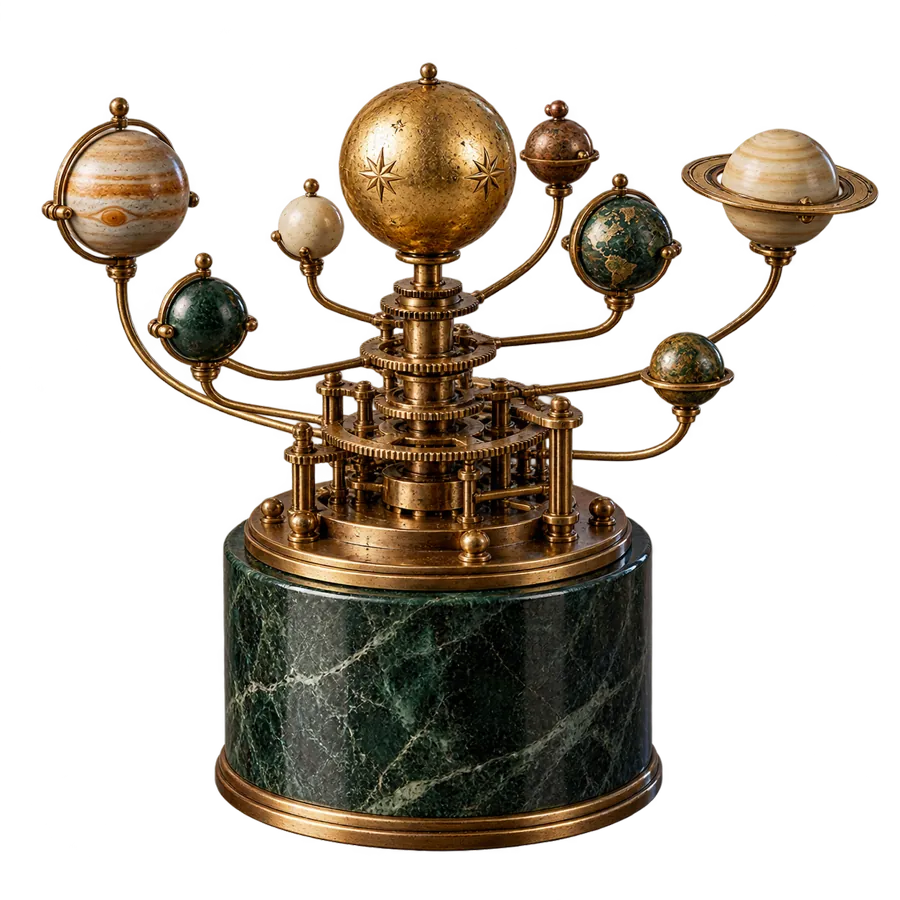
How Spinoza replaces the supernatural ruler with infinite Nature, and why this annihilates fear-based religion
I. The Transaction Nobody Admits
Every fear-based religion rests on a single transaction: obedience in exchange for safety. The believer offers submission, ritual, belief, and self-renunciation, and in return receives protection from a god who could otherwise destroy him. The transaction is not usually stated this plainly. It is wrapped in language of love, grace, fatherhood, and divine concern. But the structure is unmistakable. The god is powerful enough to punish eternally, and the believer's primary task is to remain in his favor. Fear is the engine. Love is the paint.
Spinoza saw this transaction for what it was and refused it entirely. He did not soften the god of fear. He did not argue that God is actually kinder than the priests say, more merciful than the theologians claim, more willing to forgive if only we understood him correctly. That would have been a reform, and Spinoza was not a reformer. He was something more dangerous. He replaced the god of fear with a conception of the divine that cannot be feared because it cannot be bargained with, offended, appeased, or escaped. His God is not a person. His God is Nature itself.
This is the move that makes Spinoza uniquely intolerable to every institution that governs through dread. A god who does not punish is useless to priests. A god who does not take sides is useless to holy wars. A god who cannot be flattered is useless to the anxious. Spinoza leaves the temple standing and empties it of its operational mechanism. The result is not atheism in the ordinary sense. It is something harder to categorize and much harder to live with: a theism so purified of projection that it asks everything of the mind and offers nothing to the fear.
II. The God Who Cannot Be Offended
The god of fear has moods. He is pleased by some actions and angered by others. He watches, judges, remembers, and eventually settles accounts. This is not a mystery. It is a projection. We take the structure of a human court , sovereign, law, transgression, punishment , and inflate it to cosmic scale. We imagine God as a king with infinite jurisdiction and perfect memory, and we imagine ourselves as perpetual defendants whose every act enters into evidence.
Spinoza dismantles this by dismantling the idea that God could be a person at all. In the Ethics, God is defined as substance consisting of infinite attributes, each expressing eternal and infinite essence. Substance is that which exists in itself and is conceived through itself. Nothing outside substance can act upon it. Nothing outside substance can constrain it. Substance is not one being among others. It is the being within which all other beings exist as modes.
A substance of this kind cannot be offended, because offense requires that something outside the offended party act upon it in a way it does not wish. A king can be offended by a rebellious subject because the subject is outside the king and acts against his will. But nothing is outside God. Every mode, every finite thing, every human thought and action, exists within God as a modification of God's own being. There is no external agent that could possibly injure, disappoint, or defy the divine. The entire category of offense collapses. The god of fear turns out to be a logical impossibility dressed in royal robes.
III. Against the Legislator God
Spinoza traces the god of fear to a specific error: the belief that God acts for ends, that the universe is governed by a divine will pursuing purposes, and that those purposes can be known and must be obeyed. This is what he calls the prejudice of final causes, and he spends much of the Appendix to Part I of the Ethics destroying it.
The argument is brutally simple. Humans act for ends because we are conscious of our desires and we pursue what we imagine will satisfy them. We then project this structure onto nature. We see the sun warm the earth, the rain nourish the crops, the body heal its wounds, and we conclude that these things happen for our benefit, designed by a mind that intended them. The sun exists to give us light. The rain exists to water our fields. The universe, in our imagination, is arranged around us.
From this projection we infer a divine legislator who, like a human ruler, issues commands and enforces them. We imagine moral laws as his decrees and misfortune as his punishment. Spinoza reverses the entire chain. It is not that things happen because God wills them for our benefit. It is that we call beneficial whatever happens to suit us, and then retroactively attribute the benefit to divine intention. The design we see in nature is a reflection of our own desires, not a property of nature itself. God does not legislate. Nature simply is, and necessity governs everything within it.
IV. Nature as the Only Temple
If God is Nature , infinite, necessary, self-caused, self-expressing , then the entire apparatus of sacred space collapses. There is no temple more holy than any other place, because every place is equally an expression of the one substance. There is no profane world outside the sacred, because nothing exists outside God. The distinction between holy ground and common dirt is a human invention, useful for priests who need to control access to the divine, but philosophically incoherent.
This has consequences that Spinoza drew explicitly. Miracles are impossible, not because God lacks power, but because a miracle would be a violation of nature's order, and nature's order is God's order. If something happened contrary to the laws of nature, it would mean that nature was not the full expression of God's being, that something outside God had forced an exception. But there is nothing outside God. A miracle is not an act of divine power. It is a conceptual mistake dressed as a pious hope.
The religious imagination finds this cold because it has been trained to locate the divine in exceptions. The more a religion depends on miracles , the parting of seas, the raising of the dead, the suspension of natural law , the more it depends on the idea that nature is normally godless and only becomes divine when interrupted. Spinoza says the opposite. Nature is always divine. The ordinary operations of causality are the face of God. The laws of physics are not obstacles to the sacred. They are its grammar.
V. Why Fear Requires a Person
Why does the god of fear persist when the philosophical case against him is so strong? Because fear needs a target. An abstract principle cannot be pleaded with, cannot be mollified, cannot be imagined to change its mind. When disaster strikes, the frightened mind does not want to hear about the order of causes. It wants someone to blame, someone to beg, someone whose mood might be influenced by sacrifice or prayer. A personal god provides what an impersonal nature cannot: the illusion of negotiation.
Spinoza understood this psychology with clinical precision. In the Appendix to Part I, he describes how humans, finding themselves subject to fortune and ignorant of causes, take refuge in superstition. They imagine that nature is governed by beings like themselves, beings who can be flattered, bribed, or persuaded. They invent gods, rituals, and intermediaries. They build temples and hire priests. They mistake the intensity of their fear for evidence of the reality of its object.
The whole structure of fear-based religion is thus, for Spinoza, an elaborate coping mechanism for ignorance. It does not reveal God. It reveals our unwillingness to bear uncertainty. The more a person clings to a personal, interventionist deity, the more he confesses, without knowing it, that he cannot tolerate a world he does not control.
VI. The Political Use of Sacred Terror
Spinoza was not naive about why this superstition persists. It persists because it serves power. In the Tractatus Theologico-Politicus, he analyzes how political and religious authorities collaborate to keep populations fearful and therefore governable. A people terrified of divine punishment will obey almost any command if it is presented as God's will. They will pay tithes, support wars, persecute heretics, and surrender their freedom of thought, all in exchange for the promise of safety from the very god the authorities claim to represent.
The mechanism is circular and self-reinforcing. The priest invents a terrifying god, then offers protection from the terror he has invented. The ruler allies with the priest, because a population that bows before an invisible throne will bow more readily before a visible one. The people, caught between manufactured dread and purchased relief, never notice that the entire apparatus depends on their remaining ignorant. Knowledge is the enemy of the arrangement. Philosophy is a political threat.
Spinoza's own life proved the point. He was excommunicated from the Amsterdam synagogue in 1656, at twenty-three, with a curse so elaborate it remains shocking even by the standards of the time. He was forbidden from teaching, publishing, or even conversing with members of the community. The authorities understood what he was doing. A man who argues that God cannot be offended is a man who has removed the lever by which priests move populations. A philosophy that dissolves fear-based religion is not merely a theological treatise. It is an act of liberation.
VII. Blessedness Without Terror
The most subversive claim in the Ethics is the one that closes it: blessedness is not the reward of virtue, but virtue itself. We do not obey God's commands in order to earn happiness. We are happy to the extent that we understand, and understanding is itself the highest form of blessedness. There is no future reward. There is no deferred salvation. There is only the present activity of the mind grasping the necessary order of things and taking joy in that grasp.
This inverts the entire psychology of fear-based religion. In the traditional model, fear motivates obedience, obedience earns favor, favor produces safety, and safety, eventually, in some distant future, allows peace. But peace never arrives, because the fear that powers the system is never discharged. It is only managed. The believer spends his life anxious about his standing with a deity whose moods he cannot predict and whose standards he can never be certain he has met. The system runs on perpetual insecurity.
Spinoza breaks the cycle by removing the anxiety's object. If God cannot be offended, there is nothing to fear. If God does not punish, there is nothing to escape. If blessedness is present understanding rather than future reward, the entire structure of deferred salvation collapses. You are not working toward peace. You are either in it or not, now, depending on the adequacy of your understanding.
VIII. The Terror of a Silent Universe
Here the honest reader will feel resistance. A god who does not answer prayers, who does not intervene, who does not love in any human sense, who does not even notice us as individuals: this sounds like abandonment. The god of fear is terrifying, but at least he is there. At least he attends. At least the universe has a face.
Spinoza's response is not comforting in the way the reader might wish. He does not say that God loves you individually, that your prayers are heard, that your suffering has a hidden purpose. He says that the desire for a cosmic person who attends to you is itself a form of bondage. It is the wish to remain a child before a parent, to have your existence validated by a larger consciousness, to be known and noticed by the ultimate authority. This wish is understandable. It is also, for Spinoza, a refusal of maturity.
The free person does not need the universe to have a face. He does not need reality to notice him. He participates in the order of nature as one mode among infinite modes, and he finds his dignity not in being singled out for divine attention but in understanding his place within the whole. This is not coldness. It is a different kind of warmth: the warmth of a mind that has stopped begging and started comprehending.
IX. The God That Remains
What kind of religious life survives Spinoza's demolition of fear-based religion? Not worship in the ordinary sense. Not prayer as petition. Not ritual as transaction. What remains is something Spinoza calls the intellectual love of God: the joy that arises in the mind when it grasps reality under the aspect of eternity, understanding finite things not as isolated accidents but as necessary expressions of the infinite.
This love does not ask God to love back. It does not require a personal relationship. It is not emotional in the sense of sentiment. It is the natural byproduct of understanding. When the mind sees a truth clearly, it experiences joy. When the mind sees the most comprehensive truth , the necessary order of all of nature , it experiences the highest joy. This joy is not separate from the understanding. It is what understanding feels like from the inside.
And in a formulation so strange it has puzzled readers for centuries, Spinoza adds that this love by which the mind loves God is part of the infinite love by which God loves himself. Since the human mind is a mode of God, and its understanding is God's own nature expressed through one of its modifications, the mind's love of God is God loving himself through the mind. The distinction between lover and beloved dissolves. There is only the one substance, expressing itself in infinite ways, and in some of those expressions, coming to conscious joy in its own order.
X. Freedom from the Invisible Witness
What does a human life look like when lived without the god of fear? It looks like a life without an invisible witness. The god of fear functions primarily as a surveillance mechanism. He sees everything. He remembers everything. He will eventually judge everything. The believer lives under permanent observation. Every private thought, every unspoken desire, every half-formed intention is already on the record.
Spinoza's God sees nothing in this sense, because seeing requires a subject separate from what is seen, and nothing is separate from God. But the psychological effect is the same as if God were blind: the surveillance is gone. The record does not exist. There is no tribunal. There is no verdict. There is only the causal order, within which actions have consequences, but those consequences are natural, not juridical. They follow from causes, not from judgments.
For someone raised in fear-based religion, this can feel like vertigo. The invisible witness has been the organizing principle of the psyche. Without him, who enforces the rules? Who guarantees that virtue is rewarded and vice punished? Who ensures that the moral order of the universe is maintained? Spinoza's answer is stark: nobody. No one enforces the moral order because there is no moral order of the kind we imagine. There are causes and effects. There are actions and consequences. There is the natural striving of each thing to persist in its being. But there is no cosmic judiciary. The universe does not prosecute. It simply proceeds.
XI. The Frightened and the Free
This leaves us with a division that is uncomfortable to state but impossible to avoid. Some people are governed by the god of fear because they are governed by fear itself. Their religion is the shape their anxiety takes. Remove the god and the anxiety remains, seeking a new object. Others are capable of the intellectual love of God, not because they are morally superior, but because their minds have been trained, through philosophy and discipline, to find joy in understanding rather than comfort in submission.
Spinoza does not judge the first group. He analyzes them. They are not wicked. They are caused. Their fear has causes, and until those causes are understood and reorganized, the fear will persist. But he also does not pretend that fear-based religion and rational understanding are compatible. They are not two paths to the same destination. They are opposing orientations toward reality. One seeks safety through submission to an imagined person. The other seeks power through comprehension of an actual order.
The transition from the first to the second is not a conversion. It is an education. It requires learning to tolerate a universe that does not arrange itself around human desires, learning to find dignity in understanding rather than in being noticed, learning to replace the fantasy of cosmic justice with the reality of causal consequence. This is the work of a lifetime, and most people never begin it. The god of fear is too useful, too familiar, too woven into the fabric of childhood and culture, to be abandoned lightly. But for those who do the work, the reward is not heaven. It is something more immediate and more durable: the end of trembling before a phantom.
XII. The Final Silence
Spinoza's God does not speak. There is no revelation, no scripture, no prophetic voice, no burning bush, no still small voice in the heart. The only access to the divine is through reason, and reason does not receive commands. It understands structures. It traces causes. It grasps necessities. It does not hear voices.
This silence is the deepest challenge Spinoza poses to the religious tradition. Even theologians who reject anthropomorphism usually retain some notion of divine communication. God may not have a body or emotions, but he speaks. He reveals. He addresses humanity through prophets, texts, traditions, or the inner voice of conscience. Spinoza dismantles all of this. Scripture is a historical document, written by humans, reflecting their imaginations and political circumstances. Prophecy is vivid imagination mistaken for supernatural communication. The inner voice is the echo of one's own unexamined affects.
What remains when the voice of God is silenced is not nihilism. It is the possibility of genuine understanding. So long as we believe we are being addressed by a divine person, we interpret the world as a message and spend our energies decoding intentions that do not exist. When we accept that the world is not a message but an order, we can begin to study it as it is. The silence of Spinoza's God is not an absence. It is the condition of clarity. Only when the imagined voice stops can the real structure be heard.
XIII. The Only Worship That Survives
If Spinoza's philosophy leaves any room for worship, it is worship in a form almost unrecognizable to the religious traditions. It is not praise. It is not petition. It is not ritual. It is not community. It is the solitary activity of the mind comprehending necessity and taking joy in that comprehension. The more we understand, the more we participate in the divine nature. The more we participate, the more blessed we become. There is no priest, no temple, no scripture, and no congregation. There is only the mind and the infinite order it strains to grasp.
This is austere, but it is not empty. A mind that has experienced the intellectual love of God has experienced something real. It has felt the peculiar joy of seeing a difficult truth clearly, of grasping the causal structure behind a phenomenon that had seemed chaotic, of understanding why something had to be the way it is. This joy is not emotional intoxication. It is the felt increase of the mind's power to act. It is, in Spinoza's exact sense, the passage to greater perfection.
Fear-based religion offers a pale imitation of this joy. It offers relief from anxiety, which feels like joy if you have never known anything better. The believer mistakes the cessation of dread for blessedness. He thinks that because he is no longer afraid of hell, he must be experiencing heaven. But relief is not joy. Relief is the temporary absence of a manufactured torment. The intellectual love of God is something else entirely. It does not require the prior production of terror. It arises from the positive activity of understanding. It is the mind exercising its highest power, and it needs no threat to motivate it.
XIV. The God That Cannot Be Used
The final and most radical implication of Spinoza's God is that he cannot be used. The god of fear is endlessly useful. He can be invoked to justify wars, to enforce obedience, to extract money, to shame desire, to control women, to sanctify rulers, to console the suffering, to terrify the disobedient. He is the most versatile instrument of social control ever invented. Every institution that depends on him has a stake in his continued existence.
Spinoza's God is useless in precisely this sense. He cannot be invoked because he does not intervene. He cannot justify a war because he does not take sides. He cannot enforce obedience because he does not command. He cannot extract money because he has no treasury and no priests. He cannot shame desire because desire is the very essence of finite beings, and the question is not whether we desire but whether our desires are rational. He cannot sanctify a ruler because a ruler is just another mode of nature, and the divine does not confer legitimacy on any particular political arrangement.
To the institutions that depend on the god of fear, this is worse than atheism. An atheist can be argued with, refuted, persecuted, or ignored. But a philosopher who says that God exists and is Nature, that the divine is real but cannot be bargained with: this is an enemy who leaves no ground to fight on. The temple is still there, but the god has been replaced by an idea, and ideas do not collect tithes.
XV. What We Lose and What We Gain
To abandon the god of fear is to lose something real, and it is dishonest to pretend otherwise. We lose the sense that the universe is watching. We lose the hope that justice will be done in the end, that the wicked will be punished and the virtuous rewarded. We lose the comfort of believing that our suffering has a hidden meaning, that there is a plan, that someone is in control. We lose the child's confidence that a parent governs the world and will eventually make everything right.
What we gain is harder to describe but more substantial. We gain the capacity to face reality without a protective layer of fantasy. We gain the dignity of understanding rather than the comfort of believing. We gain a world that operates according to knowable laws, a world in which action has predictable consequences and knowledge genuinely increases power. We gain the possibility of a joy that is not dependent on uncertainty, a blessedness that is not deferred, a peace that is not the mere cessation of manufactured terror.
Spinoza does not ask us to believe in his God. He asks us to understand what follows from the nature of things. The conclusion is not a matter of faith. It is a matter of logic. If substance is that which exists in itself, and if there can be only one such substance, and if everything else exists as a mode of that substance, then God is Nature and Nature is God. The god of fear is a conceptual error with a long political career. Spinoza's God is simply what remains when the error has been corrected, and what remains is not a void. It is the infinite and necessary order of everything that is, and to understand any part of it is to love it, and to love it is to be free.