The Philosophy of Not Flinching

Why Spinoza's rationalism demands the courage to see reality without ornament.
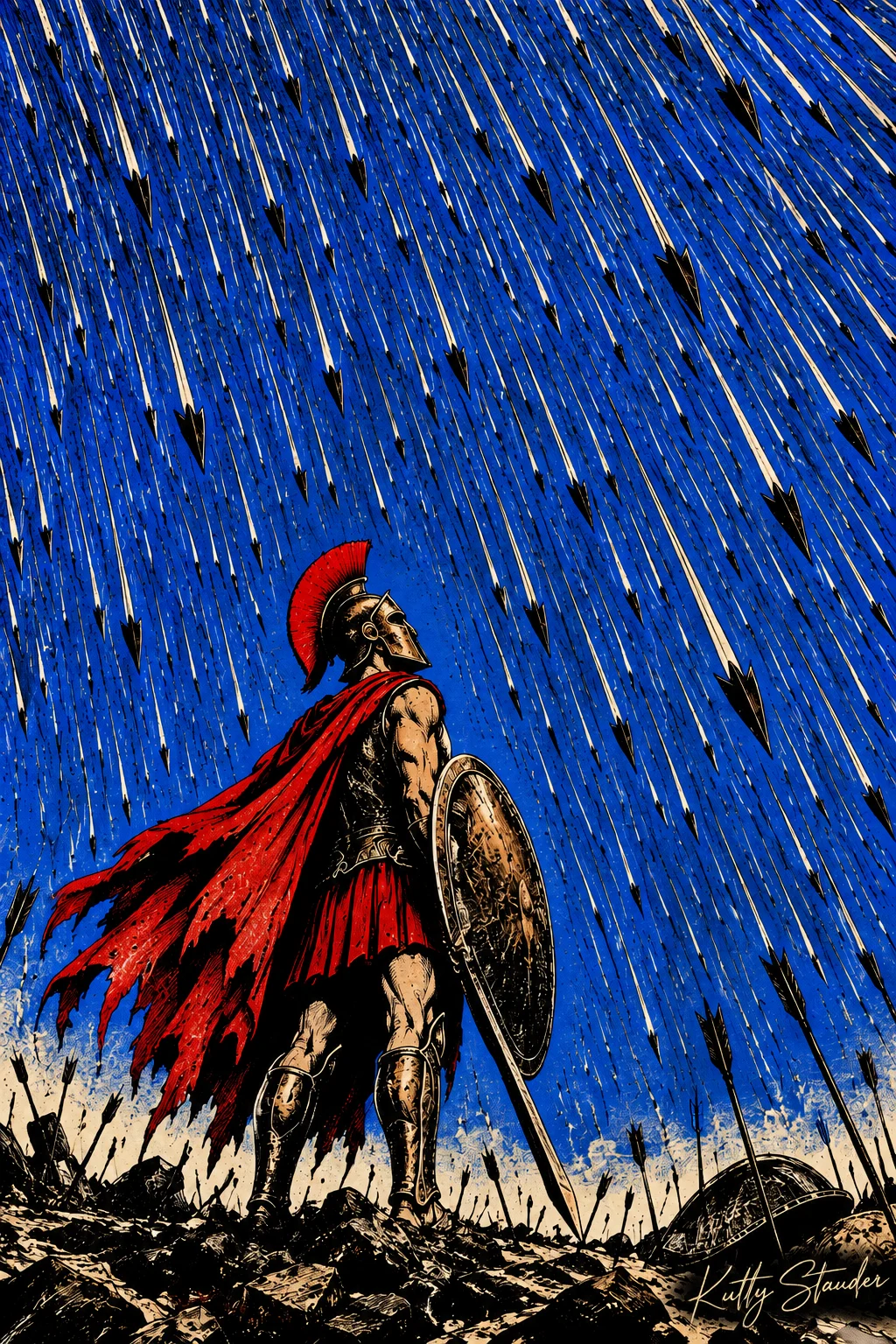
I.
Most philosophy is, at some level, a negotiation with comfort. It asks how we can live well, which often means how we can live without excessive pain. Spinoza's philosophy is unusually uncompromising on this point. It does not negotiate. It asks what is true, and it follows the truth wherever it leads, even when the destination is uncomfortable. This is the philosophy of not flinching: the commitment to see reality as it is, without ornament, consolation, or evasion.
The commitment is not a personality trait. It is a logical consequence of Spinoza's epistemology. Adequate ideas are ideas that include their causes. To have an adequate idea of a situation is to see it as it is, in its full causal context, without adding or subtracting anything on the basis of hope, fear, or wish. The mind that flinches from uncomfortable truths is a mind that is substituting inadequate ideas for adequate ones. It is choosing comfort over power.
II.
Flinching takes many forms. The most common is denial: the refusal to acknowledge a truth because it is painful. A person who cannot face his own failures, his own limitations, his own mortality, is flinching. He constructs a false account of reality in which the painful truth is absent, and he lives inside that account. The account is comfortable. It is also false, and its falsity diminishes his power to act, because actions based on false premises produce worse outcomes than actions based on true ones.
A subtler form of flinching is intellectual ornamentation: the use of complex theories or elaborate language to obscure a simple, uncomfortable truth. The academic who buries a banal finding under jargon is flinching. The politician who wraps a betrayal in rhetoric is flinching. The philosopher who promises cosmic meaning where there is only causal necessity is flinching. In every case, the ornament is a distraction from a truth the speaker cannot bear to state plainly.
III.
Spinoza's own life is a model of not flinching. He was excommunicated from his community at twenty-three for beliefs he would not recant. He lived modestly, refused prestigious positions that would have constrained his thought, and published cautiously in the face of constant threat. He did not seek persecution, but neither did he compromise to avoid it. When his Theological-Political Treatise was banned, he continued writing. When friends urged him to soften his conclusions, he refused.
This is not the courage of the martyr, who seeks suffering as a proof of conviction. It is the courage of the geometer, who will not falsify a proof because the conclusion is unpopular. Spinoza did not flinch because flinching would have been an error: the substitution of a comfortable falsehood for an uncomfortable truth. An error is not a sin, but it is a failure of understanding, and understanding was the only thing he valued absolutely.
IV.
The practical discipline of not flinching is simple to describe and extraordinarily difficult to practice. It requires the willingness to ask, about every belief: is this true, or do I want it to be true? The distinction is not always obvious, because wanting a belief to be true often produces the feeling that it is true. The mind is adept at manufacturing evidence for its preferences.
The discipline also requires the willingness to tolerate discomfort. Adequate ideas do not always feel good. The idea that you are not as talented as you believed is painful. The idea that a relationship is irreparable is painful. The idea that death is final is painful. But the pain of an adequate idea is the pain of a wound being cleaned. The pain of an inadequate idea is the pain of a wound being ignored. The first pain heals. The second festers.
V.
Not flinching is often confused with cynicism or pessimism. The confusion is instructive. It reveals how accustomed we are to the idea that truth must be softened to be bearable. Spinoza would reject the assumption. Truth is not inherently bearable or unbearable. It is simply true. Whether it is bearable depends on the strength of the mind that receives it. And the strength of the mind is increased, not decreased, by the acquisition of adequate ideas, even painful ones.
The person who does not flinch becomes stronger with each uncomfortable truth he absorbs. The person who flinches becomes weaker, because the energy required to maintain the falsehood is energy that could have been used to act. The philosophy of not flinching is not a counsel of despair. It is a counsel of power.