Why Spinoza Wrote in Geometric Order
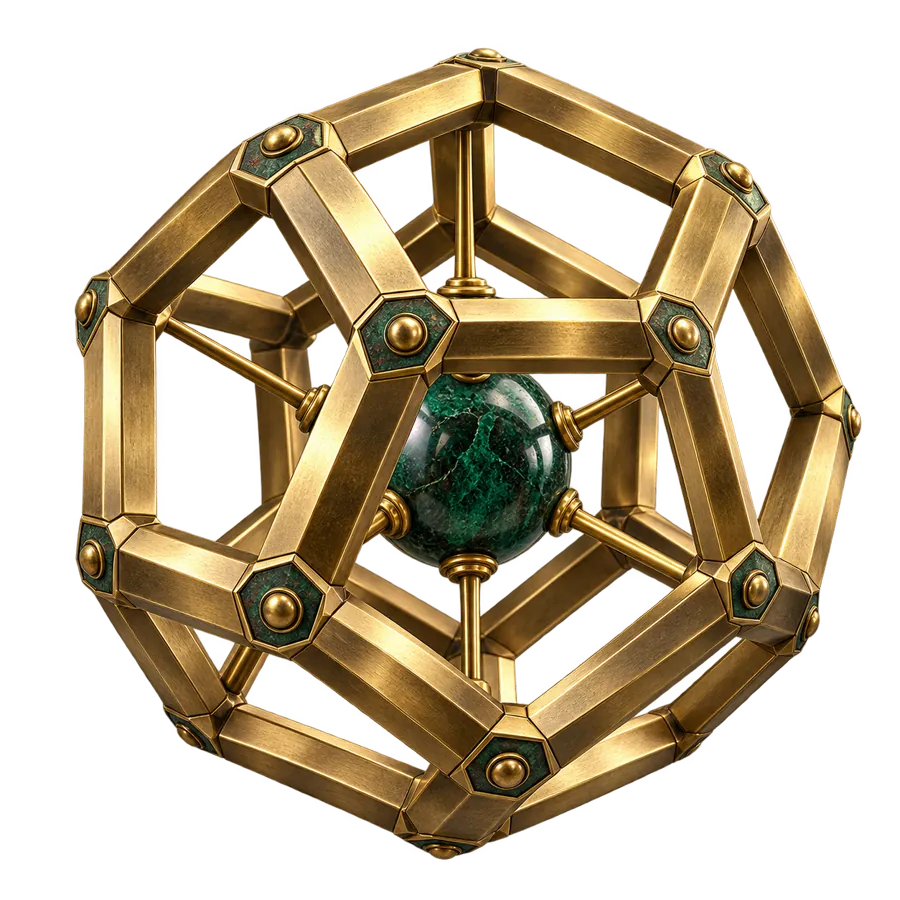
The method is the meaning, and the meaning is that everything follows
I. The Surface
The Ethics is structured like a geometry textbook. Definitions, axioms, propositions, demonstrations, corollaries, scholia. The form is rigid. The prose is austere. The reader who opens it expecting philosophy in the style of Plato or Nietzsche is disoriented. Why would anyone write about God, the mind, the affects, and human freedom in the style of Euclid? The standard answer is that Spinoza was influenced by Descartes, who had attempted something similar, and by the scientific revolution's enthusiasm for mathematical method. This answer is true but superficial. The geometric order is not a stylistic choice. It is the argument.
II. The Deeper Reason
Spinoza's central claim is that everything follows necessarily from the nature of God or Nature. There is no contingency. No free will in the metaphysical sense. No events that could have been otherwise. Every thing, every event, every thought is the necessary consequence of prior causes, all the way back to the eternal and infinite substance. If this claim is true, then the correct way to present it is to demonstrate that it follows necessarily from self-evident starting points. The geometric order is not a metaphor for necessity. It is the performance of necessity. The reader who follows the demonstrations from definition to proposition to corollary is experiencing, in the act of reading, the very necessity that the text describes. The form and the content are the same thing.
This is why Spinoza did not write the Ethics as a dialogue, an essay, a meditation, or a narrative. All of those forms imply contingency. A dialogue presents alternatives and chooses among them. An essay develops a perspective that could have been developed differently. A meditation records the movements of a particular mind at a particular time. Only the geometric order presents conclusions as inescapable. When you reach Proposition 36 of Part IV: "The greatest good of those who follow virtue is common to all, and all can enjoy it equally": you do not feel that Spinoza has persuaded you. You feel that the conclusion was already contained in the premises and could not have been otherwise. The feeling is the truth.
III. The Moral Purpose
The geometric order also serves a therapeutic function. The Ethics is not merely a description of the path from bondage to freedom. It is the path. Reading the Ethics in geometric order trains the mind to think geometrically: to move from causes to effects, to refuse leaps of imagination, to demand demonstration for every claim. A mind trained in this way is less susceptible to the passive affects that arise from inadequate ideas. It has learned to ask: what are the premises? Do the conclusions follow? What has been assumed without proof? These questions, applied to one's own emotional life, are the mechanism of freedom. The geometric order is not just how Spinoza wrote. It is how a free mind operates.
IV. The Modern Application
You do not need to write your thoughts in definitions and axioms. But you can adopt the geometric habit. When you are confused, ask: what are my premises? What am I assuming that I have not examined? When you are agitated by an affect, ask: what are the causes? Does the affect follow necessarily from those causes, or am I adding something from imagination? When you are making a decision, ask: what follows from this choice? What are the corollaries I have not considered? The geometric habit is the habit of tracing necessity. It is the opposite of wishful thinking, of hoping, of assuming that things will work out because you want them to. It is severe. But it is also liberating. Once you see what necessarily follows from what, you stop being surprised by outcomes, because you have already traced the causal chain. The surprise is the mark of an inadequate idea. The absence of surprise is the mark of understanding.
V. The Limit
Spinoza knew the geometric order had limits. Most people will not read a book written in definitions and axioms. Most people will not train their minds to think geometrically. The Ethics was published posthumously, and Spinoza delayed its publication during his lifetime partly because he understood the resistance it would provoke. The geometric order is demanding. It asks the reader to do work. It refuses to entertain, to flatter, to comfort. This is not a flaw. It is a filter. The Ethics is not for everyone. It is for those who are willing to trade comfort for understanding. The geometric order is the statement of the trade. The trade is the whole point.