Against the Kingdom Within a Kingdom
I. The Forbidden Thought
The most offensive sentence in the Ethics is not about God, freedom, or blessedness. It is a quiet remark at the beginning of Part III, where Spinoza announces that he will treat human emotions "as if the subject were lines, planes, or bodies." He will not laugh at them, weep at them, or detest them. He will understand them. And he warns the reader that most people will find this approach intolerable, because most people believe that "man disturbs rather than follows the order of nature, that he has absolute power over his actions, and that he is determined by nothing other than himself."
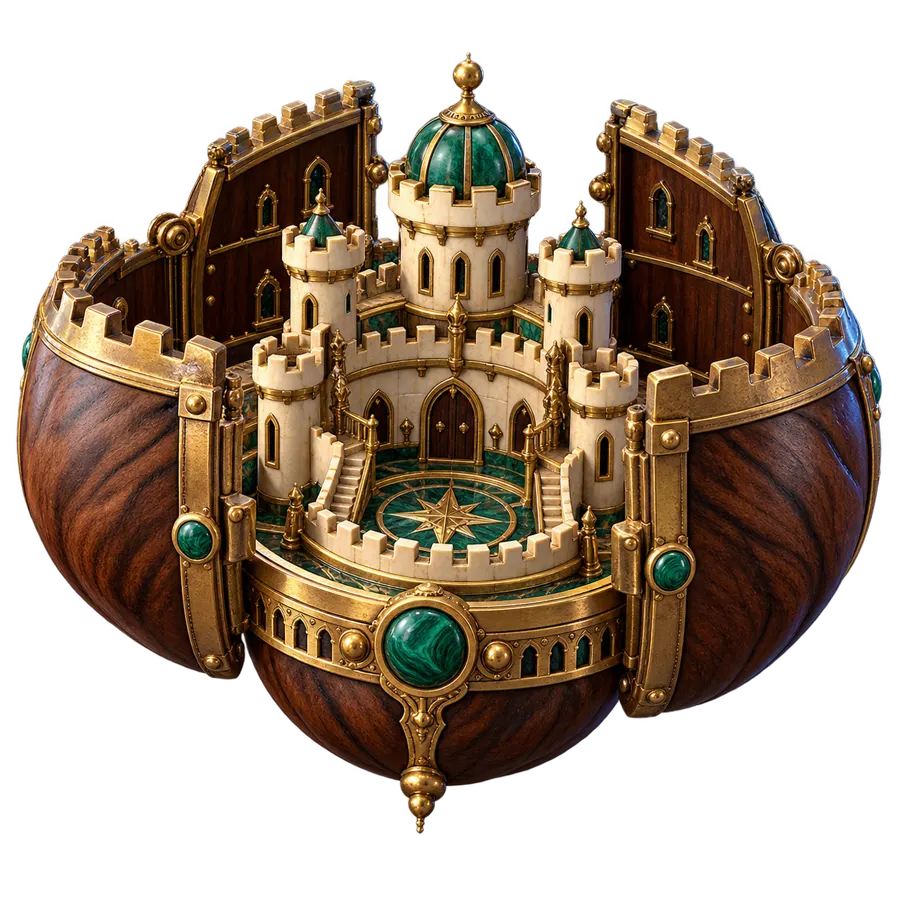
This is the kingdom within a kingdom: the belief that human beings are not part of nature but a separate domain governed by different laws. It is the deepest assumption of Western thought, the foundation of religion, morality, law, and common sense. And Spinoza demolishes it.
II. The Architecture of the Kingdom
The kingdom within a kingdom is built on three pillars. The first is the conviction that human beings have free will: an uncaused power of choice that sets them apart from everything else in nature. The second is the conviction that human emotions are moral phenomena to be judged rather than natural phenomena to be understood. The third is the conviction that the universe is arranged around human concerns, that our desires, fears, and hopes are reflected in the structure of reality itself.
These three convictions support each other. Free will makes moral judgment possible. Moral judgment makes the universe morally significant. A morally significant universe validates the importance of human concerns. The system is circular, but it is stable, because each part reinforces the others.
Spinoza attacks all three pillars simultaneously. There is no free will. There is no moral judgment that stands outside the causal order. There is no universe arranged around human desire. The kingdom is an illusion, and the illusion is the primary source of human bondage.
III. The Error of Transcendence
The belief that man stands outside nature is not merely false. It is disabling. It prevents human beings from understanding themselves as what they are: finite modes of infinite substance, governed by the same laws that govern everything else. The person who believes he transcends nature will not study himself as a natural phenomenon. He will not trace the causes of his emotions. He will not examine the conditions that shape his desires. He will attribute his actions to his will, his moods to his character, his failures to his vices, and he will never understand any of them.
The Spinozan alternative is not to reduce human beings to machines. It is to understand them as natural systems of extraordinary complexity, capable of self-understanding to a degree unmatched by any other known system, but still fully embedded in the causal order. The capacity for self-understanding is not evidence of transcendence. It is a particularly sophisticated form of natural functioning, one that allows the system to modify its own behavior through comprehension of its own causes.
IV. The Return to Nature
What does it look like to accept that you are fully part of nature? It means giving up the fantasy that your mind is a private sanctuary that external forces cannot touch. Your mind is modified by everything that acts upon your body: the food you eat, the air you breathe, the words you hear, the images you see, the people you encounter, the institutions that structure your life. None of these influences are choices. All of them are causes.
This sounds like a diminishment. It is, in fact, the beginning of real agency. The person who believes his mind is a sanctuary is constantly being invaded by forces he does not understand and cannot resist. The person who knows that his mind is part of nature can study the forces that act upon it and, to the degree that understanding enables, can modify his exposure to them. The first person is a fortress that does not know it has no walls. The second person is an open system that has learned to manage its inputs.
V. The Liberation of Being a Thing
There is a surprising liberation in accepting that you are a thing among things. You are no longer burdened with the responsibility of being a transcendent subject whose free choices determine the meaning of your life. You are a mode of substance, expressing the nature of God through your particular existence. Your task is not to transcend your nature. It is to understand it and to act from that understanding.
This is the opposite of fatalism. The fatalist believes that because he is determined, his actions do not matter. The Spinozan believes that his actions are causes in the same chain as everything else, and that understanding this makes his actions more effective, not less. He does not pretend to stand outside causation. He participates in causation with comprehension, which is the only form of freedom available to a finite being.
VI. The End of the Exception
Spinoza's rejection of the kingdom within a kingdom is the most radical move in the history of philosophy, and it has still not been fully absorbed. We continue to speak of free will as though it were obvious. We continue to judge emotions as though they were choices. We continue to treat human beings as exceptions to the laws of nature, even as neuroscience, genetics, and behavioral economics demonstrate the opposite.
The resistance is understandable. Accepting that we are fully natural beings means accepting that our most cherished beliefs about ourselves are inadequate ideas. It means accepting that our moral judgments are often projections of our own conditioning. It means accepting that our sense of autonomy is a useful illusion produced by the limits of our self-knowledge. This is painful, and most people will avoid the pain by maintaining the illusion.
But for those who can bear it, the reward is not pain but power. The power that comes from understanding what you are, how you work, and what you can become. The kingdom within a kingdom was always a prison dressed as a palace. The open field of nature, for all its constraints, is the only place where freedom is possible.