The Mathematics of Peace
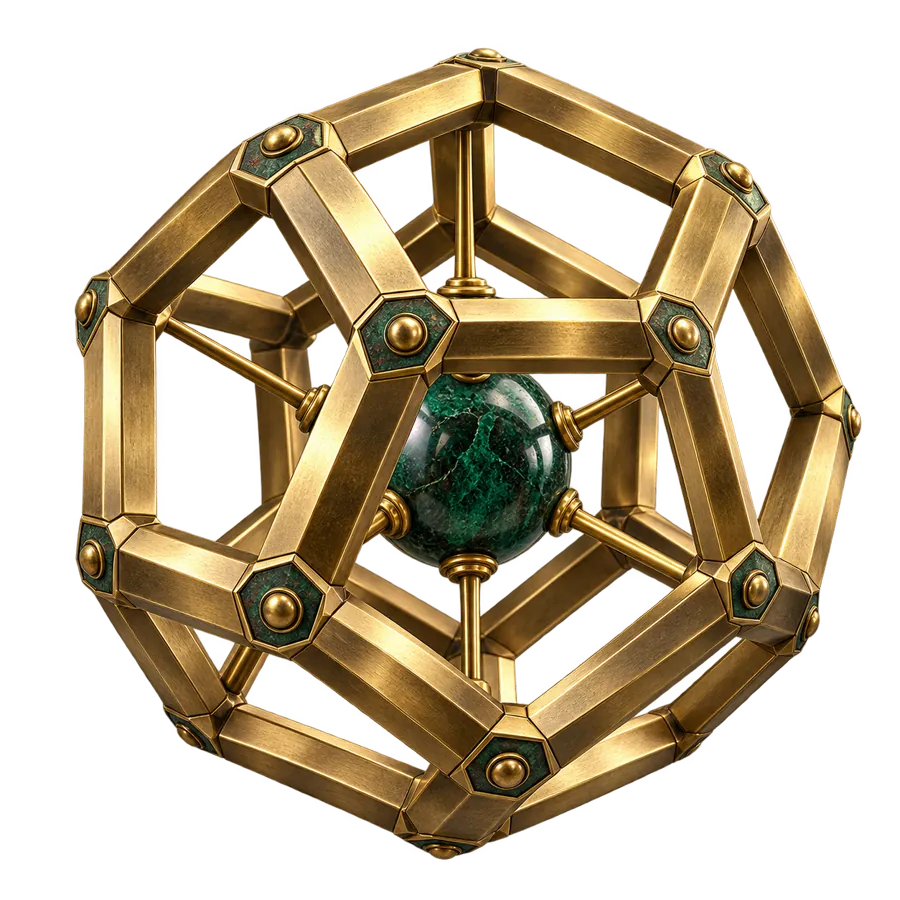
Why Spinoza believed rational order could quiet the turbulence of the passions.
I.
Peace is usually conceived as the absence of conflict: a negative condition, defined by what is not happening. Spinoza reconceives it as a positive achievement of rational order, something that must be built rather than merely awaited. Peace is not the quiet that falls when the fighting stops. It is the stability that arises when the causes of conflict are understood and addressed. The distinction is not semantic. It is the difference between a treaty and a structure.
This is what Spinoza means when he says that peace is not the absence of war but a virtue that springs from strength of mind. A tyrant can impose quiet through fear, but the quiet is not peace. It is the silence of the oppressed, and it will erupt the moment the fear weakens. Genuine peace arises when people act from reason rather than passion, when their interests are aligned rather than opposed, when the social order produces cooperation as a natural outcome rather than enforcing it as an external demand.
II.
The mathematics of peace begins with the recognition that human beings are not naturally peaceful. Spinoza does not share the Enlightenment fantasy of a naturally benevolent humanity corrupted by bad institutions. Human beings are modes of nature, driven by their conatus, their striving to persist and increase their power. When two strivings conflict, the result is not harmony. It is collision.
The question is not how to create a world without conflict. The question is how to arrange things so that conflict, when it arises, is resolved through reason rather than force, through institutions rather than violence, through aligned incentives rather than moral exhortation. This is an engineering problem, not a spiritual one. It requires understanding the causes of human behavior and designing systems that channel those causes toward peaceful outcomes.
III.
The primary cause of conflict, in Spinoza's analysis, is inadequate ideas. People fight because they misunderstand their own interests, because they are governed by passions that distort their perception of what would actually increase their power, because they imagine threats where none exist, because they envy what they do not need, because they seek to dominate rather than to cooperate.
Adequate ideas reverse these tendencies. The person who understands that his power is increased by cooperation with others, not by domination over them, has no reason to aggress. The person who understands that another's success does not diminish his own power has no reason to envy. The person who understands the causal structure of his own emotions is less likely to be swept into conflict by a passion he does not comprehend.
IV.
But adequate ideas are rare, and the passions are constant. Spinoza does not imagine a world in which everyone suddenly becomes rational. He imagines a world in which institutions are designed to produce peaceful outcomes even when the people within them are not particularly rational. This is the political dimension of the mathematics of peace: the design of laws, norms, and structures that align individual interest with collective good.
A well-designed state, for Spinoza, is one in which obedience to the law increases the individual's power rather than diminishing it. When the law protects property, enforces contracts, and punishes violence, the rational person obeys it not out of fear but out of understanding that the alternative (a state of nature without law) would be worse. The irrational person obeys out of fear, and this is acceptable. The outcome is peace, even if the motives differ.
V.
The mathematics of peace also applies at the level of the individual mind. The mind at war with itself is a mind divided among competing passions: desire against fear, ambition against prudence, love against hatred. This internal conflict is as destructive as external conflict, and it has the same root: inadequate ideas.
When you understand the causes of your desires, they cease to be competing forces and become items in a coherent picture of your situation. You can prioritize. You can choose which desires to act on based on your understanding of their consequences. You can stop being the battlefield and become the strategist. This is the peace that passes understanding, not because it surpasses understanding, but because it is constituted by it.
VI.
The practical yield is this: peace is not something you wait for or wish for. It is something you build, and the building materials are adequate ideas. Every time you trace a conflict to its causes rather than simply reacting to it, you are adding a brick to the structure of peace. Every time you understand an opponent's position rather than merely opposing it, you are reducing the temperature of conflict. Every time you design a system that makes cooperation easier than competition, you are shifting the mathematics in favor of peace.
This is not sentimental. It is not naive. It is the recognition that peace is an effect with causes, and that those causes can be understood and manipulated. The person who merely wants peace is a dreamer. The person who understands the conditions under which peace becomes likely is an engineer. Spinoza was both.